It’s 11:00 pm. You’re still scrolling through your phone, telling yourself, “Just five more minutes.”
Then all of a sudden, it’s midnight, and your brain is somehow more awake than it was an hour ago.
Sound familiar?
Late nights make mornings miserable. When you wake up tired, focusing in class or during activities becomes impossible.
But getting enough rest isn’t always as simple as going to bed earlier. Distractions can easily keep you up. And even if you do make it to bed on time, you might toss and turn instead of drifting off to sleep right away.
Sleep hygiene for teens is all about building healthy habits that make it easier to fall asleep, stay asleep, and wake up refreshed.
These practical tips will help you give your mind and body the rest they need.
(Don’t forget to download your free quick action guide below.)
Why do teens stay up late?
Teens stay up too late for several reasons, and most of them stem from habits and lifestyle choices.
After a long day of school, extracurriculars, and homework, nighttime can feel like your only chance to relax. That’s when activities like scrolling through social media, gaming, or chatting with friends can push past bedtime.
Many of these activities also involve screen time, which makes things worse. According to the Sleep Foundation, using screens at night can delay the release of melatonin. This is the hormone that helps you fall asleep. As a result, you may find yourself staying awake much later than planned.
Additionally, biology plays a role. During puberty, hormonal changes naturally push the body’s internal clock later, often by an hour or two. That’s why you might not feel sleepy until significantly later.
With all these factors at play, the relationship between teens and sleep can be complicated. But understanding why this happens is the first step to better rest.
Why do teens need more sleep?
Teens need about 8 to 10 hours of sleep each night.
During this stage of life, you are undergoing rapid physical and mental growth. So, sleep isn’t just “rest time” for your body; it’s when your brain and body do some of their most important work.
Here’s why sleep is so important for teens:
Better focus and learning: Sleep supports brain development. It also strengthens memory and helps your brain process what you learned during the day. This means you can absorb new information and feel more confident in your learning.
Stronger mood regulation: Without enough sleep, it’s easy to feel cranky or anxious. A good night’s rest helps you manage stress, control emotions, and handle challenges more calmly.
Improved performance: Sleep can enhance your performance in sports, music, and other activities. Proper rest sharpens your reaction time, creativity, learning, and overall performance.
Healthy growth and development: Your body needs sleep for important functions. Sleep helps to support growth, repair muscles, and keep you energized for the next day.
Stronger immune system and long-term health: Sleep gives your body the time it needs to recharge and fight off illnesses. It also supports a healthy heart, balanced metabolism, and overall well-being.
Sleep deprivation in teens is more common than you might think.
When you consistently get less than 8 hours of sleep, the effects build up over time. You might notice yourself feeling more irritable, struggling to concentrate, or getting sick often.
The good news? Once you start prioritizing sleep, your body can recover, and you’ll typically begin feeling better within a few days.
Why do teenagers sleep so much on weekends?
If you find yourself sleeping until noon on Saturdays, you’re probably dealing with what’s known as “sleep debt.”
When you don’t get enough rest during the week, your body tries to catch up on weekends.
While recovery sleep can help you feel better temporarily, it’s not a long-term solution. The goal is to get consistent, quality sleep every night so you don’t need to crash on weekends.
In short, getting enough sleep isn’t just about avoiding morning grogginess. It’s essential for supporting your body’s rapid growth during the teenage years and protecting your health in the long run.
Sleep hygiene habits for teens that actually work
Sleep hygiene means building habits and creating an environment that helps you get high-quality sleep every night.
You don’t have to completely overhaul your life to improve your sleep hygiene. Even a few small changes to your routine can make a huge difference in how quickly you fall asleep and how rested you feel the next morning.
Let’s explore some practical sleep hygiene tips for teens.
Set a consistent bedtime and wake-up time
Your body works best on a routine. Going to bed and waking up at the same time every day, even on weekends, helps to keep your internal clock on track.
Start by setting a realistic bedtime and sticking to it as consistently as you can. Try not to shift your sleep schedule by more than an hour, even if it’s tempting to stay up late on weekends.
When you keep a steady routine, your body begins to recognize when it’s time to wind down. You’ll naturally start feeling sleepy around bedtime. This makes it easier to fall asleep and wake up feeling refreshed the next morning.
Create a pre-sleep routine
A calming bedtime routine signals to your brain that it’s time to get ready to sleep.
Pick one or two self-care activities that help you feel calm. Examples include reading a book, listening to soft music, taking a warm bath, or doing some light stretching.
Avoid anything too stimulating before bed. Activities like doing homework, watching an intense show, or playing a fast-paced game might make you stressed or excited.
Once you’ve found what works for you, commit to doing it for about 30 to 60 minutes before bedtime. Over time, this routine will train your body and mind to shift into “sleep mode” easily.
Limit screen time at least 30 minutes before bed
Phones, tablets, and laptops give off blue light, which can interfere with the production of melatonin. As a result, your brain may find it harder to wind down at night.
To avoid this, try putting away your devices at least 30 to 60 minutes before bed. Use that time to do something relaxing that doesn’t involve screens, such as reading, journaling, or listening to calming music.
If that feels challenging, start small. Try going screen-free just 10 minutes before bed and gradually increase the time every one or two weeks.
Keep your room cool and dark
Your sleep environment matters more than you might think.
If your bedroom is too bright, your body may still think it’s daytime, which can lower melatonin levels and make it harder to fall asleep. Your body also needs to cool down to get good quality rest.
Here are a few ways to create a sleep-friendly environment:
Use blackout curtains or a sleep mask to block out light.
Keep your room cool with an air conditioner or fan.
Use earplugs or a white noise machine.
Turn off your devices or mute notifications before bed.
Avoid caffeine in the late afternoon and evening
Energy drinks, coffee, and some sodas contain caffeine. Caffeine stays in your system for hours, keeping you awake long after the time you intend to go to bed.
Try switching to caffeine-free drinks in the late afternoon and evening. Avoid caffeine for at least 6 to 8 hours before going to bed.
Naps can boost energy and focus, but long or late naps can make it harder to fall asleep at night.
If you really need to nap, keep it short. Set an alarm to wake you up after 20 to 30 minutes. Make it a point to nap earlier in the afternoon rather than close to bedtime. That way, you’ll still feel refreshed during the day without disrupting your nighttime sleep.
Tips to promote better sleep quality
In addition to improving your sleep hygiene, other lifestyle habits can help you fall asleep faster and enjoy deeper sleep.
Use your bed only for sleep
Reserve your bed strictly for sleeping. Avoid using it for other activities, such as studying, scrolling through your phone, or watching shows.
When your brain associates your bed only with sleep, it becomes easier to relax and drift off when you get into bed.
If you enjoy reading, journaling, or listening to music, try doing those activities in another cozy spot, like a sofa or chair. Only move to your bed when you’re ready to sleep.
Exercise during the day
Regular physical activity can significantly improve the quality of your sleep. Exercise helps reduce stress and promotes deeper, more restorative sleep.
Teens should get about 60 minutes of exercise daily. But if that feels overwhelming, start small. Try 30 minutes of activity on most days and gradually build up from there.
Just remember to avoid intense workouts close to bedtime, as they can leave you feeling energized rather than sleepy.
Manage stress before bed
Maybe you’re lying in bed replaying an awkward conversation from lunch, or you can’t stop thinking about tomorrow’s biology test. When your mind races like this, falling asleep becomes nearly impossible.
Here are some ways to manage stress and clear your mind before bedtime:
Create a to-do list to organize your thoughts and reduce mental clutter.
Do deep breathing exercises.
Write in a journal to release your worries or reflect on your day.
Practice gratitude by reflecting on a few positive things that happened.
Listen to calming music or nature sounds.
Consider using a sleep tracker
If you’re curious about your sleep patterns, using a sleep tracker can provide valuable insights.
Many phone apps and smartwatches can track how long and how deeply you sleep, helping you understand your sleep patterns better. They can also show how certain habits, such as exercise, caffeine intake, or screen time, impact your sleep.
With this information, you can make small but effective adjustments to improve your overall sleep quality.
Conclusion
Building better sleep habits is just the beginning. When you learn how to take charge of your routines, you don’t just sleep better. You also think more clearly, handle stress with confidence, and feel more in control of your life.
Through my 1:1 coaching program, I’ve helped teens transform not just their sleep, but their entire approach to school, stress, and life. If you’re ready to build habits that actually stick and create lasting change, I’d love to help!
(And if you haven’t already downloaded your free quick action guide, you can get it below.)
Competition for students has never been tougher. With rising parent expectations and limited budgets, school marketing ideas need to do more than get attention. They have to inspire trust and drive enrolment.
At its core, school marketing includes every effort your institution makes to strengthen brand visibility and attract families. Today’s parents research online, compare schools carefully, and look for authenticity at every touchpoint.
That’s why the most successful private schools are shifting toward creative, data-driven marketing strategies that meet families where they are. The goal isn’t just to promote your programs; it’s to tell your story in a way that highlights your school’s true value, whether that’s academic excellence, a close-knit community, or innovative extracurriculars.
So how can your school stand out? Through inbound marketing, strategies that pull families in rather than push messages out. Inbound marketing builds trust by being genuinely helpful: answering parents’ questions, showcasing real student stories, and creating an online experience that feels personal and sincere.
Even with modest resources, schools that use inbound methods see stronger engagement and higher enrolment.
In this guide, we’ll break down 10 proven school marketing ideas to help boost private school enrolment, from optimizing your website and social channels to using testimonials, events, and storytelling that connect on an emotional level.
Struggling with enrollment?
Our expert digital marketing services can help you attract and enroll more students!
1. Create a High-Quality, SEO-Optimized Website
Your school’s website is your digital front door, the first real impression most families will have of your community. It’s where curiosity turns into consideration, so design and usability matter. A great school website should feel both professional and personal: clean visuals, simple navigation, and all the essentials easy to find, such as tuition, programs, admissions steps, and contact details.
But here’s where many schools fall short: visibility. Even the most beautiful site won’t help if parents can’t find it on Google. That’s where search engine optimization (SEO) comes in. Most families begin their search online, typing things like “best private schools near me” or “bilingual schools in Toronto.” To show up for those queries, your site needs relevant keywords, descriptive titles and meta tags, and fast load times.
Localization also helps. If your school attracts families across regions, tailor content by geography. And don’t stop at information. Your website should engage visitors visually and emotionally. Use dynamic photos and videos of real students, candid campus moments, and parent or alumni testimonials to bring your story to life. Clear calls to action: Book a Tour,Request Info,Apply Now, guide families naturally toward the next step.
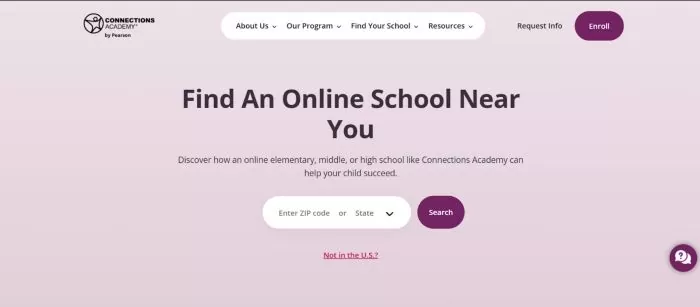
Example: Connections Academy (K–12 Online Public Schools): This online school network uses a geo-targeted approach on its site to connect families with their nearest program. A “Find Your School” tool routes visitors to state-specific pages based on ZIP code, ensuring that parents quickly find relevant information like curricula and enrolment steps for their locality. By organizing content by region and using local keywords (e.g., Georgia Connections Academy), the school boosts its presence in local search results.
Finally, make sure it’s mobile-first. Parents are browsing between meetings or from the car. A responsive, regularly updated website signals not only professionalism but also vitality, proof that your school is active, thriving, and ready to welcome new families.
2. Develop Valuable Blog Content and Resources
If your website is the front door, your blog is the conversation that happens once families walk in. It’s your chance to build trust, show expertise, and let your school’s personality shine.
Content marketing works because it educates while it engages. Blog posts, news stories, or downloadable guides can position your school as a thought leader on topics parents actually care about. From how to choose the right private school to how your teachers nurture student confidence. Every post is also an SEO opportunity: each new article gives Google another reason to show your site to searching parents.
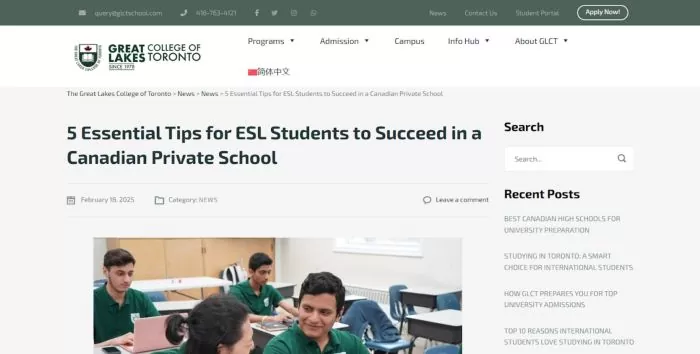
Example: Great Lakes College of Toronto (Private High School, ON): GLCT’s blog targets the needs of international students and parents. The school regularly publishes practical articles, from “5 Essential Tips for ESL Students to Succeed in a Canadian Private School” to guides on university admissions. Each post provides valuable advice (e.g., study strategies, application how-tos) while naturally highlighting GLCT’s supportive programs. By answering real questions (like how to improve English or navigate applications) in its content, GLCT attracts the right audience via SEO and builds trust.
Here’s the key: write content that answers parents’ real questions and reflects your school’s strengths. End each post with a next step: Book a Tour,Download Our Admissions Guide, or Join Our Mailing List.
The result? A blog that informs while also converting curiosity into connection.
3. Leverage Social Media to Build Community
In 2025, a strong social media presence is essential. Parents (especially millennials) and students spend hours every day scrolling through platforms like Facebook, Instagram, YouTube, and TikTok. The majority of students say they use social media when researching schools. For K–12 families, these platforms are often their first window into your community, and leveraging them effectively is one of the most effective school marketing ideas.
Here’s the thing: social media is where your school’s story comes alive. Share moments that reflect your culture: a championship win, a robotics project, a candid classroom laugh. Posts with real photos and videos consistently outperform text-only updates, and they help families visualize what life at your school feels like.
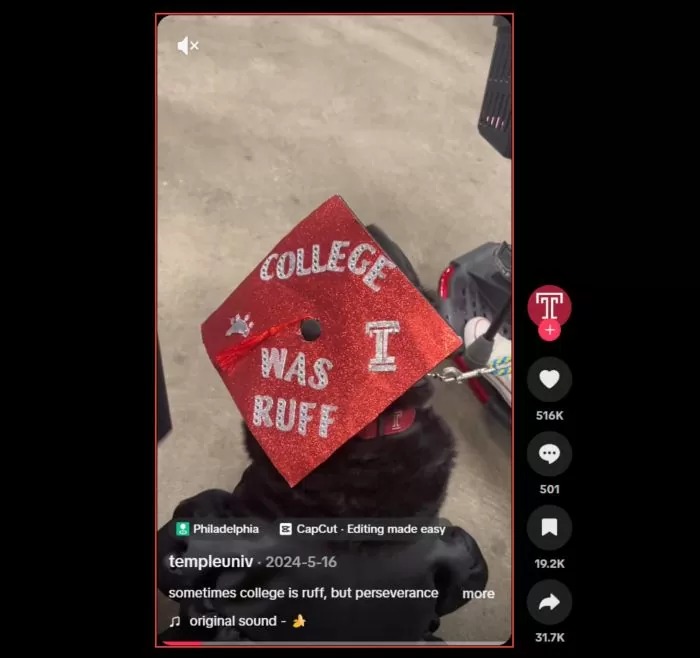
Example: Temple University (Higher Ed, PA): Temple’s social media team has achieved award-winning success by sharing vibrant, authentic content that resonates with students and parents alike. One viral example was a TikTok video of a service dog at graduation, which garnered 3.2 million views and helped Temple achieve a top TikTok engagement rank. More importantly, Temple treats social media as a storytelling and outreach platform: posts across TikTok, Instagram, Facebook, and YouTube showcase campus life and student achievements in ways that help prospective students “see themselves” at Temple.
Consistency and tone matter just as much as creativity. Keep your voice genuine and community-driven, never overly promotional. Use a content calendar to maintain regular posting and highlight diverse voices from your community. Finally, don’t overlook targeted ads. Platforms like Meta and TikTok let you reach local parents by age, location, or interests, which makes them perfect for promoting open houses or admissions deadlines.
But above all, remember this: social media isn’t just about reach, it’s about connection. When families see a living, breathing community on your feeds, they’re provided the opportunity to imagine being part of it.
4. Implement Email Marketing & Lead Nurturing Campaigns
How do you market a private school? By combining digital strategies like SEO, email nurturing, and social media with in-person tactics like open houses and community events. Tailor messaging to families’ needs, use authentic storytelling, and provide clear calls-to-action to drive inquiries and enrolment.
When a prospective family fills out an inquiry form, downloads a guide, or subscribes to your newsletter, they’ve taken the first step, but they’re not ready to apply yet. That’s where email marketing and lead nurturing come in.
Most families need five or more touchpoints before they decide to apply or enrol. The key is staying in touch consistently, offering value each time, not just reminders to “apply now.”
Start by segmenting your email list. Group families by grade level, interests, or where they are in the admissions process, from first inquiry to scheduled tour. This allows you to send messages that actually matter. A parent curious about scholarships will appreciate updates about financial aid or payment plans. Another, interested in athletics, will engage more with stories about your latest championship or coaching philosophy. Modern CRM tools make this kind of personalization simple.
Effective lead nurturing happens through a drip campaign, a planned series of emails spaced over several weeks. The sequence might look like this:
A thank-you email and link to your virtual tour.
A week later, a student or parent testimonial.
Then, an update about upcoming events or key deadlines.
Track metrics like open and click-through rates to see what resonates. If engagement dips, tweak your subject lines or timing.
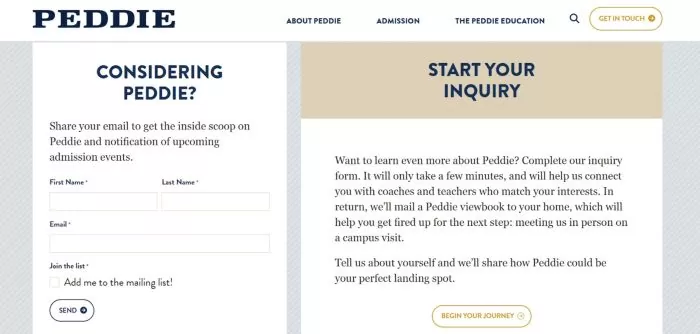
Example:Peddie School (Boarding High School, NJ): Peddie personalizes its follow-up emails based on each family’s interests. When inquiries come in, the admissions CRM captures details like academic or athletic interests. The school then connects prospects with relevant community members (coaches, teachers) and sends tailored content. For instance, a family noting interest in basketball might receive an email invite to a game and a note about Peddie’s sports facilities. This segmented approach (made clear on Peddie’s inquiry form, which promises to “connect you with coaches and teachers who match your interests”) makes families feel understood and keeps them engaged. A series of drip emails: thank-yous, student stories, deadline reminders, then nurtures each lead from initial inquiry to campus visit to application.
Finally, make your emails two-way. Encourage replies, invite questions, and link to live chats or calls. When families feel heard and guided rather than “marketed to,” they’re far more likely to see your school as their future community.
5. Use Video Marketing to Showcase Your School’s Culture
If a picture is worth a thousand words, a video can tell the whole story. Video marketing gives prospective families an inside look at your school, its energy, community, and heart, in a way that text simply can’t. A great video captures what it feels like to be on campus, walking through halls, meeting teachers, or cheering at a game. It builds an emotional bridge between your school and the viewer, and harnessing it properly is another of the more impressive marketing ideas for schools.
Video doesn’t have to be flashy to work. Start small. Create short, story-driven clips: student testimonials, “day in the life” vlogs, quick faculty interviews, or highlight reels from school events. Keep them engaging and under three minutes when possible. Post across platforms: your website, YouTube, Instagram, even TikTok. Videos with strong storytelling and emotional authenticity consistently build trust and drive inquiries.
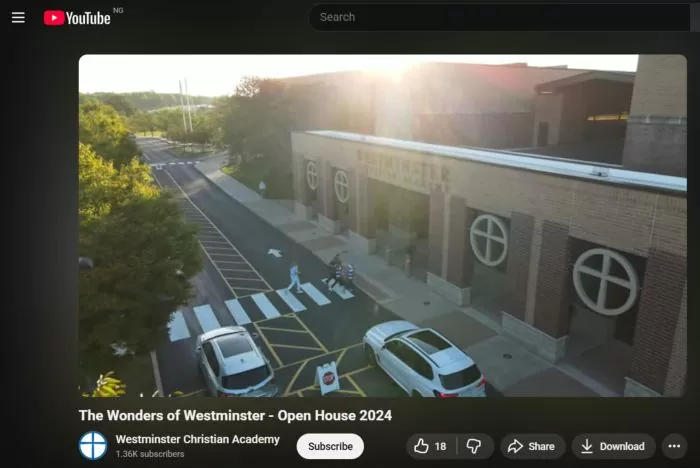
Example: Westminster Christian Academy (Day School, MO): Westminster created a cinematic short film called “The Wonders of Westminster” to encapsulate its school spirit. Premiered at an open house event to 550+ attendees, this nine-minute video weaves together stunning visuals of campus life with heartfelt student and teacher narratives. Beyond this feature film, Westminster produces numerous short clips: alumni testimonials, “day in the life” vlogs, and event highlight reels, all shared on YouTube and social media. These videos let viewers virtually walk the halls and imagine themselves as part of the community.
Authenticity is what matters. Even a smartphone-shot interview can outperform a high-budget ad if it’s real, relatable, and human. Use live streams, student-led content, and candid storytelling to show your school’s true culture, and let families see themselves as part of it.
6. Optimize Your Local Presence (Google Profile & Reviews)
When parents search “private schools near me,” your school should be one of the first names they see, complete with photos, reviews, and all the right details. That’s where your Google Business Profile (formerly Google My Business) comes in. Think of it as your school’s digital front door.
Here’s what to do: claim your profile, verify it, and fill out every field: address, phone number, website, hours, and category. Upload high-quality photos of your campus, classrooms, and events. An optimized Google profile gives prospects “an easily digestible snapshot of your institution and makes it much easier for your target audience to find you” online. Schools that post regularly and add fresh visuals tend to appear more prominently in local search results and get more clicks.
Next, turn your attention to reviews. Parents trust other parents. Encourage satisfied families to share their experiences on Google, and respond to every review (good or bad) with professionalism and gratitude. It shows transparency and genuine care.
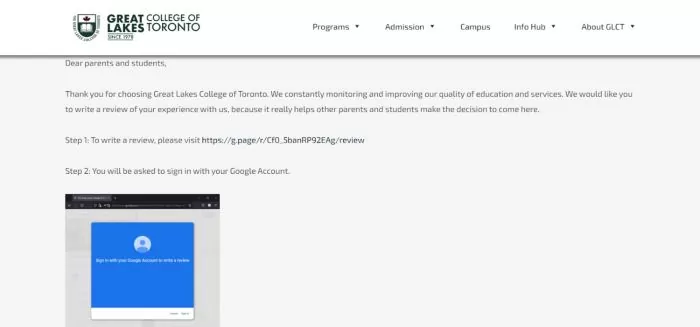
Example: Great Lakes College of Toronto (ON): GLCT leverages its happy families to boost local and global reputation. On its site, GLCT prominently links to external review platforms and showcases testimonials from international graduates. In fact, GLCT encourages parents to share their experiences on Google and Facebook, knowing that “parents trust other parents.” The school provides step-by-step instructions (via a dedicated page) on writing a Google review for GLCT, making it easy for busy parents to post feedback. By managing its online presence through accurate info on Google, active responses to every review, and abundant testimonials, GLCT ensures that when families search “best international high school Toronto,” they not only find GLCT but also see proof of its quality through peer reviews.
In short, managing your local presence is one of the simplest, most powerful enrolment tools you have. When families see accurate information, warm reviews, and vibrant imagery, your school instantly feels credible and worth exploring.
7. Host Open Houses and Community Events (Virtual & In-Person)
There’s nothing quite like seeing a school in action. Open houses, school tours, and community events let families feel what your school is really about. The energy in classrooms, the warmth of the community, the values that guide every interaction. That experience often does more to drive enrolment than any ad campaign ever could.
Today, the most effective schools blend in-person and virtual options. A well-run virtual open house allows busy or distant parents to attend from anywhere, while in-person events create the emotional connection that seals decisions. The key is to make every visit interactive, structured, and personal.
Start with a short welcome presentation from your head of school, followed by Q&A panels with teachers and students. Offer guided tours — physical or via livestream — and create themed “stations” where families can explore specific programs like arts, athletics, or STEM. Virtual attendees? Use breakout rooms or session links so they can choose what interests them most.
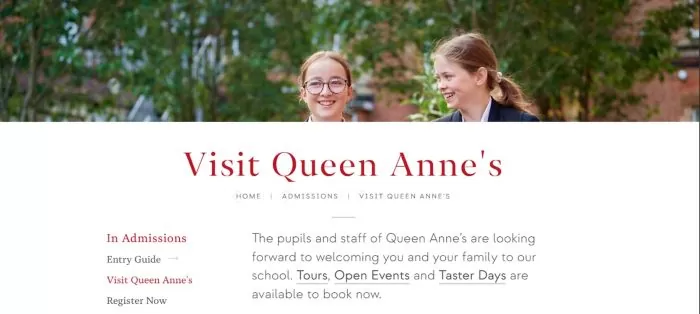
Example:Queen Anne’s School (Boarding, UK): Queen Anne’s offers a wide range of visit opportunities to fit every family’s needs. They host large Open Morning events each term (e.g., a Friday or Saturday with campus tours, student panels, and the Head’s welcome) and personal “bespoke” tours by appointment. For students, Queen Anne’s runs Taster Days: full school days where prospective girls join real classes, meet future classmates, and even try boarding for a night. This flexibility ensures that whether a family is local or overseas, busy weekdays or only free on weekends, they can experience the school. The Queen Anne’s website makes it easy to book tours or taster days online, and even features a 360° Virtual Tour so families can explore facilities remotely.
Finally, don’t limit yourself to admissions events. Sponsor local fairs, host workshops, or open performances to the community. Every event is a brand moment. Capture contact info, follow up with thank-you messages and next steps, and keep the conversation going.
When families walk away feeling welcomed and informed, they’re already picturing themselves and their children as part of your school’s story.
8. Invest in Targeted Online Advertising (Including Retargeting)
Organic marketing builds awareness over time, but sometimes you need an extra push to reach the right families fast. That’s where targeted digital advertising comes in. Platforms like Google Ads, Facebook, and Instagram let you put your school in front of parents who are actively researching options, not just scrolling aimlessly.
Think of it this way: when someone searches “private schools in [Your City]” or browses parenting and education pages on Facebook, you can show them a perfectly timed ad for your next open house. These platforms let you narrow by location, age of children, and interests, ensuring your message hits families most likely to engage. Even a few hundred dollars can make a measurable impact when ads are well-targeted and optimized.
How much should a school spend on marketing? Most schools allocate 1–10% of their overall budget to marketing, depending on goals and enrolment needs. Competitive schools aiming to grow or reach new markets may invest more, especially in digital advertising, content, and lead-nurturing systems.
Make every ad count. Use inviting visuals, happy students, engaging classrooms, welcoming teachers, paired with clear headlines (“Discover [School Name]”) and direct CTAs (“Schedule a Tour,” “Join Our Open House”). Test two or three variations at once to see which version gets more clicks, then double down on the winner.
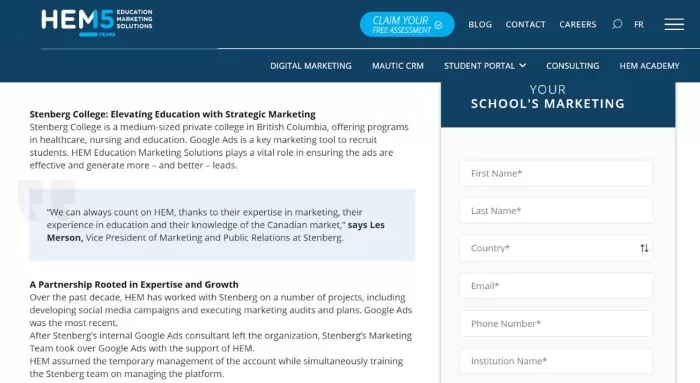
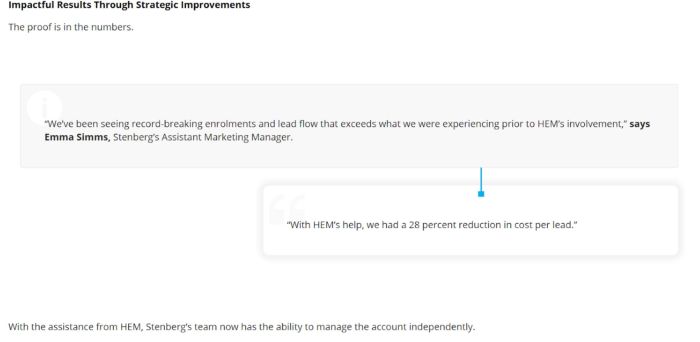
Example: Stenberg College (Private College): Stenberg partnered with HEM to elevate its Google Ads campaigns for student enrolment, ensuring the ads attracted more and higher-quality student leads. With HEM’s support in restructuring and managing these paid search campaigns, Stenberg’s marketing saw “record-breaking enrolments and lead flow” beyond previous levels. The refined advertising strategy also achieved a 28% reduction in cost per lead, demonstrating the efficiency of targeted online ads.
Beyond new audiences, retargeting helps you reconnect with families who already visited your site or clicked on an earlier ad but didn’t inquire. Maybe they browsed your tuition page or watched your virtual tour. A gentle reminder later that week (“Still exploring schools? Visit us this fall!”) can bring them back.
Pro tip: segment retargeting by behavior. Parents who downloaded your admissions guide might see an ad about financial aid, while those who viewed athletics pages could get one about campus life. The more relevant your messaging, the better your conversion rates.
According to Google, every $1 spent on search advertising can generate up to $8 in value. For schools, that often means more inquiries, more tours, and more applications, without overspending. In short: targeted ads aren’t about throwing money at the problem; they’re about placing your story in front of the right families, right when they’re ready to listen.
9. Create Downloadable Guides and Lead Magnets
Want a steady stream of new inquiries from your website? Offer something valuable first. Downloadable resources like e-books, checklists, or planning guides give parents useful information and give your admissions team qualified leads to nurture.
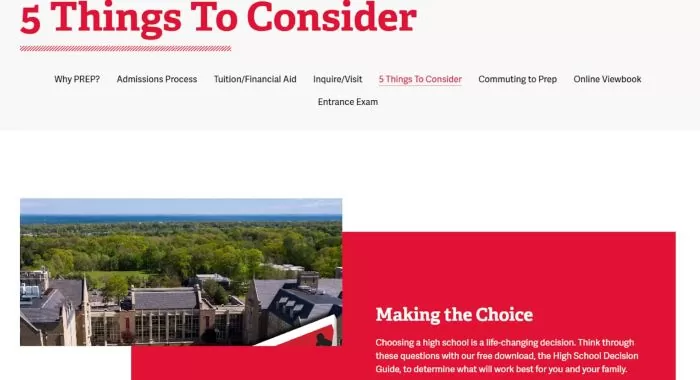
Here’s how it works: you create a helpful resource (“5 Things to Consider When Choosing a Private School,” for example), place it behind a short form asking for a name and email, and voilà, you’ve started a conversation. It’s a win-win: parents get expert advice, and you get insight into who’s exploring your school.
Example:Fairfield Prep (High School, CT): Fairfield Prep entices prospective families with a free e-book called the “High School Decision Guide.” On its admissions page, a prompt acknowledges that “choosing a high school is a life-changing decision” and invites visitors to download the guide to help them weigh their options. To get the guide, parents simply fill out a short form (name, email, child’s grade), providing Prep with a valuable lead. The guide itself, “5 Things to Consider When Choosing a High School,” offers general tips on factors like academics, community, and fit – not a pure advertisement, but a genuinely useful resource for any 8th-grade parent.
The best lead magnets solve real questions: a “School Visit Checklist,” a “Private vs. Public Comparison Chart,” or a “Financial Aid Planning Worksheet.” Even quizzes like “What’s Your Child’s Learning Style?” can engage parents while introducing your school’s philosophy.
Design matters too. Make your guide visually appealing, branded, and easy to read. Include a final call-to-action inviting families to take the next step, like booking a tour or contacting admissions.
Finally, promote your downloads across your website, blog posts, and pop-ups. Each new subscriber is a potential applicant, and your content positions your school as the trusted expert helping them get there.
10. Encourage Reviews, Testimonials, and Word-of-Mouth
At the end of the day, no marketing tool is more powerful than a happy parent or student sharing their story. Families trust real voices over polished ads. It’s why word-of-mouth remains one of the strongest enrolment drivers for private schools.
Start by collecting testimonials from your most satisfied families, students, and alumni. These can take many forms: written quotes, short videos, or casual social posts. Display them prominently. Sprinkle parent quotes across your website, include testimonial snippets in your newsletters, or dedicate a full webpage or YouTube playlist to success stories. The goal is to help prospects think, “That could be us.”
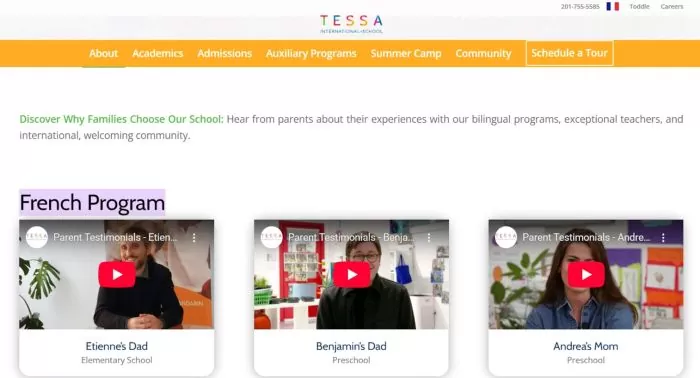
Example:Tessa International School (Preschool & Elementary, NJ): Tessa turns its parent community into its best ambassadors. The school’s website features a dedicated Testimonials page with dozens of short parent videos and quotes. Each testimonial is labeled with the family’s name and program (e.g., “Etienne’s Dad – Elementary”, “Zoe & Sophia’s Mom – Preschool & Elementary”), adding a warm personal touch. Tessa promotes these stories on social media as well, regularly sharing “Thank you” posts to parents who give shout-outs on Facebook. Additionally, the school links to external reviews on Niche.com and invites new parents to talk to veteran parents. This open celebration of parent voice not only builds trust with prospects (they see real satisfaction) but also fuels a virtuous cycle: Tessa’s parents feel valued and are even more likely to spread the word.
Encourage satisfied families to leave Google and Facebook reviews after positive milestones such as a great report card or a successful event. Monitor those reviews and respond thoughtfully. An active, appreciative reply tells others that your school listens and cares.
Don’t stop there. Turn your current community into ambassadors. Offer small referral incentives or create shareable moments, photo days, spirit challenges, and alumni shoutouts that naturally spark pride and conversation.
The result? A thriving network of advocates. When people talk about your school with genuine enthusiasm, it builds credibility and attracts families who already believe in what you stand for.
Partner with HEM to Build Momentum That Lasts
Attracting new families is about consistency, connection, and authenticity. Every piece of your marketing matters: a clear website that tells your story, social media posts that capture daily life, thoughtful emails that guide parents, and real voices from your community that build trust. When all of these elements work together, they create something powerful: a lasting impression.
Schools that commit to steady, strategic communication see results that compound over time. Keep testing, refining, and listening to what families respond to. When your marketing reflects the real experience, your students and parents love, it shows, and it resonates.
If you’re ready to take your private school marketing to the next level, Higher Education Marketing (HEM) can help. We specialize in crafting digital strategies that combine creativity, data, and storytelling to boost visibility, engagement, and enrolment.
From SEO and content creation to paid ads and automation, we’ll help you connect with families who are searching for exactly what your school offers. Because when your marketing feels genuine, families don’t just notice, they believe. And that’s what turns interest into enrolment.
Struggling with enrollment?
Our expert digital marketing services can help you attract and enroll more students!
Frequently Asked Questions
Question: What is school marketing?
Answer: At its core, school marketing includes every effort your institution makes to strengthen brand visibility and attract families. It involves branding, outreach, and communications across channels like websites, ads, email, social media, and events to connect with prospective families.
Question: How do you market a private school?
Answer: By combining digital strategies like SEO, email nurturing, and social media with in-person tactics like open houses and community events. Tailor messaging to families’ needs, use authentic storytelling, and provide clear calls-to-action to drive inquiries and enrolment.
Question: How much should a school spend on marketing?
Answer: Most schools allocate 1–10% of their overall budget to marketing, depending on goals and enrolment needs. Competitive schools aiming to grow or reach new markets may invest more, especially in digital advertising, content, and lead-nurturing systems.
Universities and colleges today face a highly competitive recruitment environment. Declining enrollment trends, shifting demographics, and the rise of alternative education options mean institutions must work harder than ever to connect with prospective students. Traditional outreach methods alone are no longer enough.
That’s where digital marketing for universities comes in. By leveraging the right mix of online strategies, higher education institutions can build brand awareness, generate qualified leads, and foster lasting relationships with students. From content marketing and SEO to social media and data-driven analytics, digital tools give schools the power to meet prospective students where they are: online.
In this blog post, we’ll break down eight proven digital marketing strategies tailored for universities. Along the way, we’ll answer common questions—like what exactly digital marketing in education means and how much universities invest in it—to give you a clear, actionable roadmap for success.
Struggling with enrollment?
Our expert digital marketing services can help you attract and enroll more students!
Understanding Digital Marketing in Higher Education
What is digital marketing in education? Digital marketing in education is the use of online channels—such as websites, SEO, social media, email, and digital ads—to promote programs, connect with prospective students, and engage alumni. Unlike other sectors, the “product” is not just a service but an experience and long-term investment, so messaging must inform, inspire, and build trust.
Why is digital marketing for universities so critical now? The stakes are high. With declining enrollments and growing skepticism about the value of a degree, institutions are investing heavily in outreach. According to SimpsonScarborough’s 2019 State of Higher Ed Marketing report, universities typically allocate between $429 and $623 per enrolled student each year to marketing efforts. The University of Maryland Global Campus, for example, committed $500 million over six years, half dedicated to digital ads.
Digital channels offer clear advantages: precise targeting, interactive storytelling, and measurable results. More importantly, they allow two-way communication—helping schools nurture relationships from first contact through enrollment, turning digital marketing into both a recruitment engine and a trust-building tool.
Below, we outline 8 proven digital marketing strategies for universities and colleges. These strategies have been tested in the education sector and shown to drive results – whether it’s increasing website traffic, applications, or student engagement. Along the way, we’ll highlight real-world examples (with sources) from reputable institutions to illustrate how each strategy can be put into practice.
1. Content Marketing and Search Engine Optimization (SEO)
In higher education, content is king. Universities that create valuable, student-focused content build trust and attract more applicants. Effective content marketing means answering the questions students and parents are already asking—through program pages, blogs, testimonials, videos, guides, and virtual tours.
SEO ensures this content gets discovered. When prospects search “best MBA in Canada” or “colleges with digital marketing programs,” optimized titles, headings, and keywords help your institution appear in results. Consistent updates, quality backlinks, and keyword-rich program pages boost visibility even further.
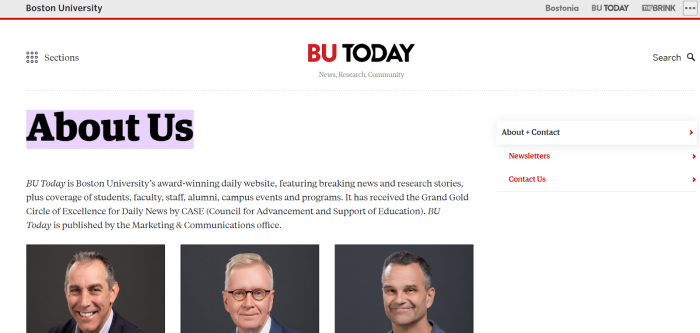
Example: Boston University runs an extensive content hub (“BU Today”) that publishes daily stories about student life, wellness, careers, research and more. This on-site news magazine – featuring contributions from students, faculty, staff, and alumni – builds trust and drives organic traffic by answering the questions prospective students are asking. BU Today’s engaging content strategy not only informs and inspires readers, but also strengthens the university’s visibility in search results through fresh, keyword-rich stories.
Students spend countless hours on social media, making it one of the most powerful tools for higher ed marketing. Platforms like Instagram, TikTok, YouTube, and LinkedIn allow universities to showcase campus life, share authentic stories, and build community long before students arrive on campus.
Tailor content to each platform: Instagram thrives on visual storytelling, TikTok on fun, viral content, YouTube on long-form video, and LinkedIn on alumni success. Meeting students where they are ensures your message resonates.
Authenticity wins: Many schools hand over the reins to students for “takeovers.” For instance, Babson College used Instagram takeovers for Q&As, giving prospects a candid look at campus life. Spelman College maximizes Instagram’s features—Stories, Highlights, and IGTV—to create a polished yet authentic presence that builds trust.
TikTok’s rise: Universities like Oxford and Indiana University leverage TikTok trends to humanize their brand and showcase student enthusiasm, boosting engagement dramatically.
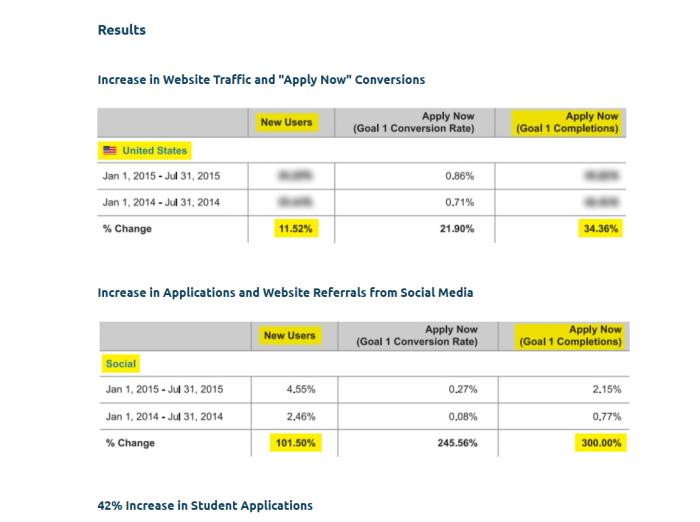
The payoff is real: John Cabot University increased applications by 42% after ramping up its social media presence. Done right, social platforms don’t just market a school—they cultivate belonging and amplify word-of-mouth.
Example: John Cabot University, an American-accredited university in Rome, overhauled its social media strategy to engage prospective students and saw remarkable results. By partnering with Higher Education Marketing and tailoring content to its audience, JCU achieved a 300% increase in applications coming directly from social media and a 42% overall rise in student applications. In practice, this involved creating more audience-targeted posts and campaigns that funneled followers to the admissions site – demonstrating how active social engagement can translate into measurable recruitment gains.
Organic content builds long-term visibility, but paid digital advertising delivers immediate reach. Pay-Per-Click (PPC) ads—on Google, Facebook, Instagram, LinkedIn, or YouTube—allow universities to target demographics, locations, and search intent with precision.
Search ads help institutions appear at the top of results for competitive terms like “MBA program online” or “study in Canada.” Even major universities bid on their own branded keywords to capture applicants searching directly for admissions. These ads often lead to optimized landing pages designed to convert interest into inquiries.
Social ads provide granular targeting. The takeaway? With smart targeting, strong creative, and optimized landing pages, PPC can deliver measurable results in recruitment, even on modest budgets.
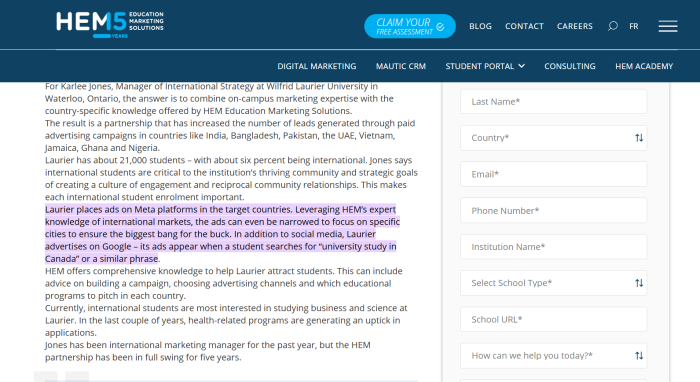
Example: Laurier employs highly targeted PPC advertising to reach international prospects in key markets. In partnership with HEM, Laurier runs country-specific campaigns on Google and Meta (Facebook/Instagram), even narrowing ads to specific cities to maximize relevance. For example, prospective students in India, Nigeria or Vietnam might see ads for Laurier programs, and search ads ensure Laurier appears for queries like “study in Canada university.” This precise targeting has boosted Laurier’s lead generation from countries such as India, Bangladesh, Ghana and more, illustrating how PPC can efficiently capture students in different regions.
Email remains one of the highest-ROI tools for higher ed recruitment. When a prospect shares their email, it creates an opportunity for personalized, direct communication that nurtures them through the enrollment journey.
Lead nurturing works best through sequenced emails—welcoming inquiries, highlighting programs, showcasing campus life, and reminding applicants to complete next steps. Segmentation and personalization make campaigns more effective: tailoring messages by program, audience type, or student behavior ensures relevance and boosts engagement.
Automation tools like HubSpot or Slate allow universities to trigger timely follow-ups—such as reminders for incomplete applications or pre-visit info before a campus tour. Done well, email serves as the connective tissue of digital strategy—tying content, events, and ads into one cohesive student journey.
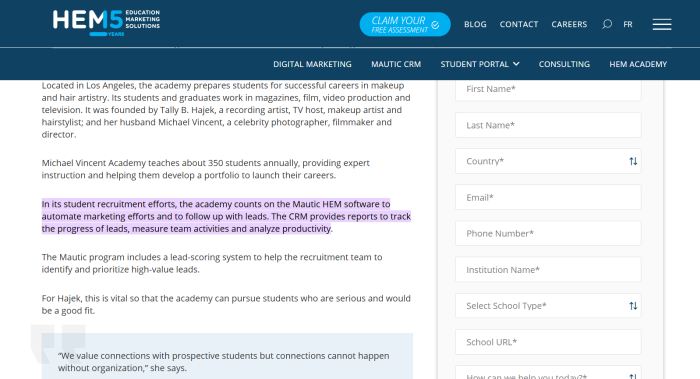
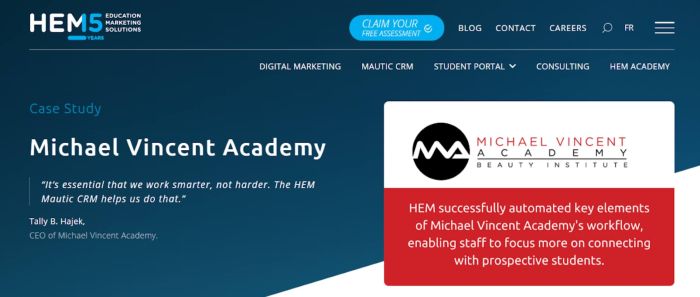
Example: Michael Vincent Academy, a private vocational school in Los Angeles, streamlined its recruitment process by implementing a customized CRM with marketing automation. The academy uses an automated system (HEM’s Mautic CRM) to follow up with every inquiry, score leads, and send sequenced emails. Routine tasks – from welcome emails to application reminders – are now handled automatically, allowing staff to spend more time on personal outreach to high-value prospects. The impact is significant: key elements of the follow-up workflow are now automated, improving efficiency and ensuring no prospective student falls through the cracks.
Pro Tip: Don’t overload inboxes—send 1 email every 7–10 days, keep designs mobile-friendly, and always include a clear call-to-action.
5. Website Optimization and User Experience (UX)
Your website is your digital campus, often the first impression prospective students have. A well-optimized site improves engagement and conversion by guiding visitors smoothly through their journey.
Mobile-first design is non-negotiable. With most students researching on phones, responsive layouts, fast load speeds, and intuitive navigation are critical. Google also rewards mobile-friendly sites in search rankings.
Clear navigation helps diverse audiences—prospective undergrads, grads, parents, international students—find relevant information quickly. Saint Louis University, for example, introduced an interactive admissions page with customizable “pathways,” simplifying content discovery and personalizing the student journey.
Engaging media like photos, videos, and virtual tours immerse visitors in campus life, while CTAs such as “Request Info” or “Apply Now” nudge them toward action.
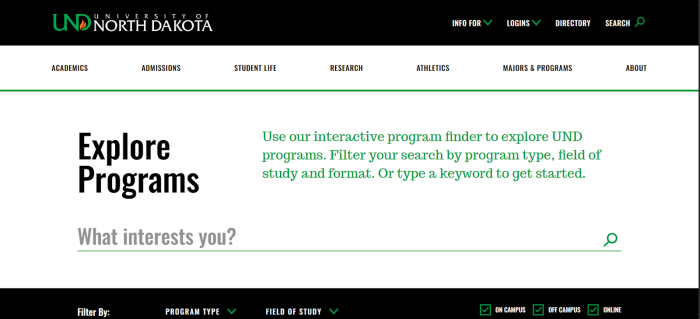
Example: University of North Dakota undertook a comprehensive website refresh that yielded strong results in both engagement and conversions. The new site introduced a powerful “Program Finder” tool giving prospective students one central place to discover academic programs by interest. The homepage and navigation were reorganized around key audiences (prospective undergrads, grad students, parents, etc.), making it easier for each group to find relevant info. UND also weaves in student stories and news in a way that reflects student life and values, rather than just facts. This focus on UX paid off: after launch, UND saw organic traffic climb and a 62% jump in undergraduate inquiries year-over-year, all while many peer institutions saw declines. It underscores that a fast, intuitive, mobile-friendly site can be a university’s best recruitment tool.
Pro Tip: Audit your site regularly—outdated info or broken links can undo even the best design.
6. Search Engine Marketing (SEM) and Local SEO
Search engine marketing ensures your institution is visible when prospective students actively look for programs. Beyond broad SEO, local optimization and targeted campaigns make a significant difference.
Local SEO helps capture location-based searches like “MBA in Toronto” or “universities near me.” Universities should claim and update their Google Business profiles, add campus photos, respond to reviews, and use city/region keywords across their site. For multi-campus schools, create individual location pages optimized with local terms.
Long-tail keywords are equally powerful. Students often search specific queries like “best undergraduate business programs for entrepreneurship.” Creating FAQ pages, blog posts, or landing pages around these terms captures highly motivated prospects. Likewise, many universities now optimize program pages with alumni career outcomes and salary data to rank for career-focused searches.
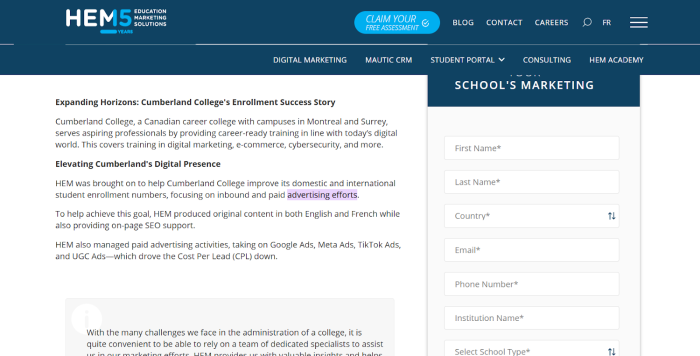
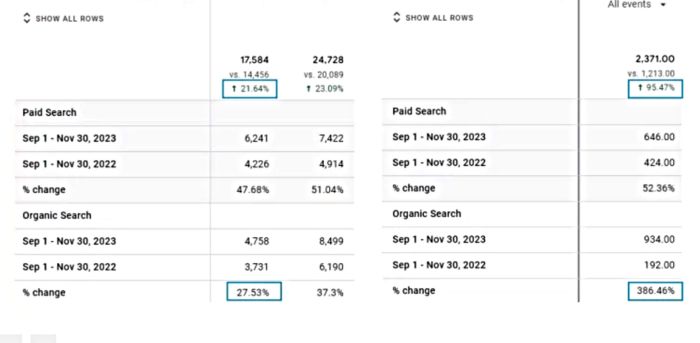
Example: Cumberland College, a career college in Montréal, used SEM and on-page SEO to significantly boost its visibility and inquiries. With expert help, Cumberland optimized its website content (in English and French) and refocused its keyword strategy – plus ran complementary Google Ads – to capture more search traffic. The impact was dramatic over a short period: organic web visitors rose by 27.5%, and overall leads (inquiries) jumped by 95% after the campaign, compared to the previous year. Even more striking, leads coming specifically from organic search increased nearly five-fold (a 386% increase) as Cumberland climbed higher in search results.
Pro Tip: Align SEM campaigns with the admissions cycle—boost spend before deadlines to capture undecided applicants.
7. Video Marketing and Virtual Engagements
In the digital era, video has become an incredibly powerful medium of digital marketing for colleges, and universities are uniquely positioned to leverage it. From campus tour videos and student vlogs to recorded webinars and live-streamed events, video marketing allows prospective students to experience a taste of campus life and academics from anywhere in the world. It’s engaging, shareable, and often more memorable than text.
Campus tours and virtual experiences: When students cannot visit in person (due to distance or as we saw during pandemic lockdowns), a virtual tour is the next best thing. Many universities now feature immersive 360-degree virtual campus tours on their websites. These let users “walk” through the quad, peek into classrooms, dorms, and labs, all from their computer or phone. It’s an interactive way to showcase facilities and atmosphere. Even a simple narrated campus tour video on YouTube can be effective – guiding viewers through major spots on campus while current students or staff explain highlights.
Storytelling through students: Prospective students trust their peers. “Day in the life” vlogs or testimonial clips highlighting internships and career outcomes resonate strongly. Short, authentic videos often outperform highly produced pieces.
Example: Montgomery County Community College (USA) grabbed attention with an award-winning recruitment video campaign. Their 30-second video spot, “You in Motion,” is a high-energy montage that inspires viewers to envision their success at the college. In that half-minute, the video communicates key value props – an affordable, top-notch education; extensive support resources; and a wide range of programs – all set to uplifting visuals of campus and student achievements. The campaign succeeded in exciting prospective students and driving home the message that at Montco you can “make your own momentum”. It’s a prime example of how concise, well-produced video content can boost a school’s appeal and conversion rates.
Source: YouTube
Takeaway: Video marketing builds trust through storytelling, making your institution both relatable and aspirational.
8. Data Analytics and Continuous Optimization
A major advantage of digital marketing for colleges is the ability to measure performance in real time. Universities that actively track and optimize campaigns consistently outperform those that rely on static strategies.
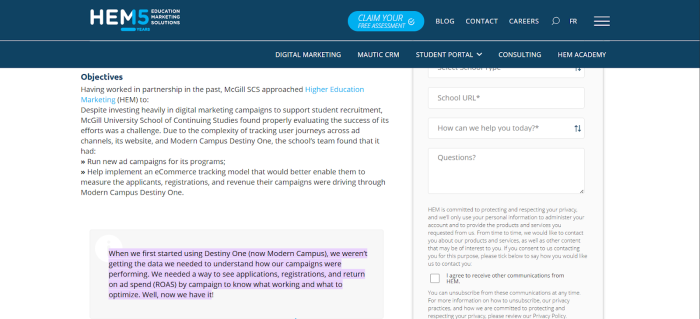
With tools like Google Analytics, CRMs, and marketing automation, schools can monitor conversions such as info requests, applications, and event signups, while attributing results to specific channels. For example, McGill University’s School of Continuing Studies implemented eCommerce-style tracking with HEM, enabling them to connect digital ad spend directly to applications and enrollment outcomes.
Example: McGill’s School of Continuing Studies struggled to connect its digital ad spend to actual enrollments – until it implemented an advanced analytics solution. Working with HEM, McGill SCS set up eCommerce-style tracking (via its Destiny One online registration system) to measure exactly how ads and web campaigns translated into applications, registrations, and revenue. This involved configuring Google Analytics and tag manager to capture each student touchpoint and conversion. The result was a newfound ability to make data-driven decisions on marketing: McGill can now see ROI by campaign and optimize accordingly, rather than guessing.
Optimization goes beyond tracking. A/B testing landing pages, refining email subject lines, or adjusting ad targeting can deliver significant lifts in conversions. Ultimately, analytics turn insights into action. By continuously refining campaigns based on real results, institutions ensure smarter spending, better engagement, and stronger recruitment outcomes.
Bringing It All Together
Digital marketing is no longer optional for universities—it’s the foundation of how students discover, evaluate, and choose their educational path. From content marketing and social media engagement to PPC, email nurturing, and data-driven optimization, each strategy plays a role in building trust and guiding prospects through the enrollment journey.
The institutions that succeed are those that take an integrated approach: aligning their website, campaigns, and student communications to deliver a consistent, authentic experience. Real-world examples—from Boston University’s content hub to McGill University’s data-driven enrollment gains—show how strategy translates into measurable results.
Ultimately, digital marketing is about connection. By telling authentic stories, engaging students where they are, and continuously refining based on analytics, universities can cut through the noise, reach the right audiences, and build relationships that last well beyond enrollment.
Done right, digital marketing doesn’t just attract students—it creates advocates who carry your institution’s story forward.
Struggling with enrollment?
Our expert digital marketing services can help you attract and enroll more students!
FAQs
Q: What is digital marketing in education?
A: Digital marketing in education is the use of online channels—such as websites, SEO, social media, email, and digital ads—to promote programs, connect with prospective students, and engage alumni. Unlike other sectors, the “product” is not just a service but an experience and long-term investment, so messaging must inform, inspire, and build trust.
Q: Why is digital marketing for universities so critical now?
A: The stakes are high. With declining enrollments and growing skepticism about the value of a degree, institutions are investing heavily in outreach.
Q: How much do universities spend on digital marketing?
A: Universities now spend between $429 and $623 per enrolled student, per year on marketing.
The first words I uttered after successfully defending my dissertation were, “Wow, what a ride. From Head Start to Ph.D.!” Saying them reminded me where it all began: sitting cross-legged with a picture book at the Westside Head Start Center, just a few blocks from my childhood home in Jackson, Mississippi.
I don’t remember every detail from those early years, but I remember the feeling: I was happy at Head Start. I remember the books, the music, the joy. That five-minute bus ride from our house to the Westside Center turned out to be the shortest distance between potential and achievement.
And my story is not unique. Every year, hundreds of thousands of children — kids whose names we may never know, though our futures depend on them — walk through Head Start’s doors. Like me, they find structure, literacy, curiosity and belonging.
For many families, Head Start is the first place outside the home where a child’s potential is nurtured and celebrated. Yet, this program that builds futures and strengthens families is now under threat, and it’s imperative that we protect it.
Years later, while training for high school cross-country meets, I’d run past the park next to the center and pause, flooded with memories. Head Start laid the foundation for everything that followed. It gave me structure, sparked my curiosity and built my early literacy skills. It even fed my short-lived obsession with chocolate milk.
More than that, Head Start made me feel seen and valued.
There’s a clear, unbroken line between the early lessons I learned at Head Start and the doctoral dissertation I defended decades later. Head Start didn’t just teach me my ABCs — it taught me that learning could be joyful, that I was capable and that I belonged in a classroom.
That belief carried me through elementary school, Yale and George Washington University and to a Ph.D. in public policy and public administration. Now, as part of my research at the Urban Institute, I’m working to expand access to high-quality early learning, because I know firsthand what a difference it makes.
Research backs up what my story shows: Investments in Head Start and high-quality early childhood education change lives by improving health and educational achievement in later years, and benefit the economy. Yet today there is growing skepticism about the value of Head Start, reflecting an ongoing reluctance to give early childhood education the respect it deserves.
If Head Start funding is cut, thousands of children — especially from communities like mine in Jackson, where families worked hard but opportunities were limited — could lose access to a program that helps level the playing field. These are the children of young parents and single parents, of working families who may not have many other options but still dare to dream big for their kids.
And that is why I am worried. Funding for Head Start has been under threat. Although President Donald Trump’s proposed fiscal 2026 budget would maintain Head Start funding at its current $12.3 billion, Project 2025, the influential conservative policy document, calls for eliminating the program. The administration recently announced that Head Start would no longer enroll undocumented children, which a group of Democratic attorneys general say will force some programs to close.
I feel compelled to speak out because, for our family, Head Start wasn’t just a preschool — it was the beginning of everything. For me, it meant a future I never could have imagined. For my mother, Head Start meant peace of mind — knowing her son was in a nurturing, educational environment during the critical developmental years. My mother, Nicole, brought character, heart and an unwavering belief in my potential — and Head Start helped carry that forward.
My mother was just 18 when she enrolled me in Head Start. “A young mother with big dreams and limited resources,” she recounted to me recently, adding that she had “showed up to an open house with a baby in my arms and hope in my heart.”
Soon afterward, Mrs. Helen Robinson, who was in charge of the Head Start in Jackson, entered our lives. She visited our home regularly, bringing books, activities and reassurance. A little yellow school bus picked me up each morning.
Head Start didn’t just support me, though. It also supported my mother and gave her tips and confidence. She took me to the library regularly and made sure I was always surrounded by books and learning materials that would challenge and inspire me.
It helped my mother and countless others like her gain insight into child development, early learning and what it means to advocate for their children’s future.
Twenty-five years after those early mornings when I climbed onto the Head Start bus, we both still think about how different our lives might have been without that opportunity. Head Start stood beside us, and that support changed our lives.
As we debate national priorities, we must ask ourselves: Can we afford to dismantle a program that builds futures, strengthens families and delivers proven returns?
My family provides living proof of Head Start’s power.
This isn’t just our story. It is the story of millions of others and could be the story of millions more if we choose to protect and invest in what works.
Travis Reginal holds a doctorate in public policy and public administration and is a graduate of the Head Start program, Yale University and George Washington University. He is a former Urban Institute researcher.
The Hechinger Report provides in-depth, fact-based, unbiased reporting on education that is free to all readers. But that doesn’t mean it’s free to produce. Our work keeps educators and the public informed about pressing issues at schools and on campuses throughout the country. We tell the whole story, even when the details are inconvenient. Help us keep doing that.
Steady lead generation for colleges and universities is what keeps enrollment strong. Without a consistent flow of qualified inquiries, even the best programs struggle to meet their targets. The challenge, however, is that prospective students now have more options than ever, online and on campus, at home and abroad. Competing for their attention requires more than just a few ads or a static website; it demands a thoughtful, multi-channel strategy that builds trust and delivers value.
The good news is that digital marketing offers powerful tools to do just that. From content that tells your school’s story to SEO, social media engagement, targeted ads, and personalized email campaigns, every channel plays a role in capturing interest and moving students closer to enrollment. Add in technologies like CRM systems, chatbots, and virtual events, and institutions can create highly tailored experiences that convert browsers into applicants.
This article explores nine proven strategies to boost lead generation for higher education in the current industry. We’ll highlight real-world examples, including case studies from HEM’s own work, and show how combining smart tactics with the right technology can help your institution attract, nurture, and convert more qualified student leads.
Struggling with lead generation?
Our expert digital marketing services can help you attract and enroll more students!
1. Leverage Content Marketing to Attract and Engage Prospective Students
Content marketing is one of the most reliable ways for higher education institutions to generate quality leads. By creating blog posts, videos, and downloadable guides that address real student questions, schools can attract organic traffic, build trust, and guide prospects through the enrollment funnel. Effective content also boosts SEO, keeping your institution visible when students search for programs or career paths.
How can content marketing help universities generate more leads? Content marketing attracts prospective students by answering their questions and showcasing institutional strengths. Blogs, guides, and videos build trust, improve SEO visibility, and highlight success stories. This engagement draws high-intent visitors to program pages, where they can convert into inquiries or applications.
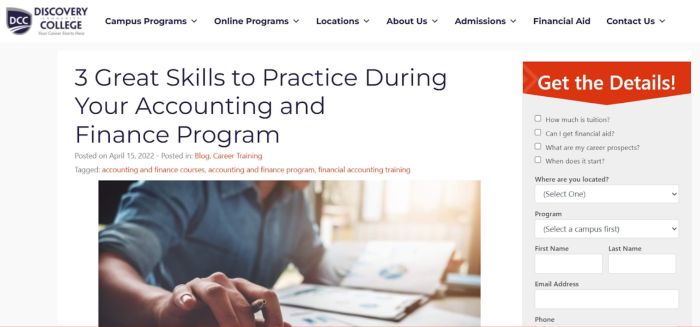
Example: Discovery Community College’s official blog uses program-specific keywords in post titles to boost SEO. For example, one post is titled “3 Great Skills to Practice During Your Accounting and Finance Program,” directly incorporating the Accounting and Finance program name. This keyword-focused approach makes it far more likely that the content appears in search results when potential students are googling that training area. By optimizing blog content for high-intent queries, Discovery Community College increases its visibility to the right audience and draws in quality traffic (prospects already interested in those programs).
Gated content like e-books or checklists can add another layer—prospects are more willing to share contact details if the resource provides clear value, such as a scholarship checklist or career outlook guide.
2. Optimize Your Website for Search Engines (SEO)
Even the best content won’t generate leads if students can’t find it. That’s why SEO is essential. Since most students begin their school search online, ranking on the first page of Google for program- and location-based keywords (“MBA programs in Canada,” “best nursing degree in Ontario”) is critical. The higher you rank, the more qualified traffic you attract.
Effective SEO starts with understanding what prospective students are searching for and weaving those terms naturally into your program pages, blog posts, and FAQs. On-page basics, like strong titles, meta descriptions, mobile-friendly design, and fast load times, should work hand in hand with technical SEO and local optimization.
How can universities leverage SEO to improve their lead generation efforts? SEO boosts visibility when students search for programs, scholarships, or career outcomes. By optimizing program pages, blogs, and local listings with relevant keywords, universities appear in top search results. This organic traffic delivers high-intent leads, students actively seeking education opportunities, directly into the recruitment funnel.
Example: Partnering with HEM, Cumberland College invested in multilingual SEO, optimizing its website in both English and French. Within a year, organic traffic grew by 27.5%, and leads from SEO traffic surged by 386%. This data-driven strategy directly fueled a 20–35% increase in new enrollments, proving how powerful SEO can be for lead generation for higher education.
3. Optimize Your Website’s Landing Pages and Lead Capture Forms
Attracting visitors is only half the battle; converting them into leads is what drives enrollment. Landing pages and inquiry forms are at the heart of conversion rate optimization (CRO) for higher education. With education landing pages averaging a 4.5% conversion rate, small improvements can mean a big jump in inquiries. To maximize results:
Mobile-first design: Students browse on their phones, so pages must load fast and display seamlessly.
Clear, concise copy: Use scannable headlines and bullet points to highlight benefits.
Prominent CTA: Each page should push one clear action: “Request Info” or “Register Now,” with an eye-catching button.
Short forms: Ask only for essential info (name, email, program interest). Long forms create friction.
Trust signals: Add student testimonials, alumni outcomes, or accreditation badges to reassure visitors.
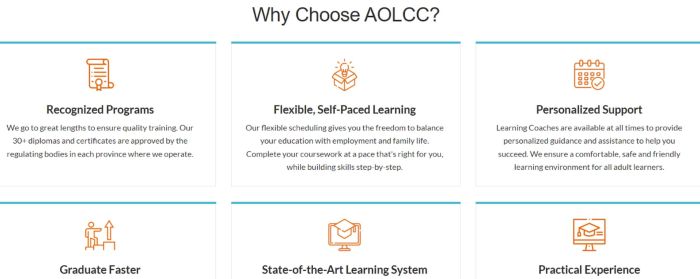
Example: The Academy of Learning Career College’s landing pages highlight clear program benefits and unique selling points to persuade visitors. AOLCC outlines its proposition value on landing pages, essentially listing what students gain from the program, and expands on each point to hold interest. By foregrounding these program benefits, AOLCC’s pages effectively communicate value and encourage prospects to take the next step (e.g., request info or apply).
4. Implement Chatbots and Live Chat for Instant Engagement
Today’s prospective students expect instant answers when they land on a university website. Chatbots and live chat make that possible, engaging visitors the moment they arrive instead of waiting for them to stumble upon a form. A chatbot that greets with a simple “Do you have questions about admissions or programs?” lowers barriers, creates an immediate connection, and often captures leads that would otherwise leave without taking action.
Configured well, education chatbots can handle common questions around deadlines, prerequisites, or housing 24/7. When a query requires a human touch, they can hand off to a live staff member or at least collect contact details for follow-up. This style of communication appeals especially to Gen Z, who spend significantly more time on messaging apps than older generations and respond well to the casual, conversational tone of chat.
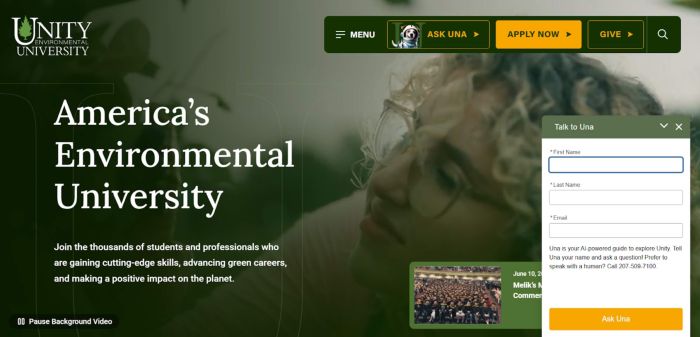
Example: Unity Environmental University launched an AI virtual agent named “Una” to assist prospective students in finding suitable programs and navigating the application process. According to Unity’s press release, Una is available 24/7 as a personalized guide, providing instant answers about admissions and even helping complete application steps.
From a practical standpoint, institutions can blend live and automated support depending on resources. Staff-led chat during business hours provides personal attention, while chatbots can cover after-hours. The key is visibility: a small but inviting chat icon, integrated with your CRM to capture leads automatically, turns your site into an “always-on” recruitment assistant. In higher education lead generation, that combination of accessibility, speed, and personalization is increasingly what sets strong digital strategies apart.
5. Harness the Power of Social Media Platforms
Social media remains one of the most powerful tools for lead generation for colleges. Prospective students spend hours daily on platforms like Instagram, TikTok, Facebook, LinkedIn, and X. Making these spaces essential for reaching and engaging them. Each channel serves a slightly different role: Instagram and TikTok connect best with high school and undergraduate audiences, LinkedIn appeals to graduate and professional prospects, while Facebook often reaches parents and working adults.
What role do social media platforms play in lead generation for higher education institutions? Social media connects universities with prospects where they already spend time. Authentic posts, student takeovers, and targeted ads spark awareness, build community, and drive traffic to lead forms. Engagement nurtures interest over time, transforming casual followers into applicants and amplifying recruitment campaigns.
To generate leads, institutions should focus on consistent posting, authentic storytelling, and quick responses to comments or direct messages. Content like student takeovers, alumni testimonials, and “day in the life” videos resonates strongly, helping prospects envision themselves at your school.
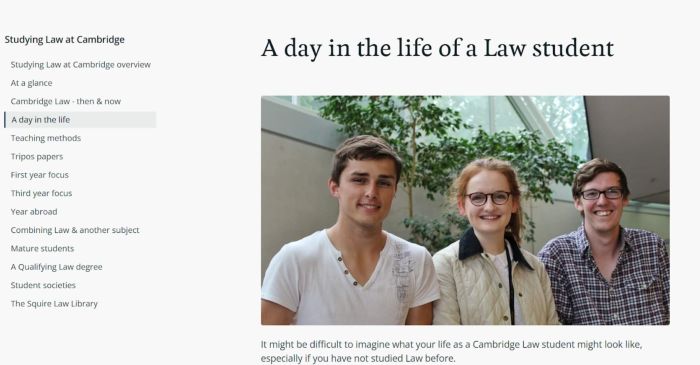
Example: The University of Cambridge leverages authentic, student-led “Day in the Life” videos on its official channels (website, YouTube, TikTok) to showcase everyday student experiences. These videos are produced through the university’s own outlets, not third-party media, ensuring they are direct primary sources from Cambridge. For instance, Cambridge’s Faculty of Law features a “Day in the life of a Law student” video on its official site and YouTube, where “three first year Law students, Robbie, Katie and Scott, give us an insight into a typical day in their lives, using hand-held cameras”. In this video, the students themselves film their lectures, study sessions, and social activities, offering a genuine glimpse into daily life in Cambridge.
Done well, social media builds community, nurtures awareness, and funnels engaged viewers toward applications or info requests.
6. Invest in Targeted Paid Advertising (SEM & Social Ads)
While organic search and social media build long-term visibility, paid advertising can accelerate lead generation for colleges by reaching the right students at the right time. Search engine marketing (SEM), such as Google Ads, is especially valuable for competitive programs or new offerings that don’t yet rank organically. Targeting keywords like “online MBA in healthcare” ensures your ads appear when students are actively searching, capturing high-intent leads ready to convert.
On social platforms, precise targeting by age, interests, location, or even undergraduate major allows you to reach audiences that align with your programs. Retargeting campaigns are equally powerful, reminding visitors who viewed your site or started an application to take the next step.
Example: Stenberg College leveraged Google Ads to attract more qualified leads for its healthcare and nursing programs. HEM’s case study notes that Stenberg uses Google Ads as a “key marketing tool to recruit students,” and with HEM’s expertise, the college’s ads now generate both more leads and better-qualified leads for admissions. The partnership allowed Stenberg to optimize keywords, ad creatives, and targeting, resulting in improved ROI on their ad spend and a healthier enrollment pipeline.
7. Nurture Leads With Email Marketing and Marketing Automation
Capturing a lead is only the start. The real work begins with nurturing that interest into enrollment. Email marketing remains one of the most powerful tools in higher ed lead generation, delivering an estimated ROI of $36 for every $1 spent. Students also welcome it: surveys show nearly 70% prefer to hear from institutions via email.
The key is relevance. Segment leads by program, stage in the decision journey, or demographics, and tailor messages accordingly. Personalization should go beyond using a first name. It should highlight specific programs, address common concerns, or share stories aligned with student interests. Mapping emails to the student journey also ensures prospects receive the right content at the right time, from early-stage guides to deadline reminders.
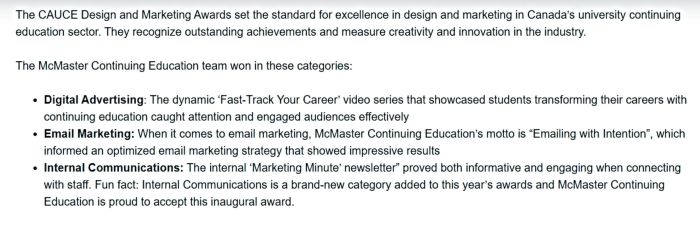
Example: By developing email campaigns tailored to specific learner personas (“Emailing with Intention”), McMaster’s Continuing Ed achieved email engagement far above industry benchmarks. In fact, its automated drip emails earned about a 27.9% open rate, outperforming average open rates (~21.5%) for education emails. This persona-driven strategy was recognized with national marketing awards, underscoring how segmenting messaging to audience needs leads to more engaged prospects and higher conversion potential.
8. Host Events and Leverage Virtual Engagement Opportunities
Events remain one of the most effective lead generation tools in higher education because they let prospects experience your institution firsthand. In-person open houses, campus tours, and information sessions build emotional connections as students meet faculty, see facilities, and imagine themselves on campus. From a lead gen perspective, event registrations and check-ins capture valuable contact information, which can then be nurtured with timely follow-up emails or calls.
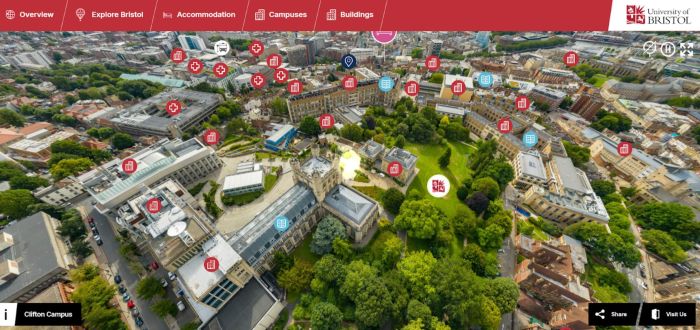
Virtual events have expanded this reach even further. Online open houses, live webinars, and 360° virtual tours allow schools to engage international prospects and those unable to travel. The University of Bristol, for example, hosts a dedicated page for virtual campus and city tours, giving global audiences a way to explore on their own time.
Example: Bristol has embraced virtual engagement to reach students globally. The university maintains a dedicated page for virtual events and tours, where prospects can take self-guided 360° campus tours and even explore the city online. During the pandemic, such virtual open days were crucial: over half of UK prospective students surveyed (59%) attended at least one virtual open day. By offering rich virtual events and tours, the University of Bristol kept students engaged during lockdowns and expanded its reach beyond those able to visit in person. This virtual strategy not only sustained interest through difficult times but continues to complement in-person events as a convenient lead generator.
The most effective events, whether in-person or online, blend interactivity with personal connection. Live chats, Q&As, and student ambassador involvement ensure attendees feel engaged, while follow-up communications help convert that interest into applications.
9. Utilize CRM Systems and Data Analytics to Refine Your Outreach
Behind every strong lead generation program is a system that manages, tracks, and optimizes outreach. A Customer Relationship Management (CRM) platform, such as HubSpot, Slate, or HEM’s own Mautic CRM, centralizes prospect data, automates follow-ups, and makes it easier to measure performance.
Every new lead, whether from a form, ad, or event, flows into the CRM, where it can be segmented, scored, and assigned to counselors. Automated workflows ensure timely engagement: for example, sending a personalized welcome email immediately after an inquiry and triggering reminders if no action follows.
Example:Michael Vincent Academy overhauled its recruitment process by adopting a customized CRM automation solution with HEM. Michael Vincent Academy automated key workflows using the CRM, which dramatically improved efficiency in managing inquiries. Staff could spend less time on manual follow-ups and more on building relationships with prospects. The result was a smoother funnel, inquiries were responded to promptly, and no prospective student fell through the cracks, ultimately leading to higher enrollment yields.
Analytics make this even more powerful. By monitoring lead sources, campaign performance, and student behaviors, institutions can refine targeting and invest where returns are strongest. Business School Lausanne, for instance, leverages data insights to optimize international outreach and ensure global diversity in recruitment.
In short, a data-driven CRM approach ensures no lead slips through the cracks and every prospect receives timely, personalized attention.
Integrating the 9 Strategies Into a Cohesive Lead Generation Plan
Effective lead generation in higher education isn’t driven by one silver bullet; it’s the outcome of multiple strategies working together. Content fuels SEO, SEO drives visitors to optimized landing pages, social media and paid ads amplify your reach, while email and CRM workflows nurture prospects into applicants. Layered on top, data and analytics help refine every stage, creating a cycle of attraction, engagement, and conversion that grows stronger over time.
Real-world outcomes show the power of this integrated approach. Webster University Geneva reported a 30% surge in enrollments through digital marketing and timely follow-ups, while Cumberland College doubled its lead flow by combining SEO content with paid ads and social engagement. Even more targeted initiatives, like Queen Anne’s School’s multi-platform ad campaigns or McMaster University’s persona-based email drips, prove that each tactic can meaningfully contribute to the bigger picture when executed strategically.
Think of your role as designing a system that balances creativity with data. Keep testing new formats, from TikTok challenges to interactive quizzes, while staying agile to shifts like AI tools or evolving privacy rules. Above all, keep the student experience front and center: personalization, authenticity, and responsiveness are what today’s learners value most.
By applying the nine strategies outlined in this guide, your institution can not only attract more qualified leads but also convert them into enrolled students in a sustainable, scalable way. Lead generation may be challenging, but with a student-first mindset and a data-informed strategy, you’ll build a steady pipeline of future students ready to join your community.
Struggling with lead generation?
Our expert digital marketing services can help you attract and enroll more students!
Frequently Asked Questions
Question: How can content marketing help universities generate more leads? Answer: Content marketing attracts prospective students by answering their questions and showcasing institutional strengths. Blogs, guides, and videos build trust, improve SEO visibility, and highlight success stories. This engagement draws high-intent visitors to program pages, where they can convert into inquiries or applications.
Question: What role do social media platforms play in lead generation for higher education institutions? Answer: Social media connects universities with prospects where they already spend time. Authentic posts, student takeovers, and targeted ads spark awareness, build community, and drive traffic to lead forms. Engagement nurtures interest over time, transforming casual followers into applicants and amplifying recruitment campaigns.
Question: How can universities leverage SEO to improve their lead generation efforts? Answer: SEO boosts visibility when students search for programs, scholarships, or career outcomes. By optimizing program pages, blogs, and local listings with relevant keywords, universities appear in top search results. This organic traffic delivers high-intent leads, students actively seeking education opportunities, directly into the recruitment funnel.
In today’s competitive digital landscape, higher education institutions must continually evolve to reach and engage prospective students. YouTube has evolved from a video-sharing platform into a dynamic search engine where students explore campus life, academic programs, and authentic student experiences. That’s why developing and optimizing a higher education YouTube channel is more important than ever.
Smart video SEO strategies can significantly improve visibility, build brand authority, and support enrollment goals for institutions. A well-crafted YouTube strategy plays a crucial role in this effort, ensuring that content reaches and resonates with prospective students.
Why YouTube SEO matters for higher ed video marketing
YouTube SEO goes beyond views. It positions your institution within one of the most influential search engines in the world. YouTube has become the second-largest search engine after Google, and for today’s prospective students — many of whom are digital natives — video is a primary method of discovery and research.
Whether exploring campus life, comparing academic programs, or seeking authentic student voices, prospective learners turn to YouTube to gather insights that influence their decisions. A well-optimized higher education YouTube channel offers a range of benefits, including:
Builds credibility and trust by providing authentic, engaging content.
Expands visibility on a platform used heavily by prospective students.
Drives enrollment by surfacing at key moments in the decision-making journey.
Strengthens your digital footprint through content that aligns with search behavior.
Supports multi-channel strategies by integrating with websites, email, and social media.
Improves AI-driven search visibility as AI-powered search results increasingly prioritize video content. (Tools like YouTube’s auto-transcription and AI tagging can further enhance discoverability.)
Optimizing your channel ensures your content appears when it matters most and positions your institution as a leader in digital engagement.
“Video content is the future of marketing—it’s authentic, engaging, and capable of building trust with your audience faster than any other medium.”
— Neil Patel, digital marketing expert
Build a strong SEO foundation for your higher education YouTube channel
Every video your institution shares is more than just content — it’s an opportunity to shape perceptions, highlight your strengths, and connect with your audience. Before diving into more advanced strategies, it’s essential to ensure that each video is built on a solid SEO foundation.
When executed consistently, these foundational elements can make the difference between content that gets buried and content that drives meaningful engagement. Foundational elements include:
Accurate video transcripts: Ensure transcripts are complete and error-free. This enhances accessibility and helps search engines understand your content. Also, include captions and alt text to enhance accessibility and meet ADA standards.
Optimized video settings: Configure each video correctly (e.g., mark as “not for children”, assign relevant categories, add strategic tags) to improve discoverability.
Robust video descriptions: Use keyword-rich, detailed descriptions aligned with your academic offerings. Think like a prospective student searching for programs or campus life.
SEO-friendly video titles: Titles should be compelling, clear, and keyword-focused. Avoid jargon — focus on what the viewer will gain.
Apply advanced channel strategies to stand out
Once the foundational elements are in place, it’s time to move beyond the basics. Elevating your higher education YouTube channel requires thoughtful planning and strategic segmentation. This is especially important for institutions with diverse academic offerings and multiple audiences, such as prospective undergraduate and graduate students.
Taking a more advanced approach can help differentiate your content, make navigation easier for users, and deliver tailored experiences that align with varied student needs. To elevate your channel’s performance and support segmented marketing goals:
Create dedicated channels: Maintaining separate channels for different audiences (like graduate versus undergrad) allows for more targeted messaging and cleaner audience segmentation.
Use playlists strategically: Group videos by topic or series and apply consistent naming conventions. This improves navigation, boosts engagement, and supports channel SEO.
Optimize thumbnails and preview content: High-quality thumbnails and concise preview text boost click-through rates, especially on mobile devices.
Ready for a Smarter Way Forward?
Higher ed is hard — but you don’t have to figure it out alone. We can help you transform challenges into opportunities.
Enhance viewer engagement
Even if your department isn’t directly producing every video, there’s still an opportunity to influence engagement and performance. By implementing a few proven tactics, institutions can increase viewer interaction and strengthen their presence on YouTube.
These strategies work in tandem with foundational SEO practices to extend the reach and impact of your video content:
Include clear calls-to-action (CTAs): Ask viewers to like, comment, subscribe, or visit your website. These actions signal relevance to YouTube’s algorithm.
Leverage end screens and cards: Use these to direct viewers to related content, encouraging longer sessions and deeper engagement.
Maintain consistent branding: Ensure videos reflect your institution’s visual identity and messaging tone to reinforce brand equity.
Integrate video into your broader strategy
YouTube content shouldn’t exist in a silo. When part of a cohesive higher ed video marketing approach, your higher education YouTube channel becomes a versatile asset that supports communication and engagement across platforms.
To truly maximize its value, it must be woven into your institution’s broader marketing and communication ecosystem. When aligned with your website, email campaigns, and social media channels, your YouTube strategy reinforces key messages and creates a cohesive experience for prospective students.
YouTube videos can be a powerful asset across multiple marketing channels:
Website integration: Embed program overviews, testimonials, and campus tours to enrich landing pages and drive engagement.
Email campaigns: Incorporate personalized video content into outreach and drip campaigns to boost open and click-through rates.
Social media amplification: Repurpose YouTube content into short clips for Instagram, TikTok, Facebook, and LinkedIn to reach broader audiences.
Virtual events and webinars: Leverage recorded content as follow-up resources or promotional teasers.
Advertising and paid media: Use high-performing videos in YouTube ads or across PPC campaigns to increase reach and ROI.
Stay agile and stay ahead
YouTube SEO isn’t a one-time effort — it’s a continuous process. Use YouTube Studio to track key performance metrics such as watch time, engagement, and search impressions. These insights help guide your strategy and identify opportunities to improve content.
Monitor analytics regularly, refresh metadata, and adapt to changing viewer behaviors. Institutions that stay agile will be better positioned to engage digital-native audiences.
Take your higher ed video marketing to the next level
YouTube remains a powerful tool to build institutional visibility and connect with prospective students. At Collegis Education, our expansive marketing services are backed by deep expertise in higher ed SEO, digital strategy, and content performance. Whether you’re refining your current efforts or starting fresh, a smart, scalable strategy can turn your YouTube channel into a powerful tool for student engagement.
Let’s connect and start building a smarter strategy today.
Innovation Starts Here
Higher ed is evolving — don’t get left behind. Explore how Collegis can help your institution thrive.