Not only is that 7 percentage points worse than the national average, but 48% represented a significant jump from pre-pandemic levels in 2019, when 36% of Oregon’s 4th graders tested below basic for reading.
The state’s latest reading scores are “disgraceful” and “unacceptable,” said Darcy Soto, director of learning acceleration at Portland Public Schools.
But unlike for the state at large, the Portland district has seen an increase — albeit a slight one of 1% — in reading scores since the pandemic, said Karla Hudson, program administrator for the district’s learning acceleration team. Still, Portland’s progress has been slow and incremental, she said, and less than 60% of the district’s students are proficient in reading.
“We have a lot of work to do,” Hudson said, which is why the 43,500-student district has zeroed in on providing high-impact tutoring.
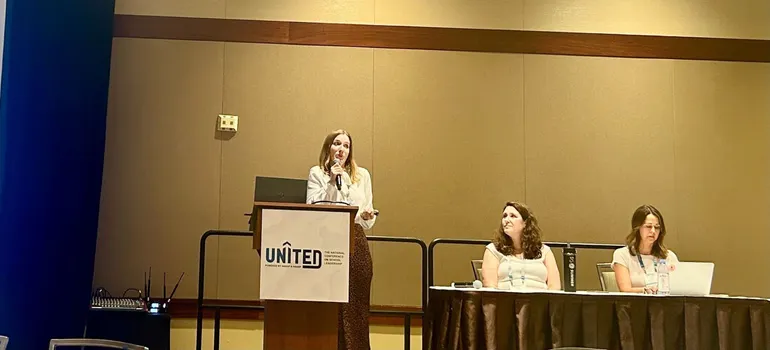
Joined by Stanford University’s Nancy Waymack, Soto and Hudson shared what Portland has learned from its efforts during a July 12 session at UNITED, the National Conference on School Leadership.
High-impact tutoring is a data-driven service that is embedded into the school day and uses consistent, well-supported tutors, said Waymack, director of research, partnerships and policy for Stanford University’s National Student Support Accelerator. The tutors use high-quality instructional materials and hold sessions at least three times a week in small groups of no more than four students, she said.
While teachers can be successful tutors, Waymack said, so too can community members like college students and retirees. Regardless, it’s important that students be able to build a relationship with their tutors, she said.
Data also plays a valuable role in tracking student progress throughout the tutoring, Waymack said. When tutoring occurs during school hours or shortly before or after class time, she said, research shows students are far more likely to attend sessions.
Years in the making
Portland began its early literacy tutoring program through a small after-school pilot initiative in 2021-22 at a few elementary schools for students in grades 3-5, said Soto. The pilot started to show “some really great outcomes,” she said, allowing the district to expand the program from 6 to 20 schools by the 2022-23 school year.
During those first two years, teachers were trained on the curriculum and paid for extended hours to tutor after school and. While that approach did improve students’ reading skills, Soto said, “it was very expensive” given teacher pay and the small student group size. This made the pilot difficult to scale to other schools.
As the tutoring program continued into the 2023-24 school year, the district began shifting to a more cost-effective model — especially as federal pandemic relief funds were sunsetting, Soto said.
By the 2024-25 school year, Soto said, the district used some of its last remaining Elementary and Secondary School Emergency Relief funds to partner with the Oregon Department of Education and Oregon State University to develop a free K-3 tutoring curriculum aligned with structured literacy instruction.
After successfully piloting the new curriculum in summer 2024, the district launched a $1.2 million program across 50 of its 58 elementary schools to serve over 1,200 students in 2024-25, Soto said. The program hired 152 tutors — mostly paraprofessionals — and was embedded during school hours during 30-minute blocks that didn’t interfere with core instruction.
Outcomes and what’s next
Portland attributes recorded a wide range of student outcomes to the tutoring program. One school saw an average growth of 91% on post-tutoring assessments, while another grew on average by just 18%, according to Soto.
The tutoring outcome data so far is “interesting and complex,” Soto said, but it still shows that the program is working.
However, as the district faces declining enrollment and big budget cuts, it has sought partnerships to keep it going, Hudson said. As a result, most tutoring for the 2025-26 school year will run through a community-based partner known as Reading Results with some in-house support and also a new AI literacy tutoring tool.
A majority of the funding will come from the district’s education foundation via a one-year, $1 million grant, Hudson said. The remaining funds will be from the state’s early literacy grant and a private foundation.
When the tutoring program gets underway in the new school year, Soto said her team will continue collecting feedback and data from participants. Sharing success stories, she noted, will help secure funding for the program’s future.
It also will be important to keep adjusting the model’s funding and structure as the district’s budget and capacity shift, Soto said.
This audio is auto-generated. Please let us know if you have feedback.
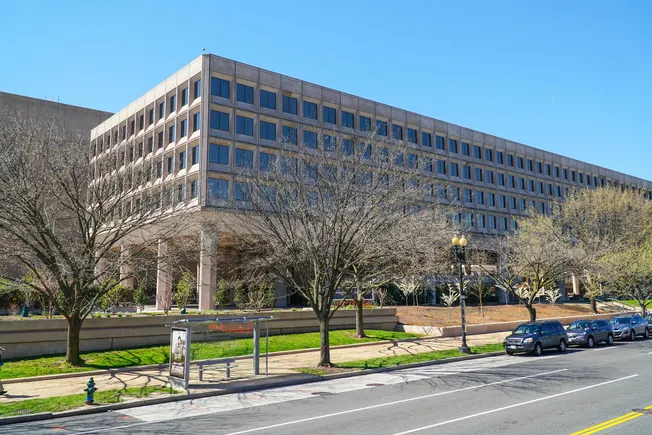
The U.S. Department of Energy delayed implementation of multiple rules that it had quietly set to go into effect this week for schools that receive funding from the agency. The move comes in response to public pushback to proposed policy changes.
The department said it was extending the effective dates for several direct final rules from July 15 to Sept. 12, 2025. The proposals would have undone some student protections related to sex discrimination under Title IX, disability discrimination under Section 504, and racial discrimination under Title VI.
One direct final rule, for example, would have no longer required schools to offer girls tryouts for boys’ teams in noncontact sports if the school didn’t have an equivalent girls’ team. Another would have removed protections allowing gender-conscious after-school programs or college initiatives to provide women and girls opportunities they have historically been denied, such as in STEM fields or in technical training.
Had the public not responded to the direct final rules with “significant adverse comments,” the rules would have undone such protections within a 30-day period — a much shorter timeline than the typical rulemaking process, which requires federal agencies to consider public feedback and make changes to their policy proposals accordingly.
The Trump administration’s decision to undo civil rights protections for students using expedited rulemaking — a process usually reserved for rules agencies expect to be uncontroversial — alarmed many civil rights organizations.
Kel O’Hara, senior attorney for policy and education equity at Equal Rights Advocate, called the move a “backdoor elimination of student protections.”
“The Trump Administration tried to exploit an obscure regulatory loophole meant only for minor administrative updates to gut fundamental protections for female athletes and transgender students,” O’Hara said in a Wednesday statement.
Typical rulemaking would require a public notice and comment period, and a second version of the rule that takes into consideration changes based on public feedback. That process also gives school districts more time to prepare for policy changes.
The rules were also atypical in that they were released by the Energy Department rather than the U.S. Department of Education — meaning only schools receiving Energy Department funding would have been impacted by this set of changes. The Energy Department gave 28 schools just over $160 million in fiscal year 2025, and provides over $2.5 billion annually to more than 300 colleges and universities to fund research.
However, had significant adverse comments not been received and delayed these rules’ implementation, and had the Energy Department been successful in its approach, the administration could have replicated the expedited method through other federal agencies to set education policies in many more schools, education policy experts predicted.
“This is a paradigm shift on the part of how the federal government articulates and connects some of these tools to their education priorities,” said Kenneth Wong, a professor of education policy at Brown University, when the direct final rules were announced. “Basically every single school, in practically every single school district, has some grants from one of the many agencies in the federal government.”
Most schools receive K-12 funding from multiple agencies, such as the Energy Department and the U.S. Department of Agriculture.
Because of the opposition to the rules, the Energy Department must now either withdraw them entirely or issue new final rules by September 12 that take the comments into account.
The Energy Department did not respond to a request for comment in time for publication.
RESTON, Va.(GLOBE NEWSWIRE) — K12, a portfolio brand of Stride, Inc. has been recognized for its steadfast commitment to quality education. In a recent review by Cognia, a global nonprofit that accredits schools, K12 earned an impressive Index of Education Quality (IEQ) score of 327, well above the global average of 296. Cognia praised K12 for creating supportive environments where students are encouraged to learn and grow in ways that work best for them.
For over 25 years, K12 has been a pioneer in online public education, delivering flexible, high-quality learning experiences to families across the country. Having served more than 3 million students, K12 has helped shape the future of personalized learning. This long-standing presence in the field reflects a deep understanding of what families need from a modern education partner. The recent Cognia review further validates K12’s role as a trusted provider, recognizing the strength of its learning environments and its commitment to serving all students.
“What stood out in this review is how clearly our learning environments are working for students,” said Niyoka McCoy, Chief Learning Officer at Stride, Inc. “From personalized graduation plans to real-time feedback tools and expanded course options, the Cognia team saw what we see every day, which is students being supported in ways that help them grow, stay engaged, and take ownership of their learning.”
K12’s impact extends well beyond the virtual classroom. In 2025, the organization was honored with two Gold Stevie® Awards for Innovation in Education and recognized at the Digital Education Awards for its excellence in digital learning. These awards highlight K12’s continued leadership in delivering meaningful, future-focused education. What sets K12-powered online public schools apart is a curriculum that goes beyond the basics, offering students access to STEM, Advanced Placement, dual-credit, industry certifications, and gamified learning experiences. K12’s program is designed to spark curiosity, build confidence, and help students thrive in college, careers, and life.
Through student-centered instruction and personalized support, K12 is leading the way in modern education. As the learning landscape evolves, K12 adapts alongside it, meeting the needs of today’s students while shaping the future of education.
To learn more about K12 and its accredited programs, visit k12.com.
About Stride, Inc.
Stride Inc. (LRN) is redefining lifelong learning with innovative, high-quality education solutions. Serving learners in primary, secondary, and postsecondary settings, Stride provides a wide range of services including K-12 education, career learning, professional skills training, and talent development. Stride reaches learners in all 50 states and over 100 countries. Learn more at Stridelearning.com.
eSchool Media staff cover education technology in all its aspects–from legislation and litigation, to best practices, to lessons learned and new products. First published in March of 1998 as a monthly print and digital newspaper, eSchool Media provides the news and information necessary to help K-20 decision-makers successfully use technology and innovation to transform schools and colleges and achieve their educational goals.
The Trump administration has waged its war on higher education on the battlegrounds of social media, press releases and on-air interviews. Shrouded in vague terminology and questionable legal authority, the public attacks are a stark departure from the channels the federal government traditionally uses to issue guidance and policy changes.
In March, we learned from the Department of Health and Human Services press office that it, along with the Department of Education and the General Services Administration, had started a comprehensive review of $54.1 million in federal contracts and $5 billion in federal grant commitments for Columbia University over alleged violations of Title VI of the Civil Rights Act. The next day, the president doubled down on social media, posting to the conservative site Truth Social, which he owns, that colleges and universities that allow “illegal protests” would be at risk of losing federal funding.
In May, during an ongoing public battle with Harvard University, Education Secretary Linda McMahon announced in a letter posted to the social media platform X thatthe federal government would no longer give grants to the institution. The document aired a litany of grievances against the institution including allegedly adopting a remedial math program and hiring “failed” former mayors Bill De Blasio and Lori Lightfoot; it also took aim at the Harvard Corporation’s senior fellow Penny Pritzker for being a “Democrat operative.”
The style and tone of communication goes beyond bombast and tells of a more coherent vision for the country, including higher education, according to Daniel Kreiss, the Edgar Thomas Cato Distinguished Professor in the Hussman School of Journalism and Media at the University of North Carolina at Chapel Hill and the faculty director and principal researcher of the UNC Center for Information, Technology, and Public Life. Issuing public threats, using pliable labels and making examples of individual colleges are tactics to control an autonomous sector and provoke widespread confusion, he said in an interview with Inside Higher Ed.
Colleges have little recourse to fight the full force of the federal government—legally or through publicity, Kreiss said, but he urged institutions to invest more in their local communities and to recommit to their teaching missions. He also explained why Vice President JD Vance’s autobiography is a great teaching tool.
(This interview has been edited for length and clarity.)
Q: The way the administration is communicating with higher ed is unlike anything the sector has seen before. Public letters and social media posts now deliver news of investigations, funding freezes or threats of future action. What does that reveal about how the government is thinking about its relationship with higher ed?
Daniel Kreiss
UNC at Chapel Hill
A: This is not the relationship, let’s say, between the U.S. government and research universities that prevailed from World War II on, when the government was collaborating with its research industries to make America stronger, militarily and economically. This is very much an adversarial relationship where the Trump administration is saying, “Universities and higher education broadly are making America weaker, and therefore we need to bring U.S. higher education to a heel in order to fit with our political vision for what America should be.” I think that some of the characteristics of the communication that you described is the strategy of policymaking through publicity, as well as the creation of a pervasive climate of uncertainty that is really directed by this core goal of theirs, which is control. In essence, what they want is for universities to fall in line behind the administration’s own vision and priorities for what the American agenda should be, which is one of a deeply reactionary, far-right coalition that is currently occupying all three branches of government.
Q: Do you think the administration has a vision for higher education in particular?
A: I think it’s a vision for America, and Trump has been remarkably clear on what that looks like. It’s an America defined pretty narrowly on racial, ethnic and religious terms. It’s an America that has a certain understanding of its history that aligns with those dominant religious, racial and ethnic groups. It’s an America that has doubled down on masculinity as its defining gender in terms of who should be in power and have power in public life. So when we talk about a vision for higher ed, it’s a higher ed that serves that.
This is what you see in these very vague pronouncements about things like DEI. Anyone who educates or does research on anything that runs counter to that celebration of a very particularistic America is suspect and un-American. Higher ed is part of a whole set of knowledge-producing institutions in society—we can think about journalists and scientists, too— as being problematic because they serve accountability functions. They hold corporations responsible for things like polluting. They hold executives responsible for violations of democratic norms. Or, you know, they hold people in power accountable for not being good custodians of public trust. I think the administration wants to weaken that accountability function that can be played by universities because it undermines, ultimately, their ability to exercise power in the service of that larger vision of what they believe America should be.
Q: You mentioned vague pronouncements about things like DEI. What conclusions do you draw from this tactic of sowing confusion and using unclear and undefined language?
A: Ultimately, the end goal is control. They have a few tools to do so—legal means, regulatory means—and they have a lot of funding means to get institutions that are otherwise autonomous in civil society to comply with what they want them to do. But in the absence of those levers, what do you use? Well, you use publicity to get willing compliance or anticipatory compliance.
This is really what’s key about the publicity piece, because every time they issue something on X or Truth Social or speak publicly about something, whether it’s a threat or making claims that a college is going to be investigated, they’re speaking to the sector as a whole. And publicity ensures that everyone in higher ed is going to have to be responsive to what they say, even if not publicly, but at least in internal decision-making.
If nobody really knows what DEI is, what discrimination actually entails, what threats are actually real and legal, who will be investigated and how, that creates conditions where every single university administrator has to act in some anticipatory way in order to mitigate a perceived threat, or to escape scrutiny. That ultimately increases this control over universities because they’re acting in ways that might comply in some way and likely are going far beyond what the law will actually allow. We can understand this by looking at other countries, like Hungary, for example. Viktor Orbán has created enough of a climate of both outright control and uncertainty over funding that people comply with what he wants them to do. He’s weaponized this to his advantage
The Supreme Court’s recent decisions have also played a role in this—in making it harder for [federal] judges to issue these broad injunctions. In essence, what they’re saying is that people are going to be anticipatory, interpreting whatever this public statement is in some way, and in the absence of any other guidance of what might be subject to judicial scrutiny or might be, let’s say, judicially suspect in itself, administrators are going to be making these decisions based on their own risk assessments.
Q: Speaking of the courts, we’ve seen a flurry of lawsuits challenging the administration, so some final decisions will be made on these issues at some point. Will that clarity roll back some of the pre-emptive compliance you’re describing?
A: Well the rub is the judicial process takes years. And administrators have to act now. And it’s in exactly that disconnect between that far-off time horizon of, “Oh, I’m sure our lawyers are telling us that this will likely get struck down” and in the meantime, you have to act on the basis of yearly budgets or what is in compliance with guidelines coming from the NIH or the NSF. All of those decisions have to be made in the moment, in a climate of uncertainty.
So in that context, no, the legal resolution is so far off, and the strategy of how to get there is so deeply unclear, that I don’t think higher ed’s in a great place to pursue judicial remedies for these things.
Q: We’ve got a number of examples of how institutions have responded to the administration—Harvard pushing back, Columbia and Penn conceding to demands, Jim Ryan resigning from the UVA presidency. Are universities at all prepared for how to handle this moment?
A: There’s a lot going on there, right? The best public case that we have for resistance is Harvard, but even while Harvard is negotiating, the Trump administration is continuing to put a lot of public pressure on it, which gets back to that earlier point that they’re speaking far beyond Harvard, saying, “If you do this, you will come under the full weight of federal government scrutiny, and we’re willing to have this battle.”
Universities are in a hard spot for a few reasons. One, collective action is really hard. Higher ed as a sector is deeply diversified, so the question is: Who’s in the best position to actually do that sort of fighting? The second is that every institution, no matter how large, is really complex. It’s hard to make a proactive case for anything, for just all of faculty, for example, let alone an entire university.
That said, there are a few effective models that we can begin to pick out. Harvard’s choice to double down on making an easily understandable argument for the value of higher education is our best public communication strategy—really doubling down on how universities are an economic engine for communities, states and America itself. When we’re talking about advancing science and technology, early research into artificial intelligence, the development of the internet—that all comes from university-led research that was funded, in part, through federal subsidies and research dollars. That has made America the leading country in technology innovation. This is where we get into a big tent with people from the Republican coalition who are pro-business and pro-corporations that are built on the infrastructure that universities help put together. We train the employees that go work for Fortune 500 companies that position America’s global dominance in its corporate workforce. It’s not saying we do everything, but we do a lot of really great public value work. And somebody needs to make that argument, because if no one is doing it, why would the American public come to these answers themselves?
Q: On the point about federally funded research at universities advancing technology innovation and the economy—is that argument lost on this administration?
A: My educated guess of why universities are this particular target in this particular way is that this is political. It’s not about America’s economic growth or America’s technological advantage at the end of the day. This is foremost a political strategy of mobilizing a set of grievances and victimhoods that help to build and maintain a coalition. It’s this idea that Trump’s electoral coalition is being continually victimized by being less safe. That America is losing its culture, its language, its identity, etc., through immigration. This has been the dominant drumbeat since Trump announced his candidacy for president in advance of 2016.
The other piece to this is the divide in the two parties between who has a college education and who doesn’t. This is a really important point that fuels the Republican Party’s coalition, and which is why attacks on higher ed, if we read them through the lens of publicity, are about identity work. [It’s] saying, “We are representing you people who never went to college against all these higher ed elites who don’t respect you, constantly denigrate America and who want us to be some cosmopolitan global force that’s going to undermine what makes America great.” That’s why, to me, it’s fundamentally political.
Q: Can you say more about the education divide among voters? How can colleges address that?
A:The New York Times did some great reporting maybe two years ago that gave universities social mobility scores. It was looking at which universities were the best vehicles of the American dream. One broad conclusion from that reporting was that a lot of universities are failing at this. Now, there’s all sorts of complicated reasons for that—income inequality generally, the finances of higher ed, etc.—but I think one thing that universities can very much do across the board is reinvest in opportunities for those who have the least amount of money or access to a college education.
I’m somebody who spent some time at very elite institutions, and, you know, they don’t always have great relationships with the communities that exist right next to them. If we’re thinking about what a model would look like to win people back to see these great advancements and their ultimate value for the American people, it would involve just trying to extend it locally. How do we create more affordable housing in towns where universities are located? How can we help people in communities where there’s vast income inequalities between the university and its surrounding environments? How do we get our deep wells of expertise and knowledge out into the communities closest to us in a way that clearly demonstrates through action, not just words or abstract statistics, our real value in people’s lives?
The last thing is that we need to reinvest in our teaching missions. Most professors I know care deeply about their students, but their time and attention is split in many different ways. We really need to restore commitment to that educational mission that we all have, at least for the very simple reason that students are the bridges to the communities that they represent. They’re our best messengers for what the value of this amazing institution of American higher education is. I have kids from all over the state, from all different walks of life—this idea is that what the university does is serve those students as well as their communities. The knowledge that students are bringing from those communities and the traditions that they are a part of flows into universities as much as knowledge is flowing out.
Q: In the swirl of staffing cuts and hiring freezes in response to federal funding cuts, are you concerned about what it means for science communication, fact-checking and efforts to combat misinformation?
A: At its best, science communication is scientists and social scientists making assessments based on the best available evidence that we have about a particular phenomenon in the world and society. We need people to play that function, because that’s the best evidence we have to make political decisions. We can have a range of possible political solutions to things as long as we’re safeguarding institutions that produce a set of public facts that we’re all sharing.
But as you know, science is complicated. There are always going to be debates. And that’s good. But when social scientists or scientists have a general consensus about something, it is the outcome of a very antagonistic process. Maybe that speaks to something that we used to have a lot more conversations around—explaining the scientific process and how hard it is to produce a fact, and how many millions of dollars go into producing research that can produce something as reliable as a fact.
We’re seeing this erosion of institutions that can serve the goals of public accountability, and it is deeply problematic for the field. So there’s going to be fewer people entering the field, because there’s less funding and fewer opportunities for them to do this work. The other thing is a lot of people make the choice not to go into doing disinformation-related research, in part, because it’s hard. We’ve seen doxing, death threats against researchers. It’s also the rhetoric, like when the vice president is calling somebody an “enemy of the people.” I taught JD Vance’s book to my undergraduates in 2017, and we had a great series of conversations about that book. I could have all sorts of differences with him, but I would never say JD Vance is an enemy of the people. It’s that deliberately inflammatory rhetoric that is exactly what a lot of researchers like myself are concerned about.
Q: Do you still teach Hillbilly Elegy to your undergrads?
A: That was a special one-off course, but I 100 percent would teach it again. It’s a great teaching tool and book, and I think it lays out a very particular and searing account of somebody’s upbringing while then prescribing a set of political responses that are thoughtful and can and should be debated in a classroom. It resonated with a lot of my students.
Even though there have been longstanding ideological differences across states, higher education leadership was largely insulated against these differences over the last half-century. Yes, they popped up in meaningful ways on topics such as South African divestment, affirmative action, and antiwar protests, but it was possible for university leaders to move from red states to blue states and vice versa. It helped to share the state’s political leanings, but it was generally not a requirement.
The last month has clearly shown that potential presidents now must pass an ideological litmus test in order to gain the favor of governing boards and state policymakers. Here are three examples:
Santa Ono’s hiring at Florida was rejected by the system board (after being approved by the campus board) due to his previous positions in favor of diversity initiatives and vaccine mandates. He tried to pivot his views, but it was not enough for Republican appointments on the board.
Six red states, led by Florida and North Carolina, are seeking to launch a new accreditor to break free from their longtime accreditor (which was the only major institutional accreditor to never have a DEI requirement, although their diversity page is now blank). Florida Governor Ron DeSantis used his press conference to go on a tirade against higher education, but the North Carolina system’s statement was more cautious, focused on academic quality.
The Trump administration’s Justice Department effectively forced out University of Virginia president James Ryan over his alleged noncompliance in removing diversity initiatives from campus. This effort was successful because Virginia’s Republican governor also supported removal and has the ability to push the institution’s governing board to take action.
While there has been a long history of politicians across the ideological spectrum leading universities (such as Mitch Daniels at Purdue, John King at the State University of New York, and Dannel Molloy at Maine), these politicians have generally set aside most of their ideological priors that are not directly related to running an institution of higher education. But now a growing number of states are expecting their campus presidents to be politicians that are perfectly aligned with their values.
There are two clear takeaways from recent events. The first is that college presidents are now political appointments in the same way that a commissioner of education or a state treasurer would be in many states. Many boards will be instructed (or decide by themselves) to only hire people who are ideologically aligned to lead colleges—and to clean house whenever a new governor comes into power. The median tenure of a college president is rapidly declining, and expect that to continue as more leaders get forced out. Notably, by threatening to withhold funding, governors do not even have to wait for the composition of the board to change before forcing a change in leadership. New presidents will respond by requesting higher salaries to account for that risk.
Second, do not expect many prominent college presidents to switch from red states to blue states or vice versa. (It may still happen among community colleges, but even that will be more difficult). The expectations of the positions are rapidly diverging, and potential leaders are going to have to choose where they want to be. Given the politics of higher education employees, blue-state jobs may be seen as more desirable. But these positions often face more financial constraints due to declining enrollments and tight state budgets, in addition to whatever else comes from Washington. Red-state jobs may come with more resources, but they also are likely to come with more strings attached.
It is also worth noting that even vice president and dean positions are likely to face these same two challenges due to presidential transitions and the desire of some states to clean house within higher education. That makes the future of the administrative pipeline even more challenging.
This audio is auto-generated. Please let us know if you have feedback.
Dive Brief:
Six of Indiana’s higher education institutions are moving to collectively cut or consolidate over 400 programs in the face of a state law taking effect Tuesday that aims to end academic offerings that award low numbers of degrees.
The programs on the chopping block account for 19% of all degree offerings at the state’s public higher education institutions.The colleges opted to consolidate 232 programs, suspend 101 and eliminate 75.
Under the new state law, public colleges must seek approval from the Indiana Higher Education Commission to continue degree programs that don’t graduate enough students to meet certain thresholds. If the commission doesn’t grant approval, colleges must eliminate those programs.
Dive Insight:
The new quotas are a part of a slate of last-minute provisions that Indiana lawmakers added to the state’s budget plan, which was signed into law in early May, to reshape college governance. Along with the quotas, lawmakers also implemented post-tenure reviews for faculty and gave Republican Gov. Mike Braun full control over selecting Indiana University’s governing board.
Braun praised the degree cuts and consolidations in a statement Monday, casting them as a way to ensure public colleges prepare students for in-demand fields and streamline their offerings.
“This will help students make more informed decisions about the degree they want to pursue and ensure there is a direct connection between the skills students are gaining through higher education and the skills they need most,” Braun said.
Under the new law, associate degree programs are on the chopping block if the average number of students they graduate falls under 10 students over the past three years, while bachelor’s programs are at risk if they graduate fewer than an average of 15 students. Master’s and doctoral programs have slightly lower thresholds — an average of seven and three students, respectively.
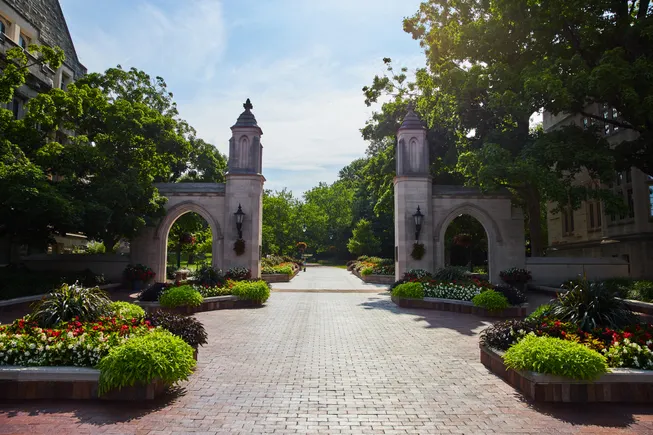
Indiana University is moving to cut or consolidate 249 programs across its campuses, the most out of the six institutions. Of those, the university is immediately eliminating 43, suspending another 83 and consolidating 123.
Indiana University Bloomington, the flagship campus, will see 116 degree cuts or consolidations.
The cuts and consolidations at Bloomington heavily impact programs in education, humanities and foreign languages, including bachelor’s programs in Spanish, French, Italian and Portuguese. However, they also include STEM programs, such as bachelor’s in statistics and atmospheric science.
Ahead of the news, some faculty members expressed concern they could lose their jobs due to the state law, Heather Akou, president-elect of the Bloomington Faculty Council, recently told WFYI.
“Even tenured faculty are wondering, am I going to have a job in two months?” Akou told the station. “We’re scheduled to teach classes. Will I be allowed to teach the classes I’m scheduled to teach this fall? I don’t know. That’s really the level of chaos and confusion that’s going on right now.”
An Indiana University spokesperson on Tuesday said that 27 programs would be created through consolidating other programs.The spokesperson did not answer questions about how the cuts and consolidations would impact faculty, but referred Higher Ed Dive to a university announcement detailing the changes.
Purdue University is moving to cut or consolidate 83 programs, followed by Ball State University (51 programs), Indiana State University (11 programs), Ivy Tech Community College (10 programs) and University of Southern Indiana (4 programs).
New social media privacy requirements come just as US government lifts four week-long study visa interview freeze, leading to fears of a backlog.
Concerns of added complications where consular officers responsible for social media vetting do not speak the applicant’s language.
Policy extends even to those who have been issued US visas in the past.
In an update sent to consulates last week, the US government has advised that all those applying for F, M or J nonimmigrant visas are “requested” to make their social media accounts available to view by anybody so that their identity can be verified and they can be thoroughly vetted before entering the country.
Immigration experts have criticised the move because of the huge additional workload it will place on immigration officers, meaning that visa issuance is likely to slow down considerably.
US immigration lawyer James Hollis said he “almost [felt] bad” for consular officers.
“It’s going to grind processing to a halt and will likely result in increased wait times for all nonimmigrant visas, let alone the student and exchange visitor applicants,” the business immigration specialist at the McEntee Law Group warned – noting that there are added complications where applicants were posting on social media in their own local language if officers do not understand what they have written.
It appears that the new policy will be mandatory from June 25 onwards, and all applicants will be vetted in this way even if they have been issued a US visa in the past.
It’s going to grind processing to a halt and will likely result in increased wait times for all nonimmigrant visas, let alone the student and exchange visitor applicants James Hollis, McEntee Law Group
Consulates are advised that they should consider whether active social media privacy settings “reflect evasiveness or otherwise call into question the applicant’s credibility”.
Officers have been told to reject a visa application in cases where the applicant has:
expressed “hostile attitudes” toward the US in terms of its citizens, culture, government, institutions, or founding principles;
advocated for or supported “designated foreign terrorists and other threats to US national security”;
shown or supported anti-semitism;
even if they have otherwise proven they are not an immigration risk;
and are not already ineligible for a visa (ie does not post a risk to US national security).
In these cases, the US can deny entry on national security or foreign policy grounds.
The US has asked visa applicants to provide social media information on their application forms for the past five years – including all social media names or handles of every platform they have used over the past five years. Failing to include this information could lead to an applicant’s visa being denied and being ineligible for future visas.
It comes after a tumultuous few weeks for prospective international students eyeing a place at US institutions. After stretching a study visa interview freeze into its fourth week – despite assurances that the pause would be quick – officials last week resumed interviews with additional social media vetting for applicants.
US stakeholders have repeatedly expressed concerns that the Trump administration’s extreme social media crackdown could inflict untold damage upon the country’s international education sector.
A torrent of controversy has erupted over the Trump administration’s decision to shutter the federal Department of Education. Critics howl that it will destroy public education in America. Supporters insist it will somehow make things better.
The only thing that’s clear is that our public education system is broken. It’s time for politicians to stop using education as a political football, with blue and red teams competing for control rather than sharing the responsibility to prepare our children for their futures.
The resulting chaos and confusion and rigid policies choke the joy out of learning and of working in our schools. Insufficient attention by leaders to education culture can result in fear and distrust, turf wars and a tendency to blame and make excuses for a lack of progress.
Such behaviors produce a toxicity that disables learning and disempowers leadership. Instead of increasing our nation’s economic prosperity, we’re deepening inequality, limiting opportunity and sadly wasting the potential of many children, on whose ability to thrive our country depends.
Poor work conditions, insufficient support, inadequate pay and limited career opportunities are among some of the reasons teachers are leaving and schools are struggling to attract top talent. Reductions in funding from the Great Recession through the present render our facilities dangerous in some instances and unwelcoming in others. Would you buy a house with barbed wire fencing and unkempt grounds that make you wonder whether the aim is to keep something out or in?
What should we do to change what is going on inside our schools?
We must first of all start working together to make our public schools great places to teach and learn.
Great places to work and learn are places that are well led, fueled by purpose and guided by shared, positive behaviors that advance learning goals and serve as “rules of the road” for how employees and students are expected to behave.
In great schools, employees, students and families are respected and valued. Leaders in great schools inspire their employees — all of them — to do more than they think they can. Employees align behind the purpose of enabling learning, which creates momentum and camaraderie for what they are working to attain together.
In great schools, leaders inspire their communities to join them in cheering for and supporting kids’ future successes. Families, no matter their socioeconomic status, feel a sense of belonging.
Problems are perceived as opportunities to get better, not sources of indiscriminate blame. Solutions are found by looking in the mirror first. External threats to learning, such as poverty or parents’ underemployment, are acknowledged and addressed. Schools don’t dodge their responsibility to educate all kids.
In great schools, kids are known by caring employees; they feel seen and heard and are deeply engaged and invested in their learning.
Every employee working in a great school district feels responsible for achieving the district’s mission, no matter whether they work inside or outside of the classroom.
When kids return after being absent, employees welcome them back, tell them they were missed and focus on catching them up. They do not judge the constraints of their families’ lives or mete out punishment as though missing school is a crime.
Great places to learn must also be great places to work. We must reframe our concept of schools as not just places where kids learn. Great places to work care about the needs of all the human beings in their care, including and especially their employees.
“To win in the marketplace, you must first win in the workplace,” Douglas R. Conant, former Campbell Soup Company CEO famously said. He knew what is becoming clearer within our public school systems — that unhappy, unfulfilled employees lead to high turnover, disengagement by students and staff and disaffected families turning to alternative educational offerings.
It is no secret that attracting and retaining top talent to work in our schools is increasingly difficult as employees seek more stability. Attracting younger workers is even more difficult.
Many of those who currently work in schools, especially teachers, are stressed, burned out and dissatisfied. Being stressed and burned out is not a normative experience; it’s a symptom of a weak culture, and an organizational problem to be solved. And employee turnover is no longer limited to teachers. There are increasing vacancies among principals, bus drivers and food service and facilities staff.
The quality of the experiences of employees working in our schools must be higher. Every point along the employee experience continuum, from applying for a job to choosing to leave, is an opportunity to deepen employee engagement and commitment to being a high performer.
We can fix what we have broken. Thinking differently about making our public schools great places to work and learn is a good place to start. No policy changes are required to demonstrate concern for the human beings the system employs and seeks to educate.
Etienne R. LeGrand is a thought leader, writer and culture-shaping strategist and adviser at Vivify Performance.
This story about school culture was produced by The Hechinger Report, a nonprofit, independent news organization focused on inequality and innovation in education. Sign up for Hechinger’s weekly newsletter.
The Hechinger Report provides in-depth, fact-based, unbiased reporting on education that is free to all readers. But that doesn’t mean it’s free to produce. Our work keeps educators and the public informed about pressing issues at schools and on campuses throughout the country. We tell the whole story, even when the details are inconvenient. Help us keep doing that.
I’d be hard-pressed to find any person in higher ed who has had a larger influence on my own thinking than James Lang. Many folks will know Jim from his books like Cheating Lessons, Small Teaching and Distracted. He’s consistently ahead of the curve when it comes to identifying a problem in teaching and learning spaces—academic dishonesty, class disengagement, student attention problems—and proposing remedies that instructors can explore and make use of for themselves.
His new book, Write Like You Teach: Taking Your Classroom Skills to a Bigger Audience, part of the University of Chicago Press series of guides to writing, editing and publishing, is the best book I’ve ever seen for showing academics how to translate their current skills and practices to another audience and purpose. I’m excited by this book because we need as many academics as possible putting their voices into the world, not just because they have so many interesting and worthwhile things to say as individuals, but because it also helps remind everyone about the value of institutions where this kind of work happens.
I had a great time talking to Jim over email. This Q&A even breaks some news on Jim’s next book, too.
Jim Lang is a professor of the practice at the Kaneb Center for Teaching Excellence at the University of Notre Dame, and an emeritus professor of English at Assumption University. He’s the author of multiple books, including Small Teachingand Distracted, and a longtime columnist for The Chronicle of Higher Education. You can follow him on Substack at A General Education or connect with him on LinkedIn.
John Warner: One of my favorite initial questions for people who write is if they enjoy writing. So that’s my question: Do you enjoy writing?
James Lang: “Enjoyment” doesn’t seem like the right word for my feelings about writing. Writing has always been the activity that drives and gives meaning to my life. It helps me make sense of the world; if I have deep questions about the purpose of my life, or questions about anything important, I seek answers through writing, both within my published work and in my various notebooks. I have always been a very curious person who gets excited about learning new things, so writing has always been a way to satisfy those curiosities and push me into new places in my life.
If I focus specifically on the emotion of enjoyment … I hate to admit it, but I don’t seem to enjoy the actual writing process quite as much as I used to. I think I had a more unreserved embrace of writing when I was younger, when I felt like I had a lot to say and was confident that I had the ability to say it. I think both of those feelings have diminished, which I attribute in equal parts to the stroke I had a few years ago and to my age. I had to learn to speak and write again after my stroke, and while I have regained all of the words and writing skills I had before, I have to work a little harder than I used to [to] call them up and apply them. But even beyond the stroke, I guess I feel less of a desire to announce my ideas confidently to the world than I once felt. I have a great family, lots of friends and ongoing interests in many areas of my life. As my appreciation for those things has increased, the available real estate in the enjoyment part of my brain has shrunk slightly.
But the key word in that sentence is “slightly.” I do still take much pleasure from finding the perfect word, crafting a great sentence or launching a new essay or book. Writing still fills my life with meaning, and I could never envision my life without writing, or at least the desire to write, being part of who I am.
Q: What you describe sounds a bit like a winding down or maybe a shift in focus? I often say about myself that I’m never going to retire because I can’t imagine not reading and writing, which is both my pleasure and my work. But I do sometimes wonder if there’s a space to do less of it, if that makes sense. But as you note, it seems impossible to shut off that curiosity that drives those activities.
Where does that curiosity come from for you? You’ve had a varied career and it seems like every so often you shifted gears. Was that necessity or design or something else?
A: It comes from both a negative and a positive place. The negative place is that I do get bored of routines in any form, and when I feel like my life has fallen into a routine place, I start getting this itch to break it. I received tenure in the usual time frame, and it was only a couple of years after that I was seeking a new challenge, so I applied to direct our honors program. I enjoyed that work tremendously, but then once again sought a change and founded a new teaching center on campus. Right after the pandemic, based on the success of Small Teaching and Distracted, I decided to give myself a new challenge: give up tenure and try to make it with a mix of writing, speaking and adjunct teaching. That plan was upended by my long medical ordeal, but even after I was able to return to that life, I realized that I missed deeply having a home on a campus, which led me to Notre Dame. So that has definitely been a pattern in my career and in my life.
For the positive explanation for this restlessness, I would point to something my wife (an elementary school teacher) told me about the kids who come into her classrooms each year. She says that while we might be all born curious, by the time children get into school, they are already separating in terms of how much curiosity they bring to school. The differentiating factor she sees is how much exposure kids have to different kinds of life experiences. The kids who sit in their bedroom on their parents’ tablets all day or play video games in their rooms just don’t see as much of the world, and they aren’t being prompted to ask questions, wonder and explore. The ones who come in curious are the ones whose parents have deliberately tried to expose them to new things in some form—trips, walks outside, reading aloud, giving them books, etc.
When I heard that, I realized that I had been raised as one of those latter kids. My mother was also an elementary school teacher, but her best years were in preschool. She had a special love, and special gift, for very young children. And while I have only a few memories of my preschool years, I know from seeing how she interacted with my children that I must have been raised to become a curious person.
Q: I had a mini epiphany while reading the opening section of Write Like You Teach, which is that good teachers and good writers think of the needs of their audience (students/readers) first. This is something I think I’ve always done as a teacher, perhaps because I was a writer before I was a teacher, but you make it pretty explicit and then give it a little specific flesh. When did this connection first come to you?
A: I actually can’t quite remember where that specific connection came from. I do know that this book really came out of my desire to write some more about attention, the subject of my previous book. I have written books about several major issues in teaching and learning, and some of them I finished and felt like I was done with that topic. That wasn’t true for attention. The more you read and learn about attention, the more you realize how it has a part in almost everything that matters in our lives. Work, play, relationships, spirituality, learning—all of them demand our attention. They often go well or poorly depending upon the quality of our attention. And so I still find attention fascinating, and I keep reading and thinking and writing about it. I also just really enjoyed writing the book Distracted. So I think maybe I was trying to determine what else I could write about attention which would relate to another area where I have some interest and expertise.
Reading was the initial bridge to further thinking about attention. Anyone who reads a lot knows that some books capture our attention more than others. I think the teaching-writing connection that produced this book came from realizing both in classrooms and books, you have to be aware of the limits of a learner’s attention. Both as teachers and writers, we can either just expect people to pay attention or we can try to help them. I had made the case for the latter approach in Distracted and realized I could make the same case to writers: If you want readers to sustain their attention over the course of many pages, don’t just bang away at them with paragraph after paragraph of argument and idea. They need breaks, they need stories, they need space to pause and think—just as students do in the classroom. Seeing how attention informs both teaching and writing led to the basic idea of the book: The things we do in the classroom to help students learn can also be useful for our readers.
Q: In a note at Substack, Arvind Narayanan (coauthor of AI Snake Oil) offered a “hypothesis on the accelerating decline of reading.” It’s got a bunch of bullets, so I’ll do my best to paraphrase: Essentially, people mostly read for pleasure or to obtain information. These functions have been replaced by other things. Video is more entertaining than reading. We can use large language models to summarize long texts and deliver information to us. He theorizes that most people will be happy with the trade-off of increased speed/efficiency, the same way we’ve gravitated toward “shallow web search over deeper reading.” He’s worried about this but also believes that merely “moralizing” about this is not going to be helpful. (I tend to agree.) I’ve argued for years that getting students engaged with writing is a great way to get them reading, because reading is the necessary fodder for writing. Writing is also a tremendous way to cultivate our ability to pay attention. I’m wondering if you’re worried in the same way as Narayanan or if you have any additional ideas of what we can do about this.
A: First, thanks for sharing that note, which will be helpful to me as I am working on my next project—which I am happy to announce here. My next book will be The End of Reading?, which will be published by W. W. Norton, a publisher whose books I have been reading since high school and assigning in my courses for my entire teaching career. I’m so excited to dig into this project, but I am going to beg off on an answer here because I am just in the beginning of my thinking and writing and need more time to formulate my ideas. Put another way: Ask me that question again in two years!
Q: I have sort of the opposite problem as the folks this book is addressed to, in that I find it very natural to write to regular people—because that’s where I started—while writing for more formal or academic audiences is something I can struggle with. What is it about the experience of the academic that makes the transition you’re writing about difficult?
A: The problem here is that experts often lose track of what novices don’t know in their fields. The more we know in a discipline, the further away we get from our memories of what it was like to know very little about biology or literature or politics. When academics write to each other, they can assume their readers know certain things: basic facts, theories, common examples or cases, histories, major players in the field. Let’s say I’m a scholar of Victorian literature and want to write something about a work of Victorian literature. If I am writing to other scholars in that field, I can be confident that my readers know things I know: the expansion of the British Empire during that time period, the impact of Darwin and evolutionary theory on many writers in that era, the political turbulence and social unrest accompanying the Industrial Revolution.
If I am writing to a more public audience, I can’t assume my reader knows any of that stuff. In a classroom, I can always stop and just ask students, “Have you heard of this before?” If they haven’t, I can give a quick introduction. But as a writer with deep expertise in a subject, I have no idea what a more public audience knows or doesn’t know. Faced with that problem, I think a lot of academics just say, “Never mind, I’ll just keep writing to my people.” And that writing is important and can be great! I love a good scholarly book, and I still read them regularly. That kind of writing also helps people get and keep academic jobs, so I am not on some crusade to encourage everyone to write for the public. But I think the major sticking point for people who do want to expand their audiences is thinking more deeply about their audiences: what they know or don’t know, why they are reading your work, and what you want them to take away from the experience.
Q: Something I’ve often said about both writing and teaching is that they are “extended exercises in failure,” where failure means not missing the target entirely, but falling short of one’s initial expectations. I find this reality interesting, fascinating, really, because with both activities, you usually get a chance to try again. Does this make sense to you, or do you have any different frames for how you view these two activities?
A: No absolutely, and in fact that framework applies to all of the pursuits that give me satisfaction, including the other major intellectual pursuit of my life: learning languages. I did not start learning other languages until my first year of high school, where I started with Latin. Immediately I was fascinated, and so in my junior year I added ancient Greek into my curriculum. When I got to college, I took classes in both those languages, and then also took French. Over the next 30 years I have gone back and forth with those original three languages and also tried to learn Spanish and Italian and German.
I start every new language with this expectation that this time I’m going to really dig in and master this thing and become just totally fluent. The truth is that I have some basic knowledge in all six of those languages but know none of them particularly well. But I just love the fact that I can go back to any of them, at any time, and start trying again. I’m 55, and my brain has a different shape than it used to (because of the stroke), so I have to be realistic and acknowledge that it’s unlikely that I will ever become a fluent speaker in any other language than English. But gosh, I just love to keep trying.
As you say, teaching and writing are the same. You start off with such hope and expectation and excitement: This will be the best class I will ever teach! This essay or book is the one that will change people’s lives! But it never quite works out that way. Even when you teach a great course, not every class period will be perfect. Not every student will have a great experience. When I look at my own books, I am proud of them but can see places where I cringe and wish I had done better. But I don’t feel defeated by those feelings: They make me want to keep trying.
Q: The book is filled with practical approaches to writing for broader audiences, but I wouldn’t quite call it a book of “advice.” The word that comes to mind is “guidance.” Does that distinction make sense to you?
A: This distinction matters a lot to me, actually. I think because of the success of Small Teaching, which had a lot of concrete pieces of advice, people can view me as a “teaching tips” guy. I do love learning and thinking about specific practices in the classroom, so I don’t wholly disavow that association. Presenting theories and big ideas about teaching only gets people so far; they need to envision what those theories look like when they are standing in the classroom on Tuesday of week seven with 20 blank faces in front of them. Describing examples of specific practices helps them with that imaginative work.
But I always want people to understand that I am not advising them to do anything in particular: I am showing examples designed to spur their own creative thinking. Write Like You Teach, for example, has a chapter about the challenge of reader attention, and I do offer some very concrete pieces of advice based on writing strategies that I have observed in great writers. Ultimately, though, I want the readers of my book to move beyond these specific examples and develop their own strategies based on the principle readers are learners, and learners need support for their attention. With that principle in mind, I want people to analyze their classroom practices and see what translates to the page.
That leads me to the final thing I want to say: The first and final goal of this book is to help academics feel empowered and enabled to write for the public. The prospect of doing that kind of writing can be intimidating, and many of us shy away from it. But if I can convince academics of this one principle—a great teacher can become a great writer—then I hope they will be able to develop their own writing practices based on their experiences in the classroom.
Q: And finally, the last question I ask everyone: What’s one book you recommend that you think not enough people are aware of?
A: When people ask me to recommend a novel to them, or when people ask me to share my favorite novel, I always mention two: Zadie Smith’s White Teeth and Arundhati Roy’s The God of Small Things. I am cheating a little bit here because both of these novels were very well-known when they were published, sold many copies and won prizes. But they are both a couple of decades old now, and I believe that their themes are as relevant today as they were when they were first published. If you are a word person, choose Roy, whose prose comes as close to poetry as a novel can get; if you love a great plot, choose Smith, whose genius shines through the ebullience of her narrative construction. If I were forced to choose between the two, I would choose … I can’t. I just can’t.
As a bilingual territory, Quebec offers students the chance to learn both English and French, which can be daunting for some. However, this bilingualism also provides a distinctive advantage in the global education market. This article explores how institutions like the Lester B. Pearson School Board are adapting to these changes and highlights key strategies for success.
Challenges and opportunities in Quebec
Quebec’s bilingual nature often makes it a secondary choice for international students who may prefer English-only environments. However, the opportunity to learn both languages can be a significant draw for students seeking to enhance their global competencies. Over the past two years, the field of international education has undergone significant changes, requiring institutions to adapt swiftly. Here are some of the changes:
New IRCC requirements since July 2023:
Revised funds requirement for study permit applicants, increasing the financial threshold to ensure students are adequately prepared for the cost of living in Canada.
End of the Student Direct Stream (SDS), affecting the expedited processing of study permits for certain countries.
Revision of programs eligible for post-graduation work permits (PGWP), limiting eligibility to specific fields of study and designated learning institutions.
Introduction of Provincial Attestation Letters (PALs), requiring students to obtain a PAL as part of their study permit application.
Adapting to new requirements: a strategic advantage
The introduction of PALs and the revised financial requirements had a minimal impact on the Lester B. Pearson School Board (LBPSB) due to Quebec’s existing Certificat d’acceptation du Québec (CAQ) process. The CAQ process already required higher financial proof than the new federal standards, positioning LBPSB at an advantage. This continuity ensured that our processes and requirements remained stable, providing a smoother transition for international students.
Shifting the message: beyond PGWP
Previously, programs eligible for post-graduation work permits (PGWP) were a major selling point, maintaining healthy student intake levels with minimal marketing effort. However, the focus has now shifted. The message is no longer solely about the PGWP; it is about acquiring a skillset that can be exercised globally. Montreal, an amazing student city, continues to be a prime study destination due to its quality of education, accessibility to higher education, cost of living, quality of life, and availability of a wide range of outdoor activities and hobbies. Montreal was always part of our marketing plan, but now it has become the marketing plan.
Maintaining stability and messaging
In the face of these changes, it is crucial to keep our messaging and name intact. As a public institution, the Lester B. Pearson School Board emphasizes stability and a long-term commitment to international education. Quebec offers an exceptional option for students to benefit from its established quality education system. Students study in state-of-the-art facilities, interact with local students, and immerse themselves in a new culture. This experience is not only about receiving a quality education but also about personal growth. The education and personal development gained here are invaluable and transferable anywhere in the world.
Addressing the housing crisis
While the housing crisis in Quebec is not as severe as in other parts of Canada, it remains a concern. The lack of housing has been cited as a key reason for limiting the number of international students in Canada, yet this approach overlooks a crucial fact: many international students, especially those in vocational programs like Lester B. Pearson’s, are essential to addressing the very housing shortage they’re being blamed for. These students are training to become carpenters, electricians, plumbers, and other skilled tradespeople—professions desperately needed to build more homes across the country.
To ensure accessibility to safe, secure, and affordable housing for international vocational students, the Lester B. Pearson School Board has partnered with 4Stay to offer a dormitory experience on campus for adult vocational students. This is a one-of-a-kind offering in Canada, with students enjoying turn-key housing, meal plans, and student life programming to ease their transition to life in Montreal.
About 4Stay
4Stay was founded by international students who experienced firsthand the challenges of finding student housing when they arrived in the United States for their education. Launched in 2016, 4Stay is driven by the mission to create a world where everyone has a “home away from home.” The company connects students and interns with local hosts, room providers, and roommates near their destinations, offering both short-term and long-term housing solutions.
4Stay works with educators and administrators to craft bespoke housing programs, tailored to the institution’s unique needs. Recognizing that every institution has their own set of unique interests, challenges, and strategic priorities, 4stay has a suite of services and strategies to source student housing options and manage them.
By providing affordable homes, 4Stay helps students find a supportive community that eases their transition to life in a foreign country. The company’s vision and values resonate deeply with the Lester B. Pearson School Board, making it an ideal partner to manage our student residence and enhance the student experience.
Building a supportive community
The partnership between LBPSB and 4Stay allows students to access residence options either as a short-term landing pad (up to three months) or as a long-term accommodation solution throughout their entire program. This initiative helps build a community of students who can support each other through the challenges of settling in a new country. By offering these housing solutions, the Lester B. Pearson School Board ensures that international students have a safe and welcoming environment, contributing to their overall success and well-being.
Conclusion
Adapting to the ever-changing world of international education requires innovative strategies and a commitment to providing comprehensive support for students. By leveraging Quebec’s bilingual advantage, shifting the focus of marketing messages, and addressing housing needs through partnerships like 4Stay, public institutions in Quebec can continue to thrive in the global education market. These efforts not only attract international students but also ensure they have the resources and community support needed to succeed in their academic and personal endeavors.
About the author:
Martine St-Pierre, MBA, is the director of international programs at the Lester B. Pearson School Board (LBPSB). With over two decades of experience in education, she oversees the recruitment and support of international students, ensuring they receive high-quality education and a welcoming environment. Her strategic vision and expertise have positioned LBPSB as a top choice for students worldwide.