Tag: Public

  • Supreme Court Must Not Undermine Public Education in Religious Charter Case – The 74

    Supreme Court Must Not Undermine Public Education in Religious Charter Case – The 74


    Get stories like this delivered straight to your inbox. Sign up for The 74 Newsletter

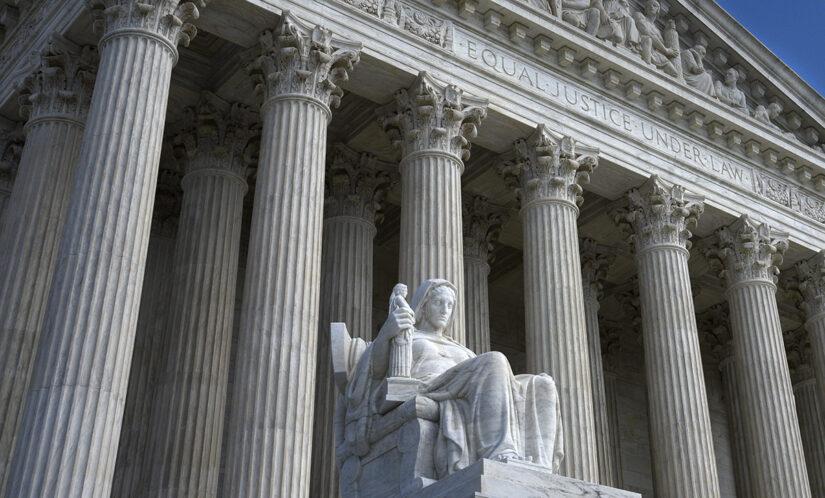
    Last week, the Supreme Court held oral arguments in a case that could undermine public education across America. The question the court is looking to answer is whether a religious institution may run a publicly funded charter school — a move that would threaten not only the separation of church and state, but the right of every student to access free, high-quality learning.

    In 2023, Oklahoma’s Statewide Virtual Charter School Board approved St. Isidore of Seville Catholic Virtual School, an action that would make it the nation’s first-ever religious charter school. It would be governed by Catholic religious doctrine in its syllabus, operations and employment practices. It would use taxpayer dollars to pay for religious instruction. And it could turn away students and staff if their faith or identity conflict with Catholic beliefs. 

    Here’s the issue: Charter schools were created to be public schools. They are open to all students, from every background, tradition and faith community. They are publicly funded and tuition-free. And they are secular. 

    That’s not an arbitrary distinction – it’s a constitutional one, grounded in the law and embedded in charter schools’ very design. The First Amendment’s Establishment Clause bars the government from promoting or endorsing any religion through public spaces or institutions. This foundational rule has ensured that students of all backgrounds can access public schools. It does not stifle religious expression — the Constitution fully protects this freedom, and religious education is available in other venues. Personally, I was, in fact, educated at Jesuit Catholic schools for my entire academic career. 

    Parochial education has long been an accepted and important part of the education ecosystem, serving a variety of students and often filling an important need. Religiously affiliated schools have a long history of educating and caring for children who are new to this country and underserved, and supporting families who are overlooked. But promoting the exclusive teachings of a specific religion with public funds in a public school violates a clear constitutional principle. 

    The issue isn’t only a legal matter; it’s about the character of public education itself. Muddying the boundary between public and religious institutions would undercut a fundamental commitment made by the nation’s public charter schools: that they are accessible to every student. It would undermine legal protections that keep public services available to the public. 

    Rather than creating more opportunities for America’s students, it would constrict opportunities for a high-quality education, especially in states that are hostile toward charters or alternative public school models. Legislative bodies could seek to eliminate funding for all unique school types if the court decision forced them to fund religious schools operating with public dollars. This would curtail or dismantle strong independent schools, 30-year-old public charter schools and schools with unique programs designed for special populations.

    As executive director of the DC Charter School Alliance, and a long-time public charter school advocate, I’ve seen the importance of public charter schools firsthand. Here in the District of Columbia, charter schools serve nearly half of the public school students in the city. Outstanding educators from all walks of life teach a wide range of subjects with enthusiasm and expertise to prepare young people for success. Our students bring to the classroom an incredible range of experiences, including faith traditions. And every student, family and faculty member is welcome. D.C.’s charter schools reflect a core American value: the promise of a high-quality public education for all. 

    The justices of the Supreme Court face a clear and critical choice: They can bolster that promise, or they can tear it down. If the court allows a religious school to operate with public funds, there is no doubt that it will open the floodgates to other proposals across the country. Taxpayers could be forced to foot the bill for countless new and converted schools, draining resources from an already financially strapped education system. True public charter schools — the ones committed to high standards, positive results and opportunity for all — could bear the cost. And the students who rely on them could suffer. 

    Public education is one of America’s most vital institutions. It offers all children, no matter their background or beliefs, access to free, high-quality learning. Charter schools play an essential role in making that promise real. But allowing a religious school to operate with public funds turns public education into something much more restrictive, dismantling its very foundation.

    The court must reaffirm this indisputable truth: Public schools should remain public — and open to all. 


    Get stories like these delivered straight to your inbox. Sign up for The 74 Newsletter

    Source link

  • NIH Speeds Up Implementation of New Public Access Policy

    NIH Speeds Up Implementation of New Public Access Policy

    The National Institutes of Health is accelerating a Biden-era plan to make its research findings freely and quickly available to the public, the agency announced Wednesday.

    The 2024 Public Access Policy was set to take effect Dec. 31, 2025, but will now take effect July 1 of this year. It updates the 2008 Public Access Policy, which allowed for a 12-month delay before research articles were required to be made publicly available. The 2024 policy removed the embargo period so that researchers, students and members of the public have rapid access to these findings, according to the announcement. 

    NIH director Jay Bhattacharya, who took over last month, said the move is aimed at continuing “to promote maximum transparency” and rebuilding public confidence in scientists, which has waned in recent years

    “Earlier implementation of the Public Access Policy will help increase public confidence in the research we fund while also ensuring that the investments made by taxpayers produce replicable, reproducible, and generalizable results that benefit all Americans,” Bhattacharya said in the memo. “Providing speedy public access to NIH-funded results is just one of the ways we are working to earn back the trust of the American people.”

    Although the scientific research community is supportive of the policy itself, some are calling on the NIH to reinstate the original implementation date to give researchers time to effectively comply with this and other new agency regulations. 

    “This new effective date will impose extra burdens on researchers and their institutions to meet the deadline,” Matt Owens, president of COGR, which represents research institutions, said in a statement Wednesday. “Ironically, at the same time NIH is accelerating implementation of this policy, the agency is adding new burdensome certification and financial reporting requirements for grant recipients. This runs counter to the administration’s efforts to reduce regulations.”

    Source link

  • Strengthening America’s Regional Public Universities

    Strengthening America’s Regional Public Universities

    Title: Regional Public Universities: Expanding Higher Education’s ROI for Student and Communities

    Authors: Cecilia M. Orphan and Mac Wetherbee

    Source: Third Way

    A new Third Way report urges tailored federal and state support for regional public universities (RPUs)—rural and urban alike—that educate the majority of four-year public college students and drive local workforce development.

    RPUs are “regionally-focused colleges and universities that education 70 percent of all students (nearly seven million annually) attending four-year public institutions in the United States each year,” according to the report. They offer accessible education to individuals throughout their adulthood while also training students to enter economically important jobs in a particular region.

    While there are different types of RPUs (e.g., regionally-focused HBCUs, master’s degree-granting RPUs, urban-serving MSIs, and Puerto Rican Hispanic-serving RPUs), about 49 percent of RPUs are considered rural-serving.

    Yet RPUs face low funding under broad policies and programs that also fund non-RPUs. As such, report authors Orphan and Wetherbee suggest the following policy recommendations:

    Develop a federal Region-Serving Institution designation. Creating an RPU designation that is akin to what already exists for MSIs could create a new wealth of opportunities for the institutions. Subsequent funding and opportunities could potentially serve students in more effective ways.

    Build funding partnerships between state and federal government. States can reassess their funding and find ways to invest in RPUs, and the federal government should encourage states to invest more in these institutions. Doing so can foster better statewide economic outcomes, as well as improved success metrics for students.

    Revise federal programs with RPUs in mind. Institutions are often required to provide matching funds to access certain Department of Agriculture and Department of Labor grants, an obstacle for many RPUs. The government should consider waiving these requirements for RPUs, as well as encouraging federal agencies to offer more programming supporting applied research at RPUs.

    Differentiate policies based on type of institution. Given the diversity of RPUs, multiple types can exist in the same district. Thus, policymakers should consider adapting policies to target the different types of RPUs and their needs.

    To see the full report, click here.

    Kara Seidel


    If you have any questions or comments about this blog post, please contact us.

    Source link

  • AGB Reports on Governing Boards’ Top Public Policy Issues

    AGB Reports on Governing Boards’ Top Public Policy Issues

    Concerns about the Trump administration’s plans for higher ed loom large in a new report by the Association of Governing Boards of Universities and Colleges, outlining the top public policy issues facing higher ed governing boards.

    The report looked at emerging public policy challenges through six different lenses:  

    • Accountability and regulation
    • Judicial outcomes
    • Political intrusion
    • Federal and state funding
    • Federal tax legislation
    • Intercollegiate athletics

    According to the report, boards could confront a wide range of issues in the 2025–26 academic year, including federal research funding cuts impacting university budgets, uncertainties about the future of federal financial aid, possible changes to the accreditation system, federal interference into institutional governance and shifting immigration policies affecting international student admissions and faculty hiring. The report raises additional concerns about how possible changes to the federal tax code could affect colleges and universities and how boards should respond to federal policies currently facing court challenges.  

    The report also offers lists of questions for boards to consider through each lens, like how students might be affected if income-contingent loan repayment programs undergo significant changes or how to honor donors’ intent for scholarships, endowed positions or research projects that could conflict with state or federal anti-DEI laws.

    “Governing boards have a critical role to play in ensuring that their institutions emerge stronger, more adaptable, and committed to their core educational values and must be prepared to confront policy shifts head-on,” Ross Mugler, AGB board chair and acting president and CEO, said in a press release. “This report provides the essential knowledge trustees need to make informed, strategic decisions that preserve institutional missions, ensure financial sustainability, and promote student success.”

    Source link

  • AI in private vs public higher education sector – Episode 164 – Campus Review

    AI in private vs public higher education sector – Episode 164 – Campus Review

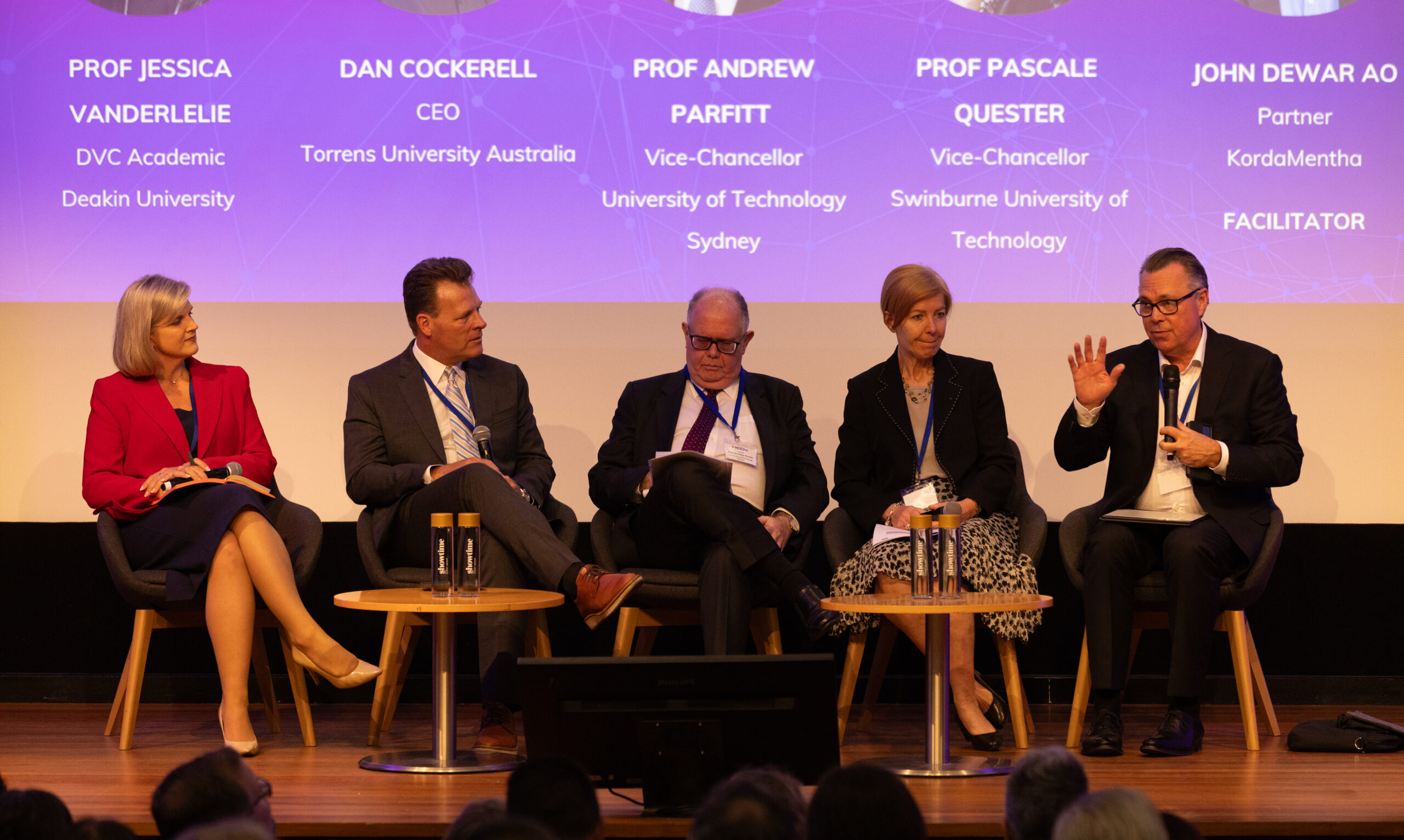
    Partner at consultant KordaMentha John Dewar led a panel of public and private university leaders that re-examined the sector’s current artificial intelligence (AI) strategies and opportunities.

    Please login below to view content or subscribe now.

    Membership Login

    Source link

  • Building a public transport agenda for commuter students

    Building a public transport agenda for commuter students

    If you have been to Greater Manchester in the last few years, you will have noticed that more and more yellow buses have started to appear.

    The Bee Network fully launched across the region on the 5th January 2025 – the yellow bus takeover is now complete.

    When all buses in the region became a part of the Bee Network – the integrated transport network for Greater Manchester – this was a significant moment for the city’s devolution journey. It became the first place in England, outside of London, to have buses back under public control.

    One of the Greater Manchester Student Partnership’s (GMSP) priorities is to improve students’ experience of transport across the region, the launch of the Bee Network is a key opportunity to make that happen.

    Institutions often define commuters differently and in Greater Manchester we already have a large proportion of students “traditionally” commuting. However traditional residential students are living further away from campus due to rising costs and are more reliant on public transport to get to classes.

    The GMSP has been thinking about how we can use the Greater Manchester Combined Authorities’ powers to support commuter students in their widest of definitions.

    A backdrop of devolution

    Since the coalition government of the early 2010s, devolution has been growing and Greater Manchester and the West Midlands have been the guinea pigs of the plan.

    Putting buses back under public control was a large part of the devolution deals and settlements, with the Bus Service Act 2017 being introduced so regions can take back control of buses.

    For context, in the 1980s bus travel in the UK was deregulated – anyone with a licence and a bus could run any bus service they wanted. The act allows Metro Mayors and in the future local authorities to franchise bus services. In doing so they can set up routes, tickets and costs for bus operators to bid for.

    Andy Burnham, the mayor of Greater Manchester, got the ball rolling on this quickly.

    In the 2024 general election, Labour had promised more devolved powers for regional mayors that have already been elected. In December, the government announced the Better Buses Bill which will give more powers to local authorities to own their own bus companies.

    Students use buses to get around their city but commuter students are not just reliant on buses, they are also reliant on trams and trains and other forms of transport.

    Building a student city

    The new bus fare cap rising will be a further strain on student cost of living and inevitably impact on student engagement on campus – for traditional commuters and residential students. The benefits of a mayor and devolved transport powers mean that isn’t the case here, fares are staying put at £2.

    As of last month, if you “tap in” on the tram and the bus with your contactless card, it all falls under the same ticket.

    This again is welcomed by GMSP, but this does not reduce the price of students who have to travel on both modes of public transport.

    This improves accessibility but not necessarily affordability.

    If they take multiple journeys a week on both a tram and a bus, it will cost £41. There is currently no student rate on trams or on the “tap in” system that is about to be introduced.

    From December 2026 until December 2028, the Bee Network will gain control of eight major commuter train lines. Greater Manchester could then become the best city for student public transport in the country, but only if Transport for Greater Manchester (TfGM), universities and student unions work together.

    Busy making promises

    The GMSP has been advocating for cheaper, more reliable transport with the mayor and TfGM.

    In 2022, officers from GMSP wrote to the mayor asking for a £1.50 bus single for all students. The mayor responded by saying that although he wanted to do something like this, until he had full control on the Bee Network, that would not be possible.

    In the mayor’s 2024 mayoral election manifesto, he announced at a mayoral hustings for students that he was to introduce a 18-21 monthly half price bus pass, bringing down the cost from £80 to £40.

    This was welcomed by GMSP to an extent, but we recognised that a lot of students, especially commuter students, do not fall into this category. And termly student tickets that are already on offer would work out cheaper for most students anyway.

    Since the Bee Network fully launched, we have seen no sign of this offer appearing.

    Student transport agenda

    The big question is, how can the universities, student unions and transport authorities work together to make life better for commuter students?

    Whilst we’re lucky in Greater Manchester to have a forum to meet with and discuss things like patronage, pricing and safety, getting all partners into the room is not as easy.

    We have big plans to make Greater Manchester the best place to be a student, and to do that we need to think big with things like creating a student living and staying strategy for the city region.

    This would bring together all these partners to create a long-term strategy for students in the city region, with one of themes being transport. Having these three partners working together is key for the success of any long-term transport strategy in the region.

    TfGM holds a lot of the power, including data on patronage and which routes students are using the most. Universities hold influence and potential financial influence, which could be beneficial for introducing new routes and discounting prices for students.

    Universities have a lot of data about students, especially on where they live, and that information could be used to target key routes for commuter students. And student unions are important as the voice of students.

    One of the mayor’s key aims for students in Greater Manchester is retaining talent. An element of this is making the Greater Manchester universities more attractive for potential students from Greater Manchester. If you want to make local universities more desirable for commuter students, improving the reliability, access and price of transport would go a very long way.

    Whilst Greater Manchester has a unique opportunity to improve the commuter student experience, more devolution is on its way. In the meantime, the more connections and collaborations that exist between local authorities, universities, student unions and transport providers, the better.

    Collaboration is key to making these ideas a reality and in building transport strategies in university towns and cities, commuter students need to be at the heart of decision making.


    This blog is part of our series on commuter students. Click here to see the other articles in the series.

    Source link

  • “Portrayed as a place that isn’t what I know it to be”: Professor Bell on ANU’s public perception

    “Portrayed as a place that isn’t what I know it to be”: Professor Bell on ANU’s public perception

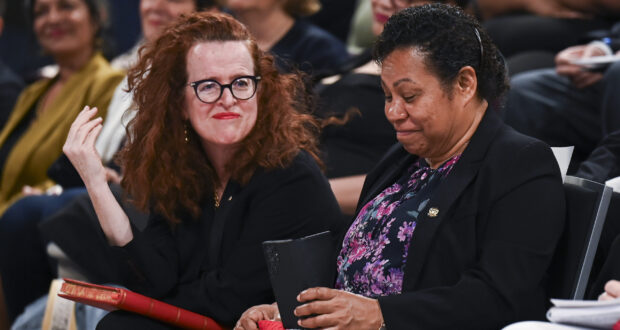
    ANU vice-chancellor Genevieve Bell with Rachel Marape at James Marape, the Prime Minister of Papua New Guinea’s address to the ANU in February, 2024. Picture: Martin Ollman

    Australian National University’s (ANU) vice-chancellor Genevieve Bell has made a statement confirming she plans to stand by her university after a “four-month negative media campaign.”

    Please login below to view content or subscribe now.

    Membership Login

    Source link

  • Kentucky Gov. Andy Beshear vetoes bill to ban DEI at public colleges

    Kentucky Gov. Andy Beshear vetoes bill to ban DEI at public colleges

    This audio is auto-generated. Please let us know if you have feedback.

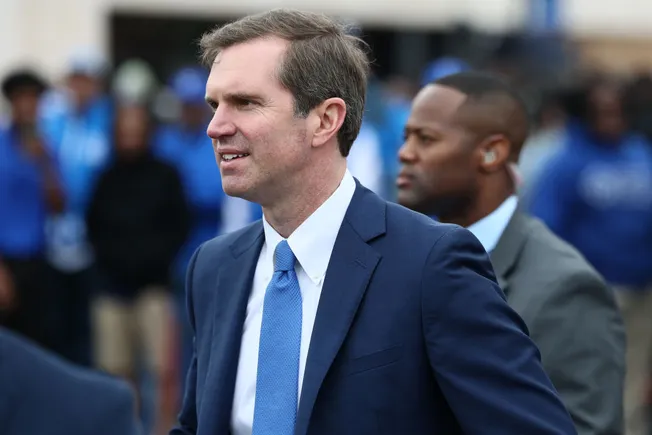
    Kentucky Gov. Andy Beshear on Thursday vetoed a bill aiming to ban the state’s public colleges from spending money on diversity, equity and inclusion efforts.

    “We’ve worked hard to make our commonwealth a welcoming place,” the Democratic governor said in a social media post Thursday. “House Bill 4 takes us away from that. We should be embracing diversity, not banning it.”

    But Beshear’s veto will likely prove to be strictly symbolic, as the state’s Republican lawmakers hold a veto-proof supermajority. 

    State Rep. Josh Calloway, a co-sponsor of the bill, said Thursday that the Legislature plans to override Beshear’s veto next week and blasted the governor’s decision.

    “His veto of our bill to end DEI in colleges is nothing but political theater, and the people of Kentucky see right through it,” he posted on social media.

    The legislation — which offered exemptions for programs required by federal and state law — also seeks to bar colleges from requiring students to take classes that would “indoctrinate participants with a discriminatory concept,” which it defines as promoting “differential treatment or benefits conferred to individuals on the basis of religion, race, sex, color, or national origin.”

    And it would prohibit Kentucky’s higher education coordinating board from approving degree programs with such courses, as well as ban colleges from using diversity statements or requiring employees to undergo DEI training.

    The American Civil Liberties Union of Kentucky praised Beshear’s decision. 

    “Thank you, Governor, for recognizing that diversity makes us stronger, equity makes us fair, and inclusion is a Kentucky value,” the organization said on social media Thursday.

    Should the lawmakers enact the legislation, public colleges would have until the end of June to eliminate all DEI positions and offices.

    Kentucky colleges are facing attacks on DEI at the federal level as well.

    The University of Kentucky is one of more than 50 colleges facing investigations by the U.S. Department of Education over allegations that they offer programs with race-based restrictions.

    On Wednesday, university President Eli Capilouto said that his institution had minimal engagement with the The PhD Project, the organization at the center of the majority of the department’s probes. 

    Nevertheless, Capilouto said the University of Kentucky had formally cut ties with the group and will fully cooperate with the federal investigation. 

    The university previously eliminated its DEI center in August, citing looming state legislation.

    Source link

  • Arizona Republicans Want Chaplains to be in Public Schools – The 74

    Arizona Republicans Want Chaplains to be in Public Schools – The 74


    Get stories like this delivered straight to your inbox. Sign up for The 74 Newsletter
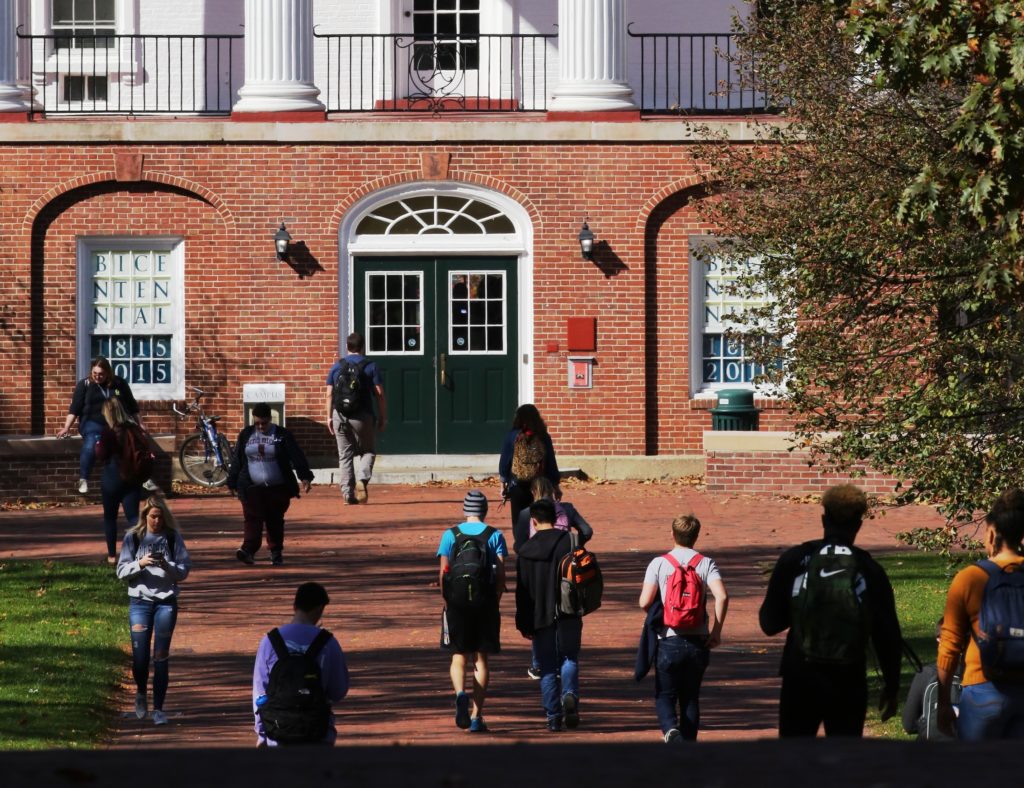
    Republican politicians who accuse public school teachers of indoctrinating students with a “woke agenda” are pushing to bring religious chaplains into the same schools to provide counseling to students.

    “I think Jesus is a lot better than a psychologist,” Rep. David Marshall, R-Snowflake, said during a March 11 meeting of the Arizona House of Representatives’ Education Committee.

    Marshall said that he’s been a chaplain who provides counseling for 26 years.

    Senate Bill 1269, sponsored by Flagstaff Republican Sen. Wendy Rogers, was modeled after similar legislation passed in recent years in Texas and Florida.

    The proposal would give school districts the option of allowing volunteer religious chaplains to provide counseling and programs to public school students. Districts that decide to allow chaplains would be required to provide to parents a list of the volunteer chaplains at each school and their religious affiliation, and parents would be required to give permission for their child to receive support from a chaplain.

    Despite ample concerns that the proposal violates the First Amendment’s Establishment Clause and that it would open up schools to legal liability for any bad mental health advice a chaplain might provide, the bill has already passed through the Senate on a party-line vote. The House Education Committee also approved it along party lines.

    Rogers told the Education Committee that the existence of any requirement for the separation of church and state in U.S. law “was a myth,” adding that she sees no harm in bringing religion into public schools.

    Rogers, a far-right extremist, has embraced white nationalism, and in 2022 spoke at a white nationalist conference, calling the attendees “patriots” and advocating for the murder of her political enemies.

    She has also said she is “honored” to be endorsed by a prominent antisemitic Christian nationalist and regularly trafficks in antisemitic tropes. And Rogers has advocated racist theories, appeared on antisemitic news programs and aligned herself with violent anti-government extremists.

    Democrats on the committee raised the alarm that Rogers’ bill would violate the Establishment Clause by allowing chaplains with religious affiliations to counsel students, while not providing the same kinds of services to students who don’t follow a religion or who follow a less-common religion with no chaplains available to the school.

    An amendment to the bill, proposed by committee Chairman Matt Gress, a Phoenix Republican, requires that the chaplains be authorized to conduct religious activities by a religious group that believes in a supernatural being. The amendment would also allow a volunteer chaplain to be denied from the list if the school’s principal believes their counsel would be contrary to the school’s teachings.

    Both of these changes would allow districts to exclude chaplains from The Satanic Temple of Arizona, a group that doesn’t believe in a higher power but promotes empathy and has chapters across the country that challenge the intertwining of Christianity and government.

    Oliver Spires, a minister with The Satanic Temple of Arizona, voiced his opposition to Rogers’ bill during a Feb. 5 Senate Education Committee meeting.

    The legislation, Spires said, would disproportionately impact students from minority religions who see Christian chaplains providing support to their peers while no chaplains representing their religion are available.

    “If a district listed a Satanist on their chaplain list, would they have your support?” he asked the committee members.

    Gress’s amendment would preclude that.

    Gaelle Esposito, a lobbyist for the American Civil Liberties Union of Arizona, told committee members on Tuesday that school counselors are required to undergo specialized training to prepare them to help students — requirements that religious chaplains wouldn’t have to meet, even though they’d be providing similar services.

    “They will simply not be equipped to support students dealing with serious matters like anxiety, depression, eating disorders, self harm or suicidal ideation,” Esposito said. “Religious training is not a substitute for academic and professional training in counseling, health care or mental health… Even with the best intentions, chaplains may provide inappropriate responses or interventions that could harm students.”

    But as Democrats on the House Education Committee argued that Arizona should provide more funding for trained counselors and social workers to help students with mental health issues, the Republicans on the panel said that students are actually struggling with mental health issues because they don’t have enough religion in their lives.

    “I’ve heard that there is a mental health crisis afflicting kids,” Gress, a former school board member, said. “Now, I don’t necessarily think in many of these cases that something is medically wrong with these kids. I think, perhaps, there is a spiritual deficit that needs to be addressed.”

    Rep. Justin Olson, R-Mesa, said he’s been frustrated by the federal courts’ interpretation of the First Amendment to require the separation of church and state, claiming it has made the government hostile to religion instead of protecting it.

    “I heard comments here today that this is going to harm kids — harm kids by being exposed to religion? That is absolutely the opposite of what is happening here today in our society,” Olson said. “We have become a secular society, and that is damaging our society. We need to have opportunities for people to look to a higher power, and what better way than what is described here in this bill?”

    Democratic Rep. Nancy Gutierrez, of Tucson, called SB1269 “outrageous” and “incredibly inappropriate.”

    And Rep. Stephanie Simacek, of Phoenix, pointed out that the courts have repeatedly ruled against allowing religious leaders to be invited to share their faith with public school students. She described Rogers’ bill as indoctrination that gives preferential treatment to students who have religious beliefs over those who don’t

    “No one is saying that you may not go and celebrate your God, however you see fit,” Simacek, a former teacher and school board member, said. “But this is not the place, in public education, where our students go to learn math, reading and writing and history.”

    Florida’s school chaplain law, which went into effect last July and is similar to Rogers’ proposal, has received ample pushback from First Amendment advocacy groups, as well as some church groups who said that allowing untrained chaplains to provide mental health support to students would have unintended negative consequences.

    The option to bring chaplains into schools in Florida has not been particularly popular, with several large school districts deciding not to implement a program allowing them.

    Proposed legislation similar to SB 1269 has been introduced in red states across the country this year, including in Indiana, Nebraska, Iowa, Montana and North Dakota.

    The bill will next be considered by the full House of Representatives. If it passes the chamber, it will return to the Senate for a final vote before heading to Gov. Katie Hobbs.

    Arizona Mirror is part of States Newsroom, a nonprofit news network supported by grants and a coalition of donors as a 501c(3) public charity. Arizona Mirror maintains editorial independence. Contact Editor Jim Small for questions: [email protected].


    Get stories like these delivered straight to your inbox. Sign up for The 74 Newsletter
    Source link

  • UPDATE: Another federal appeals court backs academic free speech for public employees

    UPDATE: Another federal appeals court backs academic free speech for public employees

    The U.S. Court of Appeals for the Seventh Circuit just sided with free speech, joining five of its sister circuits in holding the First Amendment protects academic research, writing, and teaching at public colleges and universities. This carves out an important exception to the Supreme Court’s 2006 decision in Garcetti v. Ceballos holding that public employees’ speech pursuant to their official duties is not protected.

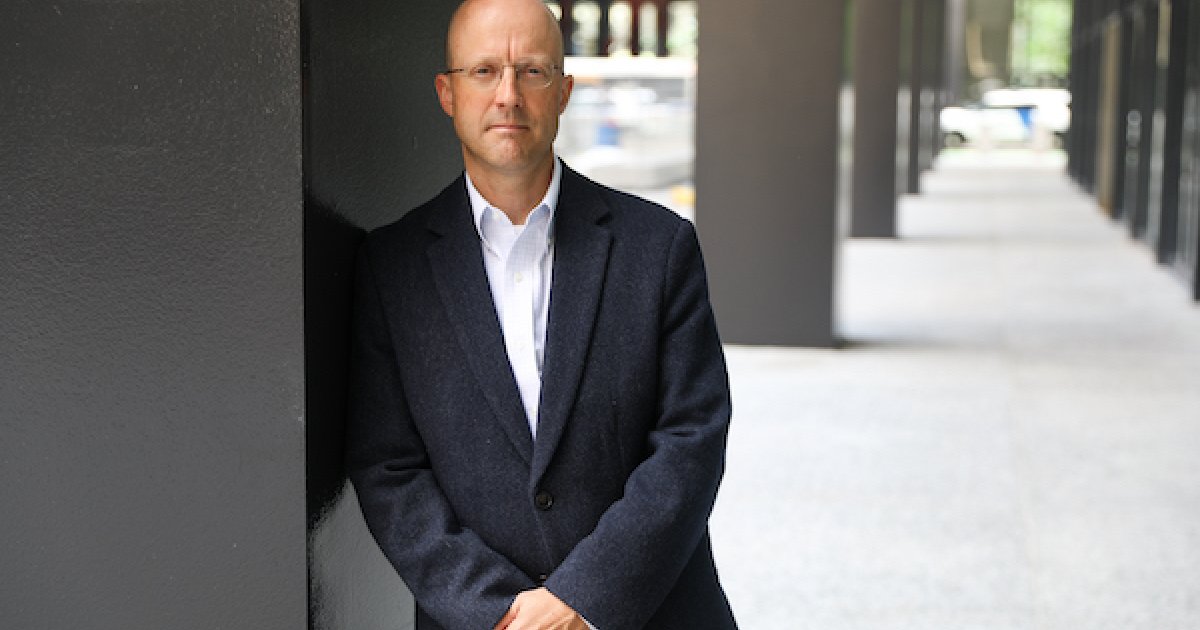
    This is a big deal. Just ask Jason Kilborn, a law professor at the University of Illinois Chicago suspended in late 2021 for using a redacted racial slur “n___” on a final exam question about employment discrimination. He also used the redacted term “b___” in the same question.

    UIC suspended Kilborn and launched an investigation into his (non-)use of the terms. That’s when FIRE stepped in — defending Kilborn, writing to UIC administrators, and securing him a lawyer through our Faculty Legal Defense Fund. With help from that lawyer, UIC briefly reached a resolution with Kilborn but it later reneged on that agreement and forced him to write reflection papers and participate in months-long training sessions before he could return to teaching.

    Kilborn sued, alleging administrators violated his constitutional right to academic freedom — and while the district court had dismissed the case, on Wednesday, the Chicago-based Seventh Circuit agreed the First Amendment protected Kilborn’s speech. That court rejected UIC’s “invitation to extend Garcetti to speech involving university teaching and scholarship when the Supreme Court was unwilling to do so,” and sent the case back to the district court. 

    With the rejection of that application of Garcetti, the district court will analyze this case using the balancing test from Pickering v. Board of Education, which directs courts to weigh “the interests of the [employee] in commenting upon matters of public concern” against “the interest of the state, as an employer, in promoting the efficiency of the public services it performs through its employees.” 

    This is now the sixth federal appeals court to establish this exception to Garcetti, extending academic freedom protections to public university faculty throughout Illinois, Indiana, and Wisconsin. FIRE is currently awaiting a decision from the Atlanta-based Eleventh Circuit, where we’ve asked that court to do the same with respect to the Garcetti exception. Stay tuned for more as we continue to press and follow this issue closely. 

    Source link