Get stories like this delivered straight to your inbox. Sign up for The 74 Newsletter
Chicago Public Schools launched new school profiles on its website — a milestone in the district’s five-year push to change how it portrays the quality of its campuses.
The new school accountability dashboards replace the district’s controversial number ratings for schools, which CPS put on hold and then scrapped during the pandemic. Those ratings had drawn the ire of educators and some community members, who said they unfairly stigmatized campuses that serve students with high needs. The old level ratings had also factored into high-stakes decisions about school closures and staff overhauls.
Some parents who’ve provided feedback on the shift said families welcome having a one-stop repository of information on school performance again. But they said they’d like to see simpler, more accessible language in information about the metrics the district included to put the numbers into context. And they noted that a busy parent must click repeatedly to get to each metric — only to find out in many cases that these numbers aren’t available yet.
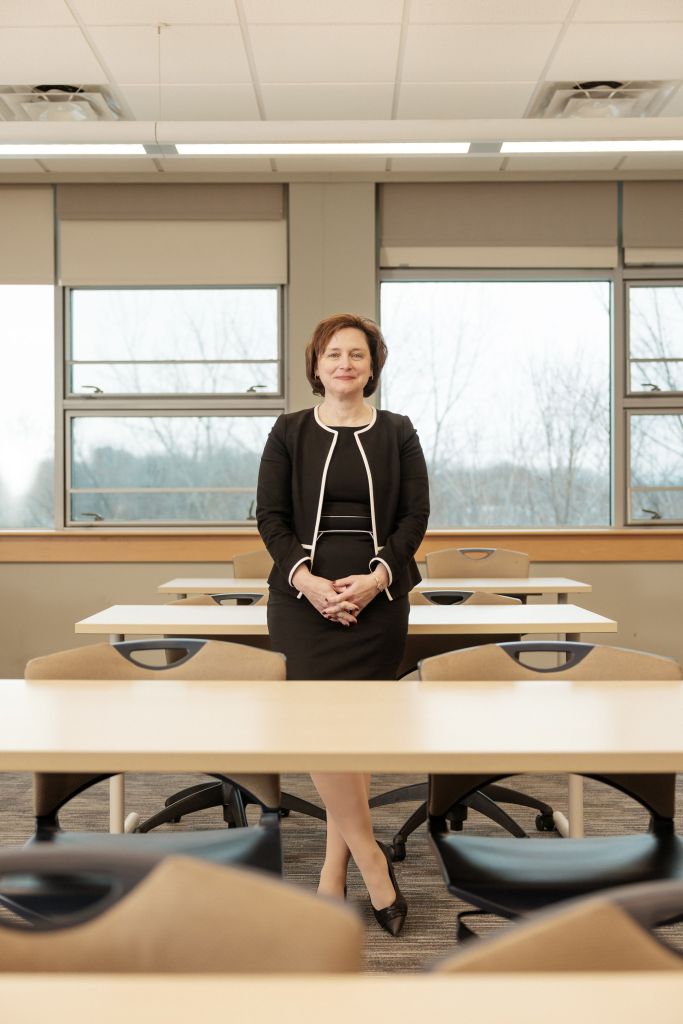
Bogdana Chkoumbova, the district’s chief education officer, said the new system aimed to strike a balance.
“We didn’t want this to be just another state report card; we are embracing the complexity of the data,” she said. “If it looked like a one-pager in red and green, that just brings in the trauma.”
The new profiles went up in mid-December, the day after the window to apply to the district’s selective and magnet programs closed. Chkoumbova said the timing was not intentional. After all, families could find most of the information available on the dashboards so far on schools’ Illinois Report Card profiles.
For now, the profiles include only a portion of the data they’ll eventually feature — mostly traditional metrics such as test scores, chronic absenteeism, and graduation rates. Later this year, the district is gearing up to add long-anticipated information that gets at students’ experience and well-being — metrics that in some cases officials are still weighing how to best capture.
Still, CPS leaders say the launch of the new dashboards is an important start. They can be a handy tool as the members of a new, partly elected school board learn about the district and its schools. District officials plan to show off the profiles at the board’s monthly meeting on Thursday.
“We are transitioning to a completely new way of how we view student success and the district’s role in supporting schools,” said Chkoumbova.
The dashboards are available here by scrolling to the bottom and looking up a school.
The new profiles are five years in the making
Chicago first set out to overhaul how it measures and publicly communicates about school quality in 2019. At that time, school board members called on district officials to do away with the School Quality Rating System, or SQRP, policy, which many considered too focused on metrics that are affected by poverty levels and other demographics of the student body. The district formally adopted a new Continuous Improvement and Data Transparency policy in 2023.
With input from academics, parents, and others, the district tried to design a more holistic approach, bringing in a wider array of metrics, including some that got at the experience students have on campus — and at whether the district is providing schools the resources they need to improve that experience.
After years of largely behind-the-scenes work, the new dashboards went live quietly in December, giving principals and other educators a chance to weigh in.
Claiborne Wade, the father of four CPS students, served on a district committee that provided input on the new accountability system. He said he is a big believer in the district’s efforts to take a more holistic look at school performance.
“It’s more than test scores and attendance rates and graduation rates,” he said. “Those are important, but so is making sure we have funds for extracurricular activities and parents have a seat at the table.”
Last week, Wade presented the new dashboards to a group of 10 parents actively involved at DePriest Elementary on the West Side, where he works as a family coordinator as part of the Sustainable Community Schools program. Some liked that the new dashboards offer information about each metric and how to interpret it. But many felt these explanations were too heavy on education jargon and terms such as “alternate assessments.”
Jaqueline Vargas, the mother of two CPS students and two district graduates, said the site asks parents to do too much navigating — especially given that many metrics are not landing on the dashboard until later this year.
“You have to click a lot, but when you finally get there, the information isn’t there,” said Vargas, who also served on the district’s Transparency Committee.
She said she would love to see more information on parent leadership groups and parent engagement more generally, photos of principals, and readily accessible listings of the specialized programs and support services a campus offers. One of her CPS graduates was really interested in cooking while in high school, but the family had no idea that even though their neighborhood high school did not offer a culinary program, two nearby campuses did.
Hal Woods, chief of policy with the parent advocacy group Kids First Chicago, said the dashboards are clearly a work in progress. The layout can be more user-friendly. The metrics available so far are largely what SQRP offered, though the recently released dashboards do include some new information, such as whether a school has quality curriculums.
Parents are eager to see the full set of metrics later this year, Woods said — including those that show how schools are providing social and emotional support to students, a task that recent research has shown greatly affects outcomes such as high school graduation.
The district aims to better measure the student experience
Like districts across the country, CPS is still grappling with how to measure the student experience on campus more fully, said Elaine Allensworth of the University of Chicago’s Consortium on School Research. For the past two years, the district has given students a survey called Cultivate, which was developed by Allenworth’s team at the university. But she says the survey was designed to give teachers information about students’ experiences in their classrooms — not as an accountability tool for families and others.
“There’s a concern that if the survey becomes public, teachers would feel under pressure to make their schools look good and won’t feel as comfortable using it for their own development,” she said.
The district also explored how to best present another key piece of the student experience: extracurricular activities. The district could likely do more than simply listing the activities a school offers, Allensworth said. The new dashboards show the portion of students who participate in any activities. But are these activities high-quality? Are outside partners chipping in?
Chkoumbova said the district will continue to work on improving the platform. In late February, it will include new data on the growth toward math and reading proficiency on state tests that students make — a metric that Ellensworth said is much more telling about how well a school is doing than the portion of students who meet state standards on these tests.
Chkoumbova feels CPS is on the right track.
“We are trailblazers,” she said. “There are very few systems that have taken such an innovative and different approach.”
Chalkbeat is a nonprofit news site covering educational change in public schools.
Get stories like these delivered straight to your inbox. Sign up for The 74 Newsletter