Tag: publicly

  • Fla. Board Says Syllabi, Reading Lists Must Be Posted Publicly

    Fla. Board Says Syllabi, Reading Lists Must Be Posted Publicly

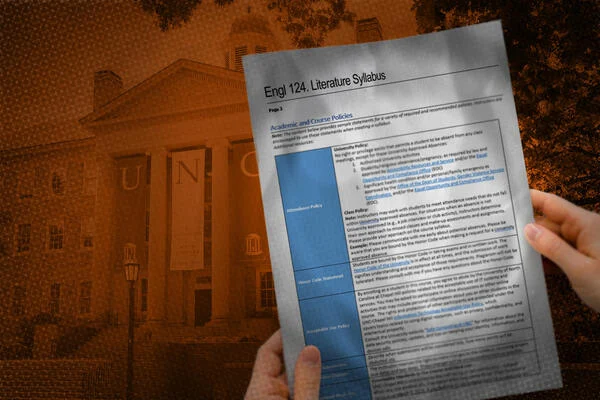
    Photo illustration by Justin Morrison/Inside Higher Ed | Liudmila Chernetska, Davizro and DenisTangneyJr/iStock/Getty Images

    Faculty at all Florida public universities must now make syllabi, as well as a list of required or recommended textbooks and instructional materials for each class, available online and searchable for students and the general public for five years.

    The new policy is part of an amendment to the Florida Board of Governors’ regulation on “Textbook and Instructional Materials Affordability and Transparency,” and it passed unanimously without discussion at a board meeting Thursday. On the agenda item description, board officials cited improved transparency as the impetus for the rule, which is meant to help students “make informed decisions as they select courses.” But some faculty members say it’s designed to chill academic freedom and allow the public to police what professors teach in the classroom.

    “Many of my colleagues and I believe that this is yet another overreach by political appointees to let Florida’s faculty know that they are being watched for potentially teaching any content that the far right finds problematic,” said John White, a professor of English education and literacy at the University of North Florida. He said officials at his institution told faculty members they must upload their syllabi for 2026 spring semester classes to Simple Syllabus, an online syllabi hosting platform, by December.

    “Florida’s universities are being run in an Orwellian manner, and working as a faculty member in Florida is increasingly like living in the world of Fahrenheit 451,” he said.

    According to the approved amendment, professors must post the syllabi “as early as is feasible” but no fewer than 45 days prior to the start of class. Public syllabi must include “course curriculum, required and recommended textbooks and instructional materials, goals and student expectations of the course, and how student performance will be measured and evaluated, including the grading scale.” Individualized courses like independent study and theses are exempt from the rule.

    The Florida Board of Governors did not respond to Inside Higher Ed’s questions about the amended policy, including a question about when it will start being enforced.

    Concerns About Faculty Safety

    It’s not a unique policy, even in Florida. Since 2013, the University of Florida has required professors to post their syllabi online—but only three days prior to the start of class, and they have to remain publicly available for just three semesters. Now, all Florida public universities, including the University of Florida, must follow the new rules. A UF spokesperson told Inside Higher Ed the university is waiting for the Board of Governors to share guidance about when the new policy will be enforced.

    “Even before the rule, most faculty members have been posting anyway to advertise their course. Faculty members in fact prefer to post in advance and certainly have nothing against posting,” said Meera Sitharam, a professor in the department of computer and information science and engineering, and president of the University of Florida’s 2,150-member United Faculty of Florida union. The faculty she spoke with primarily took issue with the new 45-day deadline, which is “quite early for a posting containing all the details” of a syllabus, she said. They are also concerned that they will no longer be able to make changes to reading lists midsemester.

    “A good-quality discussion class would permit the instructor to assign new reading as the course proceeds. This would now be disallowed,” Sitharam said. “The effect of this is likely to be that an overlong reading list is posted by the faculty member just to make sure that they don’t miss anything they might want to assign. And much of the reading list may never be assigned.”

    Texas similarly requires all faculty at public institutions to make a version of their syllabus public. Indiana implemented a law in July requiring public institutions to publish all course syllabi on their websites, and this fall, the University System of Georgia introduced a new policy requiring faculty to post syllabi and curriculum vitae on institution websites.

    Some faculty members in those states have seen firsthand the risks of posting syllabi online; several professors have been harassed and doxed over course content in their online syllabi. Florida faculty are concerned the same thing could happen to them; several faculty members believe that the board passed the rule with the intent of siccing the general public on professors who teach about topics that conservative politicians don’t like.

    “The sole purpose is to subcontract out the oversight of all of our courses, so that if there’s some independent entity or individual that wants to look at the College of Education at Florida State, and they spend two months doing a deep dive into all of the classes, then they’ll come up with: ‘Here at Florida State we found these five classes that don’t meet [our standards],’” said William Trapani, communications and multimedia studies professor at Florida Atlantic University. “Why else would you have that capacity to make this data bank and make it publicly accessible for five years?”

    Stan Kaye, a professor emeritus of design and technology at the University of Florida, sees concerns about the policy as overblown. “I cannot see why making syllabi public at a public institution is a problem for anyone—I would think that promoting your work and subject is generally a good thing,” he said. “If you are afraid you are teaching something illegal or that lacks academic integrity and you want to keep it secret, that should be a problem.”

    Faculty safety is the primary concern for James Beasley, an associate professor of English and president of the faculty association at North Florida.

    “The most important issue related to this requirement is the safety of our faculty, both online and in person. The concern is that faculty will be exposed to external trolls of course content and that the publication of course locations will expose faculty to location disclosures,” Beasley said in an email. While it is typical for syllabi to include course meeting times and locations, the new board policy does not require that information to be posted online.

    Trapani also said that because of the five-year syllabus retention period, faculty are worried they could be retroactively harassed for teaching about something the public finds unfavorable from a class several years ago. White has similar concerns.

    “I’m teaching a course that utilizes neo-Marxist theory to critique the idea of meritocracy—will the Board of Governors or members of the public falsely claim I’m teaching communism or that I’m teaching students to hate their country? If a history professor or a social studies education professor is discussing redlining or Jim Crow laws, will they later be critiqued for teaching students about institutionalized racism or sexism?” White said.

    Ultimately, Trapani believes the amended syllabi policy is an attempt to insulate the Board of Governors from public criticism.

    “Florida will make a lot more sense to outsiders if its policymaking is viewed through a lens of fear,” he said. “They’ve deputized an army of outsiders to pore through records older than most students’ time at the university—all so that they cannot be accused of missing something … It’s just another way in which faculty employment conditions and physical safety are made more precarious by the endless barrage of false claims about our teaching practices.”

    Josh Moody contributed to this report.

    Source link

  • VICTORY: FIRE lawsuit leads California to halt law penalizing reporters, advocates, and victims who discuss publicly known information about sealed arrest records

    VICTORY: FIRE lawsuit leads California to halt law penalizing reporters, advocates, and victims who discuss publicly known information about sealed arrest records

    SAN FRANCISCO, Dec. 19, 2024 — A federal court, acting on a stipulation agreed to by the California attorney general and San Francisco city attorney, today halted enforcement of a California law that officials deployed to suppress journalism about a controversial tech CEO’s sealed arrest records. 

    Under the law, any person — including journalists, advocates, witnesses, and victims of crimes — faced a civil penalty of up to $2,500 for sharing public information. The court order results from a First Amendment lawsuit filed by the Foundation for Individual Rights and Expression in November, which led the California attorney general and San Francisco city attorney to agree not to enforce the law while the lawsuit is pending.

    “The press and public have a constitutional right to discuss what’s publicly known,” said FIRE attorney Adam Steinbaugh. “Government officials can’t punish the press and public when officials fail to safeguard information. That responsibility starts and ends with the government.”

    In October 2023, journalist Jack Poulson published articles about a controversial tech CEO’s arrest, sharing a copy of the arrest report sent to him by an unidentified source. The San Francisco Police Department had previously made that report public, even though the executive had successfully petitioned a state court to seal the record. 

    Almost a year after Poulson published the report, the city attorney of San Francisco — working with the tech executive — sent three letters to Poulson and his webhost, Substack, demanding they remove articles and the sealed report. Those letters threatened enforcement of California’s anti-dissemination statute, Penal Code § 851.92(c). The law imposes a civil penalty of up to $2,500 on any person (except the government officials charged with maintaining the secrecy of sealed records) who shares a sealed arrest report or any information “relating to” the report — even if the information is already publicly available.

    Concerned by the implications of the statute, FIRE sued the San Francisco city attorney and the California attorney general on behalf of the Bay Area-based First Amendment Coalition, its Director of Advocacy Ginny LaRoe, and legal commentator Eugene Volokh. Each regularly comments on censorship campaigns precisely like the one the tech CEO and city attorney launched against Paulson and Substack. But the anti-dissemination statute prohibited them from covering the CEO story, even though the information has been publicly available for over a year.

    Today, the court entered a preliminary injunction agreed to by both California and the city attorney that prohibits them from enforcing the law with respect to publicly available information. 

    The preliminary injunction protects not only FAC and Volokh, but anyone — including journalists like Poulson — who publishes information made available to the public. 

    “Discussing and sharing lawfully obtained information about arrests is not a crime — it’s a core First Amendment right,” said FIRE Staff Attorney Zach Silver. “The rich and powerful shouldn’t have the luxury of deploying the government to put their skeletons back in the closet. By standing up for their own rights, the First Amendment Coalition and Eugene Volokh have helped to protect others from facing legal action under California’s anti-dissemination law.”

    The Foundation for Individual Rights and Expression (FIRE) is a nonpartisan, nonprofit organization dedicated to defending and sustaining the individual rights of all Americans to free speech and free thought — the most essential qualities of liberty. FIRE educates Americans about the importance of these inalienable rights, promotes a culture of respect for these rights, and provides the means to preserve them.

    CONTACT:

    Jack Whitten, Communications Campaign Specialist, FIRE: 215-717-3473; [email protected]

    Source link