
Tag: pull

  • Pull the Plug on H-1B Workers

    Pull the Plug on H-1B Workers

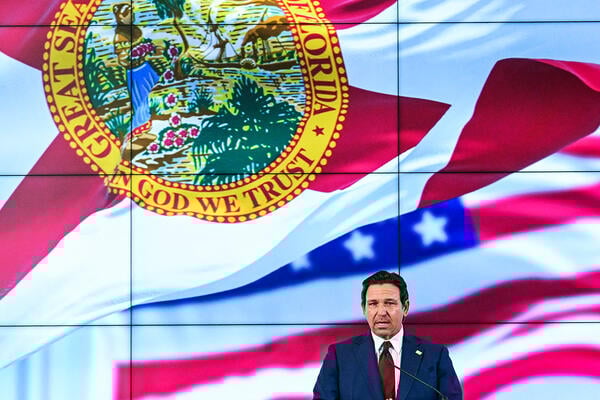
    Florida governor Ron DeSantis on Wednesday ordered the state’s public universities “to pull the plug on the use of these H-1B visas in our universities.” In doing so, the Republican appeared to call for his state to go further than President Trump in restricting entry of these foreign employees—an issue that has divided prominent conservatives.

    Since fiscal year 2022, Florida public universities have employed nearly 2,000 people via the H-1B program—nearly half at the University of Florida. The program is capped at 85,000 new visas a year, but colleges, universities and some other organizations aren’t subject to that cap. In the first three quarters of 2025, nearly 16,800 visas were approved for employees at colleges and universities; 395 of the visas were for jobs at Florida’s public universities. Universities use the program to hire faculty, doctors and researchers and argue it’s required to meet needs in health care, engineering and other areas.

    Last month, Trump announced a $100,000 application fee for H-1B visas. U.S. Citizenship and Immigration Services says the fee will apply to new H-1B petitions filed on or after Sept. 21 and must be paid before the petition is filed. It said there could be exceptions from the fee in an “extraordinarily rare circumstance” in which the Homeland Security secretary determines a foreigner’s presence in the U.S. “is in the national interest.”

    Lawsuits have been filed over the fee, and higher ed associations and institutions have spoken out in opposition. The Trump administration says employers are abusing the program to avoid hiring Americans.

    In a speech at the University of South Florida on Wednesday, DeSantis called on the state board governing public universities to “pull the plug” on H-1B visa employees. He didn’t mention any exceptions.

    If this the ban happens, it would be another example of a red state going further than the Republican-controlled federal government in restricting public higher ed institutions. In states such as Texas and Ohio, GOP politicians have exceeded Trump in regulating curricula and restricting faculty rights. Before Trump retook office, DeSantis put Florida on the leading edge of the conservative overhaul of higher ed, from cracking down on what he called “woke” education to putting allies in charge of universities—a playbook other states have followed.

    It’s unclear, however, whether the Florida Board of Governors, which oversees the state’s public universities but not it’s public colleges, will follow DeSantis’s directive. Fourteen of the board’s 17 members are appointed by the governor and confirmed by the state Senate.

    It’s also unclear what his directive specifically means; a news release the governor’s office issued Wednesday didn’t, unlike his speech, go as far as suggesting an end to all H-1B visa employees at public universities.

    But neither the State University System of Florida nor the governor’s office provided more details in response to Inside Higher Ed’s questions about DeSantis’s intent. A news release from the governor’s office said DeSantis directed the board to “crack down on H-1B Visa abuse in higher education” but didn’t repeat the governor’s apparent call to end H-1B employment completely.

    University of Florida interim president Donald Landry spoke at the press conference after DeSantis and mentioned his institution was called out. 

    “It’s a complex issue, and we can chat,” Landry said, to laughs from the audience. He did list one benefit, saying H-1Bs are mainly used at UF to hire new faculty from the international student population.

    “Occasionally, some bright light might be good enough for the faculty, and then we will try and retain the person into whom we have invested so much,” he said. 

    UF is conducting its own review of the H-1B program, he added. “We know that H-1B is not handled in a pristine fashion, even in academia,” he said.

    Robert Cassanello, president of the United Faculty of Florida union and a tenured associate history professor at the University of Central Florida, suggested that banning H-1B visa holders would be illegal.

    “You can’t discriminate against someone based on foreign birth,” Cassanello said. “My big question coming away from this is: Where’s the authority?”

    ‘Do It’ With Florida Residents

    In his speech, DeSantis started his criticism of the H-1B program from a national perspective. He said, “Tech companies will fire Americans and hire H-1B at a discount, and they’re basically indentured servants … They’re indentured to the company, so the company can basically pay them low.”

    He then turned to Florida universities, appearing to read from a list of positions occupied by H-1B holders at unnamed institutions. (His office didn’t provide the list Wednesday.)

    After mentioning a public policy professor from China, DeSantis said, “Why do we need to bring someone from China to talk about public policy?” Later—apparently looking at information on another H-1B holder—he exclaimed, “Wuhan, China!”

    Although DeSantis’s complaints focused on supposed international scholars from China, he didn’t spare those from other countries.

    “Assistant swim coach from Spain, on an H-1B visa—are you kidding me, we can’t produce an assistant swim coach in this country?” he said. He then turned to the Middle East.

    “Clinical assistant professor from the West Bank, clinical assistant professor from supposed Palestine,” he said. “Is that just social justice that they’re doing? And that’s University of Florida.”

    “We need to make sure our citizens here in Florida are first in line for job opportunities,” DeSantis said. But he also suggested he doesn’t fully know why universities are hiring H-1B workers.

    “I guess there’s probably reasons why it ends up being this way,” DeSantis said. “But I think it’s a poor reflection on some of the decisions that some of these universities have made that they’re trying to say they need an H-1B visa to do some of these jobs … We can do it with our residents in Florida, or with Americans, and if we can’t do it then—man—we need to really look deeply about what is going on.”

    Sarah Spreitzer, vice president and chief of staff for government relations at the American Council on Education, said DeSantis’s move would limit universities’ ability to hire the best researchers.

    “It’s going to have an enormous impact, obviously, on Florida institutions,” Spreitzer said.

    Cassanello, who said his union includes some H-1B holders, called DeSantis’s speech a “xenophobic and nativist diatribe.”

    “He’s a nativist, he’s anti-immigrant and so he’s coming to these decisions based on no facts,” Cassanello said. He also said DeSantis opposed diversity, equity and inclusion programs by arguing they were anti-meritocratic, but now, “all of a sudden, he’s willing to throw out meritocracy.”

    “He’s using fear of people of color and fear of immigrants to sort of impose his will on the running of our public colleges and universities,” Cassanello said. He said the speech represents “a further attack from DeSantis and our state political leaders on the autonomy of our public colleges and universities.”
    Source link

  • IU Alumni Pull Donations Over Student Newspaper Censorship

    IU Alumni Pull Donations Over Student Newspaper Censorship

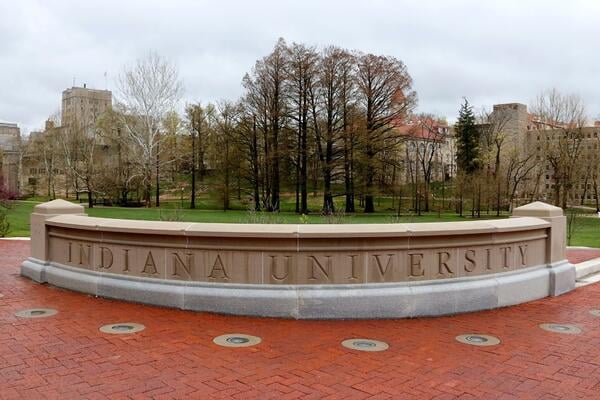
    Indiana University’s decision to suspend the print publication of its student newspaper is costing the institution: Alumni are pulling donations in protest. The university ended the Indiana Daily Student’s print edition after firing the paper’s adviser, who refused to comply with administrators’ request to remove news coverage from a homecoming edition of the paper.

    University leaders insist they’re not censoring the student paper but moving it to a digital platform in line with a business plan adopted last year to address the paper’s deficits. But alumni aren’t buying it, IndyStar reported. Some are asking what came of donations they made to a fund dedicated to the student publication after the newspaper reported students faced hurdles to spending the money. Other alumni are pulling their donations altogether.

    Former journalism student Patricia Esgate canceled $1.5 million in bequests she planned to leave to the university. Alum Ryan Gunterman, executive director of the Indiana High School Press Association and the faculty adviser of Franklin College’s student newspaper, posted on Facebook that he and his wife were ceasing all future donations after giving money to the university and newsroom for over two decades. Toby Cole, a fourth-generation alum of the institution, told IndyStar in an email that his family was ending its monthly contributions and a $300,000 planned gift for scholarships.

    “If IU can pay our [football] coach almost $100mm we can fund our IDS,” Cole said in the email. “Problem is ‘they’ don’t want an independent free speaking print newspaper because students actually wield power with it.”

    Source link

  • Newsom vows to pull state funding from California colleges that sign Trump’s compact

    Newsom vows to pull state funding from California colleges that sign Trump’s compact

    This audio is auto-generated. Please let us know if you have feedback.

    Dive Brief:

    • California Gov. Gavin Newsom on Thursday threatened to pull state funding from colleges that signed a proposed compact from the Trump administration seeking to impose sweeping policy changes in return for priority in research funding. 
    • If any California university signs this radical agreement, they’ll lose billions in state funding,” Newsom said in a statement. “California will not bankroll schools that sell out their students, professors, researchers, and surrender academic freedom.”
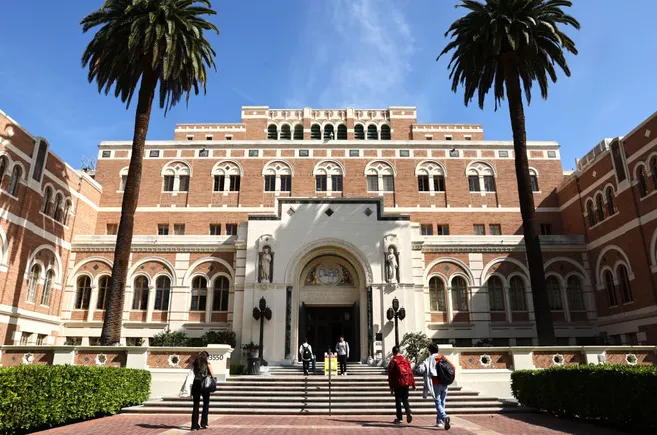
    • First reported by the Wall Street Journal, federal officials offered the compact to the University of Southern California and eight other high-profile research universities this week.

    Dive Insight:

     Since taking office, President Donald Trump and his administration have waged a legal and financial campaign against colleges in an effort to transform them ideologically. It comes after Trump on the campaign trail described colleges as “dominated by Marxist maniacs and lunatics” and full of academics “obsessed with indoctrinating America’s youth.” 

    With the compact, the administration has gone from using mainly sticks — typically in the form of civil rights investigations and canceled research grants — to using carrots as a means of pushing institutions to make reforms.

    The Trump administration offered to prioritize colleges for research grants and other funding if they agree to give the government unprecedented control over internal institutional decisions and governance. 

    That includes:

    • Taking a position of institutional neutrality on events that don’t directly impact the college.
    • Committing not to consider race, gender, religion and other characteristics “explicitly or implicitly” in admissions. (The compact would grant exceptions for religious and single-sex institutions to limit admissions based on religious belief and gender, respectively.)
    • Conducting broad, public assessments of the viewpoints of employees and students.
    • Changing governance structures and potentially dissolving or taking over departments that “purposefully punish, belittle, and even spark violence against conservative ideas.”
    • Adopting policies that recognize “academic freedom is not absolute” and prevent “discriminatory, threatening, harassing, or other behaviors that abridge the rights of other members of the university community.”
    • Capping international undergraduate enrollment at 15% of the broader student body while screening out “students who demonstrate hostility to the United States, its allies, or its values.”
    • Freezing tuition for five years.
    • Requiring applicants to take standardized tests such as the SAT.
    • Committing to using “lawful force” and “swift, serious, and consistent sanctions” to handle protests that “delay or disrupt class instruction or disrupt libraries or other traditional study locations.”

    The compact would also require colleges with endowments worth $2 million or more per student to waive tuition for students studying hard sciences, though the memo didn’t define the field. 

    Along with USC, eight other colleges received the administration’s memo detailing the compact: the University of Arizona, Brown University, Dartmouth College, Massachusetts Institute of Technology, the University of Pennsylvania, the University of Texas, Vanderbilt University and the University of Virginia.

    The compact has drawn alarm and stern rebukes throughout the higher education world. 

    “College and university presidents cannot bargain with the essential freedom of colleges and universities to determine, on academic grounds, whom to admit and what is taught, how, and by whom,” the American Association of Colleges and Universities said in a statement Friday.

    Denise Forte, president and CEO of the policy analysis and advocacy organization EdTrust, described the compact in a statement as an “existential threat to all institutions of higher learning and the latest example of the federal government overexerting its power to intimidate colleges and universities viewed as ideological enemies.”

    In a joint statement Thursday, top leaders of the American Association of University Professors and the American Federation of Teachers described the compact as offering preferential treatment “in exchange for allegiance to a partisan ideological agenda” and said that it “stinks of favoritism, patronage, and bribery.” They urged all governing boards and administrators to reject the agreement.

    American Council on Education President Ted Mitchell in an interview with The New York Times described the compact as a power play “designed to divide the higher education community.” 

    And then there is Newsom, who has been among the most vocal Democrats opposing Trump, especially since the president sent the National Guard into Los Angeles this summer, a move that a judge later ruled illegal.

    In a press release, Newsom’s office described the compact as tying access to federal research funding to “radical conservative ideological restrictions on colleges and universities.” The governor also specifically threatened to “instantly” pull colleges’ eligibility for Cal Grants, a form of state aid for students from low- and middle-income families.

    USC on Friday confirmed it had received and was reviewing the administration’s letter, but the university did not offer further comment.

    Most of those institutions have remained quiet about their plans, if any, to sign or reject the agreement. A leader from one, however, voiced enthusiastic openness to the compact. 

    In a widely shared statement, Kevin Eltife, chair of the University of Texas Board of Regents, said that the system was “honored” that its flagship in Austin was selected among the nine to receive the compact. 

    We enthusiastically look forward to engaging with university officials and reviewing the compact immediately,” said Eltife, a former Republican state senator.  

    Source link