Tag: punished

  • Staff Members Fired, Grad Student Punished for Cheering Charlie Kirk’s Death

    Staff Members Fired, Grad Student Punished for Cheering Charlie Kirk’s Death

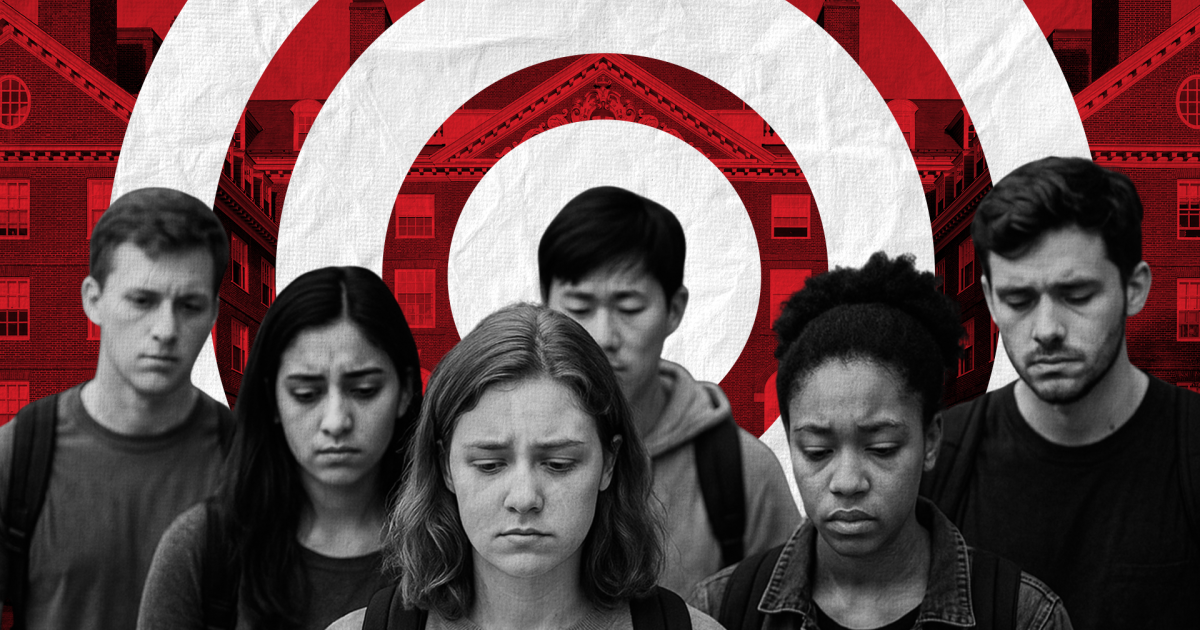
    Photo illustration by Justin Morrison/Inside Higher Ed | skynesher/E+/Getty Images

    Two administrators are now out of a job and a graduate student lost an internship after making comments online that downplayed or celebrated the death of Charlie Kirk, the influential conservative founder of the campus-focused Turning Point USA. 

    In the 36 hours since Kirk was shot and killed during an event at Utah Valley University, right-wing social media accounts have screenshotted and circulated several social media posts, likes and reposts from college faculty and staff members related to Kirk’s death. In addition to the firings, the campaign to name and shame these individuals has led to death threats, Wired reported.

    Late Wednesday, a student affairs administrator at Middle Tennessee State University was fired after posting “insensitive” remarks on Facebook in response to Kirk’s death. “We take great pride in the professionalism of our staff; in my long tenure with this university I’ve never before had to dismiss someone for so carelessly undermining the work and mission of this fine institution,” Middle Tennessee State president Sidney McPhee wrote in a statement Thursday. A university spokesperson confirmed the employee was Laura Sosh-Lightsy, an associate dean of student care and conduct who had worked at the university since 2005. 

    “Looks like ol’ Charlie spoke his fate into existence. Hate begets hate. ZERO sympathy,” Sosh-Lightsy wrote in a Facebook post that has been circulated widely by right-wing accounts on social media. A university spokesperson did not confirm whether or not that specific post led to her firing but noted that “her termination was related to her insensitive social media posts related to the horrific death of Mr. Kirk.” Tennessee senator Marsha Blackburn, a Republican, called for Sosh-Lightsy’s firing on X, writing that she “should be ashamed of her post.” Sosh-Lightsy did not respond to Inside Higher Ed’s request for comment.

    On Thursday afternoon, University of Mississippi chancellor Glenn Boyce confirmed the firing of an unnamed staff member who he said “re-shared hurtful, insensitive comments on social media regarding the tragic murder of Charlie Kirk.”

    Boyce didn’t provide specifics but noted that “these comments run completely counter to our institutional values of civility, fairness and respecting the dignity of each person.” 

    At Baylor University, officials distanced the university from a graduate student who wrote “this made me giggle” in response to a social media post sharing the news of Kirk’s death.

    “We are aware and greatly disappointed by a social media comment from a Baylor graduate student regarding the fatal shooting of Charlie Kirk. To make light of the death of a fellow human being is completely inappropriate and completely counter to Baylor’s Christian mission. Baylor strives to be a community in which every individual is treated with respect—in life and in death,” a university statement said.

    The graduate student—whose online username includes “coach”—is not a member of the faculty nor a part of the athletics program, the statement clarified. Midway Middle School, where the graduate student was student teaching, also removed him from teaching there, KWTX reported

    The Foundation for Individual Rights and Expression is monitoring which universities are censoring employee speech, said Lindsie Rank, director of campus rights advocacy at FIRE. “It may not be moral to speak ill of the dead, but it is protected by the First Amendment so we’re going to be keeping our eyes open for those situations,” she said.

    Ryan Quinn contributed to this report.

    Source link

  • REPORT: More than 600 college students and student groups punished or investigated for speech in five years

    REPORT: More than 600 college students and student groups punished or investigated for speech in five years

    • 63% of over 1,000 efforts to suppress student speech resulted in administrative investigation or punishment.
    • In the wake of Hamas’s 2023 attack on Israel, administrators overtook students as the main instigators of attempted speech suppression.
    • Speech about race and the Israeli-Palestinian conflict led to most attempts.

    PHILADELPHIA, May 15, 2025 — A new report from the Foundation for Individual Rights and Expression found that 637 college students and student groups were punished or investigated by administrators for their constitutionally protected expression between 2020-2024.

    “Students Under Fire” documents over 1,000 efforts to punish students for speech and expression over a five-year span, 63% of which resulted in some form of administrative punishment. The research provides the most detailed collection of speech-related campus controversies involving students to date. The underlying data will be compiled in an interactive database that will be regularly updated and searchable by the source of the outrage, demands made of the institution, whether the pressure is from the political left or right of the student’s speech, the outcome, and more.

    “Every instance of censorship threatens students’ ability to engage in a free exchange of ideas,” said FIRE Senior Researcher Logan Dougherty. “Open minds and free debate, not self-censorship and punishment, must be the standard across our nation’s campuses.”

    There were two dominant incendiary topics on campus: race and the Israeli-Palestinian conflict. The report found that following the murder of George Floyd in 2020, race was the topic that most commonly landed a student in hot water. The Oct. 7 Hamas attacks on Israel, and subsequent debates over the Israeli-Palestinian conflict and Israel’s military response, then quickly became the topic that most often produced attempts at punishment. 

    Other notable findings from the report include:

    • The problem spans ideologies. When it comes to speech about race, most students are targeted from their left, while students speaking out about the war in Gaza are more likely to be targeted from their right.
    • Among the worst punishments were 72 students or groups who were suspended, 55 who were expelled, lost student group funding, or were otherwise separated from their university, and 19 more who were unenrolled under ambiguous circumstances. In one case, a student had to sleep in his car after his university kicked him out of campus housing. In another, a student was suspended for sending a survey about mental health to his peers.
    • The most frequently targeted or punished student groups spanned the political divide: Students for Justice in Palestine (75 incidents), Turning Point USA (65 incidents), and the College Republicans (58 incidents)

    The report also found that after a decade of surging efforts by students to silence campus speech, administrators have taken up the censorial mantle in the wake of the Israeli-Palestinian conflict. In 2020, only 27% of cases were initiated by administrators. By 2024, that number increased to 52%.

    “This is unacceptable coming from people whose job it is to serve college students and ensure that their rights are protected,” said FIRE Chief Research Advisor Sean Stevens. “Their job should be to protect students’ free speech rights, not torpedo them.” 

    The First Amendment protects students at public institutions — and those institutions cannot legally punish students for the expression in the report (though they often do). Private institutions, though not directly bound by the First Amendment, often make institutional promises of free speech and academic freedom. FIRE advocates for targeted students at both types of institutions.

    Students at public institutions should contact FIRE if they face punishment for their expression by submitting a case.

    The Foundation for Individual Rights and Expression (FIRE) is a nonpartisan, nonprofit organization dedicated to defending and sustaining the individual rights of all Americans to free speech and free thought — the most essential qualities of liberty. FIRE educates Americans about the importance of these inalienable rights, promotes a culture of respect for these rights, and provides the means to preserve them.

    CONTACT
    Katie Stalcup, Communications Campaign Manager, FIRE: 215-717-3473; [email protected] 

    Source link

  • VICTORY! 9th Circuit rules in favor of professor punished for criticizing college for lowering academic standards

    VICTORY! 9th Circuit rules in favor of professor punished for criticizing college for lowering academic standards

    SAN FRANCISCO, March 10, 2025 — Today, the U.S. Court of Appeals for the Ninth Circuit ruled in favor of Lars Jensen, a math professor unconstitutionally punished for criticizing what he believed was his college’s decision to water down its math standards.

    Reversing a federal district court, the Ninth Circuit held Jensen suffered wrongful dismissal of his claims against Truckee Meadows Community College in Reno, Nevada, and that he should have his day in court to prove college administrators violated his First Amendment rights. The court also held Jensen’s right to speak out about the math standards was so clearly established that the administrators were not entitled to dismissal on qualified immunity grounds.

    “This decision is a major victory for the free speech rights of academics,” said Foundation for Individual Rights and Expression attorney Daniel Ortner, who argued the case before a Ninth Circuit panel in November 2024. “This decision will protect professors from investigation or threats of termination for their speech, and promote accountability for administrators who violate the First Amendment.”

    The dispute began in 2020, when Jensen planned to comment at a TMCC conference about what he perceived to be diminishing academic standards at the college. After administrators prohibited Jensen from sharing his views at a Q&A session, he printed out his planned comments critiquing the college for allowing for “a student graduating from college” while only being “ready for middle school math,” and handed them out to his colleagues during the break. TMCC Dean Julie Ellsworth told Jensen not to circulate his fliers during the break, but he continued to do so without interrupting the session.

    Ellsworth then accused Jensen of “disobeying” her and warned him he had “made an error” defying her. Following through on her veiled threats, Ellsworth sent Jensen an official reprimand. Over the next two performance reviews, Jensen’s department chair suggested he receive an “excellent” rating, but Ellsworth retaliated by giving him “unsatisfactory” ratings for “insubordination.” As a result, Jensen automatically had to undergo review for possible termination.

    “The college’s actions tarnished my reputation and chilled my speech,” said Jensen. “The Ninth Circuit’s decision vindicates my First Amendment rights and allows me to have my day in court.” 

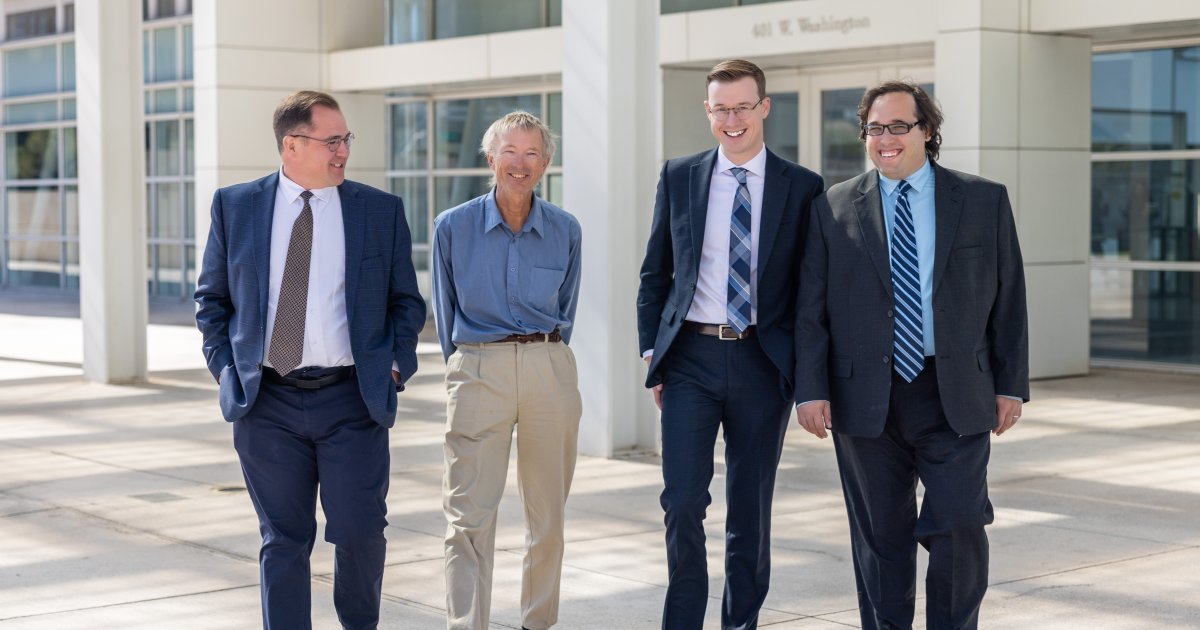
    COURTESY PHOTOS OF PROFESSOR JENSEN AND HIS ATTORNEYS

    TMCC might have fired Jensen if not for the speedy intervention of FIRE, which wrote a letter objecting that the administrators were violating the First Amendment, which protects faculty at public colleges in commenting as citizens on matters of public concern. TMCC announced that Jensen would not be fired, but the damage to his First Amendment rights was already done, especially with the negative performance evaluations remaining on his file.

    Jensen sued Ellsworth and other TMCC administrators in 2022, arguing the college’s retaliatory actions violated his First Amendment rights as well as his right to due process and equal protection. A district court dismissed the case in 2023. 

    The Ninth Circuit ruled today that the district court erred in dismissing Jensen’s First Amendment claim, because his speech about the college’s academic standards involved a matter of public concern related to scholarship or teaching, and thus receives First Amendment protection. 

    The Court also held the university’s retaliatory actions were likely to chill Jensen’s speech, and that a university’s “interest in punishing a disobedient employee for speaking in violation of their supervisor’s orders cannot automatically trump the employee’s interest in speaking.” The Court warned, in fact, that if an employer could fire an employee solely for refusing to obey an order to stop speaking, a university could unconstitutionally enjoy “carte blanche to stifle legitimate speech.”

    The Court further held the district court erred when it held that claims against the college administrators were barred by qualified immunity, a doctrine that requires plaintiffs to show a government official violated their “clearly established right” before they can hold those officials accountable for damages. The Ninth Circuit held that at the time Jensen spoke out, “it was clearly established that a professor has a right to speak about a school’s curriculum without being reprimanded, given negative performance reviews, and put through an investigation and termination hearing.”

    The ruling remands the case back to the District Court of Nevada, where Jensen’s First Amendment claims can proceed. He may also choose to amend his other claims as necessary to proceed alongside them. Jensen is also represented by Nevada attorney John Nolan, who brought the lawsuit and wrote the briefs filed with the Ninth Circuit. 


    The Foundation for Individual Rights and Expression (FIRE) is a nonpartisan, nonprofit organization dedicated to defending and sustaining the individual rights of all Americans to free speech and free thought — the most essential qualities of liberty. FIRE educates Americans about the importance of these inalienable rights, promotes a culture of respect for these rights, and provides the means to preserve them.

    CONTACT:

    Alex Griswold, Communications Campaign Manager, FIRE: 215-717-3473; [email protected]

    Source link