Conservative commentator Charlie Kirk recently made headlines by calling for a full military occupation of American cities following what he terms the “liberation” of Washington, D.C. Speaking on a national platform, Kirk advocated deploying U.S. military forces to urban centers such as Chicago, New York, Boston, Philadelphia, Portland, and San Francisco to restore order amid rising crime and social unrest. He emphasized that a sustained military presence was necessary until these cities were “safe,” drawing comparisons to the low-crime, tightly controlled environments of Tokyo and Singapore.
Kirk’s call is not merely rhetorical; it reflects a growing faction within right-wing politics that endorses the federalization of local law enforcement issues, invoking military force as a tool for domestic order. He also proposed federalizing Washington, D.C., with military oversight — a step he deems essential to restoring law and order in the nation’s capital.
This stance has sparked significant debate over the balance between public safety and civil liberties. Critics warn that deploying military forces in civilian settings risks authoritarian overreach and undermines democratic norms. Supporters, meanwhile, argue that urgent and decisive action is needed in cities they see as suffering from governance failures. The implications of such a military occupation extend beyond crime statistics to the very fabric of American democracy, raising concerns about militarization, racial justice, and the erosion of local governance.
Background on Charlie Kirk and Turning Point USA
Charlie Kirk is the founder and president of Turning Point USA (TPUSA), a conservative nonprofit organization established in 2012. Founded when Kirk was just 18, TPUSA has grown into a powerful network dedicated to promoting free markets, limited government, and conservative values among youth. Financially backed by donors including the late Foster Friess and Home Depot co-founder Bernie Marcus, TPUSA reported revenues exceeding $55 million in 2022.
The organization’s stated mission is to “identify, educate, train, and organize students to promote freedom.” However, its campus activities have drawn criticism for compiling “watchlists” targeting left-leaning faculty and spreading misinformation. The Higher Education Inquirer has closely documented TPUSA’s growth, spotlighting its alliances with conservative student chapters, the appearances of controversial figures on its platforms, and its alignment with Trump administration policies. Beyond campuses, TPUSA has expanded through initiatives like TPUSA Faith, TPUSA Live, and the AmericaFest conference series, which have featured speakers such as Donald Trump Jr., Candace Owens, Tucker Carlson, and Marjorie Taylor Greene.
Fox News and the Epstein Fallout: Kirk’s Rising Media Profile
Amid Fox News’ ongoing tensions with Rupert Murdoch’s Wall Street Journal over the Jeffrey Epstein investigative files, Charlie Kirk has been tapped to guest host Fox & Friends Weekend. His upcoming appearances on July 27–28, 2025, alongside Rachel Campos-Duffy and Charlie Hurt, signal a strategic move by Fox News to bolster its conservative youth appeal and MAGA alignment amid internal pressures.
This development follows the Wall Street Journal’s July 2025 investigative report detailing Donald Trump’s past ties with Jeffrey Epstein, including allegations about a hand-drawn birthday card sent to Epstein. Trump has vehemently denied the claims and sued the Journal and Rupert Murdoch for $10 billion, labeling the report defamatory. Fox News, however, has noticeably limited its coverage of the Epstein files and the lawsuit, unlike other right-leaning outlets such as Newsmax and Real America’s Voice.
Kirk has vocally attacked the Journal’s reporting, calling it “fake” and “a hit job” on Trump. He praised Trump’s lawsuit on his podcast and social media platforms, framing the allegations as baseless attempts to tarnish the former president’s reputation. Despite initial criticism of Attorney General Pam Bondi over a DOJ memo regarding the Epstein investigation, Kirk later shifted his position, urging trust in government officials — a reversal that drew attention to the strategic recalibrations within MAGA circles.
Institutional Expansion and Political Influence
TPUSA’s influence extends well beyond college campuses. Through Turning Point Academy, it reaches high schools, while TPUSA Faith engages religious communities. Its political arm, Turning Point Action, spent over $7 million in the 2022 midterms, reflecting significant investment in electoral politics. TPUSA’s 2023 annual report highlights its presence in more than 2,500 schools and training of over 12,000 student activists.
Kirk’s upcoming role on Fox News underscores the merging of youth-oriented conservative political branding with legacy cable television platforms. This integration comes as Fox News attempts to balance the demands of its MAGA base against legal and reputational challenges linked to its corporate ownership. Kirk’s rising profile represents the normalization and institutionalization of organizations like TPUSA within mainstream conservative media.
Charlie Kirk’s calls for military occupation of American cities, coupled with his increasing prominence within conservative media, highlight the evolving landscape of political influence, youth activism, and media power in the United States. As debates intensify over public safety, civil liberties, and the militarization of law enforcement, it is crucial to scrutinize the intersection of political ideology and institutional authority. The implications extend far beyond partisan disputes — touching the core of democratic governance and social cohesion in a deeply divided nation.
Sources:
Axios (July 2025): “Charlie Kirk to co-host Fox & Friends Weekend”
Wall Street Journal (July 2025): “Trump’s Epstein Birthday Card”
IRS Form 990 Filings (TPUSA 2021–2023)
Media Matters: “Fox News Epstein Coverage Analysis”
FEC.gov: Turning Point Action Political Expenditures
Rolling Stone, Puck News (July 2025): Trump’s calls to allies over Epstein story
TPUSA 2023 Annual Report
Higher Education Inquirer Archive (2016–2025): Reports on TPUSA campus activity
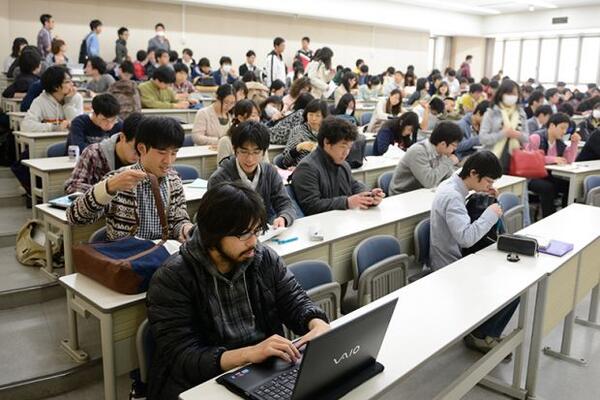
Japan needs to admit that long-running efforts to address gender inequality in higher education aren’t working, experts say, with antidiversity sentiment spreading from the U.S. and threatening to gain traction.
Despite government policies spanning nearly two decades, women remain severely underrepresented across Japanese universities, particularly in science, technology, engineering and mathematics fields.
As of 2022, women made up just 26.7 percent of faculty nationwide and fewer than half of all students, with even starker disparities in senior academic roles and male-dominated disciplines.
Sayaka Oki, a professor at the University of Tokyo, described the situation as “terrible.”
“Gender equality doesn’t really exist here,” she added.
As of 2022, only 11 percent of professors at Oki’s university were female, with particularly low representation in engineering. In undergraduate programs in physics and engineering, women typically make up only about 15 percent of the student population.
“The gender imbalance starts at the student level and gets worse in higher positions,” she said. The university has launched repeated initiatives that have attempted to address the problem and has reported that it has “steadily increased the number of women in faculty positions.”
Since 2006, Japan’s government has implemented a “goal and timetable” policy aimed at increasing women researchers in natural sciences, setting numerical hiring targets every five years.
However, these targets have remained largely unchanged because the proportion of women earning doctoral degrees—the main feeder for research roles—has not significantly increased.
Ginko Kawano, professor of gender equality at Kyushu University, said that, “after nearly two decades, the policy has not produced significant results, and it appears we are now at a turning point in terms of policy design.”
Yet “while this sends a positive message that women are welcome in these disciplines, it is unlikely to serve as a fundamental solution to the underlying issues,” she said.
She also acknowledged strong opposition from students and faculty: “Institutions that choose to introduce this system should clearly explain the reasoning behind it.
“At the same time, it is crucial for university faculty to have access to the information and knowledge necessary to evaluate the merits and drawbacks of such quotas.
“For example, they should be aware of the historical exclusion of women from science, and recognize the persistent bias that suggest[s] women are not suited for STEM fields—biases that continue to shape the choices women feel able to make,” Kawano said.
Adding to the complexity is a political environment increasingly wary of diversity initiatives.
Kawano warned that antidiversity sentiment similar to that in the U.S. could gain traction in Japan, although opposition to gender equality policies has existed independently for years.
Akiyoshi Yonezawa, professor of higher education in the Global Strategy Office at Tohoku University, highlighted demographic pressures pushing universities toward diversity.
“Since around 1990, the number of 18-year-olds has continuously declined and is expected to continue until at least 2040,” he said.
In response, women and international students have been framed as essential for sustaining Japan’s knowledge economy.
Yonezawa criticized how diversity initiatives in Japan are often framed: “DEI initiatives in Japanese universities and society tend to be promoted as a ‘catch-up’ Western mindset rather than intrinsic value formation through daily experience. This makes DEI activities in Japan’s higher education fragile in the long term when faced with controversy.”
Institutional barriers also persist. Oki described how her university’s collegial governance system complicates efforts to implement top-down diversity policies and secure funding, which often comes with centralized control conditions.
“To access the fund, we’re required to adopt a more top-down management style,” she said. “That’s difficult because our university traditionally follows a collegial governance model.”
Oki agreed that there was a risk that international developments had made the situation potentially more difficult—particularly in the U.S., where things like the ban on affirmative action had made colleagues “more cautious about what might happen here.”
This audio is auto-generated. Please let us know if you have feedback.
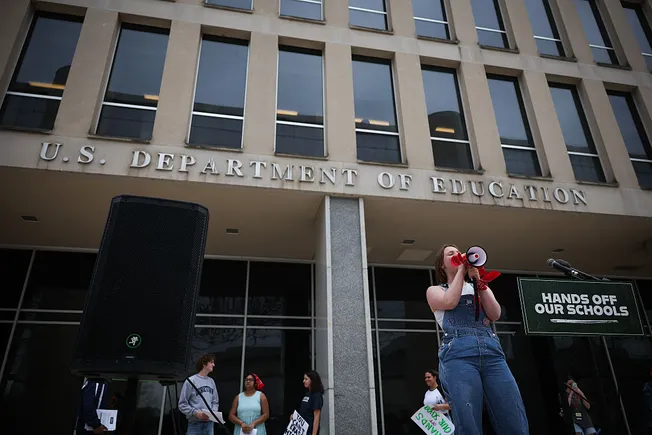
The Trump administration’s decision to gut federal programs administered by the U.S. Department of Education and lay off half of the agency’s staff in an attempt to increase its efficiency has been met with resistance from lawmakers and, most recently, a federal judge whose court order brought efforts to close the department to an abrupt halt.
In an update required by a May 22 court order, the Education Department posted on its website that it has notified its employees of the court-ordered reversal of the reduction in force that left the agency with only about 2,183 out of 4,133 employees. The department on May 27 acknowledged its being compelled by the order in State of New York v. McMahon“to restore the Department to the status quo such that it is able to carry out its statutory functions.”
U.S. District Judge Myong Joun, in temporarily reversing the reduction in force, said gutting the department would lead to “irreparable harm that will result from financial uncertainty and delay, impeded access to vital knowledge on which students and educators rely, and loss of essential services for America’s most vulnerable student populations.”
“This court cannot be asked to cover its eyes while the Department’s employees are continuously fired and units are transferred out until the Department becomes a shell of itself,” Joun said in his decision.
The Education Department appealed Joun’s ruling the same day it was issued. The agency did not respond to K-12 Dive’s request for comment.
Delays in distributing grant funds
The decision came on the heels of a May 16 letter sent by Democratic lawmakers to U.S. Education Secretary Linda McMahon. They claimed the Education Department was delayed in distributing grant funding for the 2025-26 school year. The delay gives states and districts less time to allocate funds meant to help students experiencing homelessness and other underserved students the grants are meant to help, they said.
“States and school districts are best able to plan to most effectively use federal funds with advance knowledge of expected funding, as Congress intends by providing funds on a forward-funded basis,” said Sen. Patty Murray of Washington, Sen. Tammy Baldwin of Wisconsin, and Rep. Rosa DeLauro of Connecticut in the letter.
Murray is vice chair of the Senate Committee on Appropriations, of which Baldwin is also a member. DeLauro is ranking member of the House Appropriations Committee.
“We believe you need to immediately change course and work in partnership with states and school districts to help them effectively use federal funds,” the lawmakers wrote in their reprimand of the department’s delay.
By the lawmakers’ count, the department took three times as long under this administration to distribute Title I-A grants than under the Biden administration. Whereas the former administration took two weeks to distribute the funds after the appropriate law was signed in 2024, the current administration took more than 50 days after the enactment of the 2025 appropriations law to distribute Title I-A funds. The program provides $18.4 billion by formula to more than 80% of the nation’s school districts.
The department also delayed applications for the Rural Education Achievement Program, which funds more than 6,000 rural school districts. It opened applications to REAP’s Small, Rural Schools Assistance program nearly two months later than the Biden administration, and gave districts half the time to apply — just 30 days compared to 60 in FY 2024.
AASA, The School Superintendents Association, said it was aware of this delay. “We understand this release date is significantly later than usual coupled with a shortened application window, so it is important to ensure all eligible districts are aware of this change,” the association said in a May 7 post, prior to the application’s release on May 14. The deadline for program applications is June 13.
These delays in funding distribution and last week’s letter from Democrats come as the department bumped funding for charter schools by $60 million this month.
In April, the department also abruptly canceled billions in federal pandemic aid reimbursements for COVID-19 spending, a move that was met with pushback from Democratic lawmakers and states. Sixteen states and the District of Columbia sued for access to the funds and scored a victory earlier this month when a judge ordered a temporary reversal of the administration’s cancellation as the litigation is pending.
The lawmakers blasted the department’s reduction in force as the culprit behind the delays. “We were told your Department’s work would be efficient, particularly after the reduction in force in which you reduced half of the Department’s workforce, but that does not appear to be the case here,” the lawmakers wrote in their letter.
Following the layoffs, education policy experts worried the department’s efforts to prevent waste, fraud and abuse by eliminating key federal programs and employees would backfire, as a reduced workforce could lead to less oversight and delayed support for states and districts.
However, the department has repeatedly said its decision to push out nearly 1,900 employees would not impact its ability to deliver on its responsibilities required by law.
This audio is auto-generated. Please let us know if you have feedback.
Dive Brief:
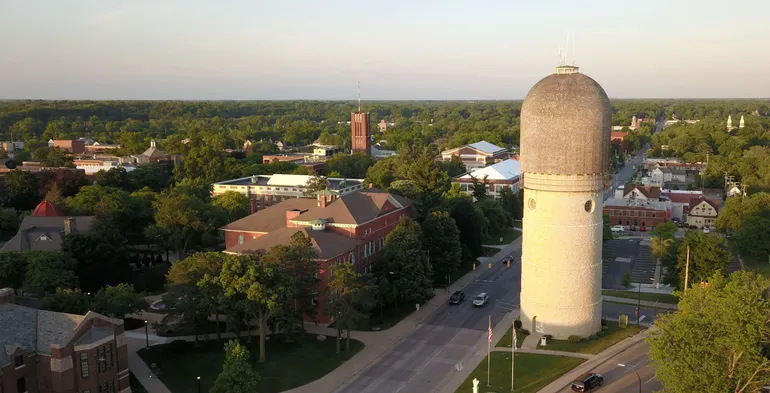
Eastern Michigan Universityis ending engineering teaching partnerships with two Chinese universities after a pair of prominent Republican lawmakers raised national security concerns.
The university announced Wednesday it is terminating its partnership withGuangxi University and Beibu Gulf University. Eastern Michigan President James Smithsaid the university is working with Beibu Gulf to ensure affected students can complete their studies elsewhere.The Guangxi partnership did not enroll any students.
The move comes as Republican lawmakers increasingly raise research theft concerns about colleges’ partnerships with Chinese universities. The Trump administration is also moving to “aggressively revoke” the visas of international students from China, U.S. Secretary of State Marco Rubio said this week.
Dive Insight:
In February, two high-profile lawmakers from Michigan — Rep. Tim Walberg, the chair of the House’s education committee, and Rep. John Moolenaar, the chair of the House Select Committee on the Chinese Communist Party — called on Eastern Michigan and two other universities in their state to end their partnerships with Chinese colleges.
“The university’s [People’s Republic of China] collaborations jeopardize the integrity of U.S. research, risk the exploitation of sensitive technologies, and undermine taxpayer investments intended to strengthen America’s technological and defense capabilities,” the letter stated.
Shortly afterward, Oakland University said it would end its partnerships with three Chinese universities. The University of Detroit Mercy, the third institution that received a letter in February, is likewise ending its teaching partnerships with Chinese universities.
University of Detroit MercyPresident Donald Taylorsaid in a Friday statement that the institution is working to ensure students can finish their studies.He also noted that the partnerships have not included any research or technology transfer.
“They are solely for undergraduate teaching programs only with course content that is available publicly,” Taylor said.
In Eastern Michigan’s Wednesday announcement, Smith stressed that both partnerships had been exclusively focused on teaching and did not involve research or the transfer of technology. He added that the programs did not encompass cybersecurity teaching.
“The course content for all offered classes is widely available in the public domain,” Smith said.
In October, Moolenaar also urged theUniversity of Michiganto end its two-decade partnership with Shanghai Jiao Tong Universityon a joint institute.Moolenaar alleged the partnership had helped the Chinese government advance their defense technologies, from rocket fuel research to improving imaging to detect flaws in military equipment.
The University of Michigan announced in January it would end academic collaboration with Shanghai Jiao Tong and ensure students enrolled in the joint institute’s programs would be able to complete their degrees.
Last year, the Georgia Institute of Technology also announced it would pull out of a partnership that established an overseas campus in China, while the University of California, Berkeley recently severed ties with Tsinghua University following a House report raising concerns with colleges’ partnerships with Chinese institutions.
The Trump administration recently opened an investigation into UC Berkeley over its partnership with Tsinghua University,alleging that it failed to properly report its foreign gifts and contracts.
Earlier this month, two House committees set their sights on Harvard University’s ties with China, arguing that some of its partnerships “raise serious national security and ethnical concerns.” Lawmakers demanded the Ivy League institution hand over internal documents related to its partnerships with China and certain other countries by June 2.
The Trump administration is also planning a crackdown on international students from China, citing national security concerns. Rubio said Wednesday that the federal government will revoke visas from Chinese students “with connections to the Chinese Communist Party or studying in critical fields,” though he didn’t specify what those disciplines would be.
As President Donald Trump has ramped up deportations, some immigrant students across New York have been too afraid to attend class in person. In response, some school districts have turned to virtual learning, a move the state’s Education Department is sanctioning, officials revealed last week.
“I will tell you in the sense of a crisis, we do have some districts right now … that are taking advantage and providing virtual instruction to our children who are afraid to go to school,” Associate Education Commissioner Elisa Alvarez told state officials at May’s Board of Regents meeting.
Alvarez shared with the board a memo the state Education Department issued in March clarifying that districts have the flexibility to offer online instruction to “students who may be unable or averse to attending school, including during times of political uncertainty.”
The memo further specified schools can tap online learning for immigrant and migrant students “who may be affected and reluctant to attend school in person due to concerns about their personal safety and security.”
Alvarez didn’t disclose how many or which districts were using the approach and for how many students. A state Education Department spokesperson did not respond to follow-up questions.
New York City public schools already have virtual options available and aren’t doing anything different for immigrant students fearful of attending school, a spokesperson for the city’s Education Department said.
Still, the disclosure from state officials highlights the ongoing fears some immigrant students are facing four months into the Trump administration and raises fresh questions about how their school experiences are being affected.
Shortly after taking office, Trump rescinded longstanding guidance barring federal immigration agents from making arrests at “sensitive locations” including schools.
Migrant families staying in New York City shelters expressed acute fears during the week after Trump’s inauguration in January and stayed out of school in large numbers, likely contributing to lower citywide attendance rates that week (though Mayor Eric Adams later downplayed the attendance woes). Some city educators said they’ve seen attendance for immigrant students rebound since that first week.
City policy prohibits federal law enforcement agents, including Immigration and Customs Enforcement, from entering schools without a warrant signed by a judge, and Education Department officials have trained school staff on detailed protocols for how to respond.
At the state level, the Attorney General’s office and Education Department issued joint guidance in March reiterating that state and federal law both compel districts to only permit federal law enforcement to enter schools under very limited circumstances.
Many school leaders have worked hard to communicate those policies and reassure anxious families. And immigration enforcement inside of schools has remained rare.
But some high-profile raids have targeted school-age children, including one in the upstate New York hometown of Trump border czar Tom Homan that swept up three students in the local public schools, sparking fear and outrage. And there have been reports across the country of parents detained by immigration agents right outside schools during drop-off time.
Under those circumstances, virtual learning could give schools a way to keep up some connection with students or families who might otherwise completely disengage.
But some New York City educators said they’re still working hard to convince fearful immigrant students to come to school in person, noting that virtual learning was especially challenging for English language learners during the COVID pandemic.
Lara Evangelista, the executive director of the Internationals Network, which oversees 17 public schools in the five boroughs catering exclusively to newly arrived immigrant students, said none of her schools have made the “purposeful choice” to engage fearful students through virtual learning.
“Virtual learning for [English Learners] was really challenging during COVID,” she said.
Alan Cheng, the superintendent who oversees the international schools as well as the city’s dedicated virtual schools, said he hasn’t seen any significant changes in enrollment or interest in online learning due to fear of in-person attendance among immigrant students.
And while virtual learning might be able to offer a version of the academic experience of in-person school, it’s harder for it to replicate some of the other services that schools provide families.
“Our schools serve much more than just the academic environment,” Cheng said. “They are really community schools, they provide health care, they provide plenty of other resources.”
This story was originally published by Chalkbeat. Chalkbeat is a nonprofit news site covering educational change in public schools. Sign up for their newsletters at ckbe.at/newsletters.
Tuesday Willaredt knew her older daughter, Vivienne, struggled to read.
She tentatively accepted teachers’ reassurances and the obvious explanations: Remote learning during the COVID pandemic was disruptive. Returning to school was chaotic. All students were behind.
Annie Watson was concerned about her son Henry’s performance in kindergarten and first grade.
But his teachers weren’t. There was a pandemic, they said. He was a boy. Henry wasn’t really lagging behind his classmates.
So Willaredt and Watson kept asking questions. So did Tricia McGhee, Abbey and Aaron Dunbar, Lisa Salazar Tingey, Kelly Reardon and T.C. — all parents who spoke to The Beacon about getting support for their kids’ reading struggles. (The Beacon is identifying T.C. by her initials because she works for a school district.)
After schools gave reassurances or rationalizations or denied services, the parents kept raising concerns, seeking advice from teachers and fellow parents and pursuing formal evaluations.
Eventually, they all reached the same conclusion. Their children had dyslexia, a disability that makes it more difficult to learn to read and write well.
They also realized something else. Schools — whether private, public, charter or homeschool — aren’t always equipped to immediately catch the problem and provide enough support, even though some estimates suggest up to 20% of students have dyslexia symptoms.
Instead, the parents took matters into their own hands, seeking diagnoses, advocating for extra help and accommodations, moving to another district or paying for tutoring or private school.
“You get a diagnosis from a medical professional,” Salazar Tingey said. “Then you go to the school and you’re like, ‘This is what they say is best practice for this diagnosis.’ And they’re like, ‘That’s not our policy.’”
Recognizing dyslexia
It wasn’t until Vivienne, now 12, was in sixth grade and struggling to keep up at Lincoln College Preparatory Academy Middle School that a teacher said the word “dyslexic” to Willaredt.
After the Kansas City Public Schools teacher mentioned dyslexia, Willaredt made an appointment at Children’s Mercy Hospital, waited months for an opening and ultimately confirmed that Vivienne had dyslexia. Her younger daughter Harlow, age 9, was diagnosed even more recently.
Willaredt now wonders if any of Vivienne’s other teachers suspected the truth. A reading specialist at Vivienne’s former charter school had said her primary problem was focus.
“There’s this whole bureaucracy within the school,” she said. “They don’t want to call it what it is, necessarily, because then the school’s on the hook” to provide services.
Missouri law requires that students in grades K-3 be screened for possible dyslexia, said Shain Bergan, public relations coordinator for Kansas City Public Schools. If they’re flagged, the school notifies their parents and makes a reading success plan.
Schools don’t formally diagnose students, though. That’s something families can pursue — and pay for — on their own by consulting a health professional.
“Missouri teachers, by and large, aren’t specially trained to identify or address dyslexia in particular,” Bergan wrote in an email. “They identify and address specific reading issues students are having, whether it’s because the student has a specific condition or not.”
Bergan later added that KCPS early elementary and reading-specific teachers complete state-mandated dyslexia training through LETRS (Language Essentials for Teachers of Reading and Spelling), an intensive teacher education program that emphasizes scientific research about how students learn to read.
In an emailed statement, the North Kansas City School District said staff members “receive training on dyslexia and classroom strategies,” and the district uses a screening “to help identify students who may need additional reading support.”
Public school students with dyslexia or another disability might be eligible for an individualized education program, or IEP, a formal plan for providing special education services which comes with federal civil rights protections.
But a diagnosis isn’t enough to prove eligibility, and developing an IEP can be a lengthy process that requires strong advocacy from parents. Students who don’t qualify might be eligible for accommodations through a 504 plan.
A spokesperson for Olathe Public Schools said in an email that the district’s teachers participate in state-mandated dyslexia training but don’t diagnose dyslexia.
The district takes outside diagnoses into consideration, but “if a student is making progress in the general education curriculum and able to access it, then the diagnosis alone would not necessarily demonstrate the need for support and services.”
Why dyslexia gets missed
Some families find that teachers dismiss valid concerns, delaying diagnoses that parents see as key to getting proper support.
Salazar Tingey alerted teachers that her son, Cal, was struggling with reading compared to his older siblings. Each year, starting in an Iowa preschool and continuing after the family moved to the North Kansas City School District, she heard his issues were common and unconcerning.
She felt validated when a Sunday school teacher suggested dyslexia and recommended talking to a pediatrician.
After Cal was diagnosed, Salazar Tingey asked his second grade teacher about the methods she used to teach dyslexic kids. She didn’t expect to hear, “That’s not really my specialty.”
“I guess I thought that if you’re a K-3 teacher, that would be pretty standard,” she said. “I don’t think (dyslexia is) that uncommon.”
Louise Spear-Swerling, a professor emerita in the Department of Special Education at Southern Connecticut State University, said estimates of the prevalence of dyslexia range from as high as 20% to as low as 3 to 5%. She thinks 5 to 10% is reasonable.
“That means that the typical general education teacher, if you have a class of, say, 20 students, will see at least one child with dyslexia every year — year after year after year,” she said.
Early intervention is key, Spear-Swerling said, but it doesn’t always happen.
To receive services for dyslexia under federal special education guidelines, students must have difficulty reading that isn’t primarily caused by something like poor instruction, another disability, economic disadvantage or being an English language learner, she said. And schools sometimes misidentify the primary cause.
Tricia McGhee, director of communications at Revolucion Educativa, a nonprofit that offers advocacy and support for Latinx families, has had that experience.
She said her daughter’s charter school flagged her issues with reading but said it was “typical that all bilingual or bicultural children were behind,” McGhee said. That didn’t sound right because her older child was grade levels ahead in reading.
“The first thing they told me is, ‘You just need to make sure to be reading to her every night,’” McGhee said. “I was like, ‘Thanks. I’ve done that every day since she was born.’”
McGhee is now a member of the KCPS school board. But she spoke to The Beacon before being elected, in her capacity as a parent and RevEd staff member.
Dyslexia also may not stand out among classmates who are struggling for various reasons.
Annie Watson, whose professional expertise is in early childhood education planning, strategy and advocacy, said some of Henry’s peers lacked access to high-quality early education and weren’t prepared for kindergarten.
“His handwriting is so poor,” she remembers telling his teacher.
The teacher assured her that Henry’s handwriting was among the best in the class.
“Let’s not compare against his peers,” Watson said. “Let’s compare against grade level standards.”
Receiving services for dyslexia
Watson cried during a Park Hill parent teacher conference when a reading interventionist said she was certified in Orton-Gillingham, an instruction method designed for students with dyslexia.
In an ideal world, Watson said, the mere mention of a teaching approach wouldn’t be so fraught.
Annie Watson with her son Henry, 11, before track practice. Henry went through intensive tutoring to help him learn to read well after his original school didn’t provide the services he needed. (Vaughn Wheat/The Beacon)
“I would love to know less about this,” she said. “My goal is to read books with my kids every night, right? I would love for that to just be my role, and that hasn’t been it.”
By that point, Watson’s family had spent tens of thousands of dollars on Orton-Gillingham tutoring for Henry through Horizon Academy, a private school focused on students with dyslexia and similar disabilities.
They had ultimately moved to the Park Hill district, not convinced that charter schools or KCPS had enough resources to provide support.
“I felt so guilty in his charter school,” Watson said. “There were so many kids who needed so many things, and so it was hard to advocate for my kid who was writing better than a lot of the kids.”
So the idea that Henry’s little sister — who doesn’t have dyslexia — could get a bit of expert attention seamlessly, during the school day and without any special advocacy, made Watson emotional.
“Henry will never get that,” she said.
While Watson wonders if public schools in Park Hill could have been enough for Henry had he started there earlier, some families sought help outside of the public school system entirely.
The Reardon and Dunbar families, who eventually received some services from their respective schools, each enrolled a child full-time in Horizon Academy after deciding the services weren’t enough.
Kelly Reardon said her daughter originally went to a private Catholic school.
“With one teacher and 26 kids, there’s just no way that she would have gotten the individualized intervention that she needed,” she said.
The Dunbars’ son, Henry, had been homeschooled and attended an Olathe public school part-time.
Abbey Dunbar said Henry didn’t qualify for services from the Olathe district in kindergarten, but did when the family asked again in second grade. Henry has a diagnosed severe auditory processing disorder, and his family considers him to have dyslexia based on testing at school.
She said the school accommodated the family’s part-time schedule and the special education services they gave to Henry genuinely helped.
“I never want to undercut what they gave and what they did for him, because we did see progress,” Dunbar said. “But we need eight hours a day (of support), and I don’t think that’s something they could even begin to give in public school. There’s so many kids.”
T.C., whose daughters attended KCPS when they were diagnosed, also decided she couldn’t rely on services provided by the school alone. One daughter didn’t qualify for an IEP because the school said she was already achieving as expected for her IQ level.
In the end, T.C. said, her daughters did get the support they needed “because I paid for it.”
She found a tutor who was relatively inexpensive because she was finishing her degree. But at $55 per child, per session once or twice a week, tutoring still ate into the family’s budget and her children’s free time.
“If they were learning what they needed to learn at school… we wouldn’t have had that financial burden,” she said. Tutoring also meant “our kids couldn’t participate in other activities outside of school.”
Support and accommodations
Tuesday Willaredt is still figuring out exactly what support Vivienne needs.
Options include a KCPS neighborhood school, a charter school that extends through eighth grade or moving to another district. Outside tutoring will likely be part of the picture regardless.
Willaredt is worried that her kids aren’t being set up to love learning.
Vivienne, 12 (left), and Harlow, 9, were both diagnosed with dyslexia earlier this year. (Vaughn Wheat/The Beacon)
“That’s where I get frustrated,” she said. “If interventions were put in earlier — meaning the tutoring that I would have had to seek — these frustrations and sadness that is their experience around learning wouldn’t have happened.”
When Lisa Salazar Tingey brought Cal’s dyslexia diagnosis to his school, he didn’t qualify for an IEP. But his classroom teacher offered extra support that seemed to catch him up.
In following years, though, Salazar Tingey has worried about Cal’s performance stagnating and considered formalizing his accommodations through a 504 plan.
She wants Cal, now 10, to be able to use things like voice to text or audiobooks if his dyslexia is limiting his intellectual exploration.
Before his diagnosis, she and her husband noticed that every school writing assignment Cal brought home was about volcanoes, even though “it wasn’t like he was a kid who was always talking about volcanoes.”
When he was diagnosed, they learned that sticking to familiar topics can be a side effect of dyslexia.
“He knows how to spell magma and lava and volcano, and so that’s all he ever wrote about,” Salazar Tingey said. “That’s sad to me. I want him to feel that the world is wide open, that he can read about anything.”
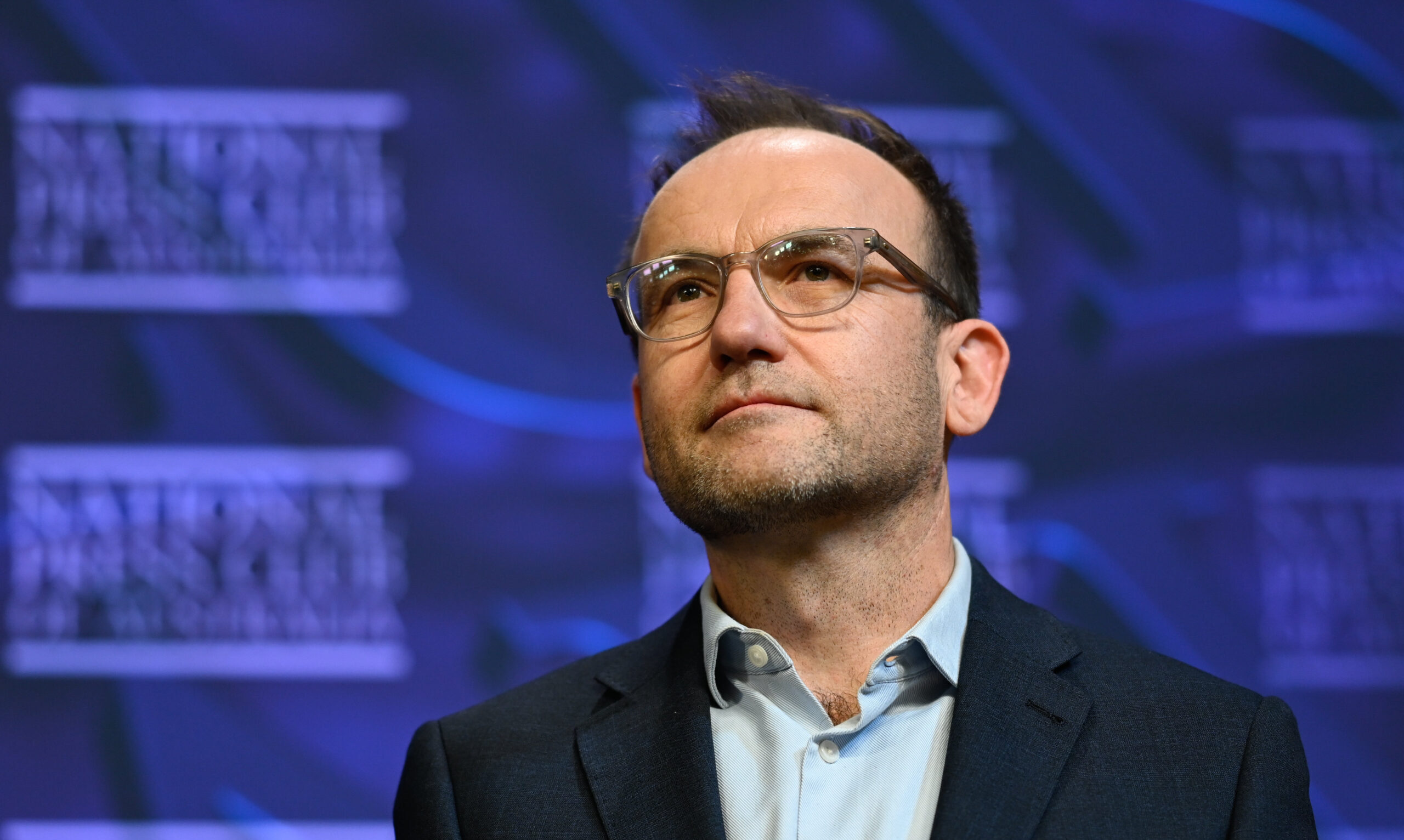
Australian Greens leader Adam Bandt addresses the National Press Club of Australia in Canberra. Picture: Martin Ollman
Every Australian would be able to go to university or TAFE for free under a new Greens policy that would cost the federal budget $46.5 billion over the next four years.
Please login below to view content or subscribe now.
State education agencies are no longer bound to certify their compliance with President Donald Trump’s executive orders and guidance memos banning diversity, equity and inclusion programs in order to continue receiving federal funds—at least for now.
K-12 school districts were originally required to prove they had met the president’s standard by April 14. But now, as the result of an agreement reached Thursday in a lawsuit, the Department of Education cannot enforce that requirement or enact any penalties until April 24. The move to require school systems to certify their compliance was one of the department’s first actions since releasing the Feb. 14 Dear Colleague letter that declared all race-conscious student programming, resources and financial aid illegal.
The National Education Association challenged that letter in a lawsuit and then moved for a temporary restraining order to block the certification requirement. (The department notified state educational agencies of the deadline April 3.)
In addition to not enforcing the certification requirement, the Education Department also agreed not to take any enforcement action related to the Feb. 14 guidance until April 24, though that doesn’t cover any other investigations based on race discrimination.
The plaintiffs, represented by the American Civil Liberties Union, still want to block the Dear Colleague letter entirely. But they see the agreement as a positive step.
“This pause in enforcement provides immediate relief to schools across the country while the broader legal challenge continues,” the plaintiffs said in a news release.
A judge will hold a hearing April 17 to consider the NEA’s motion for a preliminary injunction, which could block the guidance entirely.
For more information on this case and others, check out Inside Higher Ed’s lawsuit tracker here.
Leader of the Australian Liberal party Peter Dutton said he would push back against “woke” agendas in schools and universities. Picture: Thomas Lisson
The Coalition has warned it would use university regulator levers to review university degree course content to check for “woke” teaching if elected, leading Labor to draw parallels between Peter Dutton and Donald Trump.
Please login below to view content or subscribe now.