
Tag: Pushback

  • Iowa board reworks anti-DEI course policy proposal following pushback

    Iowa board reworks anti-DEI course policy proposal following pushback

    This audio is auto-generated. Please let us know if you have feedback.

    Dive Brief:

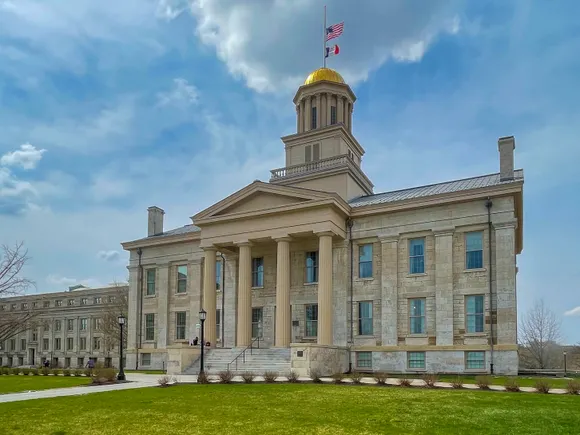
    • The Iowa Board of Regents has removed references to “critical race theory” and “diversity, equity and inclusion” from a controversial proposal to limit what courses the state’s three public universities can require. The regents plan to vote on the issue during a special meeting on Tuesday.
    • Under the original proposal, academic programs would not have been able to require students to take classes containing “substantial content that conveys DEI or CRT.” Universities that wanted an exemption would have had to gain board approval every other year.
    • Following public pushback, the board reworked the proposal to state that “faculty may teach controversial subjects” when relevant to course content, but they are expected to “present coursework in a way that reflects the range of scholarly views and ongoing debate in the field.” The revision also leaves the board the option to “periodically” review the universities’ compliance.

    Dive Insight:

    The Iowa Board of Regents — which oversees the University of Iowa, Iowa State University and the University of Northern Iowa — has so far delayed the vote on the proposal twice, last postponing the decision at its July 30 meeting. 

    The original language included extensive examples of DEI topics that would have been restricted, including anti-racism, “transgender ideology,” systemic oppression, and unconscious or implicit bias.

    “One of the primary reasons we are not taking up the DEI/CRT policy is that the discussions on how to best implement the ideas that were brought forward are still ongoing,” Board President Sherry Bates said in prepared remarks, citing responses from the community. “It has become clear that we would be better served by something more comprehensive.”

    Much of the local response has been negative.

    Five Iowa educator advocacy groups joined together to form the Iowa Higher Education Coalition to oppose the policy and launched a petition “to urge the Iowa Board of Regents to firmly reject efforts to restrict what students can learn.” The petition, which does not address the updated policy, had garnered 470 signatures as of Friday afternoon.

    The faculty union at the University of Northern Iowa, one of the members of the coalition, voiced opposition at the board’s June meeting, when it was first scheduled to vote on the proposal.

    “There is no middle position, no position of slight appeasement,” United Faculty President Christopher Martin told board members at the meeting. “Either you stand for free expression at Iowa’s universities or you don’t. And God help Iowa, its public universities and all the citizens of this state if you don’t.”

    Martin said that the proposal came from two out-of-state think tanks’  generic recommendations, and he alleged that it runs contrary to state law.

    Since that meeting, the board has reworked the language significantly.

    “University teachers shall be entitled to academic freedom in the classroom in discussing the teachers’ course subject, but shall not introduce into the teaching controversial matters that have no relation to the subject,” the updated version said.

    Regardless of how the board votes next week, the Iowa Legislature may step in.

    State Rep. Taylor Collins, chair of the Legislature’s newly created Higher Education Committee and an avid opponent of DEI efforts, voiced support for the board’s original policy proposal last month.

    “If this policy is not adopted, the House Committee on Higher Education stands ready to act,” he said on social media after the board delayed a vote on the policy for the second time.

    Iowa Gov. Kim Reynolds signed a bill in May 2024 that prohibits public universities from maintaining or funding DEI offices or from officially weighing in on a wide array of issues. The list includes allyship, cultural appropriation, systemic oppression, social justice, racial privilege or “any related formulation” of the listed topics. 

    The law prompted PEN America, a free expression advocacy group, to include Iowa on its yearly list of states that enacted “educational gag orders.”

    The board of regents has also moved to limit diversity work on campus. In 2023, it ordered the universities under its purview to cut all campuswide DEI efforts not required to comply with the law or accreditation standards.
    Source link

  • Energy Department delays multiple rules after public pushback

    Energy Department delays multiple rules after public pushback

    This audio is auto-generated. Please let us know if you have feedback.

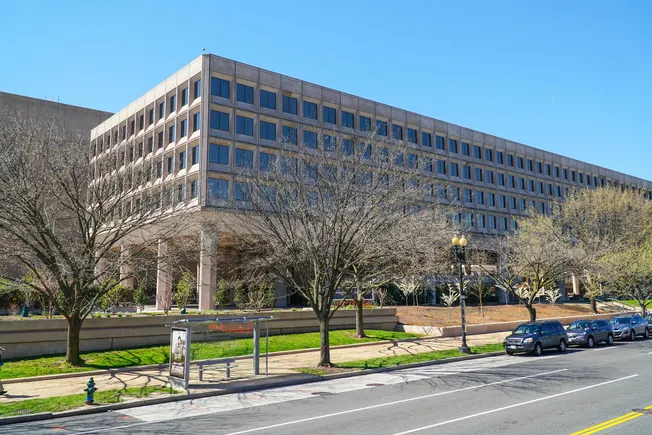
    The U.S. Department of Energy delayed implementation of multiple rules that it had quietly set to go into effect this week for colleges and schools that receive funding from the agency. The move comes in response to public pushback to proposed policy changes.

    The department said it was extending the effective dates for several direct final rules from July 15 to Sept. 12, 2025. The proposals would have undone some student protections related to sex discrimination under Title IX, disability discrimination under Section 504, and racial discrimination under Title VI. 

    One direct final rule, for example, would have no longer required schools to offer girls tryouts for boys’ teams in noncontact sports if the school didn’t have an equivalent girls’ team. Another would have removed protections allowing gender-conscious after-school programs or college initiatives to provide women and girls opportunities they have historically been denied, such as in STEM fields or in technical training.   

    Had the public not responded to the direct final rules with “significant adverse comments,” the rules would have undone such protections within a 30-day period — a much shorter timeline than the typical rulemaking process, which requires federal agencies to consider public feedback and make changes to their policy proposals accordingly. 

    The Trump administration’s decision to undo civil rights protections for students using expedited rulemaking — a process usually reserved for rules agencies expect to be uncontroversial — alarmed many civil rights organizations.

    Kel O’Hara, senior attorney for policy and education equity at Equal Rights Advocate, called the move a “backdoor elimination of student protections.”

    “The Trump Administration tried to exploit an obscure regulatory loophole meant only for minor administrative updates to gut fundamental protections for female athletes and transgender students,” O’Hara said in a Wednesday statement.

    Typical rulemaking would require a public notice and comment period, and a second version of the rule that takes into consideration changes based on public feedback. That process also gives school districts more time to prepare for policy changes. 

    The rules were also atypical in that they were released by the Energy Department rather than the U.S. Department of Education — meaning only schools receiving Energy Department funding would have been impacted by this set of changes. The Energy Department gave 28 schools just over $160 million in fiscal year 2025, and provides over $2.5 billion annually to more than 300 colleges and universities to fund research.

    However, had significant adverse comments not been received and delayed these rules’ implementation, and had the Energy Department been successful in its approach, the administration could have replicated the expedited method through other federal agencies to set education policies in many more schools, education policy experts predicted. 

    “This is a paradigm shift on the part of how the federal government articulates and connects some of these tools to their education priorities,” said Kenneth Wong, a professor of education policy at Brown University, when the direct final rules were announced. “Basically every single school, in practically every single school district, has some grants from one of the many agencies in the federal government.” 

    Most schools receive K-12 funding from multiple agencies, such as the Energy Department and the U.S. Department of Agriculture. 

    Because of the opposition to the rules, the Energy Department must now either withdraw them entirely or issue new final rules by September 12 that take the comments into account. 

    The Energy Department did not respond to a request for comment in time for publication.

    Source link

  • Energy Department delays multiple rules after public pushback

    Energy Department delays multiple rules after public pushback

    This audio is auto-generated. Please let us know if you have feedback.

    The U.S. Department of Energy delayed implementation of multiple rules that it had quietly set to go into effect this week for schools that receive funding from the agency. The move comes in response to public pushback to proposed policy changes.

    The department said it was extending the effective dates for several direct final rules from July 15 to Sept. 12, 2025. The proposals would have undone some student protections related to sex discrimination under Title IX, disability discrimination under Section 504, and racial discrimination under Title VI. 

    One direct final rule, for example, would have no longer required schools to offer girls tryouts for boys’ teams in noncontact sports if the school didn’t have an equivalent girls’ team. Another would have removed protections allowing gender-conscious after-school programs or college initiatives to provide women and girls opportunities they have historically been denied, such as in STEM fields or in technical training.   

    Had the public not responded to the direct final rules with “significant adverse comments,” the rules would have undone such protections within a 30-day period — a much shorter timeline than the typical rulemaking process, which requires federal agencies to consider public feedback and make changes to their policy proposals accordingly. 

    The Trump administration’s decision to undo civil rights protections for students using expedited rulemaking — a process usually reserved for rules agencies expect to be uncontroversial — alarmed many civil rights organizations.

    Kel O’Hara, senior attorney for policy and education equity at Equal Rights Advocate, called the move a “backdoor elimination of student protections.”

    “The Trump Administration tried to exploit an obscure regulatory loophole meant only for minor administrative updates to gut fundamental protections for female athletes and transgender students,” O’Hara said in a Wednesday statement.

    Typical rulemaking would require a public notice and comment period, and a second version of the rule that takes into consideration changes based on public feedback. That process also gives school districts more time to prepare for policy changes. 

    The rules were also atypical in that they were released by the Energy Department rather than the U.S. Department of Education — meaning only schools receiving Energy Department funding would have been impacted by this set of changes. The Energy Department gave 28 schools just over $160 million in fiscal year 2025, and provides over $2.5 billion annually to more than 300 colleges and universities to fund research.

    However, had significant adverse comments not been received and delayed these rules’ implementation, and had the Energy Department been successful in its approach, the administration could have replicated the expedited method through other federal agencies to set education policies in many more schools, education policy experts predicted. 

    “This is a paradigm shift on the part of how the federal government articulates and connects some of these tools to their education priorities,” said Kenneth Wong, a professor of education policy at Brown University, when the direct final rules were announced. “Basically every single school, in practically every single school district, has some grants from one of the many agencies in the federal government.” 

    Most schools receive K-12 funding from multiple agencies, such as the Energy Department and the U.S. Department of Agriculture. 

    Because of the opposition to the rules, the Energy Department must now either withdraw them entirely or issue new final rules by September 12 that take the comments into account. 

    The Energy Department did not respond to a request for comment in time for publication.

    Source link

  • Department of Education Orders End to Race-Based Programs Amid Fierce Pushback

    Department of Education Orders End to Race-Based Programs Amid Fierce Pushback

    The U.S. Department of Education has issued a sweeping directive ordering educational institutions to eliminate race-based considerations from admissions, hiring, and other programs, sparking immediate opposition from civil rights organizations, educational leaders, and advocacy groups.

    In a Dear Colleague Letter to schools receiving federal funding, the Department mandated the cessation of race preferences in areas ranging from admissions and hiring to scholarships and disciplinary actions. Schools that fail to comply within 14 days risk losing federal funding.

    “With this guidance, the Trump Administration is directing schools to end the use of racial preferences and race stereotypes in their programs and activities,” said Acting Assistant Secretary for Civil Rights Craig Trainor, characterizing the move as “a victory for justice, civil rights laws, and the Constitution.”

    The directive, which builds on last year’s Supreme Court decision in Students for Fair Admissions v. Harvard, extends far beyond college admissions to encompass elementary, middle, and high schools. It also targets diversity, equity, and inclusion (DEI) programs, which the Department claims have contributed to “widespread censorship” and a “repressive viewpoint monoculture” on campuses.

    The Department’s action specifically prohibits race-based considerations in admissions processes, hiring and promotion decisions, compensation, scholarship and prize distributions, and disciplinary actions. Schools must now evaluate students “according to merit, accomplishment, and character,” according to the directive.

    The sweeping nature of the order has raised serious concerns among education experts about its implementation timeline and scope. The 14-day compliance window, in particular, has drawn criticism from school administrators who argue that revamping entire systems of administration, hiring, and student life programs requires more time and careful consideration.

    Critics of the directive argue that it represents an overreach of the Department’s authority and misinterprets the Supreme Court’s Harvard decision. While the Court ruled against race-conscious admissions programs at Harvard and the University of North Carolina, many legal experts contend that the ruling’s scope was more limited than the Department’s interpretation suggests.

    The Department’s letter also takes aim at what it describes as a “DEI regime” in educational institutions, claiming these programs have fostered censorship through various mechanisms, including “deplatforming speakers who articulate a competing view” and using “bias response teams” to investigate those who object to a school’s racial ideology.

    Educational institutions now face the complex task of reviewing and potentially overhauling numerous programs and policies to ensure compliance with the new directive. This includes examining everything from recruitment strategies and scholarship criteria to student organization funding and faculty hiring practices.

    The Department has established a complaint system through its Office of Civil Rights for individuals who believe an institution has violated these new guidelines. However, education advocates warn that the rapid implementation timeline could lead to hasty decisions that might inadvertently harm educational equity and access.

    As schools scramble to interpret and implement these changes, the directive’s long-term impact on educational equity and institutional diversity remains uncertain. The Department’s enforcement approach and how it will evaluate compliance are yet to be fully detailed, leaving many institutions in a challenging position as they attempt to navigate these new requirements while maintaining their educational missions and values.

    Source link