The University of Oklahoma put a lecturer on administrative leave last week for allegedly exercising “viewpoint discrimination” five days after a different instructor was placed on leave for alleged religious discrimination.
Kelli Alvarez, an assistant teaching professor focused on race and ethnicity in literature and film, allegedly encouraged students to miss her English composition class to attend a protest in support of Mel Curth, a graduate teaching assistant in the psychology department who was removed from teaching after a student filed a religious discrimination complaint against her. Alvarez said she would excuse the absences of students who attended the protest. But according to university officials, she did not extend the same offer to students who intended to miss class that day to “express a counter-viewpoint.”
“Immediately upon learning of the situation, the Director of First-Year Composition told students in class today and by email that the lecturer’s actions were inappropriate and wrong, and that the university classroom exists to teach students how to think, not what to think. The Director further stated that any student, regardless of viewpoint, would be excused if absent from class today to attend the protest without penalty, and that the lecturer had been replaced, effective immediately, for the remainder of the semester,” officials wrote in a statement Friday. “Classroom instructors have a special obligation to ensure that the classroom is never used to grant preferential treatment based on personal political beliefs, nor to pressure students to adopt particular political or ideological views.”
Spokespeople for the University of Oklahoma did not respond to Inside Higher Ed’s request for comment. An X post by the University of Oklahoma chapter of Turning Point USA, a conservative student group founded by the late Charlie Kirk, said that the chapter president, a student in Alvarez’s class, had asked to miss class in order to counterprotest.
“Kalib Magana, student in professor Alavarez’s [sic] class and TPUSA OU president, asking to counter-protest was denied the same option unless a large, documented group could be organized,” the chapter wrote. “Kalib filed a report with The University of Oklahoma’s Equity Office for ‘discrimination of a viewpoint’ and freedom of speech violations Friday morning.”
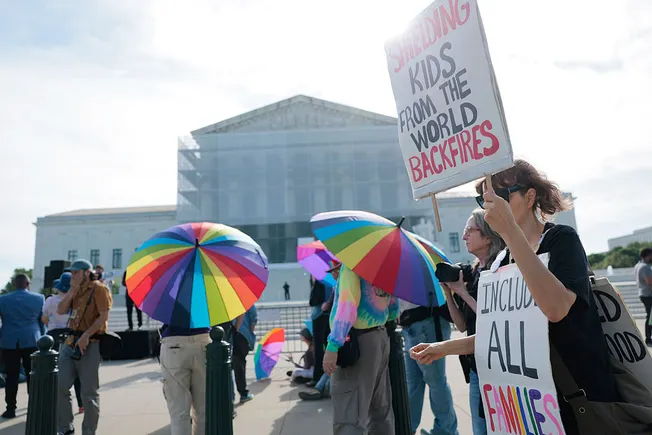
Hundreds of students, faculty, staff and community members rallied Friday in support of Curth, who is on leave after giving a junior psychology student, Samantha Fulnecky, a zero on a reaction essay assignment. In her explanation about the grade, Curth said that Fulnecky did not answer the assignment’s questions, that her essay contradicted itself and that it “heavily uses personal ideology over empirical evidence in a scientific class, and is at times offensive.” A second teaching assistant for the course concurred with Curth’s grade.
Fulnecky fought back, appealing to the president of the university and the governor of Oklahoma, arguing that she was unfairly given a failing grade because her essay cited the Bible and discussed her religious beliefs. Though university officials said the grading dispute was settled last week, Curth was put on leave pending investigation after Fulnecky filed a formal religious discrimination complaint.
The university’s TPUSA chapter helped whip the story into a social media storm. The news caught fire, offering something for everyone to comment on. Supplied with the full essay, assignment instructions and rubric, academics online debated how they would have scored Fulnecky’s essay. Others blasted her writing skills. Conservatives, including Fulnecky’s mother, used the story to fuel a narrative of persecution against Christian students by “woke” academics. “Individuals who identify as trans should be automatically disqualified from holding any position as teacher or professor,” one X user commented, which Samantha Fulnecky’s mother, lawyer and conservative radio commentator Kristi Fulnecky, reposted.
Liberal commenters pointed to the incident as another example of genderqueer faculty being unfairly maligned and doxed. “Mel Curth should be reinstated,” a user wrote on Bluesky. “I’m sorry, but religious freedom does not mean you as a student get to write out a genocidal screed wishing for your teachers death & eternal torture.”
During a meeting Thursday, the University of Oklahoma Graduate Student Senate passed a resolution calling for greater transparency and protection for graduate teaching assistants on leave and under investigation. The resolution also said that Curth was justified in giving Fulnecky a zero on the assignment and called on the university to publicly apologize to the professor for failing to protect her from the bullying and harassment the case has incited.
The Oklahoma University chapter of the American Association of University Professors made a similar call to administrators, KOKH reported. “Disturbingly, OU has not made a public statement stating that it vigorously defends instructors, including transgender instructors, from harassment, discrimination, and even reported death threats,” the chapter told KOKH in a statement.
In the lead up to her son’s birth, Jacqueline made plans to call 911 for an ambulance to pick her up from her North Florida home and transport her to a hospital about an hour away.
The second-time mom and Guatemalan immigrant, who has lived in the country for a decade, would have relied on her husband to drive her to the hospital. But a few months ago he was deported, leaving Jacqueline and her daughter without the family’s primary source of income, transportation and support.
One morning in March, Jacqueline said, her partner was pulled over on his way to work when law enforcement officials discovered he didn’t have a valid driver’s license. Jacqueline’s pregnancy was in its early stages. Her husband fought his case from detention for three months before U.S. Immigration and Customs Enforcement (ICE) removed him to Guatemala.
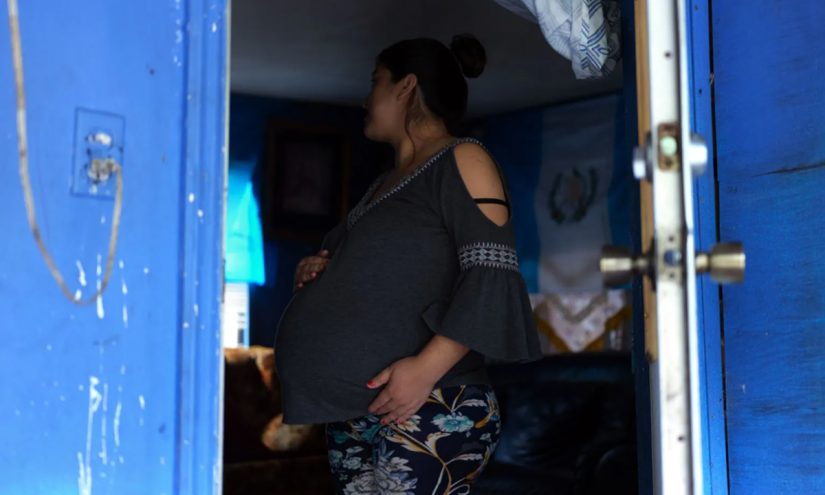
“He was deported and I was left behind, thinking, ‘What am I going to do?’” said Jacqueline, who requested that her last name not be published because she lacks permanent legal status. The couple shares an 8-year-old daughter who was born in, and is a citizen of, the United States.
This summer, as she entered the later stages of this pregnancy amid the Trump administration’s turbocharged immigration enforcement, Jacqueline found herself so fearful of being detained that she avoided leaving her home. Her husband’s car sits in the driveway, but there are no signs of him in the small room Jacqueline shares with her daughter. His belongings — tools, clothes, even personal photos — are with him in Guatemala. The only family pictures Jacqueline has are on her phone.
Her partner was the family’s main provider, rotating between picking strawberries or watermelon and packing pine needles for mulch, depending on the season.
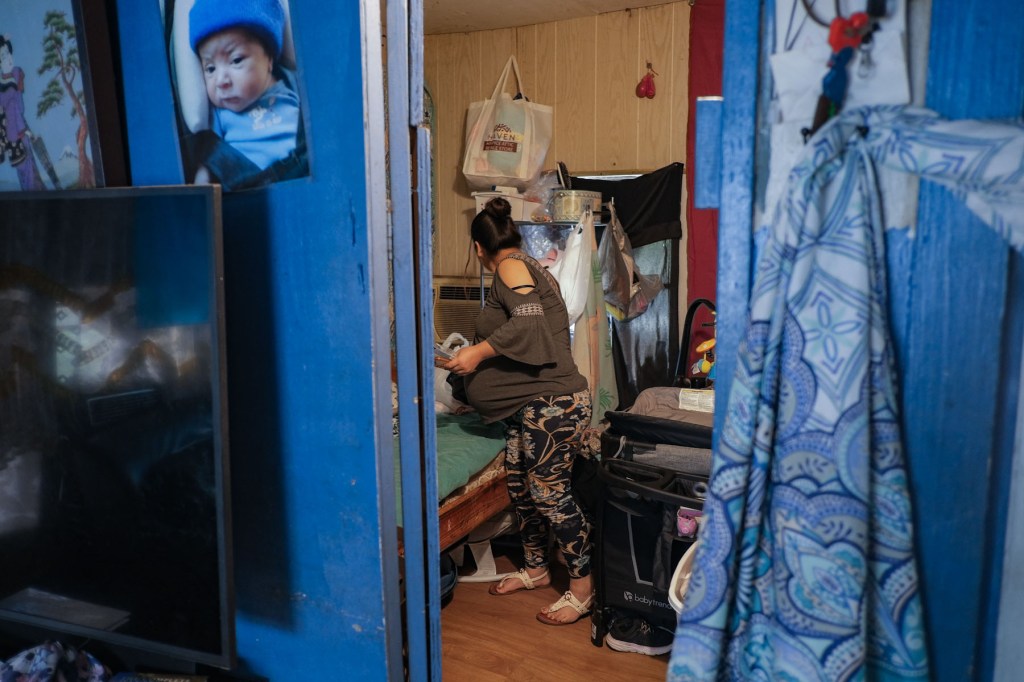
Jacqueline struggled to get the most basic items to welcome a baby: Someone gifted her a used carseat and crib, which sit in the packed room along with onesies and other clothing items she’s collected inside a large plastic bag. She’s hoping that a federal assistance program will cover the cost of formula. A baby tub is still on her list.
Medical care in her rural area has been possible only because a small nonprofit organization nearby that provides prenatal care services offered to pay for Ubers so she could continue regular check-ups. Even if she wasn’t behind the wheel, Jacqueline says that just the act of leaving her home feels risky since her husband’s deportation.
“Things got really complicated. He paid our rent — he paid for everything,” she said. “Now, I’m always worried.”
At her home in North Florida, Jacqueline looks at a photo of her husband and daughter on her phone. The only family pictures she has are on her phone; her husband’s belongings — tools, clothes, even personal photos — are with him in Guatemala. (Michelle Bruzzese for The 19th)
Medical care and support essential to a healthy pregnancy have become harder for people like Jacqueline to obtain following President Donald Trump’s inauguration. Many patients — nervous about encountering immigration officials if they leave their homes, drive on public roads or visit a medical clinic — are skipping virtually all of their pregnancy-related health care. Some are opting to give birth at home with the help of midwives because of the possible presence of ICE at hospitals.
Across the country, medical providers who serve immigrant communities said fewer patients are coming in for prenatal or other pregnancy-related care. As a result, patients are experiencing dangerous complications, advocates and health care providers told The 19th.
“Fear of ICE is pushing my patients and their families away from the very systems meant to protect their health and their pregnancies,” said Dr. Josie Urbina, an OB-GYN in San Francisco.
In January, Trump rescinded a federal policy that protected designated areas including hospitals, health clinics and doctors’ offices from immigration raids. ICE has recently targeted patients in hospital maternity wards and on their way home from prenatal visits.
A majority of Americans believe ICE should not be carrying out immigration enforcement at health centers. A new poll from The 19th and SurveyMonkey conducted in mid-September found that most Americans don’t think ICE should be allowed to detain immigrants at hospitals, their workplace, domestic violence shelters, schools or churches.
Women are more likely to oppose enforcement in these spaces than men. More than two-thirds of women said ICE shouldn’t be allowed to detain immigrants in hospital settings.
Enforcement is only expected to grow as the administration works to meet its ambitious deportation goals. The federal government is pouring more than $170 billion over the next four years into expanding immigration enforcement, the result of Trump’s signature tax-and-spending bill. About $45 billion has been directed to expanding detention facilities; $29.9 billion is to increase ICE activity.
That expansion could put even more births at risk. Approximately 250,000 babies are born every year to immigrants without permanent legal status. Already, research has shown these immigrants, who have higher uninsured rates, are less likely to seek prenatal care and are at risk of worse birth outcomes.
Major medical groups, including the American College of Obstetrics and Gynecologists, World Health Organization and the Centers for Disease Control and Prevention (CDC) recommend regular prenatal and postpartum care as a key tool to combat pregnancy-related death and infant mortality.
According to the federal Office of Women’s Health, infants born to parents who received no prenatal care are three times more likely to have a low birth weight and five times more likely to die than those born to parents who received regular care.
A CDC analysis published last year found infant mortality rates went up the later families began prenatal care: 4.54 deaths per 100,000 live births for families whose prenatal care began in the first trimester, compared with 10.75 in families whose prenatal care began in the third trimester or who did not receive any at all.
“A lot of patients aren’t going to get help,” said Yenny James, the founder and CEO of Paradigm Doulas in the Dallas-Fort Worth metro.
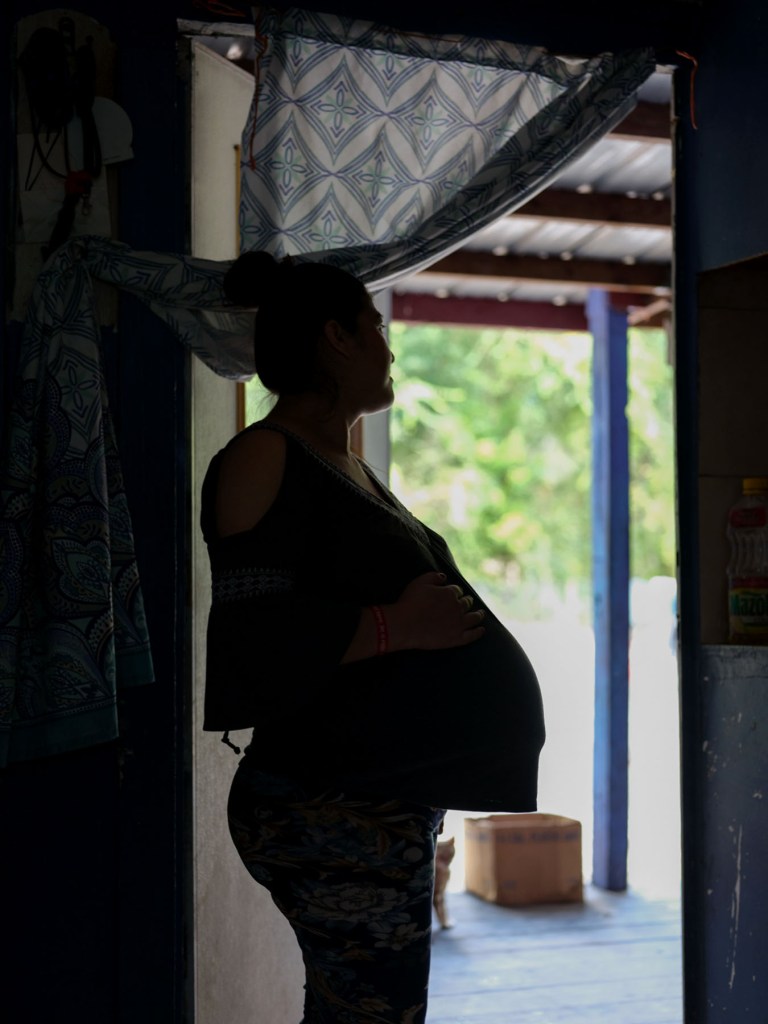
After her husband’s deportation, Jacqueline became so fearful of being detained that she avoided leaving her home. “He was deported and I was left behind, thinking, ‘What am I going to do?’” she said. (Michelle Bruzzese for The 19th)
James said she’s seeing an increasing number of emergency cesarean sections because of untreated gestational diabetes, or preeclampsia — a deadly pregnancy complication — that went unnoticed because of lacking prenatal care.
In Denver, OB-GYN Dr. Rebecca Cohen has delivered multiple babies this year for women who have told her that, because they fear endangering themselves or their families, they have received no prenatal care. Several have given birth to babies with fatal fetal anomalies that were never diagnosed because the women did not receive prenatal ultrasounds.
“They were willing to forgo care — their own health care — but to find out that something was devastatingly wrong with their child is when they feel like maybe they should have risked it,” Cohen said. “There’s a sound of a mother’s wail that anybody who has worked labor and delivery has known, and it will haunt you for the rest of your life. To hear that when it could have been prevented, it is just absolutely devastating.”
Early in her pregnancy, Jacqueline received free care at a local clinic. Shortly after her husband’s detention, she called the office to let them know she likely wouldn’t make her next appointment.
“I told them that I probably wouldn’t be able to make my appointments anymore, well, because I’m really afraid given what happened to my husband. And they offered to help,” she said.
Jacqueline and the nonprofit clinic worked out an arrangement: The day of her appointments, someone at the clinic called an Uber to her home, paid for by the clinic, and let her know when it would arrive so she could be ready.
Many people in her small town have come to rely on a single person who does have a valid driver’s license for transportation. That driver recently brought Jacqueline to an appointment with the local office that manages the Special Supplemental Nutrition Program for Women, Infants and Children (WIC), which she is relying on for baby formula and food. There were no guarantees that this driver would be available to take her in whenever she goes into labor.
The Biden administration directed ICE not to detain, arrest or take into custody pregnant, postpartum or breastfeeding people simply for breaking immigration laws, except under “exceptional circumstances.” The Trump administration has not formally reversed that policy. But despite the directive, reports from across the country confirm that ICE has detained numerous pregnant immigrants since Trump took office.
James said that until the Biden guidance is formally rescinded, she will continue to encourage pregnant immigrants to print it out and carry it with them.
“I told my doulas — have them print out this ICE directive, have them keep it with them, so that they know and these agents know that we know our rights, our clients know their rights,” James said.
Jacqueline prepares for the birth of her second child in the room she shares with her daughter. Someone gifted her a used car seat and crib, which sit among the few items she’s collected inside a plastic bag to welcome the baby. (Michelle Bruzzese for The 19th)
It’s unclear exactly how many pregnant immigrants are being detained by ICE, or have been arrested by the agency. A May report from the office of Democratic Sen. Dick Durbin found 14 pregnant women in a single Louisiana detention facility at the time of staff’s visit.
Another report out of the office of Democratic Sen. Jon Ossoff published in late July found 14 credible reports of mistreatment of pregnant women in immigrant detention. The report cited an anonymous agency official who said they saw pregnant women sleeping on floors in overcrowded intake cells. The partner of a pregnant woman in federal custody said that she bled for days before she was taken to a hospital, where she miscarried alone. A pregnant detainee who spoke to Ossoff’s office said she repeatedly asked for medical attention and was told to “just drink water.” The office received several reports of clients waiting weeks to see a doctor, and that sometimes scheduled appointments were canceled. ICE has disputed the report.
“Pregnant women receive regular prenatal visits, mental health services, nutritional support, and accommodations aligned with community standards of care. Detention of pregnant women is rare and has elevated oversight and review. No pregnant woman has been forced to sleep on the floor,” ICE said in a statement posted on their website.
ICE did not respond to a request for comment.
Fear of being detained is a major contributor of stress for pregnant immigrants. Research shows that even when pregnant patients do receive medical care, prenatal stress puts many at greater risk of complicated births and poor outcomes, including premature birth and low infant birth weight. Babies born after an immigration raid are at a 24 percent higher risk of low birth weight, according to one study.
Monica, 38, is expecting her fourth child in November. The Tucson resident, who requested that her last name not be published out of fear of being detained, has lived in the United States for two decades but has no legal immigration status.
This pregnancy has been unlike the others, she said: While Monica has continued with her prenatal care appointments, her anxiety levels about her immigration situation have colored her experience. Her other children, who are in their teens, are U.S. citizens but grappling with the stress of their parents’ situation. Her husband also doesn’t have authorization to live in the country.
“We try to be out and about much less, and to take precautions,” she said. “Whenever we do leave the house, we have it in the back of our minds.”
Monica said she has seen reports of ICE being allowed inside hospitals, and she is worried about facing immigration officers while or following her birth. Her plan is to have her partner and a group of friends at the hospital to make sure she’s never alone.
“My biggest fear is going to the hospital,” she said.
Stress like Monica’s makes pregnancy more dangerous.
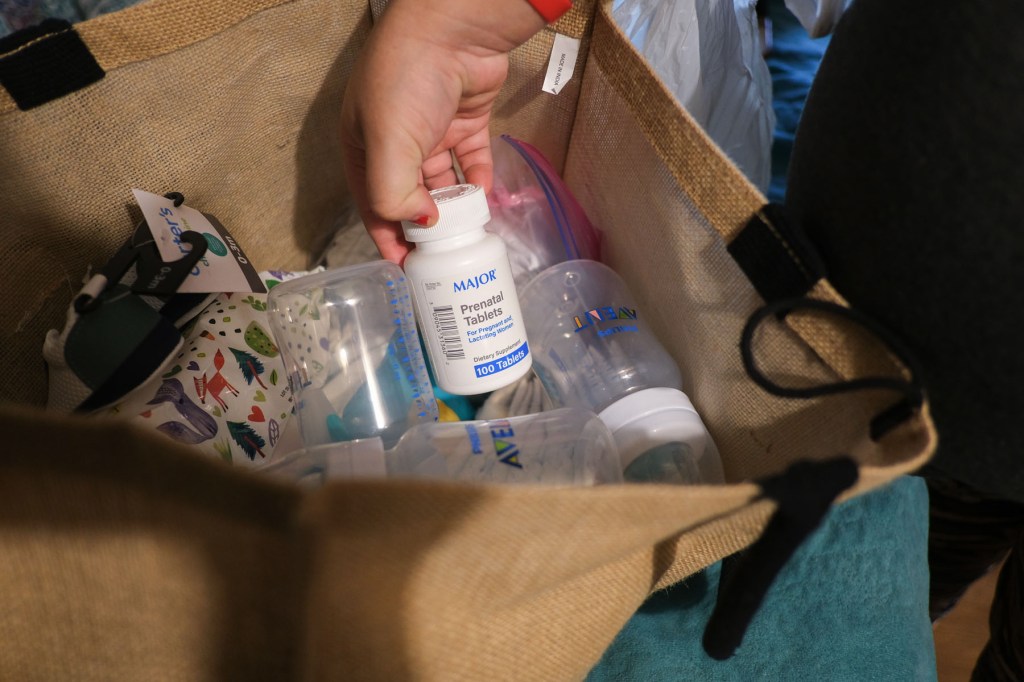
Jacqueline holds a bottle of prenatal vitamins at her home in North Florida. A small nonprofit clinic nearby has been paying for Ubers so she can continue her prenatal check-ups. (Michelle Bruzzese for The 19th)
“In our hospital, every doctor I’ve talked to — and these are doctors that have been there 20 years — all are saying these past six months they’ve seen worse obstetrics outcomes than ever in their career,” Dr. Parker Duncan Diaz, a family physician in Santa Rosa, California, whose clinic mostly cares for Latinx patients. That’s included more preterm labor and more pregnant patients with severe hypertension.
“I don’t know what’s causing it, but my bias is that it is the impact of this horribly toxic stress environment,” he added, specifically noting the stress caused by the threat of immigration enforcement.
In recent months, Dr. Caitlin Bernard, an Indiana-based OB-GYN, has seen a number of pregnant patients seeking emergency attention who have not received any prenatal health care. One was 31 weeks, approaching the end of her pregnancy. Another was more than 20 weeks pregnant when she came to Bernard’s office, having developed complications from a molar pregnancy — a rare condition that means a healthy birth is impossible and that without early treatment can result in vaginal bleeding, thyroid problems and even cancer.
“Anytime you’re not able to access that early prenatal care, we do see complications with that,” she said. “And many of these things can absolutely be life-threatening for both the moms and the babies.”
Dr. Daisy Leon-Martinez, a maternal-fetal medicine specialist in San Francisco, said she now regularly cares for patients in her labor and delivery ward who have been transferred to her hospital because of newly developed pregnancy complications. These are often their first doctors’ visits since becoming pregnant. Many of those patients have told her that they did not want to seek prenatal care for fear of encountering immigration officials.
During regular visits, she added, she has advised people with pregnancy complications that they would be best served by a hospital stay — only to be told that her patients no longer feel safe going to the hospital.
The current enforcement environment is challenging immigrant advocates, who are continuing to encourage immigrants to seek appropriate medical care while acknowledging that doing so is increasingly risky.
Lupe Rodríguez, the executive director of the National Latina Institute for Reproductive Justice, said her organization is urging pregnant immigrants to seek the health care that they need, and to be proactive about making plans for themselves and their families in the event that they are detained.
“We can’t know for certain about any given [health care center] whether or not it’s going to be safe. One of the things that we’ve been seeing is leadership at some of these health centers — big hospitals and clinics — have said that they will provide the kind of protection that folks need, that they don’t want folks to be afraid of care,” Rodriguez said.
While those statements signal the intentions of a hospital’s leadership, Rodriguez said, “we still know that there are individuals within some of those care centers that are part of the reporting mechanism or are intimidating people.”
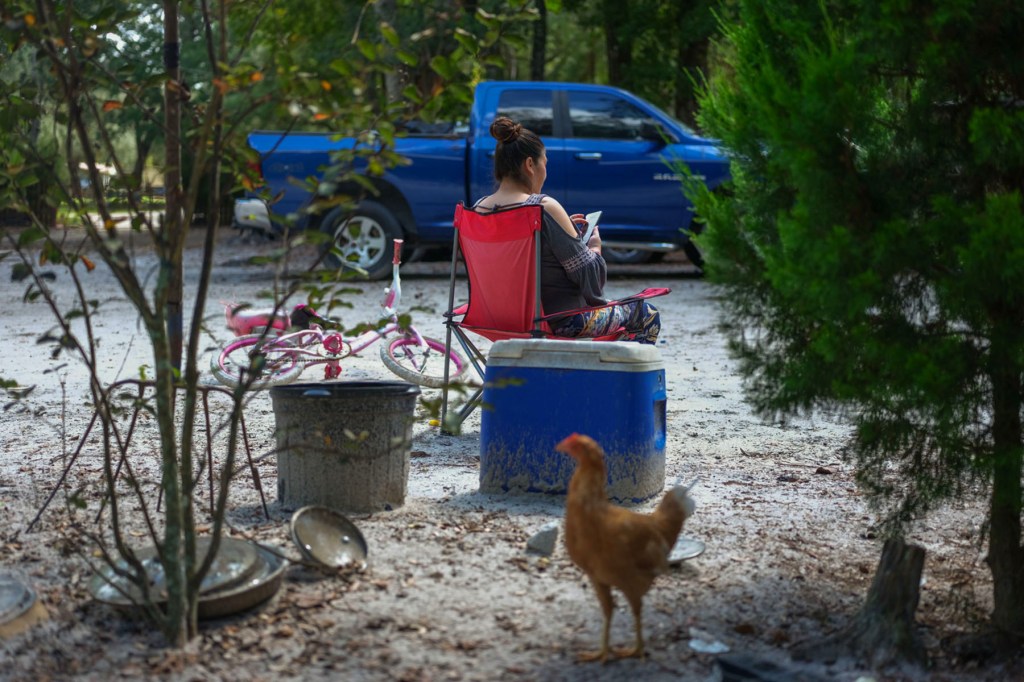
Outside her home in North Florida, Jacqueline sits in a red chair as a chicken wanders nearby. (Michelle Bruzzese for The 19th)
Jacqueline approached the last days of her pregnancy hopeful that the place she had chosen — a large university hospital that workers at her local clinic recommended — would be a safe place for her to give birth.
One night at the end of September, when labor pains grew too intense, she called for an ambulance and made it to the hospital. When she got there, she asked her providers if there were any ICE agents near the building. She had heard of a man at a local hospital being detained after having surgery. They told her there were none they were aware of.
She went on to deliver her baby under general anesthesia after a long, difficult labor. “I didn’t even hear him cry when they pulled him out,” she said. Her only relative left in the area was taking care of her daughter, so she recovered alone at the hospital for five days before heading home in an Uber that a social worker procured for her and her son.
“If my husband was here, he would have been there with me at the hospital,” Jacqueline said while recovering at home. “He would be here taking care of me, of us. I wouldn’t be worried about the things I still want to get for the baby.”
This story was originally reported by Mel Leonor Barclay and Shefali Luthra of The 19th. Meet Mel and Shefali and read more of their reporting on gender, politics and policy.
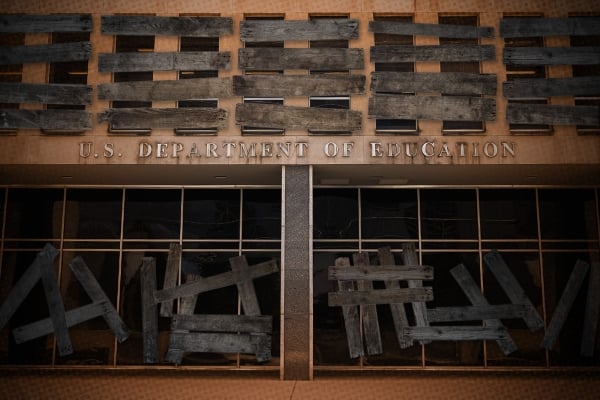
The department is largely closed due to the government shutdown. In the meantime, the Trump administration is using furloughed workers’ emails to make a political statement.
Photo illustration by Justin Morrison/Inside Higher Ed | Tierney L. Cross/Getty Images | nevodka/iStock/Getty Images
Wednesday morning, as the government shutdown began, chief officers at the Department of Education distributed a standard out-of-the-office statement to all furloughed staff members and instructed them to copy and paste it into their email. So that’s what they did.
But just hours later, those same nonpartisan staffers began to hear that the message they’d pasted into their email account was not the message being received by the public.
“On Wednesday evening, my supervisor reached out to me on my personal equipment and said, ‘You’re going to want to log in and change your out-of-office status,’” one department staffer told Inside Higher Ed on the condition of anonymity out of fear of losing her job.
When she followed her supervisor’s direction and logged in, the automatic message she saw was not the one she had saved earlier that morning.
Rather than the original note, which had said, “There is a temporary shutdown … due to a lapse in appropriations,” the new message said, “Unfortunately, Democrat Senators are blocking passage of [a bill] … which has led to a lapse in appropriations.”
This is one of the more than 10 emails Inside Higher Ed received as automatic responses including the same political message. Although Keast was appointed by Trump, most of the staffers we contacted were not.
The outgoing message had been changed internally without her consent. And this staffer was not alone. Inside Higher Ed emailed 10 separate Education Department staffers Thursday, all of whom had been placed on furlough, and each one bounced back with identical responses. One senior leader from the department, who also spoke anonymously, said that to his knowledge the politically charged message was set as the out-of-office notification for all furloughed employees.
(The Department of Education did not immediately provide comment. In fact, the emails sent to both deputy press secretary Ellen Keast and the general press team account were met with the same automatic response.)
The first staffer said that while she was caught off guard by the override at first, it made sense the more she thought about it. Similar messages blaming Democratic senators for the shutdown had already been put at the top of HUD.gov, the landing page for all things Department of Housing and Urban Development, and other federal websites.
As of Thursday evening, the HUD website noted, “The Radical Left in Congress shut down the government. HUD will use available resources to help Americans in need.”
Republicans control the White House, the House and the Senate. In the Senate, they need the votes of at least seven Democratic senators to reach the 60-vote threshold necessary to overcome a filibuster.
“I was really surprised, because we had gotten such explicit instructions on what to use for our out-of-office message,” the staffer said. But “when I saw that message from my supervisor, I assumed it had been changed to something more political than the original neutral one.”
She has already logged back in multiple times to change the automatic response back to the neutral language. But each time, within hours, the department has overridden her changes.
“It’s what [is being sent] to people who contact me, and they could reasonably misunderstand it as coming from me, and I don’t feel comfortable as a federal employee communicating a political message like that,” she said.
A second staffer told Inside Higher Ed that he has worked through multiple shutdowns prior but not experienced anything like this.
“It’s just wild to see your name attached to a message that you had nothing to do with,” he said. “It feels like a violation … You know that you don’t have any expectation of privacy when you’re working for the federal government. But it’s a different thing to say that you don’t have autonomy over your own words.”
The second staffer noted that in his view, not only did this seem to be a violation of his personal rights, but also a violation of federal law.
The Hatch Act, passed in 1939, was intended to ensure that nonpartisan federal workers who worked across administrations remained just that—nonpartisan. And according to documents from the Office of Special Counsel website, the Hatch Act “limits certain political activities of federal employees,” like using official authority for political purposes, soliciting political donations, wearing partisan political gear at work and posting or sharing partisan content on government systems.
“It’s crazy to see the law violated on your behalf,” the second staffer said.
None of the department employees Inside Higher Ed spoke with intended to file an individual lawsuit, nor had they heard anything from their union about a collective legal response. But one shared that Democracy Forward, a nonprofit legal organization that has sued the Trump administration several times this year, will be going to court over the matter as soon as Friday.
Standing on the charred remains of his hut in a village near Assam’s Morigaon district in South India, Shafik Ahmed clutched a worn folder of papers: land deeds, ration cards and a laminated voter ID, all declaring the 68-year-old bicycle repairman an Indian citizen.
None of it mattered when bulldozers rolled into his neighbourhood in June 2025, demolishing 17 homes, all belonging to Bengali-speaking Muslims.
“I was born here, voted here, paid taxes here,” Ahmed said. “Still, they told me I am a foreigner. They dumped us near the border like we are cattle.”
Ahmed is among the hundreds of Muslims who say they were pushed across India’s eastern border into Bangladesh in recent months, as part of what human rights lawyers say is a rapidly intensifying campaign of ethnic targeting in Assam, a region famous across the world for the quality of tea it produces.
The drive has escalated in the run-up to the 2026 state elections, with Chief Minister Himanta Biswa Sarma branding undocumented Muslims as “infiltrators” and vowing to “protect the culture of Assam.”
Islamophobia is a global concern.
The expulsions, many executed without due legal process, have sparked concern far beyond India’s borders. As the United Nations warns of a global surge in anti-Muslim bigotry, activists say Assam’s campaign fits a broader pattern of Islamophobia playing out across continents.
“They call it pushback,” Ahmed said. “We call it expulsion.”
Across Assam, particularly in Muslim-majority districts like Dhubri, Barpeta and Goalpara, families wake up to midnight police knocks, arbitrary detentions and the looming threat of forced deportation.
Rubina Khatun, 53, said she was taken without explanation from her home In May 2025, driven 200km to the Matia detention centre and later left in the no-man’s land near the India-Bangladesh border along with other women and children.
“The soldiers shouted at us: ‘You’re not Indian anymore. Go to your country’,” she said. “But I have never been to Bangladesh. We spent hours in the swamp. No food, no water. It felt like we were being erased.”
Applying old laws to new intolerance
Human rights lawyer Hameed Laskar, who represents several families appealing the orders by the Foreigners Tribunals, says the government is misusing a 1950 law meant for undocumented immigrants.
“These people have lived in Assam for generations,” Laskar said. “Some even appear on the National Register of Citizens. But a misspelled name or a missing land receipt from 1970 is enough to be declared a foreigner. It’s not legal enforcement. It’s engineered exclusion.”
The targeting of Muslims in Assam is not new. But since the conservative Bharatiya Janata Party came to power in India in 2014, the rhetoric has hardened and the policies have sharpened.
In 2019, the national registry process excluded nearly 2 million people, most of them Muslims. That has left families in limbo. While Hindus excluded from the list can claim citizenship under India’s 2019 Citizenship Amendment Act, there is no such provision for Muslims.
The wife of Parvez Alam, a schoolteacher in the city of Barpeta, Aswas recently declared a foreigner despite having a birth certificate and electoral record.
“Muslims now need 20 documents to prove their Indian-ness. Hindus only need to declare it,” Alam said.
Ping-ponging people across borders
According to a June statement from Chief Minister Sarma in the state assembly, more than 300 “illegal Bangladeshis” have been expelled since May. Local media and community groups put the number closer to 500, including at least 120 women.
But the Bangladeshi government has rejected many of these returnees, saying they have no proof of origin. Several have been stranded in border areas, caught in a bureaucratic tug-of-war.
In one incident that drew widespread attention, 60-year-old Salim Uddin, a retired truck driver from Golaghat, was found wandering along the India-Bangladesh border after his family saw a viral video showing him being handed over to Bangladesh’s border guards.
His son, Rashid, later confirmed that Uddin had served in the Assam Police for nearly three decades.
“How can the son of a state police officer be declared Bangladeshi?” Rashid asked. “Had my grandfather been alive, it would have broken his heart.”
A pattern of prejudice
The Assam government has denied that the crackdown is communal, insisting it targets only “illegal foreigners.” But the pattern tells a different story. A recent report by a coalition of civil society groups found that over 95% of those detained or expelled this year were Bengali-speaking Muslims.
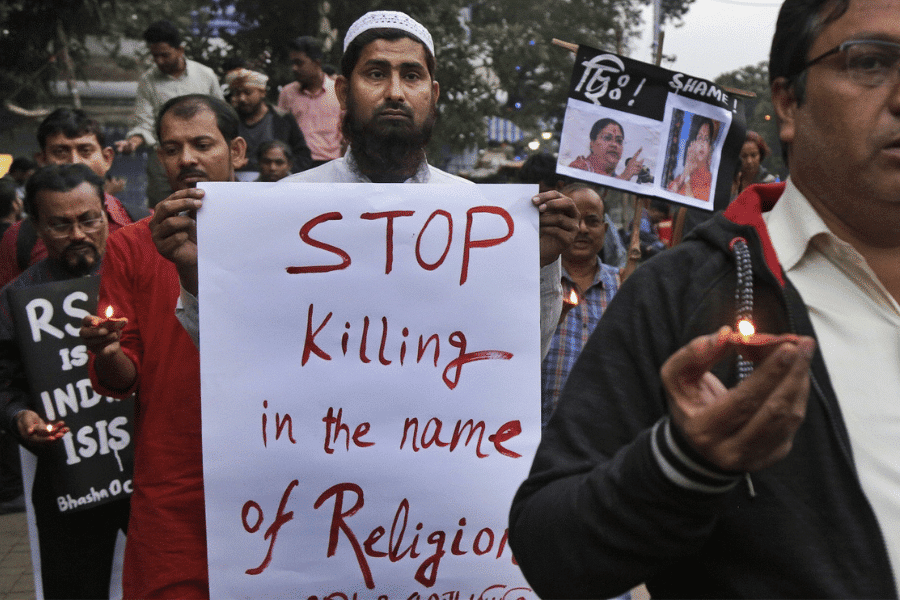
The fear gripping Assam’s Muslims mirrors rising Islamophobia globally. From bans on hijabsin French schools to mosque attacks in the United Kingdom, Muslims across continents are facing what the United Nations calls a “widening wave of intolerance.”
On March 15, UN Secretary-General António Guterres marked the International Day to Combat Islamophobia by warning of a disturbing rise in anti-Muslim bigotry. “This is part of a wider scourge of extremist ideologies and attacks on religious groups,” Guterres said in a video address. “Governments must foster social cohesion and protect religious freedom.”
He called on online platforms to curb hate speech, and on leaders to avoid rhetoric that demonizes communities. Muslim civil rights groups in Europe and North America have echoed those concerns.
A spread of intolerance across the globe
A recent report by the Council on American-Islamic Relations documented a record 8,658 anti-Muslim incidents in 2024 alone.
In the UK, advocacy group Tell MAMA has reported a 30% increase in Islamophobic hate crimes since October 2023, including attacks on mosques, verbal abuse and discrimination in housing and employment.
Dr. Arshiya Khan, a political sociologist based in London, said these patterns are not isolated. “They’re interlinked,” Khan said. “What starts as state policy in one country often emboldens vigilante behaviour in others.”
In Assam’s tea belt, the fear is palpable. In several villages, Muslim residents say they have stopped going to police stations or even hospitals, afraid they might be detained. In one case, a 27-year-old man who went to register a land dispute at a local police station was declared a foreigner after a routine ID check.
“We don’t know who is next,” said Shahina Begum, a mother of three. “They say we don’t belong here. But where do we go?”
Fighting back
At least four petitions have been filed in the Assam High Court since June by families who say their relatives disappeared after being taken by police. Most had no ongoing legal cases against them.
“They’re being disappeared without a trace,” said Laskar. “This is not law enforcement, it’s ethnic cleansing in slow motion.”
Back in Morigaon, Shafik Ahmed said he has no plans to leave, even as bulldozers return to neighbouring villages.
“This land is all I know. If they push me out again, I’ll come back again,” he said, eyes fixed on the debris of his former home.
But for those like Rubina Khatun the trauma is lasting. “We’re citizens,” she said. “We have documents. We were born here. But in their eyes, we will never be Indian enough.”
As global attention briefly turns to Assam, with international bodies urging India to uphold human rights, residents say they don’t expect justice, only survival.
“Every day we live feels like another test to prove we exist,” Ahmed said.
Questions to consider
1. Why do Muslim citizens of Assam India believe that their government treats them differently than non-Muslims?
2. Should religion be a factor in determining whether someone should get national citizenship?
3. Should a government be concerned about the religions of its citizens?
This audio is auto-generated. Please let us know if you have feedback.
Dive Brief:
Five large school districts in Northern Virginia were put on high-risk status and told their federal funding would only be distributed by reimbursement from the U.S. Department of Education Tuesday.
The announcement comes after the Education Department last month found the five districts had violated Title IX through their policies allowing transgender students to use restrooms and locker rooms that match their gender identity.
As the Trump administration advances its agenda to exclude transgender students from sports teams and bathrooms aligning with their gender identities, LGBTQ+ advocates and Democratic lawmakers warn that these funding restrictions are unprecedented and will cause financial hardships to the districts.
Dive Insight:
Collectively, the five Virginia districts impacted have about $50 million in federal formula funding, discretionary grants and impact aid grants that will need to be processed through reimbursements, according to a Tuesday statement from the Education Department.
The districts — all located near Washington, D.C. — are Alexandria City Public Schools, Arlington Public Schools, Fairfax County Public Schools, Loudoun County Public Schools, and Prince William County Public Schools.
“We have given these Northern Virginia School Divisions every opportunity to rectify their policies which blatantly violate Title IX,” said U.S. Education Secretary Linda McMahon in the statement.
Under the Trump administration, the Education Department has maintained that transgender student inclusion in school facilities and on athletic teams encroaches on cisgender girls’ Title IX rights. The 53-year-old Title IX law prohibits sex discrimination in federally funded education programs.
“Today’s accountability measures are necessary,” McMahon said, because the five districts “have stubbornly refused to provide a safe environment for young women in their schools.”
After finding the districts in violation of Title IX in July, the Education Department’s Office for Civil Rights offered a proposed resolution agreement to the districts. The districts were asked to voluntarily agree within 10 days or risk imminent enforcement action including referral to the U.S. Department of Justice. However, the districts rejected those efforts.
The proposed resolution agreement would require the districts to rescind policies that allow students to access facilities based on their “gender identity” rather than their sex and issue a memo to each school explaining that any future policies related to access to facilities must separate students strictly on the basis of sex. The memo would have to specify that Title IX ensures women’s equal opportunity in any education program including athletic programs.
In addition, the agreement would require the districts to adopt “biology-based” definitions of the words “male” and “female” in all practices and policies relating to Title IX.
Fairfax County Public Schools, which has nearly 183,000 pre-K-12 students and is one of the country’s largest school systems, said in a Wednesday statement that the district is reviewing OCR’s letter about the district’s high-risk status and will then respond to OCR. In the meantime, the district is maintaining its policies that it said align with Virginia law and rulings from the 4th U.S. Circuit Court of Appeals.
“FCPS remains dedicated to creating a safe, supportive, and inclusive school environment for all students and staff members, including our transgender and gender-expansive community. Any student who has a need or desire for increased privacy, regardless of the underlying reason, shall continue to be provided with reasonable accommodations,” the district said.
The two Virginia senators, Mark Warner and Tim Kaine — both Democrats — condemned the action against the five districts, saying the Education Department “wants to punish high-performing, award-winning schools districts in Northern Virginia.
“You can’t have a strong economy without strong schools, so add this to the list of President Trump’s disastrous economic policies,” the senators said.
Denise Marshall, CEO of the Council of Parent Attorneys and Advocates, called the action a “direct assault on schools” in a Tuesday statement. The administration’s efforts to withhold “critical” funding are unlawful and amount to “political warfare” and “continue to do significant harm” to schools,” Marshall said.
She added the announcement “is part of the Administration’s pattern to exhibit explicit hostility towards LGBTQ+ students and students of color whose identity often intersects with and includes disability.”
But America First Legal — the organization that filed a complaint with OCR against the five districts earlier this year, sparking the Education Department investigation — condemned the five districts’ defiance of a “federal directive to end illegal ‘gender identity’ policies and choosing to follow extremist ideology over federal law while jeopardizing millions in federal funding.” The AFL had asked the department in its February complaint to “cut off all federal funding” if necessary.
Ian Prior, senior counsel at America First Legal, said in a statement Tuesday that the districts are “proving that they are deliberately indifferent to the safety of schoolchildren and are perfectly willing to sacrifice millions of dollars” in funding that he says supports low-income and special needs students.
Prior added that the “grim reality is that these school districts are merely delaying the inevitable — these policies will soon be dead and buried.”
Eveline McPhee, a 39-year-old mother of two, has been a dental assistant in northern Massachusetts for nearly 15 years. And while she’s long aspired to upgrade that title to dental hygienist, for most of her career that goal seemed unattainable.
With a full-time job, managing classes seemed arduous, and without a job she and her husband wouldn’t be able to afford day care and after-school programs.
But that all changed last year when an admissions officer at Mount Wachusett Community College told McPhee about Child Care Access Means Parents in School, or CCAMPIS—a $75 million federal grant program designed to help low-income parents in college pay for childcare both on and off campus. McPhee enrolled last fall and is on track to graduate in 2026.
“I have a 9-year-old son, and they paid for him to go to camp this summer so that I can take an intensive course in the dental hygiene program,” McPhee said. “I definitely would not have been able to go back to school without CCAMPIS.”
Now the future of the program is cloudy.
Applications for this year’s CCAMPIS grants—which typically open in May and close by the end of July—have yet to be announced, leaving thousands of student parents in limbo.
Multiple think tank fellows and student advocacy representatives said they’ve been reaching out to the Trump Department of Education for more information since the spring, but the response is always “We’ll open it soon.” Similar circumstances have been reported for other basic needs programs included under FIPSE, the Fund for the Improvement of Postsecondary Education.
Neither the Department of Education nor Republican committee chairs in the House and the Senate responded to Inside Higher Ed’s request for comment.
With the new academic year quickly approaching, the lack of funds leaves many colleges and universities with major budget gaps.
Until last month, Mount Wachusett’s childcare finances looked grim; CCAMPIS funding was set to run out on Sept. 30. But Ann Reynolds, the student support adviser who runs the program, had seen all the headlines about the Trump administration’s fundingfreezes and anticipated the delay. (Last year, the Biden administration chose not to open the grant to new applicants, but it sent out a clear notice in advance and allowed existing awardees to reapply.) She reached out to a local philanthropy and secured $94,000 to carry McPhee and about a dozen other student parents through graduation.
“We could see the writing on the wall, so to speak,” Reynolds said. “And it’s lifted a great weight from my student parents’ shoulders.”
Not all colleges were so forward-thinking. Many students, including future enrollees at Mount Wachusett, will have to take out additional loans—or drop out and try to repay the loans they already have without a college degree.
“We’re seeing a lot of students raising children coming to school now, so our need is greater,” Reynolds said. “But we can’t take in new students.”
Without the grants, which have had bipartisan support in Congress for years, historically underfunded institutions, including community colleges and minority-serving institutions, will be cash-strapped. Some may be forced to cut staffing or eliminate services entirely.
“Given all the other funds from the U.S. Department of Education that have been frozen or subject to political games in the last few months, the community is right to worry,” said Bryce McKibben, senior director of policy and advocacy at Temple University’s Hope Center for Student Basic Needs. “This doesn’t serve anyone—certainly not taxpayers. The administration should announce a competition or award continuation grants immediately.”
‘A Vicious Cycle’
Most experts speculate the delay is occurring for one of two reasons: Either the department lacks the capacity to meet this statutory requirement since it laid off half its staff in March, or it is intentionally withholding the dollars as part of a broader effort to claw back education funding through a process known as rescission.
The latter option would require congressional approval. But the president already won enough votes to pass one rescission package earlier this month, and policy analysts say it’s likely he’ll try to do it again. (Trump’s proposed budget for fiscal year 2026 axes CCAMPIS and FIPSE completely.)
Either way, Theresa Anderson, a senior education and labor fellow at the Urban Institute, a nonpartisan think tank, said the delay symbolizes a larger restriction on college access.
This is a “well-documented agenda pattern and strategy” of the Trump administration, she explained. “It represents further disinvestment and disinterest in helping people access the necessary training, education and credentialing programs that states recognize are necessary to development of the workforce.”
Tanya Ang, executive director of the Today’s Student Coalition, an adult learner advocacy group, described the situation as putting the leaders of critical student support services “up against a brick wall.”
“If students are going to school, we want them to finish, because that’s going to ensure they can get a job and start a long-term career that will provide a strong return on investment,” Ang explained. Cutting off access to childcare “creates a vicious cycle that will hurt not just them and their children as individuals but, honestly, our economy.”
Critics have long argued that CCAMPIS is a duplicate program, suggesting that the Child Care and Development Block Grant, which is run by the Department of Health and Human Services, fulfills a similar purpose. But higher education experts say that’s simply not the case.
CCDBG, they say, supports broad, state-level childcare subsidies, predominantly allocated to parents who work full-time. CCAMPIS, on the other hand, is more targeted and serves student parents, many of whom can’t meet the work requirements attached to the block grant.
“CCAMPIS was really important to not only be able to fill childcare needs in a way that was very flexible for colleges, but also to allow for additional wraparound supports that are incredibly important to support persistence,” Anderson said. It helps student parents “build meaningful community connections, not only with staff of the college, but also with each other.”
At Mount Wachusett, Reynolds said student parents who participate in the CCAMPIS program have one of the highest completion rates among any demographic, at 73 percent. So she hopes that even a sliver of the current operation will survive past its current end date in 2027.
When asked what she would tell the Trump administration if she had the chance, McPhee said she was worried people were losing the opportunity to get ahead.
“I wanted to do better for my family, and this allowed me to do that,” she said. “To not be able to provide that for people moving forward, it’s just not what this country is about. It’s wrong, and I don’t really understand why they would do it.”
I know this all too well. As a former military police officer who trained as a truck driver in 2016 under a VA-approved program, I was exposed to dangerous, poorly maintained equipment that ultimately caused me to lose the use of my right arm for over a year, a disability I will carry for life.
Despite repeated complaints to the program staff and the assigned State Approving Agency (SAA), the official body responsible for oversight, my concerns were dismissed, and no corrective action was taken until years later — and only after significant evidence surfaced.
Unsafe Equipment Ignored
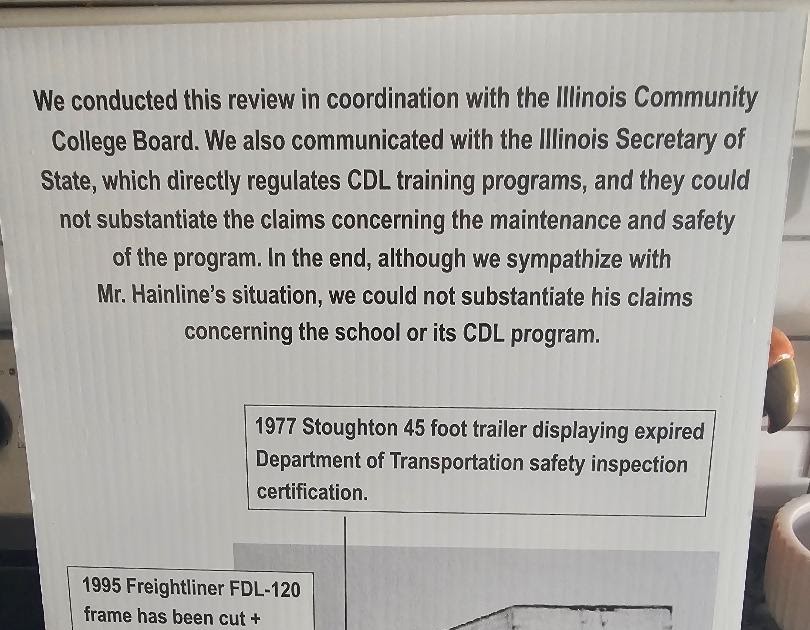
During my class, veteran student Mike and I, and non-veteran students Dustin & Richard, discovered that the landing gear on the 1977 Stoughton trailer assigned for training was missing an axle and four wheels. I reported this to the staff, who admitted the equipment was faulty but took no timely corrective action. A veteran student later informed me that the school replaced the landing gear on a similar 1987 Great Dane trailer sometime after our class ended, contradicting official reports submitted to the VA and state approving agencies that claimed no issues existed.
To confirm these claims, I located the trailer used in program advertising and compared photos taken during and after our training. The landing gear had indeed been replaced—freshly painted and altered, as confirmed by Great Dane Trailers’ manufacturer.
The trucks used for training showed similar problems. According to Vehicle Identification Numbers, three trucks had modifications—such as frame cutting between tandem axles—that Daimler Trucks North America (the manufacturer) neither recommended nor approved. Federal Motor Carrier Safety Administration guidelines were not followed, creating additional safety concerns, per conversations with the Federal Motor Carrier Safety Administration.
Systemic Oversight Failures
These issues highlight a broader problem: the State Approving Agencies, under contract with the VA, are failing to provide adequate oversight and ensure program quality. The VA Office of Inspector General’s 2018 report (OIG Report #16-00862-179) found that 86% of SAAs did not sufficiently oversee educational programs to ensure only eligible, high-quality programs were approved. The report estimated that without reforms, the VA could improperly pay out $2.3 billion over five years to subpar or fraudulent institutions.
Alarmingly, the VA Veterans Benefits Administration (VBA) is restricted in its ability to question or audit the reports submitted by SAAs. There is no mechanism for veterans to challenge or appeal SAA findings, effectively leaving veterans powerless within a system that is supposed to protect them.
Veteran Service Organizations’ Silence
I sought help from veteran service organizations but found little interest in addressing these critical problems. The American Legion initially responded to my outreach in 2017, engaging in conversations and phone calls. However, within months, communication ceased without explanation. Attempts to meet with American Legion leadership and their legislative contacts, including Dr. Joe Wescott—an influential consultant on veterans’ education—were unsuccessful. Dr. Wescott dismissed concerns about the integrity of the SAA’s targeted risk-based reviews, citing that schools typically fix problems before SAAs visit, and failed to investigate conflicts of interest between report authors and SAA officials.
At the 2024 American Legion convention, a planned meeting between a fellow veteran and Legion leadership was abruptly canceled. Meanwhile, other veteran groups such as Veterans of Foreign Wars (VFW), Disabled American Veterans (DAV), and Veterans Education Success (VES) showed engagement, but the American Legion and Student Veterans of America remained unresponsive.
The American Legion’s own 2016 Resolution #304 warned of the exact issues I and countless other veterans have endured: deceptive practices by some education providers, poor accreditation standards, and underfunded and understaffed SAAs unable to enforce proper oversight.
A Cycle of Scandal
Congressional staff admitted privately that veterans’ education legislation rarely progresses without support from key players like Dr. Wescott and the National Association of State Approving Agencies (NASAA), whose leaders have repeatedly declined to meet with veterans raising concerns. These complex relationships between SAAs, VA officials, veteran groups, and legislators perpetuate a “cycle of scandal” that leaves veterans vulnerable and taxpayers footing the bill.
In 2023, a combat veteran attending the same program I did reported similar frustrations: only one of three trucks was roadworthy, severely limiting practical training time for a full class of students. Despite numerous documented complaints, the NASAA president refused to meet or discuss these issues.
The Human Cost
Beyond financial waste and bureaucratic failures, real human harm occurs. My injury, caused by training on unsafe equipment, robbed me of a year of mobility and continues to affect my life. Thousands of veterans have lost their G.I. Bill benefits, incurred debt for worthless or limited degrees, or been misled about their job prospects after completing programs approved by the very agencies meant to protect them.
The internet is rife with investigative reports exposing waste, fraud, and abuse in VA-approved programs. Headlines like “School Scammers Are Robbing Veterans and the Government Blind” and “For-Profit Colleges Exploit Veterans’ G.I. Bill Benefits” are far too common.
A Call for Reform
Despite these glaring failures, meaningful reform remains elusive. The VA OIG report and numerous investigations call for increased accountability, transparency, and cooperation between the VBA, SAAs, veteran service organizations, and Congress. Veterans deserve a system that genuinely safeguards their education and wellbeing.
My fellow former veteran students and I have organized online and turned to media outlets to break the silence. It’s time for the public and policymakers to hear our stories—not just slogans and “catchy” legislative titles that fail to restore lost benefits or improve program quality.
We veterans demand change—because we have earned more than empty promises and a broken system that leaves us behind.
Michael S. Hainline is a veteran and advocate living in Pensacola, Florida. He served in active duty and reserve military components and now works to expose the failures of oversight in VA-approved education and job training programs. He can be reached at [email protected].
Free speech in Europe is under debate at the moment, and for good reason. For anyone who is concerned about the preservation of free expression on a global scale, the restrictions on speech — including online speech — in countries like the United Kingdom and Germany in recent years have been alarming.
I’ve long written about international threats to free expression at FIRE — including in our newsletter, the Free Speech Dispatch — to help Americans better understand the broader state of speech, and how our First Amendment fits into the global stage. The current spotlight on speech restrictions abroad should once again remind us of the value of protecting our rights here at home.
Policing the ‘limits’ of Germany’s speech
A CBS 60 Minutes segment that aired over the weekend is particularly disturbing, both because of the extent to which Germany polices speech and the casual disregard the prosecutors interviewed showed toward freedom of expression.
One of the prosecutors, when asked how targets respond to raids — sometimes conducted pre-dawn — of their homes and electronics, said that they are surprised to discover that they have committed a crime. “You have free speech as well, ” Dr. Matthäus Fink said, “but it also has its limits.”
Indeed it does, online and off. Just look at how German police and prosecutors have responded to speech that has the potential to offend in recent years.
A 64-year-old man is facing charges not just for alleged antisemitic posts, but also for calling a German politician a “professional idiot.” An American writer living in Germany may be sentenced to years in prison for satirically using a swastika to criticize the country’s COVID policies. Berlin police literally cut off the power to a pro-Palestinian conference because of “the potential for hate speech.” Then they shut down a pro-Palestinian protest because they couldn’t be sure if Irish protesters were saying something hateful in a foreign language — better censored than sorry. And what of the arrests of people who share, even unknowingly, a fake quote, because “the accused bears the risk of spreading a false quote without checking it”? Or of the man whose home was raided at dawn for tweeting at a local politician, “You are such a penis”?
And it’s not only Germany that targets insults of politicians. Just yesterday, news broke that a musician from the band Placebo has been charged with defamation for “contempt of the institutions” after calling Italian Prime Minister Giorgia Meloni a “piece of shit, fascist, racist” during a 2023 music festival.
Free speech is under threat in Europe, whether it’s online speech, blasphemy, or public protests.
In case you thought arrests over insults were a fluke, the prosecutors featured by 60 Minutes are here to assure you: That’s the intention, not a byproduct. When interviewer Sharyn Alfonsi asked, “Is it a crime to insult somebody in public?,” all three confirmed it was, with Fink suggesting punishment for online insult could be even more severe “because in internet, it stays there.” Reposts, too, can be criminal.
Fink went on to defend prosecutorial action against the man who called a politician a “penis,” suggesting this and similar crass language has “nothing to do with … political discussions or a contribution to a discussion.” The notion that prosecutors should use the power of the state to shape the civility of political discourse should alarm anyone concerned about the state of expression in Germany and online.
Vance criticizes European leaders’ speech policing
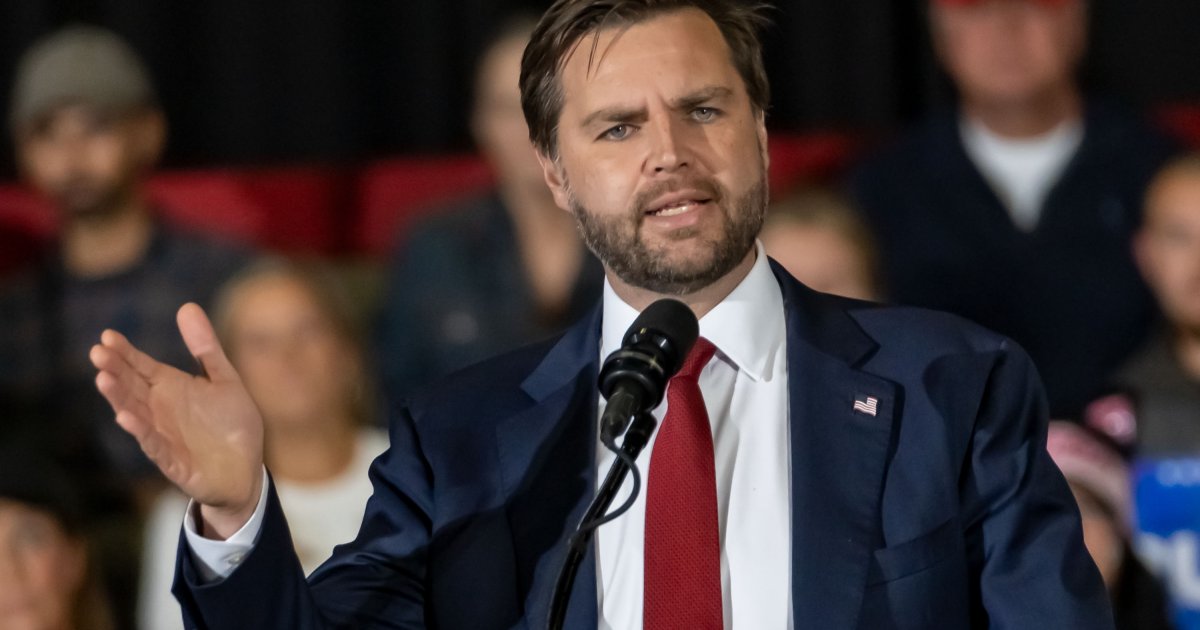
Last week, Vice President JD Vance gave a much-discussed speech about “shared values” at the Munich Security Conference. In it, Vance took European leadership to task over censorship of conservative and religious speech, particularly in the UK. “Free speech, I fear, is in retreat,” Vance said.
The speech prompted pushback from European officials who objected to Vance’s diagnosis. Business Secretary Jonathan Reynolds, for example, said in response to Vance’s discussion of religious speech, “let’s be clear, we don’t have blasphemy laws in the UK.”
That isn’t so clear at all.
In just the past few months alone, the UK managed to have multiple blasphemy controversies. (Not to mention the UK’s many other recent freespeechwoes covered in FIRE’s Free Speech Dispatch, which are too numerous to discuss in full here.)
In November, the Advertising Standards Authority banned comedian Fern Brady from using an advertisement for her stand-up tour that depicted Brady as the Virgin Mary because it could cause “serious offence” to Christians. Then Member of Parliament Tahir Ali called on Prime Minister Keir Starmer to create “measures to prohibit the desecration of all religious texts and the prophets of the Abrahamic religions” — also known as a blasphemy law.
And early this month, Greater Manchester Police arrested a man “on suspicion of a racially aggravated public order offence” for publicly burning a Quran. An assistant chief constable said police “made a swift arrest at the time and recognise the right people have for freedom of expression, but when this crosses into intimidation to cause harm or distress we will always look to take action when it is reported to us.”
Harm? Distress? These concepts are vast enough to fit the entirety of Big Ben. It is, as writer Kenan Malik puts it, “a form of blasphemy restriction but in secular garb.”
Labour Deputy Prime Minister Angela Rayner is also establishing a council to create an official government definition of Islamophobia. Depending on the council’s ultimate definition, and whether and how it is used by government agencies to respond to Islamophobia, it could implicate UK citizens’ ability to speak freely about important religious issues. (As FIRE has writtenrepeatedly in the context of the International Holocaust Remembrance Alliance’s definition of anti-Semitism in the U.S., codification of these definitions into official policy can risk punishment or chilling of protected speech about political and religious matters.)
Outside of the UK, Europe’s restrictions on blasphemy are growing — and show no signs of stopping. Indeed, the Manchester man arrested for burning a Quran did so in response to the Jan. 29 assassination in Sweden of Iraqi refugee Salwan Momika, known for his well-publicized and controversial public Quran burnings. Just after Momika’s killing, a Swedish court found Salwan Najem, another Iraqi refugee who burned Qurans with Momika, guilty of incitement against an ethnic group. Momika faced similar charges, which were only dropped upon his death.
The United Nations Human Rights Council encourages these kinds of prosecutions, passing a 2023 resolution advising countries to “address, prevent and prosecute acts and advocacy of religious hatred.” Denmark did so, enacting a law criminalizing desecration of holy texts later that year.
Vance’s support of speech abroad is undermined by Trump admin’s early censorship efforts
Free speech is under threat in Europe, whether it’s online speech, blasphemy, or public protests. But it simply isn’t possible to square Vance’s criticism of European censorship with the recent actions of the administration in which he serves.
In his speech, Vance said “there is a new sheriff in town” and “under Donald Trump’s leadership, we may disagree with your views, but we will fight to defend your right to offer them in the public square.” Vance also objected to “shutting down media.”
Has Vance checked in on what the sheriff is doing?
The president is directly targeting people for their speech, which frustrates the United States’ ability to credibly — and rightfully — advocate for free speech on the world stage. Take, for example, the White House’s decision last week to indefinitely bar the Associated Press from spaces including the Oval Office and Air Force One over its failure to adopt the government-preferred term “Gulf of America.” Press Secretary Karoline Leavitt confirmed that the White House was punishing what it deems misinformation, saying that “if we feel that there are lies being pushed by outlets in this room, we are going to hold those lies accountable.” In his speech, Vance criticized the Biden administration for “threaten[ing] and bull[ying]” private companies into censoring “so-called misinformation.”
Vance, however, is aware of the AP decision — and supports it. In response to journalist Mehdi Hasan’s post asking Vance if he’d seen the ban, he wrote yesterday afternoon: “Yes dummy. I think there’s a difference between not giving a reporter a seat in the WH press briefing room and jailing people for dissenting views. The latter is a threat to free speech, the former is not. Hope that helps!”
That’s rationalizing censorship.
He’s right that banning a journalist from press events isn’t the same as imprisoning them. Obviously some punishments are worse than others, but any punishment based on a journalist’s viewpoint is a free speech violation. As my colleague Aaron Terr explained last week, explicitly barring a news outlet on the basis of viewpoint — and its failure to adopt the state’s preferred terminology — is a serious threat to free speech, one Americans should oppose regardless of who is in the Oval Office.
Vance also said in Munich, “Speaking up and expressing opinions isn’t election interference.” He’s right. There is perhaps no one who needs to hear that message more than President Donald Trump, who praised Vance’s speech but is nevertheless suing Iowa pollster J. Ann Selzer for her polling in the 2024 election — calling it “election interference.” (FIRE represents Selzer.)
FIRE’s defense of pollster J. Ann Selzer against Donald Trump’s lawsuit is First Amendment 101
News
A polling miss isn’t ‘consumer fraud’ or ‘election interference’ — it’s just a prediction and is protected by the First Amendment.
Another member of the Trump administration, Elon Musk, separately called this weekend for journalists at 60 Minutes to receive “a long prison sentence” for “deliberate deception to interfere with the last election,” referring to the journalists’ editing of an interview with then-Vice President Kamala Harris, not the segment on Germany’s online speech policing. Instead, hours later, he shared a clip of that segment with the caption, “Thank the Lord that America has freedom of speech!”
Elected officials should press their colleagues around the world to stand by the values of free expression. Vance’s articulation of those rights is necessary. But being effective requires credibility. That’s why FIRE believes our commitment to nonpartisanship, and our dedication to defending the right to speak regardless of preference or popularity, is our most important value.
If we undermine these freedoms at home, it’s harder to advocate them abroad to an already skeptical body politic.
Date: February 12-14, 2025 Location: The Ritz Carlton, New Orleans
EducationDynamics’ InsightsEDU is one of the only higher education marketing and enrollment management conferences focused on the Modern Learner. Every year, InsightsEDU brings together thought leaders, decision-makers, and professionals from colleges, universities, and education-related organizations nationwide. The mission of InsightsEDU is to create a platform for the exchange of ideas, strategies, and innovations that propel higher education forward.
The Council of Independent Colleges’ 2025 Presidents Institute serves as a pivotal gathering amid the shifting higher education environment, offering a space for leaders to address key challenges. The 2025 gathering will provide over 300 college and university presidents, along with nearly 750 participants, the opportunity to explore how strategic community engagement can transform challenges into opportunities. With a focus on critical issues like financial sustainability, legal challenges, DEI and belonging, and federal policy, this event offers timely insights for navigating higher education’s political landscape.
Immerse yourself in four days of unparalleled learning and collaboration at the SXSW EDU Conference & Festival. Designed for education professionals, industry leaders, and policymakers, this pivotal event ignites creativity and fosters innovation in the field of education.
UPCEA’s Annual Conference is one of the most significant assemblies of thought leaders and practitioners today in the field of professional, continuing, and online education. Deans and other senior university leaders, key staff, and teams responsible for the management, administration, and growth of professional, continuing, and online education programs attend every year to gain insights on the most pressing topics in the higher education landscape – including federal policy, finance and operations, marketing and enrollment management, instructional design, noncredit programs, alternative credentialing, and more.
The American Association of Community Colleges (AACC) Annual Conference hosts a premier professional development event for leaders and stakeholders in the community college sector. It features impactful keynote presentations, focused breakout sessions, technology showcases, and peer-to-peer exchanges, all aimed at addressing the most pressing challenges and opportunities in two-year colleges. With a focus on innovation, problem-solving, and extensive networking opportunities, the AACC Annual Conference serves as an essential platform for shaping the future of community college education.
Date: March 30 – April 2, 2025 Location: Seattle, WA
Join a global network of higher education professionals at the AACRAO Annual Meeting, where leaders from various disciplines come together to explore, engage, and advance the field. This event provides an opportunity to discuss the ever-changing landscape of higher education, share valuable insights, and collaborate on practical solutions to real-world challenges. Each year, the AACRAO Annual Meeting tackles emerging issues and trends, offering attendees the chance to deepen their knowledge, expand their network, and contribute to the future of higher education.
The Online Learning Consortium (OLC) is a group of higher education leaders and innovators who work to advance quality digital teaching and learning experiences. OLC Innovate 2025 offers educators of all experience levels to explore, share, and advance digital and blended learning. Themed “The Rhythm of Innovation: Hitting the High Notes in Digital Education,” the conference will reimagine how today’s disruptions shape tomorrow’s classrooms.
HLC’s Annual Conference is geared towards administrators in the higher education community, including administrative professionals, faculty members, CEOs, presidents, and chancellors. Sessions, speakers, and workshops provide opportunities for institutions that seek accreditation and offer information on the latest developments, issues, and best practices in higher education. The 2025 conference will explore how colleges and universities use higher education to address evolving student and societal needs, impart workforce skills, fuel innovation, and tackle today’s most pressing challenges.
The ASU GSV Summit brings together leading thinkers in digital learning and workforce skills to create a future where everyone has equal access to opportunity. It is a community of educators, entrepreneurs, investors, and innovators in the educational technology and higher education industry who are motivated in reshaping society and education through innovation.
Date: April 23-26, 2025 Location: San Francisco, CA
NAGAP’s annual summit unites professionals engaged in every aspect of the graduate enrollment lifecycle—from admissions and recruitment to financial aid, academic affairs, and beyond. As the only professional organization dedicated exclusively to graduate enrollment management, NAGAP provides a unique platform for addressing the specific concerns and challenges faced by those in this field.
Digital University Week, hosted by Inside Higher Ed and Times Higher Education, brings together leaders in higher education’s digital transformation to explore the opportunities and challenges of a digital-first future. The event focuses on overcoming institutional silos, fostering industry collaboration, and maximizing resources while emphasizing a human-centered approach for equitable digital learning. The series offers an intimate setting for impactful conversations, sparking new ideas and building connections to reshape the future of education.
The 2025 North American Career Education Convention is regarded as the largest gathering of private career education professionals nationwide. Featuring renowned keynote speakers, expert-led sessions, and ample opportunities to connect with sector leaders, this conference attracts a diverse audience each year, fostering collaboration and innovation in postsecondary career education.
The Slate Summit, an exclusive event led by the Slate community, provides a deep dive into specific Slate topics through expert-led sessions and offers networking opportunities with like-minded peers in affinity group breakouts. This year’s Summit, tailored for admissions, student success, and advancement professionals, promises to be the most engaging and informative yet, featuring industry experts, interactive workshops, and unparalleled networking opportunities.
The eduWeb Summit is a community of higher education professionals and industry partners who are passionate about advancing their marketing, communications, and digital work. This conference gathers higher education professionals and industry partners from 16 countries and all 50 states. Attendees benefit from enhanced networking opportunities, engaging with peers and potential partners while gaining valuable insights into web and digital experiences, AI and analytics, leadership and innovation, and enrollment marketing.
UPCEA’s DT&L and SOLA+R event combines 2 conferences into 1 seamless experience. It captures all the elements of digital transformation and leadership in a holistic way—from teaching and learning to leadership and administration—preserving the salient issues for two distinct professional communities, while catalyzing dialogue across all facets of the larger field. This event is ideal for key campus leaders – presidents, provost, deans, instructional designers, faculty, and other focused on digital leadership.
UPCEA DT&L and SOLA+R 2025 Conference details have not been released at this time, but you can view last year’s event page for more information.
UNITE, powered by the United Negro College Fund (UNCF), is the nation’s leading annual gathering for Historically Black Colleges and Universities (HBCUs) and Predominately Black Institutions (PBIs). This influential event brings together thought leaders, change agents, and community partners to accelerate institutional transformation, address shared challenges, and celebrate achievements. Through networking, discussions, and celebration, UNITE fosters innovation within higher education and propels institutions towards a brighter future for all students.
UNCF Unite 2025 Conference details have not been released at this time, but you can view last year’s event page for more information.
HashtagHigherEd 2025
Date: TBD Location: TBD
HashtagHigherEd is a dedicated forum of professionals in higher education marketing and communications to converge, fostering the exchange of best practices amidst the complexities of a competitive and ever-evolving landscape. This dedicated forum provides a space for these professionals to collaboratively discuss effective communication, marketing, and branding strategies tailored to the unique challenges of the higher education sector.
HashtagHigherEd US 2025 Conference details have not been released at this time, but you can view last year’s event page for more information.
Date: September 28-October 1, 2025 Location: Online and Grand Rapids, Michigan
Connect with colleagues and explore the impact of digital media on higher education at the HighEdWeb Annual Conference 2025. Designed for professionals across all roles—programmers, marketers, social media experts, managers, designers, and writers—this event offers diverse track sessions, an inspiring keynote, and group discussions. Engage with a vibrant community, gain valuable insights, and address unique digital challenges faced by colleges and universities, all while expanding your network and enhancing your professional development.
Date: September 18-20, 2025 Location: Columbus, OH
The NACAC Conference 2025 will gather over 6,000 dedicated counselors in Los Angeles to exchange best practices, gain inspiration, and explore cutting-edge research in admission counseling. This event provides higher education counselors with the chance to discover innovative strategies, engage with thought leaders and peers, stay updated with the latest research, and connect with a diverse community of professionals.
The UPCEA Convergence conference explores contemporary trends and emerging models within the realm of alternative credentials. This event, a collaborative effort by UPCEA and AACRAO, serves as a platform for key campus figures involved in credential innovation. This includes deans of professional education, chief online learning officers, registrars, and their respective teams. Together, they aim to delineate and refine institutional strategies concerning alternative credentials.
UPCEA Convergence 2025 conference details have not been released at this time, but you can view the 2024 event page for more information.
P3 EDU – Innovation and Public-Private Partnership in Higher Education
Date: TBD Location: TBD
P3 EDU is an invitation-only annual conference that brings together university administrators, government officials, and representatives from foundations and corporations to discuss public-private partnerships in higher education. Attendees will delve into partnership opportunities, share best practices, and address the challenges of implementing successful public-private partnerships in higher education.
P3 EDU 2025 conference details have not been released at this time, but you can view the 2024 event page for more information.
Educause Annual Conference 2025
Date: October 27-29, 2025 Location: Nashville, TN and Online
The Educause Annual Conference is the premier event for higher education technology professionals, connecting the brightest minds in the field. This global gathering brings together individuals from diverse backgrounds within the higher education industry – practitioners, researchers, and solution providers – to share ideas, develop their expertise, and discover innovative solutions to contemporary challenges.
The Educause Annual 2025 Conference details have not been released at this time, but you can view the 2024 event page for more information.
2025 AMA Symposium for the Marketing of Higher Education
Date: TBD Location: TBD
For over 30 years, the AMA Symposium for the Marketing of Higher Education has offered a dynamic glimpse into the ever-evolving landscape of higher education. With a program featuring peer-reviewed content, attendees gain the strategic insights needed to elevate their marketing strategies, enhance their institutional reputation, and ensure financial strength. Beyond the wealth of sessions, the Symposium serves as a vibrant community where knowledge seamlessly transitions into actionable initiatives, making it an invaluable resource for marketers looking to shape the future of higher education, foster growth, and ensure vitality.
The 2025 AMA Symposium Conference details have not been released at this time, but you can view the 2024 event page for more information.
OLC Accelerate 2025
Date: November 17-20, 2025 Location: Orlando, FL
The OLC Accelerate conference showcases groundbreaking research and effective practices in online, blended, and digital learning. It offers a diverse range of sessions and activities designed to support administrators, designers, and educators by addressing the unique challenges and goals of the entire community. This event is a comprehensive resource for staying at the forefront of innovative practices in digital education.
The OLC Accelerate 2025 Conference details have not been released at this time, but you can view last year’s event page for more information.
UPCEA MEMS 2025
Date: TBD Location: TBD
UPCEA MEMS is a must-attend conference for education professionals who want to stay on top of the trends in higher ed marketing. Presented from a variety of perspectives, sessions elevate the conversation about today’s higher education landscape. For over 30 years, MEMS has drawn professionals from institutions of all sizes to showcase thought leadership in higher education and explore trends in adult student recruitment and retention.
UPCEA MEMS 2025 Conference details have not been released at this time, but you can view the 2024 event page for more information.
NAICU’s Annual Meeting & Advocacy Day is the premier policy and advocacy event for private, nonprofit higher education leadership, including college and university presidents, government relations personnel, and executives from state and mission-specific higher education associations. The meeting annually offers briefings on pressing policy issues affecting higher education and focuses advocacy efforts on these critical concerns.
WCET 37th Annual Meeting
Date: October 21-23, 2025 Location: Denver, CO
The WCET Annual Meeting brings together higher education professionals and practitioners to foster critical discussions, share the latest advancements in digital learning, and navigate the evolving regulatory landscape. With a registration limit of 500, the intimate and collegial setting of the WCET Annual Meeting offers unique opportunities for meaningful dialogue and insights, making it a valuable event for leaders and practitioners in digital learning.
WCET 2025 Conference details have not been released at this time, but you can view last year’s event page for more information.
2025 Engage Summit
Date: June 24-26, 2025 Location: Charlotte, NC
The Engage Summit focuses on practical applications of AI, equipping attendees to lead their institutions through AI transformation. Participants will gain insights into the modern student’s mindset—understanding their motivations, interactions, and expectations in today’s digital landscape. This event serves as a great opportunity for educational leaders to prepare their campuses for the evolving future of learning.
The 2025 Engage Summit Conference details have not been released at this time, but you can view last year’s event page for more information.
Conferences offer invaluable opportunities for higher education professionals to stay current with industry trends, discover innovative strategies, and connect with like-minded individuals. Whether you’re seeking to advance your career, enhance your skills, or simply stay informed, attending a relevant conference can be a hugely rewarding experience.
If you see any of our experts at EducationDynamics (EDDY) at one of these events, come and say hello! We’re excited about making new connections with people from all over the world who share a passion for learning more about what it means to understand, find, enroll, and retain adult, online, or non-traditional students.
We look forward to seeing you there; drop us a line if you’re attending any of the conferences above.