Tag: questions

  • Three questions for UVA’s Anne Trumbore

    Three questions for UVA’s Anne Trumbore

    The Teacher in the Machine: A Human History of Education Technology (Princeton University Press) will be published this May. I was lucky enough to receive an advance copy. It is too early to interview the author, the University of Virginia’s Anne Trumbore, about the book, as you will not be able to get your hands on it for a few months. I can’t help myself, though.

    Like Anne, I am also a practitioner-scholar, working in and writing about the intersection of technology, learning and higher education change. While The Teacher and the Machine covers much of the same ground as my first co-authored book, Learning Innovation and the Future of Higher Education (JHUP, 2020), I learned much of what I didn’t know from reading Anne’s book.

    As the publication of The Teacher in the Machine approaches, I’ll share a full (highly positive) review. Until then, to help build anticipation about the book’s launch and also get to know its author better, I thought the best place to start is a Q&A.

    Q: Tell us about your current role at Darden (UVA) and the education and career path that you have followed.

    A: I’m currently the chief digital learning officer, where I lead a team that designs, develops and delivers education that enables career mobility for learners at all ages and stages. I arrived at this stage through a pretty circuitous path that included time as a journalist and obituary writer, a copywriter for motion picture advertising, a writing teacher at SFSU and Stanford, and then a lateral hop into ed tech. My education path was somewhat more straightforward: straight to undergrad from high school. But my graduate degrees were driven by career aspirations and occurred decades apart. (I resemble a lot of the learners we are helping now in that regard.)

    Oddly enough, my “unmarketable” undergrad degree in semiotics and my graduate work in writing and teaching writing got me hired full-time at Stanford, working on an adaptive grammar program that provided asynchronous personalized instruction and creating curriculum for and teaching at Stanford Online High School. That led to a role on the early team at Coursera, with a focus on working with university professors using (and developing) online peer review, which morphed into a role on the founding team at NovoEd, developing designs for social and project-based learning at scale. Then I pivoted back to higher ed with a role at Wharton, where I established Wharton Online.

    The questions I was trying to answer there, most of which revolved around maximizing the effectiveness of, and revenue for, online education in business topics, led me to UVA. Its Darden School of Business had just received a transformational gift to establish the Sands Institute for Lifelong Learning, which is where I saw the puck going at the intersection of higher education and technology. I earned an education doctorate at Penn GSE during my time at Wharton because the questions I began asking about what we were doing and why were not easily answered within the confines of the business school.

    Q: In The Teacher and the Machine, you tell the story of the birth and evolution of massive open online courses within the context of the history of educational technology. What are the lessons from the history of ed tech that we in higher education should absorb as we make decisions about the future of online education and AI for teaching and learning?

    A: The main takeaway is that innovation in ed tech is particularly reliant upon ignorance of its history for a couple of main reasons: Innovation drives adoption (no one wants to invest in an “old” idea), and the idea of using technology to make education both more efficient and democratic consolidates power in the hands of the disrupters, who are almost always businessmen and scientists educated at the most elite universities in the world.

    I believe that once you understand the history of ed tech and its intertwined beginnings with artificial intelligence, universities can be more clear-eyed about their business partnerships with ed-tech companies and their purchasing decisions, which are usually not driven by evidence-backed research. We also have the opportunity to be more thoughtful about our motives in distributing education “to the masses” and ask ourselves who this strategy benefits and why it is attractive to venture capital.

    Finally—and this is a point you and a few others have made extremely well—it’s incumbent upon higher ed institutions to be informed about the innovation narrative that gets circulated, which enriches the same set of people and institutions over and over again. I have to believe that if we have a greater understanding of the history and the motives of the major players in ed tech, we can also ask better questions of our ed-tech providers and partners so that we can create educational experiences that provide more returns to learners than ed-tech investors.

    Q: You are not only a student of higher education and digital learning, you are also a practitioner. How did your role throughout your career as a participant in the creation and development of MOOCs and other online learning initiatives impact how you write about that history in The Teacher in the Machine?

    A: The closest metaphor I can think of is that it felt like putting together a 2,000-piece puzzle of a photograph I was in: I knew what it would look like, but I had to break down and examine all the pieces and then reassemble. The questions I asked of the events were less about what happened and more about why did it happen that particular way? What were the conditions that produced our actions? Living the history also provided opportunities to fill in the gaps that some more traditional records leave out.

    I’m thinking especially of the daily minor decisions that were made under pressure that drove the history in unplanned directions, as well as the personalities of the main players. Experiencing these elements of the story and being able to report firsthand is one of the benefits to being in the circus ring instead of in the seats. Another is that you can directly see the audience, which provides a different lens than a more traditional history. Hopefully, the narrative benefited from the inside-out point of view.

    Source link

  • We answer your free speech questions

    We answer your free speech questions

    FIRE staffers take your questions on the TikTok ban, mandatory
    DEI statements, the Kids Online Safety Act, Trump vs. the media,
    and more.

    Joining us:

    • Ari Cohn, lead counsel for tech policy

    • Robert Shibley, special counsel for campus advocacy

    • Will Creeley, legal director

    This webinar was open to the public. Future monthly FIRE Member
    Webinars will not be. Become a paid subscriber today
    to receive invitations to future live webinars.

    If you became a FIRE Member
    through a donation to FIRE at thefire.org and would like access to Substack’s paid
    subscriber podcast feed, please email [email protected].

    Timestamps:

    00:00 Intro

    00:52 Donate to
    FIRE
    !

    02:49 TikTok ban

    10:01 Ari’s work as tech policy lead counsel

    12:03 Mandatory DEI statements at universities

    15:19 How does FIRE address forced speech?

    18:17 Texas’ age verification law

    24:35 Would government social media bans for minors be a First
    Amendment violation?

    33:48 Online age verification

    35:17 First Amendment violations while making public comments
    during city council/school board public meetings

    37:25: Edison, New Jersey city council case

    39:48 FIRE’s role in educating Americans

    41:55 If social media addiction cannot be dealt with like drugs,
    how can it be dealt with?

    43:34 “Pessimists Archive” Substack and moral panics

    45:27 Trump and the media

    51:23 Gary Gadwa case

    52:49 How to distinguish the freedom of speech versus freedom
    from social consequences?

    55:53 Free speech culture is a “mushy concept”

    57:58 ABC settlement with Trump

    01:01:27 Nico’s upcoming book!

    01:02:32 FIRE and K-12 education

    01:04:40 Outro

    Show notes:

    TikTok Inc. and ByteDance LTD. v. Merrick B. Garland, in his
    official capacity as attorney general of the United States

    (D.C. 2024)

    Opinion: The TikTok court case has staggering implications for
    free speech in America
    ” L.A. Times (2024)

    H.B. No. 1181 (Tex. 2023; Texas age-verification
    law)

    The Anxious Generation” Jonathan Haidt (2024)

    S. 1409 – Kids Online Safety Act (2023-2024)

    American Amusement MacH. Ass’n v. Kendrick (Ind.
    2000)

    Edison Township, New Jersey: Town Council bans props, including
    the U.S. flag and Constitution, at council meetings
    ” FIRE
    (2024)

    LAWSUIT: Arizona mom sues city after arrest for criticizing
    government lawyer’s pay
    ” FIRE (2024)

    President Donald J. Trump v. J. Ann Selzer, Selzer & Company,
    Des Moines Register and Tribune company, and Gannett Co.,
    Inc.
    ” (2024)

    Trump v. American Broadcasting Companies, Inc.
    (2024)

    New Jersey slaps down censorship with anti-SLAPP
    legislation
    ” FIRE (2023)

    FIRE defends Idaho conservation officer sued for criticizing
    wealthy ranch owner’s airstrip permit
    ” FIRE (2023)

    On Liberty” John Stuart Mill (1859)

    Home Depot cashier fired over Facebook comment about Trump
    shooting
    ” Newsweek (2024)

    Free speech culture, Elon Musk, and Twitter” FIRE
    (2022)

    Questions ABC News should answer following the $16 million
    Trump settlement
    ” Columbia Journalism Review (2024)

    Appellants’ opening brief — B.A., et al. v. Tri County Area
    Schools, et al.
    ” FIRE (2024)

    Transcript:

    *Unedited transcript and edited transcript for Substack will
    be available later in the week!

    Source link

  • Frequently Asked Questions From CUPA-HR’s FLSA Overtime Webinar – CUPA-HR

    Frequently Asked Questions From CUPA-HR’s FLSA Overtime Webinar – CUPA-HR

    by CUPA-HR | May 29, 2024

    Reminder for the July 1 threshold update: Lawsuits challenging the final rule are underway. Though such challenges are ongoing, we expect the July 1 salary threshold to withstand legal challenges and to go into effect on that date. Institutions should therefore prepare to implement changes to comply with the July 1 threshold. We will continue to keep members apprised of any new legal updates on the final rule.

    On May 8, CUPA-HR hosted the webinar “How the DOL’s Changes to Overtime Rules Will Impact Campus.” The webinar — presented by Josh Ulman, CUPA-HR’s chief government relations officer, and Laurie Bishop, partner at Hirsch Roberts Weinstein LLP — provided an overview of the upcoming changes to the Fair Labor Standards Act (FLSA) overtime regulations, including the new minimum salary thresholds and automatic updates that are included in the department’s final rule. Nearly 3,000 people attended.

    During the webinar, CUPA-HR received several questions about the applicability of the final rule’s changes to institutions. To answer these questions, CUPA-HR’s government relations team has put together the following FAQ. We also encourage members to visit CUPA-HR’s FLSA Overtime News and Resources page for more guidance and to discuss potential changes with legal counsel and leadership at their respective institutions.

    Background

    On April 23, the Department of Labor (DOL) issued its final rule to alter the overtime pay regulations under the FLSA. The rule increases the minimum salary threshold to $43,888 on July 1, 2024, and then to $58,656 on January 1, 2025. The rule also implements automatic updates to the threshold that will occur every three years. Institutions will need to make all necessary adjustments by July 1, 2024, in order to be in compliance with the first increase under the final rule.

    FAQs

    1. Do all exempt workers need to meet the minimum salary threshold requirement?

    Not necessarily. Generally speaking, an employee must satisfy a three-part test to qualify as an executive, administrative and professional (EAP) employee and therefore be exempt from the FLSA’s overtime pay requirements: (1) the employee must be paid on a salary basis and paid the same amount each week regardless how many hours they work (unless the employee does not work at all that week), (2) the employee must receive a salary not less than the minimum salary threshold established by DOL, and (3) the employee’s primary duties must involve the kind of work associated with executive, administrative or professional positions.

    Some workers, however, may be “exempt” even though they are paid below the minimum salary threshold. In 2019, DOL issued Fact Sheet #17S, which states that teachers, coaches and “academic administrative employees” that meet certain requirements can be exempt even though they are paid below the minimum salary threshold.

    According to the guidance, teachers need not meet the minimum salary threshold if their primary duty is teaching, tutoring, instructing, or lecturing to impart knowledge, and if they are performing that duty as an employee of an educational establishment. This teaching exemption would include higher ed positions such as faculty, part-time faculty, adjunct faculty and others who primarily engage in teaching while working. Additionally, graduate students and postdoctoral employees whose primary duties are teaching, tutoring, instructing or lecturing may also qualify for the teacher exemption.

    Coaches may also fall under the teacher exemption. As DOL explains, coaches whose primary duty is to “teach” student-athletes how to perform in their sport can qualify for the teacher exemption. The guidance clarifies, however, that coaches whose primary duties are recruiting students would not qualify for the teacher exemption, as their primary duty is not teaching, and are therefore subject to the three-part test used for most other employees.

    DOL also explains that “academic administrative employees” need not be paid the minimum salary threshold if they meet the requirements of a separate exemption test. According to the guidance, “academic administrative employees” are administrative employees whose primary duty is “performing administrative functions directly related to academic instruction or training in an educational establishment.” DOL states that, in order for such employees to be exempt, they must:

    • Satisfy the salary basis and salary threshold tests OR receive a salary of at least the entrance salary for teachers in the same educational establishment, and
    • Have primary duties to perform administrative functions directly related to academic instruction or training in an educational establishment.

    DOL explains that academic administrative employees at institutions of higher education generally include department heads; intervention specialists who respond to student academic issues; and academic counselors that may administer school testing programs, assist students with academic problems, and advise students on degree requirements. As with all exemptions, however, DOL clarifies that exemptions are granted based on the employee’s duties rather than their titles.

    1. Are students/graduate students exempt from overtime pay requirements?

    In Fact Sheet #17S, DOL states that most students that work for their institution are hourly nonexempt workers who typically do not work more than 40 hours per week. However, DOL provides guidance on three types of student workers who may receive salaries or other non-hourly pay. These include graduate teaching assistants, who can fall under the teacher exemption if their primary duty is teaching; research assistants, who DOL says typically have educational relationships when performing research under faculty supervision and do not have employment relationships; and student residential assistants, who DOL states are not generally considered employees under the FLSA, as they are often students enrolled in educational programs and receive reduced room or board charges or tuition credits.

    1. How do the overtime pay requirements apply to part-time workers?

    Part-time workers are required to meet all three tests (the duties test, salary basis test and salary level test) to be exempt from overtime pay requirements. Regardless of full- or part-time status, employees must be paid at least the minimum salary threshold on a weekly basis in order to be exempt from overtime pay requirements. That means that, beginning July 1, 2024, full- and part-time employees must be paid at least $833 per week in order to maintain exempt status, so long as the salary basis and duties tests are also met. The same will be true beginning January 1, 2025, when full- and part-time employees must be paid $1,128 per week per week to maintain their exempt status. It is important to note that the minimum salary threshold cannot be prorated for part-time employees.

    1. How do you determine nonexempt/exempt status for partial-year employment? For example, how do you determine exemption status for employees who work for less than 12 months per year but are paid their salary over a 12-month period?

    According to the Wage and Hour Division (WHD) Field Operations Handbook, institutions “may prorate the salary of an otherwise-exempt employee who has a duty period of less than a full year.” For example, an employee who works a nine-month schedule but receives paychecks over a 12-month period may have their checks prorated over the actual period of work (nine months) to determine whether the employee is paid at least the salary threshold.

    Example: An employee who works for nine months (39 weeks) of a year but is paid over a 12-month period receives a salary of $40,000 ($769.23 per week), which would fall below the new July 1 salary threshold of $43,888 per year ($844 per week). Without prorating the salary, it would appear that the employee would need to be classified as nonexempt for failing to meet the minimum salary threshold. However, because DOL allows for employers to prorate the salary of the partial-year employee, the nine-month employee would actually meet the salary level requirement because the prorated weekly salary is $1,025.64 ($40,000/39 weeks), which is well over the July 1 level of $844 per week. As such, the nine-month employee could be classified as exempt, so long as they also meet the salary basis and duties tests. It is important to note, however, that the nine-month employee cannot perform any work outside of the nine-month period if employers choose to prorate their salary to meet the minimum salary threshold.

    1. Can room and board be included in total compensation to meet the salary threshold?

    No. In the existing overtime regulations, DOL specifies that “an [exempt] employee must be compensated on a salary basis at a rate of not less than $684 per week … exclusive of board, lodging or other facilities.”*

    CUPA-HR has historically advocated for the inclusion of room and board in the total compensation considered when determining whether an employee meets the salary level test, and we most recently included this request in our comments responding to the 2023 proposed rule. Despite these efforts, DOL has declined to update the regulations to allow for this. In the 2024 final rule, DOL states that they received comments about granting employers the ability to credit the value of board and lodging towards the salary level, but they declined to address the issue as they view it as outside of the scope of the rulemaking.

    *Note that the $684 per week refers to the current salary threshold. Beginning on July 1, 2024, the new minimum salary threshold will be $844 per week, and beginning January 1, 2025, the new minimum salary threshold will be $1,128 per week.

    1. Can other benefits, such as health insurance, dental insurance and tuition reimbursement, be counted toward an employee’s salary to meet the salary threshold?

    No. Similar to room and board, benefits provided to an employee such as health and dental insurance or tuition reimbursement cannot be counted toward an employee’s salary to meet the salary threshold. These would fall under “other facilities” as included in the regulatory language.

    1. Can institutions provide compensatory time to nonexempt employees in lieu of overtime pay?

    Under the FLSA and its implementing regulations, nonexempt employees at a “public agency” may be compensated with compensatory time off in lieu of overtime pay. Fact Sheet #17S explains that a public institution may be considered “a public agency under the FLSA if it is a political subdivision of a state.” To determine whether a public institution falls under the definition of a “political subdivision,” DOL considers “whether the state created the [institution]” or “if individuals administering the [institution] are responsible to public officials or the general electorate.”

    At qualifying public institutions, nonexempt employees may be compensated with compensatory time off at a rate of not less than one and one-half hours for each hour worked over 40 hours in a given workweek. Most nonexempt employees are not allowed to accrue more than 240 hours of compensatory time off, but nonexempt employees who work in public safety, emergency response or seasonal activity may accrue up to 480 hours of compensatory time off.

    1. My institution is in a state where the minimum salary threshold for overtime pay exemptions is higher than that of the federal standards. Does the federal level take precedence over my state’s salary threshold?

    No. The minimum wage and overtime requirements under the FLSA are meant to establish a floor for pay requirements. This means that institutions in states that have minimum salary requirements for overtime exemptions that are higher than the federal FLSA requirements must adhere to the state levels. For example, in 2024, California mandates that employees must earn an annual salary of at least $66,560 to be exempt from overtime pay requirements. This is significantly higher than the July 1, 2024, level established in DOL’s recent final rule ($43,888 per year). In this case, institutions in California must adhere to the state’s level for overtime exemptions.

    1. Will the final rule be challenged in court?

    Yes. On May 23, a group of 13 local and national associations and Texas businesses filed suit in federal court in Texas, challenging the U.S. Department of Labor’s rule setting new minimum salary thresholds for the white collar overtime pay exemptions under the FLSA. The suit claims that the salary threshold that goes into effect on January 1, 2025, is so high it will result in more than 4 million individuals being denied exempt status, even though these individuals could be reasonably classified as exempt based on their duties, and in doing so, the rule violates both the statutory language of the FLSA and prior court decisions. The suit also challenges the automatic updates.

    CUPA-HR will continue to provide regular updates on DOL’s overtime final rule and the court case underway.


    Disclaimer: The purpose of this blog post is to provide additional information from existing guidance, regulations and laws from the federal government on the FLSA overtime regulations. Content included in this blog post does not constitute legal advice. We encourage members to speak with their institution’s legal counsel about appropriate ways to implement changes on their respective campuses.


    Source link

  • Embracing the Future of HR: Your AI Questions Answered – CUPA-HR

    Embracing the Future of HR: Your AI Questions Answered – CUPA-HR

    by Julie Burrell | April 16, 2024

    In his recent webinar for CUPA-HR, Rahul Thadani, senior executive director of HR information systems at the University of Alabama at Birmingham, answered some of the most frequently raised questions about AI in HR. He also spoke to the most prevalent worries, including concerns about data privacy and whether AI will compete with humans for jobs.

    In addition to covering the basics on AI and how it works, Thadani addressed questions about the risks and rewards of using AI in HR, including:

    • How can AI speed up productivity now?
    • What AI tools should HR be using?
    • How well is AI integrated into enterprise software?
    • What are the risks and downsides of using AI?
    • What role will AI play in the future of HR?

    Thadani also put to rest a common fear about AI: that it will replace human jobs. He believes that HR is too complex, too fundamentally human a role to be automated. AI only simulates human intelligence, but it can’t make human decisions. Thadani reminded HR pros, “you all know how complex humans are, how complex decision-making is for humans.” AI can’t understand “the many components that go into hiring somebody,” for example, or how to measure employee engagement.

    AI won’t replace skilled HR professionals, but HR can’t afford to ignore AI. Thadani and other AI leaders stress that HR has a critical role to play in how AI is used on campuses. As the people experts, HR must have a seat at the table in AI discussions, partnering with IT and leadership on decisions such as how employees’ data are used and which AI software to test and purchase.

    Take the First Step

    Most people are just getting started on their AI journey. As a first step for those new to AI, Thadani recommends signing up for a ChatGPT account or another chatbot, like Google’s Gemini. He suggests using your private email account in case you need to sign a privacy agreement that doesn’t align with your institution’s policies. Test out what these chatbots are capable of by using this quick guide to chatbots.

    For leaders and supervisors, Thadani proposes having ongoing conversations within your department, on your campus and with your leadership. Some questions to consider in these conversations: Does your campus have an AI governance council? If so, is HR taking part? Do you have internal AI guidelines in place to protect data and privacy, in your department or for your campus? If not, do you have a plan to develop them? (As a leader in the AI space, the University of Michigan has AI guidelines that provide a good model, and are broken down into staff, faculty and student guidance categories.) Have you identified thought leaders in AI in your office or on your campus who can spur discussions and recommend best practices?

    In HR, “there’s definitely an eagerness to be ready and be ahead of the curve” when it comes to AI, Thadani noted. AI will undoubtedly be central to the future of work, and it’s up to HR to proactively guide how AI can be leveraged in ethical and responsible ways.

    HR-Specific Resources on AI


    Source link

  • Three Questions to Help You Build a Better Workplace Culture — Annual Conference Takeaways – CUPA-HR

    Three Questions to Help You Build a Better Workplace Culture — Annual Conference Takeaways – CUPA-HR

    by CUPA-HR | October 18, 2023

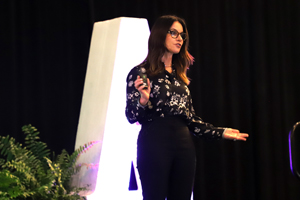
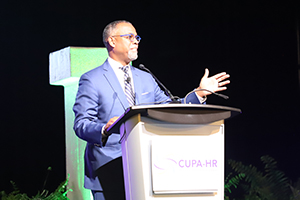
    Culture was at the heart of the three keynote events at CUPA-HR’s 2023 national conference, which took place recently in New Orleans. Our keynote speakers asked thought-provoking questions that resonate with higher ed HR’s mission. Engaging with these questions can help you boost employee engagement, promote a culture of inclusivity and strengthen collaboration with your campus colleagues.

    1. Are You Creating an Ecosystem of Opportunity?

    Organizations with strong learning cultures tend to have significantly higher retention rates.

    In her keynote presentation on employee retention, business strategist and author Erica Keswin pointed out that the days of climbing the same corporate ladder for 50 years are long gone. Organizations are flatter, which means you need to get creative to give people opportunities to move not only up, but sideways, helping them gain new skills and find new pathways for their careers. Instead of thinking “ladders,” Keswin said, think “lilypads.”

    She also encouraged attendees to talk about employee learning opportunities early and often, beginning with their onboarding programs! Managers should be talking regularly with employees about what skills they want to learn and giving them the opportunity to learn with no strings attached.

    The mission, values and priorities of higher education have learning at their core, and that culture of learning is a value proposition higher ed is uniquely positioned to provide as an employer. Make it work to your advantage by prioritizing learning and opportunity for all employees.

    Another key takeaway from Keswin’s presentation was the importance of being a “human professional” and checking in with your team on a regular basis. She shared the story of a company that starts team meetings with a quick check-in called “Pick Your Nic.” Referring to a popular meme of Nicolas Cage images representing different feelings (happy, relaxed, excited, focused, stressed, meh, etc.), each person picks the Nic that represents how they’re feeling that day. The goal isn’t to address the responses in the meeting, but rather to give the team leader the opportunity to take a pulse and to give team members the opportunity to be seen and heard.

    You’ll find more retention strategies in Keswin’s new book, The Retention Revolution: 7 Surprising (and Very Human!) Ways to Keep Employees Connected to Your Company. And be sure to check out the article “The Higher Ed Employee Retention Crisis — and What to Do About It” in the fall issue of Higher Ed HR Magazine.

    2. Are You Treating Diversity as a Problem to Be Managed or a Value to Be Cherished?

    When it comes to creating and sustaining a more inclusive culture, Princeton professor and religion scholar Dr. Eddie S. Glaude Jr. prompted attendees to consider a question: Do you view diversity as a problem to be managed or a value to be cherished?

    Through a problem-solving lens, we might see diversity as a series of goals to be met and obstacles to be overcome. Through the lens of a cherished value, on the other hand, we are more likely to see every situation as an opportunity to expand and celebrate diversity of people and ideas. A problem-solving lens divides “us” from “others,” while a value-based lens sees diversity as constitutive of who we are, as a people, a country and an institution. Instead of envisioning inclusion as something undertaken in response to a mandate or in compliance with a law, what if diversity was seen as key metric of an institution’s success?

    The data support the positive impact of diversity on metrics like productivity and creativity in the workplace, and Glaude urged higher education to also view diversity as an integral part of its core identity and a reflection of its regional or national reach.

    To see how your institution compares to others when it comes to composition of your workforce and pay equity for employees, see the results of CUPA-HR’s signature surveys.

    3. Are You Ramping Up Retention Efforts in Your Most Vulnerable Departments?

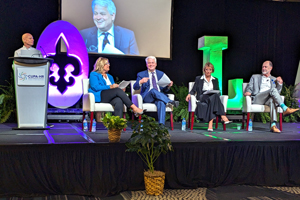
    Retention and recruitment were on everyone’s mind at CUPA-HR’s annual conference. The closing panel discussion brought together leaders in student affairs, campus facilities and IT and provided insights on how HR can partner with these campus constituencies to support a culture of belonging. Here are a few of their recommendations:

    Provide training opportunities.

    John O’Brien, president of EDUCAUSE, which represents IT professionals in higher ed, stressed the importance of career pathways to support employees’ desire to grow in their careers.

    Noting that “supervisors will make or break us,” Lander Medlin, president and CEO of APPA, which serves the needs of facilities professionals, stressed the critical role that supervisor training has on retention and workplace culture in facilities, where the aging of the skilled craft workforce has posed unique recruitment and retention challenges, and all areas.

    Ensure employees feel they belong and are valued.

    No matter their role on campus, employees want their opinions to be heard and valued.

    Kevin Kruger, president of NASPA, the association for student affairs administrators in higher education, noted that millennial and Generation Z employees especially want to feel cared about at work and to believe their opinions matter. Today, as all student affairs professionals find themselves on the front lines of the mental health crisis, they need supervisors who have the skills to meet them where they are and to create a culture of belonging.

    Medlin seconded the importance of feeling heard when it comes to job satisfaction. She would ask supervisors this question: Are you a coach and mentor, or are you a boss?

    Offer job flexibility.

    Some campus jobs don’t easily lend themselves to remote work, but that doesn’t mean institutions can’t build in flexibility, which CUPA-HR found is a key retention factor.

    For example, facilities employees might take advantage of a compressed workweek, with employees having the option to work four 10-hour shifts.

    Since student affairs professionals often work outside of a typical nine-to-five day, there’s room for remote work. In fact, students might prefer to meet with student affairs professionals remotely.

    If year-round remote work isn’t a possibility, seasonal flexibility might be. When students are off campus during holiday and summer break, your staff might be able to work from home.

    See employees as a strategic asset (and pay them accordingly).

    The three areas represented by the panel — IT, facilities and student affairs — are among the most vulnerable to turnover and recruitment challenges on most campuses. How can HR lead the way in creating a culture that positions these employees as strategic assets? The panel offered these suggestions, based on their unique perspectives:

    • O’Brien encouraged satisfaction surveys. Find what’s working well and replicate it.
    • Kruger recommended streamlining job searches, posting salary ranges, and focusing on internal pay equity and livable wages.
    • Medlin asked conference attendees to help us help you. How we treat people matters, and HR leads the way in building that culture of belonging.


    Source link

  • Do They Work? How Can You Use These Questions For Your Organization?

    Do They Work? How Can You Use These Questions For Your Organization?

    One thing that I have recently become very interested in is – “stay interviews”.

    These types of interviews are very beneficial because they determine which factors keep a current employee engaged and which ones do not.

    Think about it. Why do you decide to remain at your current job? What would entice you to leave? Perhaps a better offer?

    This information is perfect for employers and who wish to attract millennials to their workplace.

    • Stay interviews are informal conversations
    • What to ask in a stay interview
    • Ask what would make your employee leave
    • How managers can stay accountable

    Question 1 – What do you look forward to each day when you commute to work?

    Question 2 -What are you learning here, and what do you want to learn?

    Question 3 – Why do you stay here?

    Question 4 – When is the last time you thought about leaving us, and what prompted it?

    Question 5 – What can I do to make your job better for you?

    This is especially important for rural workplaces where they struggle to attract and retain employees. It is especially difficult for rural employers. Let’s support them in any possible way we can.

    Now, I do not have any direct reports at this time, but I have had a wealth of organizational leadership experiences throughout my 20 years in higher education. As a employee, i would not like to answer these questions. I would suggest that leaders determine which questions are most appropriate for their teams. 

    We do not want these “stay interviews” to be the first interview on a short journey to an “exit interview”. 

    In the comment box, let us know which questions you would add and which questions you would delete.

    Jennifer

    ***

    Check out my book – Retaining College Students Using Technology: A Guidebook for Student Affairs and Academic Affairs Professionals.

    Remember to order copies for your team as well!


    Thanks for visiting! 


    Sincerely,


    Dr. Jennifer T. Edwards
    Professor of Communication

    Executive Director of the Texas Social Media Research Institute & Rural Communication Institute

    Source link