Tag: Radical

  • Only radical thinking will deliver the integrated tertiary system the country needs

    Only radical thinking will deliver the integrated tertiary system the country needs

    The post-16 white paper was an opportunity to radically enable an education and skills ecosystem that is built around the industrial strategy, and that has real resonance with place.

    The idea that skills exist in an entirely different space to education is just wrongheaded. The opportunity comes, however, when we can see a real connection, both in principle and in practice, between further and higher education: a tertiary system that can serve students, employers and society.

    Significant foundations are already in place with the Lifelong Learning Entitlement providing sharp focus within the higher education sector and apprenticeships, now well established, and well regarded across both HE and FE. Yet we still have the clear problem that schools, FE, teaching in HE, research and knowledge transfer are fragmented across the DfE and other associated sector bodies.

    Sum of the parts

    The policy framework needs to be supported by a major and radical rethink of how the parts fit together so we can truly unlock the combined transformational power of education and innovation to raise aspirations, opportunity, attainment, and ultimately, living standards. This could require a tertiary commission of the likes of Diamond and Hazelkorn in the Welsh system in the mid-2010’s.

    Such a commission could produce bold thinking on the scale of the academies movement in schools over the last 25 years. The encouragement to bring groups of schools together has resulted in challenge, but also significant opportunity. We have seen the creation of some excellent FE college groups following an area-based review around a decade ago. The first major coming together of HE institutions is in train with Greenwich and Kent. We have seen limited pilot FE/HE mergers. Now feels like the right time for blue sky thinking that enables the best of all of those activities in a structured and purposeful way that is primarily focused on the benefits to learning and national productivity rather than simply financial necessity.

    Creating opportunities for HE, FE and schools to come together not only in partnerships, but in structural ways will enable the innovation that will create tangible change in local and regional communities. All parts of the education ecosystem face ever-increasing financial challenge. If an FE college and a university wished to offer shared services, then there would need to be competitive tender for the purposes of best value. This sounds sensible except the cost of running such a process is high. If those institutions are part of the same group, then it can be done so much more efficiently.

    FE colleges are embedded in their place and even more connected to local communities. The ability to reach into more disadvantaged communities and to take the HE classroom from the traditional university setting, is a distinct benefit. The growth in private, for-profit HE provision is often because it has a great ability to reach into specific communities. The power of FE/HE collaboration into those same communities would bring both choice and exciting possibility.

    While in theory FE and HE can merge through a section 28 application to the Secretary of State, the reality is that any activity to this point has been marginal and driven by motivation other than enhanced skills provision. If the DfE were to enable, and indeed drive, such collaboration they could create both financial efficiencies and a much greater and more coordinated offer to employers and learners.

    The industrial strategy and the growth in devolved responsibility for skills create interesting new opportunities but we must find ways that avoid a new decade of confusion for employers and learners. The announcement of new vocational qualifications, Technical Excellence Colleges and the like are to be welcomed but must be more than headlines. Learners and employers alike need to be able to see pathways and support for their lifelong skills and learning needs.

    Path to integration

    The full integration of FE and HE could create powerful regional and place-based education and skills offers. Adding in schools and creating education trusts that straddle all levels means that employers could benefit from integrated offers, less bureaucracy and clear, accelerated pathways.

    So now is the moment to develop Integrated Skills and Education Trusts (ISET): entities that sit within broad groups and benefit from the efficiencies of scale but maintaining local provision. Taking the best of FE, understanding skills and local needs and the best of HE and actively enabling them to come together.

    Our experience at Coventry, working closely and collaboratively with several FE partners, is that the barriers thrown up within the DfE are in stark and clear contrast to the policy statements of ministers and, indeed, of the Prime Minister. The post-16 white paper will only lead to real change if the policy and the “plumbing” align. The call has to be to think with ambition and to encourage and enable action that serves learners, employers and communities with an education and skills offer that is fit for the next generation.

    Source link

  • A smarter way to manage public dollars

    A smarter way to manage public dollars

    Key points:

    For public school districts across Florida and much of the country, employee benefits–particularly health insurance–are among the largest and fastest-growing budget line items. But too often, decision-makers in these districts manage benefits with incomplete information, little visibility into vendor practices, and limited tools for addressing escalating costs.

    Part of the problem is the complexity of the healthcare delivery system itself. The supply chain encompasses numerous moving parts, making cost drivers challenging to identify. While not intentional, school districts need to both educate and empower their agents and their team of specialists to peel back the layers that create added costs. Districts must also be willing to look inward.

    One of the real secrets to cost containment is transparency. A committed school district that wants to take control of its program must first understand its strengths and weaknesses, then fill gaps with specialists who can uncover hidden costs–an ongoing, vigilant effort that reveals the actual sources of waste and inefficiency. These efforts include transparent procurement and optimizing deal tension, as well as pharmacy contract negotiation, claims repricing, claims redirection, and more. Only then can districts make informed, strategic decisions that control costs and improve outcomes.

    The cost of opaque processes

    The result is a system that too often lacks meaningful transparency. School boards are presented with insurance renewals but not the data behind cost increases, insights into why claims costs are as they are, or guidance on how to contain them. Carriers field calls from district employees, but little to no reporting is returned to help the district understand what’s driving service demand. Without actionable data and intelligence, many districts default to passive renewals, accepting annual rate hikes without a clear strategy to contain costs or improve the employee experience.

    Building a foundation for smart decision‑making

    It doesn’t have to be this way. True transparency–in procurement, data, and intelligence–is not just a matter of regulatory compliance; it’s the foundation for smarter decision-making, better benefits engagement, and long-term cost control. When school districts gain access to previously unavailable data and unfiltered insights into how their benefits programs are performing, they can better serve their educators and protect their budgets.

    One example is call utilization data. Many school boards have no visibility into how often–and why–their employees contact their insurance carriers. Without this insight, they may not realize, for instance, that a large number of calls could pertain to prescription benefit confusion–something they could address through targeted employee education or plan redesign. Transparency in that data enables the district to act rather than react. It transforms benefits management from a cycle of guesswork into a proactive strategy, where decisions are driven by real needs rather than assumptions.

    Beyond call utilization, pharmacy and provider network fees can quietly escalate into six- or seven-figure losses if not monitored. Pharmacy contracts in particular demand negotiation by seasoned experts who understand the contractual nuances and levers that drive real savings. Ideally, a benefits partner will have a pharmacy benefits consultant or Doctor of Pharmacy on staff to review contracts and formularies line by line. Likewise, provider network claims and therapies must be benchmarked against competitive pricing. Transparency in these areas unleashes competition, and competition drives costs down.

    Operationalizing and incentivizing transparency leads to cost containment

    When a school district commits to operationalizing and incentivizing transparency, it can start to regain control of its costs. This process begins with examining the bigger picture of why and how the health-delivery supply chain can be leveraged or disintermediated to produce better outcomes. District leaders realize they have the power to effect change. Superintendents, HR, and finance departments can work in unison to embed transparency by empowering and incentivizing their benefits consultants to focus on solutions that reduce the district’s costs. This includes aligning agent compensation models with the district’s cost-containment roadmap.

    Equally important is how this transparency gets operationalized. Most small- to mid-sized school districts don’t have the staff or resources to analyze claims trends, facilitate wellness programs, or manage a complex benefits ecosystem. That’s why some are turning to outside partners to act as an extension of their internal team–not just as benefits brokers but as collaborative advisors who help design, implement, and maintain smarter benefits strategies. The difference is night and day: Instead of a transactional approach focused solely on renewals, these partners bring a year-round, data-driven mindset to benefits administration.

    Reclaiming control through radical transparency

    Ultimately, it’s about control. For too long, many public entities have ceded control of their benefits strategy to intermediaries operating behind closed doors. Radical transparency flips the script. It empowers school districts to take ownership of their benefits programs to lower costs and improve outcomes for the people they serve.

    That change doesn’t happen overnight. It starts with asking better questions:

    • Do we receive actionable data on employee engagement and utilization, and are we using it to drive measurable change?
    • Is our procurement process fully competitive and transparent, or are outdated practices perpetuating the status quo?
    • Do we have the tools and thought leadership from our broker to act on these insights?
    • Is our broker delivering transparent, cost-containment strategies, and are those solutions proven to reduce expense?
    • Are we empowered by a partnership structured around ROI?
    • Are we incentivizing our broker and vendor partners to prioritize ROI, transparency and ongoing savings?
    • Is our internal team contributing to transparency, data analysis and ROI? If not, what organizational changes are needed?

    The answers may be uncomfortable, but they’re necessary for reclaiming control. And in today’s fiscal climate, where every dollar matters and expectations for good governance are higher than ever, doing what’s always been done is no longer good enough.

    Transparency is more than a buzzword. It’s a path to fiscal responsibility, employee trust, and strategic clarity. And for public school districts facing mounting healthcare costs, it may be the smartest investment they can make.

    Latest posts by eSchool Media Contributors (see all)

    Source link

  • The possibilities for radical collaboration in HE go far beyond mergers

    The possibilities for radical collaboration in HE go far beyond mergers

    2024-25 has been quite a year for collaboration in higher education. A year on from the election of the Labour government two things are pretty clear: there will be no significant injection of public funds into the sector in the current parliament; and the guiding lens for this government’s post-16 education policy will be regional.

    Instead of a highly competitive national higher education market the current policy landscape speaks to finding more ways to pool resources between institutions – so much so that Universities UK announced the formation of its taskforce on efficiency and transformation with the announcement of a “new era of collaboration” in higher education.

    Early in the year as the reality of the fiscal situation became clearer the sector saw a renewal of interest in coordinated efficiency models, including shared services, joint procurement, and up to and including mergers and acquisitions. There was only one problem: anyone who had experience of these kinds of initiatives, whether in higher education or another sector, would quickly warn that they require a great deal of upfront investment of time and energy, and the intended efficiency savings rarely materialise in the short term.

    No institution whose sole objective was to save money would look to collaboration as the best solution. But when we have explored themes of collaboration with the sector – through our radical efficiency article series with KPMG UK and our Connect More report with Mills & Reeve – we have found that despite the competitive pressures on the sector there is an appetite to explore where greater coordination between institutions could enhance value for students, employers, research funders and communities and regions.

    Play by play

    That sense of strategic potential for new ways of realising value is the starting point for a new publication from KPMG UK and Mills & Reeve. Titled Radical collaboration: a playbook, the report sets out the strategic context and considerations for boards and executives considering the range of options for structural collaboration, and the legal implications for the different kinds of possible models for structural collaboration.

    “If structural collaboration is framed as a short term fix for immediate financial sustainability then it’s the wrong answer to a bad question,” says Justine Andrew, partner at KPMG UK, and one of the authors of the playbook. “I think this is the moment, looking at the medium to long term, to say ‘is there a more joined-up way of fulfilling the purposes of what universities are for which is delivering world class teaching and research with impact in our places?’”

    It is often assumed that “structural collaboration” is a euphemism for merger – which itself is a euphemism for acquisition of one education provider by another. But this is far from accurate. One of the intents of the playbook is to explore the breadth of possible collaborations available to higher education providers on a spectrum from the softer to harder forms, including contractual alliance models, federation, group structures, and even the concept of a “multi-university trust.”

    “The multi-university trust is a concept that doesn’t exist yet,” says Poppy Short, partner at Mills & Reeve, and playbook author. “But in the school sector we have multi-academy trusts where all the institutions combine into one charitable company but the legacy institutions operate out of a separate academic division within that corporate vehicle, with some localised autonomy and branding. I think we will see one or more of those in higher education in the not too distant future.”

    Better the hurdle you know

    A further, highly practical, intent of the playbook is to help institutions to navigate some of the initial barriers to thinking through those different possibilities. Where higher education providers have merged – something that, while not especially common in higher education, is hardly beyond the bounds of accepted practice – they have been surprised to discover a lack of formal guidance that sets out the legal and regulatory requirements to help two organisations become one. There is even a degree of murkiness about the extent to which organisations are allowed to start conversations about collaboration under competition law – something which, under pressure from the sector, the Competition and Markets Authority (CMA) has said it will look into.

    To tackle this lack of guidance, for each of the collaborative entities explored the playbook sets out the corporate structure and governance, and the implications for brand identity, management of finances and delivery of services, and the impact on staff and students, including a real-world example where one exists. The playbook then sets out a worked example of a hypothetical scenario of a group of providers in a place working through options for structural collaboration, thinking through what the strategic drivers and risks for individual institutions might be, and the legal, financial and regulatory implications for a new corporate group entity.

    “We really hope the playbook can move the conversation from the theoretical into a really practical one,” says Justine. “We’re using the fictional example of a place called Newtown that has a diverse range of FE and HE providers, and looking through a regional lens, if I’m a student, if I’m an employer, if I’m a combined authority, an industrial partner is the way that the sector I’m interfacing with set up the best for me from a curriculum, a research, a delivery point of view. So we’re not only thinking through the impact on the institutions themselves but flipping the lens a bit and asking whether, from the end user point of view, there is a better way of doing this.”

    Why wait for government

    Traditionally, the sector might have looked to the government to set out an agenda or framework where policy gaps are identified – but it’s also fair to say that few in the sector want the government to start putting pressure on institutions to work together or combine forces when the strategic rationale for doing so is undercooked. Far better for the impetus to come from institutions themselves, underpinned by a shared idea of the kinds of value that can be created through collaboration and a common commitment to achieving those ends.

    That doesn’t mean there is no role for government, not least in reducing the barriers to collaboration and potentially setting out some kind of brokerage framework or regulatory support service to encourage and support exploration of options. There are also some obvious tweaks to be made to the tax system to, at the very least, ensure structural collaborations do not incur a tax penalty.

    “I think the Department for Education is in listening mode,” says Poppy. “I think they are looking for the sector to come forward with ideas, for these conversations to start happening, and for the asks to fall out of that. Obviously there are funding challenges but there are other asks as well, such as could the department broker conversations with the CMA or give some additional regulatory guidance? Also it would be helpful to work on joining up the different forms of education provision across FE and HE so you’re not constantly finding hurdles – just as you get over one issue in your sector, you’re in another sector. I think there are many things the department could do to help universities navigate their way through some of the decision-making and planning and considering what their options are.”

    None of this looks like the kind of funding investment in transformation the sector might hope to see, but it’s worth noting that in some cases a benefit of scale can be to unlock opportunities for private investment. The playbook works through the circumstances under which private investment could be a sensible option and points to some existing public/private partnerships already in place in the sector.

    Radical collaboration may not be the answer for all or even most higher education institutions in England. But both the sector and government have to answer the fundamental policy question of how to organise the post-16 education sector in such a way as to support the provision of the kinds of diversity of qualifications, subjects and modes of delivery that will enable the largest possible numbers to benefit from the opportunity to enhance their life chances.

    If there is a chance that broader and deeper structural collaborations across further and higher education can help to deliver that agenda, then at the very least boards and executive teams have to give those options meaningful consideration – and this playbook just radically lowered the bar to starting that process.

    This article is published in association with KPMG UK and Mills & Reeve. You can view and download Radical collaboration: a playbook here.

    Source link

  • Open universities: between radical promise and market reality

    Open universities: between radical promise and market reality

    by Ourania Filippakou

    Open universities have long symbolised a radical departure from the exclusivity of conventional universities. Conceived as institutions of access, intellectual emancipation, and social transformation, they promised to disrupt rigid academic hierarchies and democratise knowledge. Yet, as higher education is increasingly reshaped by market logics, can open universities still claim to be engines of social progress, or have they become institutions that now reproduce the very inequalities they sought to dismantle?

    This question is not merely academic; it is profoundly political. Across the globe, democratic institutions are under siege, and the erosion of democracy is no longer an abstraction – it is unfolding in real time (cf EIU, 2024; Jones, 2025). The rise of far-right ideologies, resurgent racism, intensified attacks on women’s and LGBTQ+ rights, and the erosion of protections for migrants and marginalised communities all point to a crisis of democracy that cannot be separated from the crisis of education (Giroux, 2025). As Giroux (1984) argues, education is never neutral; it can operate as both a potential site for fostering critical consciousness and resistance and a mechanism for reproducing systems of social control and domination. Similarly, Butler (2005) reminds us that the very categories of who counts as human, who is deemed grievable, and whose knowledge is legitimised are deeply political struggles.

    Open universities, once heralded as radical interventions in knowledge production, now find themselves entangled in these struggles. Increasingly, they are forced to reconcile their egalitarian aspirations with the ruthless pressures of neoliberalism and market-driven reforms. The challenge they face is no less than existential: to what extent can they uphold their role as spaces of intellectual and social transformation, or will they become further absorbed into the logics of commodification and control?

    My article (Filippakou, 2025) in Policy Reviews in Higher Education, ‘Two ideologies of openness: a comparative analysis of the Open Universities in the UK and Greece’, foregrounds a crucial but often overlooked dimension: the ideological battles that have shaped open universities over time. The UK Open University (OU) and the Hellenic Open University (HOU) exemplify two distinct yet converging trajectories. The UK OU, founded in the 1960s as part of a broader post-war commitment to social mobility, was a political project – an experiment in making university education available to those long excluded from elite institutions. The HOU, by contrast, emerged in the late 1990s within the European Union’s push for a knowledge economy, where lifelong learning was increasingly framed primarily in terms of workforce development. While both institutions embraced ‘openness’ as a defining principle, the meaning of that openness has shifted – from an egalitarian vision of education as a public good to a model struggling to reconcile social inclusion with neoliberal imperatives.

    A key insight of this analysis is that open universities do not merely widen participation; they reflect deeper contestations over the purpose of higher education itself. The UK OU’s early success inspired similar models worldwide, but today, relentless marketisation – rising tuition fees, budget cuts, and the growing encroachment of corporate interests – threatens to erode its founding ethos.

    Meanwhile, the HOU was shaped by a European policy landscape that framed openness not merely as intellectual emancipation but as economic necessity. Both cases illustrate the paradox of open universities: they continue to expand access, yet their structural constraints increasingly align them with the logic of precarity, credentialism, and market-driven efficiency.

    This struggle over education is central to the survival of democracy. Arendt (1961, 2005) warned that democracy is not self-sustaining; it depends on an informed citizenry capable of judgment, debate, and resistance. Higher education, in this sense, is not simply about skills or employability – it is about cultivating the capacity to think critically, to challenge authority, and to hold power to account (Giroux, 2019). Open universities were once at the forefront of this democratic mission. But as universities in general, and open universities in particular, become increasingly instrumentalised – shaped by political forces intent on suppressing dissent, commodifying learning, and hollowing out universities’ transformative potential – their role in sustaining democratic publics is under threat.

    The real question, then, is not simply whether open universities remain ‘open’ but how they define and enact this openness. To what extent do they serve as institutions of intellectual and civic transformation, or have they primarily been reduced to flexible degree factories, catering to market demands under the guise of accessibility? By comparing the UK and Greek experiences, this article aims to challenge readers to rethink the ideological stakes of openness in higher education today. The implications extend far beyond open universities themselves. The broader appeal of this analysis lies in its relevance to anyone interested in universities as sites of social change. Open universities are not just alternatives to conventional universities – they represent larger struggles over knowledge, democracy, and economic power. The creeping normalisation of authoritarian politics, the suppression of academic freedom, and the assault on marginalised voices in public discourse demand that we reclaim higher education as a site of resistance.

    Can open universities reclaim their radical promise? If higher education is to resist the encroachment of neoliberalism and reactionary politics, we must actively defend institutions that prioritise intellectual freedom, civic literacy, and higher education for the public good. The future of open universities – and higher education itself – depends not only on institutional policies but on whether scholars, educators, and students collectively resist these forces. The battle for openness is not just about access; it is about the kind of society we choose to build – for ourselves and the generations to come.

    Ourania Filippakou is a Professor of Education at Brunel University of London. Her research interrogates the politics of higher education, examining universities as contested spaces where power, inequality, and resistance intersect. Rooted in critical traditions, she explores how higher education can foster social justice, equity, and transformative change.

    Author: SRHE News Blog

    An international learned society, concerned with supporting research and researchers into Higher Education

    Source link

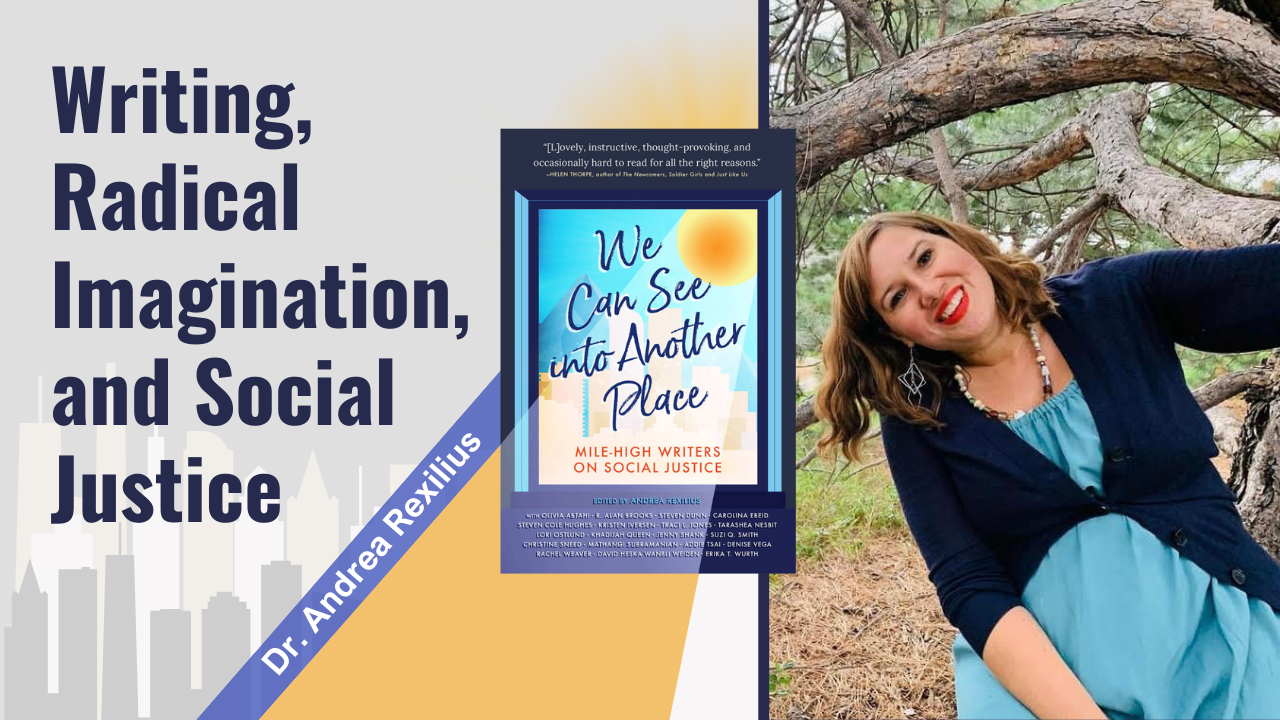
  • Writing, Radical Imagination, and Social Justice with Anthology Editor Dr. Andrea Rexilius

    Writing, Radical Imagination, and Social Justice with Anthology Editor Dr. Andrea Rexilius

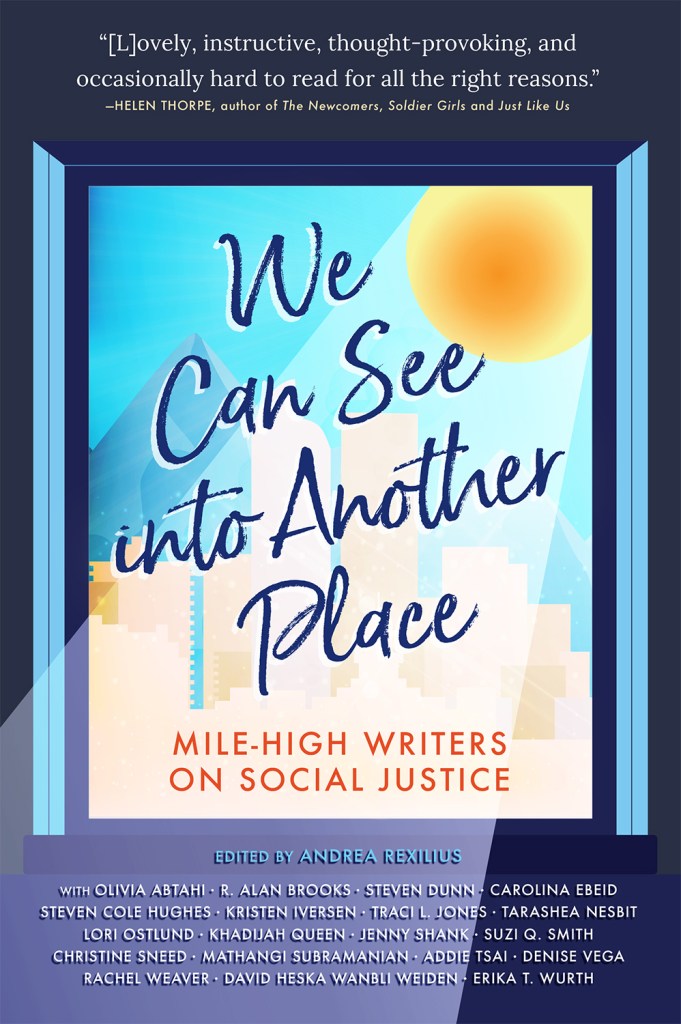
    Dr. Andrea Rexilius joins me on The Social Academic to talk about her new edited anthology, We Can See Into Another Place: Mile-High Writers on Social Justice (The Bookies Press and Bower House 2024). This innovative, multi-genre anthology brings together writers and faculty from the Mile-High MFA Program at Regis University in Colorado.

    In this featured interview, Dr. Andrea Rexilius joins me to talk about social justice, radical imagination, and the power of storytelling. Read Andrea’s bio.

    Jennifer: Hello everyone. Welcome to The Social Academic. This is Jennifer van Alstyne and we are right after Election Day [USA]. So there are a lot of feelings and emotions out there. And even though this episode isn’t gonna air for a little while, the topic we are talking about today is social justice.

    I’m very excited to bring my guest, Dr. Andrea Rexilius, to talk about this new anthology, We Can See Into Another Place: Mile-High Writers on Social Justice. Andrea, thank you for coming on The Social Academic. Would you introduce yourself for people?

    Andrea: Sure. Thank you Jennifer. Good to see you. I am a professor and writer living in Denver, Colorado, teaching at Regis University in the Mile-High MFA and Creative Writing Program. I think that’s all I’ll say.

    Jennifer: Great. I’m curious because you’ve reached out to me about this episode and I’m wondering what prompted this anthology? What made you decide to bring together these faculty, these writers from the Mile-High program together into one collection?

    Andrea: Well, they’re such interesting writers. They’re varied in terms of their genre, their aesthetic, which is also representative of the program that they were all teaching in. But a lot of them, there’s about 20, 21 of them in the anthology, and they don’t all always overlap. So I wanted to kind of, since they’re all part of that same conversation, teaching similar students working with the Mile-High MFA program at various times over the last nine years. I just wanted to put them a little bit more in conversation with each other, especially some of them that hadn’t crossed paths before, just to celebrate all of them together and share their work with, I think some of them probably looked each other up, but just to share their work with one another and with the public, with everybody else, because there’s just tremendous writing coming from all of them.

    The form above subscribes you to new posts published on The Social Academic blog.
    Want emails from Jennifer about building your online presence? Subscribe to her email list.
    Looking for the podcast? Subscribe on Spotify.
    Prefer to watch videos? Subscribe on YouTube.

    Jennifer: Yeah, the collection was tremendous and emotional and almost fraught with language that really pulls you in.

    I’m curious, the anthology brings together a lot of genres, like multi-genre anthology. What made anthology and book the right format for sharing these stories?

    Andrea: Yeah, I think in terms of anthology, it was kind of unusual to gather a kind of multi-genre format for an anthology. They’re traditionally fiction or their creative nonfiction or their poetry. A lot of writers only maybe read in one of those genres. A lot readers only read in one of those genres. We also have a graphic narrative, a comic strip in here. We have some playwriting.

    And so all of those different ways of kind of conveying ideas seemed interesting to gather into one publication and to sort of begin to maybe break down some of those barriers across genre. There’s more and more interest in hybrid writing and reading hybrid materials, but something that actually celebrates genre distinctions and also genre overlap seems like an important thing to sort of add to the literary conversation.

    Jennifer: I felt like your essay at the start, the introduction was so powerful in terms of shaping, the openness and the hope and the tenuousness that writers can achieve through storytelling. I found myself transported into each one of those writer’s forms. It felt like I was jumping from poetry to play to that, the graphic one, it was just overwhelming in the sense that I hadn’t really considered so many voices on this subject in the genre-bending kind of format. It was a different kind of experience to me compared to other things that I’ve read about social justice that I’ve watched about social justice this year. And it felt more powerful because of that. Like the collective of voices and the difference in genre made it more meaningful and impactful for me.

    Did you find that when you were putting together, the different sections, and the layout for the book?

    Andrea: Yeah, absolutely. It was really interesting because initially what kind of bound the writers together was their overlapping relationship with the MFA program. But I also just wanted to create an artifact of that kind of archive. All of those voices that were part of that community at the Mile-High, which is still continuing on, but that’s the first nine years of it. And I didn’t have the theme so much in mind when I first started gathering things. I wasn’t sure, is this something I’m just going to make as a kind of PDF that I make available to the community? Or, am I going to try to seek out a publisher, and put it into the larger world?

    Pretty early on I had begun gathering some things and in the process of gathering them, I started shopping around some local presses in the Colorado area to see if it might be something they’d be interested in. And as sort of a long answer to what you asked me. But as I was shifting into, “Okay, it’s actually gonna be published by a press, it’s going to be a book that is available to anybody. It’s not just sort of in-house community. I started noticing patterns in the early submissions. And that’s where the theme began to develop from.

    Also, seeing like how some of the poems communicated with the fiction, just the little overlaps and detail that were coming in were really interesting. That’s how the [Young Adult] interview got in there as well. ‘Cause there were so many writers, like Stephen Dunn’s piece, Addie Tsai’s piece, Lori Ostlund’s piece, where they’re talking about experiences in high school or as young adults and how writing impacted them, why they became writers and avid readers, and what their experiences to were with reading. They weren’t always delightful.

    Jennifer: Yeah.

    Andrea: So that started to kind of naturally grow out of the process of gathering those submissions.

    Jennifer: And for those of you who are listening, Stephen Dunn did appear on The Social Academic a few years ago. So be sure to check out that interview.

    The form above subscribes you to new posts published on The Social Academic blog.
    Want emails from Jennifer about building your online presence? Subscribe to her email list.
    Looking for the podcast? Subscribe on Spotify.
    Prefer to watch videos? Subscribe on YouTube.

    Jennifer: I’m curious, who do you feel should really read this book? Who should go out and buy a copy or buy it for someone that they know or love?

    Andrea: I mean, on the day that we’re recording this, I would say everybody should go read this book. I mean there’s many different representations and iterations of what we mean by social justice in the book, you know? It speaks to social economic stuff. It’s speaking to race relations, all kinds of different power dynamics speaking to neurological difference, the environments. It’s just a wide swath of what we think about when we are collectively, socially trying to enact justice for ourselves and our daily lives. But it also, like, the thing that I think about when I come to social justice is the idea of ‘radical imagination.’ And the idea that the mind, the interior, I quote Emily Dickinson at the beginning of the book, I love, I’m a poet, so I’m always referencing her, but she has a line, ‘The brain is wider than the sky.’ So this idea that like the mental space, the interior space is larger than this external world. It can imagine anything.

    So when it feels like something, when possibilities are shutting down, I think the most powerful thing you can do is just remember that you have your own imagination. You can envision a different way forward. You can still be disappointed. You know we still have all of our emotions in relation to these things, but being able to maintain and hang onto that hope and awareness that like it’s always yours. It’s always in you. You always have that power of the interior and the mind to think differently than what the external world might be kind of crushing you into thinking and feeling and being.

    Jennifer: Ooh, that was powerful. I needed to hear that too. I’m like crying. I’m like, what do I have tissues near me? And I don’t. But what I really gravitated toward from what you said is the word, ‘hope.’ Like the imagination can create hope. It can create futures that we haven’t experienced or thought of. It can be world opening. How do you hope this book can inform or provide an entrance into some kind of change or transformation?

    Andrea: Yeah, that’s a good question. I mean, I’m gonna quote a couple things and then talk about the final section of the book.

    Jennifer: I love that

    Andrea: My frameworks at Emily Dickinson again, “I dwell in possibility” because I think so much of diminishment of hope is feeling that the possibilities are becoming fewer and fewer. But again, that idea of radical imagination, if we can imagine something different than what we are being told must happen, or that there’s this kind of non-linearity, there’s always a possibility for something to shift or to swerve. And the more we think toward that possibility, I think the more empowered we stay.

    And then this Toni Morrison quote was so important in thinking about putting together this book. She says, “Don’t let anybody convince you this is the world is, and therefore must be, it must be the way it ought to be.” That speaks similarly, I think to the Emily Dickinson piece about possibility that nothing has to be any particular way. Sometimes it’s that particular way.

    But knowing that we still have so much inside of us that can speak out, that can share our experiences, that can voice things that the dissent from the powers that be, I mean, hopefully we retain that powers. I mean, people go underground, they make zines. We get the word out in whatever way we need to. And right now there’s this book, the last section, we move into questions for the reader that kind of bring you into this state of reflection and get you in touch with your own ideas and imagination.

    So, what would you like to give voice to? How do you survive and thrive when everything feels like it is on fire? That’s a great question for today.

    Jennifer: Today’s the day for that one. Woo.

    Andrea: And probably in the coming days and first of the year, that’ll be a great one to speak to. What is your hope for re-imagining of our societal and cultural future? What actions would help us move individually and or collectively toward that re-imagined future? So finding ways to bring those spaces, those radical imagination and those imaginings into external action, to starting small, making it grow larger, finding people to share your voice with who, who have similar thoughts and feelings, putting it in a book form, reading something where other people speak to that.

    Jennifer: A lot of professors, faculty members are listening to this podcast. And I’m curious, is this a book that would fit well in like a classroom discussion? Is this something that can or should be taught?

    Andrea: Yeah, I mean, absolutely. I think it would be great for high school, for college or book clubs for all kinds of reading groups because they’re part of the multi-genre aspect too. There’s something in it for everybody. If you’re not super into reading essays, there’s a comic. If you don’t love poetry, there’s short stories. If you aren’t into any of that, there are some interviews with why young adults, authors at the end.

    There’s places for you to do your own thinking and writing and responding to whatever was in the book. It’s meant to be engaging in that way, to invite people to participate in the conversation of the book, and to add their own voice if they think something’s missing from it, if there’s something, that they wanna add, all of those openings are are there. And it would be great.

    I think too, just thinking about in a classroom setting, thinking about how the different genres and pieces in here speak to these topics as well. What unique things happen formally in short story or poetry or essay. So yeah, thanks for asking that.

    The form above subscribes you to new posts published on The Social Academic blog.
    Want emails from Jennifer about building your online presence? Subscribe to her email list.
    Looking for the podcast? Subscribe on Spotify.
    Prefer to watch videos? Subscribe on YouTube.

    Jennifer: Now, as editor, maybe you don’t have like favorites, but I’m curious if you have one or two pieces you could share with us that especially faculty members might find a spark, or something that really draws them in.

    Andrea: Yeah, I mean, you mentioned Steven Dunn and I think his piece in here is just absolutely brilliant. And he is speaking about his experiences in English class and then feeling left out of that conversation, feeling like it’s a conversation just for white people. He’s only reading stories written by white authors and is being told that his voice is incorrect, that he needs to correct his grammar, his way of being, his way of speaking. And I think that’s another thing like that this book demonstrates to some extent, through the genre, but also part of what we were all trying to do in the program together with students was just let every let people know like, you can be who you are.

    So in order to be a good writer, you have to speak, you have to get in touch with what, who you actually are and what you actually want to say. And that’s when the writing becomes the most powerful. You shouldn’t be trying to conform your voice to anybody else’s. And I hear that in Steven’s piece and Addie Tsai’s piece.

    There’s a lot of interesting reflecting in a lot of the pieces too: David Heska, Wanbli Weiden is writing this essay about his grandmother who was in a Native American boarding school that are infamous for, cultural obliteration and all kinds of horrific things. And she has this nostalgia for the boarding school.

    He’s kind of reckoning with that, and sort of wondering why, answering why she might have that nostalgia in really interesting, complicated ways. And the ending of that piece I think really speaks to that reckoning with his grandmother’s state of mind and why she might have had that nostalgia and what other of nostalgia she had. I don’t wanna spoil the ending, but that’s one of my favorites because it.

    Jennifer: I loved that piece.

    Andrea: Yeah.

    Jennifer: I’d be happy if you’d be open to reading something. That sounds great.

    Andrea: I’ll read maybe a little bit from Steven’s piece that I was talking about. More beige. All right. I dunno what happens. Okay. It’s a snow day here. I usually am wearing bright colors, but I’m engaged. So this book to, or the piece from Steve Dunn, it’s from a book that he is working on called Travel With Nas, and he is co-writing it with a bunch of his friends and family members, which is, so it’s a collaborative project. He recently published another book, Tannery Bay, which he co-wrote with Katie Jean Shinkle. So that idea of sort of conversational collaborative writing comes through in his work in general too.

    Jennifer: I love that.

    Andrea: This is Intro / An Excerpt from Travel with Nas by Steven Dunn.

    Jennifer: Oh, Steven Dunn’s words are so powerful. I love that he’s interested in collective writing and also that he posts about the writing that he does on Facebook. So even if you’re not, the book’s not out yet, but like, I feel like I know a little bit more about Nas and about his process of writing it because he’s open to sharing it.

    Jennifer: Actually, that kind of brings me into my next question. I’m curious about your online presence as an author. What’s it like to be a faculty member and a writer, and just like a person who your personality is like quite vivacious in the sense that it’s so memorable. How do you craft all of that online and show kind of your personality when you are in online spaces?

    Andrea: Oh, wow. That’s a great question. I’m pretty introverted. Pretty like, I feel like it’s hard to know how that comes across. But I think of my social media, the way I curate it, because we’re all sort of curating it to some extent. I’m trying to maybe express my academic self on there, posting about books, about readings, sharing events with students, trying to kind of build that community with the MFA students and everybody in the Front Range, bringing different communities that I’m part of together. I’m teaching at Lighthouse Writer’s Workshop, a community creative writing place, and also at a Regis University. So sort of colliding some of those folks at times. And then I have my sort of like more artsy poetic life where I am doing some volunteer classes at this farm in Lafayette [Colorado] that some of my friends run.

    Jennifer: Really?

    Andrea: They have a little, they have a farm share. It’s called Community Farm

    Jennifer: That’s so cool.

    Andrea: And there’s an art lab. So I had a former student of mine donated a bunch of arts supplies, and so it’s just overfilling with art supplies. So I’ve been hosting like collage and mask making parties there.

    Jennifer: Ugh, that’s amazing. Mask making parties. I’m so jealous. So Dr. Rexilius and I know each other from Naropa University at the Jack Kerouac School back when I was in my MFA program. So I’m so excited we’re having this conversation now, but I am super jealous of these art classes. That sounds so fun. And I love What I see from you on social media is a lot of your artistic side. Like I remember your moth costume, your masks. Like I love seeing that part of who you are in online spaces for sure. What about as an author, we talked about like what you do for your community.

    Andrea: Right. Right.

    Jennifer: What’s it like talking about yourself as an author online? That one’s really fun [Andrea holds a mask to her face].

    Andrea: Talking about myself as an author, I probably should do more of that because I tend to keep my process pretty low key. I don’t share about my writing process as much. I share more about the end result. I might share more about my creative process. I share more of the kind of masks and art making that I’m doing visual art making.

    Jennifer: Yeah.

    Andrea: But if I have something finished published, then I tend, I’ll share that.

    Jennifer: Nice.

    Andrea: Yeah. But I like to keep my process a little bit more to myself because I like to have it untouched by other opinions.

    Jennifer: Oh, I’m so glad you shared that. That’s a really nice perspective. It’s not so much as private as protecting it almost.

    Andrea: Yeah.

    Jennifer: Like protecting your process. That’s beautiful. Oh, thank you for sharing that with me. I’m curious, is there anything you really dislike about social media or about being online?

    Andrea: I don’t like social media.

    Jennifer: You don’t like it at all? That’s totally fine.

    Andrea: When you asked, I was like, ‘oh!’ I just panicked. I was like, do I have a presence? I do because I’m the Director of this program, I have a presence to be online for that. I do have different sort of pages that I manage. So different hats that I put on. I post more of the artsy personal stuff on my own page. That’s me. But it also, part of me is that community aspect. And then I have some program specific pages where, it’s maybe a little more professional or like posting, sharing work by the authors, in this collection sharing student work. As much as I know if people tell me about it, but it’s fine.

    Jennifer: That’s always part of the process.

    Andrea: Yeah. I don’t wanna… I try not to spend a lot of time scrolling on social media.

    Jennifer: Yeah.

    Andrea: But yeah, I guess I like, the part of it that I do like is it does connect so many aspects of my world over the years that otherwise would have, many of them I think would have, disappeared from my life entirely. Like friendships in high school, things like that. And it is really nice to sort of just see what people are up to. Even if I’m somebody that I was best friends with when I was 16 or something just to see, get a glimpse of their life.

    Jennifer: I saw a childhood friend of mine who I haven’t talked to in, oh my gosh, a couple decades maybe, just had a child. And I was so touched for her, like we don’t talk, but it still felt meaningful to me. So you don’t like social media and you have actually a strong online presence compared to a lot of faculty members because you’re wanting to be part of that community and wanting to bring together communities as well. That’s really interesting.

    Andrea: Yeah, I always think if I didn’t have this job, I would leave Facebook, but I’m still there.

    Jennifer: Oh, that’s interesting. Yeah. You’re still there. That’s true. Well, you gotta have somewhere to share your masks.

    Andrea: That’s right. Yeah. I might keep it just to share the masks. I say I would leave, but I probably just share weirder things.

    Jennifer: Right, a little bit leaning more into your personality. Exactly.

    Andrea: Yeah. Yep.

    The form above subscribes you to new posts published on The Social Academic blog.
    Want emails from Jennifer about building your online presence? Subscribe to her email list.
    Looking for the podcast? Subscribe on Spotify.
    Prefer to watch videos? Subscribe on YouTube.

    Jennifer: Now academics who I’d say don’t consider themselves writers are listening to this, and I want them to go out and buy your book. I’m also curious, like if they are interested in leaning into more social justice lenses or social justice audiences, even for their writing. Is there somewhere you recommend they start? Maybe if this is their first time leaning into that area? I’d say they’re academics who maybe don’t consider themselves writers, even though they do quite a bit of writing.

    Andrea: Well, there’s lots of amazing literary conferences of all sizes and topics and themes. There’s a couple of things that I would note. Like in Denver, there’s a really great conference that The Word Storytelling, A Sanctuary runs. They have a conference called Margins. And so it’s an audience primarily of people of color who are writers. Talking about all types of different things. Some of that overlaps social justice. And I think that idea, radical imagination too, is this sort of holding equally everybody’s voice and making space for everybody’s voice to be heard. And maybe even making more space for the voices that are typically more marginalized. So that place would be a good place to start. There’s also a website called Writing the Other that is for writers and thinking about the publishing industry and how to, thinking about representation, appropriation, those kinds of issues, and how to navigate those as writers which I think also relates writers, academics, social justice, kind of entwines with all of those things. And then looking at this anthology has so many amazing authors in it. You can read any of them. Read interviews by them. They’re on podcasts. They’re doing online interviews. They have amazing things to say creatively, critically, academically. So there’s 20 people right there who have your back and can, who are also really open and friendly and up for answering questions. I shouldn’t speak for all of them, but reach out, see if they’re willing to engage. They definitely do a lot of them do classroom visits. They are used to sort of doing interviews and podcasts and things like that too.

    Jennifer: Oh, that is so cool. I want everyone to go out and get your copy of We Can See Into Another Place. This is an important anthology, especially for academics like you. Oh, it made big difference when I read it, and I hope it does for you as well. Andrea, is there anything else that you’d like to touch on, talk about before we wrap up today?

    Andrea: I think we got everything. Thank you so much for having me. It was really lovely to see you again and have this conversation with you.

    Jennifer: Oh, I’m so excited to share your book with everyone and to feature you on The Social Academic. Thank you so much.

    Andrea: Thank you.

    The form above subscribes you to new posts published on The Social Academic blog.
    Want emails from Jennifer about building your online presence? Subscribe to her email list.
    Looking for the podcast? Subscribe on Spotify.
    Prefer to watch videos? Subscribe on YouTube.

    Dr. Andrea Rexilius is the author of Sister Urn (Sidebrow, 2019), New Organism: Essais (Letter Machine, 2014), Half of What They Carried Flew Away (Letter Machine, 2012), and To Be Human Is To Be A Conversation (Rescue Press, 2011), as well as the chapbooks, Séance (Coconut Books, 2014), To Be Human (Horseless Press, 2010), and Afterworld (above/ground press, 2020).

    She earned an MFA in Poetry from the School of the Art Institute of Chicago (2005), and a PhD in Literature & Creative Writing from the University of Denver (2010). Andrea is the program director for Regis University’s Mile-High MFA in Creative Writing. She also teaches in the Poetry Collective at Lighthouse Writers Workshop in Denver, Colorado.

    Authors Interviews Professor Interviews The Social Academic Women in Academia

    Source link