Tag: rally

  • Students, Alumni Rally to Keep Cut Affinity Programs Alive

    Students, Alumni Rally to Keep Cut Affinity Programs Alive

    For years, Black students gathered at the University of Cincinnati’s African American Cultural and Resource Center for its traditions, including the Tyehimba Black Graduation Celebration and Akwaaba, a welcome event for new students, among other programs. This year, the AACRC, at least as it once existed, is gone. It’s been rebranded “the Cultural Center” after an Ohio law banned diversity, equity and inclusion activities at public colleges and universities in March.

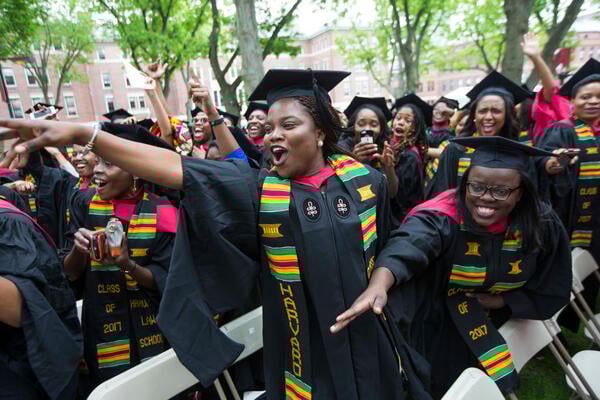
    But Black students and alumni wouldn’t let the center’s traditions and resources die. Black seniors celebrated their graduations at an event held off campus. Freshmen gathered for Akwaaba, organized by students and funded by alumni, who created a foundation to sustain the AACRC’s programming. The United Black Student Association and other student groups have committed to putting on programs throughout the year that were previously handled by AACRC staff.

    “Regardless of these changes, there is no policy that can be written that can outlaw OUR spirit, OUR ability to mobilize, OUR right to congregate,” the United Black Student Association wrote on Instagram. “They cannot outlaw our ability to gather, to build, to resist, and to love. Our legacy is not theirs to give or take.”

    Amid an escalating anti-DEI movement, students, alumni and off-campus advocates are hustling to fill the gaps left by shuttered and rebranded identity centers, DEI offices and programs across the country. Students and outside organizations, like the Native Forward Scholars Fund, hosted their own affinity group graduations this year as campuses started to cancel such events. Three student clubs broke off from the University of Utah to avoid the state’s limits on public university programs, forgoing university funding. Some students and alumni involved in these efforts say they feel a renewed pressure and responsibility to provide the services colleges are shedding as institutions are caught in the crosshairs of state DEI bans and the Trump administration’s sweeping anti-DEI campaign.

    How do we make lemonade out of a lemon?”

    —Harlan Jackson, president of the Cincy Cultural Resource Center Foundation

    The Cincy Cultural Resource Center Foundation, the nonprofit founded to continue Black student programming at University of Cincinnati, was born out of that sense of duty among alumni. Some graduates involved in the effort spent years pushing for the creation of the African American Cultural and Resource Center and took pride in watching its programs expand and flourish.

    “We can’t just stand idly by and just allow something this negative and something this backward to happen at the university,” said Harlan Jackson, president of the foundation and former president of the United Black Association in the late 1980s. “I’m really proud of the diverse community that’s showing up and acknowledging that we’re going to take this on.”

    The foundation now has weekly meetings with Black student leaders to determine how best to support their needs, and alumni leaders plan to put three students on the foundation’s board. Students emphasized to alumni that continuing the center’s events and traditions is their top priority, so the foundation is funding these programs, with hopes to also fund student scholarships in the future.

    So far, alumni have raised “well over” the roughly $5,000 needed to run Akwaaba and parents’ weekend, with plans to raise half a million dollars within the academic year, said Byron Stallworth, the foundation’s secretary.

    Stallworth, who was president of the United Black Association in 1991 when the AACRC opened, said the idea of alumni and students taking the reins is catching on beyond University of Cincinnati as well—three University of Cincinnati alumni, parents of students at other colleges and universities, have asked him questions about how they could start similar efforts to sustain Black student life on their children’s campuses.

    “This is a universal problem,” he said, and alumni elsewhere “are aware of what we’re doing.”

    Jackson noted that while the rebranding of the AACRC hits close to home, programs and centers dedicated to supports for women and LGBTQ+ students have also suffered cuts because of the Ohio anti-DEI legislation.

    He hopes other Ohioans “can look to this model, and we can determine … How do we connect? How do we share? How do we learn? How do we build bridges and partnerships to continue to support the young people developing themselves in the state of Ohio?” he said. “That’s what it’s all about.”

    Pressures New and Old

    Even with such support, students fighting to keep programs alive without university backing hasn’t necessarily been easy.

    Isaac Makanda, co-head of the juvenile justice and political action committee for University of Cincinnati’s NAACP chapter, said students and alumni can’t completely make up for the loss of the African American Cultural and Resource Center. He described running into a Black first-year on campus who didn’t know about Akwaaba or other events happening for Black students on campus. He believes that’s because the new students are without a hub.

    When Makanda was a freshman, the AACRC sent out emails telling incoming Black students about events and programs, he said. This student “had no idea about any of these things that were going on because those resources were taken away from him.”

    Some student groups have also had to hustle for funding to keep their events running. The Pacific Islander Student Association, which cut ties with the University of Utah alongside the Black Student Union, lost its student group funding in the separation. PISA used to receive at least $5,000 annually from the university, so that loss was a “major hit,” said Mayette Pahulu, vice president of the group.

    But she and other student leaders felt it was worth it to have full control over their programming after Utah’s anti-DEI bill became law last year. They didn’t want to be limited by the new strictures on public universities, “whether that be talking about certain subjects, encouraging our members to have their own rights … to host socials that are specific to our heritage, cultures and ethnicities,” Pahulu said. “We would rather lose the funding than our members lose a safe space.”

    Now the group raises its own money. PISA student leaders have an ongoing GoFundMe campaign and seek out sponsors for event costs, including the nominal fees required for outside groups to host programs on campuses.

    We would rather lose the funding than our members lose a safe space.”

    —Mayette Pahulu, vice president of the Pacific Islander Student Association at the University of Utah

    Pahulu said the students’ new responsibilities have pros and cons. On one hand, she and other student leaders find themselves pushing hard, with less support, to engage students who are feeling unwelcome on campus amid changes wrought by Utah’s anti-DEI legislation. On the other hand, she believes the new connections they’ve had to make with other student groups, community organizations and businesses to sustain their work could bode well for PISA’s future.

    “Even though we’ve taken kind of the short end of the stick, having to scramble around to find these organizations, we’ve honestly started to build a bigger community and network,” she said. “I think in the long run, it will benefit us … We’re working with representatives to get these supports put in place so that the longevity and the sustainability of our organizations can outlast—no matter how drastic the changes may be politically.”

    Jackson, the University of Cincinnati alum, said in a similar vein that he’s proud to see students and alumni making the best of the raw deal they’ve been given.

    As universities strip away programs at the behest of state lawmakers, “all they’ve done is put more burden on the students,” Harlan said. At the same time, “it gives them opportunity to network with the community, more opportunity to do planning and budgeting, more opportunity to lead in terms of putting together programs and executing programs.” The question is “How do we make lemonade out of a lemon?”

    Keisha Bross, director of race and justice at the NAACP, said student organizations—like Black student unions, NAACP chapters and the group of Black sororities and fraternities known as the Divine Nine—have always provided supports and programming for Black students in areas where universities have failed to do so. These groups “stepping in” to fill unmet needs is their “legacy,” she said. But she doesn’t believe the work students are doing, and have historically done, should allow universities to “get off easy” for cutting back programs dedicated to their success.

    “We cannot allow colleges to make these really traumatic decisions that are hurting student populations and their leadership, and then just say, ‘Oh well,’” Bross said. “We need to continue to hold universities accountable, because they have a responsibility to the students that they serve. Universities have and should be providing these resources to their students, 100 percent.”


    Source link

  • Free speech advocates rally to support FIRE’s federal appeal to defend advocacy in public parks

    Free speech advocates rally to support FIRE’s federal appeal to defend advocacy in public parks

    Protesting in public parks is as American as apple pie. It’s at the heart of our First Amendment — and one of our nation’s most time-honored principles. That right does not disappear merely because a private entity operates the public park on the government’s behalf. 

    That’s why FIRE and the Law and Religion Clinic at the University of Texas School of Law are appealing a district court ruling that weakens this First Amendment right. And we are proud to be backed by a broad coalition of prominent organizations as “friends of the court.” 

    Here’s what happened. Several years ago, animal welfare advocates Daraius Dubash and Dr. Faraz Harsini took to Houston’s largest public park to raise awareness about the harms of industrialized farming. For Dubash, this activism is rooted in his Vedantic Hindu faith, which compels him to promote the teaching of ahimsa, or nonviolence. To communicate their message, Dubash and Harsini serve as co-organizers for an international nonprofit animal-rights group. Their signature event involves volunteers showing muted documentary footage of farming practices to passersby, while others remain available to answer questions.

    Dubash and Harsini’s right to peacefully advocate on this issue in a public park is beyond dispute. But on three separate occasions, the public park’s private management ordered them to leave. The fourth time, park management had Houston police arrest Dubash for criminal trespass and banned them both from showing their video footage in the park in the future. Why? Because the park’s private managers and city police deemed their message “offensive.”

    With the help of FIRE and the Law and Religion Clinic, Dubash and Harsini filed suit in 2023 against the City of Houston, the park management corporation, its then-president, and the arresting officers. But in September, 2024, the U.S. District Court for the Southern District of Texas dismissed their claims, ruling that none of the defendants were responsible for violating Dubash and Harsini’s constitutional rights in a public park. 

    We disagree. 

    FIRE and the Clinic appealed to the Fifth Circuit, arguing that the ruling effectively lets the government bypass the First Amendment by delegating the management of public spaces to private organizations. And the court’s limited interpretation of governmental liability would make it nearly impossible for anyone to challenge violation of their constitutional rights by municipalities or law enforcement. 

    Last week, 12 prominent organizations from across the ideological spectrum filed nine amicus curiae briefs in support of Dubash and Harsini:

     The ACLU of Texas argues the park management company was acting as a state actor and public-private partnerships “cannot serve as an end run around the First Amendment.” The brief also argues the district court erred by failing to hold the arresting officers accountable based on their “mistaken belief” that the park was private. As the brief explains, probable-cause findings must be based on “objective facts and circumstances rather than subjective beliefs.”

    Young America’s Foundation, Hamilton Lincoln Law Institute, and Advancing American Freedom explain that Houston cannot bypass its duty to protect free speech in its public spaces by granting oversight authority to a private third party. The brief also emphasizes the sweeping implications of the district court’s decision, including in the academic context where state universities are increasingly attempting to evade First Amendment protections by outsourcing park management to nominally private entities like student governments.

    Liberty Justice Center argues the district court’s decision “blurs the line between state and private actors,” allowing Houston to “contract out of its constitutional obligations.” We could not agree more.

     The Center for American Liberty, in a brief submitted through Reeves Law LLC, argues that maintaining a public park is a traditional and exclusive government function, with public parks serving “as public forums for the expression of speech,” whether or not they are managed by a private entity.

     The National Press Photographers Association, in a brief submitted through the First Amendment Clinic at Southern Methodist University Dedman School of Law, explains how the district court’s ruling “threatens the sanctity of the spaces where speech is deserving of the highest protection.”

     Law Enforcement Action Partnership and the National Police Accountability Project explain that accountability for law enforcement officers and municipalities is crucial to preserving public confidence in the police and the government, and that failing to hold police officers accountable “undermines public trust in law enforcement.” The brief also argues that municipalities should know their police officers “need training and guidance to appropriately respond” to peaceful expressive activity, and failing to provide that training is sufficient to establish municipal liability.

    Protect the First Foundation, in a brief submitted through the Religious Freedom Clinic at Harvard Law School and Schaerr Jaffe LLP, highlights that Dubash was motivated to proselytize nonviolence by his deeply held religious beliefs, and describes the long history and tradition of public proselytization, from the persecution of religious minorities in the colonies through the legal protections established by First Amendment jurisprudence.

    The Hindu American Foundation, in a brief submitted through Jackson Walker LLP, explains that Dubash’s religious motivation to advocate for nonviolence towards animals is consistent with Hindu teachings. The brief also argues that his “arrest, detention, and the ongoing prohibition on his method of proselytizing” do not pass constitutional muster.

    The American Hindu Coalition, in a brief submitted through the Free Exercise Clinic at Yale Law School, emphasizes the history of public parks and streets as centers of religious activity, how marginalized faiths rely on these spaces to exercise their faith, and that Dubash’s activism is rooted in his religious beliefs.

    Our clients and their counsel are grateful for the support of this impressive and diverse amicus coalition. This case will play a critical role in protecting the rights of other protesters and religious minorities to engage in protected expression as guaranteed under the First Amendment.

    Source link

  • Higher Ed Leaders Rally to Protect DEI Initiatives

    Higher Ed Leaders Rally to Protect DEI Initiatives

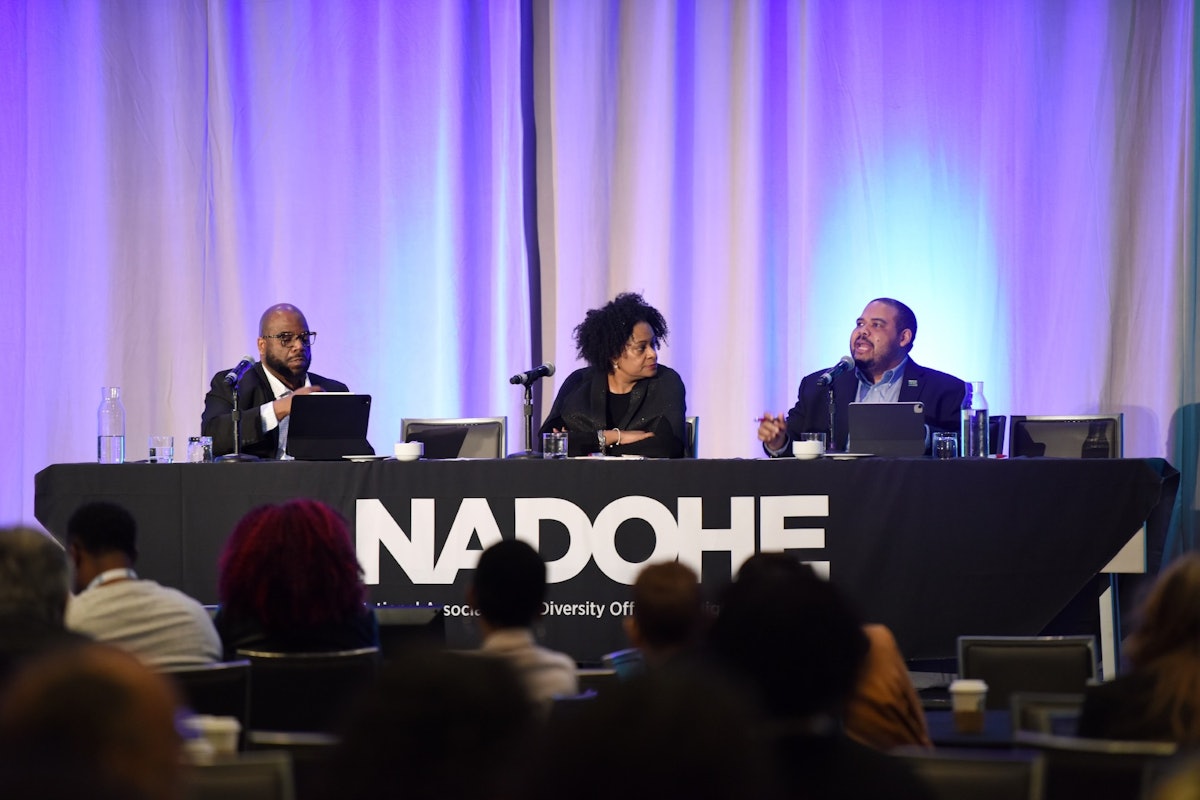
    Drs. Warren Anderson, Lisa Coleman, and Michael Anthony speaking on the President’s panel at NADOHE.Photos by Tim Trumble In a powerful gathering of diversity, equity, and inclusion (DEI) professionals, university leaders from across the nation shared strategies for protecting critical DEI work on college campuses despite mounting opposition nationwide.

    The concluding panel discussion, moderated by Dr. Warren Anderson from Bradley University, featured Dr. Michael D. Anthony, the first African American president of Prairie State College, and Dr. Lisa Coleman, the first female and first Black president of Adler University.

    Coleman, who has over three decades of experience in inclusion work, emphasized the importance of strong communications and media representation in defending DEI efforts.

    “What I see is the evolution of a diversity equity inclusion field from multiculturalism to liberalism to diversity,” she noted, adding that leaders must determine their own risk tolerance and that of their institutions when navigating these challenges.

    Anthony, who leads Prairie State College—both a Predominantly Black Institution and Hispanic-serving Institution about 30 miles from Chicago—highlighted the increasingly polarized context in which DEI work takes place.

    “We’ve been under attack around the federal government… with citizens becoming more cynical, hostile, and divided,” he observed, stressing the importance of critical thinking in an era of fast, subjective media.

    Following the panel discussion, Dr. Clyde Wilson Pickett, vice chancellor for equity, diversity, and inclusion at the University of Pittsburgh and board chairman of NADOHE shared a personal story about his great-grandmother that embodied the spirit of responsibility central to DEI work. He recounted how his great-grandmother, just one generation removed from slavery, would pick up garbage along the streets of her neighborhood every day after working a full day as a domestic worker.

    Thumbnail Img 8378Photos by Tim Trumble “She would take two buses out to be a domestic worker . When she got up in the morning at 5:00 AM to catch her first bus, she would walk down one side of the street picking up garbage,” Pickett explained. When he asked her why she did this, she responded, “We have to understand that we have a responsibility for our own and to take care of our own. So, what I’m doing is investing in our community.”

    Pickett drew a parallel to current DEI challenges that these frontline administrators are facing. “We have to do some things that we didn’t necessarily cause, but something that we had the responsibility to clean up.”

    He reminded attendees of their purpose during these “defining moments” that test values and resilience. “The ultimate measure of a person is not where they stand in moments of comfort and convenience, but where they stand in times of challenge and controversy,” he said, quoting Dr. Martin Luther King Jr.

    Pickett urged DEI professionals to stay grounded in their values and purpose. “We have to understand when we face this adversity, we have to return to our why—why do we do what we do? Why we’re committed to what we’re committed to, and who we do it for.”

    He said that building connections rather than divisions is crucial in the fight ahead. Over the weekend, the University of Virginia’s Board of Visitors voted to dissolve the college’s Office of Diversity, Equity and Inclusion (DEI) and Community Partnerships.

    “We know now more than ever, it’s important for us to do so by building bridges and not walls,” he said. “The same individuals who are leaving trash in our communities, who are causing conflict, want us to put up further walls between each other.”

    Pickett acknowledged the real challenges and potential for burnout in DEI work but urged professionals to practice self-care. “The work of diversity, equity, and inclusion is real. The burnout is real… And our ability to do this work can be compromised if we do not take care of ourselves.”

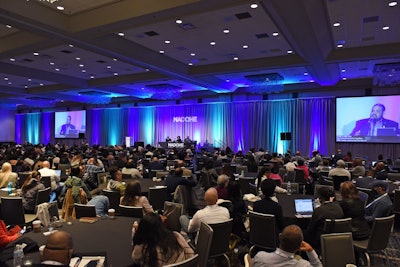
    The four-day conference, which coincided with International Women’s Day, served as both a celebration of progress and a rallying cry for continued advocacy. Despite growing opposition to DEI initiatives across American campuses, these leaders remain committed to protecting the progress made and supporting the professionals who advance this essential work every day.

    “I am leaving more reenergized and confident for the fight ahead,” said one attendee.

    Source link

  • Higher ed unions rally against Trump’s cuts, layoffs

    Higher ed unions rally against Trump’s cuts, layoffs

    At more than a dozen events across the country Wednesday, workers and faculty at colleges and universities gathered to speak out against what they see as an attack on federal research funding, lifesaving medical research and education. 

    In Washington, D.C., hundreds rallied in the front of the Department of Health and Human Services, while in Philadelphia, hundreds gathered at the office of Senator Dave McCormick, a Pennsylvania Republican. Other protests were planned at colleges in Seattle and St. Louis, among others. 

    The rallies were part of a national day of action organized by a coalition of unions representing higher ed workers, students and their allies. The coalition includes the American Association of University Professors, the American Federation of Teachers, Higher Ed Labor United and United Auto Workers, among others.

    Hundreds in Philly braved the freezing temps to rally for our healthcare, research, and jobs! ❄️💪Workers & students from CCP, Drexel, UPenn, Rutgers, Temple, Jefferson, Arcadia, Rowan, Moore—alongside elected leaders & union presidents—made it clear: We won’t back down. #LaborForHigherEd

    [image or embed]

    — Higher Education Labor United (HELU) (@higheredlabor.bsky.social) February 19, 2025 at 2:33 PM

    In recent weeks, the Trump administration has proposed capping reimbursements for indirect research costs, laid off hundreds of federal employees and cracked down on diversity, equity and inclusion. Most recently, the Education Department gave colleges and K-12 schools until Feb. 28 to end all race-conscious student programming, resources and financial aid. Higher education advocates have called that directive “dystopian” and “very much outside of the law.”

    Colleges and universities sued to block the rate cut for indirect costs, warning it would mean billions in financial losses and an end to some research. Some colleges have already frozen hiring in response, even though the cut is temporarily on hold.

    “If politics decides what I can and cannot study, I’m afraid I will fail the very people who need this research and inspire me to do it,” said Lindsay Guare, a doctoral student at the University of Pennsylvania, in a news release about the Philadelphia event. “In an ideal world, I would be fighting to expand support for my science instead of fighting to keep it afloat … The work done in Philadelphia’s institutions doesn’t just lead the world in innovation—it saves lives.”

    Source link