Tag: rates

  • Removing Credit Transfer Barriers Key to Improving Higher Ed Completion Rates

    Removing Credit Transfer Barriers Key to Improving Higher Ed Completion Rates

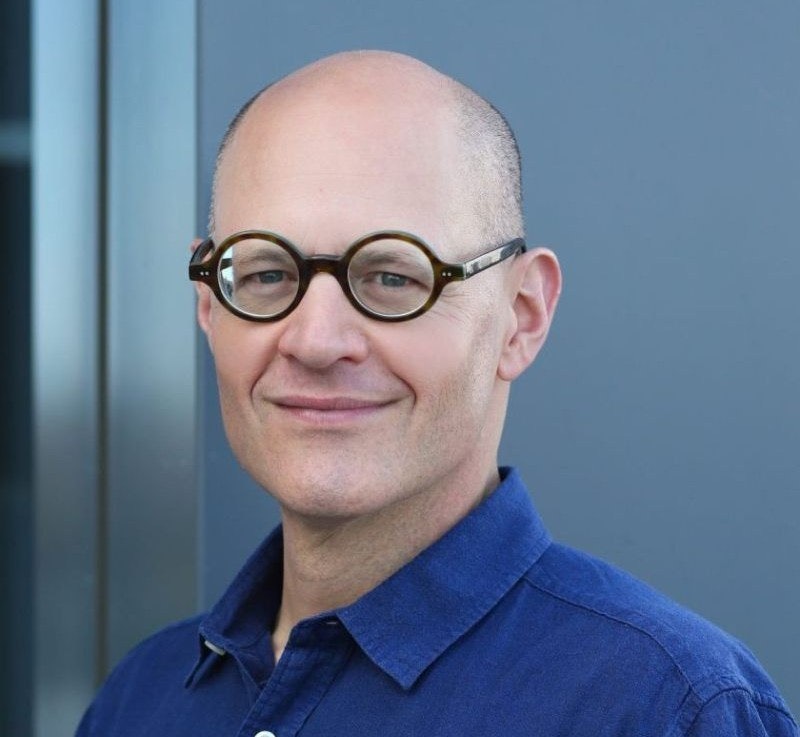
    Dr. Andrew J. SeligsohnHigher education in the United States has come under increasing scrutiny — but not always for the right reasons. Critics claim that colleges and universities award degrees with little economic value, limit ideological expression on campus, and operate primarily for their own financial interests, rather than as institutions of shared public value. While much in this narrative is false, it nonetheless affects the public’s attitude toward higher education and individuals’ decisions about pursuing a postsecondary degree, which may be detrimental to their economic interest.

    When these critiques are made in bad faith, we should counter them with facts about the value of college attainment. It remains true for example, that a college degree is likely to yield a significant boost in earnings. Nonetheless, anyone who cares about higher education must also ask why these arguments resonate so deeply with the public. Where real frustrations are fueling legitimate skepticism, addressing those concerns can both improve higher education’s reputation and enhance its value for students, families, and society. Since the experiences that give rise to frustration and receptivity to attacks on higher education are personal experiences, it pays to drill down into the particulars to figure out what’s going on.

    In that spirit, Public Agenda, in partnership with Sova and the Beyond Transfer Policy Advisory Board, set out to deepen our collective understanding of learner experiences with the credit transfer process. We knew from research on enrolled students that transfer was a source of pain for many learners. But we didn’t know how many people were affected, how much it mattered to them, and how it shaped their views of higher education more broadly. With support from ECMC Foundation, we fielded a national survey of adult Americans that interrogates transfer experience and outcomes. 

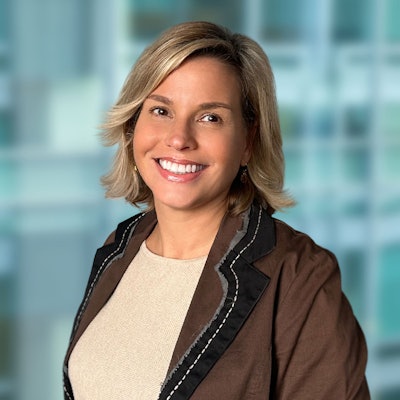
    Dr. Lara CouturierDr. Lara CouturierThe findings were striking, and they should serve as a call to action for institutions of higher education. Nearly 4 in 10 respondents reported that they had tried to transfer credit toward a college degree or credential. This included credits earned at a previous college or university, as well as credits earned from nontraditional sources. In fact, more than a third attempted to transfer credits earned from workplace training, military experience, industry certification, vocational or trade school, or other prior learning. With more households feeling the cost of inflation and needing to upskill to survive in this economy, and more higher education institutions facing enrollment declines, we should be finding ways to develop more on-ramps and clear the path to a college degree.

    Unfortunately, the survey revealed that Americans who attempt to transfer encounter convoluted paths, often losing credit hours, money, and motivation along the way. One in five respondents reported having to repeat a class they had already taken because their credits didn’t transfer. Thirteen percent reported running out of financial aid as a result of having to repeat courses. And, most concerning, 16% reported that they gave up on pursuing a college degree or credential because the process of transferring was so difficult. It’s clear difficulties with transfer are not only inconveniences — they’re significant financial burdens and barriers to completion.

    We also sought to understand how these direct experiences shape individuals’ broader attitudes toward higher education. We found it profoundly troubling that 74% of respondents who had tried to transfer credit agreed with the statement that two- and four-year higher education institutions care more about making money than about educating students. In fact, respondents who had tried to transfer credit were more likely to hold this jaded view than those who had attended college but had not transferred or those who had no prior experience with higher education. So while some of the current attacks on higher education may be in bad faith, it should not be surprising that they find a receptive audience among so many Americans who recall feeling personally misled. 

    We know, then, that credit transfer needs reform — but what exactly does that look like? Public Agenda also surveyed Americans about potential interventions, and the results are promising. First, when asked what should happen to a college with a track record of not accepting many credits for transfer, Americans felt public accountability would be more helpful than heavy-handed punitive approaches. Fifty-four percent of Democrats and 47% of Republicans agreed that institutions should have to make a plan to improve credit transfer rates. Conversely, just one-third of Republicans and Democrats thought colleges should lose their funding. But what might go into a plan for improvement? Our survey found broad support among Republicans, Democrats, and independents for a variety of policies intended to make it easier for students to transfer credits. Support is notably strong for requiring that students have free and easy access to their transcripts, credentials, and degrees; requiring institutions to create public databases with transfer information; and requiring that prospective transfer students are quickly told how many credits will be accepted. 

    The benefits of a better transfer process are clear and compelling. Students would face fewer obstacles to completing their degrees, leading to higher graduation rates, better individual economic outcomes, and broader prosperity. Just as importantly, higher education would rebuild trust with the public by showing that institutions are committed to serving students—not just collecting tuition dollars. And the benefits of this renewed trust extend beyond the higher education system. The perception that public institutions don’t care about ordinary Americans is a key element of the challenge our broader democracy is facing. Since the education system is a direct way many people interact with our government, restoring confidence that higher education works for all Americans can further inspire faith in public institutions.

    If we ignore issues like the broken credit transfer system, skepticism about higher education will continue to fester. Worse, more students may give up on college altogether, missing out on opportunities for personal and professional growth—all of which ultimately erodes our democracy. Pushing back against misinformation isn’t the only way to defend higher education; we must acknowledge and address the real barriers students face. Credit transfer is an experience shared by many with cross-partisan support for reform—now is the time to act. Reforming the transfer process won’t solve every challenge facing higher education, but it’s a clear and necessary step toward improving the system for the good of both students and institutions themselves.

    Dr. Andrew J. Seligsohn is president of Public Agenda, a national research-to-action organization. Dr. Lara Couturier is a partner at Sova, a higher ed advocacy organization.

    Source link

  • Why Assess Your Students: The Path to Better Retention and Graduation Rates

    Why Assess Your Students: The Path to Better Retention and Graduation Rates

    As an enrollment manager or a vice president of academic affairs, or even a leader in student affairs, you might think, “Why should I care about gathering data from our current student population? That’s Institutional Research’s job.” But if you care about the health of your institution, if you care about keeping your students enrolled to graduation and if you care about showing your students you care about them as individuals, then regularly assessing student motivation and student satisfaction is an activity that should be on your radar. Intentionally using that data to improve the lives of your students and to identify key challenges for the college should be a priority for every member of the institutional leadership team.

    You may know that assessing student satisfaction is important, but you need to get others on board on campus.

    “If the WHY is powerful, the HOW is easy.” – Jim Rohn

    Student-level data: Motivational assessments

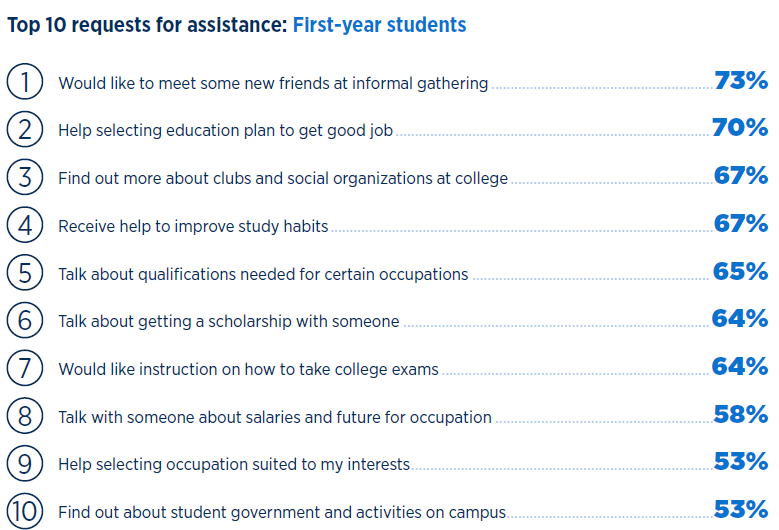
    Understanding what students need to be successful as they first enter your institution is a powerful way to begin building connections and showing students you care about them. Providing them with the services that they say they want and need to be successful will put you in the best position to serve students in the way they want to be served. In the recently published 2025 National First-Year Students and Their Motivation to Complete College Report, we identified the top 10 requests for support by incoming first-year students, based on the nearly 62,000 responses to the College Student Inventory in the fall of 2024:

    2025 National First-Year Students and Their Motivations for Completing College: Top 10 requests for assistance

    Source: 2025 National First-Year Students and Their Motivation to Complete College Report

    Among first-year students’ top ten requests for assistance, we found themes of connection and belonging, career assistance, academic support, and financial guidance. These top 10 have remained fairly consistent over the last few years.

    When campuses are aware of what incoming students need in the aggregate, institutional resources can be targeted to support these services. And when campuses, specifically advisors, know what individual students have self-identified as desired areas of support, guidance can be provided directly to the students most in need of and most receptive to receiving assistance.

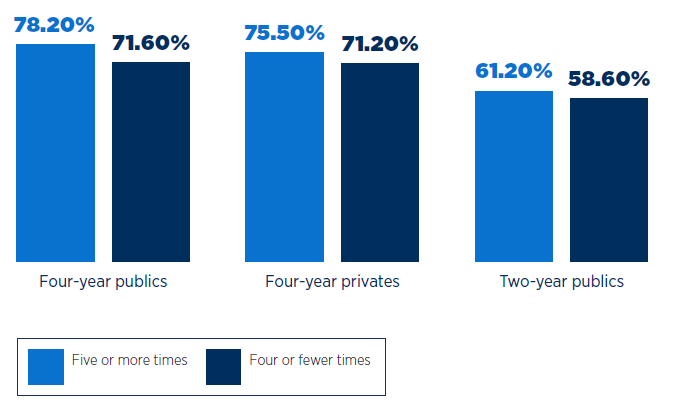
    While campuses can see a 1% improvement in student retention within the first year of implementing a motivational assessment, we have found that campuses that are assessing student motivation on a consistent basis over multiple years are most likely to see retention levels improve.(We recognize that motivation data alone doesn’t lead to improved retention, but the student-level data is an important component of institutional retention efforts.) The impact of consistently assessing student motivation with the RNL Retention Management System (RMS):

    2025 National First-Year Students and Their Motivations for Completing College: Chart showing higher graduation rates for institutions using retention assessments2025 National First-Year Students and Their Motivations for Completing College: Chart showing higher graduation rates for institutions using retention assessments
    Data based on a February 2025 RNL review of reported retention rates 2015-2024 in IPEDS for client institutions using one or more of the instruments in the RNL Retention Management System.

    The bottom line on why you should care about assessing individual student motivation

    Asking students as they enter your institution what they need shows that you care about their experience. Using that data to build relationships between advisors and students lays the foundation of one of the most important connections students can have with your institution. Guiding students to the specific service or support they seek puts you in the best position to engage your students in meaningful ways. Ultimately, serving your students in the ways they need will make your institution more likely to retain those students.

    Learn more about the national student motivation data and how it supporting campus retention efforts by joining live or listening to the on-demand session First Year Focus: Understanding Student Motivations, Recognizing Opportunities, and Taking Action.

    Download the First-Year Student Motivation Report

    2025 National First-Year Students and Their Motivation to Complete College Report2025 National First-Year Students and Their Motivation to Complete College ReportWhat are the needs, challenges, and priorities for first-year college students? Find out in the National First-Year Students and Their Motivation to Complete College Report. You will learn their attitudes on finishing college, top areas of assistance, desire for career assistance, and more.

    Read Now

    Institution-level data: Student satisfaction assessments

    Knowing what students value across all class levels at your institution can provide the student voice in your data-informed decision-making efforts. Assessing student satisfaction is another way to show students you care about them, their experience with you, and what matters to them. Aligning your resources with student-identified priorities will reflect a student-centered environment where individuals may be more likely to want to stay.

    Student satisfaction data from across your student population can inform and guide your institutional efforts in multiple ways:

    • Student success and retention activities: Identifying your top priorities for response so you are working on high-importance, low-satisfaction areas from the student perspective.
    • Strategic planning: Incorporate the student voice into your long-term planning efforts to stay aligned with where they want to see you make investments.
    • Accreditation: Document your progress year over year as part of a continuous improvement process to show your regional accreditor that you are paying attention and responding to students (and not just when it is time for re-affirmation!).
    • Recruitment: Highlight your high-importance, high-satisfaction strengths to attract students who will care about what you can offer.

    To assist institutions with building the case for student satisfaction assessment on their campuses, we have developed two brief videos (under two minutes each), one talking about why assess satisfaction and why work with RNL specifically. My colleague Shannon Cook also hosted a 30-minute webinar that is available on demand to dive deeper into the why and how of assessing student satisfaction.

    Satisfaction data provides valuable perspectives for every department on campus, identifying areas to celebrate and areas to invest more time, energy, and resources. Campuses that respond to what their students care about have reported seeing satisfaction levels increase and graduation rates improve. Most institutions we work with assess student satisfaction at least once every two or three years and then use the intervening months to explore the data through demographic subpopulations and conversations on campus, take action in high-priority areas, and communicate back with students about what has been done based on the student feedback. These ongoing cycles put institutions in the best position to create a culture of institutional improvement based on the student voice.

    Student motivation and satisfaction assessments are effective practices

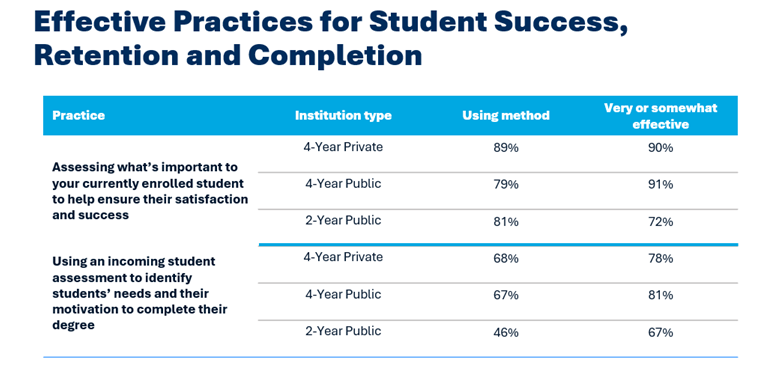
    According to the results of the 2025 Effective Practices for Student Success, Retention and Completion Report, assessing student motivation and student satisfaction are methods used by high percentages of institutions and are considered to be highly effective.

    2025 Effective Practices for Student Success Report: Chart showing 2/3 of four year institutions assess incoming students and only half of two-year institutions do2025 Effective Practices for Student Success Report: Chart showing 2/3 of four year institutions assess incoming students and only half of two-year institutions do

    Source: 2025 Effective Practices for Student Success, Retention, and Completion

    The impact of assessing student motivation and student satisfaction on institutional graduation rates has been documented with numerous studies over the years.

    It is important to be aware that just gathering the data will not magically help you retain students. It is the first step in the process, following these ABCs:

    1. Assess the needs with student and institutional level data collection
    2. Build a high impact completion plan to engage students from pre-enrollment to retention to graduation, taking action based on what students say
    3. Connect students to campus resources that best match their needs and will increase their likelihood to persist and complete and Communicate about what you are doing and why as improvements are made.

    Contact me if you would like to learn more about assessing student motivation and student satisfaction on your campus.

    Source link

  • New Jersey has the lowest rates of inclusion for students in special education in the country

    New Jersey has the lowest rates of inclusion for students in special education in the country

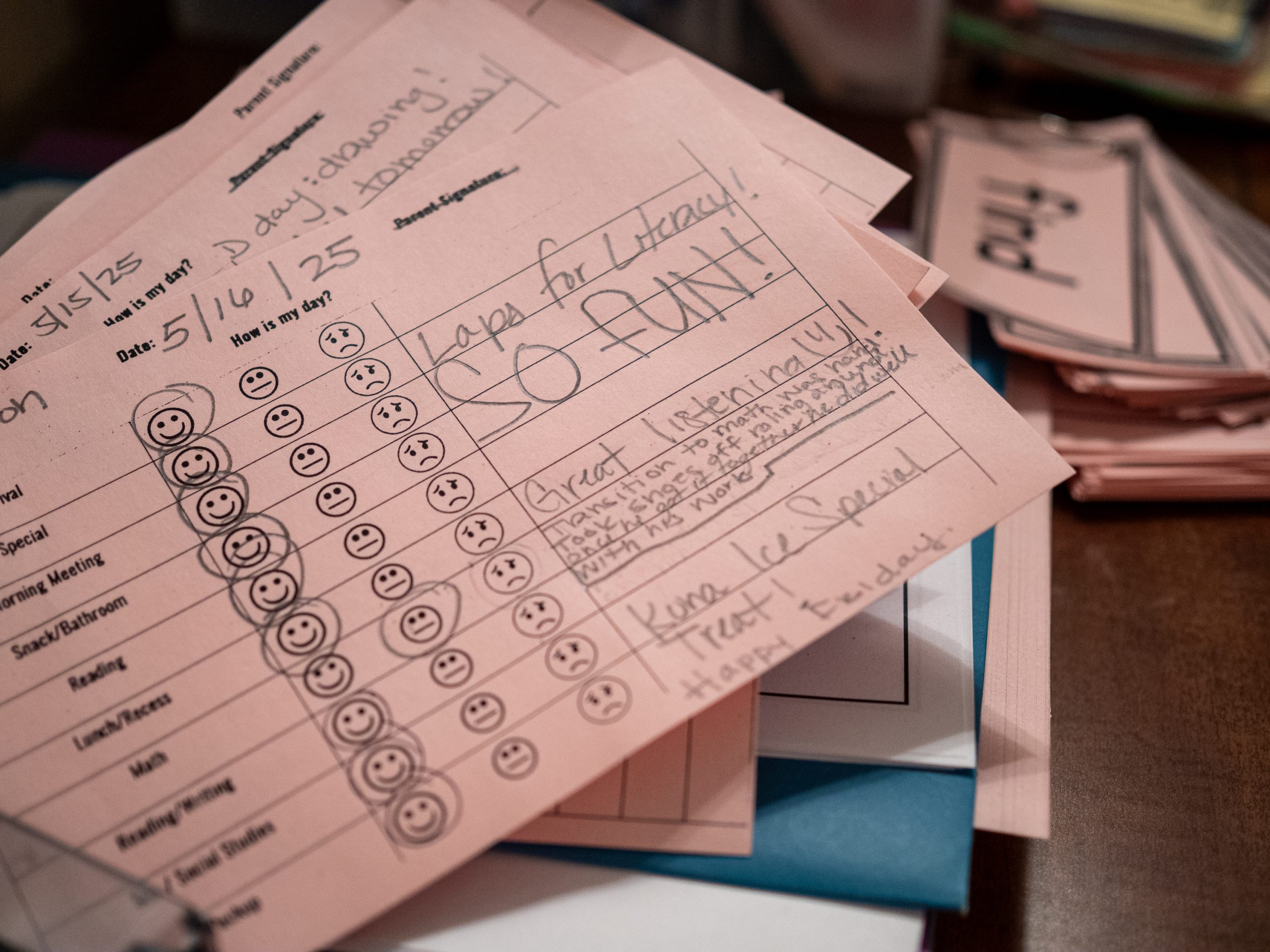
    New Jersey students with disabilities are the least likely in the nation to spend their days surrounded by peers without disabilities. 

    One underlying reason: a sprawling network of separate schools that allows districts to outsource educating them.

    New Jersey has more than a hundred private schools, plus eight county-run districts specifically for students with disabilities. 

    Districts spend hundreds of millions of dollars placing students in private schools rather than investing in their own staffing and programs — placements that cost New Jersey taxpayers $784 million in 2024, not including transportation. That’s up from about $725 million the year before. This can create a self-perpetuating cycle that increases reliance on separate schools and, experts say, may violate students’ federal right to spend as much time as possible learning alongside students without disabilities.

    In many cases, parents say school administrators are too quick to send children out of district and pressure families to agree to those settings. Other times, parents choose to send their child to a separate school, sometimes feeling that they have no choice after repeatedly failing to get their kids the help they need in their local school.

    “Whatever it is that their kids need within the district, they’re not getting,” said special education parent and advocate Amanda Villamar, who works with families throughout New Jersey. “The question becomes: Why are these services in private schools and not necessarily integrated into our public school system?” 

    Related: A lot goes on in classrooms from kindergarten to high school. Keep up with our free weekly newsletter on K-12 education.

    In all, about 30,000 students with disabilities in New Jersey — or 13 percent— attend separate private or public schools, according to The Hechinger Report’s analysis of federal data. That’s the highest percentage in the country. Nationwide, 4 percent attend separate schools. 

    New Jersey’s history of failing to include children with disabilities in public school classrooms dates back to the 1910s. That’s when the state began promoting separate schools for students with disabilities as a more humane alternative to barring them from schools altogether. 

    Nationwide, only 1 in 5 students with disabilities were enrolled in the public school system in the 1970s, when Congress passed the Individuals with Disabilities in Education Act or IDEA. The law enshrines integration by saying students with disabilities have a right to learn alongside students without disabilities to the “maximum extent” possible and that they should be placed in the “least restrictive environment.” 

    Across the nation, parents and children fought state laws excluding students with disabilities from public schools — with fights in Washington D.C. and Pennsylvania fueling the passage of IDEA. It wasn’t until 1992 that New Jersey repealed its statutes allowing public schools to exclude “untrainable” children with disabilities. By then, separate schools were an integral part of the state’s highly decentralized education system, which today comprises roughly 600 districts. 

    New Jersey Department of Education officials said the state is committed to ensuring students with disabilities are in the most appropriate school setting based on individual needs, and that includes out-of-district programs. 

    “New Jersey is uniquely positioned in this regard, with a longstanding infrastructure of out-of-district options and many small local public school districts,” department spokesman Michael Yaple said in an email. “These and other factors have contributed to the state’s historical reliance on a wide array of specialized programs designed to offer diverse, individualized educational options for students with disabilities.”

    The rate at which New Jersey school districts place students in separate schools has declined over the past two decades. In the same period, however, more parents chose to send their children to private schools, sometimes because they felt they had no other viable options. 

    Related: Young kids with and without disabilities can learn side by side. One state has instead kept them apart for years

    Some parents say there are significant trade-offs when their child leaves their district school.

    Ellen Woodcock’s son, a fifth grader, attends a county-run school for students with disabilities where she says teachers understand his autism much better than they did in her home district.* Despite her son’s fascination with geography, however, teachers spend little time on science or social studies. The school has no library, and the day ends an hour earlier than his district elementary school. School staff focus on teaching social skills, but he’s lost the chance to model the behavior of peers without disabilities. 

    “I feel like he’s not being challenged, like he’s kind of pigeonholed,” Woodcock said. “We just felt like we didn’t have a choice.”

    Her son spent kindergarten through second grade learning in general education classrooms at his local neighborhood school in Haddonfield, New Jersey, and she was happy with the social and academic progress he was making. In third grade, however, things changed. The school shifted him into a separate classroom for significant parts of the day. Woodcock said school staff seemed unable, or unwilling, to address how his autism affected his learning and provide the right support to account for it. She felt he was unwanted.

    In the middle of fourth grade, she said she reluctantly transferred him to a specialized school where he spent his day with other students with autism.

    “It was almost out of desperation,” Woodcock said. “It was like, let’s get him out of the school district, because we feel like they can’t support him. It was a fight all the time to get him what he needed.”

    Haddonfield district officials said privacy laws prevent them from commenting on individual students but noted that the percentage of students with disabilities who spend almost all of their time in general education classrooms is significantly higher than the state’s average. About 69 percent of Haddonfield students with disabilities spend at least 80 percent of the school day in general education classrooms, compared with 45 percent statewide, according to state Education Department data

    “We are proud of our inclusive practices and the strong sense of belonging we strive to create for all students,” district officials said in a statement. “The least restrictive environment can look different for each student.”

    In Haddonfield, 19 percent of parents with students with disabilities choose to enroll their children in private schools, compared with 7 percent statewide.

    Woodcock decided to move her son back to the district next year, where he’ll start sixth grade at the local middle school. She understands that her son may need to be pulled out of class to learn a subject like math in a special education resource room — but she believes he can, and should, learn in general education classrooms as well. 

    Related: Special education and Trump: What parents and schools need to know

    Under IDEA, students with disabilities should be placed in separate schools or classes only if their disability makes it too difficult for them to learn in a regular classroom, even with extra help and support. A team made up of a child’s parents, teachers, school district officials and, when appropriate, the child, decide on a placement together and must review it each year. 

    The federal Department of Education says those teams have to make this decision based on an individual child’s needs — not solely because of the kind of disability, how significant the child’s needs are or whether the school has the money or the staff. In New Jersey, however, some parents say schools too often determine placement on a child’s diagnosis alone.

    Observers, including special education advocates and attorneys, say school districts and leaders of separate schools tend to argue it would be too difficult for all of New Jersey’s hundreds of public school districts to provide services for all types of disabilities. That’s fueled a reliance on private and county-run separate schools, many of which have classrooms or programs focused on a specific disability, such as autism or dyslexia, with specially trained teachers.  

    Districts sometimes launch specific special education programs — applied behavioral analysis classrooms for students with autism, for example — only to abandon them after challenges paying for them or finding qualified staff, said Paul Barger, a special education lawyer in Irvington, New Jersey.

    “Instead of continuing to develop their own programs in the districts, they went ahead and just said they’re placing out into state-approved private school programs,” Barger said.

    Returning some students with disabilities to in-district schools would require more money. Lawmakers in New Jersey are debating the governor’s proposal to boost funding for special education services in public schools by $400 million for the next school year. Advocates say that’s an opportunity to build stronger special education systems in public schools. The governor also proposed flat funding of $420 million for private school tuition payments for students with disabilities.

    Related: OPINION: Students with disabilities should not lose their rights when they are placed in private settings by public school systems

    Some parents, unhappy with the services they see in public districts, prefer private schools: A growing number pay for their children to attend. That’s despite the fact that those parents who choose private schools lose federal protections, including the rights to raise formal complaints. 

    ASAH, the group representing New Jersey private schools for students with disabilities, which enroll more than 10,000 students, points out the lack of special education services in public districts. It tells parents that poorly trained paraprofessionals in public schools can be stigmatizing, and placing students in self-contained classrooms doesn’t make students feel valued or included. The group, formerly known as the Association of Schools and Agencies for the Handicapped, argues private schools may not be more costly to the state than public schools once pensions are factored in.

    Students with disabilities have the right to options like private schools, the association’s executive director John Mulholland said in an interview. 

    “It really is an individualized determination, and merely just being a part of your home district isn’t always a least restrictive environment,” he said. 

    Unlike for public schools, the federal government doesn’t collect data from private schools about how often their students interact with peers without disabilities. According to the association’s recent study of 5,300 students served by ASAH schools, 262 students planned to leave their private schools in the 2022-23 school year to return to their home district. That report suggests such a move was less likely for children with autism and multiple disabilities.

    Mulholland said private schools may offer some interaction with students without disabilities through community service or sporting events. His association’s analyses have found that students who start at a private school earlier are more likely to return to their public school district. 

    “If students come to us younger, they can get the intensive support they need or return to their school districts — many of our members pride themselves on that turnaround,” Mulholland said.

    Nicole Lannutti, of Washington Township in Gloucester County, said her daughter Sophia, who is non-verbal and has multiple disabilities, attended a private preschool for one year at a cost to the district of roughly $90,000. (New Jersey requires school districts to provide preschool for students with disabilities.) 

    Lannutti pushed to get Sophia into the public school system for a second year of preschool and then elementary school, where she said her daughter thrived in a school that prioritized inclusion. But that changed in middle school, where her mom says she’s had to push to have her daughter included even in lunch, recess and extracurricular activities. Washington Township school district did not respond to requests for comment. 

    Lannutti said her local public school is still the most appropriate setting for her child, who will enter seventh grade in the fall and has made friends by participating in the school play. The school agrees, and said as much in her education plan. Lannutti said private schools play an important role, but public schools should work harder to serve more students and fulfill their civil right to an education. “When it comes to my kid, it’s not that she should go because this district can’t handle it,” Lannutti said. “They should learn how to do it.” 

    *Correction: This story has been updated to correct Ellen Woodcock’s son’s current grade level.

    Contact investigative reporter Marina Villeneuve at 212-678-3430 or [email protected] or on Signal at mvilleneuve.78

    Contact senior investigative reporter Meredith Kolodner at 212-870-1063 or [email protected] or on Signal at merkolodner.04

    This story about special education and inclusion was produced by The Hechinger Report, a nonprofit, independent news organization focused on inequality and innovation in education. Sign up for the Hechinger newsletter.

    The Hechinger Report provides in-depth, fact-based, unbiased reporting on education that is free to all readers. But that doesn’t mean it’s free to produce. Our work keeps educators and the public informed about pressing issues at schools and on campuses throughout the country. We tell the whole story, even when the details are inconvenient. Help us keep doing that.

    Join us today.

    Source link

  • Defense Department Caps Universities’ Indirect Cost Rates

    Defense Department Caps Universities’ Indirect Cost Rates

    The Department of Defense is planning to cap indirect cost reimbursement rates for higher education institutions at 15 percent, according to a May 14 memo signed by Secretary of Defense Pete Hegseth. 

    “The Department of Defense (DoD) is the steward of the most critical budget in the Federal Government—the budget that defends our Nation, equips our warfighters, and secures our future. That stewardship demands discipline. It demands accountability. And it demands that we say no to waste,” wrote Hegseth.

    The memo directs the DOD to develop the new policy within 21 days, marking the fourth federal agency—including the National Institutes of Health, the Department of Energy and the National Science Foundation—that has enacted a plan to cap indirect cost rates at 15 percent. For decades, universities have negotiated with the federal government to calculate bespoke indirect cost reimbursement rates to pay for research costs that support multiple grant-funded projects, such as facilities maintenance, specialized equipment and administrative personnel. (The paragraph has been updated.)

    Universities and their trade associations have already sued the NIH, DOE and NSF over these plans, arguing that capping indirect costs would hurt research production and compromise global competitiveness, all while violating multiple aspects of the Administrative Procedure Act, including bypassing congressional authority required to alter indirect cost rates. So far, federal judges have blocked indirect cost caps from taking effect at the NIH and DOE. The NSF agreed to pause the cap until June 13 in order to proceed to summary judgment, which is a way to resolve the case quickly without a full trial.

    Matt Owens, president of COGR, which represents research institutions, condemned the DOD’s newly announced plan. 

    “DOD research performed by universities is a force multiplier and has helped to make the U.S. military the most effective in the world. From GPS, stealth technology, advanced body armor, to precision guided missiles and night vision technology, university-based DOD research makes our military stronger,” Owens said in a statement. “A cut to DOD indirect cost reimbursements is a cut to national security. Less funding for research means less security for our nation.”

    Hegseth’s memo claimed that capping the Defense Department’s indirect cost rate for universities would “save up to $900 [million] per year on a go-forward basis,” while also claiming that the department’s “objective is not only to save money, but to repurpose those funds—toward applied innovation, operational capability, and strategic deterrence.” The NIH has also made similarly incompatible assertions. It touted on social media its indirect rate cap plan’s potential to save taxpayers more than $4 billion, while a lawyer for the NIH told a federal judge that the cut was simply a reallocation of funds. 

    The Defense Department’s plans “will not stop at new grants,” Hegseth wrote, adding that “meaningful savings can also be achieved by revisiting the terms of existing awards to institutions of higher education.” The memo directed the under secretary of defense for research and engineering to do the following within 30 days:

    • Initiate a departmentwide effort to renegotiate indirect cost rates on existing financial assistance awards to institutions of higher education. “Wherever cooperative, bilateral modification is possible, it shall be pursued.”
    • “Where bilateral agreement is not achieved, identify and recommend lawful paths to terminate and reissue the award under revised terms.”
    • “Complete renegotiations or terminations for all contracts by 180 days from the date of this memorandum.”

    Source link

  • Judge Blocks Energy Dept. Plan to Cap Indirect Cost Rates

    Judge Blocks Energy Dept. Plan to Cap Indirect Cost Rates

    A federal judge temporarily blocked the U.S. Department of Energy’s plan to cap universities’ indirect research cost reimbursement rates, pending a hearing in the ongoing lawsuit filed by several higher education associations and universities.

    Judge Allison D. Burroughs of the U.S. District Court for Massachusetts wrote in the brief Wednesday order that the plaintiffs had shown that, without a temporary restraining order, “they will sustain immediate and irreparable injury before there is an opportunity to hear from all parties.”

    Plaintiffs include the Association of American Universities, the American Council on Education, the Association of Public and Land-grant Universities and nine individual universities, including Brown, Cornell and Princeton Universities and the Universities of Michigan, Illinois and Rochester. They sued the DOE and department secretary Chris Wright on Monday, three days after the DOE announced its plan.

    Department spokespeople didn’t return Inside Higher Ed’s requests for comment Thursday afternoon.

    DOE’s plan is to cap the reimbursement rates at 15 percent. Energy grant recipients at colleges and universities currently have an average 30 percent indirect cost rate. The Trump administration has alleged that indirect costs are wasteful spending, although they are extensively audited.

    The DOE sends more than $2.5 billion a year to over 300 colleges and universities. Part of that money covers costs indirectly related to research that may support multiple grant-funded projects, including specialized nuclear-rated facilities, computer systems and administrative support costs.

    The department’s plan is nearly identical to a plan the National Institutes of Health announced in February, which a judge also blocked.

    Source link

  • Louisiana Sees Improved Pass Rates With Corequisite Model

    Louisiana Sees Improved Pass Rates With Corequisite Model

    During the 2020–21 academic year, only 12 percent of students attending a public institution in Louisiana who attempted to complete a credit-bearing English class passed. This past fall, success rates among learners jumped to 60 percent.

    The change reflects an overhaul of remedial education courses at the state level, led by the Louisiana Board of Regents, to improve completion rates across the system’s 28 colleges and universities.

    The initial numbers, coupled with high passing rates among mathematics courses, are a step in the right direction to support credential attainment for adults in Louisiana, said Tristan Denley, deputy commissioner of academic affairs and innovation for the Board of Regents.

    What’s the need: The overhaul of remedial education is tied to the state’s strategic initiative, Louisiana Prospers, which sets a goal for 60 percent of the state’s adult population to have at least a credential of value. At present, the state is at 51 percent attainment, up six percentage points from 2021.

    “One of the fundamental changes that had to be made to be able to increase that attainment in that way is really the barrier of early math and English success,” Denley explained.

    Compared to remediation, corequisite courses reflect an asset-based approach to student success that indicates institutional readiness for student achievement. Research shows students who are placed in corequisite courses are more likely to retain, save money and graduate earlier, compared to their peers.

    “A traditional approach to remediation sort of says, ‘Well, I know you think you’re in college, but maybe not quite yet,’” Denley said.

    Other states, including California, Georgia, Illinois and Tennessee have also prioritized corequisite courses over remedial education offerings to boost student success.

    Building better: The process of rolling out corequisite education began in spring 2022, providing each of the state’s 28 institutions 18 months to launch the math program and then another 18 months for English courses.

    Louisiana launched its corequisite course structure for math courses in starting in fall 2023, and during that academic year, 52 percent of students in a corequisite class completed a college-level math course, up 41 percentage points from 2020–21, when only 11 percent of remedial math students completed a credit-bearing course.

    Implementing corequisite education at scale is a large undertaking, requiring work from math and English faculty as well as the registrar’s office and others, and each rollout looked a little different depending on the college and its needs.

    The system office hosted technical assistance and professional development events to support campuses, including semesterly corequisite academies, which brought together 150 faculty who teach corequisite math and English to share best practices, identify common challenges and establish a community of practice.

    “Interestingly, there are lessons to be learned from the math folk for the English folk, and vice versa, as well as among themselves in those different disciplines,” Denley said.

    One important facet of the corequisite model is addressing students’ self-perceptions of themselves as learners—particularly in math courses where students experience math anxiety—so the board established “Mindset Meauxtivators,” a faculty development course that emphasizes a growth mindset. Two hundred–plus corequisite faculty have completed the course, and a dozen or so serve as faculty champions for this work within their own campuses or regions.

    What’s next: The state will continue to collect data and parse through to identify trends in completion of credit-bearing English and math courses across student groups and institutions.

    Identifying opportunities to support faculty with modern pedagogy that assist with corequisite education is another focus for the board, because the teaching style is much different from remedial.

    Attainment is the goal of this current strategic plan, but future student success work in Louisiana will address socioeconomic mobility and ensuring students “make good on the credential they earn,” Denley said. “After they’ve earned that, what are ways in which we can make sure that that credential is life-changing, both to themselves and to their families and their communities?”

    We bet your colleague would like this article, too. Send them this link to subscribe to our newsletter on Student Success.

    Source link

  • UC Riverside Hopes Early Exposure to College Boosts IE Grad Rates – The 74

    UC Riverside Hopes Early Exposure to College Boosts IE Grad Rates – The 74


    Get stories like this delivered straight to your inbox. Sign up for The 74 Newsletter

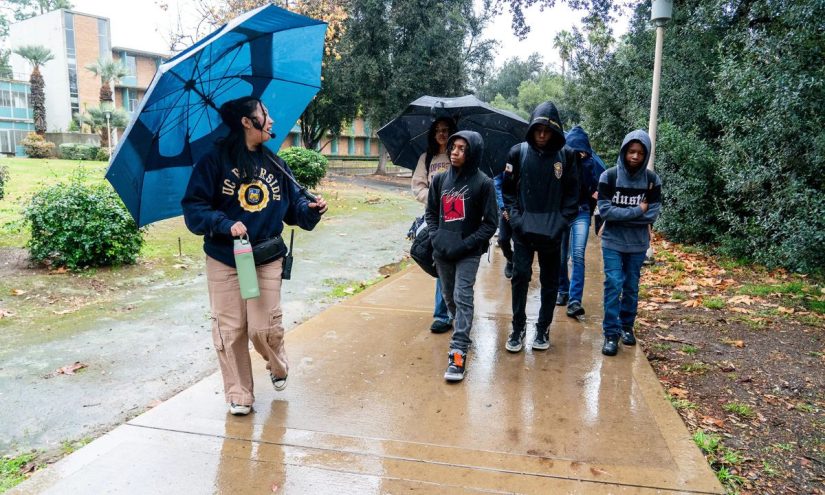
    On a recent rainy day, several dozen students sat in a UC Riverside classroom, planning their path to college.

    These weren’t high school seniors. They were seventh graders getting a jump-start on the competitive university application process. They’re part of a university program called the Middle School Initiative that aims to get Inland Empire students thinking about higher education long before they take their first AP class or submit an application.

    With a four-year college graduation rate about half the state average of 35%, the Inland Empire is falling behind in educating students for well-paid, professional jobs, limiting the economic prospects of the region’s youngest inhabitants. In an effort to raise that ceiling, educators are trying to get tweens to envision their potential for a college education and career. 

    The students from Riverside middle schools discussed how to write college application essays, toured the university campus and learned about admission standards for California universities. 

    “I like that there’s something you can do in middle school so you can do more in high school,” said 13-year-old Simone Reid, a seventh-grader at Villegas Middle School who wants to major in business. “I want to get started early so I have more opportunities.”

    UC Riverside Dean of Education Joi Spencer said she introduced the program this year to reach students who might not consider attending a university, or know how to prepare for it. Middle grades “are where kids get sorted into who’s going to go to college and who’s not,” she said.

    The initiative aims to change that pattern. With an annual budget of $15,200, the program launched has so far reached 500 students, including more than 300 who joined campus tours at UC Riverside.

    “Our first goal is to invoke a conversation across the Inland Empire related to university access and eventual success,” Spencer said. “First and foremost, too many youngsters do not even see university attendance as a possibility for them. This is our fault as adults and educators. We keep producing the same winners and losers in education and we need to break this cycle.”

    The Middle School Initiative is open to students throughout Riverside and San Bernardino counties, with Jurupa, Moreno Valley, Alvord and Riverside Unified school districts among the first participants. Any students in the Inland Empire can participate, but in the early days of the program, administrators have prioritized students who have fallen through the cracks in class.

    “Some of the students are high flyers, but are somehow overlooked in their school setting,” Spencer said. “Others may have average achievement, but high aspirations.”

    The program isn’t just an introduction to college readiness. Program administrators plan to follow students along their academic journey, meeting with them throughout middle and high school and during the transition to college. They will also track college enrollment of students who participate in a related summer program called the STEAM Academy, which increases exposure to the fields of science, technology, education, art and math.

    “This middle school period is the pivotal period to prepare for college,” said Elizabeth Benitez, Middle School Initiative coordinator.

    For instance, she said, many middle schools have foreign language options. Taking that early, in seventh or eighth grade, can pave the way for advanced placement language classes in high school, which boost students’ grade point averages and allow them to earn credits for college. 

    Some students may be a step ahead because of their family background, Frances Calvin, director of the university’s Early Academic Outreach Program, told the group. During the campus workshop she asked seventh graders to raise their hands if they spoke a second language. Several responded that they spoke Spanish, Portuguese or other languages at home.

    “If you speak a second language you are becoming marketable because the world is getting smaller and smaller,” Calvin said.

    Students at the campus event said they clearly heard the message about academic achievement and vowed to work on raising their grade-point averages.

    “I personally think I should focus more on my GPA,” said Dike Okeke, 12. “Then when I have that figured out I could find work to save for college.”

    Money matters loom large for many of the students, especially those hoping to be the first in their family to attend a university. The initiative offers instruction on how to fill out financial aid forms and tips on finding scholarships. Students can come back to the program later in high school to seek help with that process, Benitez said.

    “My family didn’t have the resources to experience college,” said Jeremiah Stinson, 12, who aims to study business and play college football. “I think I need to start saving money to afford this. I need to focus on a scholarship. Debt lasts forever. I don’t want to struggle with that.”

    Interestingly, the seventh graders also discussed personal discipline, and almost universally acknowledged that they needed to curtail electronics use and pay attention to school.

    “I also need to get rid of all my devices because I spend a lot of time on social media,” said Tatum Tobios, an aspiring fashion designer who favors Victorian Gothic styles and plans to go to art school.

    Her peers nodded in agreement. How will they scale back their TikTok and Instagram habits? 

    Some of their solutions: “Delete the apps,” “Lock them away,” “Give it to my mom,” “Hide it from myself.”


    Get stories like these delivered straight to your inbox. Sign up for The 74 Newsletter

    Source link

  • As diversity rates at elite colleges hang in the balance, some students still face increased exclusion and barriers

    As diversity rates at elite colleges hang in the balance, some students still face increased exclusion and barriers

    Diversity rates at several elite colleges and universities have plummeted, a little over a year after the Supreme Court’s restriction on race-conscious admissions. It’s a divisive but unsurprising blow to historically underrepresented students seeking educational opportunity and access.

    While demographic data is still forthcoming, the challenges these students face to attend certain colleges continue to build. MIT, Amherst College, and Tufts have already seen sharp declines in the diversity of their student populations.

    But not all is lost. Ethnically diverse students have options to express their full identities, and organizations providing services to them have options to support these students’ overall success through postsecondary pathways.

    While assessing the state of race in higher education admissions, we cannot ignore its historical context in colleges in America. Colleges and universities were built by and explicitly served the educational needs of wealthy white men. For too long, the only people of color on campus were the (often enslaved) servants of white students.

    We should also bear in mind that, at elite universities today, the students who are overlooked in favor of race-neutral policies are not the only ones who miss out — students already on campus lose out on the richness that having a diverse array of educational experiences can provide, with their opportunities to encounter alternative viewpoints limited.

    Related: Interested in innovations in the field of higher education? Subscribe to our free biweekly Higher Education newsletter.

    Oftentimes, first-generation, Black, Hispanic and Native American students experience an inherent and often unspoken isolation on campus at predominantly white institutions.

    As a Black Chicana, I vividly remember being the singular student of color in my freshman-year seminar at Michigan State. My experience was not without the awkwardness of questioning my own merit and if I belonged there in the first place. We traveled to Ireland, and due to the humidity, I put on my silk bonnet to protect my hair. It was met with questions and stares.

    Here we are in 2025, discussing the all-too-familiar concept of racial bias in America, while institutions are bound by new laws that result in restricted access for the students whose right to educational access has historically been systematically denied. So what can we do?

    While it requires creativity, students can still highlight who they are in their applications by foregrounding their lived experiences outside of their grades, test scores and academic histories. For example, students can share the intricacies of being a historically marginalized person in America — from being asked to speak English to being pulled over for driving while Black. They can write about their experiences and identities in personal statements and on their resumes and through discussions of their community involvement. Students owe it to themselves to share their personal moments of overcoming barriers in everyday life.

    Related: What’s a college degree worth? States start to demand colleges share the data

    Institutions can ask essay questions that provoke such responses and allow students to share without prejudice or fear of reprisal. Students’ insightful perspectives should be applauded by educational institutions, and the power of their words should be respected.

    Underrepresented students also have options other than the traditional elite universities. Historically Black colleges and universities (HBCUs) and Hispanic-serving institutions (HSIs) are an alternative to predominantly white institutions like the ones mentioned above. Students can make the college experience what they want and need, and it is no different at smaller institutions like Lane College, an HBCU, or Colorado State University, Pueblo, an HSI.

    At these schools, a student’s culture and identity are revered and shared. Educational institutions that see the value in diversity should be reconsidered as the best option for ethnically diverse students.

    And, as educational institutions grapple with the effects of the Supreme Court ruling, they should support the students from historically marginalized populations already on their campuses to ensure that they feel welcome, supported and valued. Building robust affinity groups not only provides current students with communities they can co-create and adapt to their needs, but also demonstrates that the institutions are committed to creating spaces for all students.

    Scholarship providers and organizations that support underrepresented students will continue to play a vital role in fostering diversity on college campuses. Mission-driven organizations like the one I work for, the Sachs Foundation, still help Black students who lack the financial capacity or easy access to attend elite schools like MIT and Brown.

    Students deserve to have their whole selves valued, welcomed and supported when applying for higher education.

    Pamela Roberts-Mora is the chief operations officer at the Sachs Foundation, serving Black youth from Colorado through educational and community programs. She was a first-generation college student.

    Contact the opinion editor at [email protected].

    This story about college diversity was produced by The Hechinger Report, a nonprofit, independent news organization focused on inequality and innovation in education. Sign up for our higher education newsletter. Listen to our higher education podcast.

    The Hechinger Report provides in-depth, fact-based, unbiased reporting on education that is free to all readers. But that doesn’t mean it’s free to produce. Our work keeps educators and the public informed about pressing issues at schools and on campuses throughout the country. We tell the whole story, even when the details are inconvenient. Help us keep doing that.

    Join us today.

    Source link

  • Six-year graduation rates at four-year colleges and universities

    Six-year graduation rates at four-year colleges and universities

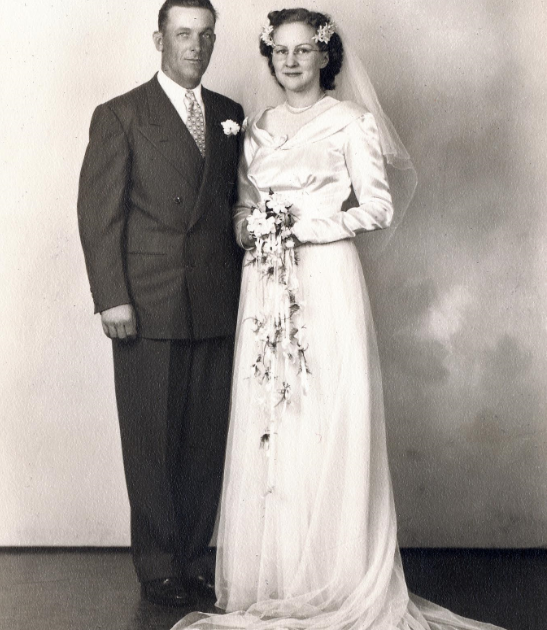
    Graduation rates are always a hot topic in higher education, but often for the wrong reason.  To demonstrate, I offer my parents.  Here is a portrait of Agnes and Mark, married May 4, 1946.

    One night while I was talking to my brother, he asked, “Do you think mom was the way she was because dad was the way he was, or do you think dad was the way he was because mom was the way she was?”  To which I replied, “yes.”  My point, of course, is that in complex relationships, it’s always difficult–impossible, actually–to detangle cause and effect.

    And, despite the Student Affairs perspective that graduation rates are a treatment effect, I maintain that they are actually a selection effect.  As I’ve written about before, it’s pretty easy to predict a college’s six-year graduation rate if you know one data point: The mean SAT score of the incoming class.  That’s because the SAT rolls a lot of predictive factors into one index number.  These include academic preparation, parental attainment, ethnicity, and wealth, on the student side, and selectivity, on the college side.

    When a college doesn’t have to–or chooses not to–take many risks in the admissions process, they tend to select those students who are more likely to graduate.  That skews the incoming class wealthier (Asian and Caucasian populations have the highest income levels in America), higher ability (the SAT is a good proxy for some measure of academic achievement, and often measures academic opportunity), and second generation.  And when you combine all those things–or you select so few poor students you can afford to fund them fully–guess what?  Graduation rates go up.

    If this doesn’t make any sense, read the Blueberry Speech.  Or ask yourself this question: If 100 MIT students enrolled at your local community college, what percentage would graduate? 

    But graduation rates are still interesting to look at, once you have that context.  The visualization below contains three views, using the tabs across the top.  You’ll have to make a few clicks to get the information you need.

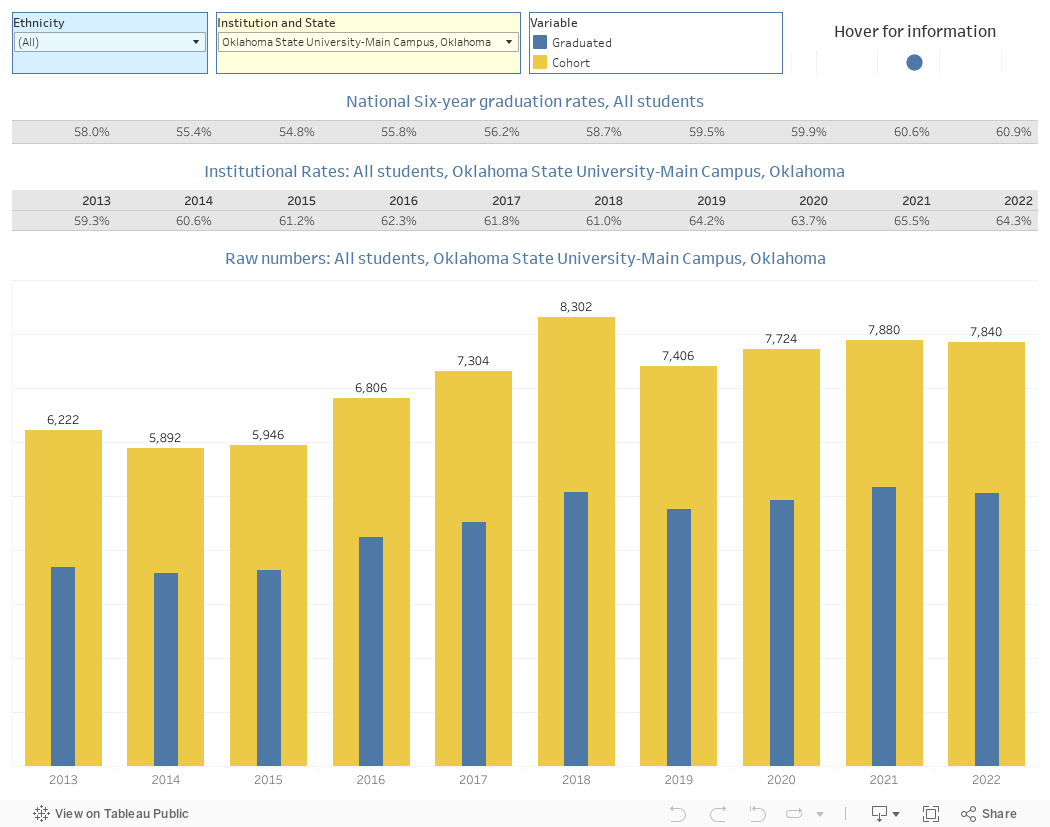
    The first view (Single Group) starts with a randomly selected institution, Oklahoma State.  Choose your institution of choice by clicking on the box and typing any part of the name, and selecting the institution. 

    On the yellow bars, you see the entering cohorts in yellow, and the number of graduating students on the blue bars.  Note: The blue bars show graduates in the year shown (so, 4,755, which you can see by hovering over the bar) while the yellow bar shows the entering class from six years prior (7,406 in 2019, who entered in 2013).

    The top row shows graduation rates at all institutions nationally, and the second row shows percentages for the selected institution.  You can choose any single ethnicity at the top left, using the filter.

    The second view (Single Institution) shows all ethnicities at a single institution.  The randomly selected demonstration institution is Gustavus Adolphus College in Minnesota, but of course you can choose any institution in the data set.  Highlight a single ethnic group using the highlight function (I know some people are frightened of interacting with these visualizations….you can’t break anything).

    Note: I start with a minimum of 10 students in each year’s cohorts for the sake of clarity.  Small schools in the Northeast, for instance, might enroll one Asian/Pacific Islander in their incoming class, each year, so the graduation rate could swing wildly from 0% to 100%.  You can change this if you want to live dangerously, by pulling the slider downward.

    The final view (Sectors) shows aggregates of institutional types.  It starts with graduation rates for Hispanic/Latino students, but you can change it to any group you want.

    Have fun learning about graduation rates.  Just don’t assume they are mostly driven by what happens at the institution once the admissions office has its say.

    Source link

  • Private college discount rates for first-year students, 2021

    Private college discount rates for first-year students, 2021

    Two quick additions/clarifications to this:  The definition of full-pays is those students who receive no institutional funds.  EM people don’t care where the cash comes from, only the discount.  Second, yes, I know some institutions use endowments to pay for institutional aid.  That percentage is likely very small, although concentrated at a few institutions.

    Before we begin, here is what this post does not do:

    • It will generally not tell you where you can get low tuition, with a very few exceptions.  And when it does, it won’t be at one of “those” colleges.
    • It will not tell you which colleges are likely to close soon, although after the fact, you can probably find a closed college and say, “Aha! Right where I expected it would be!”
    • It will not show you net costs to students.
    • It will not adjust for things like church support, enormous endowments, or the cost of living in that high-priced city where Excellence College or Superior University is located.

    Got it?  Good.

    This will show you the discount rate on first-year students at about 1,000 four-year, private, not-for-profit colleges in 2021-22.  Discount as I define it is the total unfunded institutional financial aid divided by the total charged (gross) tuition and fees.  A university that charges (published tuition and fees times the number of students) $10,000,000 and awards $4,000,000 in aid has a discount rate of 40%.  At most colleges, this discount is simply an accounting transaction, much like a coupon to save a dollar on a sandwich at Subway.  That, of course, is a gross over-simplification of the “what” of discounting, and it doesn’t touch the “why” of discounting at all.  But if you want an explanation, I’ll gladly talk to your trustees for a reasonable fee.

    And there is a difference between discount and net revenue, although at any given tuition charge, the two are perfectly related.  Unfortunately, as  you’ll soon, see, colleges all set their own tuition.  To wit:

    • A college charging $50,000 with a 20% discount has net revenue (the cash you can spend) of $40,000 per student.
    • That same college with a 50% discount has just $25,000 per student.
    • A college charging $30,000 with a 10% discount has $27,000 per student.
    • That same college with a 40% discount has $18,000 per student.

    As a college, you don’t care where the cash comes from: Pell grants, state grants, loans, or the student’s family.  This means, hypothetically, a student with low institutional aid might pay less than one with more aid.  Confused?  Good.

    If you use this with your trustees to explain your own college’s market position, consider supporting my costs of time, hosting and software by buying me a coffee.  Just click here to do so.  If you counsel high school students, or your a parent of a prospective college student, must keep reading and don’t feel any obligation at all.

    Here is the data, in three views.  The first two are box and whisker plots, where half of the colleges fall inside the gray box on each column to show you the middle 50%.

    The first view shows net revenue per freshman student, arrayed by the institution’s Carnegie type.  Use the controls to filter region, highlight region, or highlight an individual college.  To do the latter, type any part of the name in the box, hit enter, and select from the options.  Hover over dots for details; each dot is a college.

    The second view is identical, but it shows discount rate, the number people obsess over while missing the more important net revenue figure.

    The third view shows those two values arrayed, with the same highlighters, allowing you to filter on Carnegie type, or even the percentage of the students who are full-pay (that is, they get no institutional aid at all.)

    You’ll soon see that discount and net revenue don’t seem to be big issues at the big name, strongly endowed institutions.  That’s because, at many of these places, undergraduate education is essentially a sideline business, and only a minor source of revenue.  The money they bring in (or don’t) on this presumably core function of the university is managed to best optimize to reputation or selectivity, or other factors (including, sometimes, mission).

    Note that I’ve done my best to remove some outliers with wild data that throw the charts off.  Many of these are colleges I have never heard of, and they’re tiny.  Others are places with strong religious missions (like Yeshivas or Seminaries) that may be externally funded in ways this can’t account for. 

    Enjoy

    Source link