Tag: Reach

  • More 4-year colleges offer 2-year degrees to reach new groups of students (PBS NewsHour)

    More 4-year colleges offer 2-year degrees to reach new groups of students (PBS NewsHour)

    About one in four college students is both first-generation and from low-income backgrounds, making the path to a college degree especially challenging. At Boston College’s Messina College, a new, two-year, fully residential associates degree program, a wide range of support is helping change that. John Yang visited the campus to learn more as part of our ongoing series, Rethinking College.

    Source link

  • AI can be a great equalizer, but it remains out of reach for millions of Americans; the Universal Service Fund can expand access

    AI can be a great equalizer, but it remains out of reach for millions of Americans; the Universal Service Fund can expand access

    In an age defined by digital transformation, access to reliable, high-speed internet is not a luxury; it is the bedrock of opportunity. It impacts the school classroom, the doctor’s office, the town square and the job market.

    As we stand on the cusp of a workforce revolution driven by the “arrival technology” of artificial intelligence, high-speed internet access has become the critical determinant of our nation’s economic future. Yet, for millions of Americans, this essential connection remains out of reach.

    This digital divide is a persistent crisis that deepens societal inequities, and we must rally around one of the most effective tools we have to combat it: the Universal Service Fund. The USF is a long-standing national commitment built on a foundation of bipartisan support and born from the principle that every American, regardless of their location or income, deserves access to communications services.

    Without this essential program, over 54 million students, 16,000 healthcare providers and 7.5 million high-need subscribers would lose internet service that connects classrooms, rural communities (including their hospitals) and libraries to the internet.

    Related: A lot goes on in classrooms from kindergarten to high school. Keep up with our free weekly newsletter on K-12 education.

    The discussion about the future of USF has reached a critical juncture: Which communities will have access to USF, how it will be funded and whether equitable access to connectivity will continue to be a priority will soon be decided.

    Earlier this year, the Supreme Court found the USF’s infrastructure to be constitutional — and a backbone for access and opportunity in this country. Congress recently took a significant next step by relaunching a bicameral, bipartisan working group devoted to overhauling the fund. Now they are actively seeking input from stakeholders on how to best modernize this vital program for the future, and they need our input.

    I’m urging everyone who cares about digital equity to make their voices heard. The window for our input in support of this vital connectivity infrastructure is open through September 15.

    While Universal Service may appear as only a small fee on our monthly phone bills, its impact is monumental. The fund powers critical programs that form a lifeline for our nation’s most vital institutions and vulnerable populations. The USF helps thousands of schools and libraries obtain affordable internet — including the school I founded in downtown Brooklyn. For students in rural towns, the E-Rate program, funded by the USF, allows access to the same online educational resources as those available to students in major cities. In schools all over the country, the USF helps foster digital literacy, supports coding clubs and enables students to complete homework online.

    By wiring our classrooms and libraries, we are investing in the next generation of innovators.

    The coming waves of technological change — including the widespread adoption of AI — threaten to make the digital divide an unbridgeable economic chasm. Those on the wrong side of this divide experienced profound disadvantages during the pandemic. To get connected, students at my school ended up doing homework in fast-food parking lots. Entire communities lost vital connections to knowledge and opportunity when libraries closed.

    But that was just a preview of the digital struggle. This time, we have to fight to protect the future of this investment in our nation’s vital infrastructure to ensure that the rising wave of AI jobs, opportunities and tools is accessible to all.

    AI is rapidly becoming a fundamental tool for the American workforce and in the classroom. AI tools require robust bandwidth to process data, connect to cloud platforms and function effectively.

    The student of tomorrow will rely on AI as a personalized tutor that enhances teacher-led classroom instruction, explains complex concepts and supports their homework. AI will also power the future of work for farmers, mechanics and engineers.

    Related: Getting kids online by making internet affordable

    Without access to AI, entire communities and segments of the workforce will be locked out. We will create a new class of “AI have-nots,” unable to leverage the technology designed to propel our economy forward.

    The ability to participate in this new economy, to upskill and reskill for the jobs of tomorrow, is entirely dependent on the one thing the USF is designed to provide: reliable connectivity.

    The USF is also critical for rural health care by supporting providers’ internet access and making telehealth available in many communities. It makes internet service affordable for low-income households through its Lifeline program and the Connect America Fund, which promotes the construction of broadband infrastructure in rural areas.

    The USF is more than a funding mechanism; it is a statement of our values and a strategic economic necessity. It reflects our collective agreement that a child’s future shouldn’t be limited by their school’s internet connection, that a patient’s health outcome shouldn’t depend on their zip code and that every American worker deserves the ability to harness new technology for their career.

    With Congress actively debating the future of the fund, now is the time to rally. We must engage in this process, call on our policymakers to champion a modernized and sustainably funded USF and recognize it not as a cost, but as an essential investment in a prosperous, competitive and flourishing America.

    Erin Mote is the CEO and founder of InnovateEDU, a nonprofit that aims to catalyze education transformation by bridging gaps in data, policy, practice and research.

    Contact the opinion editor at [email protected].

    This story about the Universal Service Fund was produced by The Hechinger Report, a nonprofit, independent news organization focused on inequality and innovation in education. Sign up for Hechinger’s weekly newsletter.

    The Hechinger Report provides in-depth, fact-based, unbiased reporting on education that is free to all readers. But that doesn’t mean it’s free to produce. Our work keeps educators and the public informed about pressing issues at schools and on campuses throughout the country. We tell the whole story, even when the details are inconvenient. Help us keep doing that.

    Join us today.

    Source link

  • How Higher Ed Marketers Can Reach the Modern Learner with Video

    How Higher Ed Marketers Can Reach the Modern Learner with Video

    Video Content Creation: Paid & Organic Strategies That Work 

    We’ve all seen the data: attention spans are shorter, competition for screen time is fierce and the Modern Learner expects a different kind of engagement. They crave content that’s authentic, dynamic and personal – and they’re scrolling past anything that feels like a generic ad.

    EducationDynamics’ latest Engaging the Modern Learner Report confirms this: while platform preferences vary by age and learning style, the one constant is a demand for immersive, visually rich short-form video content. Most students engage daily across multiple platforms, drawn to experiences that are as dynamic as they are informative.

    So, how do you cut through the noise and prove ROI in the digital environment that demands both innovation and efficiency? The answer is leveraging video marketing as a central pillar of your brand and reputation strategy to drive enrollment.

    Explore how to create a strategic video marketing strategy that not only captures attention but also nurtures students from first impression to enrollment.

    Why Video Marketing Works in Higher Education

    Video is a fundamental part of how people consume information and make decisions. In 2024, the average user watched a staggering 17 hours of online video content per week and that number continues to climb. For higher education, this means meeting prospective students where they are—on platforms like TikTok, Instagram and YouTube.

    These platforms are the new frontier for student recruitment, especially with the explosion of short-form video. With nearly 80% of U.S. consumers preferring to watch on their smartphones, the vertical format, quick entertainment and algorithmic reach of platforms like TikTok, Instagram Reels and YouTube Shorts make them ideal for grabbing attention in seconds.

    Marketers are taking notice of video’s power. Data shows:

    • 74% of video marketers say videos drive the most engagement on social media. 
    • Short-form video delivers the highest ROI compared to other marketing trends. 
    • It is expected to receive the most investment in 2025, especially in education, retail and tech industries. 

    Short-form video is one of the strongest tools in your marketing mix, capable of cutting through the noise and sparking genuine engagement. In a world where students spend 17 hours a week consuming video, grabbing even five seconds of their attention is a meaningful opportunity. The key is making that moment count.

    According to our own analysis in the latest Landscape of Higher Education Report, 35% of education website visits start with organic search—proof that discoverability multiplies the value of your video. When short-form content is connected to both organic and paid strategies, it doesn’t just capture attention; it guides students from first impression to enrollment decision.

    The Benefits of Video – Paid & Organic 

    Paid Video Content 

    Video ads stand out in crowded feeds. Unlike static images or carousel posts, video grabs attention through movement, sound and storytelling. With tools like Meta Ads Manager and TikTok Ads, brands can now target hyper-specific audiences with tailored messaging – delivered via immersive, full-screen video experiences.  

    Benefits: 

    • Higher click through rates than static ads 
    • Ability to tell stories, show product use, or highlight real people 
    • Increase brand recall by using audio, visuals and emotions together 
    • Great for retargeting campaigns, especially when optimized with engaging hooks and calls to action 

    Organic Video Content 

    Organic video content emphasizes authenticity and community. It’s less about polish and more about relatability — behind-the-scenes moments, student stories or candid campus life. These video marketing strategies build trust and long-term engagement, making them powerful tools for enrollment marketing and student recruitment.

    Why it works: 

    • Improves SEO by increasing time-on-page 
    • Boosts algorithmic reach on platforms like Instagram and TikTok 
    • Drives repeat engagement and builds emotional connection 

    Best Practices for Paid vs. Organic Video 

    • Keep it short. People are scrolling fast; we want to make an impact quickly. Every second is geared towards driving action. 
    • Brand quickly. Use your colors fonts and logo in the first few seconds. Viewers should recognize your brand immediately – even with the sound off. 
    • Include a CTA. Every ad should include a direct action: “Apply Now,” “Learn More,” or “Sign Up Today” 

    Building a Video Marketing Strategy that Impacts the Entire Funnel

    Video content marketing is one of the few tools that can guide a prospective student from first impression to enrollment decision. To maximize impact, institutions need a funnel built around higher education marketing strategies that meet students where they are.

    Awareness: Sparking Interest

    At this stage, students are just starting to explore their options and your goal is to spark interest.

    • Goal: Reach new audiences and build familiarity. 
    • Content: Short, shareable videos that grab attention quickly. 
    • Example: A trending audio track paired with clips of dorms, campus events and happy students. For a public university, this might be a 15-second TikTok showing the vibrant campus energy on a game day.

    Consideration: Standing Out from the Competition

     Now they’re weighing their choices and you want to stand out.

    • Goal: Educate and differentiate from competitors. 
    • Content: Program highlights, student success stories and value callouts. 
    • Example: A 30-second clip of a recent grad from your nursing program talking about how your clinical partnerships helped them land a job in a top hospital.
    • Pro Tip: EducationDynamics’ Engaging the Modern Learner Report shows that videos on TikTok and LinkedIn have a particularly strong influence on students’ school selection. Strategically placing content on these platforms ensures it reaches students at the moments that matter most.

    Lead Generation: Driving Action

    This is the moment to be clear and actionable.

    • Goal: Drive action. 
    • Content: Deadline reminders, application steps and clear, direct messaging. 
    • Example: A concise video ad titled “3 Days Left to Apply: Here’s How,” featuring a direct link to the application portal.

    The key is sequencing: sharing the right type of video at the right time, on the platforms where your audience is most active. When done well, a video funnel doesn’t just catch attention. It builds trust, nurtures interest and guides students toward taking the next step.

    Video Platform Tips & Attention Spans 

    Not all platforms reward video the same way and audience behavior changes depending on where they’re watching. To maximize results, adapt your video marketing strategy to each channel by tailoring both length and style. Here’s how to optimize:

    • Long-form videos perform well on LinkedIn. 
    • Reels and TikToks should stay under 30 seconds. 
    • On Facebook, the average attention span is 2 seconds – hook viewers immediately. 
    • Use captions for accessibility and to reach viewers watching without sound. 
    • Popular aspect ratios are 9:16 or 1:1. 
    • Use trending audio when relevant. 
    • Use engaging thumbnails and headlines. 

    A Word on Memes (for Organic) 

    Yes, memes. They might seem casual, but in the right context they can be powerful tools for connecting with students. Today’s learners are fluent in meme culture and meeting them where they are can make your brand feel more approachable and relatable.

    Memes are effective because: 

    • They feel familiar and fun 
    • They increase watch time and engagement 
    • They let you communicate messages (like deadlines or events) in unexpected ways. 

    When thoughtfully woven into your video marketing strategy, memes can add personality and make your institution feel more approachable — a subtle yet powerful way to support student recruitment. The key is staying on-brand and avoiding content that could be misinterpreted.

    Tools for Video Creation 

    • CapCut – Templates for quick, customizable videos. 
    • Canva – User-friendly, versatile, intuitive editing. 
    • Adobe Express – More advanced creative control. 

    If your university provides B-roll, use it—it instantly adds authenticity and grounds your content in your campus story. And before you hit publish, double-check each platform’s “safe zones” so headlines, calls-to-action and visuals land exactly where viewers can see them. Small details like this can be the difference between a video that blends in and one that captures attention.

    Performance Metrics to Track 

    Whether running paid or organic campaigns, success in video content marketing depends on tracking the right metrics:

    • Views – How many people are watching. 
    • Engagement – Clicks, likes and comments. 
    • Watch Time – Are they sticking around? 
    • Shares – A powerful driver of awareness.

    Investing in your video strategy is an investment in your future students. Modern Learners expect content that is dynamic, engaging and tailored to how they explore, evaluate and make decisions about education. Short-form videos and authentic storytelling aren’t optional anymore. They are essential for capturing attention and building meaningful connections.

    At EducationDynamics, our marketing and creative teams specialize in higher education marketing strategies that integrate video content marketing across channels to boost visibility, engagement and enrollment outcomes. Whether you’re looking for a higher education marketing agency to manage a comprehensive video marketing strategy or simply seeking inspiration from the latest video marketing examples, we help institutions connect the right message to the right student at the right time.

    Source link

  • Beyond the Click: Why Students Really Reach Out to Colleges

    Beyond the Click: Why Students Really Reach Out to Colleges

    The Scroll

    Picture this: A high school sophomore is scrolling Instagram at midnight and stumbles on a college reel that feels… real. Maybe it is a marching band. Maybe it is students chatting on the quad. Maybe it is a 10-second video about living in the dorms. Whatever it is, something sparks.

    But here is the twist: what students do next is not always what colleges think they do.

    Take Anna, a 10th grader in Minnesota:

    “I followed my dream school on Instagram for a year before I filled out a form. I wanted to see if it was really for me.”

    Intentional. Curious. Not rushed.

    Blog on why students reach out to colleges: Image of a female high school student on her laptop in her living room

    Nearly 90% of teens use social media, with Instagram and TikTok especially popular among high school students as they shape their opinions about colleges (Pew Research Center, 2024; Statista, 2023). Students now use social platforms as a low-pressure way to assess fit before filling out a form (Šola & Zia, 2021). For first-generation and underrepresented students, social media often serves as a critical window into campus life, offering stories and info they might not find elsewhere (Wohn et al., 2013).

    Here is where the institutional side comes in. The 2025 Marketing and Recruitment Practices Report (RNL, 2025) shows that while colleges rank social media ads as one of their most effective tactics, they still put most of their dollars into Facebook and Instagram. The 2025 E-Expectations Report (RNL et al., 2025) shows that students spend much of their time, but campuses underuse these channels (RNL, 2025). That platform gap is a big reason students scroll without always finding authentic, peer-driven content that sparks action.

    The 2024 College Planning Report (RNL & Halda, 2024) adds another layer: many students describe the early stages of college exploration as “confusing” and “overwhelming,” especially when they do not see affordability clearly explained. Social becomes a safe space to watch, wait, and observe before risking that first outreach.

    Digital dominance: The top outreach methods

    According to the 2025 E-Expectations Report, nearly 90% of first college contact happens digitally.
    Students most often make that first move by:

    • Filling out a form on the college website (31%)
    • Sending an email (28%)
    • Following the school on social media (27%)

    That last one? Not just casual scrolling. One in three 9th graders is already following colleges online, long before they are ready to apply (RNL et al., 2025).

    Students are also more likely than ever to use digital inquiry forms and direct email, confirming that a digital-first mindset is now the norm (JohnXLibris, 2024; Pew Research Center, 2024).

    On the college side, the RNL Marketing Practices data reinforces the digital-first story: email and SMS are the most effective outreach methods (RNL, 2025). That is one place of alignment. But here is the catch: colleges often lead their early campaigns with brand identity, facilities, or rankings. Students, meanwhile, are looking for something more practical: programs, scholarships, and campus life glimpses. It is not just about being digital. It is about being relevant.

    The 2024 College Planning Report shows why: when asked about their top concerns in the process, students point first to affordability (42%) and finding the right academic fit (31%) (RNL & Halda, 2024). If early outreach misses those notes, students scroll past.

    What sparks a student to reach out?

    The top motivations for contacting a college are (RNL et al., 2025):

    • Information about a specific major or program
    • Details on how to apply
    • Financial aid questions
    • Talking to an admissions counselor

    Among first-generation students, financial aid is even more central; they are more likely to initiate contact specifically about affordability (Affordable Colleges Online, 2024).

    Barriers like complex forms and confusing language make it harder for first-generation and low-income students to confidently reach out (Inside Higher Ed, 2024). That is why clear, transparent messaging matters from day one.

    The College Planning Report reinforces this finding: students consistently name financial aid and cost as their most significant barriers, with 55% saying affordability worries may limit their options (RNL & Halda, 2024). The 2025 Marketing Practices Report makes the contrast clear: Colleges invest heavily in brand storytelling and polished digital ads. Students, however, are motivated to act when they see clear pathways, majors, application steps, and affordability details (RNL, 2025).

    Read the E-Expectations Report

    How can you increase engagement with prospective students? How you can you better align your recruitment strategies with their expectations. Find all this and more in the E-Expectations survey of college-bound high school students, with findings on:

    • What they expect from college websites
    • Which communication channels they prefer
    • How they use AI in the search process
    • How they value video when learning about campuses

    Download now

    From social scroll to serious inquiry

    Social media is a leading gateway for college exploration among younger students, particularly those in 9th and 10th grades (RNL et al., 2025). At this early stage, students are not necessarily ready to fill out inquiry forms or attend information sessions; they are observing. Following colleges on Instagram, watching TikTok videos, or seeing a YouTube dorm tour gives them low-pressure insight into student life, culture, and fit (Šola & Zia, 2021).

    Over half of high school students report using social media to explore colleges (Statista, 2023). Instagram and TikTok are now more popular among teens than Facebook or X/Twitter (Pew Research Center, 2024).

    However, here is the rub: the Marketing Practices Report shows that institutions still prioritize Instagram and Facebook for ad buys, with TikTok and YouTube trailing (RNL, 2025). Students are signaling where they scroll, but colleges are not always meeting them there. The result? Missed chances to connect when students are most curious and impressionable.

    The 2024 College Planning Report echoes this generational divide: while older students lean into email as their primary channel, younger students treat social media as their first stop, often months before they enter the formal admissions funnel (RNL & Halda, 2024).

    Do not sleep on the follow-up.

    Once a student reaches out, timing and tone are everything.

    • 68% of students prefer follow-up via email.
    • 40% favor text messages for quick updates or deadline reminders.
    • Only 32% are willing to share their home address (RNL et al., 2025).

    Teens are increasingly skeptical of institutions that over-collect data or send irrelevant messages (Pew Research Center, 2024). They expect transparency about why information is collected and how it will be used (EDUCAUSE, 2021).

    Here, too, we see both alignment and friction. Colleges know email and text work; the 2025 Marketing Practices data confirms these are the most effective channels (RNL, 2025). But colleges also continue to lean on printed materials and phone calls for first contacts, even though students rank them not as high (RNL et al., 2025).

    The 2024 College Planning Report drives home why this matters: slow response times can be fatal. Nearly half of students expect a reply within 24 hours, and interest drops sharply if schools take longer (RNL & Halda, 2024). The channel mismatch and speed gap risk undoing the goodwill colleges build digitally.

    Key takeaways for enrollment teams

    1. Email is not dead, but it must become smarter

    • Personalize by name, grade, interests, and inquiry source.
    • Use warm, student-centered language.
    • Keep emails short, mobile-friendly, and action-oriented.

    2. Text messaging is gaining ground, use it strategically

    • Implement opt-in texting early in the funnel.
    • Use for reminders, check-ins, and next steps.
    • Align tone and frequency with the student’s stage.

    3. Trust is the new conversion strategy

    • Explain why each piece of information is collected.
    • Be transparent about data use.
    • Maintain consistent, clear communication.

    4. Follow-up is a test and a turning point

    • Respond quickly and personally after a student takes action.
    • Boost engagement with timely, relevant replies.

    5. Segment by stage, not just grade

    • Use behavioral data to guide segmentation.
    • Share exploratory content early, application and aid support later.

    6. Communication is a relationship, not a task

    • Every message is an opportunity to build rapport.
    • The institutions that win make students feel known and respected.

    Final word: It is about more than a click

    Students are not just filling out forms; they are extending an invitation:

    “I am thinking about my future. Help me see if you are part of it.”

    If your institution can meet that moment with empathy, transparency, and good timing, you are not just capturing a lead, you are building a relationship.

    Talk with our marketing and recruitment experts

    RNL works with colleges and universities across the country to ensure their marketing and recruitment efforts are optimized and aligned with how student search for colleges.  Reach out today for a complimentary consultation to discuss:

    • Student search strategies
    • Omnichannel communication campaigns
    • Personalization and engagement at scale

    Request now

    References

    Affordable Colleges Online. (2024). Guide to financial aid for first-generation students. https://www.affordablecollegesonline.org

    Concept3D. (2024). The state of virtual tours in higher education. https://www.concept3d.com

    EDUCAUSE. (2021). 2021 student technology report: Supporting the whole student. https://www.educause.edu

    Hanover Research. (2024). Best practices in prospective student communications. https://www.hanoverresearch.com

    Inside Higher Ed. (2024). Barriers to first-generation student engagement. https://www.insidehighered.com

    JohnXLibris. (2024). Email communication preferences of college-bound students. https://www.johnxlibris.com

    Ocelot AI. (2024). Personalized communication in higher ed recruitment. https://www.ocelotbot.com

    Pew Research Center. (2024). Teens, social media, and technology 2024. https://www.pewresearch.org

    RNL & Halda. (2024). 2024 high school student college planning report. Ruffalo Noel Levitz.

    RNL. (2025). 2025 marketing and recruitment practices for undergraduate students. Ruffalo Noel Levitz.

    RNL, Halda, & Modern Campus. (2025). 2025 E-Expectations trend report. Ruffalo Noel Levitz.

    Šola, J., & Zia, A. (2021). Social media as an information source for prospective students: A review. Journal of Marketing for Higher Education, 31(2), 310–330. https://doi.org/10.1080/08841241.2020.1866521

    Statista. (2023). Share of teenagers in the United States who use social media to research colleges. https://www.statista.com Wohn, D. Y., Ellison, N. B., Khan, M. L., Fewins-Bliss, R., & Gray, R. (2013). The role of social media in shaping first-generation high school students’ college aspirations: A social capital lens. Computers & Education, 63, 424–436. https://doi.org/10.1016/j.compedu.2013.01.004

    Source link

  • Cross platforms to reach a wider audience

    Cross platforms to reach a wider audience

    In telling the story across different platforms, the important thing is to think about who you tell the story to. Imagine talking to them in person. You wouldn’t drone on with facts and data, you would get to what your story is really about.

    The great thing is that in publishing across platforms through different types of media, you don’t need fancy equipment or fancy sound or video editing techniques.

    Instead, the people who know how to do all that often go out of their way to make things look more raw, because raw looks more authentic and authentic is what many media consumers value.

    You can even use an AI program to help you create images, but make sure you tell your audience that you did that. In telling true stories you don’t want to mislead or misinform.

    Source link

  • Black Women Reach Record State Legislative Representation Despite Persistent Gaps at Higher Levels

    Black Women Reach Record State Legislative Representation Despite Persistent Gaps at Higher Levels

    Black women achieved record-high representation in state legislatures and made historic gains in the U.S. Senate in 2025, according to a new report tracking their political progress over the past decade.

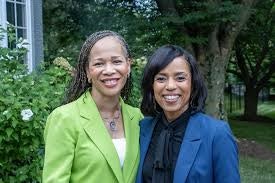
    Senators Lisa Blunt Rochester of Delaware and Angela Alsobrooks of Maryland.The “Black Women in American Politics 2025” report, released by Higher Heights Leadership Fund and the Center for American Women and Politics at Rutgers University, documents significant advances for Black women in elected office while highlighting continued underrepresentation at the highest levels of government.

    Black women now hold 401 state legislative seats nationwide, representing 5.4% of all state legislators and 16.2% of all women state legislators. This marks a 67.1% increase from 240 seats in 2014, when the organizations began tracking these statistics.

    The most dramatic change occurred in the U.S. Senate, where two Black women now serve simultaneously for the first time in American history. Angela Alsobrooks of Maryland and Lisa Blunt Rochester of Delaware both won open seats in the 2024 election, doubling Black women’s representation in the upper chamber.

    “This year also marks the first time in history that two Black women serve together in the United States Senate,” Alsobrooks and Blunt Rochester wrote in the report’s foreword. “That milestone is not a coincidence; it’s a culmination. It’s the result of investments made, barriers challenged, and generations of Black women who refused to be sidelined.”

    At the congressional level, 29 Black women currently serve as voting members, including 27 in the House and two in the Senate. This represents nearly double the 15 Black women who served in Congress when tracking began in 2014. All current Black congresswomen are Democrats except for the two senators.

    The 2024 election cycle was particularly significant because Vice President Kamala Harris became the first Black woman to head a major-party presidential ticket. Though Harris lost the election, her 107-day campaign raised $81 million in its first 24 hours and nearly doubled Democratic voter enthusiasm, according to the report.

    Black women also made notable gains in municipal leadership. Three new Black women became mayors of major cities: Cherelle Parker in Philadelphia, Sharon Tucker in Fort Wayne, and Barbara Lee in Oakland. Eight Black women now serve as mayors of the nation’s 100 most populous cities, matching their proportion of the U.S. population.

    However, significant representation gaps persist at higher levels. No Black woman has ever served as governor, and Black women remain underrepresented in statewide executive offices. Currently, 10 Black women serve in such positions nationwide, including four lieutenant governors, two attorneys general, two secretaries of state, one auditor, and one controller.

    The report notes that 34 states have never elected a Black woman to statewide executive office. Since 2014, only 25 Black women have ever held such positions across 17 states.

    “In our nation’s 249-year history, a Black woman has never served as governor of a state or as president of the United States,” the senators wrote. “That reality is a stark reminder that our work is not done.”

    The growth in Black women’s representation has occurred almost exclusively among Democratic officeholders. The report documents only seven Black Republican women state legislators nationwide and notes that all Black congresswomen are Democrats.

    State-level representation varies significantly by region. Maryland leads with Black women comprising 18.6% of state legislators, followed by Georgia at 17.4%. Conversely, five states have no Black women in their legislatures: Hawaii, Idaho, Montana, North Dakota, and South Dakota.

    The report also highlights institutional leadership gains. Twenty Black women now hold state legislative leadership positions, including six who lead their chambers. In Congress, Black women hold over 22% of House Democratic leadership positions.

    Looking ahead, the organizations identify opportunities for continued growth. Virginia Lieutenant Governor Winsome Earle-Sears, a Republican, is running for governor in 2025 and could become the first Black woman governor in U.S. history if successful. Additionally, over 200 statewide offices will be up for election in 2026.

    This marks the eighth iteration of the annual report series, which began in 2014 and has been published in 2015, 2017, 2018, 2019, 2021, and 2023. The comprehensive analysis tracks Black women’s political participation across federal, state, and local levels, providing the most detailed picture available of their representation in American politics.

    Source link

  • Should students’ unions reach for the stars?

    Should students’ unions reach for the stars?

    Ahead of heading out for the summer to deliver training to new students’ union officers, as well as booking trains and hotels and placing an unfeasibly large order of (unfeasibly large) post-it notes, every year we have a run at reading and analysing all of the pledges made in their election manifestos.

    Jim recalls a time when the key challenge emerging from the exercise was convincing the incoming crop that £1 a pint might need to be an occasional offer rather than a permanent price drop – a time when “student stress” was a precursor to mental health, and a time when “grants not fees” was a viable option rather than a lost era.

    A time when promises to improve the awareness of, or to extend the range of goods on offer in the campus food bank would have been unimaginable.

    Over the years, the pledges adorning the leaflets that litter the campus every spring have become less markedly less political and increasingly parochial. Oftentimes the key challenge has been to help new officers understand where their pledges meet policy – to help them locate what they want to achieve with the right committee or the appropriate PVC.

    So there’s something quite bleak about a year in which the demands are so historically comparatively modest, yet also so simultaneously ambitious given the resource constraints facing the sector they’re about to be immersed in.

    And as we dust down the exercises and update the slide decks, we’re left wondering whether the right message isn’t how to advocate for “more and better”, but instead should be picking which things shouldn’t join the growing group of aspects of the student experience that are becoming “less and worse”.

    They are not, in and of themselves, a collection of PDFs that are fully representative of the student body’s needs and aspirations. Many tell us more about a particular university’s culture and structure, or that students’ unions’s local funding settlement, than they do the realities of the contemporary student condition.

    But taken together, they tell us quite a bit about how students see their education and the aspects of it they’d like to see change. We’ve read, coded and analysed over 1,000 of them this year – from both winners and many of the losers – and our main conclusion is that the parochialism on offer belies something more than a lack of ambition or understanding of politics.

    They suggest a generation struggling to believe in possibility – one for whom the world looks like it will never get better, and where making little tweaks to help students cope is the wisest way to avoid being yet another politician whose promises will be broken. The question we’re struggling with is whether to amp up their ambitions, or temper their expectations with a dose of reality.

    Back to basics

    The first thing you notice when taking a step back from this year’s crop is that universities seem to be systematically failing to deliver fundamental aspects of the educational experience. The manifestos reveal students demanding things that ought to be standard – lecture materials uploaded in advance, breaks in long teaching sessions, consistent feedback. It’s not even about demanding extras or enhancements – it’s often about institutions not delivering the basics:

    Right now, some departments give detailed comments, while others leave students guessing…feedback should help students improve, not just justify a grade.

    Helen Slater, Education Officer, SU University of Bath

    Multi hour lectures should have a short break, make this enforced. Rebecca Schofield, Loughborough Students’ Union

    When, like us, you know what’s in the Quality Code or the B Conditions of the regulatory framework like the back of your hand, the sheer volume of pledges about improvements to simple things is dispiriting. Students shouldn’t need to campaign for things like accessible learning materials, or for the VLE to work:

    …resolving issues with timetabling. This will mean you receive your timetables earlier than 1-2 teaching weeks.

    Amrit Dhillon, University of Manchester SU

    End Deadline Clumping: Two deadlines shouldn’t fall on the same day, students perform best when they can focus on one piece of work at a time.

    Aliasgar Gandhi, Birmingham Guild, Postgraduate Officer

    What also emerges is a picture of institutions that have failed to adapt to students managing multiple responsibilities – work, commuting, caring duties – whilst trying to engage with their education. The assumption that getting into university means being ready for it, and that they’ll be able to benefit from what’s there, is coming apart:

    Have timetables that work for you! No more waiting around for lectures!

    Lily Watson, President, University of Chester

    Improve assessment timetabling by involving departments, preventing deadline clashes, and ensuring deadlines are released earlier.

    Aya Haidar, Academic Officer, York University SU

    It all suggests a generation that has lost faith in institutional competence and is demanding explicit guarantees that basic teaching and learning processes function in a way that allows them to experience them. We’re left wondering whether to explain what it is that students are entitled to – even if it seems that on the resource available, many universities are struggling to deliver it.

    Time won’t give me time

    It’s long been clear that student disengagement tends to reflect time scarcity rather than apathy. Manifestos reveal students stretched impossibly thin between work, commuting, and study, making traditional university schedules completely unworkable:

    Flexible Timetables & Online Learning: University should fit around your life, not the other way around. This isn’t just about convenience—it’s about reducing stress and creating a study environment that fits your needs, whether balancing work, personal life or study preferences.

    Forum Yadav, Education Officer, Manchester Metropolitan SU

    … implement a hybrid learning system that encourages people to come into the classroom in person, without disadvantaging those who cannot make it to lectures in person. This system would allow disabled students to keep up without putting their health at risk, and allow students to actually stay home when they’re ill… or have other commitments.

    Lyds Knowles, Diversity, Access and Participation Officer, University of Sussex

    Every set of manifestos contains pledges about scheduling that acknowledge students no longer have full-time availability for academic life. Universities persist with timetables designed for a student body that could prioritise education over economic survival:

    Concurrent lectures, especially around lunch time cause students to not be able to have lunch. We will work with Vice Deans and programme officers to sort out the timetables to make sure there is an hour free at noon for students to be able to eat.

    Baiyu Liu, President, King’s College London SU

    The grouping of deadlines, it is unfair to expect students who also have to work part time jobs to submit their deadlines all in the same week. Often leading to burnout, stress and further complications. I would like to see the deadlines spread throughout a student’s academic journey allowing them the time and freedom to explore them in full.

    Joshua Frost, President Faculty of Arts, Humanities and Business

    The depth of these time management proposals reveals institutions fundamentally out of step with student reality. When students need explicit campaigns for reduced commute times, condensed timetabling, and online options, it suggests universities are designing education around institutional convenience rather than student availability:

    Timetabling that will be student-friendly

    Francis Ani. President for Student Communities, Hull SU

    Make NECs more easily accessible for students, and more confidential; you shouldn’t have to disclose personal circumstances to attain a needed extension!

    Ryan Turner, VP Postgraduate Candidate, Nottingham Trent Students’ Union

    It all represents a fundamental challenge to the traditional university model, which assumed students could treat education as their primary occupation rather than one competing demand amongst many. We’re torn between encouraging SU officers to challenge that – or whether they should find ways to help students meet the demands.

    The earn-and-learn economy

    The traditional full-time student model seems to have completely collapsed as financial necessity forces students into near full-time work alongside study. The manifestos treat work not as supplementary income but as a survival strategy that universities must actively support:

    Students are left with no option other than work excessive hours in their part time jobs to be able to afford basic necessities, having a negative impact on both their academic as well as their university experience.

    Aisha Lord, Vice President Falmouth, Falmouth and Exeter SU

    Almost all students commute to university… This can be very costly and stressful, and force students to work extra hours, which takes away from their study, and their overall energy.

    Komal Ashfaq, President, Manchester Metropolitan University

    Rather than treating work and education as competing demands, the manifestos demand integration – paid internships, work experience built into courses, and academic arrangements that accommodate employment. It reflects students who can’t afford to see work and study as separate:

    Lobby for part-time work experience that matches course content and enhances learning.

    Ismail Patel, Candidate for Education Officer, University of Bradford Students’ Union.

    Advocate for more internship and part-time work opportunities for postgraduate students.

    Navin Raj Ramachandran Selvaraj, Candidate for Postgraduate Students’ Officer, Oxford Brookes University.

    Their proposals go beyond simple job-finding to demand that universities take responsibility for helping students find good work that develops relevant skills. It suggests a complete rejection of the idea that student employment is peripheral to education:

    Push for More Part-Time Job Opportunities on Campus Financial stability is crucial for students, and I will advocate for more part-time roles within the university.

    Muhammad Barik Ullah, Vice President of Undergraduate Education, Westminster SU

    I will also campaign nationally for increased apprenticeship schemes that provide real-world experience beyond the lecture hall.

    Matthew Lamb, candidate for Education Officer, Lancaster University SU

    It also reflects a generation that sees no viable alternative to integrating work and education, and expects institutions to adapt accordingly rather than maintaining the fiction of full-time student focus. We can’t work out whether they should fight to reclaim the full-time student experience, or continue to try to fit too much into a tight timetable.

    The financialisation of… everything

    On that, cost-of-living concerns have invaded every aspect of university life because the student finance system has fundamentally failed to cover basic living expenses. The manifestos demand subsidised everything – meals, transport, laundry, stationery – revealing students unable to afford necessities:

    Increase the Selection and Diversify £1.50 Value Meals to ensure access to affordable, nutritious options. …Offer Free Meal Planning and Cooking Classes to help reduce grocery expenses and prevent malnutrition.

    Izzy Downer, Community Officer, SU University of Bath

    I will fight to make the university more affordable with cheaper housing and bus travel (whilst increasing frequency!)

    Lewis Wilson, Education Officer, University of Sussex

    The breadth of financial support demanded goes far beyond traditional student finance, extending to food banks, emergency funding, and discounted services. Maintenance loans are no longer functioning as intended:

    Subsidise essential supplies like period products and course materials.

    Ana Da Silva, VP Welfare & Community, Royal Holloway Students’ Union

    Lower Living Costs – Reduce food, rent, and transport expenses for students… Food on campus should be affordable for everyone. At least one cheap, healthy option should be available on every menu.

    Emma Brown, Union President, University of Southampton

    Increasing provisions of free menstrual products across campus.

    Leah Buttery, Wellbeing Officer, Lancaster University

    Students are essentially demanding that universities compensate for a broken national funding system by subsidising daily life. The manifestos treat a financial crisis as so normalised that every policy area must include cost-reduction measures.

    But with little prospect of significant relief coming from government, we’re torn between whether they should campaign into the ether for better student financial support, or find further fixes internally to provide some relief.

    Radical transparency as a default expectation

    More than ever this year, candidates are demanding real-time access to information about every aspect of institutional decision-making, reflecting a generation raised on social media expecting constant updates and complete visibility:

    I will push for minutes of all committee meetings to be published on the student portal within a week.

    Sophie Elsey, Candidate, University of Wolverhampton Students’ Union

    More transparency from the university management in decision making, including budget allocations.

    Candidate, Queen’s Students’ Union

    Manifestos go far beyond traditional accountability to demand that previously private institutional processes become completely transparent. Students want detailed financial breakdowns, accessible decision-making explanations, and immediate access to information that universities have historically kept internal:

    Provide an open-access dashboard showing real-time spending on student services and capital projects.

    William Garvey, Officer Candidate, University of the Arts London Students’ Union

    Push for module leaders to share assessment marking rubrics with students in advance.

    Hasan Chowdhury, Candidate, University of Chester Students’ Union

    Traditional consultation processes and annual reports are treated as inadequate relics. Students expect real-time feedback systems, open access to committee discussions, and quarterly updates that explain exactly how decisions are made and money is spent:

    I will advocate for livestreamed town halls where university leaders take student questions unfiltered.

    Jasmine A., Candidate, Edge Hill Students’ Union

    Push to publish all course changes on a centralised, searchable hub before implementation.

    Priya Chandra, Academic Officer candidate, University of Bedfordshire Students’ Union

    That isn’t just about accountability but about fundamental assumptions around information access. Students treat transparency as a default setting rather than something institutions graciously provide when pressed:

    Introduce opt-in alerts so students are notified whenever the university makes a policy change that affects them.

    Mohamed Khaleel, Candidate for VP Academic Affairs, Cardiff Metropolitan University SU

    The depth of the transparency demands suggest a rejection of traditional institutional opacity and a belief that students have the right to understand exactly how things work rather than trusting authority figures to act appropriately. We could encourage them to demand clarity – or we could prepare them for a year during which confidential discussions are more likely to be the norm.

    Bureaucracy as liberation technology

    Rather than seeing formal processes as obstacles, students genuinely believe that better systems and structured procedures can solve problems that previous generations addressed through personal relationships or protest:

    I’ll lobby for a standardised extension policy across departments to remove ambiguity and favouritism.

    Aisha Khan, Education Candidate, Aston Students’ Union

    The manifestos systematically replace informal advocacy with process-driven representation that offers genuine agency rather than tokenistic consultation. This reflects deep scepticism about personal relationships as reliable routes to change:

    Create template emails and appeal guides for students contesting grades or procedures.

    Liana Dsouza, Candidate, Solent Students’ Union

    Mandate response times for all university emails affecting students’ academic progress.

    Zehra Al-Khatib, Candidate, University of the Highlands and Islands SA

    Students want predictable, systematic responses that don’t depend on who happens to be in charge or what mood they’re in. The proposals assume that good design can guarantee fair treatment regardless of individual personalities or relationships:

    Create an online portal where students can see the status of any ongoing issue or query.

    Lydia Spencer, VP Education Candidate, Bucks Students’ Union

    Replace paper-based mitigating circumstances with an automated and transparent digital system.

    Jayden Moore, Candidate, University of South Wales Students’ Union

    It reads like an inversion of traditional anti-bureaucratic politics, suggesting a generation that trusts systems more than individuals and sees formal processes as tools of liberation rather than oppression. But we are left wondering whether they should advocate for more human approaches – or whether they should place faith in systems that at least appear to them more consistent and fair.

    Change is inevitable (except from the vending machines)

    Not nearly as much as we’d like, we are starting to see the wide-ranging organisational change processes and restructures come through in manifestos. But while a decade or so ago we might have seen pledges to “fight the cuts”, more often than not we see candidates keen that students are at least kept in the loop:

    One of the biggest frustrations students have is feeling like decisions are made about them, not with them. Whether it’s changes to course structures, university policies, finance or support services, students often feel out of the loop or unsure about where to raise concerns. I want to push for better transparency between students and the university, ensuring that major decisions are clearly communicated and that student voices are involved from the start.

    Humphrey Kasale, President, Manchester Metropolitan University

    “The University and its partner colleges have embarked on a process to explore new operating models including merging into a single institution to help save money and make the institution more sustainable…I will push for any savings to be made through greater efficiencies from the university and colleges working closer together on back office functions and not at the cost of the frontline student experience.

    Xander McDade, Students’ Association President, UHI (University of the Highlands and Islands)

    In some cases manifesto sets seem oblivious to announced redundancy rounds or major change projects that are bound to dominate their year. In others, students see problems coming that others may have missed:

    I hope to ensure that grading and marking stay consistent with the merging of departments soon so continuing students don’t get marked down for writing essays in a specific way they’re used to when taking modules outside of their departmental subject that have different essay structures.

    Noor Abbass, candidate for Education Officer, Goldsmiths

    Ensure smooth transition during departmental mergers

    Jeevana Sandhya, Education Officer candidate, University of Leicester

    Again, we are puzzled. Should we explain just how tough the year looks set to be across many of the universities we’ll be visiting, or keep them focussed on the aspects of the experience they’d like to see improved?

    Power as something you practise

    One thing that is a constant from previous years, and very much reflects the Gen-Z preference for horizontal support, is plenty of pledges on peer support – on everything from wellbeing to study skills:

    I pledge to create an anonymized essay-bank showcasing past student work to illustrate degree classifications, helping students understand grading standards and academic expectations.

    Gina Tindale, Academic Officer, Newcastle University

    Expand Buddy Schemes and Pastoral Support for undergraduates and postgraduates.

    Joshie Christian, Vice President Education, University of Southampton

    I will launch a mentorship programme for new volunteers to gain a deeper, more comprehensive understanding of student media and its dynamics.

    Libby Griffiths, Student Media Officer, Newcastle University

    Even on this one, we can’t work out what to do. Explain how hard it’s getting to find and support student volunteers to deliver the student experience for each other, or encourage them to explore the sorts of schemes we see on the continent that offer academic credit,a payment (or both) – building students’ skills in the process?

    Climb every mountain higher

    In most universities every summer, there’s a careful little dance being played between new SU officers and the senior managers they most often meet with.

    On the SU side, pledges get converted into exploratory conversations to test the appetite for change in the year ahead. On the university side, managers will be sussing out the leaders that students have picked – are these ones who we can work with, or ones that need to be disabused of their assumptions and ambitions?

    Having discussed the choices at length, for what it’s worth, we’ll be doing what we always do – not making assumptions or carefully manipulating them towards particular actions, but laying out what’s going on and why so they can make those choices for themselves. After all, they are almost always perfectly able to.

    But as well as our usual advice to listen and be curious about the underpinning experiences that lead to their policy ideas, we do have one additional bit of advice this year.

    The “sunshine indoors” decade of promises to provide pretty much everything to do with the student experience reflects what universities have been doing too. It might have made sense when there was money around to invest – but it’s now not only proving impossible to deliver, it obscures the role that other areas of government should be playing in the student experience.

    Whether it’s the business department’s dismal failure to think about students at work, the absence of the recognition between health and successful study for health ministers, or (in England and Scotland) housing legislation seeming to be silent on struggles students face, it does feel like we’re close to the end of what universities can do to improve things – with untapped potential for the rest of the public realm to step up to support students.

    Student leaders and university managers may well come from different worlds, and may well need to respectively deepen their understanding of those worlds – but whether working in close partnership or public opposition, they ought to be able to agree to explore together how and why we got here – and the sorts of external lobbying and campaigning that can get us somewhere else.

    It’s almost certainly external to the university where the real possibilities can be found – and feels like students advocating for students while universities advocate for universities is a separation that should come to at least a temporary end.


    Source link

  • White House declares goal to reach 1M new apprentices per year

    White House declares goal to reach 1M new apprentices per year

    This audio is auto-generated. Please let us know if you have feedback.

    President Donald Trump directed the secretaries of Labor, Education and Commerce to submit a plan within 120 days to “reach and surpass 1 million new active apprentices,” according to an executive order signed April 23.

    The fact sheet castigated previous administrations’ investments in higher education, stating that many currently funded programs — including the Workforce Investment and Opportunity Act, signed into law in 2014 — do not have the incentives necessary “to meet workforce training needs.”

    The requested plan must identify:

    • Avenues to expand registered apprenticeships to new industries,
    • Ways to scale apprenticeships across the country, and
    • Ways to improve connections between the education system and apprenticeship programs.

    The fact sheet suggests that the intention of the administration is to reach this 1 million goal each year.

    The order also calls upon the departments of Labor, Commerce and Education to “improve transparency on the performance outcomes of workforce development programs” as well as any credentials that might be supported with federal dollars.

    “This decisive action is yet another example of President Trump keeping his promise to American workers, empowering them to fill good-paying, in-demand jobs that will secure our economic comeback,” Lori Chavez-DeRemer, DOL secretary, said in a statement.

    The White House called out a shortage of construction and durable goods workers that is projected to persist and grow. The fact sheet also flags AI as a focal point for development.

    “As the potential of American AI increases, and as America reshores manufacturing and makes Made in America a mark of international envy, America will need more skilled tradesman [sic] than we’re prepared to train,” the fact sheet said.

    Various reports, including one prepared for the DOL Chief Evaluation Office, have shown how registered apprenticeships can help workers access living wages, particularly workers in construction. That report defined a living wage as “the earnings required to pay for minimum basic needs, including food, housing, transportation, clothing, and other essentials.”

    During Trump’s first administration, the DOL published an apprenticeship rule that enabled employers to create their own versions of registered apprenticeship programs, called Industry-Recognized Apprenticeship Programs. These programs were vetted and approved by third parties, including industry groups. The Biden DOL rescinded the Trump rule in September 2022.

    Source link

  • Liaison Unveils New Intelligent Names Degree Intent Scores, Enhancing Predictive Power and Reach 

    Liaison Unveils New Intelligent Names Degree Intent Scores, Enhancing Predictive Power and Reach 

    Liaison, a leader in education technology and data-driven solutions, is excited to announce the release of its 2025 Intelligent Names Degree Intent Scores. These advanced scores represent a transformative leap in identifying adult learners nationwide with the highest potential for pursuing a degree. 

    The 2025 Degree Intent Scores are powered by cutting-edge data science, advanced modeling techniques, and insights from a national survey conducted in late 2024. Combined with responses from Liaison’s extensive consumer database of over 260 million Americans, this enhanced model offers unparalleled precision and reach into the adult learners market. 

    Recent testing using a national dataset of graduate program applicants showed a 20% improvement in predicting applicant activity within the highest intent band when comparing the new intent scores to the original. Similarly, an analysis of a national dataset of bachelor’s degree seekers found that Liaison’s Bachelor’s Degree Intent model accurately identified 91% of degree seekers under the age of 25 in the top two quintiles. These findings underscore the model’s remarkable accuracy, effectiveness, and value for higher education institutions. 

    “The 2025 Degree Intent Scores mark a major milestone in our mission to connect educational institutions with adult learners who are ready to take the next step in their academic journeys,” said Dr. Mark Voortman, Chief Data Scientist at Liaison. “By leveraging large-scale data and state-of-the-art modeling techniques, we’ve significantly enhanced our ability to help institutions identify adult learners most likely to pursue degree opportunities in the near future.” 

    The updated scoring model empowers colleges, universities, and other education providers with deeper, data-driven insights to refine recruitment strategies, enhance student engagement, and achieve enrollment goals more effectively. 

    Learn more about Intelligent Names here.

    Source link

  • A Response to ‘Online Degrees Out of Reach’

    A Response to ‘Online Degrees Out of Reach’

    A Response to ‘Online Degrees Out of Reach’

    Susan H. Greenberg

    Mon, 01/13/2025 – 03:00 PM

    An ed-tech consultant writes that a recent article about online completion rates “shows a disturbing disregard for the complexities of education outcomes.”

    Byline(s)

    Letters to the Editor

    Source link