Tag: Reality

  • Graduate jobs and recruitment reality

    Graduate jobs and recruitment reality

    Despite frequent headlines warning of large declines in graduate jobs, the Institute of Student Employers (ISE) Student Recruitment Survey 2025 shows a less severe and more nuanced reality of the entry-level recruitment market.

    Our survey captures recruitment trends from 155 ISE employer members who received over 1.8m job applications for over 31,000 early careers roles. For these employers, graduate hiring has fallen by eight per cent this year, marking the weakest year for graduate hiring since the 12 per cent decline during the pandemic in 2020.

    Although the ISE represents larger employers who recruit graduates onto formal training programmes, broader labour market data also shows reduced hiring which may impact students who take jobs that may not be part of a formal training programme. For example, data from the Recruitment and Employment Confederation shows a 13 per cent drop in all job adverts from July 2024 to July 2025.

    However, this trend varies from sector to sector and employer to employer. ISE’s survey found that while 42 per cent of employers reduced graduate hiring levels, 25 per cent of employers maintained hiring levels – and 33 per cent reported an increase.

    Looking ahead to 2025–26, we expect graduate recruitment to remain challenging as employers forecast an overall seven per cent reduction in graduate hiring, driven by sharp declines for a small number of large employers.

    Rebalancing early talent programmes

    Graduate programmes aren’t the only route into the UK’s top employers and investment in apprenticeships has been growing since the levy was introduced. ISE found employers are rebalancing early careers programmes with more focus on apprenticeships to meet skills demands.

    While graduate hiring declined this year, school and college leaver hiring increased by eight per cent. Graduates still outnumber apprentices and therefore the overall entry-level job market is down five per cent.

    This increase reflects the role of large levy-paying employers with greater resources to develop and manage apprenticeship schemes, bucking the wider market trend. Government data reports only a 0.6 per cent rise in apprenticeship starts among 19- to 24-year-olds over the past year.

    The ratio of graduates to school or college leaver hiring (which is mostly apprenticeships) among ISE members who recruit students onto both pathways is 1.8 graduates for every school/college leaver hire, down from 2.3 last year. This trend looks set to continue into 2025–26 with the ratio is forecast to decline further to 1.6:1.

    Despite this rebalancing, graduate hires still outnumber school and college leaver hires, and although the jobs market remains challenging, graduates remain a core element of early talent strategies.

    AI impact

    AI is undoubtedly reshaping the early careers recruitment sector. However, no one is telling us that AI is replacing entry level jobs (yet).

    As students increasingly use AI to craft job applications, they also submit a greater number of applications, driving up competition for each role. The application to vacancy ratio remains at a historic high of 140 applications per vacancy.

    The authenticity of applications from “AI-enabled candidates” has also emerged as a key employer concern. In fact, an arms race appears to be underway: only 15 per cent of employers said they never suspected or identified candidates cheating in assessments, and 79 per cent of employers are redesigning or reviewing their recruitment processes in response to AI developments.

    Currently around half of employers allow candidates to use AI tools during the recruitment process, primarily for drafting covering letters and CVs and completing online application questions. Only a small proportion of employers (10 per cent) have banned the use of AI or introduced technical measures to prevent its use.

    Our data also shows that 45 per cent of employers had not provided applicants with any guidance on when it was or was not appropriate to use AI. This guidance may support students in navigating their transition into a graduate role and help employers manage their application volumes.

    But while students are embracing AI in their job search, the use of AI by recruiters is currently limited, but likely to grow. While over half of employers use automated systems to fully manage some aspects of testing, AI use is very rare. Employers are most likely to use AI in gamified assessments, but even here the adoption rate is only 15 per cent. Looking ahead to the next five years, more than half of employers expect to use AI in their recruitment processes, and 70 per cent anticipate increasing their use of automation.

    Getting ahead

    The graduate job market is challenging, reflecting the broader economic climate – but it is not without opportunity.

    Students looking to get ahead should remain cautious about their prospects in their chosen career, but the graduate job market is always competitive. A job search should be treated just like a job. Applications should be authentic, considered and tailored, with a focus on quality not quantity. And work experience remains key, with employers reporting former interns better equipped with the skills that they need.

    For universities, these findings highlight the importance of preparing students for a more complex and competitive graduate market through close collaboration with employers.

    As employers rebalance early talent programmes and adapt to the rise of AI, institutions have a key role to play in equipping students with practical experience, adaptability, and digital literacy.

    Strengthening partnerships with employers, embedding employability across the curriculum, and helping students navigate responsible AI use will be critical to ensuring graduates continue to thrive in a shifting recruitment market.

    Source link

  • Higher Education Inquirer : Trump’s War on Reality

    Higher Education Inquirer : Trump’s War on Reality

    The second Trump administration has unleashed a coordinated assault on reality itself—an effort that extends far beyond policy disagreements into the realm of deliberate gaslighting. Agency by agency, Trump’s lieutenants are reshaping facts, science, and language to consolidate power. Many of these figures, despite their populist rhetoric, come from elite universities, corporate boardrooms, or dynastic wealth. Their campaign is not just about dismantling government—it’s about erasing the ground truth that ordinary people rely on.

    Department of State → Department of War

    One of the starkest shifts has been renaming the State Department the “Department of War.” This rhetorical change signals the administration’s embrace of permanent conflict as strategy. Secretary Pete Hegseth, a Princeton graduate and former hedge fund executive, embodies the contradiction: Ivy League polish combined with cable-news bravado. Under his watch, diplomacy is downgraded, alliances undermined, and propaganda elevated to policy.

    Department of Defense

    The Pentagon has been retooled into a megaphone for Trump’s narrative that America is perpetually under siege. Despite the promise of “America First,” decisions consistently empower China and Russia by destabilizing traditional alliances. The irony: many of the architects of this policy cut their teeth at elite think tanks funded by the same defense contractors now profiting from chaos.

    Department of Education

    Trump’s appointees have doubled down on dismantling federal oversight, echoing the administration’s hostility to “woke indoctrination.” Yet the leaders spearheading this push often come from private prep schools and elite universities themselves. They know the value of credentialism for their own children, while stripping protections and opportunities from working families.

    Department of Justice

    Justice has been weaponized into a tool of disinformation. Elite law school alumni now run campaigns against “deep state” prosecutors, while simultaneously eroding safeguards against corruption. The result is a justice system where truth is malleable, determined not by evidence but by loyalty.

    Department of Health and Human Services

    Public health has been subsumed into culture war theatrics. Scientific consensus on climate, vaccines, and long-term health research is dismissed as partisan propaganda. Yet many of the leaders driving this narrative hail from institutions like Harvard and Stanford, where they once benefited from cutting-edge science, they now ridicule.

    Environmental Protection Agency

    The EPA has become the Environmental Pollution Agency, rolling back rules while gaslighting the public with claims of “cleaner air than ever.” Appointees often come directly from corporate law firms representing Big Oil and Big Coal, cloaking extractive capitalism in the language of freedom.

    Department of Labor

    Workers are told they are winning even as wages stagnate and union protections collapse. The elites orchestrating this rollback frequently hold MBAs from Wharton or Harvard Business School. They speak the language of “opportunity” while overseeing the erosion of worker rights and benefits.

    Department of Homeland Security

    Reality itself is policed here, where dissent is rebranded as domestic extremism. Elite operatives with ties to intelligence contractors enforce surveillance on ordinary Americans, while elite families enjoy immunity from scrutiny.


    The Elite Architecture of Gaslighting

    What unites these agencies is not just Trump’s directives, but the pedigree of the people carrying them out. Far from being the populist outsiders they claim to be, many hail from Ivy League schools, white-shoe law firms, or Fortune 500 boardrooms. They weaponize their privilege to convince the public that up is down, war is peace and lies are truth.

    The war on reality is not a sideshow—it is the central project of this administration. For elites, it is a way to entrench their power. For the rest of us, it means living in a hall of mirrors where truth is constantly rewritten, and democracy itself hangs in the balance.


    Sources

    • New York Times, Trump’s Cabinet and Their Elite Connections

    • Washington Post, How Trump Loyalists Are Reshaping Federal Agencies

    • Politico, The Ivy League Populists of Trump’s Inner Circle

    • ProPublica, Trump Administration’s Conflicts of Interest

    • Brookings Institution, Trump’s Assault on the Administrative State

    • Center for American Progress, Gaslighting the Public: Trump’s War on Facts

    Source link

  • The End of the Traditional Student Era: Higher Ed’s New Enrollment Reality

    The End of the Traditional Student Era: Higher Ed’s New Enrollment Reality

    For decades, the term “traditional student” referred to an 18–22-year-old, full-time student living on campus and largely unencumbered by adult responsibilities. That definition may have been true in the past, but today, it’s holding institutions back. 

    Across the country, Gen Z students increasingly look like their older counterparts in how they approach higher education. They’re working while enrolled, choosing flexible learning formats, weighing cost against career ROI, and demanding that programs fit into — not disrupt — their lives. At the same time, adult learners remain a vital audience, and their motivations often mirror those of younger students. 

    For enrollment and marketing leaders, the takeaway is clear: Stop relying on outdated labels and start building strategies for the actual students you serve. 

    The blurred lines between traditional and adult learners 

    Recent Gallup-Lumina research shows that 57% of U.S. adults without a degree have considered enrolling in the past two years, and more than 8 in 10 say they’re likely to do so within the next five years. While adult learners have long valued affordability, flexibility, and career outcomes, these same factors now dominate Gen Z’s expectations. 

    Cost concerns are particularly telling, as highlighted by The CIRP Freshman Survey 2024. The study found that 56.4% of incoming first-year students reported some or major concern about paying for college, with even higher rates among Hispanic or Latino (81.4%) and Black or African American (69.6%) students. 

    Work and life responsibilities are also playing a growing role. Georgetown University’s Center on Education and the Workforce (CEW) reports that between 70-80% of undergraduate students are employed while enrolled, with about 40% working full-time.  

    For many, this isn’t a nice-to-have — it’s the only way they can afford school. 

    Why this matters for enrollment strategy 

    If your enrollment marketing still segments audiences primarily by age, you’re likely missing the mark. Here’s the reality: 

    • An 18-year-old commuter working 30 hours a week and taking hybrid classes might have more in common with a 35-year-old career changer than with a residential peer. 
    • Transfer and degree completer students (36.8 million Americans with some college but no credential) are often juggling similar priorities. 
    • Both groups respond to messaging that clearly connects program design to life balance, affordability, and employment outcomes. 

    The “traditional vs. adult” distinction no longer works for understanding motivations, predicting behaviors, or designing student experiences. 

    Ready for a Smarter Way Forward?

    Higher ed is hard — but you don’t have to figure it out alone. We can help you transform challenges into opportunities.

    4 Priorities that span generations 

    Regardless of age, today’s students share a core set of expectations that shape their enrollment decisions. These priorities now cut across the full spectrum of higher education audiences. 

    1. Affordability 

      The Gallup-Lumina report states that finances are among the most influential factors in enrollment decisions for unenrolled adults. Cost is also the top reason adults have stopped out of higher education and a leading reason current students consider doing so.  

      Gen Z mirrors this cost-conscious mindset, with many forgoing the traditional four-year route and embracing community colleges or transfer pathways as a lower-cost way to begin their degree journey.

      2. Flexible learning programs 

        Hybrid, online, and asynchronous options are no longer “adult learner perks” — they’re mainstream expectations. Traditional-aged students now seek flexible schedules to balance work, internships, and other commitments, mirroring adult learners. The pandemic accelerated digital comfort across age groups, making flexibility table stakes for recruitment. 

        3. Career outcomes 

          The Gallup-Lumina report shows that 60% of currently enrolled students cite expected future job opportunities as a “very important” factor in choosing to enroll. For stopped-out adult students, career prospects were also the top motivator. 

          Knowing this, institutions should ensure career outcomes are central to program design, marketing, and student advising. Those that clearly articulate skill alignment, employment pathways, and alumni success stories will attract and retain students. 

          4. Work-life balance 

            More students than ever are balancing jobs, caregiving, and other priorities with their academic responsibilities. For adult learners, this has always been true, but for traditional-aged students it’s increasingly the norm.  

            Institutions should respond by offering flexible schedules, targeted support, and streamlined services that help students balance academics with work and family demands. 

            Moving from segmentation to personalization 

            The solution isn’t to erase audience differences but to recognize that motivations and needs cut across age lines. Institutions should: 

            • Use behavioral and attitudinal data (not just demographics) to inform personas. 
            • Map programs to shared priorities, ensuring flexible formats and clear ROI messaging. 
            • Equip enrollment teams to surface emerging trends from student conversations. 
            • Invest in CRM and marketing automation to deliver personalized, timely outreach. 

            The opportunity for forward-thinking institutions 

            Institutions that adapt now can capture a larger share of a changing student market. Meeting the needs of today’s learners, who span generations, life stages, and responsibilities, requires more than minor adjustments. It calls for rethinking how programs are designed, marketed, and delivered to address shared priorities and remove persistent barriers. 

            Consider the following tactics: 

            • Retooling marketing messages to emphasize affordability, flexibility, and career outcomes. 
            • Rethinking program delivery models for a mixed audience. 
            • Breaking down internal silos between “traditional” and “adult learner” recruitment. 

            From outdated labels to modern enrollment strategies 

            The traditional student still exists, but they’re no longer the majority. Today’s demand for higher education comes from learners of all ages and circumstances. 

            The lines are blurred, and the labels are outdated. It’s time to create enrollment strategies that reflect today’s student realities and anticipate tomorrow’s opportunities. 

            Innovation Starts Here

            Higher ed is evolving — don’t get left behind. Explore how Collegis can help your institution thrive.

    Source link

  • the reality of the US student visa system

    the reality of the US student visa system

    Min, a student from Bangladesh, remembers his excitement after learning he had been accepted into a US university. It meant he would be learning from some the world’s leading medical experts in healthcare – learning skills he hopes to use to improve the healthcare system in his home country.

    Min, who asked not to use his name due to the enhanced US screening policies, was recently granted a visa and is due to start his freshman year this fall.

    The road to get there, however, was not a smooth one. Following the State Department’s three-week worldwide pause on interviews in June, and the implementation of enhanced screening policies, many of Min’s peers had their interview appointments delayed.

    It took Min three months to secure his required interview at the embassy for his student visa. He said the software used to schedule the interview kept crashing and the embassy had limited appointment times, checking multiple times a day for openings. 

    While Min saw his visa approved, several of his friends had their student visas denied at the end of their interview, he said, leading some of them to apply for universities in other countries. Most often, it’s another English-speaking country, since that’s the most common secondary language for Bangladeshi students, he said.

    “In recent, years, a lot of my friends have applied to Australia, because for the US, there are more uncertainties,” Min said.

    The student visa application process has come into the spotlight recently. That’s because of the Trump administration’s changes to how visa officers review students’ social media activity. Some visa applicants have expressed concerns that the policies could lead to an increase in visa denials.

    However, education nonprofits have for years raised alarms about high rates of visa denials and long interview wait times – warning it could hinder the global competitiveness of US higher education.  

    Visa denials differ for world regions

    The US State Department rejected over 650,000 student visa applications worldwide from 2018 through 2022. Students from developing nations in South Asia and Africa have their visas rejected at much higher rates compared to those from wealthier countries. 

    That’s according to a study that looked at eight years’ data – authored by The Presidents’ Alliance and Shorelight student support company. The report shines a light on experiences of students from Asia and Africa, who struggle with long wait times to schedule visa interviews.

    For European students who apply to study in the US, getting denied entry is rare – fewer than 8% in 2023, according to the study. That’s a stark difference from Africa, where 61% of students were denied a visa that year, not including South Africa and some neighbouring countries with very low denial rates. For South Asia, including Nepal, between 36% and 55% students have their visas denied each year.

    The world’s population of young, smart minds is exploding out of sub-Saharan Africa

    Carly O’Keefe, Monroe Community College, Rochester

    Rajika Bhandari, a senior advisor with the Presidents’ Alliance who led the study, said the findings reflect patterns that college administrators have noticed for decades.

    “From the campus perspective, these students have been fully vetted and deemed worthy of being offered admission,” said Bhandari, once a US international student herself. “Yet they’re facing this final barrier.”

    A visa officer decides whether to grant a student entry after interviewing them at an embassy or consulate. One goal of the interview, lasting several minutes at most, is to assess whether the student is likely to return to their homeland after graduating.

    If the student can’t demonstrate strong homeland connections – such as through owning property, having a job lined up after graduation, or strong family ties – it can be grounds for denial. The visa officer will also review documents showing the student’s eligibility to study internationally, including financial statements showing the student can afford college.

    Many students, Bhandari said, have expressed concerns to college leaders that they’ve met every requirement but are still denied – leaving them bewildered. Visa officers rarely share the specific reason for the denial with applicants. 

    “You may go back a second time and be denied yet again because you don’t know what it is that you need to fix,” Bhandari said.

    The State Department didn’t directly respond to a request for comment but has said in the past that it’s committed to a fair visa review process. The department said that applications, especially from Africa, have skyrocketed in the past few years and “a commensurate increase in denials is expected.” 

    According to the department, more visas were issued to African students in 2023 than ever before, with Nigerian students granted the highest share. However, the visa denial rate for African students grew that year by three percentage points, according to the study, while the denial rate for European and South American students dropped. 

    The State Department doesn’t publish data on visa denials but does disclose how many student visas are issued for each country every month. So far this year, the number of F-1 visas issued for Nigerian students is 23% less compared to this time last year, based on data published through May. For Bangladeshi students, like Min, the number of visas issued is about the same as last year.

    Experience with getting a visa denied

    Sooraj Sahani, entering his sophomore year at Texas State, knows how confusing and emotional it can be to have a visa denied. He had his visa denied on the first try, before applying again and getting it approved three weeks before the start of freshman year in fall of 2024.

    In his village in the plains of Nepal, Sahani fed his fascination for physics by taking online classes from some of the world’s top experts. He aspired to be like the professors who mentored him virtually through the World Science Scholars program, a nonprofit based in New York City. That’s why Sahani decided he wanted to study at a US university, determined to become a theoretical physics researcher.

    When he learned that Texas State was offering him a full undergraduate scholarship, he thought he was on track to fulfil his dream. His scholarship meant the US couldn’t deny his student visa for financial reasons, Sahani said. But he still ran into issues.

    When Sahani tried last summer to book a visa interview appointment for the US embassy in Kathmandu, Nepal, all the slots were full for weeks. Instead, he traveled to New Delhi for an interview with a visa officer. Sahani said that, at the end of the roughly one-minute interview, the officer told him he wasn’t eligible for a visa without any explanation.

    Students can wait up to nine months for a US visa interview in Dhaka, Bangladesh

    US State Department data

    “With a very sad face, I had to come back from India. It took me some time to tell myself that, OK, it happens. I’m not giving up,” he said.

    After getting his visa denied, Sahani scheduled his second visa interview appointment at the embassy in Kathmandu. To secure a slot, he repeatedly woke up in the middle of the night to check online for appointments.

    “I woke up at 2am, 3am, 4am, just to see if there was a visa slot. We have a lot of students applying for the US but we just have one embassy,” he said.

    Since releasing its study, the Presidents’ Alliance and other education nonprofits have met with State Department leaders about improving visa processing. The department says it’s made progress in lowering wait times worldwide by hiring more staff and giving visa officers the authority to waive some interviews

    However, some countries still have too few embassies or staff members to keep up with the high number of students, Bhandari said. For the embassy in Dhaka, Bangladesh, it’s currently a nine month wait time for a student visa interview, according to the department’s website.

    Academic loss and economic loss”

    Higher education leaders warn that if visa issues persist, they’ll hinder the US’s global competitiveness. In January NAFSA wrote a letter to the incoming Trump administration calling for action to make visa processing times more predictable. The letter also advocates for creating a pathway for international students to become permanent residents after graduation, which, according to Bhandari, may help to address visa denials.

    If students can choose to live and work in the US after graduation, they wouldn’t have to prove their intentions to return to their home country – a source of many denials. In April, Congress introduced the Keep STEM Talent Act with bipartisan support, aiming to create this kind of “dual intent” pathway for international students pursuing science, technology, or maths degrees. Most of the 1.1 million international students who came to the US last academic year chose STEM fields.

    The high rate of visa denial for African students is both an academic loss and an economic loss, said Carly O’Keefe, the designated school official for international student enrolment at Monroe Community College in Rochester, NY.

    Like many other states, college enrolment in New York has been declining. New York’s comptroller warns that 2025 could mark the start of an “enrolment cliff” – a sharp decline in applications reflecting the steady decline in US births since a historic high in 2007. Several colleges in the state have closed in recent years due to low enrolment. 

    Meanwhile, Africa’s young population is increasing. By 2050, Nigeria is expected to become the world’s third most populous country, behind only India and China. Africa isn’t just full of college-aged youth, O’Keefe said, but also innovation led by youth. As technology is becoming more available in Africa, the number of youth-led startups is booming. 

    “The world’s population of young, smart minds is exploding out of sub-Saharan Africa,” she said. “Just think of the brain power and the potential talent in the world.”

    Last fall, MCC welcomed about 90 international students, the most since 2018, from 30 countries. However, as with most colleges that host international students, the number enrolled was fewer than the number who planned to come because of visa denials. Colleges across the US, O’Keefe said, are missing out on talent because of the denials.

    “We’re potentially missing out on very qualified students enrolling at our colleges and universities across the country that could be doing amazing academic work,” she said.

    Source link

  • How Colleges and States Can Make Workforce Pell a Reality

    How Colleges and States Can Make Workforce Pell a Reality

    Community colleges secured a massive legislative win earlier this month after more than a decade of advocacy. Workforce Pell, at long last, is en route to become a reality.

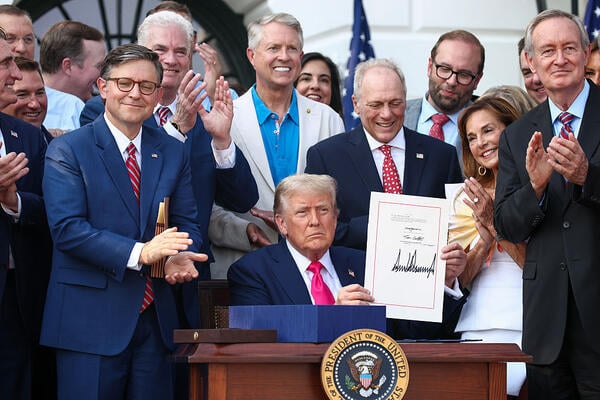
    The One Big Beautiful Bill Act, signed into law July 4, extends Pell Grants to low-income students enrolled in eligible short-term programs, between eight and 15 weeks long. The policy shift is expected to put money in the pockets of hundreds of thousands of students per year to help them afford these quicker, increasingly popular programs—and bring an influx of funds to the institutions that offer them. 

    But realizing those gains will take some time, and with the policy scheduled to get off the ground next summer, some experts are worried a year won’t be long enough to parse the program’s details and ensure a smooth rollout.

    Lawmakers in Congress and colleges have been working toward some form of workforce Pell since former senator Mary Landrieu of Louisiana pushed it forward as a part of the JOBS Act in 2014.

    Since then, multiple attempts to enact the Pell expansion have failed even as the idea gained more bipartisan support. And for a moment in late June, workforce Pell seemed dead in the water when a nonpartisan Senate official, known as the parliamentarian, claimed it violated the rules of the Senate’s reconciliation process. Senators ultimately kept it in their version of the bill but limited the new Pell funds to accredited providers, appeasing the parliamentarian.

    “We’re very thankful to the persistence of our champions in Congress on this legislation from both parties in both chambers, for the commitment they made to this legislation,” said David Baime, senior vice president of government relations at the American Association of Community Colleges, noting that while the bill was partisan, support for this provision has been “bipartisan all down the line.”

    Community college leaders are “extremely enthusiastic” about the policy change after the immense “political effort that’s gone into this,” he added. “We consistently hear reports from our campuses about the importance of finding financing sources for low-income students to participate in these programs.”

    Others, however, feel trepidation, as workforce Pell is on the precipice.

    Wesley Whistle, project director for student success and affordability at New America, a liberal think tank, said for-profit colleges and online program managers, which set up short-term online programs for community colleges and other institutions, have also been eagerly awaiting the policy shift. Despite safeguards built into the legislation, such as job-placement rates, he worries students will still be lured into subpar programs at for-profits or slapdash, mass-produced online programs also eligible for the funds.

    “I hope I’m wrong,” he said. “We’re talking about our most vulnerable students.”

    Despite the bill’s passage, debates over workforce Pell are hardly over. Now, the hard work of planning for implementation begins.

    What Happens Next

    Workforce Pell is slated to take effect next July. But for that to happen, numerous details need to be hashed out by the U.S. Department of Education, states and program providers in the coming months.

    Under the legislation, short-term programs need to meet a set of standards to be eligible for Pell money. And the task of making sure programs meet the qualifications is divvied up between states and the federal government.

    The Education Department is responsible for checking that programs have existed for at least a year, boast completion and job-placement rates of at least 70 percent, and charge tuitions below graduates’ median “value-added earnings,” or the degree to which their income exceeds 150 percent of the federal poverty line three years out of the program.

    State governors must ensure short-term programs prepare students for high-skill, high-wage or in-demand jobs. The resulting credentials also must be “stackable and portable across more than one employer,” unless preparing students for jobs with just one recognized credential. Credentials need to count toward academic credit for a certificate or degree program, as well.

    Still, many questions linger about how workforce Pell will operate—likely to be answered through negotiated rule making, a lengthy process by which the Education Department creates rules and regulations by convening and listening to key stakeholders and experts, as well as public comment.

    “There isn’t a lot of meat on the bones of the outline of what implementation would look like,” said Katie Spiker, chief of federal affairs for the National Skills Coalition, a research and advocacy organization focused on workforce training. “A whole lot of decisions and next steps … that will ultimately decide how impactful and effectively short-term Pell rolls out are still left to be determined.”

    For example, some states already have quality frameworks in place for short-term programs and have spent more than $5 billion subsidizing these programs; it’s unclear how federal workforce Pell will work alongside these existing state-level initiatives. The legislation also doesn’t say who’s involved in deciding how “high-skill, high-wage or in-demand” jobs are defined. Spiker hopes those decisions draw on input from business leaders, education providers and state workforce agencies to make “public workforce and education systems better aligned.”

    Whistle agreed some of the guardrails need ironing out. He was heartened to see a tuition limit based on graduates’ salaries—a new addition since earlier versions of the policy—but he finds aspects of the requirement murky. For example, bachelor’s degree holders qualify for workforce Pell under the law, so he worries their higher salaries could throw off the metric, intended to ensure tuitions are reasonable relative to what graduates will earn. The measure is also based on graduates’ earnings three years down the line, raising questions about how to ensure programs younger than three years don’t rip students off, he said.

    Colleges’ To-Do List

    As the department works through the policymaking process, colleges will also have their own work to do to get workforce Pell ready.

    Higher ed institutions that want to participate will need to collect the data to prove they meet eligibility metrics, said Jennifer Stiddard, senior director of government relations at Jobs for the Future, an organization focused on the intersection between education and the workforce. If they don’t have that data, they’ll need to build up the reporting infrastructure.

    In addition to measuring completion and job-placement rates, “do they think they have the data to prove a program is in demand?” Stiddard said. “Are they going to be able to demonstrate that the program articulates for credit?”

    She expects community college systems in some states will be more ready than others to answer those questions, based on their states’ existing investments in short-term programs. For example, Virginia community colleges already have outcomes data on hand because of the FastForward program, which offers short-term training for jobs locally in high demand, with the state covering much of the cost. Institutions in other states, like Indiana, Iowa, Louisiana, Michigan, North Carolina and Texas, may have a head start, as well, she said. And some colleges that are further behind could decide it’s not worth it.

    Baime, of AACC, said the association plans “to work as closely as we can with the administration to ensure that institutions are able to make their programs eligible as soon as possible.”

    Among community college leaders, “the overwhelming feeling, of course, is positive,” he added, “but there are issues of implementation that need to be ironed out sometime hopefully before next July 1 so we can get this program up and running.”

    An ‘Aggressive’ Timeline

    Some experts guffawed at the yearlong timeline set for implementing workforce Pell.

    Karishma Merchant, associate vice president of policy and advocacy at Jobs for the Future, called the July 2026 deadline “aggressive” but “possible” if the department gets started immediately. (Workforce Pell is just one item on the department’s task list for the next year, and experts are skeptical that the agency can get all the work done.)

    Even if the process could be done in a year, Spiker believes it shouldn’t be. She said a year doesn’t seem like an “effective and reasonable” amount of time to solicit feedback from different stakeholders and disentangle how the program aligns with the patchwork of existing state investments in short-term training.

    “We will be encouraging the department and states to take the time to be able to do a successful implementation that enables short-term Pell to grow over time and to serve more students and more workers, instead of pushing just to meet a relatively arbitrary timeline,” Spiker said.

    She emphasized that the process comes on the heels of drastic staff cuts at the Education Department and a larger plan to dismantle the agency, which so far includes shifting career and technical education and adult basic education programs to the Department of Labor.

    These changes are “taxing already on the agency,” she said, “and then to be spearheading an implementation simultaneous with all of those huge shifts … just makes the path forward even more difficult.”

    Source link

  • Parent Plus Loan Caps Are New Reality (Jack Wang, Smart College Buyer)

    Parent Plus Loan Caps Are New Reality (Jack Wang, Smart College Buyer)

    Big changes are coming to how families pay for college — and some colleges will need to get creative. New Parent PLUS loan caps ($20K/year, $65K total) mean schools where parents used to borrow six figures, or 50%+ of families relied on these loans will need to rethink their financial strategies. That includes several art schools and HBCUs — institutions that have long opened doors for talented students. While the full impact is still unfolding, this could spark new conversations about affordability, access, and better support for families. Change is never easy — but it can lead to smarter, more sustainable solutions for students and schools alike.

    Source link

  • Class of 2025 grads are experiencing disconnect between job expectations and reality, study finds

    Class of 2025 grads are experiencing disconnect between job expectations and reality, study finds

    This audio is auto-generated. Please let us know if you have feedback.

    Class of 2025 graduates’ expectations seem to be clashing with reality during their job search, especially when it comes to pay, job preferences and beliefs about the job market, according to an April report from ZipRecruiter. 

    For instance, some graduates have found that the job search is taking longer than they expected. About 82% of those about to graduate expect to start work within three months of graduation, but only 77% of recent graduates accomplished that, and 5% said they’re still searching for a job.

    “Navigating the transition from campus to career can be a challenge for new grads, especially given the unpredictable market this class is stepping into,” Ian Siegel, co-founder and CEO of ZipRecruiter, said in a statement.

    In a survey, additional disconnects surfaced. About 42% of recent graduates reported they didn’t secure the pay they wanted. Although soon-to-be graduates said they expected to make six figures — $101,500 on average — the average starting salary for recent graduates was $68,400.

    Those about to graduate also said they want flexibility, but recent graduates said that’s harder to achieve than they hoped. About 90% of recent graduates said schedule flexibility is important to them, yet only 29% said they had flexible jobs.

    Amid shifting job market conditions, college graduates feel both confident yet cautious about their job prospects and the economy, according to a Monster report. Employers that offer flexibility, purpose and growth opportunities will attract and retain the next generation of top talent, a CareerBuilder + Monster executive said.

    Compensation conversations could remain a challenge in 2025, especially as pay transparency feels contentious, according to a report from Payscale. To combat this, employers can listen to employees and lead with fairness through pay transparency, a Payscale executive said. 

    Despite the challenges, job seekers entered 2025 with optimism, according to an Indeed report. Job seekers’ interest will likely remain steady but face more competition since job availability has remained stagnant in recent months, an Indeed economist said.

    Source link

  • ASU’s Required Virtual Reality Lab Boosted Grades, Retention

    ASU’s Required Virtual Reality Lab Boosted Grades, Retention

    Two years after Arizona State University replaced all of its introductory biology labs with virtual reality labs, the university’s rising tide of STEM majors are getting better overall grades and persisting longer in their programs, according to the results of a longitudinal study released Monday.

    Education-technology experts say the white paper from ASU’s EdPlus Action Lab affirms the university’s recent investment in virtual reality education and shows how virtual reality can be an effective tool to nurture complex reasoning skills in the age of generative artificial intelligence. Additionally, the research indicates that virtual learning could help narrowing historic achievement and workforce gaps in the STEM fields.

    “They’re not just executing recipe-like science labs—they’re in the immersive world exploring and working through expertly designed lab assignments that connect to the VR story,” said Annie Hale, executive director at the EdPlus Action Lab and lead author of the paper. “And that’s leading to real, measurable gains in learning and persistence in STEM.”

    Since fall 2022, aspiring scientists, doctors, engineers and other STEM majors at ASU have been required to pair their Bio 181 and Bio 182 lectures with a series of 15-minute virtual reality lab sessions in a 3-D intergalactic wildlife sanctuary, where dinosaur-like creatures are on the brink of extinction. Students create field scientist avatars and traverse the virtual world to collect samples and data before returning to the classroom to analyze their findings and use real-world biological principles to save the creatures.

    When ASU first piloted the course in spring 2022, a randomized study of about 500 students showed virtual reality’s initial promise in alleviating the historically high attrition rates—especially for low-income, female and nonwhite students—in introductory STEM classes that have long plagued ASU and universities nationwide. Students in the virtual reality lab group were 1.7 times more likely to score between 90 percent and 100 percent on their lab assignments compared to students in the conventional lab group.

    While those results indicated early success of the concept, some experts told Inside Higher Ed at the time that they were interested in seeing long-term outcomes before categorizing it as a “settled piece of pedagogy.”

    Hale had a similar idea.

    “After we saw great results from that trial, I wondered if it was just a semester effect,” she said. “Pedagogical adjustments can boost ABC rates and student satisfaction, but it doesn’t always have long-term implications.”

    To answer that question, Hale and her research team developed a two-year longitudinal study that tracked more than 4,000 students’ learning outcomes in the two-course introductory biology lab sequence between fall 2022—when ASU began requiring all STEM majors to take the virtual reality biology labs—and spring 2024.

    They found that students who took the virtual reality biology lab, on average, improved their final course mark by one-quarter of a grade between Bio 181 and Bio 182. Compared to students who took those two courses between 2018 and 2022—prior to the introduction of virtual reality—students in the virtual reality cohort also scored one-quarter of a letter grade higher in advanced biology courses, including general and molecular genetics.

    Results of the study also showed that students who took the virtual reality lab were more likely than their peers to remain STEM majors, and that they consistently performed well on all lab assignments regardless of their high school preparation levels, income, race, ethnicity or gender.

    Researchers also conducted pre- and post-class student surveys, interviews, and classroom observations to inform their findings, which revealed strong and lasting emotional investment in the high-stakes narrative of saving the creatures in the intergalactic wildlife sanctuary.

    “Students come out crying because the story line is so interesting and engaging,” Hale said. “In a world where science curriculum can be boring, hard or a lot of math, the [story] motivates them when the quantitative aspects are challenging. They want to solve it because they want to know what happens next.”

    ‘Ability to Feel Successful’

    Virtual reality has a decades-old presence in the education-technology world, but educators often deploy it tangentially, through one-time experiences that aren’t critical to passing a particular course. Although some of those efforts have yielded anecdotal and small-scale evidence that virtual reality can boost student engagement, the latest data on the technology’s incorporation into biology labs offers more robust, large-scale proof that ASU’s broader investments in virtual reality education are already paying off.

    In 2020, the university partnered with the technology and entertainment company Dreamscape Immersive—a virtual reality company with ties to notable Hollywood productions, such as WarGames and Men in Black—to create Dreamscape Learn. Over the past five years, the company has developed numerous virtual reality courses for ASU and more than a dozen other K-12 and higher education institutions across numerous disciplines, including art history, chemistry and astronomy.

    But ASU’s traditional introductory biology courses were among Dreamscape Learn’s first endeavors, as it aligned with the university’s push to broaden participation in STEM fields.

    Numerous studies have identified such courses as some of the biggest barriers to completing a STEM degree and landing a well-paying job, especially for students who didn’t complete a rigorous biology course in high school.

    In typical biology labs, “students are asked to design experiments and hypotheses, but they haven’t actually been taught the skills to do that,” said John VandenBrooks, a zoology professor and ASU’s associate dean of immersive learning, who helped design the virtual reality labs. “For students who come in with a strong background, that’s easier for them to engage with. But other students who haven’t had that same experience really struggle … They feel behind already.”

    Leveling the playing field through novel problem-solving is what motivated him to ground the curriculum in a fictional universe.

    “Nobody has solved the problems in the intergalactic wildlife sanctuary,” VandenBrooks said. “It gives them a foundation and the ability to feel successful early on in their higher education career and be able to continue on.”

    Making ‘Meaning Out of Complexity’

    But virtual reality isn’t about making these fundamental STEM courses any less rigorous, but rather teaching students transferable critical thinking skills, those involved with the courses say.

    “One of the advantages of making these fictional narratives is that we can develop the story in such a way so that students have to deploy very specific skills at a very specific time to solve that problem,” VandenBrooks said. “That creates a very clear learning progression that goes across this entire curriculum and that really benefits students in their skill development versus giving them a series of labs or assignments that are related but don’t necessarily have as clear of a progression.”

    And having those complex reasoning skills are what the droves of STEM majors who want to work in the medical field, for instance, will need to succeed in their careers.

    “The key to being a good doctor is knowing what’s abnormal in the normal,” said VandenBrooks, who previously worked at Midwestern University, a private medical school with locations in Arizona and Illinois. “When things are easy, you can use an algorithm, but when things aren’t, you have to do all of this problem-solving. That’s the doctor you want when things are really going wrong, and that’s what we’re trying to train students for.”

    Jeremy Bailenson, founding director of Stanford University’s Virtual Human Interaction Lab at the education graduate school, who did not participate in any aspect of ASU’s study, said education research can benefit from studies with large sample sizes to affirm prior studies on virtual reality in education.

    In general, immersive learning experiences “reduce barriers to people believing they can succeed in the realm of science,” he said. “If you’re someone who’s been told your whole life that you don’t fit the mold of a typical scientist—because of your income, race, gender or ethnicity—VR provides learners the agency to see themselves as scientists.”

    Although the study demonstrates how that theory is already at work in ASU’s virtual reality biology labs, it may not be a feasible approach for every college and university.

    According to Josh Reibel, CEO of Dreamscape Learn, implementing the virtual reality education system (which includes software fees and the one-time costs of installing an immersive classroom called a pod) costs “mid–five figures to low six figures,” depending on the size of the school and the scale of the curricular offerings.

    In March 2022, The Arizona Republic reported that ASU had at that point invested $5 million in “philanthropic investment for development” to build out a virtual reality biology lab.

    If an institution can afford it, virtual reality also offers a strategy for teaching students to think beyond memorization and regurgitations in the age of generative artificial intelligence.

    “The more you can use AI to transmit facts, the more pressure there is on higher education to do more than just transmit facts,” Reibel said. “That helps educators see that the real problem to be solved isn’t how to populate students’ notebooks with more information, it’s how to get them to lean in to wanting to do more work.”

    Chris Dede, a senior research fellow at Harvard University’s Graduate School of Education and a learning technology expert, said that though the gains presented in ASU’s study are relatively “modest,” they are “significant” nonetheless.

    “It’s showing that it’s reasonable to develop other things based on similar approaches,” he said. “If humans are trained simply on knowing a bunch of facts and doing well on psychometric tests, they’re going to lose to AI in the workplace, because they’re doing what AI does well rather than what people do well.”

    And what people do well, he said, “is make meaning out of complexity by pulling together different things they know about the world and developing hypotheses about what’s going on in the environment, which is not something AI can do, because it doesn’t understand the world.”

    Source link

  • Anti-DEI rhetoric is not same as legal reality (opinion)

    Anti-DEI rhetoric is not same as legal reality (opinion)

    The Trump administration’s anti-DEI playlist has been booming out onto the quad since Inauguration Day. Executive orders denounced “dangerous, demeaning, and immoral race- and sex-based preferences,” and the Department of Justice promised to investigate “illegal DEI” activities. The Department of Education asserted that universities have “toxically indoctrinated students” with ideas about “systemic and structural racism” before launching its “End DEI Portal.” Meanwhile, more than 30 states have considered or enacted laws curtailing DEI.

    University responses have been varied and sometimes chaotic. Some have canceled, then reinstated cultural events. Some have scrubbed DEI websites and canceled race-focused events. Others have vowed to “resist.” More than 60 higher education organizations called on the department to rescind its DEI Dear Colleague letter, while one lawsuit seeks to block the DCL and another has won a preliminary injunction as to the executive orders.

    In sum, this is the year the culture war turned into a food fight. It’s understandably chaotic, but the chaos isn’t entirely warranted by the legal moves the administration is making. Behind all the angry words are sober laws that didn’t change on Inauguration Day. The administration’s attack on DEI is rooted in Title VI of the Civil Rights Act of 1964. Naturally, that seminal law doesn’t mention DEI. Here’s what it says:

    “No person in the United States shall, on the ground of race, color, or national origin, be excluded from participation in, be denied the benefits of, or be subjected to discrimination under any program or activity receiving Federal financial assistance.”

    The anti-DEI initiative is based on this law because, unlike other antidiscrimination laws, it prohibits differential treatment almost without exception. This has been especially true since Students for Fair Admissions vs. Harvard, the 2023 Supreme Court case that ended affirmative action based on race.

    Why Title VI?

    Title VI, which bars racial discrimination, is very different from the antidiscrimination laws covering sex and disability, since those laws often require the kind of differential treatment that is illegal in matters of race. For example, Title IX does not require that women and men try out for the same basketball team. To the contrary, it requires that men and women be given equal opportunity to benefit from the program, which in some cases requires the kind of separate-but-equal approach famously made illegal by the Supreme Court in Brown v. Board of Education. Disability laws are even more rooted in equitable practices like reasonable accommodation, accessible facilities and so on. Discrimination is avoided not by treating people the same but by treating people differently in certain defined ways.

    One key difference between conservative and progressive approaches to antidiscrimination law is about equal versus equitable treatment. Conservatives lean toward equal treatment where possible, so the law that achieves that most clearly is found in Title VI and its constitutional corollary, the equal protection clause of the 14th Amendment. The resulting law is simple and powerful: no differential treatment based on race, color or national origin.

    But it is also quite narrow. It doesn’t make DEI illegal, and it won’t “dismantle DEI.” That would require new laws, restricted funding and so on. All that may happen, and some already has—but it can’t be achieved with Title VI, even in the hands of an energetic Office for Civil Rights.

    Political Rhetoric vs. Legal Reality

    The yawning gap between political rhetoric and legal reality is perfectly embodied in the Education Department’s new “End DEI Portal.” Its provocative name appears in the press release—but not on the portal itself, which never mentions DEI (save for in the domain name). The portal is a complaint form for “illegal discriminatory practices at institutions of learning” based on civil rights law. It’s a tool constructed by lawyers that differs little from the Biden-era complaint form.

    To be sure, the “End DEI Portal” name will induce people to report practices that aren’t illegal—and that will have a chilling effect. But its implementation sticks to the letter of the law. There are many other examples like it.

    Breaking Down the EO and DCL

    The Jan. 21 executive order on DEI has sweeping political language, but its legal provisions are quite conventional. Agencies are ordered to end “discriminatory and illegal” activities and enforce civil rights laws—two long-standing obligations, though opinions vary on how well they have been carried out. It instructs agencies to “combat illegal private-sector DEI preferences” and describes “illegal DEI” as programs “that constitute illegal discrimination or preferences.” For example, under the executive order, federal contractors must now certify that they do not “operate any programs promoting DEI that violate any applicable Federal anti-discrimination laws.” Not any DEI program: any that violate antidiscrimination laws.

    The phrase “illegal DEI” invites misunderstanding—but it does not, nor could it, mean that DEI programs are illegal.

    Importantly, the executive order says it cannot limit free speech or teaching —even if that speech or teaching advocates for “the unlawful employment or contracting practices prohibited by this order.” These sober reassurances come near the end, several paragraphs after many people appear to have stopped reading.

    OCR’s Dear Colleague letter is made with the same ingredients: Heated political language condemns DEI programs, while legal language tracks Title VI. The upshot is that, in the department’s view, differential treatment based on race, color or national origin violates the law. OCR followed up with an FAQ document laying this out in detail. It is rooted in law familiar to every civil rights lawyer, and it follows a strict reading of Title VI law that comes from Students for Fair Admissions.

    Problems Still to Be Solved

    Well before the 2024 election, several public universities ended race-based scholarships, and Duke University transformed a race-based scholarship into a program open to all. In a sense, it’s surprising that scholarships based on race or national origin survived this long. The federal regulations implementing Title VI mention financial aid nine times in the section prohibiting discrimination on the basis of race, and this language has been the same since at least 1980.

    But even simple things can be uncertain in law. A related regulation allows that universities “may take affirmative action to overcome the effects of conditions which resulted in limiting participation by persons of a particular race, color, or national origin.” This would seem to open the door to scholarships and perhaps other practices based on race. But Title VI of the Civil Rights Act never mentions affirmative action, and the 14th Amendment’s equal protection clause may forbid it.

    Because of the obvious risks, university programs have long been designed not to classify people by race, color or national origin—but some common practices are in for some scrutiny. Consider a donor who has made a restricted gift to provide scholarship support to students from a specific country—it doesn’t matter if it’s Canada or Kenya. Since Title VI bars preference by national origin, can the university no longer offer that scholarship? If so, how should it be altered to conform to Title VI? Possibilities like this almost seem absurd, but they are among the issues colleges are working out right now.

    Race-based housing or mentoring programs are certainly open to challenge, but it remains to be seen how many such programs there really are. It isn’t illegal for a student club, house, activity or even a scholarship program to be of interest mainly to students of one race. It becomes a problem when a college compels behavior or allocates resources based on race. Take housing as an example. Ethnically themed houses are pretty common, and many are open to anyone. If selection is race-neutral, these should be fine. But it will be no surprise if OCR chooses to investigate housing assignment processes to confirm that they are actually race-neutral.

    The State Attack on DEI

    Over all, the law hasn’t changed much at the federal level, though its enforcement is sure to be more focused. When all the dust has settled, this may be true at the state level, too. I won’t describe the legislation pending in all the different states, but a quick look at Iowa’s DEI laws may shed some light.

    Iowa’s HSB60 is titled “An Act prohibiting private institutions of higher education that participate in the Iowa tuition grant program from establishing diversity, equity, and inclusion offices.” The bill, which closely follows the structure and language of similar legislation passed for Iowa’s public universities last year, does what the title says, so the question is— what is the definition of “diversity, equity, and inclusion” under Iowa law? For both private and public universities, DEI is defined as carrying out policies or procedures “on the basis of” or “with reference to” race, color or ethnicity—and in some cases gender identity, sex or sexual orientation. The definition also includes promoting “as the official position” of the college any of a series of concepts associated with DEI.

    That certainly seems comprehensive—perhaps DEI is indeed illegal in Iowa. But both pieces of legislation explicitly do not apply to academic course instruction, research or creative works, student organizations, invited speakers, performers, or health services. You can drive a truck through these exceptions—a truck roughly the size of a college. These expansive exceptions are probably commanded by the First Amendment, which is one of the reasons why “illegal DEI” in Iowa ends up being pretty similar to “illegal DEI” in the Trump executive orders. It’s shaped like an admittedly very expansive reading of Title VI—with a little Title IX on the side.

    DEI and Religious Liberty

    Free speech is the First Amendment protection that comes to mind most naturally in higher education, but another one might become important for some colleges: the free exercise clause guaranteeing religious liberty. Some colleges state their commitment to diversity in unmistakably religious terms. One can imagine a practice rooted in religious belief that arguably violates the letter of Title VI—for example, distributing certain committee memberships in a representational way, perhaps by national origin. Or, for a college with long-standing missionary connections, scholarships directed to students from certain international religious communities.

    Practices like this could result in a direct collision of the free exercise clause of the First Amendment and the equal protection clause of the 14th Amendment. A very similar scenario was briefly discussed in a recent Supreme Court case, but the court did not resolve it. We may not know the answer unless it comes up. Because the free exercise clause protects not just beliefs but also actions—up to a point—certain practices related to diversity could conceivably have more constitutional protection if they are faith-based.

    So Why Are Some Universities Ditching DEI?

    Over all, it looks like getting into compliance with the law will require small but meaningful adjustments—and perhaps a lot of them. But this doesn’t explain why some universities are retreating from DEI altogether. I can think of four reasons why some are making this move. Three just reflect the reality of 2025, but the fourth may be an unforced error.

    First, state legislatures control public university funding, so even those that don’t pass anti-DEI laws can express their displeasure through the budget. When an institution like the University of Akron cancels race-oriented programs that are clearly protected under the First Amendment and the Jan. 21 executive order, the real reason may be the State Senate’s opposition to DEI.

    Second, research universities rely on big pipelines of grant money from agencies like the National Institutes of Health and the National Science Foundation. Those pipelines have been shown to be fragile, so when a private research university in a very blue state reduces its DEI program, as the University of Southern California appears to have done, it may be out of concern for research grants. Exactly how these funding streams relate to DEI has yet to be fleshed out, but it’s understandable if universities are connecting the two.

    Third, the executive branch may also use its hiring discretion to roll back DEI. In February, the interim U.S. attorney for the District of Columbia wrote in a letter to the dean of Georgetown Law School that his office would not hire anyone “who is a student or affiliated with a law school or university that continues to teach and utilize DEI.” There are potential legal problems with this, but it’s hard to see how universities can compel the federal government to hire their graduates. The retreat from DEI may be motivated in part by factors like this.

    A fourth explanation is that some university leaders are confusing political language with changes in the law. This is a critical mistake: We believe in rule of law, not rule by law. The law only changes when Congress changes it. The administration’s DEI executive orders did not purport to change the law; neither did the Office for Civil Rights or the Department of Justice. They are expressing sharp views on what the law is—and, in their view, what it has been since the Students for Fair Admissions case in 2023.

    From that perspective, everyone is playing with the same legal cards they had before Inauguration Day. What matters now is our collective commitment to play those cards according to the rules of the game. There’s a lot of change coming, and the courts are destined to be very busy.

    Dan Currell was a senior adviser in the Office for Civil Rights in the first Trump administration.

    Source link

  • Open universities: between radical promise and market reality

    Open universities: between radical promise and market reality

    by Ourania Filippakou

    Open universities have long symbolised a radical departure from the exclusivity of conventional universities. Conceived as institutions of access, intellectual emancipation, and social transformation, they promised to disrupt rigid academic hierarchies and democratise knowledge. Yet, as higher education is increasingly reshaped by market logics, can open universities still claim to be engines of social progress, or have they become institutions that now reproduce the very inequalities they sought to dismantle?

    This question is not merely academic; it is profoundly political. Across the globe, democratic institutions are under siege, and the erosion of democracy is no longer an abstraction – it is unfolding in real time (cf EIU, 2024; Jones, 2025). The rise of far-right ideologies, resurgent racism, intensified attacks on women’s and LGBTQ+ rights, and the erosion of protections for migrants and marginalised communities all point to a crisis of democracy that cannot be separated from the crisis of education (Giroux, 2025). As Giroux (1984) argues, education is never neutral; it can operate as both a potential site for fostering critical consciousness and resistance and a mechanism for reproducing systems of social control and domination. Similarly, Butler (2005) reminds us that the very categories of who counts as human, who is deemed grievable, and whose knowledge is legitimised are deeply political struggles.

    Open universities, once heralded as radical interventions in knowledge production, now find themselves entangled in these struggles. Increasingly, they are forced to reconcile their egalitarian aspirations with the ruthless pressures of neoliberalism and market-driven reforms. The challenge they face is no less than existential: to what extent can they uphold their role as spaces of intellectual and social transformation, or will they become further absorbed into the logics of commodification and control?

    My article (Filippakou, 2025) in Policy Reviews in Higher Education, ‘Two ideologies of openness: a comparative analysis of the Open Universities in the UK and Greece’, foregrounds a crucial but often overlooked dimension: the ideological battles that have shaped open universities over time. The UK Open University (OU) and the Hellenic Open University (HOU) exemplify two distinct yet converging trajectories. The UK OU, founded in the 1960s as part of a broader post-war commitment to social mobility, was a political project – an experiment in making university education available to those long excluded from elite institutions. The HOU, by contrast, emerged in the late 1990s within the European Union’s push for a knowledge economy, where lifelong learning was increasingly framed primarily in terms of workforce development. While both institutions embraced ‘openness’ as a defining principle, the meaning of that openness has shifted – from an egalitarian vision of education as a public good to a model struggling to reconcile social inclusion with neoliberal imperatives.

    A key insight of this analysis is that open universities do not merely widen participation; they reflect deeper contestations over the purpose of higher education itself. The UK OU’s early success inspired similar models worldwide, but today, relentless marketisation – rising tuition fees, budget cuts, and the growing encroachment of corporate interests – threatens to erode its founding ethos.

    Meanwhile, the HOU was shaped by a European policy landscape that framed openness not merely as intellectual emancipation but as economic necessity. Both cases illustrate the paradox of open universities: they continue to expand access, yet their structural constraints increasingly align them with the logic of precarity, credentialism, and market-driven efficiency.

    This struggle over education is central to the survival of democracy. Arendt (1961, 2005) warned that democracy is not self-sustaining; it depends on an informed citizenry capable of judgment, debate, and resistance. Higher education, in this sense, is not simply about skills or employability – it is about cultivating the capacity to think critically, to challenge authority, and to hold power to account (Giroux, 2019). Open universities were once at the forefront of this democratic mission. But as universities in general, and open universities in particular, become increasingly instrumentalised – shaped by political forces intent on suppressing dissent, commodifying learning, and hollowing out universities’ transformative potential – their role in sustaining democratic publics is under threat.

    The real question, then, is not simply whether open universities remain ‘open’ but how they define and enact this openness. To what extent do they serve as institutions of intellectual and civic transformation, or have they primarily been reduced to flexible degree factories, catering to market demands under the guise of accessibility? By comparing the UK and Greek experiences, this article aims to challenge readers to rethink the ideological stakes of openness in higher education today. The implications extend far beyond open universities themselves. The broader appeal of this analysis lies in its relevance to anyone interested in universities as sites of social change. Open universities are not just alternatives to conventional universities – they represent larger struggles over knowledge, democracy, and economic power. The creeping normalisation of authoritarian politics, the suppression of academic freedom, and the assault on marginalised voices in public discourse demand that we reclaim higher education as a site of resistance.

    Can open universities reclaim their radical promise? If higher education is to resist the encroachment of neoliberalism and reactionary politics, we must actively defend institutions that prioritise intellectual freedom, civic literacy, and higher education for the public good. The future of open universities – and higher education itself – depends not only on institutional policies but on whether scholars, educators, and students collectively resist these forces. The battle for openness is not just about access; it is about the kind of society we choose to build – for ourselves and the generations to come.

    Ourania Filippakou is a Professor of Education at Brunel University of London. Her research interrogates the politics of higher education, examining universities as contested spaces where power, inequality, and resistance intersect. Rooted in critical traditions, she explores how higher education can foster social justice, equity, and transformative change.

    Author: SRHE News Blog

    An international learned society, concerned with supporting research and researchers into Higher Education

    Source link