
Tag: RealLife

  • How districts help students gain real-life skills

    How districts help students gain real-life skills

    This audio is auto-generated. Please let us know if you have feedback.

    WASHINGTON — In Illinois’ Lake Forest School Districts 67 and 115, educators are incorporating real-life skills — such as adaptability, critical thinking, communication and other 21st century competencies — into their curricula in efforts to help students succeed in K-12 and beyond.

    The work is emphasized through activities like a blog for families and educators on resilience and growth mindset and a Portrait of a Learner construct that describes the competencies students need to demonstrate in addition to academic excellence.

    These real-life skills are “not nice to haves. They are musts,” said Matthew Montgomery, who is superintendent of both districts. “They are as important as a rich foundational experience of mathematics or the classics in literature. We cannot treat them as soft skills anymore.”

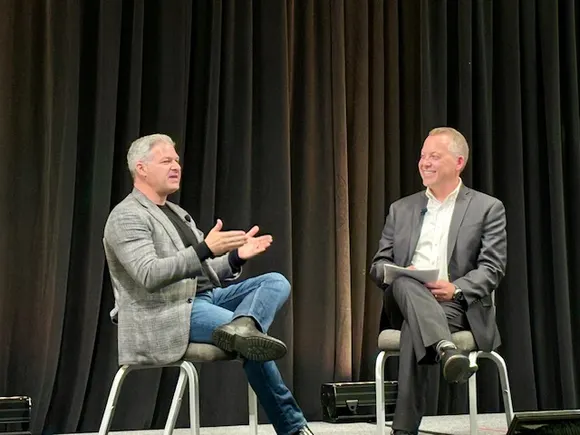
    Montgomery, along with about 150 other district leaders, educators, researchers and neuroscientists gathered last week at a Real Skills for Real Life Summit to discuss what host AASA, The School Superintendent Association called the “new basics for learning.”

    Speakers told the summit attendees that incorporating development of these skills into the school day must be intentional, collaborative and driven by student input. The work is rooted in building a sense of belonging and compassion, as well as encouraging students to take safe risks, they said.

    “Kids want to be listened to and they want to be heard. They want to be respected, connected, and they want to feel cared for. They want to have fun,” said Ryan Rydzewski, communications officer at The Grable Foundation, a nonprofit focused on children’s successful development. 

    Speakers and attendees offered practical ways schools can hone real-life skills in students, including:

    • Add joy and laughter into learning moments. 
    • Model and normalize making mistakes.
    • Offer students choice in how they engage in learning and how they demonstrate their knowledge.
    • Help teachers understand their own executive functioning skills and growth mindsets.
    • Guide students through holding themselves accountable for their choices.

    Mary Helen Immordino-Yang, a professor of education, psychology and neuroscience at the University of Southern California, said real-life skills like self awareness, curiosity, executive functioning, agency and relationship-building are critical to a student’s learning process.

    “We in education systems traditionally think of academic knowledge and scholarly knowledge as being separate from the experience of being a person — and psychologically and, it turns out, neurologically, that is not correct,” Immordino-Yang said.

    Rydzewski acknowledged that the work to build real-life skills can be hard and complex. Montgomery agreed, saying the Portrait of a Learner used in the Lake Forest districts is consistently being reexamined and improved upon based on student needs. The districts’ partnerships with students, families, educators, board members and others are imperative to this work, he said.

    “We do not have it figured out,” Montgomery said. “I actually hope I never have it figured out, because that means there’s no work to do, but we are getting closer to defining what we are trying to work on and what matters to us.”
    Source link

  • Kashana Cauley’s Fictional Rebellion Echoes a Real-Life Debt Hero

    Kashana Cauley’s Fictional Rebellion Echoes a Real-Life Debt Hero

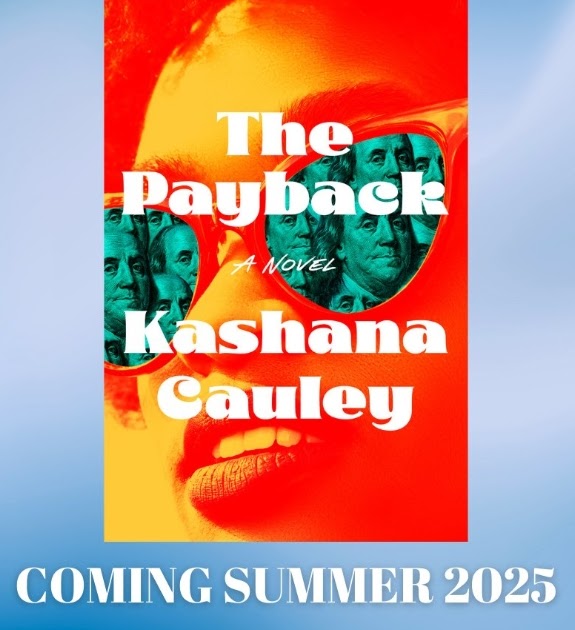
    Kashana Cauley’s second novel, The Payback (out July 15, 2025), might read like a brilliantly absurd heist movie—but its critique of debt peonage, surveillance capitalism, and broken educational promises is dead serious. With its hilarious yet harrowing depiction of three underemployed retail workers taking on the student loan-industrial complex, The Payback arrives not just as a much-anticipated literary event, but as a cultural reckoning.

    The protagonist, Jada Williams, is relentlessly hounded by the “Debt Police”—a dystopian twist that, while fictional, feels terrifyingly close to home for America’s 44 million student debtors. But instead of accepting a life of financial bondage, Jada and her mall coworkers hatch a plan to erase their student debt and strike back against the system that sold them a future in exchange for permanent servitude.

    This wild caper—praised by Publishers Weekly, Bustle, The Boston Globe, and others for its intelligence and audacity—may be fiction, but it echoes the real-life story of one bold man who did exactly what Jada dreams of doing.

    The Legend of Papas Fritas

    In the mid-2000s, a Chilean man known only by his pseudonym, Papas Fritas (French Fries), pulled off one of the most radical and symbolic acts of debt resistance in modern history. A former art student at Chile’s prestigious Universidad del Mar—a private for-profit institution later shut down for corruption and fraud—Papas Fritas discovered that the university had falsified financial documents to secure millions in profits while leaving students in mountains of debt.

    His response? He infiltrated the school’s administrative offices, extracted records documenting approximately $500 million in student loans, and burned them. Literally. With no backup copies.

    He then turned the ashes into an art installation called “La Morada del Diablo” (The Devil’s Dwelling), displayed it publicly, and became an instant folk hero. For many Chileans, who had taken to the streets in the early 2010s protesting an exploitative and privatized higher education system, Papas Fritas was more than a trickster—he was a vigilante philosopher, an artist of revolt.

    His act raised questions that still haunt us: What is the moral value of debt acquired through deception? Should the victims of predatory institutions be forced to pay for their own exploitation?

    Fiction Meets Resistance

    In The Payback, Cauley’s characters don’t just want debt relief—they want retribution. And like Papas Fritas, they understand that justice in an unjust system may require transgression, even sabotage. Cauley, a former Daily Show writer and incisive New York Times columnist, doesn’t shy away from this. Her prose is electric with rage, joy, absurdity, and clarity.

    She also knows exactly what she’s doing. Jada’s plan to eliminate debt isn’t merely about numbers—it’s about dignity, possibility, and reclaiming a future that was sold for interest. Cauley’s fiction, like Papas Fritas’s fire, is not just a spectacle—it’s a warning, and a dare.

    In an America where student debt totals over $1.7 trillion, where debt servicers act like bounty hunters, and where the promise of higher education has become a trapdoor, The Payback delivers catharsis—and inspiration.

    Hollywood, take note: this story demands a screen adaptation. But more importantly, policymakers, debt collectors, and university administrators should take heed. The people are reading. And they’re getting ideas.

    Preorder The Payback

    Signed editions are available through Black-owned LA bookstores Reparations Club, Malik Books, and Octavia’s Bookshelf. National preorder links are now live. Read it before the Debt Police knock on your door.

    Because as both Cauley and Papas Fritas remind us: sometimes, the only moral debt is the one you refuse to pay.

    Source link