Tag: Reasons

  • WEEKEND READING: Three reasons why the TEF will collapse under the weight of OfS  and DfE expectations

    WEEKEND READING: Three reasons why the TEF will collapse under the weight of OfS  and DfE expectations

    Author:
    Professor Paul Ashwin

    Published:

    This blog was kindly authored by Paul Ashwin, Professor of Higher Education, Lancaster University.

    The Office for Students (OfS) and the Department of Education (DfE) have big plans to make the TEF much more consequential. They want future TEF outcomes to determine whether institutions can increase their intake of students and their undergraduate tuition fees in line with inflation, which could mean the difference between survival or merger/closure for many institutions. These plans require that the OfS to show that the TEF provides a credible measure of institutional educational quality, whilst also fulfilling the OfS’s central remit of acting in the interest of students. The OfS consultation on the future approach to quality regulation provides an opportunity to assess the OfS’s latest attempt at such a justification. To say it looks weak is a huge understatement. Rather, unless there is a radical rethink, these proposals will lead to the collapse of the TEF.

    There are three reasons why this collapse would be inevitable.

    Firstly, the TEF provides a broad, if flawed, measure of institutional educational quality. This was fine when the main consequence of a TEF award was the presence or absence of a marketing opportunity for institutions. However, if the TEF has existential consequences for institutions, then a whole series of limitations are suddenly cast in a deeply unflattering spotlight. The most obvious of these is that the TEF uses programme level metrics to make judgements about institutional quality. It is both conceptual and methodological nonsense to attempt to scale-up judgements of quality from the programme to the institutional level in this way, as has been routinely stated in every serious review of the National Student Survey. This didn’t matter too much when the TEF was lacking in teeth, but if it has profound consequences, then why wouldn’t institutions consider legal challenges to this obvious misuse of metrics? This situation is only exacerbated by the OfS’s desire to extend the TEF to all institutions regardless of size. The starkest consequence of this foolhardy venture is that a small provider with insufficient student experience and outcomes data could end up being awarded TEF Gold (and the ability to increase student recruitment and tuition fees in line with inflation) on the basis of a positive student focus group and an institutional statement. How might larger institutions awarded a Bronze TEF react to such obvious unfairness? That the OfS has put itself in this position shows how little it understands the consequences of what it is proposing.

    Second, in relation to the OfS acting in the student interest, things look even worse. As the TEF attempts to judge quality at an institutional level, it does not give any indication of the quality of the particular programme a student will directly experience. As the quality of degree programmes varies across all institutions, students on, for example, a very high quality psychology degree in an institution with TEF Bronze would pay lower tuition fees than students on a demonstrably much lower quality psychology degree in an institution that is awarded TEF Gold. How can this possibly be in the student interest? Things get even worse when we consider the consequences of TEF awards being based on data that will be between four and ten years out of date by the time students graduate. For example, let’s imagine a student who was charged higher tuition fees based on a TEF Gold award, whose institution gets downgraded to a TEF Bronze in the next TEF. Given this lower award would be based on data from the time the student was actually studying at the institution, how, in the name of the student interest, would students not be eligible for a refund for the inflation-linked element of their tuition fee?

    Thirdly, the more consequential that the TEF becomes, the more pressure is put on it as a method of quality assessment. This would have predictable and damaging effects. If TEF panels know that being awarded TEF Bronze could present an existential threat to institutions, then they are likely to be incredibly reluctant to make such an award. It is not clear how the OfS could prevent this without inappropriately and illegitimately intervening in the work of the expert panels.  Also, in the current state of financial crisis, institutional leaders are likely to feel forced to game the TEF. This would make the TEF even less of an effective measure of educational quality and much more of a measure of how effectively institutions can play the system. It is totally predictable that institutions with the greatest resources will be in by far the best position to finance the playing of such games.

    The OfS and DfE seem determined to push ahead with this madness, a madness which incidentally goes completely against the widely lauded recommendations of the TEF Independent Review. Their response to the kinds of issues discussed here appears to be to deny any responsibility by asking, “What’s the alternative?” But there are much more obvious options than using a broad brush mechanism of institutional quality to determine whether an institution can recruit more students and raise its undergraduate tuition fees in line with inflation. For example, it would make more sense and be more transparent to all stakeholders, if these decisions were based on ‘being in good standing’ with the regulator based on a public set of required standards. This would also allow the OfS to take much swifter action against problematic providers than using a TEF-based assessment process. However things develop from here, one thing is certain: if the OfS and DfE cannot find a different way forward, then the TEF will soon collapse under the weight of expectations it cannot possibly meet.


    Source link

  • 3 reasons to switch to virtual set design

    3 reasons to switch to virtual set design

    Key points:

    If you’ve attended a professional show or musical recently, chances are you’ve seen virtual set design in action. This approach to stage production has gained so much traction it’s now a staple in the industry. After gaining momentum in professional theater, it has made its way into collegiate performing arts programs and is now emerging in K-12 productions as well.

    Virtual set design offers a modern alternative to traditional physical stage sets, using technology and software to create immersive backdrops and environments. This approach unlocks endless creative possibilities for schools while also providing practical advantages.

    Here, I’ll delve into three key benefits: increasing student engagement and participation, improving efficiency and flexibility in productions, and expanding educational opportunities.

    Increasing student engagement and participation

    Incorporating virtual set design into productions gets students excited about learning new skills while enhancing the storytelling of a show. When I first joined Churchill High School in Livonia, Michigan as the performing arts manager, the first show we did was Shrek the Musical, and I knew it would require an elaborate set. While students usually work together to paint the various backdrops that bring the show to life, I wanted to introduce them to collaborating on virtual set design.

    We set up Epson projectors on the fly rail and used them to project images as the show’s backdrops. Positioned at a short angle, the projectors avoided any shadowing on stage. To create a seamless image with both projectors, we utilized edge-blending and projection mapping techniques using just a Mac® laptop and QLab software. Throughout the performance, the projectors transformed the stage with a dozen dynamic backdrops, shifting from a swamp to a castle to a dungeon.

    Students were amazed by the technology and very excited to learn how to integrate it into the set design process. Their enthusiasm created a real buzz around the production, and the community’s feedback on the final results were overwhelmingly positive.

    Improving efficiency and flexibility

    During Shrek the Musical, there were immediate benefits that made it so much easier to put together a show. To start, we saved money by eliminating the need to build multiple physical sets. While we were cutting costs on lumber and materials, we were also solving design challenges and expanding what was possible on stage.

    This approach also saved us valuable time. Preparing the sets in the weeks leading up to the show was faster, and transitions during performances became seamless. Instead of moving bulky scenery between scenes or acts, the stage crew simply switched out projected images making it much more efficient.

    We saw even more advantages in our spring production of She Kills Monsters. Some battle scenes called for 20 or 30 actors to be on stage at once, which would have been difficult to manage with a traditional set. By using virtual production, we broke the stage up with different panels spaced apart and projected designs, creating more space for performers. We were able to save physical space, as well as create a design that helped with stage blocking and made it easier for students to find their spots.

    Since using virtual sets, our productions have become smoother, more efficient, and more creative.

    Expanding educational opportunities

    Beyond the practical benefits, virtual set design also creates valuable learning opportunities for students. Students involved in productions gain exposure to industry-level technology and learn about careers in the arts, audio, and video technology fields. Introducing students to these opportunities before graduating high school can really help prepare them for future success.

    Additionally, in our school’s technical theater courses, students are learning lessons on virtual design and gaining hands-on experiences. As they are learning about potential career paths, they are developing collaboration skills and building transferable skills that directly connect to college and career readiness.

    Looking ahead with virtual set design

    Whether students are interested in graphic design, sound engineering, or visual technology, virtual production brings countless opportunities to them to explore. It allows them to experiment with tools and concepts that connect directly to potential college majors or future careers.

    For schools, incorporating virtual production into high school theater offers more than just impressive shows. It provides a cost-effective, flexible, and innovative approach to storytelling. It is a powerful tool that benefits productions, enriches student learning, and prepares the next generation of artists and innovators.

    Latest posts by eSchool Media Contributors (see all)

    Source link

  • 10 reasons to upgrade to Windows 11 ASAP

    10 reasons to upgrade to Windows 11 ASAP

    K-12 IT leaders are under pressure from all sides–rising cyberattacks, the end of Windows 10 support, and the need for powerful new learning tools.

    The good news: Windows 11 on Lenovo devices delivers more than an upgrade–it’s a smarter, safer foundation for digital learning in the age of AI.

    Delaying the move means greater risk, higher costs, and missed opportunities. With proven ROI, cutting-edge protection, and tools that empower both teachers and students, the case for Windows 11 is clear.

    There are 10 compelling reasons your district should make the move today.

    1. Harness AI-powered educational innovation with Copilot
    Windows 11 integrates Microsoft Copilot AI capabilities that transform teaching
    and learning. Teachers can leverage AI for lesson planning, content creation, and
    administrative tasks, while students benefit from enhanced collaboration tools
    and accessibility features.

    2. Combat the explosive rise in school cyberattacks
    The statistics are alarming: K-12 ransomware attacks increased 92 percent between 2022 and 2023, with human-operated ransomware attacks surging over 200 percent globally, according to the 2024 State of Ransomware in Education.

    3. Combat the explosive rise in school cyberattacks
    Time is critically short. Windows 10 support ended in October 2025, leaving schools running unsupported systems vulnerable to attacks and compliance violations. Starting migration planning immediately ensures adequate time for device inventory, compatibility testing, and smooth district-wide deployment.

    Find 7 more reasons to upgrade to Windows 11 here.

    Laura Ascione
    Latest posts by Laura Ascione (see all)

    Source link

  • Reasons to be cheerful – HEPI

    Reasons to be cheerful – HEPI

    Author:
    Nick Hillman

    Published:

    • Pamela Baxter is Chief Product Officer and Managing Director of IELTS Cambridge at Cambridge University Press & Assessment

    At a time when the value of higher education is being called into question, the OECD’s latest Education at a Glance report offers an unequivocal statement of support for the sector – both globally and in the UK.

    This annual report gives a snapshot of the state of education in the world’s developed nations. By gathering comparative data covering the OECD’s members as well as partner countries, it lets policymakers measure their country’s achievements and set standards against best international practice.

    The 2025 report’s focus on tertiary education gives many reasons for optimism. The highlight is that, with 48% of young adults in surveyed countries holding a tertiary qualification, educational attainment is higher than ever. 

    The share of 25 to 34-year-olds with tertiary attainment increased over the last five years across OECD and partner countries – rising from 45% (2019) to 48% (2024). In the UK, tertiary education among the same cohort grew from 52% to 60% over that period – twelve percentage points above the OECD’s average.

    The report is unambiguous in stating the benefits of higher education: “Supporting equitable access to tertiary education”, it tells us, “remains crucial to strengthening social mobility as educational attainment is closely reflected in labour market outcomes.”

    Adults with an undergraduate university qualification (or equivalent), the report tells us, earn on average 54% more than those with only upper secondary education. (This goes up to 83% when those adults have a postgraduate degree.)

    But the benefits are not only financial. The report emphasises how tertiary education is directly linked to higher employment rates, and even to better health – with 51% of tertiary-educated adults rating their health as very good or excellent, compared to 26% of those with below upper secondary education.

    The report also pinpoints areas where the developed world as a whole must do better. We are told, for instance, that completion rates of young adults going into tertiary education are low – particularly among men – with under half of new entrants finishing their programmes within the expected duration. 

    The rise and rise of international student mobility

    The 2025 report shows the continuing growth of international student mobility in OECD countries, with the number of mobile students as a proportion of total student numbers more than doubling over the past decade. This is good news.

    I was especially heartened to read that the UK continues to be one of the most attractive destinations for international students: 23% of all tertiary students in the UK were international according to 2023 numbers – an increase of six percentage points since 2013, and well above the OECD average of 7%. 

    International students contribute almost £42 billion a year to the UK economy – the equivalent of every UK citizen being £560 better off. This pipeline of international talent is essential to the UK government’s high-growth economic sectors, as well as our universities’ global reputation and competitiveness.

    At Cambridge University Press & Assessment we are deeply aware of the importance of international students to the UK’s educational landscape – and indeed to the country’s wider strengths. International students’ ability to fully participate in, and contribute to, their chosen courses is essential not only to their future success, but to the UK’s prospects as an intellectual, economic and cultural power. We consider it our responsibility to make sure that those globally mobile students seeking paths to higher education are equipped with the right skills to thrive. We’re not alone in that.

    The 2025 edition of Education at a Glance provides a vivid snapshot of the state of global education. It tells us what we are doing well and, crucially, where there is room for improvement. Cambridge welcomes these findings, and we are proud to be sponsoring its launch.

    Source link

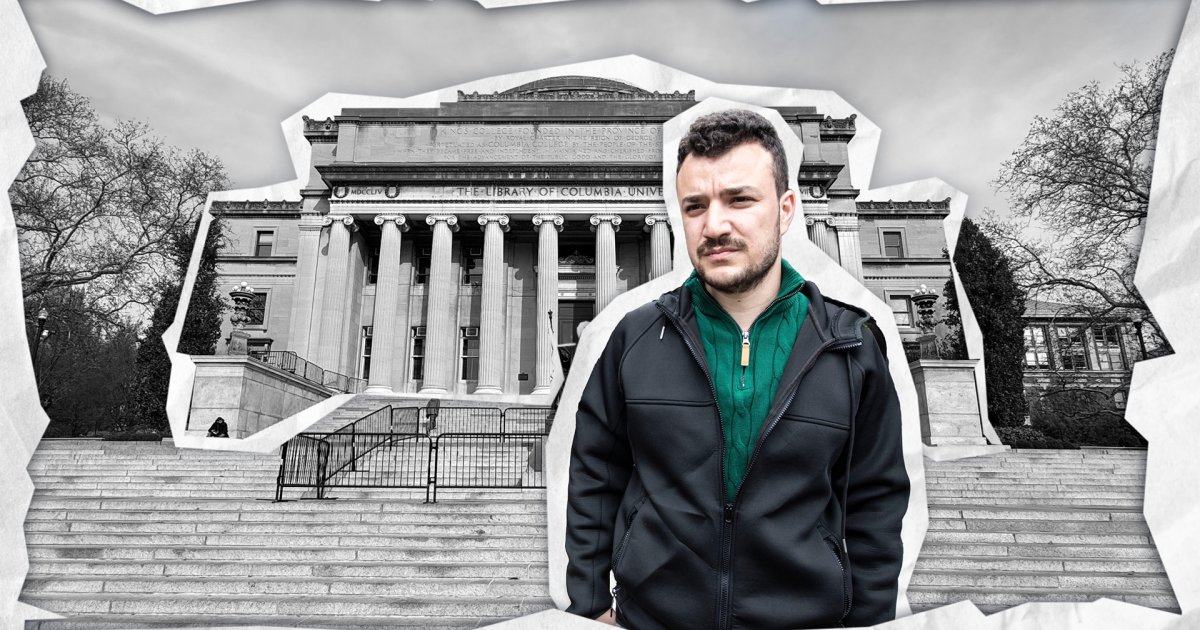
  • Trump administration’s reasons for detaining Mahmoud Khalil threaten free speech

    Trump administration’s reasons for detaining Mahmoud Khalil threaten free speech

    It’s been three days since the government arrested and detained Mahmoud Khalil for deportation. This afternoon, the administration finally stated the basis for its actions. Its explanation threatens the free speech of millions of people.

    Yesterday, an administration official told The Free Press, “The allegation here is not that [Khalil] was breaking the law.” This was confirmed today by White House Press Secretary Karoline Leavitt, who announced Khalil is being targeted under a law that she characterized as allowing the secretary of state to personally deem individuals “adversarial to the foreign policy and national security interests of the United States of America.”

    Leavitt said Khalil “sid[ed] with terrorists,” “organized group protests” that “disrupted college campus classes and harassed Jewish American students and made them feel unsafe,” and distributed “pro-Hamas propaganda.” She also said the Department of Homeland Security is trying to track down “other individuals who have engaged in pro-Hamas activity” at Columbia University.

    The law Leavitt appears to be citing requires the secretary of state to have “reasonable ground to believe” the person’s “presence or activities in the United States . . . would have potentially serious adverse foreign policy consequences for the United States.”

    The administration is wielding this standard — deportation for people whose activities could cause “serious adverse foreign policy consequences for the United States” — to arrest and detain an individual graduate student. In explaining how he met this standard, the administration did not allege Khalil committed a crime. But it did explicitly cite the content of his speech,  characterizing it as “anti-American” and “pro-Hamas.” Protesting government policy is protected by the First Amendment, as is rhetorical support for a terrorist group (if not directly coordinated with it, which the government has not alleged here).

    Disrupting college classes and harassing students is not protected expression, to be sure, and Leavitt stated that Khalil organized protests that may have done so. But the administration has not detailed Khalil’s specific actions with respect to those protests, so it remains unclear whether Khalil himself violated any campus rules against discriminatory harassment. Whether any such violation justifies detention and deportation is a separate question. In either adjudication, Khalil must be afforded due process. 

    There are millions of people lawfully present in the United States without citizenship. The administration’s actions will cause them to self-censor rather than risk government retaliation. Lawful permanent residents and students on visas will fear a knock on the door simply for speaking their minds. 

    If constitutionally protected speech may render someone deportable by the secretary of state, the administration has free rein to arrest and detain any non-citizen whose speech the government dislikes. The inherent vagueness of the “adversarial to the foreign policy and national security interests” standard does not provide notice as to what speech is or is not prohibited. The administration’s use of it will foster a culture of self-censorship and fear. 

    This is America. We don’t throw people in detention centers because of their politics. Doing so betrays our national commitment to freedom of speech.

    FIRE social media post about the government’s detention of Mahmoud Khalil, March 10, 2025.

    Source link

  • 5 Reasons to Administer the Refreshed College Employee Satisfaction Survey (CESS)

    5 Reasons to Administer the Refreshed College Employee Satisfaction Survey (CESS)

    The expectations of higher education faculty and staff have changed. Understanding the experiences, opinions, and satisfactions of your faculty and staff is invaluable to creating a healthy culture and work environment. But it’s not just about fostering a positive atmosphere—it’s also critical for retaining your employees, improving the student experience, and reducing the risk of lost institutional knowledge.

    To help institutions better understand and support their faculty and staff, RNL is excited to introduce the refreshed College Employee Satisfaction Survey (CESS), designed with enhanced features to delve deeper into employee engagement and satisfaction at colleges and universities. Here are five reasons your institution should consider administering the updated CESS in 2024-2025.

    1. Gain a comprehensive view of your employee experience

    The updated CESS measures key aspects of faculty and staff morale, including workplace recommendations, overall job satisfaction, and retention rates. With this data, you’ll have a clear picture of your university’s workplace culture, helping you make meaningful improvements driven by faculty and staff input.

    2. Identify what matters most to your team

    The refreshed CESS explores key aspects of the employee experience including internal communication, prioritization of institutional goals, work-life balance, and satisfaction with compensation. Your employees also highlight institutional strengths and opportunities for improvement, giving you direct feedback on what they value most.

    3. Benefit from detailed, actionable reports

    With your participation in the CESS, you’ll receive comprehensive reports, including faculty and staff segment analyses, the raw survey data, and the RNL CESS Benchmark National Norms report.* This information empowers you to take targeted action to boost employee morale.

    4. Support accreditation and strategic planning

    Survey results from the CESS can be a powerful asset in accreditation and strategic planning processes. Demonstrating a commitment to understanding the employee experience helps to demonstrate compliance with key standards and conveys that your institution is proactive about maintaining a thriving educational environment.

    5. Take advantage of special pricing and longitudinal analysis

    To celebrate the launch of the refreshed survey, RNL is offering a 25% discount on standard administration fees for surveys conducted in 2025. Moreover, institutions engaging in the CESS more than once within a five-year span will receive a complimentary longitudinal comparison report. This report is invaluable for tracking changes and trends over time, providing a deeper understanding of the long-term impact of implemented policies and changes.

    The refreshed College Employee Satisfaction Survey from RNL is more than just a survey; it’s a comprehensive tool that empowers higher education institutions to thrive by fostering a healthy campus culture and satisfying work environment. By participating in the CESS, your institution can gain critical insights, enhance strategic planning, and ultimately, elevate the overall campus culture.

    To learn more or to schedule your institution’s participation, please visit our dedicated College Employee Satisfaction Survey webpage.

    *Benchmark reports will be sent to participating institutions once seven institutions of their type like 4-year publics, 2-year publics, or 4-year private conduct the 2024 CESS.

    Source link

  • 10 Reasons you’re Perpetually Single (2024)

    10 Reasons you’re Perpetually Single (2024)

    Are you that person who’s always single?

    Well, you might relate to some of these potential reasons you’re single.

    Have a read and see which ones resonate with your life experience. I’ve also made a video (bottom of page) if you prefer to watch rather than read!

    10 Reasons you’re Perpetually Single

    10. High Standards

    What you Might Say: “I’m just not willing to settle for anything less than perfect.”

    Many people remain single because they have high standards for potential partners. They might be looking for someone who meets a specific set of criteria, such as shared interests, values, or life goals. While having standards is important, it can also limit opportunities to connect with a broader range of individuals who might be compatible in unexpected ways.

    9. Fear of Commitment

    What you Might Say: “I’m not ready to give up my freedom for a relationship.”

    The fear of commitment can keep people from entering into relationships. They might worry about losing their independence or fear the vulnerability that comes with being close to someone. This anxiety can lead to avoiding deep connections and thus staying single.

    8. Past Trauma

    What you Might Say: “I’ve been hurt before, and I can’t go through that again.”

    Individuals with unresolved past trauma, such as previous relationship heartbreak or family issues, may find it hard to open up to new partners. The emotional scars can create barriers to trust and intimacy, making it challenging to form new relationships. Therapy and self-reflection can help in overcoming these barriers.

    7. Focus on Career

    What you Might Say: “My career is my priority right now, and I can’t afford distractions.”

    A strong focus on career advancement can leave little time for dating and relationships. People who prioritize their professional goals may find it difficult to balance their personal lives. This dedication to career success can inadvertently lead to prolonged periods of being single.

    6. Social Anxiety

    What you Might Say: “Dating is too stressful; I’d rather avoid it altogether.”

    Social anxiety can make it difficult for individuals to meet new people and engage in social activities where they might find a partner. The fear of judgment or rejection in social situations can be overwhelming. Managing social anxiety through therapy or gradual exposure to social settings can improve chances of finding a relationship.

    5. Independence

    What you Might Say: “I love my alone time too much to be tied down.”

    Some people value their independence and enjoy the freedom that comes with being single. They might find fulfillment in their own company and activities, making them less inclined to seek a partner. This self-sufficiency can be a conscious choice to remain single rather than a situation they wish to change.

    4. Unresolved Personal Issues

    What you Might Say: “I have too much to work on personally before I can be in a relationship.”

    Personal issues such as low self-esteem, depression, or other mental health concerns can impact one’s ability to form and maintain relationships. These issues can create negative self-perceptions and affect interactions with potential partners. Addressing personal challenges through professional help can improve one’s readiness for a healthy relationship.

    3. Unrealistic Expectations

    What you Might Say: “No one seems to meet the standards I have in my mind.”

    Unrealistic expectations about what a relationship should be can prevent people from finding a partner. They might have idealized views influenced by media or past experiences that set an unattainable bar for real-life relationships. Learning to appreciate imperfections and the reality of relationships can open doors to meaningful connections.

    2. Lifestyle Choices

    What you Might Say: “I can’t find anyone else who’s willing to live with my vegan diet and my three big hairy dogs.”

    Certain lifestyle choices, such as frequent travel, unconventional work hours, or specific hobbies, can make it harder to find and maintain relationships. These choices might not align with the traditional dating scene or expectations. Finding someone with similar lifestyle preferences or being flexible can help bridge this gap.

    1. Prioritizing Other Relationships

    What you Might Say: “I’m more focused on my friends and family right now.”

    People might prioritize relationships with family, friends, or children over romantic relationships. This can be due to a strong sense of duty, satisfaction from existing relationships, or personal circumstances. Balancing these important relationships with the desire for a romantic partner can be challenging but necessary for a fulfilling love life.

    Watch my Video on Why you’re Still Single Below!


    Chris

    Dr. Chris Drew is the founder of the Helpful Professor. He holds a PhD in education and has published over 20 articles in scholarly journals. He is the former editor of the Journal of Learning Development in Higher Education. [Image Descriptor: Photo of Chris]

    Source link

  • 10 Reasons to Go Digital with Your Course Materials – Eric Stoller

    10 Reasons to Go Digital with Your Course Materials – Eric Stoller


    When I was a college student, there were times when I skipped out on buying a required textbook for a course. Finances were always tight, so I tried to balance my checkbook with buying actual books. Even then, textbooks weren’t cheap. Today, students are paying more and more for their higher education experience. If a university can find ways to make attending college more affordable, accessible, and “high-tech/high-touch”, well, it’s not really an option, it’s a necessity.

    Today’s technology makes it easy to distill course materials into digital formats and enhances them as a result.  Colleges and universities are quickly shifting from books to bytes to improve the student experience and boost course outcomes.

    Here are 10 reasons why your university should go digital with its course materials:

    1. Affordability: This may seem like an obvious reason to move to digital delivery of course materials. Students will end up paying less for digital course materials. From production to shipping, textbooks require a lot of costly infrastructure. Digital materials eliminate these costs and pass the savings on to students.
    2. A better experience for students with disabilities. Unlike print books, modern eTextbooks can be accessible “out of the box.”  When eTextbooks include features such alternative text descriptions of visuals and content that can be used with assistive technology, students can start reading right away, without waiting for a disability services department to create a file.
    3. Learning Analytics and Digital Integration: Can you remember when a physical book connected to a digital learning system? It’s just not possible. However, with digital course materials, integration with the campus LMS/VLE is possible. Plus, with learning analytics built in, digital materials can help support at-risk learners who may need additional assistance.
    4. Recruitment: Digital course materials might not seem like they give universities a recruitment edge, but in an increasingly competitive enrollment landscape, everything helps. Students seek modern solutions for their educational experience. For bring-your-own-device (BYOD) campuses and institutions that provide technology platforms for students, digital course materials hit the sweet spot. They create more affordances for student success and showcase a university experience that is effectively using the latest technologies.
    5. Multi-Platform Capability: The ability to view course materials on a variety of devices represents a huge advantage for digital course materials. If a student needs to read a chapter while on the go, odds are, they will be able to access it on whichever device they have with them. Also, it’s a good bet that no one misses having a backpack filled with textbooks.
    6. Seamless Group Work: University campuses are filled with versatile seating and project workspaces. You can’t project a textbook onto a large screen, but you can with digital course content. It’s simply a matter of either plugging in or wirelessly beaming content to a screen. It makes group work and collaboration a much easier task. 
    7. Always Current: Have you ever tried to update a textbook? Editions come and go, each one costing more than the last. With digital course materials, content is as up to date as possible and it doesn’t cost students more for this “always current” content. Who wants a used book when you can have a new digital version? 
    8. Instant Access: No longer do students have to search for the lowest price option or wait until after term starts. Instant access to digital materials, through programs such as Pearson Inclusive Access and others, ensures all students are ready to learn on the first day of class, not the third week. It’s as easy as logging into the university system, selecting the appropriate course, and downloading the material to a compatible device.
    9. Interactivity: Textbooks have been surpassed in form, function, and capability. Digital course materials allow authors the opportunity to embed audio and video into their work. This makes for a much more interactive and “real” experience for students. 
    10. Retention: Anything that a college or university can do to assist students with their academic success is a good thing. Digital course materials aid and enhance an institution’s ability to improve their overall retention rates and bolster student success with all of the supportive elements in this list. 

    What would you add to this list?

    Digital course materials are not the future for higher education; they’re the present. It’s only a matter of time before your institution goes digital for student success.


    This post was sponsored by Pearson as part of a higher education influencers collaboration.


    Source link