This essay was originally published in The Dispatch on Oct. 28, 2025.
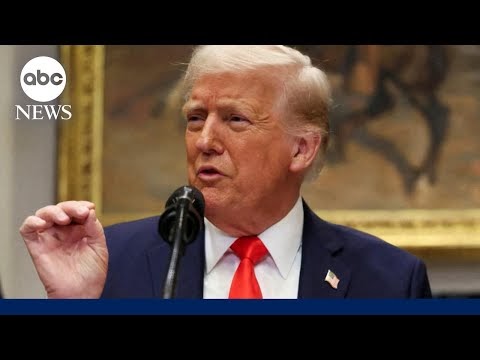
Since Charlie Kirk’s murder, the Trump administration has launched a blitzkrieg against Americans’ free speech rights. The scale and speed are dizzying — and they jeopardize the United States’ credibility as the world’s leading defender of free expression as other democracies continue to falter.
The administration’s most alarming actions blur the distinction between protected and unprotected speech as well as words and violence. Right after the Kirk tragedy, Attorney General Pam Bondi said: “We will absolutely target you, go after you, if you are targeting anyone with hate speech.” Bondi later walked this statement back, saying that “Hate speech that crosses the line into threats of violence is NOT protected by the First Amendment.” But since then, the administration has only continued to conflate protected speech with violence.
Why everything Pam Bondi said about ‘hate speech’ is wrong
The nation’s top law enforcement officer doesn’t understand there is no hate-speech exception to the First Amendment — and that’s scary.
On Sept. 25, the White House released a national security memo on “Countering Domestic Terrorism and Organized Political Violence.” Inside it lies this passage:
Common threads animating this violent conduct include anti-Americanism, anti-capitalism, and anti-Christianity; support for the overthrow of the United States Government; extremism on migration, race, and gender; and hostility towards those who hold traditional American views on family, religion, and morality.
There’s little subtlety here. The White House has flagged Americans it considers anti-American, anti-capitalist, or anti-Christian — none of which the memo defines — as potential national security threats. The president’s memo asserts a vast left-wing conspiracy to incite political violence and then directs the National Joint Terrorism Task Force and its local offices to “investigate all participants in these criminal and terroristic conspiracies.”
This guilt-by-association tactic is absolutely chilling in a free society. Being critical of America, capitalism, and Christianity shouldn’t put you on the feds’ radar because all those viewpoints are protected speech. A federal investigation should only occur when there’s reasonable evidence that some person or group — regardless of their constitutionally protected beliefs and opinions — has crossed the line into criminality. By the memo’s logic, the president’s own Make America Great Again movement could have been investigated after the political violence that erupted on Jan. 6. The message conveyed here is simple: Watch what you say. Or else.
And if you’re a noncitizen legally in the country, that message goes doubly for you. Two weeks ago, the State Department revoked six foreigners’ visas for their social media posts about Kirk’s murder. According to the State Department on X, it will “continue to identify visa holders who celebrated the heinous assassination of Charlie Kirk.” This continues the administration’s crusade against noncitizens who engage in expression that the government doesn’t like. But the First Amendment protects the free speech rights of anyone on American soil, as the Supreme Court made clear in 1945’s Bridges v. Wixon. (Full disclosure: the Foundation for Individual Rights and Expression, my employer, is currently suing Secretary of State Marco Rubio to challenge two federal provisions that give the secretary the power to deport noncitizens for their protected speech.)
Why FIRE is suing Secretary of State Rubio — and what our critics get wrong about noncitizens’ rights
FIRE is suing Secretary of State Rubio to defend the First Amendment rights of legal immigrants threatened with deportation simply for speaking their minds.
The administration has intensified its prolific jawboning, too, turning the screws on the private sector, particularly the media, to achieve what it does not have the constitutional power to do itself. The most infamous example of this occurred when Federal Communications Commission Chairman Brendan Carr pressured Disney and ABC to cancel Jimmy Kimmel Live. Soon after, ABC indefinitely suspended Kimmel, though he was back on air after a week. Then in mid-October, Bondi leaned on Facebook to remove a group page that allowed users to track where ICE agents were in Chicago, much like Waze alerts you to speed traps. Like it or not, this is constitutionally protected speech. Telling folks the location of law enforcement isn’t a crime, and the creators and users of the page are registering their dissent to the government’s immigration policies.
During the Biden administration, President Trump and conservative Americans understood the perniciousness of jawboning. They rightly pointed to the behind-the-scenes pressure the Biden administration exerted on social media companies to suppress stories they deemed as mis- or disinformation. This included Hunter Biden’s laptop, the efficacy of the COVID-19 vaccines, or the lab-leak theory of COVID-19’s origins. Yet now that Trump is back in power, the feeling is that “the left” is getting their just deserts. Politics is triumphing over principle — remember Trump’s promise to “bring back” free speech and his executive order restoring free speech and ending federal censorship once and for all — as America’s culture of free expression deteriorates more and more.
But the Trump administration’s deliberate and focused attacks on free expression don’t just impact America, they reverberate globally. Across the democratic world, a free speech recession continues to worsen. Rather than defend this foundational human right at home and abroad, the U.S. government is abdicating that responsibility and undermining the legitimacy of free speech in an increasingly illiberal and authoritarian world.
Two years ago, The Future of Free Speech, a nonpartisan think tank at Vanderbilt University, released a report, “The Free Speech Recession Hits Home.” The report analyzed free speech developments in 22 democracies between 2015 and 2022. It found something alarming: “Over 75 percent of the developments discussed are speech restrictive.”
Recent examples from the United States’ closest allies are illustrative of these societies’ splintering belief in free speech as a critical right in a democracy.
This fall, Canada’s Quebec province will consider a bill to ban prayer in public. Secularism Minister Jean-François Roberge said the bill would be introduced as part of his mandate “to strengthen secularism.” Religious expression, of course, is a form of free expression, but Roberge believes it shouldn’t be public. “Seeing people praying in the streets, in public parks, is not something we want in Quebec,” he said. He added: “When we want to pray, we go to a church, we go to a mosque, but not in public places. And, yes, we will look at the means where we can act legally or otherwise.”
In Germany last year, a 64-year-old man had his flat searched and tablet seized because of alleged “antisemitic” posts as well as one calling a German politician a “professional idiot.” Under German law, it’s not only a crime to insult a politician, the penalties are more severe than criticizing a German pleb, in perfect Animal Farm style. Also in 2024, American expat C.J. Hopkins was charged with disseminating propaganda for criticizing Germany’s COVID-19 response on X by superimposing a barely visible white swastika on top of a white medical mask.
So to Speak Podcast Transcript: CJ Hopkins compared modern Germany to Nazi Germany. Now he’s standing trial.
J Hopkins is an American playwright, novelist, and political satirist. He moved to Germany in 2004.
This is a feature, not a bug, of Germany’s repressive speech climate. During a 60 Minutes story from last February, when correspondent Sharyn Alfonsi asked three prosecutors if it was a crime in Germany to insult someone, they confirmed it was. The punishment could even be worse when posted online “because in internet, it stays there,” said one prosecutor. Germany’s federal police, the BKA, also organize “action days” — including investigations, raids, interrogations, and seizures — to crack down on hate speech and insulting politicians online. In June, the BKA launched its 12th day of action, which included a total of 180 “police measures.” Herbert Reul, an interior minister for the German state of North Rhine-Westphalia, summed it up best, telling a German news agency, “Digital arsonists must not be allowed to hide behind their phones or computers.”
In France, President Emmanuel Macron took thin-skinned to extraordinary heights when he sued a billboard owner in 2021 for using some of his inventory to depict the French president dressed up like Adolf Hitler to protest France’s pandemic policies. The business owner, Michel-Ange Flori, told Reuters: “I caricature. People may or may not like it but it is all the same, caricature will remain caricature.” A French court disagreed, slapping Flori with a fine of 10,000 euros. In response, Flori’s lawyer said “the right to caricature has been violated” in France, adding, “The president, so quick to defend freedom of expression … considers that it stops at his own august person.”
But the most depressing accomplice in the West’s retreat from free speech is, without a doubt, our neighbor across the pond. In April, the Times of London reported a shocking statistic. Analyzing custody data, the newspaper reported that police in the United Kingdom arrested more than 24,000 people from 2022 through 2023 for sending “grossly offensive” messages or sharing posts considered “indecent,” “obscene,” or of a “menacing character” on social media.
The most recent and infamous case of this is Irish comedy writer Graham Linehan. In early September, five armed police officers arrested the writer after he disembarked a flight from the United States to Heathrow. Linehan’s offense: mean tweets about transgender people, which the Metropolitan Police said incited violence. Linehan posted the tweets in April — four and a half months before his arrest — demonstrating the absurdity of the inciting-violence rationale. Last week, both Linehan and Londoners received good news: The Metropolitan Police announced they dropped the investigation into Linehan and said it would no longer investigate “non-crime hate incidents.” That’s the right approach, of course, but that’s only one police force across the entire kingdom. It also doesn’t undo the ordeal Linehan went through, which is why he intends to sue the Metropolitan police for wrongful arrest.
The U.K.’s crackdown on speech, however, isn’t contained to online discourse. Since July, more than 2,000 people have been arrested for expressing support for Palestine Action, a pro-Palestinian direct action network. In July, Parliament deemed the group a terrorist organization and banned it after two members broke into a military base and damaged two planes.
In early September, London’s Metropolitan Police arrested nearly 900 protesters for peacefully protesting the ban. A month later, police arrested nearly 500 more people for demonstrating in support of Palestine Action in Trafalgar Square. The reason for their arrest is eye-widening: They held up a sign that read, “I oppose genocide, I support Palestine Action.” Police even took in a man who held up a magazine cover about these arrests.
Diane Afhim, a 69-year-old protester, said it best during the September arrests: “I feel that justice is not working if people are being arrested for holding a sign. This is not my Britain.”
Late last month, another disconcerting story came out of the U.K., when a judge handed down a suspended sentence to Moussa Kadri, sparing him jail. Back in February, Kadri attacked a protester, Hamit Coskun, with a knife for burning the Quran outside of the Turkish consulate in London.
“The court is effectively saying that if you attack a blasphemer with a knife, … you won’t have to spend a day behind bars,” said Lord Young of Acton, general secretary of the Free Speech Union, in reaction to Kadri’s suspended sentence.
In Quran burning conviction, UK judge uses violence against defendant as evidence of his guilt
UK judge cites violence against Quran-burning protester as proof of his guilt, Brazil sentences comedian to over eight years for telling jokes, and France targets porn.
But things get worse. Back in June, a court found Coskun, the victim of Kadri’s knife attack, guilty of a religiously aggravated public order offense and ordered him to pay a fine. “Your actions in burning the Quran where you did were highly provocative,” the judge said, “and your actions were accompanied by bad language in some cases directed toward the religion and were motivated at least in part by hatred of followers of the religion.” Most alarming was the judge’s finding that the violent attack on Coskun was evidence of Coskun’s guilt. You read that right.
Fortunately, Coskun won his appeal this month. On Oct. 10, Coskun’s conviction was overturned by a judge who reminded Britons that they have no blasphemy law on the books.
“Burning a Koran may be an act that many Muslims find desperately upsetting and offensive,” Justice Joel Bennathan said. “The criminal law, however, is not a mechanism that seeks to avoid people being upset, even grievously upset. The right to freedom of expression, if it is a right worth having, must include the right to express views that offend, shock or disturb.”
While the courts finally got it right, Coskun never should have had to go through this nightmare in the first place.
The despots of the world must relish the propaganda value of this Western backsliding on free expression.
If they attack the press, they can point to what Trump is doing in the United States as justification. Throw a critic in jail? They can bring up Macron’s lawsuit for caricaturing him in France. Punish a religious dissenter? Well, there’s the curious case of Hamit Coskun in London. Repress the supporters of a disfavored group? They can point to the UK arrests of Palestine Action protesters. These illiberal actions are gifts to the world’s dictators — the Putins, the Erdogans, the Xis of the world — demonstrating that when push comes to shove, the world’s democracies will crack down on speech they don’t like, too.
Just look at the unjust trial of media mogul Jimmy Lai in Hong Kong, where a judge in the case cited censorship in the U.S. and UK to justify the proceedings against Lai. “People who were freely expressing their views on Palestine, they were arrested in England … [and] in the U.S.,” Judge Esther Toh said in August. “It’s easy to say ‘la-di-da, it’s not illegal,’ but it’s not an absolute. Each country’s government has a different limit on freedom of expression.”
But it doesn’t need to be this way.
It’s a cruel irony that America’s dedication to free speech is slipping as we prepare to celebrate this nation’s 250th birthday. But it’s an opportunity, too. An opportunity to recommit to what makes the American experiment so special: our ability to settle our differences through dialogue and the ballot box, rather than dehumanization and the bullet. America is still the last best hope of earth, that shining city upon the hill, if we’ll fight for it.
Even as America’s culture of free speech withers, the First Amendment fortunately still gives this country the world’s strongest constitutional protection for speech. But culture matters. Woe to us if we indulge our worst impulses and welcome in the ravenous, all-consuming spirits of censorship and violence and turn our back on what truly makes America exceptional.
As Judge Learned Hand wrote back in 1944: “Liberty lies in the hearts of men and women; when it dies there, no constitution, no law, no court can even do much to help it. While it lies there it needs no constitution, no law, no court to save it.”
There would be no greater tragedy than if free speech dies here by our own hands, to the delight of despots everywhere.