Tag: reconciliation

  • Truth and Reconciliation, Ten Years On

    Truth and Reconciliation, Ten Years On

    Today is September 30th, National Day for Truth and Reconciliation and Orange Shirt Day. It has been just over ten years since the Truth and Reconciliation Commission issued its report, and so this seemed like a good time to review the state of Truth and Reconciliation – and Indigenous issues generally – on Canadian campuses. So, I am teaming up today with Mark Solomon, Associate Vice-President Reconciliation and Inclusion at Seneca Polytechnic to put together some thoughts on what progress we have made over the last decade.

    Let’s start with the TRC Calls to Action which have to do with post-secondary education. These can be broken down into two parts. The first is a call (#7) to the Federal Government (not institutions, interestingly) to develop with Aboriginal groups a joint strategy to eliminate educational and employment gaps between Aboriginal and non-Aboriginal Canadians. Now, while a lot of talking has been done about this, it’s hard to say that anything resembling a strategy has emerged. Partly, that’s because the feds don’t want to spend a boatload of new money and partly it is because Indigenous groups across the country don’t all agree on what that strategy should be. One sticking point seems to be the relative prominence of Indigenous vs. mainstream institutions in closing the education gap and thus implicitly how generously to fund the former. Another is that while the federal government has a treaty relationship to provide education (K-PSE) for Indigenous learners, actualizing that responsibility to some extent requires coordination with provinces and territories, which isn’t exactly the feds’ strong suit these days.

    That doesn’t mean that nothing has happened on this front. The Post-Secondary Student Support Program (PSSP) for Status First Nations students was augmented substantially in Budget 2019, though inflation has since eaten away most of the value of the extra money. The federal government also provided new funding to Inuit and Métis students, thus to some extent fulfilling Call #11 on adequate funding for Indigenous students, though most would still say the funding is still inadequate. The question is: has any of this led to a closing of the access gap? 

    As Figure 1 shows, the answer is no, or at least not yet. Indigenous educational attainment rates are growing, particularly at the college level, but the total post-secondary attainment gap has increased a tiny bit, from 15 to 16 percentage points, and the university gap has increased a lot, from 19 to 26 percentage points.

    Figure 1: Higher Educational Attainment Among Off-Reserve Population aged 25-64, 2014, 2019 and 2024

    Let’s turn to the second set of Calls to Action – those Action aimed at institutions. The three big ones were parallel calls aimed at medical/nursing schools (Call 24), law schools (Call 28) and journalism schools (Call 86) to require all law students to take a course in Aboriginal people and the law, which includes the history and legacy of residential schools, the United Nations Declaration on the Rights of Indigenous Peoples, Treaties and Aboriginal rights, Indigenous law, and Aboriginal–Crown relations. This will require skills-based training in intercultural competency, conflict resolution, human rights, and antiracism.

    (Why not social work, or policing? We wondered that too.)

    The website Indigenous Watchdog has been following institutional progress on these areas. As of last year, 22 of 24 Canadian law schools had such mandatory courses, which is pretty good. The country’s 93 nursing schools have not done as well: only 41 are seen as having introduced mandatory courses with the requisite content; 18 have apparently no mandatory course at all and the remainder are somewhere in between. Journalism faculties, similarly, have a fairly spotty record: with 11 apparently meeting all criteria, four meeting partially and six not at all.

    This is where evaluation of progress on reconciliation gets tricky. Lots of these professional programs which did not introduce mandatory courses have, nevertheless, things which they think are relevant to reconciliation. To take merely one of potentially dozens of examples: look at the Journalism School at TMU. There, the course Reporting on Indigenous Issues remains resolutely mandatory but the faculty has put together an interesting website called Reconciling Journalism, which the school hopes will “provide a platform for Indigenous students and host many different student projects on Indigenous issues and communities at Toronto Metropolitan University”  In such a case, should one give TMU points for creativity and good wishes, or take them away for thinking that it knows better than Justice Sinclair what constitutes a contribution to reconciliation?  There is a difference between “Indigenous issues” and “reconciliation” which gets blurred here.

    More broadly: there are many institutions which have done a lot of Nice Symbolic Things for Indigenous peoples over the past decade. Things like Indigenous-language signage at places like Laurentian and UBC, Indigenization of campus architecture and campus planning like at Seneca, Centennial and Calgary. It’s good, but is it reconciliation?  (and also: why is it is easier to change signage and build buildings than change curriculum?). It’s not just symbolic stuff, either. There has been a lot of hiring of Indigenous staff, academic and otherwise.  What one might call “Indigenous lead” positions have been elevated in stature and in general individuals with Indigenous identity are moving closer to the centres of power within institutions. That’s all positive, but actually, none of the TRC calls addressed these issues. Generously, one could see these things as pre-requisites for greater Indigenous participation in higher education (back to Call #7) in the sense that Indigenous students won’t attend if they don’t feel seen or welcome; but even if that’s the case, it doesn’t seem to be working yet. 

    One thing that isn’t symbolic is the notion of “Indigenization” of the curriculum. Call #62 asks federal and provincial governments to provide the necessary funding to post-secondary institutions to educate teachers on how to integrate Indigenous knowledge and teaching methods into classrooms.  That hasn’t happened, of course, but there has been a significant elevation of Indigenous Knowledge within institutions which is worth recognizing. The notion of “Indigenization” of institutions has got stuck in part because no one can agree on what it means nor how it can be measured. Progress here won’t come from a one-size-fits-all approach. More institutional engagement with surrounding Indigenous communities on what that could and should like is necessary because in all likelihood the answer will differ a bit from one place and one set of communities to another.

    Broadly, then, it’s a mixed picture. Arguably, one could say that Canadian post-secondary institutions are doing better on Indigenous issues than they are on Truth and Reconciliation. Room for improvement for sure, but at the same time, it’s worth being mindful of the potential for backsliding, too. All of these measures were taken at a time when university and college budgets were growing; with a long period of budget cuts ahead, we’ll soon see whether or not our institutions view all of these measures as must-haves or just nice-to-haves. Time will tell.

    “Education got us unto this mess and Education will get us out of it” – Justice Murray Sinclair (1951-2024)

    Source link

  • Wins and Losses of the Reconciliation Bill

    Wins and Losses of the Reconciliation Bill

    Kevin Dietsch/Getty Images

    It’s been six months since the second Trump administration took office, and in that time it has radically changed the policy around federal student loans, grants and college accountability. With the One Big Beautiful Bill Act now signed into law, Inside Higher Ed’s editor in chief, Sara Custer, spoke with news editor Katherine Knott about what’s in the bill and the outcome of the sector’s efforts to influence the massive piece of legislation. 

    In a recent episode of The Key, Inside Higher Ed’s news and analysis podcast, they also checked in on Harvard and Columbia’s negotiations with the administration and shared what they’ll be looking out for in the next six months. 

    Source link

  • House Passes Reconciliation Bill With “No Tax on Overtime” Proposal – CUPA-HR

    House Passes Reconciliation Bill With “No Tax on Overtime” Proposal – CUPA-HR

    by CUPA-HR | June 17, 2025

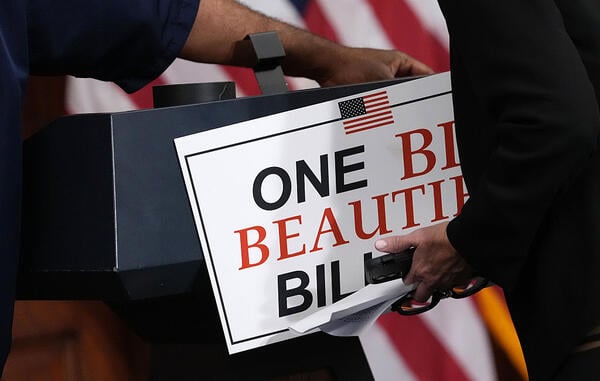
    On May 22, the U.S. House of Representatives passed H.R. 1, titled the “One Big Beautiful Bill Act.” Notably, the reconciliation “megabill” includes a provision to implement President Trump’s campaign pledge on “no tax on overtime,” among various legislative priorities for Republicans.

    The “No Tax on Overtime” Proposal

    The overtime proposal creates a temporary above-the-line deduction from gross income for overtime pay required under the Fair labor Standards Act (FLSA). The bill does not set a cap on the amount of overtime pay that can be deducted, but it limits the application of the provision to employees who earn less than $160,000 per year, and it does not extend the deduction to independent contractors. If signed into law, the deduction will be available for tax years 2025 through 2028, and employers would be required to report overtime compensation on workers’ W-2 forms during this time.

    The proposed deduction only applies to workers’ federal income taxes and overtime pay as required by the FLSA, raising some compliance concerns for employers in states with different overtime pay requirements than those required under the FLSA and for employers whose overtime pay requirements are set by a collective bargaining agreement (CBA) with overtime pay that differs from the FLSA requirements. These employers will likely need to track both the FLSA-mandated overtime hours and pay to ensure workers’ W-2s are accurate and in compliance with the law while also ensuring they are tracking the overtime hours and pay in a manner that also complies with the more stringent state or CBA obligations.

    While CBA requirements vary case-by-case, there are five states with overtime pay requirements under their state wage and hour laws that differ from the requirements under the FLSA:

    • Alaska requires 1.5 times workers’ regular rate of pay for hours worked beyond 8 in a day or 40 in a workweek;
    • California requires 1.5 times an employee’s regular rate of pay for hours worked more than 8 in a day, 40 in a workweek, or the first 8 hours on a seventh consecutive day of work in a workweek. The state also requires double an employee’s regular rate of pay for any hours worked over 12 in a day or for all hours worked over 8 on a seventh consecutive day of work in a workweek;
    • Colorado requires overtime pay after 12 hours worked in a day or 40 hours in a workweek;
    • Nevada requires overtime pay for any hours worked beyond 8 in a day if the employee earns less than 1.5 times the state minimum wage; and
    • Oregon has industry-specific daily overtime rules that apply to hospitals, canneries and manufacturers.

    Looking Ahead

    The reconciliation bill is still early in the legislative process. For now, the “no tax on overtime” provision is only included in the House version of the bill. The Senate is currently drafting its version of the reconciliation bill, and they may choose to alter the no tax on overtime proposal — possibly including language of the Overtime Wages Tax Relief Act that was introduced earlier this year by Senator Roger Marshall (R-KS). CUPA-HR will continue to monitor for further developments on this issue.


    Source link

  • What to Expect as the Senate Tackles Reconciliation

    What to Expect as the Senate Tackles Reconciliation

    The clock is ticking for Senate Republicans as they rush to approve a sweeping bill that cuts spending and taxes and pays for some of President Donald Trump’s top agenda items by the Fourth of July.

    If passed, the complex piece of legislation—known as the One Big Beautiful Bill Act—could entirely reshape the student loan system, increase endowment taxes, force colleges to repay their students’ unpaid loans and significantly cut Medicaid, among other changes.

    The House passed the measure late last month, putting the ball in the Senate’s proverbial court. But key senators have since said little about the higher ed provisions in the bill, so it’s unclear what lawmakers in the upper chamber will prioritize. Higher ed experts predict risk-sharing, or the plan to require colleges to pay a penalty for unpaid loans, likely won’t survive. Other issues, like whether to change the eligibility criteria for the Pell Grant, are more uncertain. But any changes to the House bill will come at a cost, as saving one program likely will mean deeper cuts to another.

    Over all, lawmakers will face a difficult balancing act to get the legislation through the Senate without endangering a second passage in the House, where bill advanced by the skin of its teeth. And Trump has called the bill the single most important piece of legislation in his second term, suggesting that failure is not an option.

    “The One, Big, Beautiful Bill will implement President Trump’s Make America Great Again agenda by delivering the largest tax cut in American history, the largest border security investment in history, and the largest deficit reduction in nearly 30 years,” Press Secretary Karoline Leavitt said in a statement last month. “The Senate should pass this critical legislation as soon as possible to usher in America’s Golden Age.”

    The Congressional Budget Office has estimated the bill would add $2.4 trillion to the deficit over a decade.

    What’s Next

    The Senate Health, Education, Labor and Pensions Committee hasn’t yet released its version of a reconciliation bill, though a draft is expected soon since congressional leaders are hoping to get a vote on the legislation by June 16, sources familiar with the Hill say. Lawmakers are using the reconciliation process, so they only need 51 votes in the Senate to pass the bill. But if the Senate version is at all different from the House’s, the House will have to vote again before the legislation can reach the president’s desk.

    When a bill does drop, it will likely skip the traditional committee markup, so the legislation can reach the Senate floor for a vote faster. But that fast tracking will limit the time for college leaders and others to review and weigh in on the bill.

    Policy analysts say Senate and House Republicans will likely have to make some compromises in order to move the bill forward. Some Senate Republicans may stand firm and advocate for changes on certain provisions, but the question is which ones will earn priority and which ones will fall by the wayside. For instance, can moderate Republicans save both the Pell Grant and Medicare? Or will they have to choose between the two?

    In many cases, what spending cuts and program changes survive is going to depend on “how the tug-of-war between the House and Senate plays out,” said Preston Cooper, a senior fellow at the American Enterprise Institute, a right-leaning think tank.

    All of this, however, could be thrown for a loop if former Trump adviser Elon Musk holds any influence. The billionaire tech mogul who previously led Trump’s Department of Government Efficiency has launched an all-out feud with the president over social media, calling the bill a “disgusting abomination” and saying, “shame on those who voted for it.”

    At Odds Over Accountability

    If the reconciliation bill does move forward, policy experts expect the Senate to propose a very different version than the House. And Michelle Dimino, director of education at Third Way, a left-leaning think tank, said she’s looking to the Lowering Education Costs and Debt Act, a bill introduced by Louisiana senator Bill Cassidy in 2023, for an outline of what it may include. (Cassidy is the chair of the Senate education committee.)

    “Senate and House Republicans have not always been aligned in their approach to higher ed reform,” she said. And “unsurprisingly, each chamber tends to favor legislation that originated internally.”

    One of the most notable differences Dimino and others anticipate between the House and Senate is how each tries to hold colleges accountable for students’ financial outcomes.

    House Republicans want to use risk-sharing, a strategy that would require colleges and universities to pay a fee each year based on the amount of loans their graduates (or those who left without a degree) have failed to repay. But the formula for calculating that fee is complicated, and colleges have a lot of questions about how it works and whether it’s fair. The Congressional Budget Office estimated that these risk-sharing payments would total $1.3 billion by 2034 and then continue to increase annually.

    Meanwhile, the Lowering Education Costs Act calls for a plan similar to the gainful-employment rule—a metric that ties colleges’ financial aid eligibility to their students’ earnings and debt levels. The idea was first introduced by President Obama, scrapped by President Trump in his first term and then expanded by President Biden.

    Under gainful employment, colleges would have to show their graduates make more than someone with a high school diploma and that their loan payments will be affordable. If a college ever falls below those thresholds, it could lose access to all federal student aid. The Senate plan would likely apply to all colleges, whereas the current gainful-employment rule only applies to for-profit colleges and nondegree programs.

    Higher education lobbyists are generally more supportive of the Senate’s anticipated proposal. But they note that while it’s a much lesser evil than risk-sharing, concerns remain, especially about how it would affect institutions.

    “When the data is not available … we are operating off concepts and ideas,” said Emmanual Guillory, senior director of government relations at the American Council on Education. “So it begs the question: What is the intended outcome and is this proposal the solution?”

    Other Key Issues to Watch

    What is less certain, policy experts noted, is whether the Senate will sign off on the House’s plans to consolidate student loan repayment plans, cap loans, increase endowment taxes and change who is eligible for the Pell Grant. For example, while the House proposed waiving borrowers’ interest if their monthly income-based payment isn’t enough to cover what’s owed and forgiving remaining debt after 30 years of payments, Cassidy’s legislation would create a more traditional plan where students accrue interest but all is forgiven after 20 or 25 years of payments.

    And though the House plan would eliminate subsidized loans, end the Grad PLUS loan program and limit Parent PLUS, experts predict that the Senate will likely end both Grad and Parent PLUS and put more aggressive limits on how much students can borrow over all.

    But other aspects like Pell Grant eligibility were not discussed in Cassidy’s 2023 bill at all. So while the House would expand the Pell Grant to short-term workforce programs and limit access for the full-time Pell program, it’s unclear what, if anything, the Senate would propose. At a recent hearing, some senators appeared reticent to make deep cuts to the Pell program, though lawmakers have generally supported the concept of workforce Pell.

    Over all, it’s hard to know exactly where the Senate will fall on most issues, Guillory said, especially because unlike during most sessions, it seems the House has the upper hand.

    “I think the Senate would like to propose a very different bill that would require a lot of back-and-forth compromise, but they are feeling more and more pressure from the House to make fewer changes in order to get the bill passed quicker and to meet that July 4 deadline,” he said.

    Source link

  • The reconciliation bill cleared the House. Here’s how it would change higher ed.

    The reconciliation bill cleared the House. Here’s how it would change higher ed.

    This audio is auto-generated. Please let us know if you have feedback.

    House Republicans on Thursday narrowly passed a massive tax and spending bill that, if signed into law, would add new financial pressures on U.S. colleges and students while extending the tax cuts instituted in 2017. 

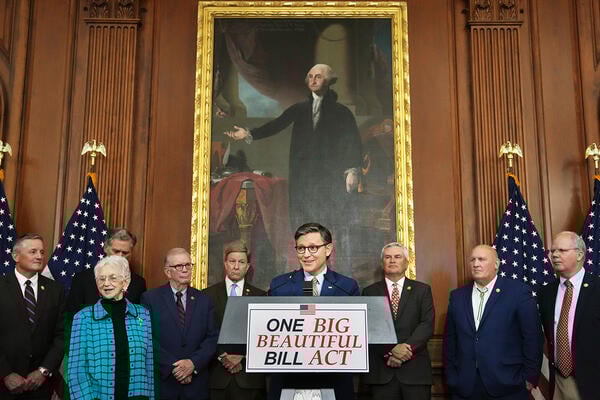
    Backed by President Donald Trump and dubbed the “One Big Beautiful Bill Act,” the proposal includes provisions for dramatically increasing the endowment tax, a risk-sharing policy that would put colleges on the hook for unpaid student loans, and changes to the federal student aid program that critics say would reduce access to higher education. 

    It also includes work requirements to the Medicaid health insurance program, changes to which could impact university hospitals and leave many college students without health insurance.

    The bill is headed to the Senate after it passed the House by one vote, with every Democrat and two Republicans voting against it. Three other Republicans either abstained or did not participate in the vote. 

    The Senate, held by Republicans with a 53-person majority, is widely expected to add changes to the bill.

    Since lawmakers passed the legislation as part of the reconciliation process — a rule allowing the Senate to approve spending-related policies with a simple majority — Republicans can avoid a filibuster that would take 60 votes to break.  

    In a Wednesday letter to House leaders, American Council on Education President Ted Mitchell wrote that the higher ed policy changes would have “a historic and negative impact on the ability of current and future students to access postsecondary education, as well as on colleges and universities striving to carry out their vital educational and research missions.”

    Here is a look at some of the major higher ed provisions:

    Endowment tax

    Today, the richest private colleges — the few dozen with at least 500 students and at least $500,000 endowment assets per student — pay an endowment excise tax set at 1.4%.

    Wednesday’s bill would implement a graduated rate structure, with levels starting at 1.4%, and rising to 7%, 14% and 21% depending on endowment assets per student. Under that tiered system, the wealthiest college would be taxed the same as the current corporate income rate. 

    When House Republicans advanced the endowment tax proposal earlier this month, they decried “woke, elite universities that operate more like major corporations.”

    The lowest tax bracket targets colleges whose endowments are valued between $500,000 and $749,999 per student.

    Endowment taxes would rise to 21% for the nation’s wealthiest private colleges

    Excise tax tiers for private colleges based on endowment funds per student

    Industry experts and insiders worry the tax could hurt colleges’ long-term missions and diminish the resources they rely on to recruit lower-income students. 

    In a statement Thursday, Kara Freeman, president and CEO of the National Association of College and University Business Officers, pointed to research by her organization and Commonfund finding that nearly half of endowment spending went toward student aid in fiscal 2024. 

    This scholarship tax takes funds away from students and makes it less possible for colleges to support them,” Freeman said. 

    Colleges spend the largest share of endowment funds on student financial aid

    Endowment spending distribution by function in fiscal 2024

    Financial aid changes

    The bill eliminates federal subsidized loans for undergraduates and Direct Plus loans for graduate students beginning on July 1, 2026.

    It also limits Parent Plus Loans, capping how much parents can borrow and only allowing them to take out loans if their dependent student has already taken out the maximum in unsubsidized loans. 

    The bill sets an overall lifetime student loan limit of $200,000 for any single borrower across all federal loan types.

    Additionally, it raises the course hours for the full-time student designation needed to receive the maximum Pell Grant from 24 to 30 per academic year, and it changes the formula for Pell eligibility.

    ACE’s Mitchell called the proposed changes to Pell Grants “crippling,” saying some 700,000 students could lose eligibility under the bill. 

    Regarding changes to federal student funding writ large, Mitchell described them as “deep cuts and damaging changes to important federal student aid programs” that would limit access to education. 

    The bill also cuts several student loan repayment programs, consolidating a “litany” of repayment plans into two, according to the House Committee on Education and Workforce.

    Source link