Tag: Reflecting

  • The civic university movement at an inflection point: reflecting on the National Civic Impact Accelerator’s legacy

    The civic university movement at an inflection point: reflecting on the National Civic Impact Accelerator’s legacy

    This blog was kindly authored by Adam Leach, Programme Director and John Fell, Policy and Partnerships Manager, at the National Civic Impact Accelerator at Sheffield Hallam University.

    As the National Civic Impact Accelerator (NCIA) programme concludes this month, we find ourselves at a critical juncture for the civic university movement. After three years of intensive work gathering evidence, developing tools, and supporting universities to deepen their civic engagement, we have learnt a profound lesson: no single formula produces civic university success, but there are proven waypoints that can guide institutions through challenging terrain.

    The timing could not be more important

    The conclusion of the NCIA arrives at a moment of acute tension. On one hand, the Secretary of State for Education has made civic engagement one of her five top priorities for higher education reform. Bridget Phillipson’s November 2024 letter to university leaders was unequivocal: institutions must:

    play a full part in both civic engagement, ensuring local communities and businesses benefit fully from your work; and in regional development, working in partnership with local government and employers.

    On the other hand, many higher education institutions are facing deficit, and NCIA research has revealed the fragility of civic infrastructure within universities. Civic teams are being disbanded, staff on short-term contracts are not being renewed, and years of carefully built community partnerships are at risk. As one participant in our research observed:

    If you are sitting in rooms with leaders of councils and hospitals, for that to be a junior role is a big ask, especially if it is a junior role on a temporary contract.

    This paradox – increased civic responsibility amid deepening financial pressures – represents perhaps the most significant challenge facing the civic university movement.

    What the NCIA has delivered

    The NCIA programme, led by Sheffield Hallam University in partnership with the National Coordinating Centre for Public Engagement (NCCPE), the Institute for Community Studies, City-REDI at the University of Birmingham, and Queen Mary University of London, set out to answer a fundamental question: what works in civic engagement, for whom, and in what contexts?

    Our flagship output is the Civic Field Guide, which distils three years of evidence gathering into 14 practical waypoints organised across seven terrains: People, Place, Partnership, Policy, Practice, Purpose and Process. These waypoints emerged not from theory alone but from the generous sharing of universities across England, who were honest about both their successes and setbacks. Think of our waypoints as signs on a coastal path – they help you understand where you are and what direction you are heading, but they do not walk the path for you.

    Each waypoint addresses critical challenges. One focuses on embedding civic engagement as a core university mission, rather than leaving it to a few passionate individuals – what we call the ‘passion trap’. Another waypoint explores measuring civic impact through both quantitative metrics and qualitative narratives, recognising that numbers alone cannot capture how civic initiatives transform real lives. A third encourages universities to position communities as equal partners through co-design and lived experience, rather than as passive recipients of university expertise.

    Beyond the Field Guide, we have created a wealth of freely accessible evidence, tools and resources. Our Action Learning Programme brought together civic practitioners from across the UK. We have funded innovative civic projects testing new approaches, and we have produced a comprehensive Civic Impact Framework identifying seven domains where universities can make a difference.

    The honest answer

    After three years and significant investment, have we finally cracked civic university success? No. The legacy of the NCIA will not be our outputs and guidance, but what people do with them, and how they use them to  make changes in their places and communities. Civic work is highly place-responsive and context-specific. What succeeds in Sheffield may not work in Southampton. The power to change lies with practitioners and academics applying these insights to their unique contexts.

    Looking ahead: policy proposals for sustainability

    As the NCIA concludes, new structures are emerging to sustain the momentum. Following six years of leadership from Sheffield Hallam University, the NCCPE will steward the Civic University Network into its next phase, ensuring that NCIA resources remain accessible. The Civic 2.0 initiative establishes a consortium of UK universities with the University of Birmingham hosting a national policy hub.

    Yet sustainability requires concrete policy action at institutional, regional and national levels:

    For universities: Civic engagement must move from the margins to the core of institutional strategy. This means long-term budgets for civic teams, senior leadership accountability for delivering civic commitments, and treating community relationships as strategic assets, not expendable add-ons.

    For Government: The devolution agenda and creation of combined authorities create opportunities to embed universities as anchor institutions in regional policy frameworks. Universities should be crucial partners in regional development strategies, with dedicated funding streams for civic infrastructure.

    For funders: Research England and UK Research and Innovation should maintain dedicated civic capacity funding beyond individual programme cycles. The civic infrastructure requires sustained investment, not stop-start project funding.

    The Government’s explicit political support for universities’ civic role creates opportunities that were unimaginable a decade ago. But opportunity must translate into sustainable structures. Universities that demonstrate clear local value will have stronger voices in regional and national policy discussions and stronger support during crises.

    Keeping civic central

    The NCIA has provided navigation tools. Universities now possess comprehensive evidence about what works, practical frameworks for action, and a growing community of civic practitioners willing to share their learning. The question facing the sector is whether institutions will commit to using them despite financial pressures.

    The future of civic engagement depends on universities recognising that their purpose is about contributing meaningfully to the places they call home and the communities they serve. The civic university movement has moved from the margins to the mainstream. Now comes the hard work of keeping it there.

    Source link

  • Reflecting on 2025: A Year of Progress, Partnership, and Purpose

    Reflecting on 2025: A Year of Progress, Partnership, and Purpose

    As we head into the holidays, I’ve been thinking about this year and what we accomplished, what we learned, and most importantly, the people who made it all possible. When I look back, I’m reminded just how proud I am of the work we do and the impact it creates for institutions and the students they serve. 

    It’s easy to focus on the numbers — enrollments up, goals met, projects launched. And those metrics certainly matter. They reflect the hard work of our team and the trust of our partners. But behind every dashboard, there’s something far more meaningful. 

    This fall, a student accepted to the University of Scranton wrote to our enrollment specialists: “Thank you for all the care that goes into this process. I truly appreciate the time, attention, and effort you and the admissions team put into reviewing my application… receiving my acceptance means so much to me.” 

    Messages like this hit home. Because this is what we’re helping build: pathways for students who are ready to learn, grow, and change their lives. And everything we do — every data integration, every marketing campaign, every phone call, every technology issue resolved — is in service of that outcome. 

    In 2025, we helped more students find those pathways. 

    Institutions we support saw steady, year-over-year enrollment growth across every major term. At the New Jersey Institute of Technology (NJIT), new student enrollments grew by more than 5% over the previous year — a meaningful lift for an institution focused on driving innovation and access. 

    Places like Montclair State University and the MGH Institute of Health Professions didn’t just hit targets, they surpassed them (in some cases by more than 20%). At George Washington University, summer enrollments surged 81%; a testament to the power of coordinated outreach and student-centered strategy. 

    Every success was the result of deep collaboration, thoughtful execution, and shared belief in what’s possible. Our creative team helped Babson College capture the story of its graduate programs in ways that resonate with students. Our tech teams kept critical systems running smoothly and securely. Our enrollment specialists showed up each day with empathy, clarity, and care. 

    Behind the scenes, our IT Managed Services team played a vital role in making outcomes possible. The things they accomplished this year — stabilizing systems at Utica, launching a new guest wireless experience at Dominican University, modernizing infrastructure at Missouri Baptist University, and integrating critical platforms for Joyce University, to name a few  — translated directly into stronger security, reduced costs, and smoother experiences for students and staff alike. 

    A standout initiative at Agnes Scott College introduced career-aligned digital credentials through Canvas, giving students a new way to showcase their skills to employers while deepening engagement with academic pathways. These efforts may be less visible, but their impact is undeniable. 

    None of this happens without our people. The Collegis team continues to lead with grit, heart, and a relentless focus on results. Their work is complex, often behind the scenes, and always in pursuit of something bigger than themselves. 

    That collective effort continues to build something meaningful: 

    Stronger institutions. More resilient systems. Smarter strategies. And above all, more opportunities for students to thrive. 

    So as we all begin to wind down for the holidays, I hope this season offers us all a chance to pause, recharge, and take pride in the progress made and the impact created. 

    —Kim 

    Source link

  • Reflecting on the 2025 AI in EDU Summit

    Reflecting on the 2025 AI in EDU Summit

    Post by Catherine Atkinson

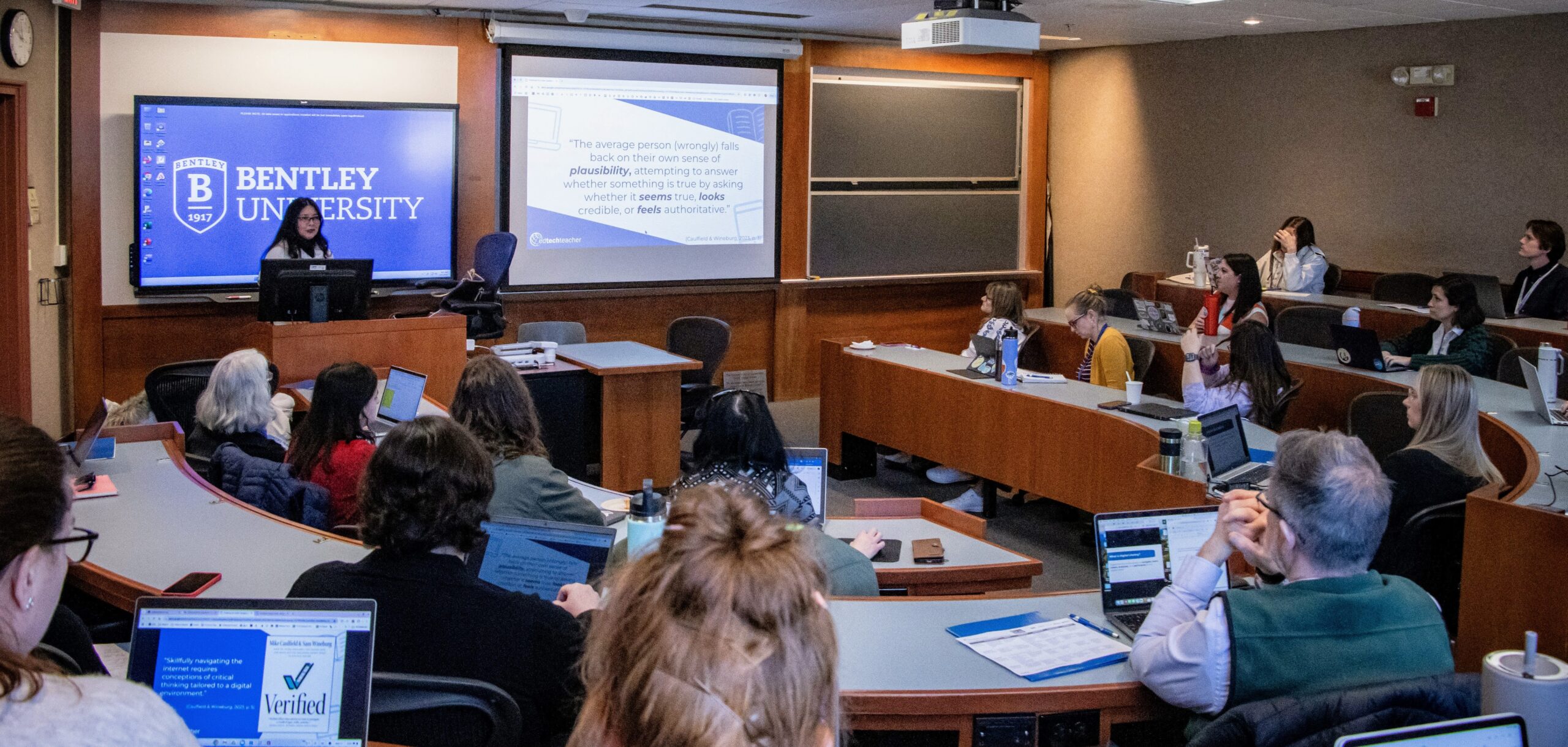
    On March 11th, I had the privilege to attend and present at EdTechTeacher’s AI in EDU Summit at Bentley University in Massachusetts. It’s been quite some time since I’ve presented in person at a conference, and let me tell you, I’ve certainly missed the adrenaline rush and camaraderie of in-person back-and-forth conversations.

    The day was a whirlwind, and there was so much to take in! I wish there was a way for me to clone myself because I wanted to attend everything. But since that wasn’t an option, I can only provide a limited review of my time there. So I hope that I do justice to the many amazing educators I had the chance to talk with and learn from.

    Here are my take-aways from the day:

    Schools and districts need an AI Policy.

    More importantly, this policy needs to be crafted with the voices of all stakeholders AND be flexible enough to be revised as AI platforms and capabilities change over time.

    Student learning outcomes need to drive AI use.

    Aside from the many useful, innovative, and enlightening uses of AI in the classroom for teaching and learning, it is important to make sure that learning objectives drive the what, how, and why of technology integration. It’s equally imperative that educators look at student learning to see to what extent AI is helping students to engage in deeper learning as opposed to superficial knowledge.

    Be curious and not judgmental.

    Okay, I totally stole that from Ted Lasso. But it’s true. AI tools can evoke a sense of excitement but also dread — sometimes both at the same time. I encourage everyone to be open to the possibilities of how AI can help level the playing field for teachers and students across demographics, regions, and socio-economic levels. I acknowledge that there are legitimate concerns with using AI (first and foremost, student privacy), but let’s begin these conversations of AI use with an open mind and sense of wonder.

    Don’t be afraid to pivot.

    I can’t be the only one who was thinking one way about AI (in general) or a particular AI tool only to change my mind when more information became available. With the many AI tools and platforms available (and emerging), it is very likely that your opinion on the value of that tool for teaching and learning will change with product updates, regular use, and/or shifting priorities for student learning. My advice? Keep the conversations flowing and recognize that opinions will fluctuate with the ever-changing landscape and reach of AI.

    There are so many different perspectives when it comes to AI use and the projected impact of AI for teaching and learning. But what I keep coming back to is the fact AI is a tool. It’s a medium for learning. It’s not a silver bullet. What is going to move the needle in terms of improving student outcomes is creating meaningful learning experiences grounded in research-based best practices with measurable metrics. Period.

    References

    Driscoll, T., & McCusker. S. (2024). Crafting AI policy for schools: A step-by-step guide [Webinar]. https://youtu.be/lxu1WS5ojzs?si=_QCot72pDDfe5xB7

    Holland, B. (2025). Is it working? Building an evidence base to inform AI initiatives [Presentation]. AI in EDU Summit. Bentley University, MA.

    Source link

  • College Student Satisfaction: Reflecting on 30 Years

    College Student Satisfaction: Reflecting on 30 Years

    College students have changed greatly in 30 years, but how has student satisfaction changed?

    Think back 30 years ago to 1995. What is different for you now? Where were you and what were you doing in the mid 1990s? Perhaps you were still in school and living at home, or not even born yet. Perhaps you were in your early years of working in higher education. Take a moment to reflect on what has (and has not) changed for you in that span of time. 

    Thirty years ago, I was just starting my position at what was then Noel-Levitz. What stands out for me was that I was about to become a mom for the first time. Now my baby is grown and will be a new mom herself later this year. And I find myself being on one of the “seasoned professionals” in the company, working alongside members of my team who were still in elementary school back in 1995. 

    Thirty years ago, we were just beginning to utilize email and the internet. Now they have become the primary way we do business, communicate professionally, and discover information.  Artificial intelligence (AI) is the new technology that we are learning to embrace to improve our professional and personal lives.   

    Thirty years ago, students were arriving on our campuses, seeking an education, guidance, growth, belonging, value for their investment and ultimately a better life.  That’s still the case today.  Plus, students are navigating more technology options, they are more openly seeking mental health support, and they are living in a world full of distractions. Online learning is a reality now and continues to become more accepted as a modality, especially after the experiences of 2020. As the demographic cliff looms, colleges are expanding their focus to include lifelong learners. 

    Thirty years ago is also when the Student Satisfaction Inventory (SSI) was launched to provide four-year and two-year institutions with a tool to better understand the priorities of their students. (In the early 2000s, we added survey instruments specifically for adult and online populations.) The data identified where the college was performing well and where it mattered for them to do better in order to retain their students to graduation. The concept of looking at satisfaction within the context of the level of importance was new back then, but in the past three decades, it has become the standard for capturing student perceptions. Since 1995, we have worked with thousands of institutions and collected data from millions of individuals, documenting what is important and where students are satisfied or dissatisfied with their experience. As we reach this 30-year milestone for the SSI, I took some time to reflect on what has changed in students’ perceptions and what has stayed the same.

    Consistent priorities

    What stood out to me as I reviewed the national data sets over the past 30 years is that what matters to students has largely stayed the same. Students continue to care about good advising, quality instruction and getting access to classes. The academic experience is highly valued by students and is the primary reason they are enrolled, now and then. 

    Another observation is that there are two areas that have been consistent priorities for improvement, especially at four-year private and public institutions:

    • Tuition paid is a worthwhile investment.
    • Adequate financial aid is available for most students. 

    These two items have routinely appeared as national challenges (areas of high importance and low satisfaction) over the decades, which shows that institutions continue to have opportunities to communicate value and address the financial pain points of students to make higher education accessible and affordable. 

    Campus climate is key

    One thing we have learned over the past thirty years is how students feel on campus is key to student success and retention. The research reflects the strongest links between students’ sense of belonging, feeling welcome, and enjoying their campus experience to their overall levels of satisfaction. High levels of satisfaction are linked to individual student retention and institutional graduation rates. Campuses that want to best influence students remaining enrolled are being intentional with efforts to show concern for students individually, building connections between students from day one, and continuing those activities as students progress each year. It is important for institutions to recognize that students have lots of options to receive a quality education, but the environment and the potential student “fit” is more likely to vary from location to location. What happens while a student is at the college they have selected is more impactful on them than which institution they ultimately chose. Creating welcoming environments and supporting students’ sense of belonging in the chosen college is a way for institutions to stand out and succeed in serving students. Colleges often ask, “Why do students leave?” when they could be asking, “Why do students stay?” Building positive campus cultures and expanding the “good stuff” being done for students is a way to critical way to improve student and institutional success.

    One sector where the data reflect high satisfaction scores and good consistency, especially in the past five years since the pandemic, is community colleges. Students attending their (often local) two-year institutions want to be there, with high percentages of students indicating the school is their first choice.  Community college students nationally indicate areas such as the campus staff being caring/helpful, students being made to feel welcome, and people on the campus respecting each other, as strengths (high importance and high satisfaction). These positive perceptions are also reflected with overall high levels of satisfaction and indications of a likelihood to re-enroll if the student had it to do over again. The data indicate that two-year institutions are doing a nice job of building a sense of community among primarily commuter student populations. 

    Systemic issues and pockets of improvement

    Everyone talks about “kids today,” but in reality, they have been doing that for generations. It can’t be a reason not to change and respond appropriately to the needs of current students. When we consider the priorities for improvement in higher education that have remained at the forefront, we may need to recognize that some of these areas are systemic to higher education, along with recognizing that higher education generally has not done enough to respond. There are certainly pockets of improvement at schools that have prioritized being responsive and, as a result, are seeing positive movement in student satisfaction and student retention, but that is not happening everywhere. Taking action based on student feedback is a powerful way to influence student success. The campuses that have bought into that concept are seeing the results. 

    Current student satisfaction national results

    Want to learn more about the current trends in student satisfaction?  I invite you to download the 2024 National Student Satisfaction and Priorities Report

    This year’s analysis takes a closer look at the national results by demographic subpopulations, primarily by class level, to get a clearer view on how to improve the student experience. Institutions have found that targeting initiatives for particular student populations can be an effective way to have the biggest impact on student satisfaction. Download your free copy today.

    Source link

  • Dr. Jennifer T. Edwards: A Texas Professor Focused on Artificial Intelligence, Health, and Education: Reflecting on the 2020 Census

    Dr. Jennifer T. Edwards: A Texas Professor Focused on Artificial Intelligence, Health, and Education: Reflecting on the 2020 Census

    In Fall 2019, I was truly fortunate to receive a grant from the Hogg Foundation to promote the 2020 Census in East Texas. Yes, this area includes my hometown county – Panola County, then Rusk County and Shelby County. This was an AMAZING project! Thanks Hogg Foundation!

    The North East Texas Counts campaign had three goals for the project. Goal one was “to select and train 200 NETX Counts Ambassadors and Junior Ambassadors to tell the importance of the census to the community”. Goal two was “to engage and educate at least 3,000 residents in the tri-county community (especially hard-to-count populations) about the importance of the census”. The final goal, goal three” was “to saturate the tri-county community media outlets with Census information pertinent to their residents”. Through this campaign, we hosted 25 outdoor Census booths, eight interactive community information sessions, an engaging social media campaign, and received coverage in almost 10 newspapers and television outlets.

    The North East Texas Counts began the Census season by communicating with key contacts in the community and scheduling large-scale events to educate the community about the Census. We scheduled events at the local community college, library, etc. After the three counties restricted large scale and in-person events, we decided to develop a more robust online training and development process for our interns and volunteers.

    We offered numerous outdoor Census education table sessions. However, instead of offering these sessions outside large big-box retailers in the country, we offered these sessions in formats more focused on common pain points experienced by residents of the three counties and safety protocols of the counties. Instead of shopping at big-box retailers, the residents were more focused on shopping in smaller retailers, visiting gas stations, and visiting the post office. As a result, our strategy changed. During this process, we coined the phrase, “from gas stations to grocery stores”, because these were the essential places visited by residents during the pandemic. During this process, we offered information booths outside of gas stations, libraries in each county, Tractor Supply stores, city council areas, and on the side of the major highways. These strategies proved to be very effective because many residents indicated they have not taken the Census before and they did not know the importance of the Census. We were able to provide support for these residents through interactive in-person, on-one-one programming focused on the Census.

    Community Communication

    The North East Texas Counts team began the Census season by communicating with key contacts in the community and scheduling large-scale events to educate the community about the Census. We scheduled events at the local community college, library, etc. After the three counties restricted large scale and in-person events, we decided to develop a more robust online training and development process for our interns and volunteers.

    We offered three pop-up Census education table sessions outside large big-box retailers in the country. During these sessions, participants received USB chargers, Census t-shirts, and USB wall plugs. These technology and apparel items were essential items during the pandemic, because individuals in these areas usually have to travel to larger cities for technology items. People saw our items as they drove on the highways and many turned around to hear about the Census and to receive the items. Many residents commented that they have seen several Census shirts around their town and they wanted to learn more. We did not have any Census t-shirts left after September 30, 2020.

    North East Texas Counts Census – Coverage

    This project was one of the TOP projects of my faculty career. It truly changed my life and impacted the way that I see local, state, and federal government. This project ENERGIZED me!

    Stay tuned!


    Sincerely,


    Dr. Jennifer T. Edwards
    Professor of Communication

    Executive Director of the Texas Social Media Research Institute & Rural Communication Institute

    Source link