Tag: Regional

  • Podcast: Free speech, uni finances, regional inequality

    Podcast: Free speech, uni finances, regional inequality

    This week on the podcast the government is to press on with implementing parts of the Higher Education (Freedom of Speech) Act 2023 while seeking to repeal others – we discuss what will (and should) happen next.

    Plus there’s a report on more resilient and sustainable higher education finances, and NEON has been looking at regional inequality in university admissions.

    With Richard Sykes, Partner at Mills & Reeve, Paul Greatrix, HE expert and until recently Registrar at the University of Nottingham, Debbie McVitty, Editor at Wonkhe and presented by Mark Leach, Editor-in-Chief at Wonkhe.

    Read more

    Bridget Phillipson reaffirms commitment to free speech

    Resolving the tensions in campus culture requires leadership from within

    Connect more: creating the conditions for a more resilient and sustainable HE sector in England

    New NEON research shows widening regional inequalities in university admission for poorer students

    Widening access needs more flexibility

    You can subscribe to the podcast on Acast, Amazon Music, Apple Podcasts, Spotify, Deezer, RadioPublic, Podchaser, Castbox, Player FM, Stitcher, TuneIn, Luminary or via your favourite app with the RSS feed.

    Source link

  • Post-Levelling Up: A New Agenda for Regional Inequality in Higher Education

    Post-Levelling Up: A New Agenda for Regional Inequality in Higher Education

    ***It’s not too late to register for HEPI’s events this week: ‘Earning and learning: What’s the reality for today’s students?‘ webinar with Advance HE at 10am, Tuesday 14 January and ‘Who Pays? Exploring Fairer Funding Models for Higher Education‘ Symposium at Birkbeck, Thursday 16 January 10am to 5pm.***

    By Professor Graeme Atherton, Director of the National Education Opportunities Network (NEON) and the Vice-Principal of Ruskin College, Oxford.

    In the post-levelling up era, the debate about regional inequality and what it constitutes continues. Insofar as higher education progression is concerned, regional differences were a constant theme of widening access work well before levelling up. On an annual basis, we have seen progress in the percentage of younger learners from low-participation neighbourhoods progressing to higher education.

    However, the situation regarding those progressing to higher education from free school meal (FSM) backgrounds is more complex. Our new report, ‘Access to Higher Education and Regional Inequality: who is missing out? ’, released today, is our second in-depth analysis of the Department for Education’s annual data set on progression to higher education by those from FSM and non-FSM backgrounds in England.

    When these data were published last October, the media focused on the fact that, for the first time since the data were first produced in 2005-06, the percentage of learners from FSM backgrounds progressing to higher education by age 19 fell year on year, from 29.2% in 2021-22 to 29% in 2022-23. But as Figure 1 shows, while the rate has dropped, the number of FSM learners has increased between 2021-22 and 2022-23 by 2,754 (from 19,443 to 22,197). This is the biggest annual increase since 2005-06. The national rate was dragged down by a significant increase in the number of FSM-eligible learners. While more FSM learners are going to higher education, the number of non-FSM learners has increased even more, meaning the national gap has widened.

    Looking at these data in detail also reveals considerable variation in progression across regions and areas. A report has already been published in 2025 predicting a gap in graduates between London and other regions of up to 40% by 2035. There is a near-20-percentage point gap in the progression of FSM learners between London and the next region – a gap that has increased over the last 10 years.

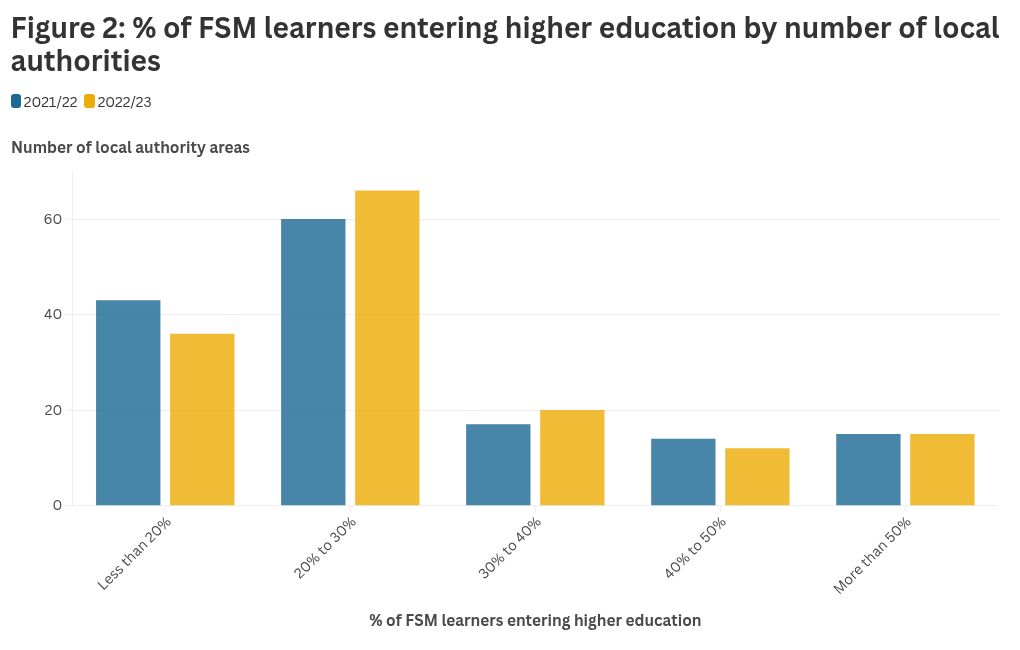
    So strong is London’s performance that it masks some of the challenges across England. At the local authority level, as shown in Figure 2, nearly 70% of areas are below the national average FSM progression rate of 29% and a quarter are at less than 20%.

    chart visualization

    However, while some of these areas may still be below the national average, over the past 10 years these areas have made the most progress. Understanding more about why they have improved while others with ostensibly similar characteristics have not would be a valuable exercise. In contrast, London, while remaining far ahead of anywhere else, has somewhat plateaued.

    As argued above, focusing on geographical differences in higher education participation between different areas of England is not new. This year sees the 21st anniversary of the Aimhigher programme, the first national, locally-focused collaborative outreach initiative for widening access. A string of similar programmes followed, most recently the Uni Connect initiative. Despite the continual chopping and changing of these programmes, they have been effective in contributing to the increases in progression to higher education from low-participation neighbourhoods referred to above, as this is what they have been told to focus on. While FSM as a measure has its well-documented limitations, it is the least worst option when compared to a neighbourhood measure which does not take into account the backgrounds of individual learners. It is now time for a new, rejuvenated collaborative outreach programme that focuses on inequalities in higher education participation as measured by the FSM progression data.

    The Office for Students recently announced its support for a new collaborative outreach programme and this is welcome. But any new programme, as well as focusing on the progression of FSM learners, must be sufficiently resourced. This could potentially happen through, at least in part, higher education providers pooling their efforts across a given area at pre-16 and being effectively co-ordinated at the national level, which has not been the case in previous iterations of such programmes. It must also be a part of the government’s forthcoming post-16 education strategy and any shifts to a broader more collaborative, ‘tertiary’ approach with regional dimensions.

    Finally, it is already becoming apparent that Labour, while right to jettison levelling up, is lacking a replacement policy agenda to address regional inequality. Levelling up, while a damp squib in terms of impact, voiced what many in the country feel about their lives, where they live and what inequality means to them. It didn’t though include inequalities in access to higher education. This can and must change.

    Source link

  • Award-Winning Work in Higher Ed HR – 2023 Regional Awards – CUPA-HR

    Award-Winning Work in Higher Ed HR – 2023 Regional Awards – CUPA-HR

    by CUPA-HR | May 23, 2023

    From developing supervisor competencies to transforming HR operations, human resources teams and HR practitioners across the country are doing great work every day.

    CUPA-HR’s regional Higher Education HR Awards program recognizes some of the best and brightest in higher ed HR and honors HR professionals who have given their time and talents to the association.

    Here are this year’s regional award recipients:

    HR Excellence Award

    This award honors transformative HR work in higher education and recognizes a team that has provided HR leadership resulting in significant and ongoing organizational change within its institution.

    Office of Human Resources, Towson University (Eastern Region)

    Towson University has had a partnership with Humanim, a nonprofit community workforce-development program, for many years. However, the pandemic created challenges that threatened to derail the partnership and the program. TU’s office of human resources, along with other anchor institutions, worked with Humanim to move parts of the program online, including virtual mock interviews, information sessions and panel discussions. Despite turnover created by the pandemic, the TU HR team was determined to maintain its relationship with Humanim and continue to provide employment opportunities to Baltimore residents. As TU’s top provider of quality temporary candidates for the university’s administrative functions, Humanim was also essential to the university during pandemic. For their outstanding work, CUPA-HR has contributed $1,000 to Towson University.

    Human Resources, Grand Valley State University (Midwest Region)

    In February 2022, Grand Valley State University’s HR team began implementing a total transformation of their operations, shifting from a 60-year-old compliance-driven approach to HR to an HR business partner approach. This change resulted in the creation of a “one-stop shop,” where HR services could be delivered more efficiently and consistently across all campus departments. The team also moved to improve efficiency by merging payroll, HR administration and technology, and benefits into a total rewards unit. And in the fall of 2022, HR established a formal talent management unit to organize and advance talent efforts. With these changes, HR is well positioned to unify and transform the university’s organizational culture. For their outstanding work, CUPA-HR has contributed $1,000 to Grand Valley State University.

    Culture Team, Utah Valley University (Western Region) 

    Recognizing a need for a better leadership experience for supervisors on their campus, Utah Valley University’s culture team set out to create a set of standardized leadership competencies that would help ensure that they were hiring the right people, communicating clear expectations during onboarding, providing leadership resources through training, and allowing supervisors to receive feedback. The Leadership Competency Experience, based on six leadership competencies and the university’s core values, established a standardized method of hiring, onboarding, training and feedback processing intended to cultivate effective leadership at all levels. Two years in, the program has made a significant impact on the quality of supervisors being hired and the training and support they receive, and the number of employee relations cases and volume of turnover due to bad supervision have decreased sharply. In fact, it has been so successful that in July 2022 the team released the Staff Competency Experience. For this impressive achievement, CUPA-HR has contributed $1,000 to Utah Valley University.

    Higher Ed HR Rock Star Award

    This award recognizes an individual who is serving in the first five years of a higher education HR career who has already made a significant impact.

    Miranda Arjona, Rollins College (Southern Region)
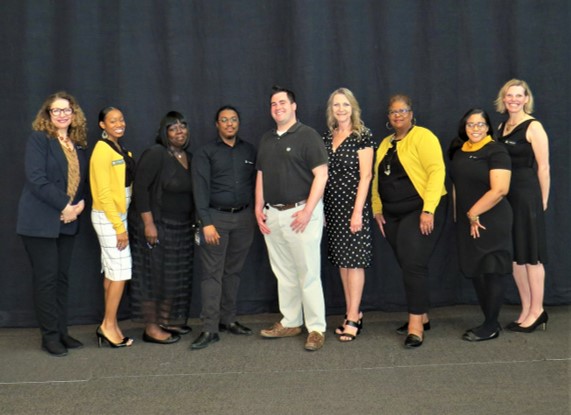
    From day one, Miranda Arjona, assistant director of human resources at Rollins College, has impressed colleagues with her positive outlook, creativity, willingness to learn and helpful attitude. Whether she’s building relationships within the HR team or leading a service excellence subcommittee, Miranda is focused on strengthening connections and making a difference. When she was asked to temporarily assist in student affairs to help manage contact tracing and consulting during the pandemic, she did so with her typical positivity and commitment to the task. Just as seamlessly, she transitioned back to her talent management role with the same mindset and tenacity. Her commitment to being a relationship-builder has not only served Rollins but also the higher ed HR community. She has been a speaker at two local HR events, and she is currently serving as president-elect of the CUPA-HR Florida Chapter.

    Lyndon Huling, University of California-Davis (Western Region)

    Lyndon Huling, manager of leadership recruitment, temporary staffing and diversity services at UC Davis, routinely taps his broad intergenerational and cross-cultural campus connections in his work, making him an exceptionally effective leader. His commitment to reimagining HR and recruitment best practices through a DEI lens shows in the strategies he’s developed and the innovative programs he’s been instrumental in establishing. Among other projects, he has co-sponsored and delivered transformative Race Matters workshops that create a safe space to learn and discuss race at work, which he has shared through presentations at regional and national CUPA-HR conferences. Through his work to create and share resources, Lyndon has demonstrated himself to be a passionate, progressive leader in higher ed HR.

    Chapter Excellence Awards

    These regional awards recognize chapters that are making a significant impact through their commitment to CUPA-HR and to the higher ed HR community. They work to achieve this through financial responsibility, commitment to CUPA-HR chapter guiding principles, cultivation of strong leadership, and development of creative networking and professional development opportunities.

    This year’s Chapter Excellence regional recipients are:

    • The CUPA-HR Michigan Chapter (Midwest Region)
    • The CUPA-HR Kentucky Chapter (Southern Region)
    • The CUPA-HR Northern and Central California Chapter (Western Region)


    Source link

  • CUPA-HR Participates in DOL Overtime Regional Listening Sessions – CUPA-HR

    CUPA-HR Participates in DOL Overtime Regional Listening Sessions – CUPA-HR

    by CUPA-HR | June 14, 2022

    In May and June, CUPA-HR participated in five regional listening sessions hosted by the Department of Labor (DOL) on the anticipated Notice of Proposed Rulemaking (NPRM) to update the criteria for the “executive, administrative and professional” exemptions for overtime pay under the Fair Labor Standards Act (FLSA). The listening sessions provided regional employers the opportunity to discuss their support or concerns with changes to the minimum salary level required to be exempt from overtime payments under the FLSA.

    CUPA-HR joined each of the five sessions to express concerns with the timing of the proposed increase to the minimum salary threshold to qualify for exempt status under the FLSA. Specifically, we raised concerns with the timing of such changes, as they would come while institutions, employees and students are still grappling with the challenges of the COVID-19 pandemic, a tight labor market and historically high inflation. Additionally, several CUPA-HR members joined the calls to raise similar concerns and discuss issues more specific to their individual institutions.

    Though many in higher ed and other industries are expressing similar concerns about raising the overtime minimum salary threshold level at this time, labor unions and worker advocates have led efforts to both raise the minimum salary threshold and expand coverage of overtime regulations to workers currently not covered under the FLSA. Notably, the National Education Association sent a letter to DOL urging the agency to remove the teacher exemption that currently exempts teachers from the FLSA requirements to receive overtime payments regardless of how much they are paid.

    The overtime NPRM that was targeted for release in April 2022 is now expected to come anytime within the next couple of months, though more information on when it will be released may be included in the anticipated Spring 2022 Regulatory Agenda. CUPA-HR will continue to monitor for the NPRM and will keep members apprised of any updates to the overtime regulations.


    Source link

  • DOL to Host Regional Listening Sessions for Proposed Overtime Rule Regulations – CUPA-HR

    DOL to Host Regional Listening Sessions for Proposed Overtime Rule Regulations – CUPA-HR

    by CUPA-HR | April 7, 2022

    In the Biden administration’s fall 2021 regulatory agenda, the Department of Labor (DOL)’s Wage and Hour Division (WHD) announced that it planned to release in April 2022 a Notice of Proposed Rulemaking (NPRM) changing criteria for the “executive, administrative and professional” exemptions from the overtime pay requirements under the Fair Labor Standards Act (FLSA). In May and June, the DOL will host five regional listening sessions allowing stakeholders to discuss the anticipated proposed rule aimed at changing the exemptions to the federal overtime pay requirements.

    With listening sessions extending into May, the WHD will not be able to meet the April target date, but we do expect the agency will release a proposed rule in 2022 with compliance likely required in 2023. While the DOL has not shared how it may change the exemptions, it is holding listening sessions to elicit stakeholder input as to whether changes are appropriate and what changes would be appropriate at this time.

    Background

    According to the regulatory agenda, one of the goals of the NPRM would be “to update the salary level requirement of the section 13(a)(1) exemption [under the FLSA].” Changes to the overtime exemption minimum salary threshold have been proposed recently under both the Obama and Trump administrations. In 2016, President Obama’s DOL issued a final rule to increase the salary threshold from $23,660 to $47,476 per year and impose automatic updates to the threshold every three years, but the rule was subsequently struck down by federal court before taking effect in 2017. In 2019, the Trump administration issued a new final rule that raised the minimum salary threshold from $23,660 to $35,568 annually, which went into effect on January 1, 2020. The $35,568 threshold remains in effect today.

    On March 29, in anticipation of the upcoming Biden administration rule, the DOL held a virtual higher education-specific listening session for D.C.-based higher education associations, including CUPA-HR. The listening session was scheduled after CUPA-HR and 14 other higher education associations submitted a request that the DOL hold such meetings prior to releasing the anticipated NPRM. CUPA-HR and several other higher education associations joined the session to discuss potential concerns institutions may have with an increase to the minimum salary threshold at this time.

    Regional Sessions

    In addition to the D.C. meeting held in March, the DOL is planning to host five additional regional listening sessions for employers. The sessions include the following:

    • Northeast Employers: May 13 at 3:30 p.m. EDT
    • Southeast Employers: May 17 at 2:00 p.m. EDT
    • Midwest Employers: May 20 at 3:30 p.m. EDT
    • Southwest Employers: May 27 at 3:00 p.m. EDT
    • West Employers: June 3 at 3:30 p.m. EDT

    If your institution is interested in participating in any of the regional meetings, please reach out to CUPA-HR’s Chief Government Relation Officer Josh Ulman at [email protected]. Additional information about the D.C. listening session and CUPA-HR’s talking points will be provided upon inquiry.


    Source link