
Tag: reimagined

  • She Reimagined Dolls for Her daughter — and Defied Stereotypes About Indigenous Women – The 74

    She Reimagined Dolls for Her daughter — and Defied Stereotypes About Indigenous Women – The 74


    Get stories like this delivered straight to your inbox. Sign up for The 74 Newsletter

    When Cara Romero’s daughter was 11, she became interested in dolls. Romero, who is an enrolled member of the Chemehuevi Indian Tribe in Southern California, began to think about doll culture more deeply and what it can convey to the next generation. 

    Romero’s husband grew up collecting G.I. Joes, and her mother-in-law had her own Victorian-style porcelain doll collection. For Romero, though, her daughter’s doll phase reminded her of the Native American dolls she grew up seeing at truck stops along I-40.

    The dolls were often dressed in plastic pony beads and fake buckskin that parroted the Native American Halloween costumes she knew all too well as dehumanizing stereotypes. So Romero, who is a photographer and artist, set out to create a series of photos that broke down these tropes.

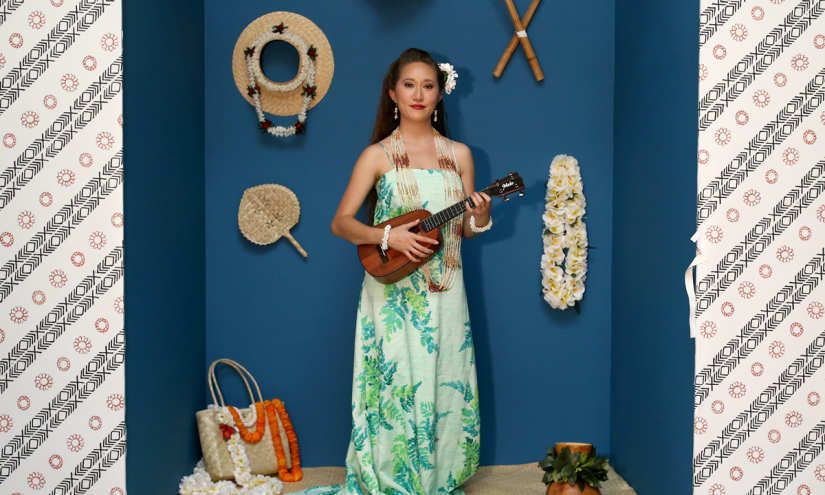
    Each photograph in the “First American Doll” series features a life-sized doll box that she designed and crafted, where she poses the women with objects that represent their families, traditions and unique stories. 

    She wanted her daughter to be proud of her heritage. “I come from a community where women are allowed to have a voice, allowed to be really strong,” she said. “So [I was] wanting to pass down good self esteem and a strong sense of self and identity,” she said. “That’s what we aim to do as moms.”

    She started the series with artist and powwow dancer Wakeah Jhane, who is of Kiowa, Comanche and Blackfeet descent. While the Plains Tribes that she is from are the models for stereotypical dolls and costumes, Romero’s photograph captures her intricate buckskin regalia, which was made by her family. Also on display are her moccasins and a fan.

    “You can see the stark contrast between what she’s wearing and the Halloween costumes that people portray Plains people as,” she said. “I really wanted to kind of own it and be like, “You guys even have this wrong.’” 

    She has since published nine photographs for the series, the most recent featuring Fawn Douglas, an artist, activist and enrolled member of the Las Vegas Paiute Tribe, who is posed with handcrafted baskets and a gourd rattle made by her family. The box is bordered by a Las Vegas playing card motif. 

    Cara Romero (Getty Images)

    The current day symbolism and high fashion lighting communicates that these women are also contemporary, Romero said. “When artwork, and specifically photography, is devoid of modern context, it does something psychologically, it perpetuates [this idea] that we’re gone and only living in history.”  

    Naming each of the pieces after the models was also meant to humanize Indigenous women in a way that they weren’t in historical photos. “A lot of times in the ethnographic photographs, they didn’t even say their name,” she said. “We don’t know who they were.”

    Some of the photographs from the series are currently traveling the country as part of Romero’s first solo museum exhibition, titled: “Panûpünüwügai (Living Light).” They will be on display next at the Phoenix Art Museum in Arizona starting in February.

    This story was originally reported by Jessica Kutz of The 19th. Meet Jessica and read more of their reporting on gender, politics and policy.


    Did you use this article in your work?

    We’d love to hear how The 74’s reporting is helping educators, researchers, and policymakers. Tell us how
    Source link

  • How one school reimagined learning spaces–and what others can learn

    How one school reimagined learning spaces–and what others can learn

    Key points:

    When Collegedale Academy, a PreK–8 school outside Chattanooga, Tennessee, needed a new elementary building, we faced a choice that many school leaders eventually confront: repair an aging facility or reimagine what learning spaces could be.

    Our historic elementary school held decades of memories for families, including some who had once walked its halls as children themselves. But years of wear and the need for costly repairs made it clear that investing in the old building would only patch the problems rather than solve them. At the same time, Southern Adventist University–on whose land the school sat–needed the property for expansion.

    Rather than cling to the past, we saw an opportunity. We could design a new, future-focused environment on our middle school campus–one that reflected how students learn today and how they will need to learn tomorrow.

    Putting students first

    As both a teacher and someone who helped design our middle school, I approached the project with one condition: every design choice had to prioritize students and teachers. That philosophy shaped everything that followed.

    My search for student-centered design partners led us to MiEN. What impressed me most was that they weren’t simply selling furniture. They were invested in research–constantly asking what classrooms need to evolve and then designing for that reality. Every piece we chose was intentional, not about aesthetics alone, but about how it could empower learners and teachers.

    Spaces that do more

    From the beginning, our vision emphasized flexibility, belonging, and joy. Every area needed to “do more,” adapting seamlessly to different uses throughout the day. To achieve this, we focused on designing spaces that could shift in purpose while still sparking curiosity and connection.

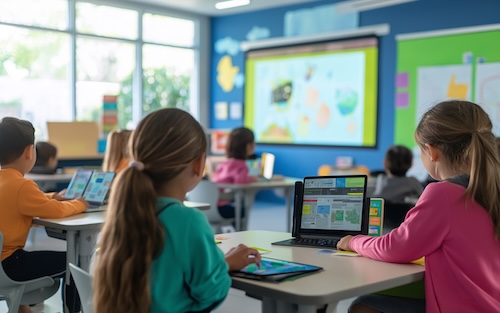
    Community hubs reimagined: Our cafeteria and media center now transform into classrooms, performance stages, or meeting spaces with minimal effort, maximizing every square foot.

    Interactive, sensory-rich design: An interactive wall panel with a ball run, sensory boards, and flexible seating encourages students to collaborate and explore beyond traditional instruction.

    Learning everywhere: Even hallways and lobbies have become extensions of the classroom. With mobile whiteboards, soft seating, and movable tables, these spaces host tutoring sessions, small groups, and parent meetings.

    Outdoor classrooms: Students gather at the campus creek for science lessons, spread out at outdoor tables that double as project workspaces, and find joy in spaces designed for both inquiry and play. Walking into the building, students immediately understood it was made for them. They take pride in exploring, rearranging furniture, and claiming ownership of their environment. That sense of belonging is priceless and drives real engagement in the learning.

    Supporting teachers through change

    For teachers accustomed to traditional layouts, the shift to flexible spaces required trust and support. At first, some colleagues wondered how the new design would fit with their routines. But once they began teaching in the space, the transformation was rapid. Within weeks, they were moving furniture to match their themes, discovering new instructional strategies, and finding creative ways to engage students.

    The beauty of this approach is that it doesn’t dictate a single method. Instead, it enables teachers to adapt the space to their vision. Watching colleagues gain confidence and joy in their teaching reinforced our original intent: create an environment that empowers educators as much as it excites students.

    A partnership that mattered

    No school leader undertakes a project like this alone. For us, partnership was everything. The team that supported our vision felt less like outside vendors and more like collaborators who shared our dream.

    They weren’t just delivering products; they were helping us shape a culture. Their excitement matched ours at every step, and together, we turned ideas into realities that continue to inspire.

    Immediate and lasting impact

    The outcomes of the project were visible from day one. Students lit up as they explored the new features. Teachers discovered fresh energy in their classrooms. Parents, many of whom remembered the old building, were struck by how clearly the new design signaled a commitment to modern learning and to prioritizing their children’s futures.

    Financially, the project was also a smart investment. Multi-purpose areas and durable, mobile furnishings mean that every dollar spent generates long-term value. And because the spaces were designed with flexibility in mind, they will remain relevant even as instructional practices evolve.

    Looking ahead

    The success of our elementary project has created momentum for what’s next. Collegedale is already planning high school renovations guided by the same student-first philosophy. The excitement is contagious, not just for our community but for how it models what schools can achieve when they align design with mission.

    For me, this project was never just about furniture. It was about creating a culture where curiosity, creativity, and joy thrive every day. With the right partners and a clear vision, schools can build environments where students feel they belong and where teachers are empowered to do their best work.

    As education leaders consider their own building projects, my advice is simple: design for the learners first. When students walk into a space and know, without a doubt, that it was built for them, everything else follows.

    Latest posts by eSchool Media Contributors (see all)

    Source link