This audio is auto-generated. Please let us know if you have feedback.
Most clicked story of the week:
Senate lawmakers have rejected the Trump administration’s proposal to vastly reduce federal funding for scientific research. Instead the Senate advanced proposals last week that would provide $188.3 billion for scientific research — 21.3% more than the Trump administration proposed.
The Senate passed those bipartisan measures Thursday in a 82-15 vote, sending them to President Donald Trump’s desk. The House passed them in a 397-28 vote earlier in the month.
Number of the week: 5.9%
The decline in graduate international students enrolled in U.S. colleges in fall 2025 compared to the year before, according to final figures from the National Student Clearinghouse Research Center. However, enrollment ticked up 1% overall, thanks to a 1.2% increase in undergraduate students.
The latest on mergers, closures and financial distress:
The California College of the Arts, a 120-year-old institution, announced that it will close at the end of the 2026-27 academic year and hand over its campus to Nashville-based Vanderbilt University. Despite a major fundraising push, CCA President David Howse said the arts college’s “tuition-driven business model is not sustainable.”
Oregon’s Higher Education Coordinating Commissionrecently passed a report that in part advises all of Oregon’s public colleges to collaborate and craft plans for “targeted institutional integration.”. Those plans could range from two colleges sharing programs to fully merging, according to the report.
Hampshire College, a private nonprofit in Massachusetts that narrowly avoided closing five years ago, is once again in potential financial trouble. According to its latest audit, the institution could shutter if it can’t refinance its debt.
‘A year of catastrophe’ for higher ed:
PEN America, a free expression group, found that 21 bills across 15 states were enacted in 2025 that censor higher education. “For higher education in America, 2025 was a year of catastrophe,” researchers wrote in a report summarizing the findings.
The researchers found the laws were a “result of a relentless, years-old campaign to exert ideological control over college and university campuses.” Although the conservative-led push began before President Donald Trump’s second term, researchers noted the campaign was “greatly exacerbated” by his administration.
Now, over 50% of college students are studying in states with at least one law on the books that censors higher education. “This is a staggering figure that should give us all pause,” they wrote.
This audio is auto-generated. Please let us know if you have feedback.
Dive Brief:
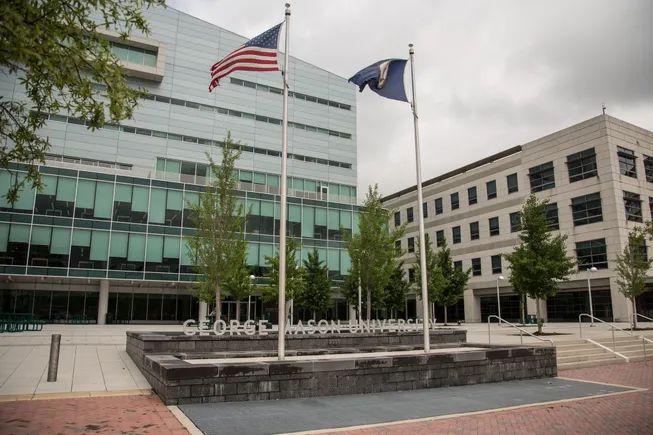
George Mason University’s faculty senate on Wednesday urged the public Virginia institution’s leadershipto rebuke any deal with the Trump administration that would undermine its independence.
In a newly passed resolution, the senate said recent federal deals struck by other colleges have set a precedent in which “administrative convenience takes precedence over the faculty’s constitutional and professional responsibility.” The resolution urged George Mason’s board and president to reject any similar settlement with the Trump administration to end federal investigations into the university.
George Mason leaders must also decline the administration’s separate higher education compact, it said, as that proposal seeks to “blur the constitutional distinction between voluntary funding conditions and compelled oversight.”
Dive Insight:
Under President Donald Trump, the departments of Education and Justice have opened at least four investigations into George Masonsince this summer, targeting the university’s diversity, equity and inclusion work.
George Mason’s faculty senate warned the governing board Wednesday against cutting a deal with the DOJ that puts the university under “continuing federal supervision.”And any settlement must involve “transparent deliberation and meaningful faculty consultation,” as required by George Mason’s shared governance policies, the senate said.
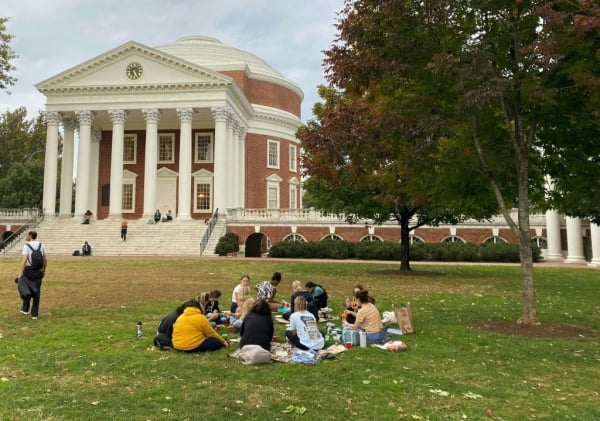
The state flagship in October agreed, in part, to adhere to the DOJ’s guidance against DEI effortsand to make quarterly oversight reports for three years.In exchange, the federal government suspended and will eventually end five DOJ investigations into UVA and continued to give the university access to research funding.
The resolution from George Mason’s faculty senate said UVA had “negotiated in secrecy, without faculty consultation” and imposed “years of federal monitoring and mandatory reporting that chill free inquiry, constrain legitimate academic debate, and erode shared governance.”
Just six weeks after the Education Department announced a probe into George Mason, it formally accused the university of illegally using race and other protected characteristics when making hiring and promotion decisions. As in other federal investigations into George Mason, the department singled out the university’s president, Gregory Washington, who has been an ardent supporter of diversity initiatives during his five-year tenure.
The agency gave the university 10 days to meet a list of demands to resolve the investigation. Among other requirements, one condition would have compelled Washington to publicly apologize. The president instead firmly rebuked the Education Department’s findings, with his lawyer calling them “a legal fiction.”
In contrast, George Mason’s governing board said that it would seek to negotiate with the Trump administration to resolve the allegations. The board also said Washington’s attorney would be involved in talks with the Education Department.
The faculty senate resolution pushed George Mason’s leaders to not accept Trump’s proposed higher education compact or any agreement that “conditions federal funding on the surrender of institutional autonomy or faculty governance.”
Through the compact, the Trump administration seeks to have colleges voluntarily agree with its policy agenda in exchange for research funding incentives rather than its playbook of seeking compliance through unprecedented punitive actions.
But the faculty senate argued in their resolution that the compact’s “promise of ‘excellence’ masks a fundamental shift of authority from university faculty and governing boards to federal agencies.”
Further complicating matters, George Mason’s board currently has just six voting members — down from the usual 16 — meaning it doesn’t have a quorum. Since June, the governing bodies of George Mason and two other Virginia public colleges have been in a state of political fluxdue to a fight between a Democrat-controlled state Senate committee and Republican Gov. Glenn Youngkinover his university board selections.
The faculty senate on Wednesday said that the board should not negotiate or sign off on any substantial agreement “affecting curriculum development, research priorities, faculty governance, or the allocation of university resources” without members who are “properly appointed and duly confirmed” by the Virginia General Assembly.
Virginia’s governor-elect, Democrat Abigail Spanberger, last month raised similar concerns over potential actions taken by UVA’s board, which has 12 of its intended 17 members.
George Mason’s board — and the board’s leader — have come under scrutiny from faculty and lawmakers.
In July, the George Mason chapter of the American Association of University Professors voted no-confidence in the board and urged it to defend Washington.
And the leaders of Virginia’s state senate accused Charles Stimson, head of George Mason’s board, of a conflict of interest in September and called forhim to resign if he did not recuse himself from discussions related to the federal investigations.
UVA officials told the Trump administration that they seek no special treatment.
Daxia Rojas/AFP via Getty Images
On a day of campus demonstrations urging officials to reject the Trump administration’s “Compact for Academic Excellence in Higher Education,” the University of Virginia announced Friday that it opposes the president’s offer of yet-unrevealed special funding benefits in exchange for signing.
“The integrity of science and other academic work requires merit-based assessment of research and scholarship,” interim president Paul Mahoney wrote in a message Friday to Education Secretary Linda McMahon, which he shared with the university community. “A contractual arrangement predicating assessment on anything other than merit will undermine the integrity of vital, sometimes lifesaving, research and further erode confidence in American higher education.”
The compact asks colleges to agree to overhaul or abolish departments “that purposefully punish, belittle, and even spark violence against conservative ideas,” without further defining what those terms mean. It also asks universities, among other things, to commit to not considering transgender women to be women; reject foreign applicants “who demonstrate hostility to the United States, its allies, or its values”; and freeze “effective tuition rates charged to American students for the next five years.”
In exchange for these agreements, the White House has said signatories would “be given [funding] priority when possible as well as invitations to collaborate with the White House.” But the administration hasn’t revealed how much extra funding universities would be eligible for, and the nine-page compact doesn’t detail the potential benefits. The compact, as well as a Thursday statement from the White House, can also be read as threatening colleges’ current federal funding if they don’t sign.
Mahoney told McMahon that his university agrees “with many of the principles outlined in the Compact, including a fair and unbiased admissions process, an affordable and academically rigorous education, a thriving marketplace of ideas, institutional neutrality, and equal treatment of students, faculty, and staff in all aspects of university operations.”
“Indeed,” Mahoney wrote, “the University of Virginia leads in several of these areas and is committed to continuous improvement in all of them. We seek no special treatment in exchange for our pursuit of those foundational goals.”
The decision makes UVA the fifth of the nine initial institutions presented with the deal to publicly turn it down. It’s also the first public university and first Southern institution to reject it. The Massachusetts Institute of Technology was the first of the nine to turn it down, on Oct. 10, followed by Brown University and the Universities of Pennsylvania and Southern California.
UVA’s rejection of the compact comes after the Trump administration successfully pressured then–UVA president James Ryan to step down in June. The Justice Department had demanded he step down. The UVA Board of Visitors voted to dissolve the university’s diversity, equity and inclusion office in March, but multiple conservative alumni groups and legal entities complained that Ryan failed to eliminate DEI from all corners of campus.
A coalition of groups opposed to the compact, including the UVA chapter of the American Association of University Professors, praised the rejection in a Friday news release.
“Today’s events demonstrate the power of collective organizing and action to defeat tyranny,” the statement said. “We hope that we serve as an example to the other public universities that received the ‘Compact’—the University of Texas, Austin, and the University of Arizona—giving them the courage and clarity not to buckle.”
UVA faculty groups had overwhelmingly urged university leaders to reject the compact. And hundreds of demonstrators showed up to the anti-compact rally Friday on the UVA campus in Charlottesville, Cville Right Nowreported.
Dartmouth College and Vanderbilt University also haven’t revealed their decisions. But after MIT announced its refusal of the compact, Trump offered it to all U.S. colleges and universities to sign.
White House officials met Friday with some universities about the proposal. The Wall Street Journal reported that UVA, Arizona, Dartmouth, UT Austin and Vanderbilt were invited, along with universities that weren’t part of the original nine: Arizona State University, the University of Kansas and Washington University in St. Louis.
White House spokesperson Liz Huston compared the compact in a statement to calls from former Presidents George Washington, Abraham Lincoln, Teddy Roosevelt and John F. Kennedy, who she said “called on our universities to be of greater service to the nation.”
“President Trump has called on universities to do their part in returning America to its economic and diplomatic successes of the past: a nation of full employment, pioneering innovations that change the world, and committed to merit and hard work as the ingredients to success,” she said, adding the administration hosted “a productive call” with several universities.
A White House official said UVA and the other seven invited universities participated in the call.
“They now have the baton to consider, discuss, and propose meaningful reforms, including their form and implementation, to ensure college campuses serve as laboratories of American greatness,” Huston said.
The University of Virginia and Dartmouth College have become the latest higher ed institutions to publicly reject the Trump administration’s “Compact for Academic Excellence in Higher Education.” Now just three of the nine institutions that the federal government originally presented with the document have yet to announce whether they will sign.
UVA announced Friday that it opposes the offer of yet-unrevealed special funding benefits in exchange for signing the compact. The statement came the day of an on-campus demonstration urging university leaders not to sign. Dartmouth unveiled its response Saturday morning. Both rejections came despite the universities attending a meeting Friday with White House officials about the deal.
“As I shared on the call, I do not believe that the involvement of the government through a compact—whether it is a Republican- or Democratic-led White House—is the right way to focus America’s leading colleges and universities on their teaching and research mission,” Dartmouth president Sian Leah Beilock wrote in a message to Education Secretary Linda McMahon, which the president also shared with her community.
“Our universities have a responsibility to set our own academic and institutional policies, guided by our mission and values, our commitment to free expression, and our obligations under the law,” Beilock wrote. “Staying true to this responsibility is what will help American higher education build bipartisan public trust and continue to uphold its place as the envy of the world.”
Beilock hasn’t been a publicly outspoken opponent of Trump; at a Heterodox Academy conference in June, she said, “It’s really a problem to say just because the administration, with many things that we all object to, is suggesting something inherently means it’s wrong.” But she also said back then that “we shouldn’t have the government telling us what to do.”
In a message Friday to McMahon, also shared with the community, UVA interim president Paul Mahoney wrote that “the integrity of science and other academic work requires merit-based assessment of research and scholarship. A contractual arrangement predicating assessment on anything other than merit will undermine the integrity of vital, sometimes lifesaving, research and further erode confidence in American higher education.”
The compact asks colleges to agree to overhaul or abolish departments “that purposefully punish, belittle, and even spark violence against conservative ideas,” without further defining what those terms mean. It also asks universities, among other things, to commit to not considering transgender women to be women; reject foreign applicants “who demonstrate hostility to the United States, its allies, or its values”; and freeze “effective tuition rates charged to American students for the next five years.”
In exchange for these agreements, the White House has said signatories would “be given [funding] priority when possible as well as invitations to collaborate with the White House.” But the administration hasn’t revealed how much extra funding universities would be eligible for, and the nine-page compact doesn’t detail the potential benefits. The compact, as well as a Thursday statement from the White House, can also be read as threatening colleges’ current federal funding if they don’t sign.
Mahoney told McMahon that his university agrees “with many of the principles outlined in the Compact, including a fair and unbiased admissions process, an affordable and academically rigorous education, a thriving marketplace of ideas, institutional neutrality, and equal treatment of students, faculty, and staff in all aspects of university operations.”
“Indeed,” Mahoney wrote, “the University of Virginia leads in several of these areas and is committed to continuous improvement in all of them. We seek no special treatment in exchange for our pursuit of those foundational goals.”
The decisions make UVA the fifth and Dartmouth the sixth of the nine initial institutions presented with the deal to publicly turn it down. UVA is also the first public university and first Southern institution to reject it. The Massachusetts Institute of Technology was the first of the nine to turn it down, on Oct. 10, followed by Brown University and the Universities of Pennsylvania and Southern California.
UVA’s rejection of the compact comes after the Trump administration successfully pressured then–UVA president James Ryan to step down in June. The Justice Department had demanded he step down. The UVA Board of Visitors voted to dissolve the university’s diversity, equity and inclusion office in March, but multiple conservative alumni groups and legal entities complained that Ryan failed to eliminate DEI from all corners of campus.
A coalition of groups opposed to the compact, including the UVA chapter of the American Association of University Professors, praised the rejection in a Friday news release.
“Today’s events demonstrate the power of collective organizing and action to defeat tyranny,” the statement said. “We hope that we serve as an example to the other public universities that received the ‘Compact’—the University of Texas, Austin, and the University of Arizona—giving them the courage and clarity not to buckle.”
UVA faculty groups had overwhelmingly urged university leaders to reject the compact. And hundreds of demonstrators showed up to the anticompact rally Friday on the UVA campus in Charlottesville, Cville Right Now reported.
Alongside Arizona and UT Austin, Vanderbilt University also hasn’t revealed its decision. But after MIT announced its refusal of the compact, Trump offered it to all U.S. colleges and universities to sign.
White House officials met Friday with some universities about the proposal. The Wall Street Journal reported that UVA, Dartmouth, Arizona, UT Austin and Vanderbilt were invited, along with universities that weren’t part of the original nine: Arizona State University, the University of Kansas and Washington University in St. Louis.
White House spokesperson Liz Huston compared the compact in a statement to efforts from former presidents George Washington, Abraham Lincoln, Teddy Roosevelt and John F. Kennedy, who she said “called on our universities to be of greater service to the nation.”
“President Trump has called on universities to do their part in returning America to its economic and diplomatic successes of the past: a nation of full employment, pioneering innovations that change the world, and committed to merit and hard work as the ingredients to success,” she said, adding the administration hosted “a productive call” with several universities.
A White House official said UVA and the other seven invited universities participated in the call.
“They now have the baton to consider, discuss, and propose meaningful reforms, including their form and implementation, to ensure college campuses serve as laboratories of American greatness,” Huston said.
Four of the nine universities initially asked to sign have rejected the document.
Photo illustration by Justin Morrison/Inside Higher Ed | Jumping Rocks/Universal Images Group/Getty Images | Mario Tama/Getty Images
The Universities of Pennsylvania and Southern California have now refused to sign the Trump administration’s “Compact for Academic Excellence in Higher Education,” making them the third and fourth of the nine initial institutions that were presented the deal to publicly turn it down. No institution has agreed to sign so far.
Both announcements came Thursday, a few days before the Oct. 20 deadline to provide feedback on the proposal. Beong-Soo Kim, interim president of the University of Southern California, shared his message to Education Secretary Linda McMahon, which outlined how USC already seems to adhere to the compact.
“Notwithstanding these areas of alignment, we are concerned that even though the Compact would be voluntary, tying research benefits to it would, over time, undermine the same values of free inquiry and academic excellence that the Compact seeks to promote,” Kim wrote. “Other countries whose governments lack America’s commitment to freedom and democracy have shown how academic excellence can suffer when shifting external priorities tilt the research playing field away from free, meritocratic competition.”
Kim added that the compact does raise issues “worthy of a broader national conversation to which USC would be eager to contribute its insights and expertise.”
California governor Gavin Newsom, a possible Democratic presidential contender in 2028, had threatened that any university in his state that signed the compact would “instantly” lose billions of state dollars.
Over at Penn, President J. Larry Jameson wrote in a message to his community Thursday that his university “respectfully declines to sign the proposed Compact.” He added that his university did provide feedback to the department on the proposal.
Penn spokespeople didn’t say Thursday whether the university would sign any possible amended version of the compact that addressed the university’s concerns, nor did they provide Inside Higher Ed a copy of the feedback provided to the Trump administration. (Penn is the only university of the four that didn’t provide its response to McMahon.)
The White House also didn’t provide a copy of Penn’s feedback, but it emailed a statement apparently threatening funding cuts for universities that don’t sign the compact.
“Merit should be the primary criteria for federal grant funding. Yet too many universities have abandoned academic excellence in favor of divisive and destructive efforts such as ‘diversity, equity, and inclusion,’” spokesperson Liz Huston said in the statement. “The Compact for Academic Excellence embraces universities that reform their institutions to elevate common sense once again, ushering a new era of American innovation. Any higher education institution unwilling to assume accountability and confront these overdue and necessary reforms will find itself without future government and taxpayers support.”
Brown University announced it had rejected the compact Wednesday, and the Massachusetts Institute of Technology did the same last Friday. Following MIT’s rejection, the Trump administration said the compact was open to all colleges and universities that want to sign it.
The compact is a boilerplate contract asking colleges to voluntarily agree to overhaul or abolish departments “that purposefully punish, belittle, and even spark violence against conservative ideas,” without further defining what those terms mean. It also asks universities to, among other things, commit to not considering transgender women to be women, to reject foreign applicants “who demonstrate hostility to the United States, its allies, or its values” and to freeze “effective tuition rates charged to American students for the next five years.”
In exchange for these agreements, the White House has said signatories would “be given [funding] priority when possible as well as invitations to collaborate with the White House.” But the White House hasn’t revealed how much extra funding universities would be eligible for, and the nine-page compact doesn’t detail the potential benefits. The compact, and the Thursday statement from the White House, can also be read as threatening colleges’ current federal funding if they don’t sign. Multiple higher ed organizations have allied in calling on universities to reject the compact.
Jameson said in his statement that “at Penn, we are committed to merit-based achievement and accountability.”
Earlier this year, the Trump administration said that Penn violated Title IX of the Education Amendments of 1972 when it allowed a transgender woman to swim on the women’s team in 2022, and officials issued several demands to the university. Penn ultimately conceded to those demands over the summer, a decision that the administration said restored about $175 million in frozen federal funds.
Marc Rowan, a Penn graduate with two degrees from its Wharton School of Business who’s now chief executive officer and board chair for Apollo Global Management, wrote in The New York Times that he “played a part in the compact’s initial formulation, working alongside an administration working group.” Rowan argued that the compact doesn’t threaten free speech or academic freedom.
Apollo has funded the online, for-profit University of Phoenix. AP VIII Queso Holdings LP—the previous name for majority owner of the University of Phoenix—was the successor of Apollo Education Group, which went private in 2017 in a $1.1 billion deal backed by Apollo Global Management Inc. and the Vistria Group.
AP VIII Queso Holdings LP was recently renamed Phoenix Education Partners as part of a new deal to take the company public once again. Phoenix Education Partners, now owner of the University of Phoenix and backed by both Apollo and Vistria, started trading on the stock market last week and was valued at about $1.35 billion after the first day.
Four of the nine universities initially asked to sign have rejected the document.
Photo illustration by Justin Morrison/Inside Higher Ed | Jumping Rocks/Universal Images Group/Getty Images | Mario Tama/Getty Images
The Universities of Pennsylvania and Southern California have now refused to sign the Trump administration’s “Compact for Academic Excellence in Higher Education,” making them the third and fourth of the nine initial institutions that were presented the deal to publicly turn it down. No institution has agreed to sign so far.
Both announcements came Thursday, a few days before the Oct. 20 deadline to provide feedback on the proposal. Beong-Soo Kim, interim president of the University of Southern California, shared his message to Education Secretary Linda McMahon, which outlined how USC already seems to adhere to the compact.
“Notwithstanding these areas of alignment, we are concerned that even though the Compact would be voluntary, tying research benefits to it would, over time, undermine the same values of free inquiry and academic excellence that the Compact seeks to promote,” Kim wrote. “Other countries whose governments lack America’s commitment to freedom and democracy have shown how academic excellence can suffer when shifting external priorities tilt the research playing field away from free, meritocratic competition.”
Kim added that the compact does raise issues “worthy of a broader national conversation to which USC would be eager to contribute its insights and expertise.”
California governor Gavin Newsom, a possible Democratic presidential contender in 2028, had threatened that any university in his state that signed the compact would “instantly” lose billions of state dollars.
Over at Penn, President J. Larry Jameson wrote in a message to his community Thursday that his university “respectfully declines to sign the proposed Compact.” He added that his university did provide feedback to the department on the proposal.
Penn spokespeople didn’t say Thursday whether the university would sign any possible amended version of the compact that addressed the university’s concerns, nor did they provide Inside Higher Ed a copy of the feedback provided to the Trump administration. (Penn is the only university of the four that didn’t provide its response to McMahon.)
The White House also didn’t provide a copy of Penn’s feedback, but it emailed a statement apparently threatening funding cuts for universities that don’t sign the compact.
“Merit should be the primary criteria for federal grant funding. Yet too many universities have abandoned academic excellence in favor of divisive and destructive efforts such as ‘diversity, equity, and inclusion,’” spokesperson Liz Huston said in the statement. “The Compact for Academic Excellence embraces universities that reform their institutions to elevate common sense once again, ushering a new era of American innovation. Any higher education institution unwilling to assume accountability and confront these overdue and necessary reforms will find itself without future government and taxpayers support.”
Brown University announced it had rejected the compact Wednesday, and the Massachusetts Institute of Technology did the same last Friday. Following MIT’s rejection, the Trump administration said the compact was open to all colleges and universities that want to sign it.
The compact is a boilerplate contract asking colleges to voluntarily agree to overhaul or abolish departments “that purposefully punish, belittle, and even spark violence against conservative ideas,” without further defining what those terms mean. It also asks universities to, among other things, commit to not considering transgender women to be women, to reject foreign applicants “who demonstrate hostility to the United States, its allies, or its values” and to freeze “effective tuition rates charged to American students for the next five years.”
In exchange for these agreements, the White House has said signatories would “be given [funding] priority when possible as well as invitations to collaborate with the White House.” But the White House hasn’t revealed how much extra funding universities would be eligible for, and the nine-page compact doesn’t detail the potential benefits. The compact, and the Thursday statement from the White House, can also be read as threatening colleges’ current federal funding if they don’t sign. Multiple higher ed organizations have allied in calling on universities to reject the compact.
Jameson said in his statement that “at Penn, we are committed to merit-based achievement and accountability.”
Earlier this year, the Trump administration said that Penn violated Title IX of the Education Amendments of 1972 when it allowed a transgender woman to swim on the women’s team in 2022, and officials issued several demands to the university. Penn ultimately conceded to those demands over the summer, a decision that the administration said restored about $175 million in frozen federal funds.
Marc Rowan, a Penn graduate with two degrees from its Wharton School of Business who’s now chief executive officer and board chair for Apollo Global Management, wrote in The New York Times that he “played a part in the compact’s initial formulation, working alongside an administration working group.” Rowan argued that the compact doesn’t threaten free speech or academic freedom.
Apollo has funded the online, for-profit University of Phoenix. AP VIII Queso Holdings LP—the previous name for majority owner of the University of Phoenix—was the successor of Apollo Education Group, which went private in 2017 in a $1.1 billion deal backed by Apollo Global Management Inc. and the Vistria Group.
AP VIII Queso Holdings LP was recently renamed Phoenix Education Partners as part of a new deal to take the company public once again. Phoenix Education Partners, now owner of the University of Phoenix and backed by both Apollo and Vistria, started trading on the stock market last week and was valued at about $1.35 billion after the first day.
This audio is auto-generated. Please let us know if you have feedback.
The Massachusetts Institute of Technology on Friday rejected the Trump administration’s proposed compact that offers priority for federal research funding in exchange for making sweeping policy changes.
MIT is the first institution to formally reject the compact, which the administration sent to nine research universities on Oct. 1.
The nine-page compact’s wide-ranging terms include freezing tuition for five years, capping international student enrollment to 15% of the institution’s undergraduate student body, and changing or eliminating units on campus that “purposefully punish, belittle, and even spark violence against conservative ideas.”
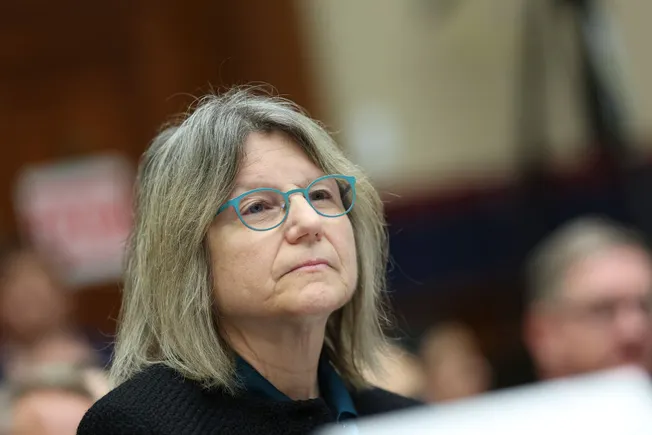
MIT already meets or exceeds many of the proposed standards in the compact, university President Sally Kornbluth said in a Friday message to U.S. Education Secretary Linda McMahon. However, the compact includes other principles that would restrict the university’s free expression and independence, Kornbluth said.
“And fundamentally,” Kornbluth added, “the premise of the document is inconsistent with our core belief that scientific funding should be based on scientific merit alone.”
The White House did not immediately respond to a request for comment on Friday.
Kornbluth’s letter to the Trump administration
In her message, which she shared publicly, Kornbluth pointed to several MIT policies that she said were already in step with the compact.For instance, the proposed agreement dictates that colleges mandate standardized testing for applicants, and MIT reinstated its SAT and ACT requirement in 2022 after pausing it due to the coronavirus pandemic.
Similarly, Kornbluth noted that MIT limits international enrollment to about 10% of its undergraduate population — below the Trump administration’s proposed cap of 15%.
The compact also focuses on affordability, including through a standard that would require colleges with large endowments to not charge tuition to students enrolled in “hard science programs,” with exceptions for those from well-off families.
Kornbluth shared MIT’s own affordability initiatives, including not charging tuition to incoming undergraduate students from families earning under $200,000. She noted that 94% of undergraduate degrees awarded at MIT are in science, technology, engineering and mathematics fields.
But the MIT president opposed other compact provisions over concerns that they would restrict free expression at the university — which she underscored as a core MIT value.
“We must hear facts and opinions we don’t like — and engage respectfully with those with whom we disagree,” Kornbluth wrote.
The compact’s terms have raised alarms from free speech advocates since becoming public.
Tyler Coward, lead counsel for government affairs at the Foundation for Individual Rights and Expression, said that the compact contains troubling language, pointing to the provision to eliminate departments that “belittle” or “spark violence” against conservative beliefs.
“Let’s be clear: Speech that offends or criticizes political views is not violence,” Coward wrote in an Oct. 2 statement. “Conflating words with violence undermines both free speech and efforts to combat real threats.”
Widespread opposition to the compact
The eight other colleges that received the compact are Brown University, Dartmouth College, the University of Arizona,the University of Pennsylvania, the University of Southern California, the University of Texas at Austin, the University of Virginia and Vanderbilt University.
The compact has drawn widespread opposition from employee groups and students.
Faculty senates at two institutions — the University of Arizona and UVA — have voted to oppose the agreement. It has also drawn campus protests and petitions to urge administrators to reject the proposal.
Democratic state lawmakers have likewise pushed colleges to reject the agreement.
“This is not a partnership,” the Virginia lawmakers said in an Oct. 7 letter to UVA leadership. “It is, as other university leaders have aptly described, political extortion.”
As of Friday afternoon, other university leaders had yet to publicly share whether they plan to agree to or reject its terms, though some of their statements allude to concerns with it. The Trump administration has demanded feedback on the proposed compact by Oct. 20 and a signature by Nov. 21
At Dartmouth College, President Sian Beilock said in an Oct. 3 statement that she would always guard the institution’s “fierce independence.”
“You have often heard me say that higher education is not perfect and that we can do better,” Beilock wrote in a message to the Dartmouth community. “At the same time, we will never compromise our academic freedom and our ability to govern ourselves.”
And Penn President J. Larry Jameson said the university “seeks no special consideration.”
“We strive to be supported based on the excellence of our work, our scholars and students, and the programs and services we provide to our neighbors and to the world,” Jameson wrote in an Oct. 5 statement.
However, he said he was seeking input from Penn stakeholders, including the trustee board, the faculty senate, deans and university leadership.
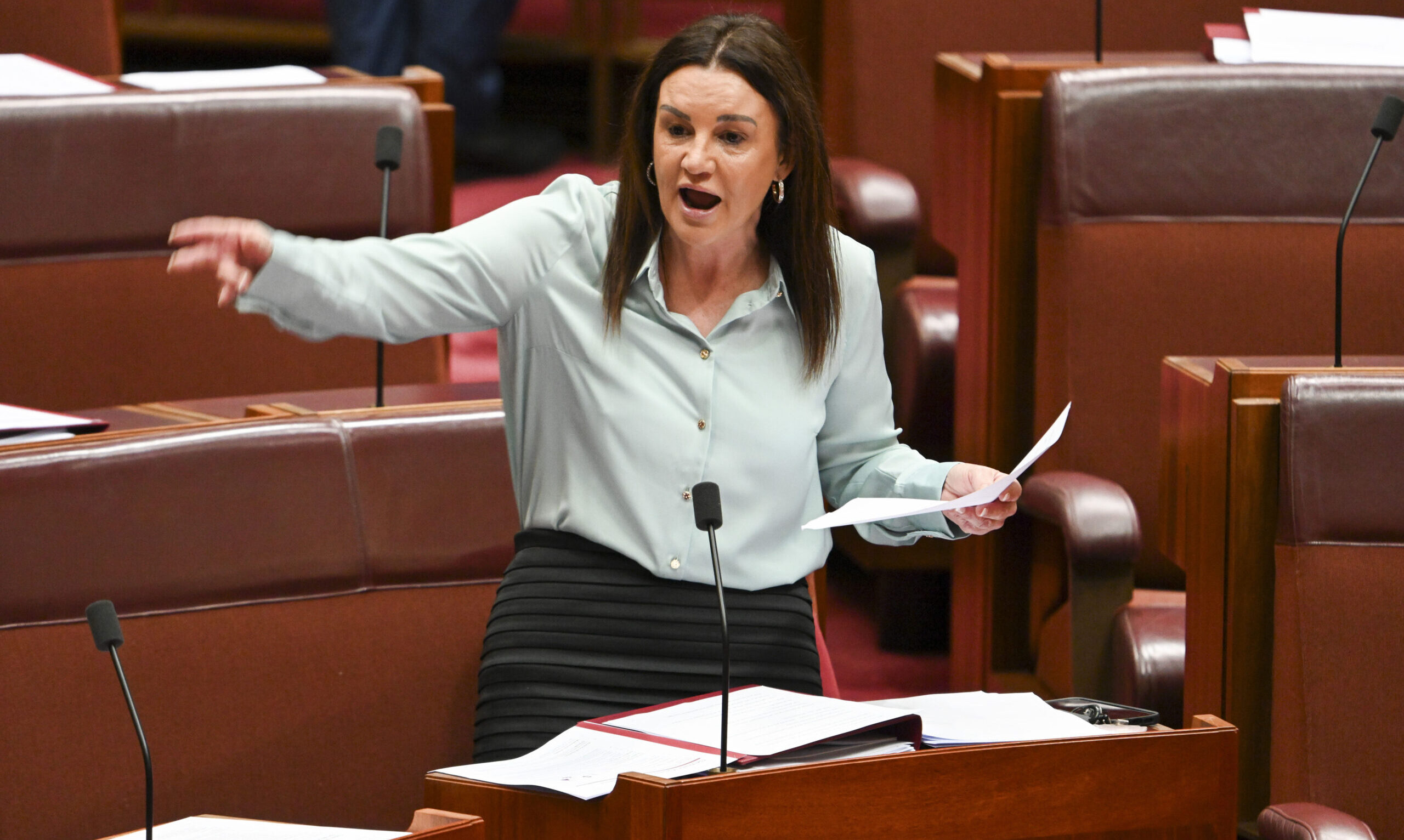
Senator Jacqui Lambie introduced the bill during the last term of government. Picture: Martin Ollman
University submissions to the inquiry into independent senator Jacqui Lambie’s There for Education, Not Profit Bill have opposed the legislation, which proposes limiting vice-chancellor salaries to $430,000.
Please login below to view content or subscribe now.
This story about children with disabilities was produced by The Hechinger Report, a nonprofit, independent news organization focused on inequality and innovation in education. Sign up for the Hechinger newsletter.
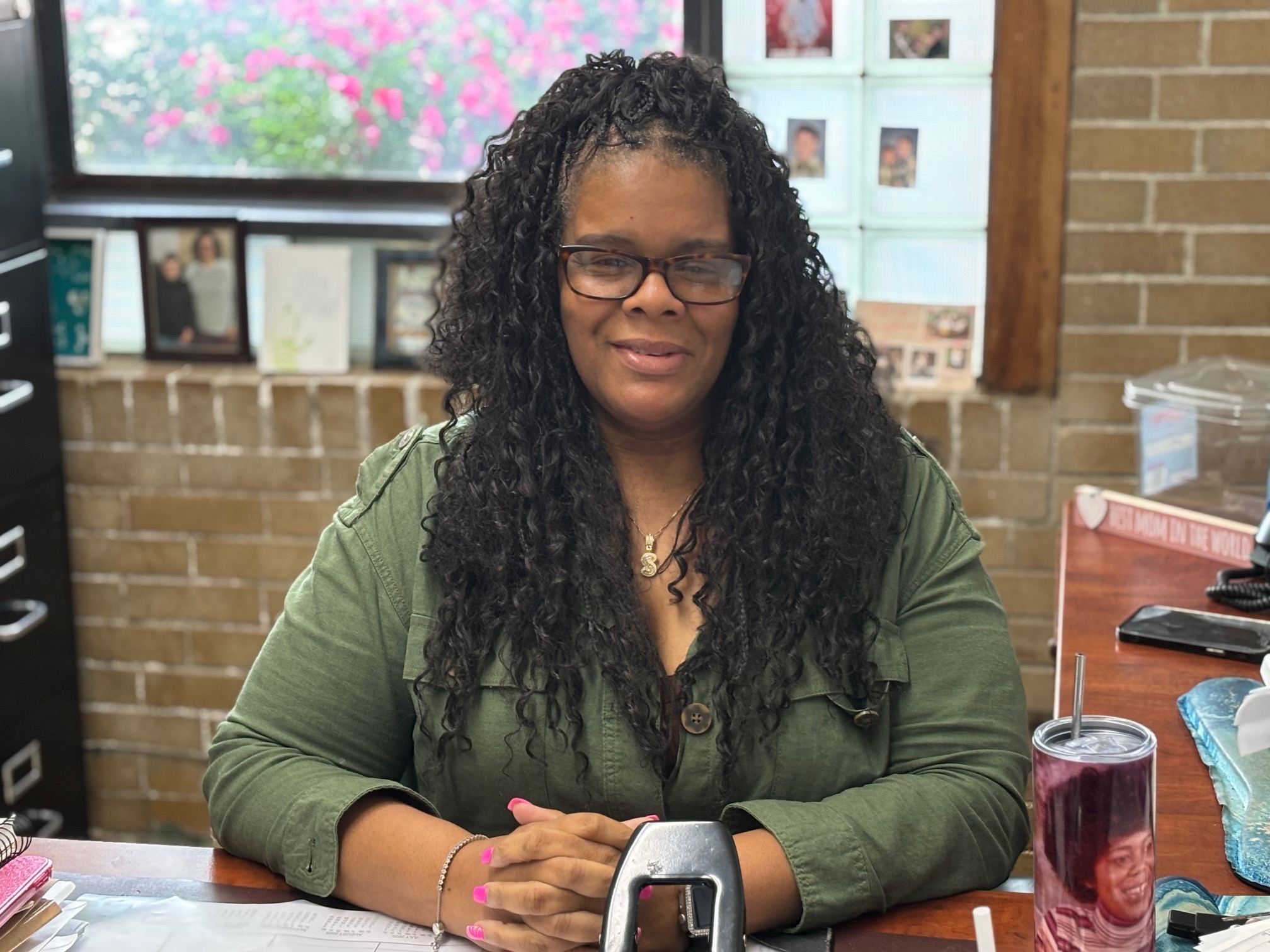
COLUMBUS, Ohio — When Selina Likely became director of the Edwards Creative Learning Center six years ago, she knew there was one longstanding practice that she wanted to change. For as long as she had taught at the thriving child care center, it had turned away many children with disabilities such as autism and Down syndrome. The practice was even encoded in the center’s handbook as policy.
Likely, the parent of a child with a disability, wanted to stop telling families no, but she knew that to do that she and her staff would need more support. “I said, ‘Let’s start getting training and see what we can do.’”
Not too long after, her effort received a big boost from a state-funded initiative in Ohio to strengthen child care teachers’ knowledge and confidence in working with young kids with disabilities and developmental delays. That program, Ohio PROMISE, offers free online training for child care workers in everything from the benefits of kids of all abilities learning and playing together to the kinds of classroom materials most helpful to have on hand. It also offers as-needed mentorship and support from trained coaches across the state.
Related: Young children have unique needs, and providing the right care can be a challenge. Our free early childhood education newsletter tracks the issues.
Child care providers across the country — including large, established centers and tiny home-based programs — struggle to meet the needs of children with disabilities, according to a 2024 report from the U.S. Government Accountability Office. More than a quarter of parents of children with disabilities said they had a lot of difficulty finding appropriate care for their kids. And even those who do find a spot regularly encounter challenges, like having their children excluded from extracurricular activities such as field trips and even academic instruction.
“It’s really hard to find child care for this population, we heard that loud and clear,” said Elizabeth Curda, a director on the GAO’s Education, Workforce and Income Security team and a coauthor of the report. Even the most well-resourced centers report that they struggle to meet the needs of children with disabilities, according to Curda.
There’s a lot of desire at the grassroots level to change that. Ohio PROMISE and a few other recent initiatives provide models for how to expand the capacity — and the will — of child care centers to serve the more than 2 million U.S. children age 5 or below who have a disability or developmental delay.
Cards on the walls at Edwards Creative Learning Center display the signs for different letters so students — whether nonverbal or not — can all learn sign language. Credit: Sarah Carr/The Hechinger Report
In Vermont, for instance, officials hope to soon unveil a free, on-demand training program aimed at helping child care teachers have more inclusive classrooms. And officials in Ohio’s Summit County, home to Akron, report growing interest from other counties in creating programs based on Summit’s more than decade-old model that provides in-person training for child care operators in inclusion of children with disabilities.
“We’re helping to create child care centers that feel they can handle whatever comes their way, especially when it comes to significant behavior concerns,” said Yolanda Mahoney, the early childhood center support supervisor for Summit County’s disabilities board.
The federal government until recently encouraged the creation of such models. In 2023, the federal Department of Education and Department of Health and Human Services issued a joint statement urging states to take steps to support inclusion in early childhood settings, including strengthening training and accountability.
Under the current president, federal momentum on the issue has largely stalled. While the administration of President Donald Trump hasn’t directly attacked inclusion in the context of special education, the president has criticized the term more broadly — especially when it comes to diversity, equity and inclusion. That can create uncertainty and a chilling effect on advocates of inclusion efforts of all kinds.
Funding for some inclusion efforts is also in jeopardy. States rely on Medicaid, which faces nearly $1 trillion in cuts over the next decade, to pay for early intervention programs for children birth to age 3 with developmental delays and disabilities. Trump has also proposed eliminating Preschool Development Grants, which states such as Vermont and Illinois have used to expand support of young children with disabilities.
That means over the next few years, progress on inclusion in child care settings could hinge largely on state and local investment. It helps that there’s a “real desire” among providers to enroll more children with disabilities, said Kristen Jones, an assistant director on the GAO’s education, workforce and income security team, who also worked on the report. “But there’s also a concern that currently they can’t do that in a safe way” because of a lack of training and resources.
In Ohio, the idea for Ohio PROMISE came after an appeal in 2022 from Republican Gov. Mike DeWine. He reported that families were coming to him saying they couldn’t find child care for their kids with disabilities.
“He said, ‘Come to me with ideas to solve that problem,’” recalled Wendy Grove, a senior adviser in the Ohio Department of Children and Youth who spearheaded development of the program.
Grove and her colleagues had already been working on a related effort. In 2020, Ohio won a federal grant that included help exploring how well — or not — children with disabilities were being included in child care and early education settings. DeWine liked the idea Grove’s team presented of morphing that work into a state-led effort to strengthen training and support for child care teachers. They also proposed more direct support to families, including the extension of child care vouchers to families with incomes above the poverty level, with a higher reimbursement rate for children with disabilities.
The training, which debuted about two years ago, is provided in three levels. Jada Cutchall, a preschool teacher at Imaginative Beginnings, an early learning center just outside of Toledo, recently completed the third tier, which for her included customized coaching. Cutchall’s coach helped her create communication tools for a largely nonverbal student, she said, including a board with pictures children can point to if, for example, they want to go to the bathroom or try a different playground activity.
As a result, Cutchall said, she has watched kids with disabilities, including those with speech impairments and autism, engage much more directly with their classmates. “They have the courage to ask their peers to play with them — or at least not distance themselves as much as they usually would,” she said. All of the children in the classroom have benefited, she added, noting that kids without disabilities have taken an interest in learning sign language, strengthening their own communication skills and fostering empathy.
Child care programs where one teacher and one administrator have completed some of the training earn a special designation from the state, which may eventually be tied to the opportunity to get extra funding to serve children with disabilities. In Ohio PROMISE’s first year, 1,001 child care centers — about 10 percent of the total number in Ohio — earned that designation, according to Grove.
For the last six years, Selina Likely has overseen the Edwards Creative Learning Center, where she’s steadily tried to enroll more children with disabilities and developmental delays. Credit: Sarah Carr/The Hechinger Report
The effort costs a little over $1 million in state dollars each year, with most of that paying for several regional support personnel who work directly with centers as mentors and advisers. Over the last two years, Ohio has seen a 38 percent increase in the number of children in publicly funded centers who qualify for the higher voucher reimbursement rate for children with disabilities, which can be double the size of the standard voucher.
Grove hopes that ultimately the effort plays a role in narrowing a critical and stubborn gap in the state: about 27 percent of children without disabilities show readiness on state standards for kindergarten; only 14 percent of children with disabilities do. Since so few disabilities exhibited at that age are related to intellectual or cognitive functioning, “we shouldn’t see that gap,” said Grove. “There’s no real reason.”
One goal of the new efforts is to reduce the number of young children with disabilities who are expelled from or pushed out of care. Those children are frequently asked to leave for behaviors related to their disability, the GAO report found.
Several years ago, a child care center in Columbus expelled Meagan Severance’s 18-month-old son for biting a staff member. The boy has several special needs, including some related to attention deficit hyperactivity disorder. Severance brought him to Edwards Creative Learning Center, where not too long after Selina Likely shifted into the role of director. The boy also bit a staff member there — not uncommon behavior for toddlers, especially those with sensory sensitivities and communication challenges.
Likely was determined to work with the child, not expel him. “They put in time and effort,” said Severance. “The response wasn’t, ‘He bit someone, he’s gone.’”
Likely empathized. Decades earlier, her own daughter had been expelled from a child care center in her hometown of Mansfield, Ohio, for biting.
“I was so angry and mad at the time — how are you going to kick out a 1-year-old?” she said. The center director didn’t think at all about how to help her child, Likely recalled, instead asking Likely what might be happening at home to make the child want to bite. She said she got no notice or grace period to find a new placement. “That left me in a disheartened place,” she said. “I was like, ‘I still have to go to work.”
Seventeen years old at the time, she was inspired by the injustice of the situation to quit her job in a factory and apply to be an assistant in a child care program. She’s been in the industry ever since, gradually trying to make more space for children like her daughter, who was later diagnosed with autism.
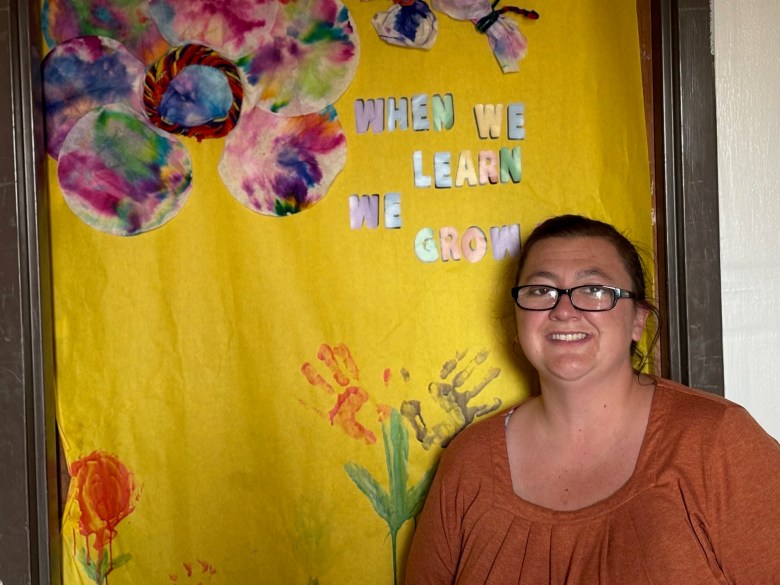
Meagan Severance, a parent and teacher at the Edwards center, has worked in recent years to make her classroom more inclusive for children with all different abilities. Credit: Sarah Carr/The Hechinger Report
As director, Likely displays the nameplate “chaos coordinator” on her desk. And she’s taken the stance that the center should at least try to work with every kid. She and some of her teachers have completed the first two tiers of the Ohio PROMISE training, as well as some related sessions available from the state. Likely estimates that about 10 percent of the children in her center have a diagnosed disability or developmental delay.
Liasun Meadows, whose son has Down syndrome, chose Edwards several years ago for her then 1-year-old over another program better known for its work with children with disabilities. She has not been disappointed.
Parents of kids with disabilities watch their children like a hawk, she said. “There are certain things you notice that you don’t expect others to notice, but they do at Edwards. They’ve been growing and learning alongside him.”
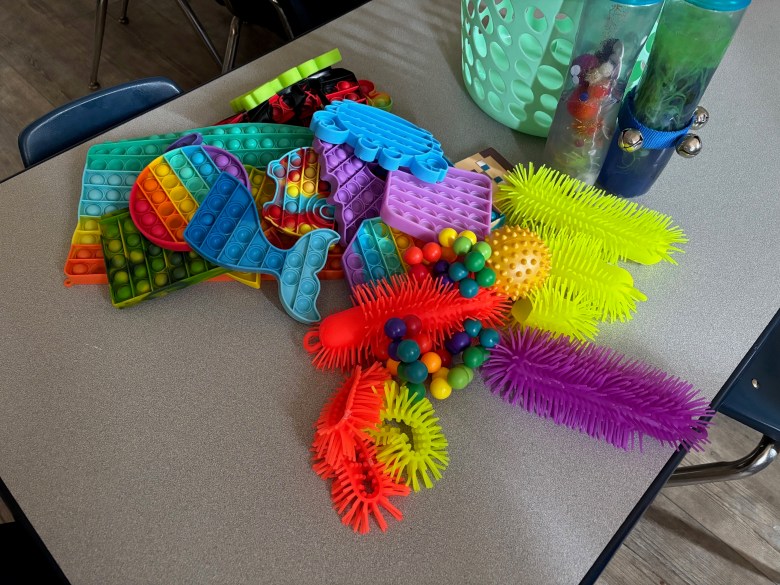
Severance, whose son is now 8, works at the center these days, leading the 3-year-old room, which includes two children who are largely nonverbal. She’s made the classroom more inclusive, adding fidget toys for children with sensory issues, rearranging the classroom to create calming areas, providing communication books to nonverbal children so they can more easily express needs and wants, and teaching everyone some sign language.
“For a while there was segregation in the classroom” between the kids with disabilities and those without, Severance said. But that’s lessened with the changes. “Inclusion has been good for the kids who are verbal — and nonverbal,” she said.
As in Ohio, state officials in Vermont turned to online training to help ensure young children with disabilities aren’t denied quality care. The state should soon debut the first parts of a new training program, focusing on outreach to child care administrators and support for neurodivergent children. The state wanted to focus on center leaders first because “directors that are comfortable with inclusion lead programs that are comfortable with inclusion,” said Dawn Rouse, the director of statewide systems in Vermont’s Child Development Division.
One tool for supporting and calming children with sensory issues is keeping a healthy supply of fidget toys and Pop-Its on hand. Credit: Sarah Carr/The Hechinger Report
Vermont also pumped millions of dollars into a separate program, known as the Special Accommodations Grant, that supports young children with disabilities. Since 2009 the state has set aside $300,000 a year that child care centers can tap to provide services for individual children with disabilities. It might help buy specialized equipment for a child with cerebral palsy, for instance, or be used to hire a full- or part-time aide.
The $300,000 has been maxed out every year, Rouse said. And after the pandemic, the need — and the number of applications — surged.
As a result, the state allocated some federal American Rescue Plan and Preschool Development Grant dollars to increase spending on the program by about sevenfold — to between $2 million and $2.5 million annually — an amount Rouse still describes as a “Band-Aid.” Without access to the grants, “we see a lot of children being asked to leave programs,” Rouse said. “That’s not good for any child, but for children with specialized developmental needs it’s particularly bad.”
Over time, Likely hopes, her Ohio center can play a small role in reducing that instability, although the center hasn’t yet been able to work with all such children it wants to. Likely recalls one toddler with a severe disability who climbed up anything he could. There wasn’t enough money to pay for what the child really needed: a full-time aide. “It’s hard when you know you’ve tried but still have to say no,” she said. “That breaks my heart more than anything.”
On one June morning, the center’s teachers acknowledged and celebrated several milestones in its work on inclusion, big and small. One child in the 3-year-old classroom with fine and gross motor challenges was drinking independently from a bottle. The preschool classroom held its first graduation ceremony, translated partly into sign language. All of the kids, no matter their challenges, were set to go on field trips to Dairy Queen and the zoo.
Likely dreams of someday running a center where about half of the children have a disability or delay. It may be years off, she said, but as with the milestones she sees scores of children at the center reach every day, “There’s a way — if there’s a will.”
Sarah Carr is a fellow at New America, focused on reporting on early childhood issues.
The Hechinger Report provides in-depth, fact-based, unbiased reporting on education that is free to all readers. But that doesn’t mean it’s free to produce. Our work keeps educators and the public informed about pressing issues at schools and on campuses throughout the country. We tell the whole story, even when the details are inconvenient. Help us keep doing that.
Senate Republicans are planning to protect the Pell Grant program, keeping the maximum grant award at $7,395 for the coming academic year, despite the Trump administration’s proposal to lower it to $5,710.
The rejection of Pell Grant cuts at a key committee markup Thursday is just the latest rebuke from congressional appropriators as lawmakers in both chambers have appeared wary of President Trump’s plans to shutter offices, gut programs and generally reshape the federal government.
In addition to protecting $22.5 billion for Pell, the GOP also spared TRIO, campus childcare subsidies and numerous other programs that Trump had proposed zeroing out. It also set new staffing standards for the recently gutted Department of Education, increased funding for medical research by $400 million and rejected the National Institutes of Health’s attempt to cap indirect research cost reimbursements at 15 percent. The legislation also restricts other efforts at NIH to change how grants are awarded, though Democrats say “more needs to be done to protect NIH research programs.”
Over all, the Department of Education is going to receive $79 billion and the NIH will get $48.7 billion. In comparison, Trump had requested $66.7 billion for ED and $27.5 billion for NIH.
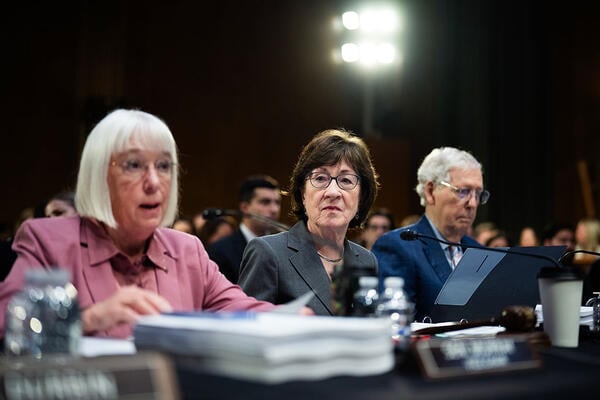
Committee chair Sen. Susan Collins, a Maine Republican, said she was proud of the legislation that advanced Thursday, calling it a bipartisan effort to fund the health and education of American families. She noted that “the appropriations process is the key way that Congress carries out its constitutional responsibility for the power of the purse.”
But Democrats, while overall supportive, noted that they’ve had to make a number of compromises already and warned that Trump could still attempt to make unilateral changes moving forward.
“These are not the bills I would have written on my own, but nonetheless they represent serious bipartisan work to make some truly critical investments in our country and families’ future,” said Sen. Patty Murray, a Washington Democrat and ranking member of the committee. Still, she added, this is only half the battle. “The fact of the matter is we have an administration right now that is intent on ignoring Congress, breaking the law and doing everything it can without transparency to dismantle programs and agencies.”
The Trump administration has repeatedly frozen or cut grant funding, largely declining to spend money that Congress appropriated—moves that Murray and others have decried as illegal. More recently, the administration waited weeks before sending critical funding to states that supports after-school programs, migrant education and adult education. About $7 billion was affected, and colleges had to scramble to find a way to fill the funding gaps before Trump’s Office of Management and Budget finally released the money last week. Meanwhile, colleges are still waiting for the Education Department to open up grant applications for millions in funds.
At NIH, grant cancellations and other changes have slowed the flow of research funding to colleges. Earlier this week the administration briefly paused all new grant awards, infuriating congressional Democrats. Over all, since Trump took office, the biomedical research agency has cut more than 4,000 grants at 600 institutions totaling somewhere between $6.9 billion and $8.2 billion.
Beyond the grant cuts, the Trump administration recently clawed back money that had been allocated to public broadcasting, using a legislative process called rescission. The president is expected to propose a second rescission package in the months to come, this time targeting education dollars. Democrats have warned that using rescissions to change the budget could endanger talks on fiscal year 2026 spending.
So while higher ed lobbyists typically look to the Senate’s spending plan as the framework for what to expect in the final bill, Trump’s willingness to test the limits of executive power complicates the picture.
Still, the Senate’s proposals for the NIH as well as the Education Department, which funds a number of programs at the previous year’s level, is a victory for advocates who spent months warning that Trump’s budget cuts would be devastating for students and research.
“We are not surprised by what we’ve seen. The Senate often works more bipartisanly together, and that was reflected in the markup today,” said Emmanual Guillory, senior director of government relations at the American Council on Education. “In this political environment, flat funding is a win. It’s not ideal, but it is us being mindful of the current realities that we’re in and the financial constraints that we’re in, especially with the upcoming rescissions package that’s supposed to include education.”
That said, Guillory noted that he’s bracing for deeper cuts from the House, which has yet to release its education and health spending proposals.
“I could see the House having a bit more influence [than most years past], as they have had more influence so far this Congress,” he said.
Seeking Guardrails
Democrats did try to amend the bill in order to establish guardrails that would retroactively address Trump’s funding cuts and protect the fiscal year 2026 appropriations from a similar ambush.
Sen. Dick Durbin, an Illinois Democrat, proposed reinstating all college grants frozen or retracted since Jan. 28, with the exception of those pulled due to financial malfeasance. He highlighted how, in Chicago, the cuts have halted infant heart defect research and then ran through a lengthy list of other medical projects affected in other senators’ districts.
“This could happen to any of your states’ research centers. It could hurt any of your families,” he argued.
Later, Sen. Chris Murphy of Connecticut, one of the few Democrats who did not support the bill, sought an inspector general report into whether the Department of Education’s civil rights office is properly following statutes when investigating discrimination complaints and issuing discipline.
Murphy proposed withholding OCR funding until the appropriations committee received the IG’s report.
“My worry is simply that the president is going to ignore the will of Congress that is present in this legislation,” he said. “If this does become normalized—if the president of the United States gets to deny funds to universities because they don’t like political viewpoints of the student body or of the faculty—that is a Pandora’s box that is hard to ever again close.”
Sen. Shelley Moore Capito, the West Virginia Republican who leads the education and health subcommittee, shot down both proposals, calling Murphy’s amendment “contrary to the point of the [OCR] office” and Durbin’s “too broad.”
“I think every administration has the prerogative to implement new goals and priorities,” she said.