Tag: Rejecting

  • Senate advances bills rejecting Trump’s efforts to slash research funding

    Senate advances bills rejecting Trump’s efforts to slash research funding

    Dive Brief:

    • Senate lawmakers have engineered bipartisan fiscal 2026 spending proposals that would largely maintain scientific funding, defying the Trump administration’s calls for massive cuts to research. 
    • Budget bills released by Senate committees in recent days would provide $188.3 billion in total scientific research funding — 21.3% more than requested by the White House, according to an analysis published last week by the American Association for the Advancement of Science.
    • However, legislators’ proposed research funding levels would still fall 3.6% below fiscal 2025 spending. The full Senate voted on Monday to advance the bills, teeing up a final vote. Congress needs to pass a budget by Jan. 30 to avoid another shutdown.

    Dive Insight:

    Since retaking office last year, President Donald Trump and his administration have pushed to downsize and disrupt the country’s longstanding system of scientific research, which for decades has relied on a financial partnership between the federal government and scientists, many of them attached to universities. 

    Headed into 2026, the Trump administration proposed broad-based cuts to the research. In all, it asked for $155.2 billion for scientific research — a 21% drop from fiscal 2025 levels — according to AAAS. 

    That figure obscures the depth of some agencies’ requested cuts. For example, the National Science Foundation under Trump asked Congress for a $3.9 billion budget — well under half its 2025 funding levels. Instead, the Senate’s appropriations committee on Thursday released an $8.8 billion budget for the NSF to “sustain U.S. leadership in scientific discovery.” 

    The Senate’s NSF proposal included investments in quantum information, artificial intelligence, regional innovation, and “critical” research facilities. 

    The Trump-appointed head of the National Institutes of Health requested $27.9 billion, a nearly 40% decrease from 2025’s $46 billion. The agency said the shrunken budget aimed to “maximize the impact of NIH research by streamlining processes and more efficiently providing funding.” 

    The Senate Appropriations committee rejected the administration’s proposal, instead advancing a $48.7 billion budget for NIH, according to Sen. Patty Murray’s office. Murray is the top-ranking Democrat on the committee.

    The bill rejects the Trump administration’s harmful efforts to defund and dismantle critical work that HHS oversees — maintaining important funding for programs across HHS that touch the lives of nearly every American, while providing targeted increases to important bipartisan priorities,” Murray’s office said in a bill summary.

    While overall, Senate plans fall short of fiscal 2025 scientific research spending, its proposed $44.9 billion budget for basic research — which explores fundamental principles of nature and science — would tick up by 2.4% compared to last year, according to AAAS. 

    The provisional budget bill set to expire at the end of this month was a stopgap that ended the longest federal government shutdown in U.S. history.

    Source link

  • Purdue Allegedly Rejecting Chinese, Other Grad Students

    Purdue Allegedly Rejecting Chinese, Other Grad Students

    wanderluster/iStock/Getty Images

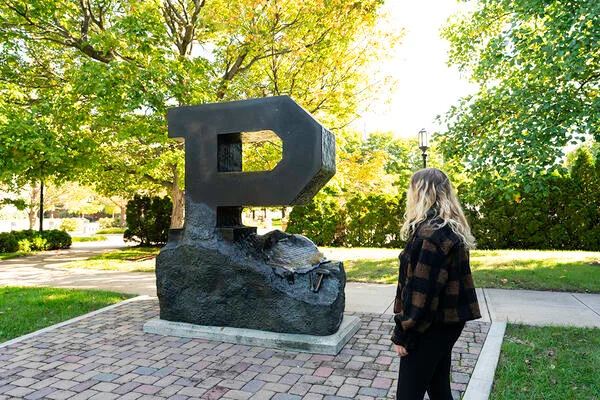
    Current and prospective Purdue University graduate students say the institution rejected a slew of Chinese applicants from its grad programs for this academic year. Also, one grad student says the university told grad admissions committees in the past couple of months that it’s highly unlikely to accept students from any “adversary nation” for next year.

    Faculty were told those countries are China, Cuba, Iran, North Korea, Russia and Venezuela, said Kieran Hilmer, a teaching assistant on the leadership committee of Graduate Rights and Our Wellbeing (GROW), a group trying to unionize Purdue grad workers. That list broadly matches the commerce secretary’s catalog of foreign adversaries.

    Hilmer said the university conveyed this prohibition verbally. “They didn’t write any of this down,” he said.

    Purdue isn’t commenting on the allegations. The university has faced scrutiny from members of Congress about its ties to China. In May, the Trump administration briefly said it would revoke Chinese students’ visas nationwide. The president has since changed his tune and said he would welcome more students from China.

    A Chinese student who wished to remain anonymous because he’s still trying to get into Purdue told Inside Higher Ed he received an offer to be a research assistant last February, meaning his funding was secure to become a Purdue grad student this academic year. But, in April or May, he said, the Office of Graduate Admissions told him that his application was denied.

    The redacted two-paragraph letter that he provided to Inside Higher Ed said admission “is competitive and many factors are carefully considered,” but “we are not able to provide specific feedback.”

    The student, who said he got his master’s degree in the U.S. and wishes to remain here, said he had already moved to West Lafayette, where Purdue’s flagship campus is, signed a lease and turned down other institutions’ offers. He said the rejection could impact his visa.

    “I may get deported,” he said.

    He said he learned through social media that at least 100 other Chinese students were similarly rejected.

    Purdue spokespeople also didn’t provide a response to the Lafayette Journal & Courier and the Exponent student newspaper when asked about this issue. The Journal & Courier, which first reported the story, cited four faculty members from “a wide range of departments” who wished to remain anonymous for fear of retribution from the university.

    Multiple heads of graduate admissions committees didn’t respond to Inside Higher Ed’s requests for comment Thursday; one who answered the phone referred a reporter to the press office, which didn’t respond. Emails sent to Office of Graduate Admissions employees went unanswered.

    While Purdue won’t explain what actions it’s taking or why, the U.S. House Select Committee on the Chinese Communist Party said in a September report that it’s been investigating Purdue and five other universities—Stanford and Carnegie Mellon Universities and the Universities of Maryland, Southern California and Illinois at Urbana-Champaign—all year “regarding the presence and research activities of Chinese national students on their campuses.”

    Hilmer said Purdue is rejecting Chinese applicants in “a specific attempt to comply with the U.S. Select Committee.” (The committee didn’t comment Thursday on whether it pressured Purdue to go as far as it allegedly has.) But Hilmer also said the “hostility and malice” the university is showing these students goes further than what the committee requested.

    “As Purdue said in its response to the House Select Committee, international students are fully vetted by the United States government when they apply for their visas,” Hilmer said. “And, on top of that, in order to work on projects related to national security, they need to get further security clearance. So there’s no reason for Purdue to make this unilateral extralegal decision to ban all of these students.”

    He said many of these students were already in the U.S.

    “This policy is obviously discriminatory and immoral, and, on top of that, it violates Purdue’s policy on nondiscrimination,” he said. The Chinese student told Inside Higher Ed that he doesn’t accept the committee pressure rationale, because Purdue wasn’t the only university under investigation.

    If Purdue is responding to the committee’s pressure, it’s another example of a selective American institution bending to the federal government’s efforts to reduce international enrollment and to particularly target Chinese students and scholars. During President Trump’s first term in office, the Justice Department launched the controversial China Initiative, which investigated faculty ties to China.

    Republicans said the initiative sought to counter espionage, but Democrats, education lobbyists and Asian American advocates argued it was ineffective and instead justified racial profiling and discrimination. A study suggested the initiative’s investigations may have caused valuable researchers of Chinese descent to leave the U.S. for China.

    Hilmer said Purdue’s rejection of Chinese students will harm its reputation and ability to recruit the best students and workers.

    “Even if they’re not international students, they’re going to say, ‘Why would I ever accept an offer from Purdue if there’s no guarantee that it’s actually an offer?’” he said. “Why would they ever feel comfortable accepting an offer from Purdue if they could go anywhere else?”

    Source link

  • Rejecting the Compact Is an Opportunity (opinion)

    Rejecting the Compact Is an Opportunity (opinion)

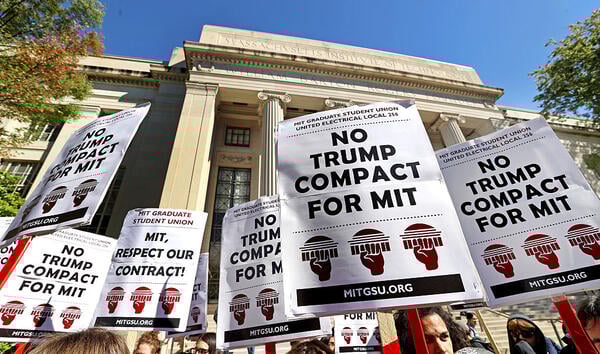
    The Trump administration’s initial effort to convince universities to join its “Compact for Academic Excellence” did not go well. Of the original nine colleges and universities, so far none has signed it, and seven—Brown University, Dartmouth College, the Massachusetts Institute of Technology and the Universities of Arizona, Pennsylvania, Southern California and Virginia—have loudly and forcefully rejected it, citing “our core belief that scientific funding should be based on scientific merit alone” (MIT) and “the government’s lack of authority to dictate our curriculum or the content of academic speech” (Brown).

    The Trump administration made more headway with its earlier efforts to force a “deal” on one university at a time. But that was never going to be enough. An authoritarian needs to establish control over the entire higher education sector, not just a handful of institutions. But the truth is, this government does not have the legal leverage or even the staff to negotiate bespoke agreements with the thousands of colleges and universities in the United States.

    The compact is an effort to overcome that problem. But it is also a gift. It has flipped the default: Now collective action does not necessarily require affirmative acts like banding together to file a lawsuit (although several are warranted). Collective action can simply take the form of nonacquiescence. All university leaders need to do is … nothing.

    Last week, the Trump administration—apparently unafraid to look desperate—decided to open the compact to any American college or university that will accept its terms. Suddenly, literally anyone affiliated with any college or university—faculty, staff, students, parents, alumni, trustees, donors—has the opportunity to use their voice to help persuade their institution not to sign, as their counterparts at the original nine invitees have been doing rather vociferously and, in six cases so far, successfully. By opening the compact so broadly, the government is risking, or inviting, an equally broad response: a recognition throughout the vast American higher education sector that the integrity and value of our whole enterprise depend on independence from government control.

    Regardless of their politics, every university leader should reject this compact. University leaders have a fiduciary responsibility to plan ahead on a time scale longer than three years. As Sally Kornbluth, the president of MIT, explained, “America’s leadership in science and innovation depends on independent thinking and open competition,” not special “preferences” for institutions that submit to government control. Future federal governments are much more likely to embrace Kornbluth’s view than Trump’s. It does not put a university in a strong position to compete for future faculty and students if the university enthusiastically agrees to toe one administration’s political line.

    To sign the compact is to invite a breathtaking degree of federal government control. Colleges signing it agree that in the future, if the Department of Justice—perhaps acting on orders from the president—“finds” that the university is disobeying any one of the compact’s many ambiguous commands, the department can take away all the university’s federal funding for a year or more. That includes not only scientific research grants but also student loans or Pell Grants, potentially even the university’s 501(c)(3) status—and not only future funds but also, incredibly, funds already spent that must somehow be returned.

    The ambiguous rules that signing institutions must avoid transgressing are numerous. Signing universities must “abolish” or “transform” academic departments that “belittle” “conservative ideas.” They must screen out foreign students with “anti-American values” and those with “hostility” toward any of America’s “allies.” They must punish students or faculty whose speech, in the DOJ’s opinion, “support[s]” any group the government deems a terrorist group, which would include “antifa” as well as Hamas (and the government has a long recent record of defining “support for Hamas” extremely broadly, so that it encompasses much pro-Palestinian speech).

    They must commit to “defining” and “interpreting” gender in the government’s preferred way, which denies that transgender people exist. Signing institutions must obtain, to the DOJ’s satisfaction, “a broad spectrum of viewpoints” not only in the university as a whole, but “within every field, department, school, and teaching unit.” They must admit students on the basis of sufficiently “objective” criteria. Leaders of signing universities must avoid speaking out about “societal and political events” beyond those that directly affect the university.

    Not a single one of those terms is self-defining. The arbiter of whether a university is fulfilling these vague promises is a Department of Justice that has a record of acting in bad faith and takes orders from a notoriously mercurial president. No university leader or trustee can truthfully say that it fulfills their fiduciary responsibility to sign their school up for this.

    The compact is also blatantly illegal. The Trump administration has cited no statutes that give it the authority to boss universities around in this way, because there aren’t any. Many of the compact’s provisions listed above—and others—violate the First Amendment. Clear black-letter law holds that what the government cannot impose by law, it also cannot impose as a condition of receiving government funds.

    It is crucial to keep in mind the larger context here: the rise of an authoritarian regime that seeks to undermine the independence of many types of civil society institutions, not just universities. The national governments in both Turkey and Hungary have increased political control over their universities as part of their consolidation of power, but neither has gone as far as this compact would go in putting universities under the government’s thumb. To sign the compact is to participate in an authoritarian project.

    Any university leaders still inclined to join the compact should consider a final argument: The dollars and cents simply don’t add up. The compact requires, among many other things, a five-year tuition freeze. In the high-inflation environment of the second Trump administration, this is very costly. (At today’s 3 percent inflation rate, it amounts to a 16 percent cut in real terms over five years; if inflation continues to rise, that could easily become a 20 to 25 percent cut.)

    The government offers a vague, nonbinding promise that it will give signing institutions extra research grants, but such grants do not easily make up for lost tuition in an environment of rising costs. The grants require doing the research; that eats up most of the money. Any college that becomes dependent on extra grants, beyond those they would have been qualified to receive without the compact, is going to be in big fiscal trouble down the line.

    This compact has vast implications, which deserve careful study. For faculty, staff, students, parents, donors and alumni hoping for a no but willing to settle for silence, time is your friend; inaction is your goal. A faculty committee would certainly be in order. If you do nothing, and most other universities do nothing, the government will have no more leverage over your institution than over any other, and academic freedom and the pursuit of knowledge and truth will continue for another day.

    Source link

  • Dartmouth Joins Growing List of Elite Universities Rejecting White House Academic Compact

    Dartmouth Joins Growing List of Elite Universities Rejecting White House Academic Compact

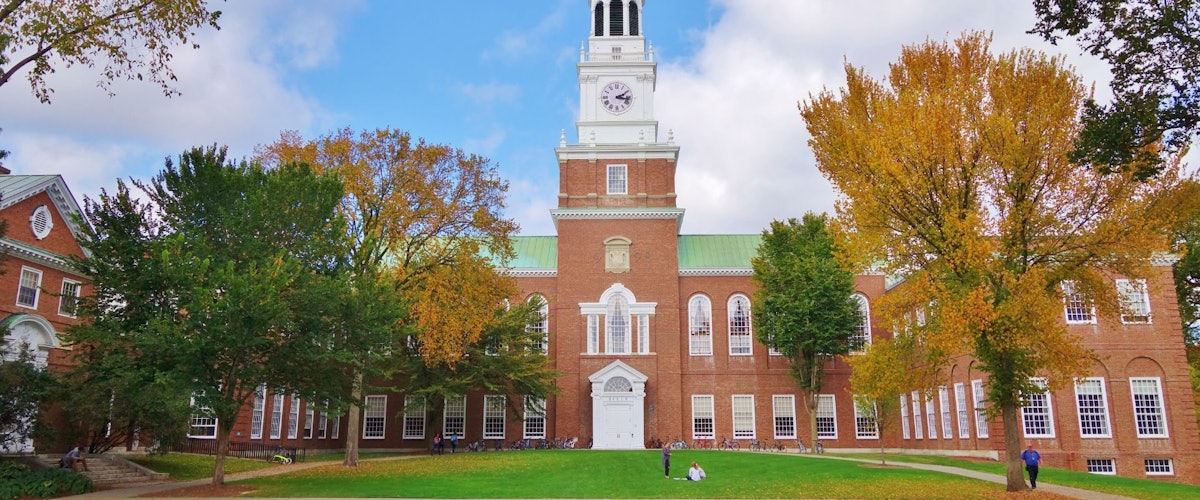
    Dartmouth CollegeFile photoDartmouth College has declined to sign the Trump administration’s “Compact for Academic Excellence in Higher Education,” becoming the latest prestigious institution to prioritize institutional autonomy over preferential federal funding access.

    In a statement released Saturday, Dartmouth President Dr. Sian Beilock firmly articulated the college’s position ahead of Monday’s deadline, emphasizing that governmental oversight—regardless of political affiliation—represents an inappropriate mechanism for directing the mission of America’s top research universities.

    “I do not believe that the involvement of the government through a compact—whether it is a Republican- or Democratic-led White House—is the right way to focus America’s leading colleges and universities on their teaching and research mission,” Beilock stated.

    The compact, extended to nine select institutions, promised enhanced access to federal research dollars in return for compliance with several administration policy mandates. These requirements included adopting the administration’s gender definitions for campus facilities and athletics, eliminating consideration of race, gender and various demographic factors from admissions decisions, and restricting international student enrollment.

    Despite rejecting the compact’s terms, Beilock expressed openness to dialogue, indicating her willingness to explore how to strengthen the traditional federal-university research partnership while maintaining higher education’s focus on academic excellence.

    The decision followed significant campus pressure, with nearly 500 Dartmouth faculty members and graduate students signing a petition advocating for rejection, according to the Valley News.

    In her statement, Beilock emphasized the fundamental principle at stake: “Universities have a responsibility to set our own academic and institutional policies, guided by our mission and values, our commitment to free expression, and our obligations under the law.”

    She framed institutional independence as essential to rebuilding public confidence across political lines and preserving American higher education’s global preeminence.

    Dartmouth’s decision aligns with rejections announced last week by peer institutions including the Massachusetts Institute of Technology, Brown University, the University of Pennsylvania and the University of Southern California, suggesting a coordinated defense of academic autonomy among elite research universities.

    Source link