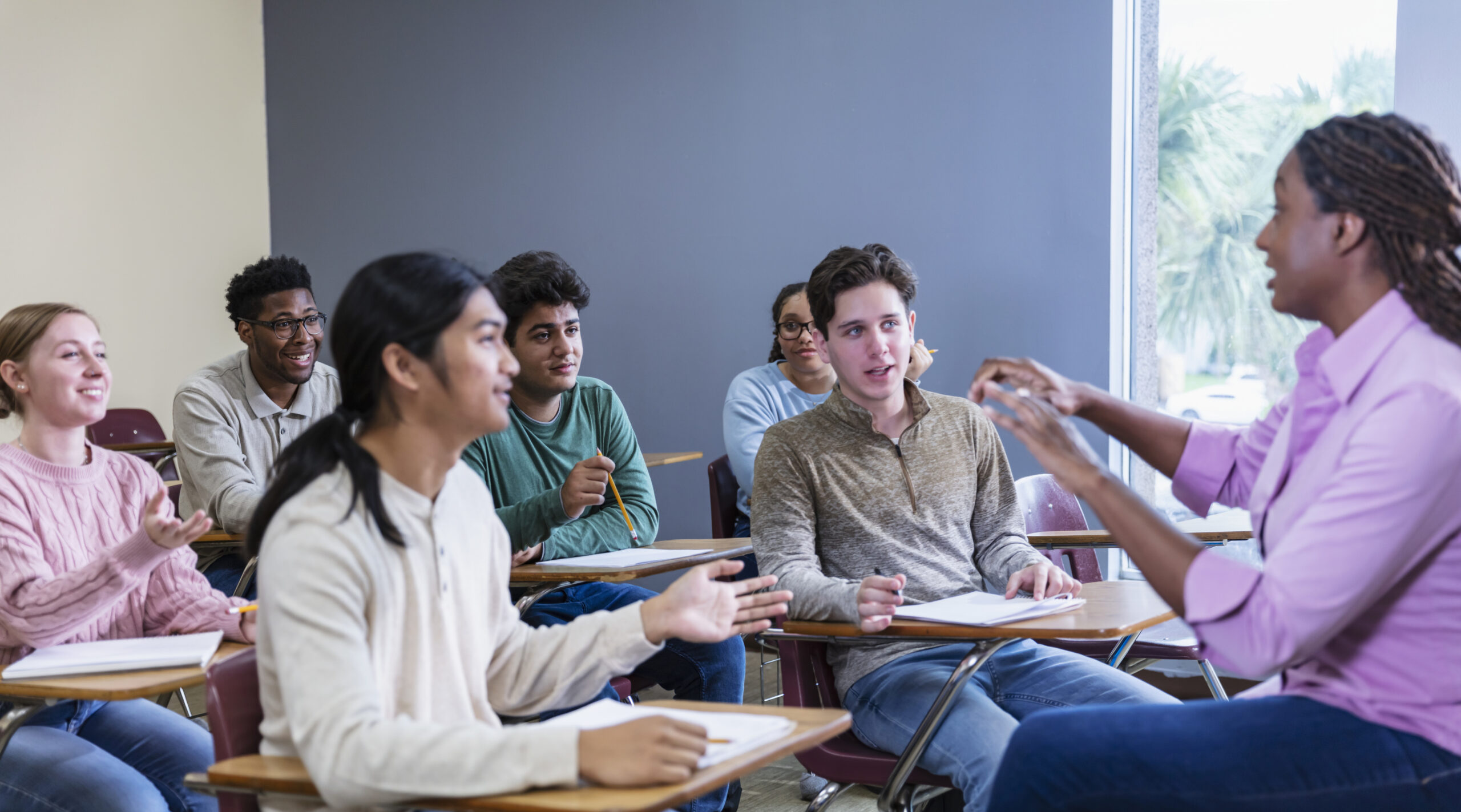
Interpersonal communication theories not only help students navigate personal and professional relationships but also strengthen teacher-student connections. Drawing on Orón (2018) and Orón Semper & Blasco (2018), we encourage instructors to use this one-day activity to shift from a “student-centered” to an “interpersonal relationship-centered” pedagogy. This approach views instructor-student relationships as essential to learning and as a space for students to apply theory with relational intent. The activity promotes self-reflexivity, theory analysis, and collaborative dialogue, resulting in improved theory comprehension, stronger rapport, and communication practices that respect classroom diversity.
Student and instructor diversity in higher education has grown significantly in recent years (Li & Koedel, 2017), with over a million international students enrolled in U.S. universities (Urban, 2016). This diversity—across culture, gender, race, ability, and socioeconomic status—shapes classroom dynamics and presents unique challenges related to language, identity, and cultural differences (Jones et al., 2021). Instructors must respond by creating inclusive learning environments that support all students (Downing & Billotte Verhoff, 2023). Diversity also presents an opportunity to apply communication theories to foster intercultural empathy and improve collaboration. Students may initially struggle to understand and respect differing perspectives, affecting group work and engagement (Gray et al., 2020), but these challenges can become learning opportunities that deepen classroom inclusivity.
Communication scholars often apply interpersonal communication theories in the classroom to strengthen student–teacher relationships (Xie & Derakhshan, 2021). This single class activity integrates uncertainty management, self-disclosure, and communication accommodation theory (CAT) for undergraduate students to (a) to understand and (b) apply these theories to facilitate an inclusive and self-reflexive classroom. Teachers are the leading actors during everyday interaction and play a significant role in shaping communication and enhancing the teaching and learning process (Almas Rizkika Nabila, 2020). This activity encourages students to actively co-create a meaningful learning experience, highlighting the reciprocal nature of classroom interaction (Anyichie & Butler, 2023; Kong, 2021).
Self-disclosure: Communication Privacy Management
Self-disclosure is “any conversation about the self that a person communicates to others” (Ampong et al., 2018). Communication Privacy Management (CPM) theory helps students understand how they set and manage privacy boundaries with peers and instructors (Petronio et al., 2021). The intersection of privacy boundaries and the learning space is complicated as students and instructors navigate privacy. Instructors deliver the lecture and explain the course content, but they also intentionally and willingly share their personal stories (Liu & Zhu, 2021). For instance, the first author, an international graduate assistant, connects class discussions to experiences from his home country, helping students relate and engage. Such instructor self-disclosure encourages student participation and fosters more meaningful classroom communication (Goldstein, 1994) (Liu & Zhu, 2021).
However, instructors and students rarely critically examine the disclosure norms in the classroom and their role in learning and relationship building. For example, disclosure boundaries (i.e., how far instructors can go to share their experiences) (Cayanus, 2004). Additionally, while students may attend to how much information they share in the classroom, this activity challenges them to apply CPM theory to examine their disclosure practices, expectations, and privacy boundary negotiations.
Communication Accommodation Theory
Communication Accommodation Theory (CAT) explains how individuals adjust their communication such as speech, tone, pace, gestures, or body language—to interact effectively with others. Instructors can use CAT to enhance student understanding during lectures (Howard Giles, 2023). The theory outlines two key strategies: convergence, where a speaker adapts to another’s communication style (e.g., simplifying vocabulary, repeating phrases, pausing, smiling, nodding), and divergence, where a speaker maintains differences by avoiding shared cues (e.g., using complex words, changing topics, or not adjusting speaking pace) (Marko Dragojevic, 2016) (Pardo et al., 2022).
Drawing on this research, the goal of this activity is 1) to understand the theories and analyze how they facilitate the teaching process, 2) to explore the perceptions of students about these theories and their inclusion in the classroom, 3) to determine the expectations of students related to characteristics of these theories.
The Activity
This single-class activity applies to various undergraduate courses, such as public speaking, communication among cultures, communication in interpersonal relationships, argument analysis and advocacy, and persuasion. Instructors can do this activity during introduction week as they begin navigating disclosures about themselves and student expectations. Moreover, planning this activity at the beginning will challenge students to examine their positionalities, norms, and expectations critically.
Step 1: Personal Reflection
Before implementing the activity, instructors should familiarize themselves with relevant communication theories and reflect on how their own identities shape their teaching assumptions (Nabila, 2020, Downing & Billotte Verhoff, 2023). We recommend engaging in self-reflexive questions, such as: What disclosure boundaries do I set and why? What uncertainties do I face around privacy or accommodation in teaching? What expectations exist between me and my students regarding communication and flexibility? Instructors should identify what personal information they’re willing to share, why they’re sharing it, and how it might impact classroom relationships. For example, the first author reflected on cultural and linguistic differences and adjusted his teaching by using simpler language, acknowledging English is not his first language, and setting shared guidelines to support mutual understanding and accommodation. This reflective process helps align instructional practices with inclusive, theory-informed pedagogy.
Step 2: Students’ Perceptions About Components of Theories
This activity takes approximately 30 to 40 minutes and is best suited for a full class session. Instructors should introduce the key theories with examples and explain the activity’s purpose and timing. For advanced courses, assigning theory readings beforehand can deepen analysis, making it more effective to conduct the activity later in the semester rather than at the start. During the session, students should be divided into groups of four and asked to write their expectations for the course and the instructor. To guide discussion, instructors can pose prompts such as:
- What expectations do you have for your instructor when it comes to using different communication accommodation strategies?
- How do you manage your own self-disclosure in the classroom? Where do you draw the line on what you choose to share?
- What are your thoughts on instructors’ self-disclosure? What types of disclosures have a positive or negative impact on your learning experience?
- How comfortable are you with classroom communication? What strategies could reduce uncertainty or discomfort?
- How do you plan to engage with and accommodate diversity in terms of culture, race, gender identity, and sexual orientation in your classroom interactions?
- Can you connect your responses to the core ideas of the communication theories we’ve discussed? How do these theories help explain disclosure and accommodation in the classroom context?
These questions will provide space for students to reflect on their experiences. Moreover, during that time, the instructor will also answer these questions from the instructor’s perspective and enlist the convergence techniques they perceive to accommodate. Instructors can give 15 to 20 minutes to answer the provided questions briefly.
Step 3: Describing the Theories and Their Impact
Instructors will invite each group to share their responses, followed by the instructor’s own disclosure of planned strategies—such as accommodation, anticipated uncertainties, and boundaries around self-disclosure. A comparison table with two columns (students vs. instructor) can be used to visually display both perspectives. Instructors then lead a discussion with prompts like: Why do these expectations exist? What differences or overlaps emerge? How do these perspectives interact? This activity encourages students to (a) practice perspective-taking shaped by diverse identities, (b) apply key concepts like co-creating privacy boundaries (CPM), and (c) see how theory fosters a supportive learning environment. Since student familiarity with these theories may vary, instructors should first assess their basic understanding.
Debriefing
At the end of the activity on the same day. Instructors can initiate the debriefing by including the Q&A sessions such as:
- How did this activity impact, how you view self-disclosure and accommodation?
- What do you understand about embedding these theories in the classroom?
- How can this activity help to build a good student-teacher relationship and create an inclusive environment in the classroom?
Appraisal
In the second week, I (the first author) compiled all responses into a table and presented it to the class. I briefly discussed both student and instructor perspectives, then posted reflection prompts on Blackboard for feedback. Students responded positively, noting that the activity was enjoyable and helped them get to know one another. Many emphasized the importance of communication accommodation, agreeing that in a diverse classroom, convergence strategies are essential for fostering inclusion and mutual respect. One student highlighted that accommodation is key to ensuring understanding and promoting respectful interaction (see Table 1).
Table 1: Responses of Students and Instructor
| Communication Accommodation | Self-disclosure | Uncertainty | |
| Students | -Speaking slower during a speech even when anxious** -Staying away from slang words to avoid language barriers -Clear annunciation -Respectful of each other’s speaking language** -Appropriate tone/voice -In class participation -Speaking clearly and loudly**** -Visual cue images if doing a speech. -Articulation -Be patient -Stay engaged -Ask him to repeat |
-Disclose how comfortable you are speaking in front of a group, so the professor understands your anxiety or emotion towards speech presentation ** -Disclosing where you are from, what languages you, speak, and how much you understand a topic will be very important to critiquing your peers on their speeches -Safe space -No personal information**** -No social media -Should disclose important and relevant events that could affect quality -Establish boundaries |
-Topics that peers choose to speak about throughout the semester may be understood less or more by others -How to write a speech -How we will be graded -How heavy the workload will be -Fear of asking questions -Ask for help when needed -Talking in front of people preparation -Speech topics (Range of issues) -Comfort -What is expected of us from the professor -Memorizing speeches -Deadlines -Clear instructions for assignments -Reminders of important dates -Remember to submit assignments -Nervous |
| Instructor | -Speak slowly -Use clear words -Allow students to ask questions -Repeat my words without asking -Take a break during lecture and ask students if they have any concern or not -Making good eye contact -Listen everyone carefully -Give everyone chance to speak |
-If you are comfortable to share your personal information you can, we can make a rule that whatever you share in this class will stay in this class | -How do you feel when I show attendance sheet on BB -How do you feel about forgetting your name -What do you think when it takes time to respond to your email -How you think when you meet me outside of class at court street on weekends |
One limitation of this activity is the time required to develop and implement it during the first week of the semester, making early planning essential. Second, the activity is best suited for small classes; in larger classrooms, it may be difficult to follow all steps without modification. Lastly, delayed feedback or response-sharing may reduce the activity’s impact, as students may forget key details over time.
Athar Memon, MBBS, MSPH, is a graduate student in the PhD program in the Scripps School of Communication Studies at Ohio University. Athar Memon research interest is related to health communication specifically health care access, behaviors to access healthcare services among marginalized population, barriers related to patient-provider interpersonal communication, health literacy and its relationship with health outcomes and healthy behaviors. His work has been published in various journals including Professional Medical Journal, Journal of Pakistan Medical Association, Pakistan Journal of Public Health, PEC Innovation, and Eastern Mediterranean Journal.
China C. Billotte Verhoff, PhD, (Purdue University) is an Assistant Professor in the School of Communication Studies at Ohio University. Dr. Billotte Verhoff’s research agenda lies at the intersections of interpersonal and organizational communication. Specifically, she explores how individuals with marginalized and stigmatized identities navigate self-disclosure and social support processes to identify the associated relational, career, and health outcomes. Dr. Billotte Verhoff’s work has been published in peer-reviewed journals such as Communication Monographs, the Journal of Language and Social Psychology, Communication Studies, Sex Roles, Women and Language, and Health Communication.
References
Almas Rizkika Nabila, A. M., Syafi’ul Anam. 2020. “TEACHER’S MOTIVES IN APPLYING COMMUNICATION ACCOMMODATION STRATEGIES IN SECONDARY ELT CLASS. Linguistic, English Education and Art (LEEA) Journal, 3(2), 373-384.”
Ampong, G. O. A., Mensah, A., Adu, A. S. Y, Addae, J. A., Omoregie, O. K., & Ofori, K. S. 2018. “Examining Self-Disclosure on Social Networking Sites: A Flow Theory and Privacy Perspective. Behav Sci (Basel), 8(6).”
Anyichie, A. C., & Butler, D. L.. 2023. Examining culturally diverse learners’ motivation and engagement processes as situated in the context of a complex task. Frontiers in Education,
Cayanus, J. L.. 2004. “Effective Instructional Practice: Using Teacher Self-Disclosure as an Instructional Tool. Communication Teacher, 18(1), 6-9.”
Downing, S. S., & Billotte Verhoff, C. C. 2023. “Incorporating mini lessons on the hidden curriculum in communication classrooms. Communication Teacher, 37(3), 246-253.”
Ewa Urban, L. B. P.. 2016. “International Students’ Perceptions of the Value of U.S. Higher Education Journal of International Students, 6(1), 153-174.”
Gray, D. L., McElveen, T. L., Green, B. P., & Bryant, L. H.. 2020. Engaging Black and Latinx students through communal learning opportunities: A relevance intervention for middle schoolers in STEM elective classrooms. Contemporary Educational Psychology, 60, 101833.
Howard Giles, A. L. E., Joseph B. Walther. 2023. Communication accommodation theory: Past accomplishments, current trends, and future prospects.
Jones, B. D., Krost, K., & Jones, M. W.. 2021. Relationships between students’ course perceptions, effort, and achievement in an online course. Computers and Education Open, 2, 100051.
Kong, Y. 2021. The Role of Experiential Learning on Students’ Motivation and Classroom Engagement. Front Psychol, 12, 771272.
Li, D., & Koedel, C. 2017. “Representation and salary gaps by race-ethnicity and gender at selective public universities. Educational researcher, 46(7), 343-354.”
Liu, X., & Zhu, L. 2021. The Role of EFL Teachers’ Self-Disclosure as Predictors of Student’s Willingness to Communicate and Their Engagement. Front Psychol, 12, 748744.
Marko Dragojevic, J. G., Howard Giles. 2016. Accommodative Strategies as Core of the Theory. Communication Accommodation Theory: Negotiating Personal Relationships and Social Identities across Contexts, 36-59.
Pardo, J. S., Pellegrino, E., Dellwo, V., & Möbius, B. 2022. Special issue: Vocal accommodation in speech communication. Journal of Phonetics, 95, 101196.
Petronio, S., Child, J. T., & Hall, R. D. 2021. Communication privacy management theory: Significance for interpersonal communication. In Engaging theories in interpersonal communication (pp. 314-327). Routledge.
Xie, F., & Derakhshan, A. 2021. A Conceptual Review of Positive Teacher Interpersonal Communication Behaviors in the Instructional Context. Front Psychol, 12, 708490.