
Tag: religion

  • Religion and politics aren’t supposed to mix

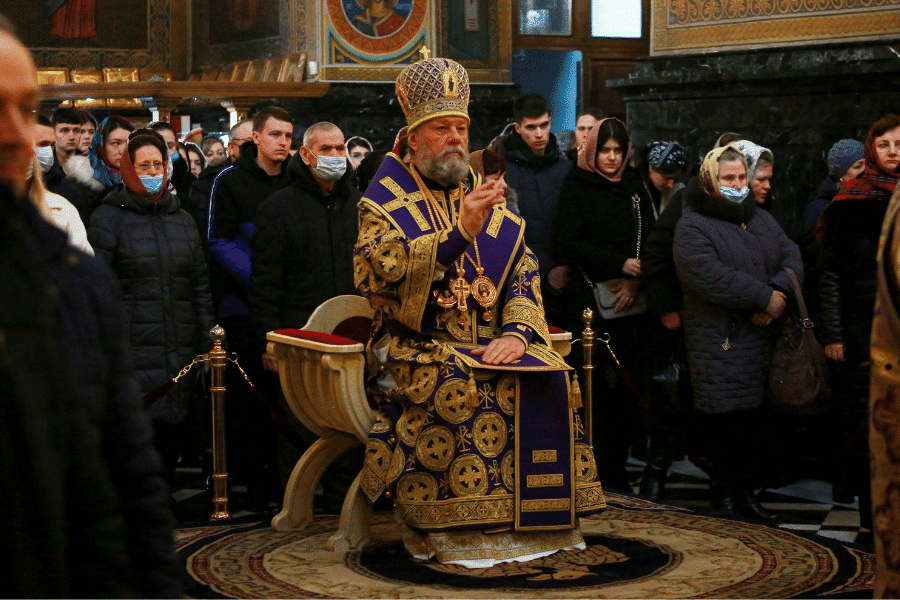
    Religion and politics aren’t supposed to mix

    Ukrainian President Volodymyr Zelensky says religion was one topic his family never mentioned at the dinner table.

    That could be because he’s from the Jewish minority, or because the overwhelming Orthodox Christian majority was split into different branches.

    Ukraine’s Orthodox have gradually become more Ukrainian, to the detriment of a once-powerful pro-Russian Church, and the trend has sped up now that Kyiv and Moscow are at war.

    The conflict between the pro-Kyiv Orthodox Church of Ukraine (OCU) and the pro-Moscow Ukrainian Orthodox Church (UOC) gets lost in the international coverage of the drama on the battlefield.

    But with about 80% of Ukrainians identifying as Orthodox Christians, even if probably less than half attend church regularly, this split between the two Churches seeps into politics.

    Christmas in Kyiv

    The religious conflict crept into the news last month when the pro-Kyiv Church authorized all Ukrainian parishes to celebrate Christmas on December 25 if they wished, rather than the traditional Orthodox date of January 7.

    The symbolism of allowing Christmas to be celebrated on the date used in the West was not lost on Ukrainian believers.

    The roots to this clash go back to the communist period. While Ukraine was part of the Soviet Union, it was under the umbrella of the Russian Orthodox Church.

    When the Soviet Union collapsed in 1991, the Ukrainian Orthodox Church continued to operate in the newly sovereign Ukraine, but proclaimed its loyalty to the Moscow Patriarchate.

    Ukrainian patriots objected and said they deserved their own Church. Their rival Orthodox Church of Ukraine was created in 1992, soon after Ukraine’s independence. It was recognized as autocephalous (independent) by the Ecumenical Patriarchate in Istanbul — the highest authority in Orthodox Christianity — in 2019.

    The politics of praying in Ukrainian

    The two Churches have the same theology, liturgy and even architecture as the Moscow Church. But the Kyiv Church prays in Ukrainian rather than Church Slavonic and declares allegiance to Ecumenical Patriarch Bartholomew in Istanbul instead of Moscow’s Patriarch Kirill.

    Originally much larger, the Moscow Church saw parishes defecting to its rival, especially after the war began. Under this pressure, the Ukrainian branch declared its independence from Russia in May, condemned the invasion and refused to recognize Patriarch Kirill in its liturgies.

    It’s unclear now which Church is larger. But the head of the Kyiv Patriarchate, Metropolitan Epiphinius, told Religion News Service in May: “Every day, Ukrainians are gradually coming to understand which Church is truly Ukrainian and which Church is Russian.”

    The Moscow Patriarchate tried to shield off Russian-occupied Crimea by creating its own metropolitanate (archdiocese) there in June. The Kyiv Church refused to recognize this.

    When Putin annexed four Ukrainian territories in September — even though he did not completely control them — he tried to justify the move in religious terms, calling it a “glorious spiritual choice.”

    Sermons, spies and the Security Service

    But Kyiv increasingly saw the pro-Moscow Church as a fifth column, or spies of Putin. In October, the acting head of Ukraine’s Security Service revealed it had found 33 suspected Russian agents among the Moscow Church’s clergy in Ukraine.

    Some preached pro-Russian sermons, Kyiv said, some had anti-Ukrainian literature and some were army chaplains who passed on information about Ukrainian artillery batteries to Russian agents.

    That’s when the Kyiv Church authorized all Ukrainian parishes to celebrate Christmas on December 25 if they wished. On December 1, Zelensky upped the ante by calling for an official ban on all activities of the Moscow Patriarchate’s Church in Ukraine. Parliament was asked to draft a suitable law, which may be difficult given the provision in the Ukrainian constitution of freedom of religion.

    In late December, Ukraine refused to renew the Moscow Church’s lease on the Cathedral of the Dormition at Kyiv’s Monastery of the Caves, traditionally the center of Ukrainian Orthodoxy.

    On January 7, Metropolitan Epiphanius, head of the pro-Kyiv Church, celebrated the traditional Christmas there to show he was the new man in charge now.

    And in its latest turn to faith, Russia called for a 36-hour truce to mark the traditional Christmas on January 7. Kyiv and its western allies rejected this as a cynical ploy, and both sides continued shelling each other as if nothing had happened.

    The battlefield struggle is still the main story, both in its ultimate importance and in the David-and-Goliath story that readers understand. The religious rivalry will always be secondary.

    But these pinpricks on the faith front add up to a new phase in the growth of local nationalism, which helps buoy Ukrainian morale. In hoping to defeat a country he thought would easily give in, Putin has done more than anyone to forge a united and defiant Ukrainian nation.


    Three questions to consider:

    1. Why do politicians often appeal to religion during a war?

    2. Do mainstream journalists make religious angles clear in a conflict?

    3. When do separate small events add up to a noteworthy trend?


    Source link

  • Can your religion put your nationality at risk?

    Can your religion put your nationality at risk?

    Standing on the charred remains of his hut in a village near Assam’s Morigaon district in South India, Shafik Ahmed clutched a worn folder of papers: land deeds, ration cards and a laminated voter ID, all declaring the 68-year-old bicycle repairman an Indian citizen.

    None of it mattered when bulldozers rolled into his neighbourhood in June 2025, demolishing 17 homes, all belonging to Bengali-speaking Muslims.

    “I was born here, voted here, paid taxes here,” Ahmed said. “Still, they told me I am a foreigner. They dumped us near the border like we are cattle.”

    Ahmed is among the hundreds of Muslims who say they were pushed across India’s eastern border into Bangladesh in recent months, as part of what human rights lawyers say is a rapidly intensifying campaign of ethnic targeting in Assam, a region famous across the world for the quality of tea it produces. 

    The drive has escalated in the run-up to the 2026 state elections, with Chief Minister Himanta Biswa Sarma branding undocumented Muslims as “infiltrators” and vowing to “protect the culture of Assam.”

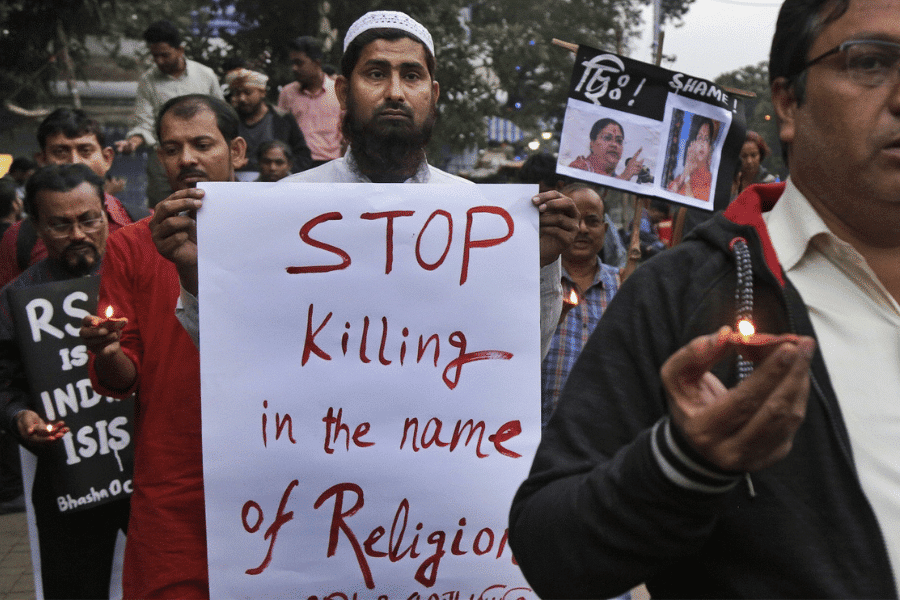
    Islamophobia is a global concern.

    The expulsions, many executed without due legal process, have sparked concern far beyond India’s borders. As the United Nations warns of a global surge in anti-Muslim bigotry, activists say Assam’s campaign fits a broader pattern of Islamophobia playing out across continents.

    “They call it pushback,” Ahmed said. “We call it expulsion.”

    Across Assam, particularly in Muslim-majority districts like Dhubri, Barpeta and Goalpara, families wake up to midnight police knocks, arbitrary detentions and the looming threat of forced deportation.

    Rubina Khatun, 53, said she was taken without explanation from her home In May 2025, driven 200km to the Matia detention centre and later left in the no-man’s land near the India-Bangladesh border along with other women and children.

    “The soldiers shouted at us: ‘You’re not Indian anymore. Go to your country’,” she said. “But I have never been to Bangladesh. We spent hours in the swamp. No food, no water. It felt like we were being erased.”

    Applying old laws to new intolerance

    Human rights lawyer Hameed Laskar, who represents several families appealing the orders by the Foreigners Tribunals, says the government is misusing a 1950 law meant for undocumented immigrants.

    “These people have lived in Assam for generations,” Laskar said. “Some even appear on the National Register of Citizens. But a misspelled name or a missing land receipt from 1970 is enough to be declared a foreigner. It’s not legal enforcement. It’s engineered exclusion.”

    The targeting of Muslims in Assam is not new. But since the conservative Bharatiya Janata Party came to power in India in 2014, the rhetoric has hardened and the policies have sharpened.

    In 2019, the national registry process excluded nearly 2 million people, most of them Muslims. That has left families in limbo. While Hindus excluded from the list can claim citizenship under India’s 2019 Citizenship Amendment Act, there is no such provision for Muslims.

    The wife of Parvez Alam, a schoolteacher in the city of Barpeta, Aswas recently declared a foreigner despite having a birth certificate and electoral record.

    “Muslims now need 20 documents to prove their Indian-ness. Hindus only need to declare it,” Alam said. 

    Ping-ponging people across borders

    According to a June statement from Chief Minister Sarma in the state assembly, more than 300 “illegal Bangladeshis” have been expelled since May. Local media and community groups put the number closer to 500, including at least 120 women.

    But the Bangladeshi government has rejected many of these returnees, saying they have no proof of origin. Several have been stranded in border areas, caught in a bureaucratic tug-of-war.

    In one incident that drew widespread attention, 60-year-old Salim Uddin, a retired truck driver from Golaghat, was found wandering along the India-Bangladesh border after his family saw a viral video showing him being handed over to Bangladesh’s border guards.

    His son, Rashid, later confirmed that Uddin had served in the Assam Police for nearly three decades.

    “How can the son of a state police officer be declared Bangladeshi?” Rashid asked. “Had my grandfather been alive, it would have broken his heart.”

    A pattern of prejudice

    The Assam government has denied that the crackdown is communal, insisting it targets only “illegal foreigners.” But the pattern tells a different story. A recent report by a coalition of civil society groups found that over 95% of those detained or expelled this year were Bengali-speaking Muslims.

    The fear gripping Assam’s Muslims mirrors rising Islamophobia globally. From bans on hijabs in French schools to mosque attacks in the United Kingdom, Muslims across continents are facing what the United Nations calls a “widening wave of intolerance.”

    On March 15, UN Secretary-General António Guterres marked the International Day to Combat Islamophobia by warning of a disturbing rise in anti-Muslim bigotry. “This is part of a wider scourge of extremist ideologies and attacks on religious groups,” Guterres said in a video address. “Governments must foster social cohesion and protect religious freedom.”

    He called on online platforms to curb hate speech, and on leaders to avoid rhetoric that demonizes communities. Muslim civil rights groups in Europe and North America have echoed those concerns.

    A spread of intolerance across the globe

    A recent report by the Council on American-Islamic Relations documented a record 8,658 anti-Muslim incidents in 2024 alone.

    In the UK, advocacy group Tell MAMA has reported a 30% increase in Islamophobic hate crimes since October 2023, including attacks on mosques, verbal abuse and discrimination in housing and employment.

    Dr. Arshiya Khan, a political sociologist based in London, said these patterns are not isolated. “They’re interlinked,” Khan said. “What starts as state policy in one country often emboldens vigilante behaviour in others.”

    In Assam’s tea belt, the fear is palpable. In several villages, Muslim residents say they have stopped going to police stations or even hospitals, afraid they might be detained. In one case, a 27-year-old man who went to register a land dispute at a local police station was declared a foreigner after a routine ID check.

    “We don’t know who is next,” said Shahina Begum, a mother of three. “They say we don’t belong here. But where do we go?”

    Fighting back

    At least four petitions have been filed in the Assam High Court since June by families who say their relatives disappeared after being taken by police. Most had no ongoing legal cases against them.

    “They’re being disappeared without a trace,” said Laskar. “This is not law enforcement, it’s ethnic cleansing in slow motion.”

    Back in Morigaon, Shafik Ahmed said he has no plans to leave, even as bulldozers return to neighbouring villages.

    “This land is all I know. If they push me out again, I’ll come back again,” he said, eyes fixed on the debris of his former home.

    But for those like Rubina Khatun the trauma is lasting. “We’re citizens,” she said. “We have documents. We were born here. But in their eyes, we will never be Indian enough.”

    As global attention briefly turns to Assam, with international bodies urging India to uphold human rights, residents say they don’t expect justice, only survival.

    “Every day we live feels like another test to prove we exist,” Ahmed said.


    Questions to consider

    1. Why do Muslim citizens of Assam India believe that their government treats them differently than non-Muslims? 

    2. Should religion be a factor in determining whether someone should get national citizenship?

    3. Should a government be concerned about the religions of its citizens? 


    Source link