For decades, America was gripped by college mania, a culturally and structurally manufactured frenzy that elevated higher education to near-mythical importance. Students, families, and society were swept up in the belief that a college degree guaranteed status, financial security, and social validation. This was no mere aspiration; it was a fevered obsession, fueled by marketing, rankings, policy incentives, and social pressure. Today, the spell is breaking, but the demand for credentials persists.
Historically, the term “college mania” dates to the 19th century, when historian Frederick Rudolph used it to describe the fervent founding of colleges in the United States, driven by religious zeal and civic ambition. Over time, the mania evolved. Postwar expansion of higher education through the GI Bill normalized college attendance as a societal expectation. Rankings, elite admissions, and media coverage transformed selective schools into symbols of prestige. By the early 2000s, for-profit colleges exploited the frenzy, aggressively marketing to students while federal and state policy incentivized enrollment growth over meaningful outcomes.
The early 2010s revealed the fragility of this system in what I have described as the College Meltdown: structural dysfunction, declining returns on investment, predatory practices, and neoliberal policy failures exposed the weaknesses behind the hype. At its height, college mania spun students and families into a cycle of aspiration, anxiety, and debt.
Now, even students at the most elite institutions are disengaging. Many do not attend classes, treating lectures as optional, prioritizing networking, internships, or social signaling over actual learning. This demonstrates that the spell of college mania is unraveling: prestige alone no longer guarantees engagement or meaningful educational outcomes. Families are questioning the value of expensive degrees, underemployment is rising, and alternative pathways, including vocational training, apprenticeships, and nontraditional credentials, are gaining recognition.
Yet the paradox remains: for many jobs, credentials are still required. Nursing, engineering, teaching, accounting, and countless professional roles cannot be accessed without degrees. The waning mania does not erase the need for qualifications; it simply exposes how much of the cultural obsession — the anxiety, overpaying, and overworking — was socially manufactured rather than inherently necessary for employment. Students are now forced to navigate this tension: pursuing credentials while seeking value, purpose, and meaningful learning beyond the symbol of the degree itself.
The breaking of the spell is not unique to higher education. History demonstrates that manias — economic, social, or cultural — rise and fall. College mania, once fueled by collective belief and systemic reinforcement, is now unraveling under the weight of its contradictions. Institutions must adapt by emphasizing authentic education rather than prestige, while policymakers can prioritize affordability, accountability, and outcomes. Students, in turn, may pursue paths aligned with practical skills, personal growth, and career readiness rather than chasing symbolic credentials alone.
The era of college mania may be ending, but with the spell broken comes an opportunity. Higher education can be reimagined as a system that serves public good, intellectual development, and genuine opportunity, balancing the need for credentials with the pursuit of meaningful education.
Sources:
Frederick Rudolph, The American College and University: A History (1962).
Frank Bruni, Where You Go Is Not Who You’ll Be: An Antidote to the College Admissions Mania (2015).
Dahn Shaulis, Higher Education Inquirer, “College Meltdown and the Manufactured Frenzy” (2011–2025).
Stanford Law Review, Private Universities in the Public Interest (2025).
Higher Education Handbook of Theory & Research, Volume 29 (2024).
Recent reporting on student engagement, class attendance, and labor-market requirements for degrees, 2023–2025.
Two years after the Supreme Court banned the use of race in college admissions decisions and in the wake of the Trump administration’s attacks on diversity, equity and inclusion, colleges’ use of diversity- and identity-related supplemental essay prompts is patchy.
After a boom in prompts about applicant’s identities, several universities have scrapped the essays entirely for the 2025–2026 admission cycle. Still others, especially selective universities, have kept the prompts, saying they are the best way to get to know their applicants.
Kelsea Conlin, who oversees the college essay counseling team for College Transitions, an admissions consulting firm, identified 19 colleges with optional or required diversity essays last admission cycle that either had dropped or reworded those prompts this year.
“I’ve seen very few colleges that still require students to write about diversity; the prompt may still be on their application and students have the opportunity to write about it, but it’s an optional essay,” she said.
Diversity-related essays often ask students to describe how they’ve been shaped by their community, culture or background, sometimes prompting them to describe how those identities will bring something new to a campus. Others ask students to discuss or reflect on issues like diversity, social justice or antiracism more broadly.
In the majority opinion in Students for Fair Admissions v. Harvard, Chief Justice John Roberts said it was acceptable for students to continue discussing race in their essays: “Nothing in this opinion should be construed as prohibiting universities from considering an applicant’s discussion of how race affected his or her life, be it through discrimination, inspiration, or otherwise.”
The following application cycle, several colleges introduced diversity-related essay prompts to their applications, according to research by Sonja Starr, a law professor at the University of Chicago; Conlin also said she observed a surge in these essays in the 2023–2024 application cycle.
But this year, the Department of Justice issued guidance warning institutions against using “proxies” for race in admissions and hiring, and described requirements for applicants to “describe ‘obstacles they have overcome’ or submit a ‘diversity statement’ in a manner that advantages those who discuss experiences intrinsically tied to protected characteristics” as examples.
“The administration basically says, … ‘if you are letting the desire for a diverse campus influence your policies in any way, that is just as unconstitutional as taking the individual applicant’s race into account,’” Starr said. “I think that’s a wrong reading of the law.”
Still, she said she’s not surprised institutions may be wary of maintaining essay questions overtly related to identity, considering the harsh actions the administration has taken against colleges it disagrees with.
“There’s all kinds of ways the federal government can really make it difficult for universities,” she said, pointing out the slew of funding the administration has cut or frozen over the past ten months. “[Some institutions], I think, are just trying to at least stay out of the administration’s way.”
Simplifying the Process
Several institutions told Inside Higher Ed that they cycle out their essay prompts regularly, so the change from last year’s diversity question was par for the course. Others said they eliminated their supplemental essay requirements altogether, in an effort to make the application process less strenuous.
The University of Washington, which removed a supplemental essay asking prospective students to describe how their background and the communities they are involved in would contribute to the campus’s diversity, told Inside Higher Ed in an email that they hope the removal of the essay will make the admissions process less strenuous for applicants.
“During the annual review of our application process, we determined that an additional essay did not provide sufficient value when reviewing students for admission. We discovered that some applicants, like those interested in our honors program, were previously seeing up to four essay prompts. This change simplifies the process for all our applicants,” wrote David Rey, associate director of strategic communications.
A University of Virginia spokesperson gave a similar statement to the campus student newspaper, The Cavalier Daily, about its decision to remove a diversity essay prompt introduced in the 2025–2026 application cycle, saying that its removal aimed to “lighten the load and reduce stress and anxiety around the college application process.” UVA did not respond to Inside Higher Ed‘s request for comment.
Does that mean supplemental essays are falling out of vogue? Not necessarily, Conlin said; a significant number of selective universities still require them, and the students she works with are generally writing just as many supplemental essays as they have in previous years.
Despite some institutions opting to change or remove their diversity prompts, though, Ethan Sawyer, the founder of the admissions consulting firm College Essay Guy, said that a review of 300 institutions’ prompts for the 2025–2026 admission season showed that questions about what a student’s identity will bring to the institution are the most popular for the second year in a row.
He said in an email to Inside Higher Ed that these prompts have proven to be particularly effective at providing colleges with the key information they’re looking for out of an admissions essay. The identity prompt acts as the new “Why Us” essay, but avoids the pitfall of students focusing exclusively on the college’s attributes rather than their own.
“It lets colleges learn what they’ve always wanted to know—how will this student engage with our community? What qualities will they bring?—but through a framing that encourages students to reflect on who they are (as opposed to how awesome the college is). In other words, colleges are still trying to understand fit; they’re just using a lens that better centers the student,” he said.
Students Still Write About Race
While some colleges may be scrapping diversity prompts, many students want to write about their identities, Conlin and Sawyer said.
“They don’t see themselves through just one lens. No student wants to be reduced to a single label or experience. They understand they’re complex people shaped by many different identities, roles, and life moments,” Sawyer wrote. “Part of our job as counselors is to help them express that complexity—to choose which pieces of their story to spotlight in each essay, and to show how those pieces translate into contributions they’ll make on a college campus.”
Many of the new or reworded essay prompts that have replaced diversity-related questions are broad enough that students can still talk about their identities and experience if they choose to, Conlin noted. In her experience, students are often interested in discussing their race or first-generation student status in essays. But students are more reluctant to write about being LGBTQ+ or having mental health struggles.
Diversity essays aside, Conlin also noted two burgeoning categories of essay topics this year: prompts asking students to talk about how they handle conflict and prompts offering students the chance to explain their relationship with AI.
Since hitting a record high in 2022, national chronic absenteeism rates have dropped modestly — by about five percentage points — according to the most recent available data, but still remain persistently higher than pre-pandemic levels.
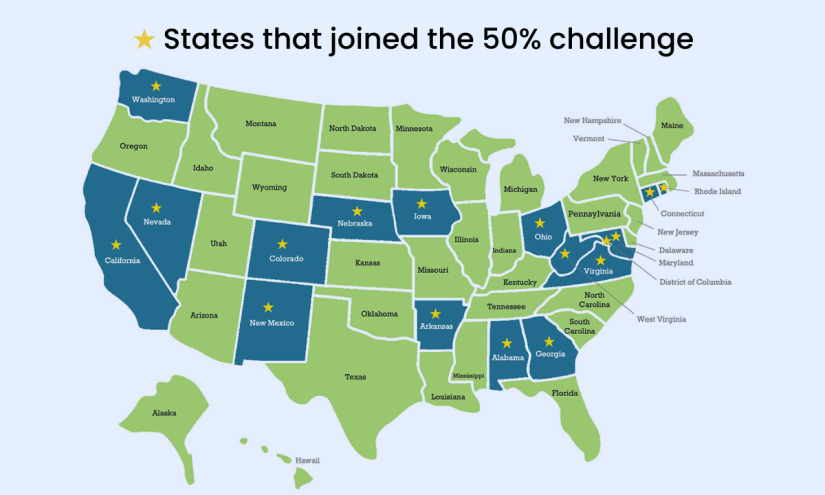
States that joined a national pledge led by three high-profile education advocacy and research groups to cut chronic absenteeism in half over five years fared better. The 16 states and Washington, D.C. posted results “substantially above the average rate” of decline, though exact numbers are not yet available, said Nat Malkus, deputy director of education policy studies at the American Enterprise Institute, one of the trio.
The national chronic absenteeism average dropped from 28.5% in 2022 to 25.4% in 2023, and fell an additional two points to 23.5% in 2024. Virginia, which is among the 16 participating states, cut its chronic absenteeism by 4.4 percentage points, year over year, to 15.7%, as of spring 2024.
Speaking of the states collectively, Malkus told The 74, “That’s good but it’s not as good as we need it to be. I think it points to the need for sustained pressure and a sustained campaign to bring absence rates down and to bring more students back to consistent attendance.”
Last July, AEI and EdTrust, right-and left-leaning think tanks, respectively, and the national nonprofit Attendance Works joined forces to launch The 50% Challenge. This week, the organizations hosted an event in Washington, D.C., to report on their progress, re-up the call to action and hear insights from state, district and community partners on how they are improving student attendance and engagement.
With California and Georgia recently joining, the 16 states and D.C. who signed on to the pledge account for more than a third of all students nationally. While Malkus doesn’t necessarily attribute their better results to the pledge itself, he noted that their participation shows a willingness to commit to the cause and be publicly accountable for their results.
“I will hold their feet to the fire on this goal,” he added during his opening remarks in D.C.
While felt most acutely by students of color and those in poorer districts, the spike in chronic absenteeism — students missing more than 10% of school days a year — cut across districts regardless of size, racial breakdown or income. Chronic absenteeism surged from 13.4% in 2017 to 28.5% in 2022 before beginning to drop in 2023.
Only about one-third of students nationally are in districts that are on pace to cut 2022 absenteeism in half by 2027, according to an AEI report, and rates improved more slowly in 2024 than they did in 2023, “raising the very real possibility that absenteeism rates might never return to pre-pandemic levels.
AEI
Research has shown that students with high rates of absenteeism are more likely to fall behind academically and are at a greater risk of dropping out of school. About 8% of all learning loss from the pandemic is attributed just to chronic absenteeism, according to soon-to-be-released AEI research.
The continued disproportionate impacts of chronic absenteeism were confirmed by recent RAND research, which found that in roughly half of urban school districts, more than 30% of students were chronically absent — a far higher share of students than in rural or suburban school districts.
RAND also found that the most commonly reported reason for missing school was sickness and one-quarter of kids did not think that being chronically absent was a problem.
SchoolStatus, a private company that works with districts to reduce chronic absenteeism, also released new numbers this week for some 1.3 million K-12 students across 172 districts in nine states. Districts using proactive interventions, the company reports, drove down chronic absenteeism rates from 21.9% in 2023–24 to 20.9% in 2024–25.
At this week’s event, numerous experts across two panels emphasized the importance of a tiered approach to confronting the issue, which has resisted various remedies. Schools must build enough trust and buy-in with kids and their families that they are willing to share why they are absent in the first place. Once those root causes are identified, it is up to school, district and state leaders to work to remove the barriers.
And while data monitoring must play a significant role, it should be done in a way that is inclusive of families.
“We need to analyze data with families, not at them,” said Augustus Mays, EdTrust’s vice president of partnerships and engagement.
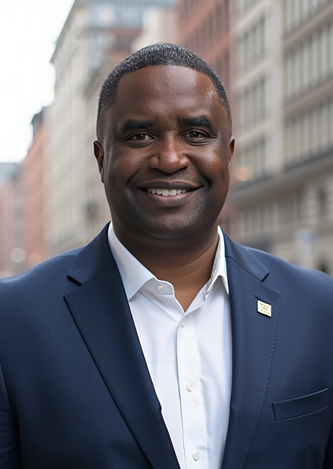
Augustus Mays is the vice president of partnerships and engagement at EdTrust. (EdTrust)
It’s imperative to understand the individual child beyond the number they represent and to design attendance plans and strategies with families so they feel supported rather than chastised.
“It’s around choosing belonging over punitive punishment,” Mays added.
One major and common mistake schools make is “accountability without relationships,” said Sonja Brookins Santelises, the superintendent of Baltimore City Public Schools.
“You can’t ‘pull people up’ if you don’t have enough knowledge of what they’re really going through,” she said.
Panelists were transparent that all this would require immense funding, staff and community partnerships.
Virginia achieved its noteworthy drop in chronic absenteeism after launching a $418 million education initiative in the fall of 2023, in part after seeing their attendance data sink, with about 1 in 5 students chronically missing school. At least 10% of those funds are earmarked to prioritize attendance solutions in particular, according to panelist Emily Anne Gullickson, the superintendent of public instruction for the Virginia Department of Education.
These strategies are far-reaching, she noted: Because parents had been told throughout the pandemic to keep their kids home at the slightest sign of illness, schools partnered with pediatricians and school nurses to help counter the no-longer-necessary “stay home” narrative.
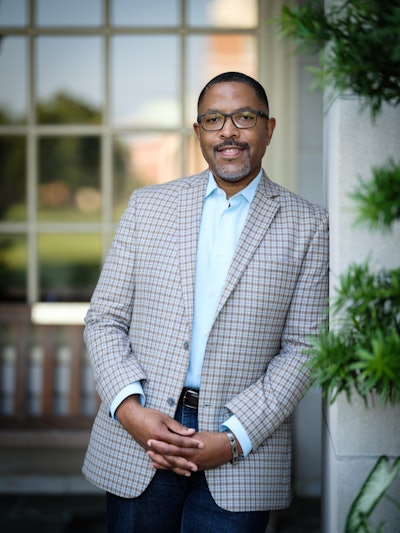
Hedy Chang is the founder and executive director of Attendance Works. (Attendance Works)
Gullickson said she also broke down bureaucratic silos, connecting transportation directors and attendance directors, after realizing the role that transit played in chronic absenteeism. The state now has second chance buses as well as walking and biking “buses,” led by parents or teachers along a fixed route, who pick up students along the way.
And they are “on a mission to move away from seat time and really deliver more flexibility on where, when and how kids are learning,” she said.
“This isn’t one strategy. It’s a set of strategies,” said Attendance Works founder and executive director Hedy Chang, who moderated the panel.
In Connecticut, state leaders have launched the Learning Engagement and Attendance Program, a research-based model that sends trained support staff to families’ homes to build relationships and better understand why their kids are missing school.
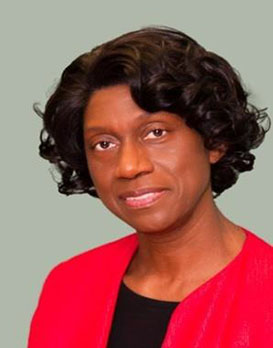
Charlene Russell-Tucker is the commissioner of the Connecticut State Department of Education. (Connecticut State Department of Education)
A recent study confirmed that six months after the program’s first home visits, attendance rates improved by approximately 10 percentage points for K-8 students, and nearly 16 percentage points for high schoolers, said Charlene Russell-Tucker, the commissioner of the Connecticut State Department of Education.
Schools must also work to motivate kids to want to show up in the first place, panelists said, making it a meaningful place that students believe will support and help them in the long run. The only way to do this is to start with student and family feedback, said Brookins, the Baltimore schools chief.
During the pandemic many parents saw up-close for the first time what their kids’ classrooms and teacher interactions looked like, “and I don’t think a lot of folks liked what they saw for a variety of different reasons,” Brookins said.
“I think it opened up boxes of questions that we — as the education establishment — were unprepared to answer,” she added. But chronic absenteeism cannot be successfully fought without engaging in those uncomfortable conversations.
Disclosure: The Bill & Melinda Gates Foundation provides financial support to EdTrust and The 74.
In a July 7 court filing, the Internal Revenue Service (IRS) announced that churches can now endorse political candidates without losing their tax-exempt status. This news follows over seven decades since the Johnson Amendment, a U.S. tax code provision that prohibited non-profit organizations and churches from intervening in political campaigns.
Religion, American public life, and Black church studies scholars argue that this moment marks a significant erosion of the separation of church and state.
Dr. Valerie Cooper“Both the government and the church are incredibly powerful institutions,” says Dr. Valerie Cooper, an associate professor of religion and society and Black church studies at Duke Divinity School and senior fellow at the Center for Theological Inquiry (CTI). “While it is important for citizens to be able to bring their religious convictions to their civic life, there is a concern, for me, as a person who loves the Christian church, about churches selling out for government power and losing their ability to be a prophetic voice.”
Since 1954, only one house of worship has lost its tax-exempt status for violating this amendment.
“The law has not changed, but the interpretation has,” says Dr. Corey D.B. Walker, Dean of Wake Forest University’s School of Divinity and a professor of the humanities. “What the IRS has said is that they’re not going to bring any cases for churches violating the Johnson Amendment.”
According to Cooper, “conservative churches, particularly, white evangelicals, have been after this for years, if not decades,” she says in an interview with Diverse. “There are hot-button issues, and they’ve distributed information doing everything short of endorsements.”
The issue has caught the attention of civil rights leaders like the Reverend Al Sharpton who said that the issue has to be studied carefully to ensure that “it does not create a double-edged sword.”Dr. Corey D.B. Walker
“We cannot have a system in which right-wing congregations may endorse political candidates and others of a different political persuasion remain under scrutiny and lead to a situation that is not beneficial to all,” says Sharpton, the founder and president of National Action Network (NAN).
Sharpton, and NAN’s Board Chairman Reverend Dr. W. Franklyn Richardson, have convened a Zoom call with Black pastors and legal experts to explore the pros and cons of the decision
Scholars of African American religion and religion in American public life have been tracking this movement for decades as well, says Walker.
“That danger the founders of the nation saw, that’s also the danger that we saw,” he says. “One of the real and understated issues that this new interpretation brings is that partisan political actors can now fund whatever limit they want into religious bodies to then instill and support particular political ideologies and projects, and that’s the danger of continually eroding the line between church and state.”
Cooper, who was the first African American woman to earn tenure at Duke Divinity School in 2014, examines the ways religion does or does not impact other existing structures, like racism or inequality.
“I’m not just a religious scholar,” she adds. “I’m a religious person, and so I’m concerned about what appears to be a kind of political intervention.”
Cooper says this kind of engagement could end with churches compromising their principles for political reasons.
“Almost exactly a year before his assassination, Martin Luther King Jr. gives us a speech/sermon where he comes out against the Vietnam War, and many people in the Civil Rights Movement were horrified by this choice, because Johnson had been such an ally,” she says. “But King really felt that it was his obligation to speak prophetically and according to his faith, not according to what was maybe even wise political policy.”
Cooper questions how this new development might impact church leaders’ ability to speak prophetically in the present day.
“What does that mean? Does that mean that the pastor is then no longer free to speak, even to call out the candidate, if he or she stops doing what is in the interest of the church,” she asks.
Walker says that he is concerned about making absolute claims on public life that bypass shared beliefs, languages, and common frameworks.
“So, the question becomes, what is the Court of Appeal when individuals are discriminated against, such as our LGBTQ brothers and sisters, or when individuals find themselves without funding for public schools because public school funding has been funneled into private religious schools,” he says. “What happens when you have reproductive rights no longer supported because reproductive rights are seen as anathema to God?”
Walker adds that this development blurs the lines between churches and families.
“Churches, congregations, religious bodies and worship are not the same as families discussing politics,” he says. “Families belong in the private sphere, so the idea that a worship service and a sermon are the same as a family in their living room discussing politics begs the question, what logic is operative at this moment?”
Cooper believes that this intervention on churches will impact everyone, even those who fought to remove the restrictions of the Johnson Amendment.
“If people begin winning elections at the cost of the health and vitality of churches, we have not won anything,” she says.
This audio is auto-generated. Please let us know if you have feedback.
A federal judge extended an emergency restraining order Friday against theNational Institutes of Health, temporarily preventing the agency from making massive cuts to indirect research funding.
The restraining order bars NIH from implementing a 15% cap on indirect cost reimbursement and requires the agency to file regular status reports confirming disbursement of funds.U.S. District Judge Angel Kelley,a Biden appointee, is considering a more permanent injunction against NIH’s plan after nearly two hours of oral arguments Friday.
NIH unveiled the new policy earlier in February. Historically, institutions negotiate their own indirect cost reimbursement rates with the agency, with an average of 27% to 28%. The change was met swiftly with multiple lawsuits, including by higher education groups and 22 state attorneys general. The cases were considered together at the hearing Friday.
Several universities have already frozen hiring and taken other budgetary measures amid the NIH funding uncertainty, despite Kelley’s initial pause on the funding cap.
The funding for indirect costs — also known as facilities and administrative, or F&A, costs — covers a wide array of staffing and infrastructure for research activity.
“Indirect costs are the backbone of IHEs [institutions of higher education] research programs and cover everything from utilities to facilities and equipment maintenance to payroll for faculty and staff to compliance programs, hazardous waste disposal, and more,” 22 state attorneys general said in their original request for a temporary restraining order on NIH. “They quite literally keep the lights on.”
Brian Lea, an attorney for NIH, said at Friday’s hearing that money saved by cutting and capping F&A funding would be “ploughed into” funding for research costs. However, in a Feb. 7 post from the agency on the social media site X, NIH said the funding cap “will save more than $4B a year effective immediately.”
Asked by Kelley about the post, Lea said that it was “at best a misunderstanding” of NIH’s guidance.
Plaintiffs attorneys argued that the F&A cap violates federal laws and regulations, pointing out that Congress passed an appropriations bill during President Donald Trump’s first term that prohibits modifications to NIH’s indirect cost funding.
Lea maintained that NIH’s guidance was compliant with regulations and statutes and within the “broad discretionary power of the executive branch” to allocate funding.
Attorneys for the plaintiffs further argued that an injunction was necessary to prevent “immediate and irreparable” harm, pointing to numerous universities that have detailed how their research, budgets and infrastructure would suffer from the cap. An official at Yale University, for example, said in court papers that the NIH rate cap could threaten the viability of many of its ongoing clinical trials for medical research.
“It is not hyperbole to say that, absent immediate injunctive relief, Plaintiff States’ IHEs will face catastrophic financial consequences, which could result in layoffs and furloughs, research program closures, financial defaults, and disruptions to clinical trials, potentially jeopardizing people’s lives and health,” the attorneys general said in their motion, filed earlier in February.
Lea questioned whether harms such as funding losses were irreparable, suggesting that they could be undone later through private funding or operational adjustments.
As the case winds on, NIH has laid off more than 1,000 employees, according to press reports.