Tag: Remembering

  • Higher Education Inquirer : Remembering SNCC and CORE

    Higher Education Inquirer : Remembering SNCC and CORE

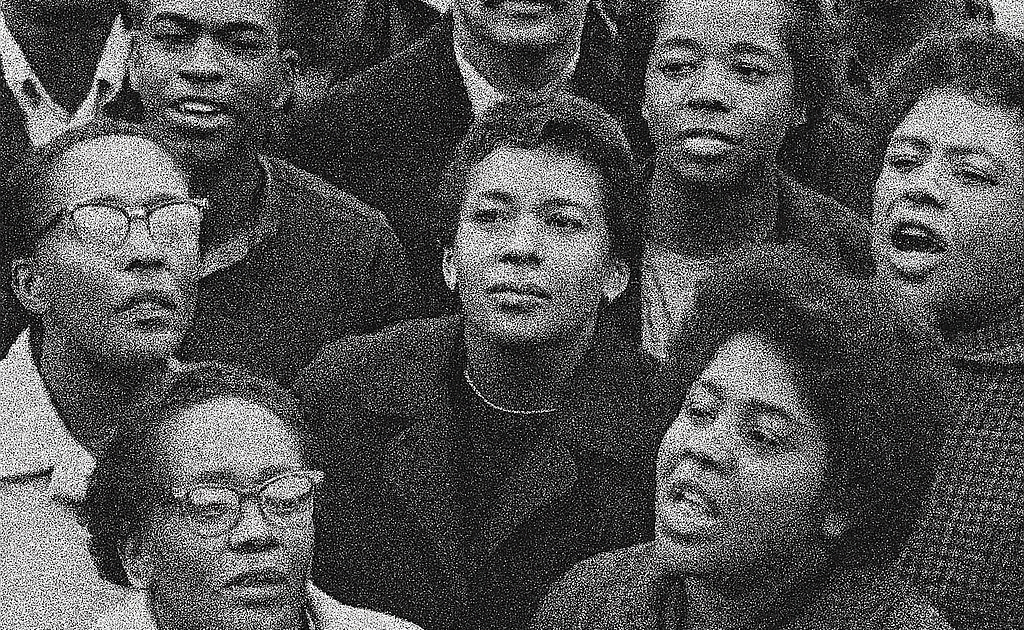
    To remember SNCC and CORE is to remember a democracy built not by elites but by everyday people—students, sharecroppers, domestic workers, bus drivers, teachers, and the poor and working class across the Jim Crow South and the segregated North. It is to remember Ella Baker’s wisdom, Diane Nash’s determination, Bob Moses’s quiet power, Fannie Lou Hamer’s moral force, James Farmer’s strategic brilliance—and also the thousands of unnamed organizers who risked everything without ever appearing in a textbook, a documentary, or a university lecture hall. Their names may not be widely known, but their work forms the backbone of the freedom struggle.

    SNCC and CORE were never celebrity movements. They were people-powered, grassroots engines of democracy. They were built by individuals who knocked on doors in rural counties where Black voter registration hovered near zero; who faced armed sheriffs, Klan mobs, and white citizens’ councils; who farmed during the day and attended movement meetings at night; who ferried activists to safe houses; who housed Freedom Riders despite threats of arson and lynching; who cooked for mass meetings; who walked into county courthouses where their presence alone was an act of political defiance. These unnamed contributors shaped history as much as the well-known leaders, and their invisibility in public memory is itself a measure of how selectively the United States remembers the struggle for justice.

    Ella Baker insisted from the beginning that the movement’s strength rested in ordinary people discovering their own power. That is why she pushed for “group-centered leadership,” refusing the myth that liberation depends on a single, heroic figure. Her practice of listening deeply—and her belief that the least recognized people held the deepest wisdom—permeated SNCC’s organizing culture. It is a challenge to institutions today, especially universities that still cling to hierarchical models of governance and expertise.

    CORE’s early commitment to interracial, nonviolent direct action emerged from a similar belief in collective action. Its activists—people like James Farmer, Bayard Rustin, and George Houser—helped introduce the tactics that would soon reverberate across the nation: sit-ins, freedom rides, boycotts, and jail-ins. CORE’s work in northern cities also exposed the hypocrisy of institutions—including universities—that claimed moral high ground while upholding segregation in housing, employment, and policing.

    SNCC’s field secretaries—Charles McDew, Ruby Doris Smith Robinson, Prathia Hall, Sam Block, and so many others—did work that higher education still struggles to fully comprehend. Their organizing went far beyond protest; it involved listening to community elders, teaching literacy classes, building independent political organizations, challenging disenfranchisement at every level, and nurturing local leadership. Behind each of those actions were dozens of unnamed individuals who opened their homes, shared their limited resources, and stood guard against retaliation.

    Remembering the unnamed is not sentimental. It is foundational. The freedom struggle was sustained by people whose names were never printed, whose stories never made the evening news, and whose families bore the consequences. Many were fired from their jobs, evicted from their homes, or harassed by police. Some disappeared from public life after the movement years, carrying trauma with little public recognition or support. Their sacrifices made the Civil Rights Movement possible, and higher education owes them a debt it has never acknowledged.

    Today’s universities still wrestle with the structures the movement confronted: racialized inequality, policing, surveillance, donor influence, and hierarchical authority. Many of the same dynamics SNCC and CORE challenged—white paternalism, economic exploitation, authoritarian governance—are alive in campus politics and in the broader “college meltdown,” where austerity, privatization, and predatory actors erode public trust and opportunity.

    To honor SNCC, CORE, and the thousands of unnamed organizers is to affirm that democracy emerges from the ground up. It means recognizing that real change requires more than symbolic gestures or PR-friendly “initiatives.” It demands revisiting Ella Baker’s core insight: strong people do not need strong leaders—they need structures that cultivate collective power.

    Remembering them means acknowledging that the freedoms we now take for granted—voting rights, desegregation, access to education—were won not by institutions, but by people who challenged institutions. And it means seeing the present clearly: that grassroots organizing, from campus movements to community struggles, remains essential to confronting the crises of inequality, debt, climate, surveillance, and governance that define our era.

    To remember SNCC and CORE is to remember not just the famous, but the countless unnamed: the hosts, the watchers, the singers, the marchers, the jailmates, the caretakers, the strategists, the frightened but determined teenagers, the elders who said “yes,” and the ones who insisted that freedom was worth the risk. Their legacy is the true measure of democracy—and a guide for what higher education must become if it is to serve justice rather than power.

    Sources

    Clayborne Carson, In Struggle: SNCC and the Black Awakening of the 1960s.

    Thomas F. Jackson, From Civil Rights to Human Rights: Martin Luther King Jr. and the Struggle for Economic Justice.

    Charles M. Payne, I’ve Got the Light of Freedom: The Organizing Tradition and the Mississippi Freedom Struggle.

    James Farmer, Lay Bare the Heart: An Autobiography of the Civil Rights Movement.

    Taylor Branch, Parting the Waters: America in the King Years.

    Barbara Ransby, Ella Baker and the Black Freedom Movement.

    Danielle L. McGuire, At the Dark End of the Street.

    SNCC Digital Gateway, Duke University.

    Source link

  • Higher Education Inquirer : Remembering Bill Moyers (1934-2025)

    Higher Education Inquirer : Remembering Bill Moyers (1934-2025)

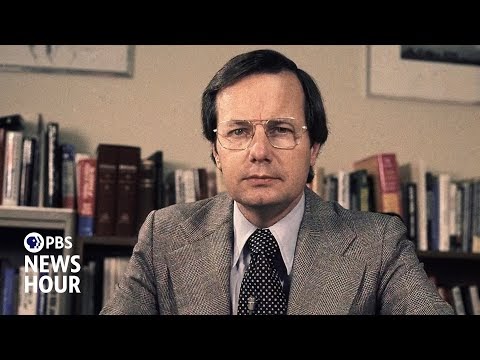
    In a media landscape often dominated by soundbites, spin, and sensationalism, Bill Moyers was a rare voice of clarity, compassion, and conscience. With his passing, America has lost not only a gifted journalist and public intellectual but also one of its most courageous truth-tellers.

    For more than half a century, Moyers stood at the intersection of journalism, politics, and public education—unyielding in his pursuit of justice and understanding. From his early days as White House Press Secretary under President Lyndon Johnson to his groundbreaking work with PBS, Moyers embodied the spirit of democratic inquiry: probing deeply, listening intently, and speaking boldly. He held the powerful to account, but always with the dignity and decency that defined his Texan roots and Baptist upbringing.

    Bill Moyers never saw journalism as a career; he saw it as a calling. His programs—Now with Bill Moyers, Bill Moyers Journal, and Moyers & Company—were sanctuaries for critical thought and inconvenient truths. He gave voice to the voiceless: whistleblowers, teachers, laborers, poets, and prophets. In a time when the corporate capture of media narrowed the spectrum of acceptable opinion, Moyers stretched it wide—amplifying progressive theologians, investigative reporters, civil rights leaders, and scholars ignored by commercial networks.

    His love of learning, and his belief in public education as a democratic cornerstone, made him a champion of educators and lifelong learners. He understood that education is not merely about credentials or career preparation, but about cultivating the moral imagination. That insight animated his long relationship with public broadcasting, where he insisted that television could—and should—educate, illuminate, and elevate.

    Bill Moyers also saw through the fog of power. He knew how elite institutions—government, media, universities, and corporations—could align to manufacture consent and mystify the public. And yet he maintained hope. Not a naive optimism, but a deep belief in people’s capacity to awaken, organize, and transform society. As he once said, “Democracy is not a lie, it is a leap of faith. But you need to keep leaping.”

    In a moment when American higher education faces crises of affordability, access, and meaning—when trust in journalism is frayed, and when truth itself feels embattled—Bill Moyers’ legacy reminds us that integrity matters. So does context, complexity, and compassion.

    His loss is personal for those of us at the Higher Education Inquirer. Many of us were shaped by his work, inspired by his commitment to investigative rigor and human dignity. His interviews with thinkers like Howard Zinn, Cornel West, Barbara Ehrenreich, and Joseph Campbell helped expand the public’s moral and intellectual horizons—precisely what higher education should strive to do.

    In remembering Bill Moyers, we are called to do more than mourn. We are called to follow his example: to ask harder questions, to listen more deeply, to speak more clearly, and to stand, always, with the people who are too often ignored or maligned.

    Rest in power, Bill Moyers. Your words lit candles in the darkness. May we carry that light forward.

    Source link