Tag: repeat

  • As Recession Risk Rises, Don’t Expect 2008 Repeat (opinion)

    As Recession Risk Rises, Don’t Expect 2008 Repeat (opinion)

    Months into the second Trump administration, clear trends are reshaping the higher education landscape. Economic uncertainty stemming from inconsistent tariff policies has left businesses and consumers grappling with unpredictability. Meanwhile, efforts by the administration and congressional leadership to overhaul federal funding for higher education, including cuts to research grants and proposed cuts to Pell Grants and student loans, have created significant challenges for the sector.

    The U.S. economy contracted slightly in the first quarter of 2025, with the administration’s erratic and unpredictable policies amplifying recession risks. These fluctuations have led some to draw comparisons to the 2008 Great Recession, particularly regarding public higher education. While some lessons of that recession for higher education, such as those related to state appropriations, remain relevant, others may not apply due to the administration’s unique policies and priorities.

    Since the 1980s, economic downturns have increasingly impacted public higher education, primarily due to state budget cuts. During the 1980 recession, state educational appropriations per full-time-equivalent student dropped by 6 percent but recovered to pre-recession levels by 1985. In contrast, during the 2008 Great Recession, funding fell by nearly 26 percent, and most states never fully restored funding to pre-recession levels before the COVID-19 pandemic once again disrupted budgets in 2020. This prolonged recovery left public institutions financially weakened, with reduced capacity to support students.

    More than a decade after the Great Recession, public institutions were struggling to regain the level of state funding they once received. This prolonged recovery significantly affected student loan borrowing. The Great Recession weakened higher education systems as states shifted funds to mandatory expenses and relied on the federal student loan system and Pell Grants to cover a growing share of students’ educational costs. As a result, when states reduce funding, students and their families shoulder more financial responsibility, leading to greater student loan debt.

    During the Great Recession, public institutions were operating with reduced funding and downsizing, even as rising joblessness drove more people to enroll in college. Before 2008, total enrollment in degree-granting institutions was about 18.3 million, but by 2011–12, it exceeded 21 million. This period marked the emergence of the modern student loan crisis. Public institutions, already strained by reduced funding, faced the dual challenge of accommodating more students while maintaining quality. For many students, especially those pursuing graduate degrees, borrowing became a necessity. The economic downturn exacerbated these trends, further entrenching reliance on debt to finance education.

    A future recession could have an even more pronounced impact on public higher education, particularly in terms of state funding. The recently passed House budget bill, which proposes substantial cuts to higher education and Medicaid, exacerbates this risk by forcing states to prioritize addressing these funding shortfalls. Consequently, as legislatures shift resources to more immediate needs, both states and students may find themselves unable to rely on federal aid to support education. Long-standing research indicates that states will prioritize health-care funding over higher education. This pattern suggests that recent state investments in higher education could be rolled back or significantly reduced, even before a recession takes hold.

    The financial pressures on public institutions are already evident. Some systems are considering closing branch campuses, while others are cutting programs, laying off staff or grappling with declining enrollments. In addition, public regional institutions are particularly at risk, as they depend heavily on state funding and serve many of the students most vulnerable to financial challenges. If a recession occurs, these institutions may face severe and rapid downsizing.

    Following downsizing, a key consideration is whether a future recession will lead to an enrollment rebound similar to that seen during the Great Recession. This issue can be analyzed through two key factors: (1) the severity of joblessness and (2) the availability of grants, scholarships and loans, as well as the repayment structures of those loans.

    During the 2008 crisis, unemployment peaked at 10 percent, double the pre-recession rate, with a loss of 8.6 million jobs. Higher unemployment historically benefits higher education as individuals seek to retool their skills during economic downturns. Economists predict that under the current administration, unemployment could rise from 4.1 percent to between 4.7 percent and 7.5 percent, though projections are uncertain due to volatile policies. While higher unemployment might lead more people to consider enrolling in college, proposed changes to financial aid policies could significantly dampen such trends.

    The House’s One Big Beautiful Bill Act introduces stricter eligibility requirements for Pell Grants, such as tying awards to minimum credit-hour thresholds. Students would need to enroll in at least 30 credit hours per year for maximum awards and at least 15 credit hours per year to qualify at all. Furthermore, the bill eliminates subsidized student loans, meaning students would accrue interest while still in school. This change could add an estimated $6,000 in debt per undergraduate borrower, increasing the financial burden on students and potentially deterring enrollment.

    On the repayment side, the proposed Repayment Assistance Plan would replace existing income-driven repayment options. Unlike current plans, RAP bases payments on adjusted gross income rather than discretionary income, resulting in higher monthly payments for lower-income borrowers. Although RAP ensures borrowers do not face negative amortization—which is important for borrowers’ financial and mental distress—the 30-year forgiveness timeline is longer than that of current IDR plans, and the lack of inflation adjustments makes it less appealing than current IDR plans. Together, these changes could discourage potential students, particularly those from low-income or disadvantaged backgrounds, and depress graduate student enrollment.

    The bill also introduces a risk-sharing framework that requires institutions to repay the federal government for a portion of unpaid student loans. This framework, based on factors such as student retention and default rates, could influence enrollment decisions. Institutions might avoid admitting students who pose financial risks, such as those from low-income backgrounds, with lower precollege performance or nonwhite students, thereby restricting access and perpetuating inequities. Alternatively, some institutions may opt out of the student loan system entirely, further limiting opportunities for those who rely on federal aid.

    Recent executive actions pausing international student visa interviews will hinder the ability to recruit international students and eliminate the potential for these students to help subsidize low-income domestic students. As a result, institutions have fewer resources to support key groups in the administration’s electoral base without burdening American taxpayers. These actions not only increase the cost of higher education but also appear inconsistent with a fiscally conservative ideology.

    Mass layoffs in the Department of Education have delayed financial aid processing and compliance and hindered institutions’ ability to support more low-income students during an economic downturn. These personnel play a critical role in ensuring that state higher education systems receive the funding needed to expand access for low-income students. During the last recession, their efforts were essential to fostering student success, but under the current administration, the federal government continues to be an unreliable partner.

    While lessons from the Great Recession may offer some insight for public higher education during a future recession, the financial context and the priorities of the administration and congressional majority leadership differ significantly. Unlike the Great Recession, the next economic downturn may not lead to a surge in higher education enrollment. Without proactive measures to protect funding, expand financial aid and increase opportunity, public higher education risks reduced capacity and declining student outcomes. These changes will likely undermine higher education’s role as a pathway to economic mobility and societal progress.

    Daniel A. Collier is an assistant professor of higher and adult education at the University of Memphis. His work focuses on higher education policy, leadership and issues like student loan debt and financial aid; recent work has focused on Public Service Loan Forgiveness. Connect with Daniel on Bluesky at @dcollier74.bsky.social.

    Michael Kofoed is an assistant professor of economics at the University of Tennessee, Knoxville. His research interests include the economics of education, higher education finance and the economics of financial aid; recent work has focused on online learning during COVID. Connect with Mike on X at @mikekofoed.

    Source link

  • Communicate, repeat and compensate – OfS issues principles over industrial action

    Communicate, repeat and compensate – OfS issues principles over industrial action

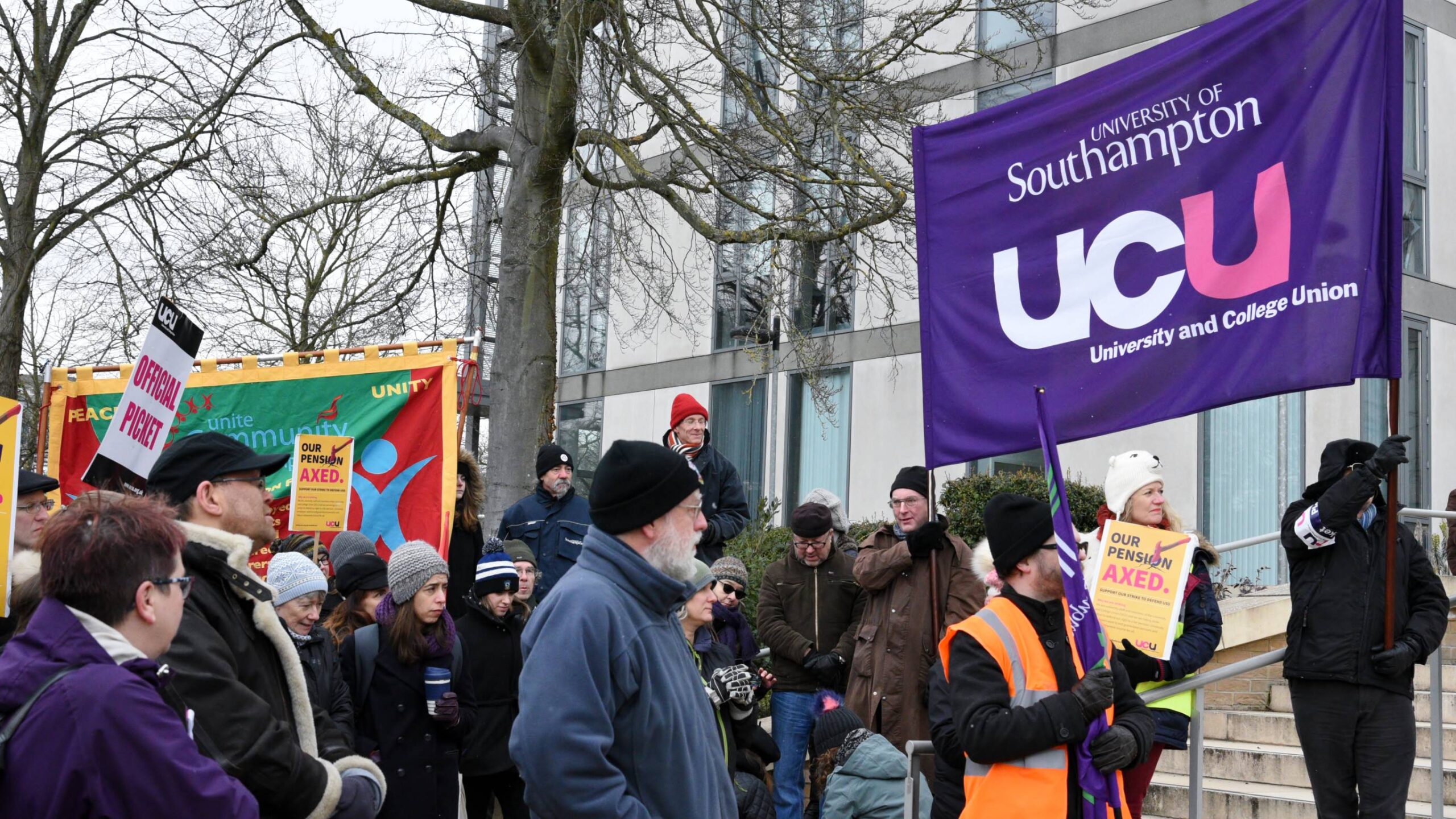
    University and College Union (UCU) staged a national marking and assessment boycott (MAB) – delaying graduations, job starts, and transitions to postgraduate study.

    UCU members took the action to tackle disputes including headline pay, gender and minority ethnic pay gaps, staff workload and the casualisation across the sector.

    Whenever there’s industrial action, the hope in Carlow St is that students will see the bigger picture – but this time around, at least for some students in some universities, the impact was significant. At the time, UCU estimated that 30,000 students were unable to graduate on time or were affected in some other way.

    In the aftermath, the Commons Education Committee held a mini inquiry to investigate the impact – it wrote to the then Conservative government to raise concerns about the lack of data, the role of the Office for Students (OfS) and the lack of clarity over students’ rights, and the eventual (post election) reply was predictably weak.

    Now, two years on, OfS has published research that was commissioned to develop an understanding of what the impacts were from a student perspective – along with guidance for institutions on protecting the interests of students during industrial action, and a webinar event planned for mid-May on the regulator’s expectations on how providers should support students before, during and after industrial action.

    OfS first ran a text-based focus group via YouGov in July 2024 that discussed short- and long-term impacts, what information they got from their institutions, and how those institutions handled the situation. A quantitative survey followed that gathered 763 responses (279 undergrads, 284 postgrads, and 200 graduates) that had been studying at impacted institutions during the boycott. You’d not be diving into demographic splits on that sample size.

    The polling drilled into how the industrial action affected their academic lives – immediately and over time – along with the comms they received from their universities, and how they viewed their rights as students.

    On the top line

    In a “topline” results report and associated student insights brief, we learn that the industrial action caused delayed or unmarked coursework (53 per cent) and exams (46 per cent), reduced lecture time (68 per cent), and decreased contact with staff.

    Most impacted students reported negative effects on academic work quality (49 per cent) and grades (42 per cent). The MAB’s psychological impact was significant – with 41 per cent reporting increased stress, 32 per cent experiencing poorer mental health, and 15-18 per cent noting negative effects on their social lives.

    One student is quoted as follows:

    I was waiting for the result of a resit that the progression of my masters’ depended upon but it was delayed so much I had to pay for the next module and would not get the results until halfway through.

    International students faced particular challenges, with visa uncertainties arising from delayed results and qualifications. Some students couldn’t attend graduation ceremonies because their results came too late:

    I didn’t manage to get graduation tickets in time due to how late results were, so I didn’t have a graduation ceremony.

    Communication varied considerably across institutions – with most updates coming through emails (65 per cent) rather than during lectures (22 per cent). Students rated information from individual lecturers (78 per cent satisfaction) more highly than university-wide communications (64 per cent satisfaction).

    Many students in the focus group:

    …were not told which of their modules would be affected, or when they would get their marks and feedback.

    OfS says that the institutional response was inconsistent across the higher education sector. Students directly affected by the MAB expressed significantly higher dissatisfaction (54 per cent) with their university’s handling of the situation compared to unaffected students (18 per cent). Just 46 per cent of affected students received alternatives or compensation, primarily through “no detriment” policies adapted from those developed during the Covid era (26 per cent).

    Financial compensation and rights awareness was low – with only 30 per cent knowing they could request it, and a mere 9 per cent successfully receiving any. The boycott also negatively impacted perceptions of education quality (38 per cent reporting a decrease) and value for money (41 per cent reporting a decrease), with one student noting:

    I ended up with a [postgraduate diploma] instead of my MSc, and I came out with a merit instead of a distinction.

    The brief does note that universities employed various mitigation strategies, including awarding interim degree classifications, guaranteeing minimum classifications, improving mental health support, reallocating marking responsibilities, and engaging with employers to request flexibility for affected graduates.

    Were they OK? Some students felt their institutions responded well, others reported that the experience contributed to decisions not to pursue further studies or work in higher education, with 42 per cent reporting decreased trust in their universities.

    Behind the screams

    Much of that won’t come as a surprise – although the sheer scale of the suggested impacts, as well as their depth and breadth on individual students (esp rer mental health and international students) ought to invigorate debates about the morality of the tactic, and how universities handled it to limit legal or financial exposure.

    Arguably of more interest is the letter and “regulatory statement” that accompanies the publication from John Blake, Director for Fair Access and Participation.

    Re-stressing that it’s not OfS’ role to intervene in labour disputes, Blake expresses concern about how strikes and the MAB disrupted students’ academic experiences, notes inconsistencies in institutional responses, sets out an aim to establish clearer expectations for fair treatment for all students in any similar future scenarios.

    And there’s a fascinating section on compensation:

    We want to be clear that we don’t see compensation as a substitute for the holistic experience of intellectual, professional and personal development that a student should expect from their higher education. Institutions should continue to focus their efforts during industrial action on delivering the education that students expect. The inclusion of an expectation in relation to compensation does, though, reflect the rights students have under the Consumer Rights Act 2015.

    Given that many students got neither, the clear implication is that a large number of students should have received both.

    Six principles

    The core of the guidance letter then manifests in six principles:

    1. Providers must remove contractual terms that inappropriately limit liability to students during staff industrial action or other circumstances within the provider’s control, as these breach consumer protection law.
    2. Effective contingency plans must be developed to minimise disruption to students during industrial action, ensuring plans are actionable, timely, and protect qualification integrity.
    3. When implementing contingency plans, providers should prioritise education delivery by: first avoiding impacts on students; if not possible, making minimal changes; and if necessary, providing timely repeat performance of missed teaching or assessment.
    4. Fair compensation must be paid when contingency plans fail to deliver promised aspects of student experience, particularly for missed teaching without timely replacement, delayed assessment marking, or delayed progression decisions affecting jobs or visa status.
    5. Clear communication with students is essential, including transparent information about rescheduled activities or compensation, with proactive identification of eligible students rather than requiring them to submit claims.
    6. Providers must submit reportable events about industrial action to the Office for Students (OfS) in accordance with established regulatory requirements.

    It’s an interesting list. The first one on the inclusion of industrial action in so-called “force majeure” clauses in student contracts – which limit liability for events that are outside of the predictability or control of of providers – is a long-running passive-aggressive row between the Competition and Markets Authority (CMA) and OfS on one side, and providers on the other.

    OfS has previously published a referral to National Trading Standards involving the University of Manchester’s contract – but my spreadsheet suggests that there’s a large number of providers that either haven’t seen that, or are digging in for a battle over it.

    That may be partly because those sorts of clauses – and CMA’s advice on them (which OfS requires providers to pay “due regard to”) – are a key point of dispute in the ongoing Student Group Claim, the UCL portion of which won’t get to court until early 2026.

    From a student point of view, if those clauses shouldn’t exist, the snail’s pace of enforcement on this is as baffling as it is frustrating.

    There won’t be many providers that weren’t developing contingency plans, notwithstanding that they can always be improved – and the one-two-three-four punch of avoid, adjust, repeat or compensate reflects (and translates) the position under consumer law.

    Of course some will argue that a legal duty to undertake any/all of those steps under consumer law depends on those force majeure clauses not existing or being unlawful – and as it stands there’s a major silent standoff that’s unhelpful.

    Even if you just look at compensation, the survey fails to differentiate between compensation paid for breach of contract, and “goodwill” payments where no such breach has been accepted by providers. As far as I’m aware, the former was vanishingly rare.

    The other issue, of course, is with punch three of four – where university managements satisfy themselves that once a dispute is over, teaching or support is rescheduled “because we told them to”, despite the fact that most heads of department find it hard to actually implement those instructions with UCU members.

    The “proactive identification of eligible students” for “repeat performance” or compensation is interesting too – especially over the latter, providers have long relied on students having to make complaints in order to get redress. This not only depends on the breach of contract or not issue being resolved, it also raises questions for universities’ legal advisors and insurers about the relative risks of doing as John Blake says, or waiting for students to raise concerns.

    But as well as all of that, there’s three things we ought to be surprised not to see.

    What’s missing?

    For a set of documents seeped in the translation of consumer protection to a higher education setting, there’s nothing on the extent to which any alternative arrangements in a MAB – especially alternative arrangements over marking – should still be carried out with reasonable skill and care. Academic judgement can’t be challenged, but only if that judgement has been carried out in the way we might expect it to be by people who know their onions. That was a major issue in the dispute for plenty of students, even if it wasn’t a big issue in the polling.

    The second is the lack of answer to the questions raised both in the polling and by the Commons Education Committee – which concern students’ understanding of what their rights are. If OfS thinks that it can vaguely pressure providers into proactively identifying students entitled to wads of cash, it’s misunderstanding the countervailing pressures on providers in similar ways to those identified by Mills and Reeve over provider collapse. And as I often say on the site, good regulatory design considers how individuals come to understand (or access information) on their rights should they need to use them without having to access a regulator or complaints adjudicator – there’s nothing on any of that here.

    But the third is the lack of a clear link to the regulatory framework, and the lack of any enforcement carried out over what must amount to failings. If the guidance is grounded in OfS’ rules, students might well say “well what action have you taken given that the problems were widespread?”

    If it’s not grounded in OfS’ powers, providers might well say “well notwithstanding that we like to look nice, why would we magnify the efficacy of an industrial action tactic if we don’t really have to”.

    It’s all very well for OfS to be “give them guidance” mode, but over this set of issues the financial impacts of compliance with something that sounds contested, and partly voluntary, could be huge both in an individual dispute and in the long-term. That all (still) needs bringing to a head.

    Source link