
Under NATO, 32 countries have pledged to defend each other. Is the United States the glue that holds it all together?
Source link
Tag: Replay
-
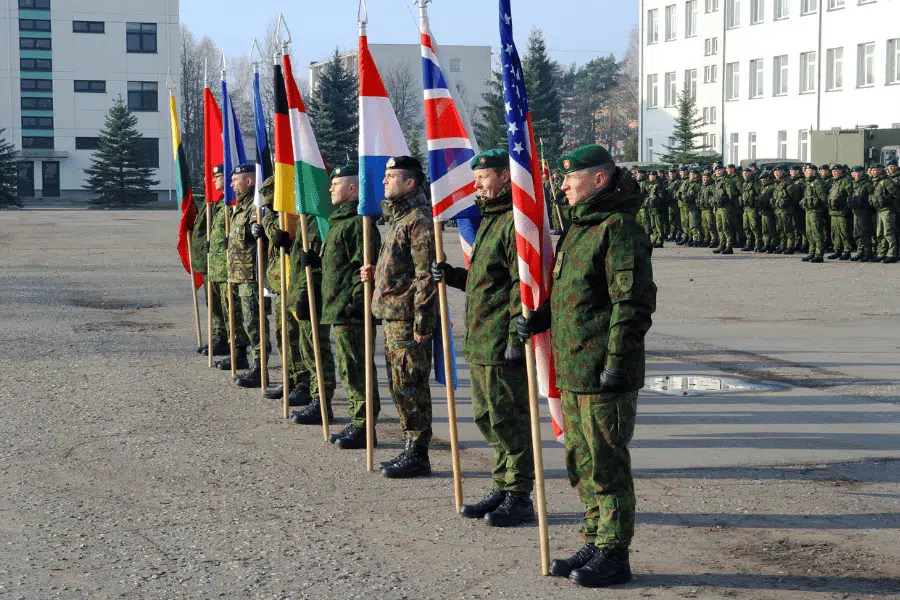
Decoder Replay: Isn’t all for one and one for all a good thing?
-
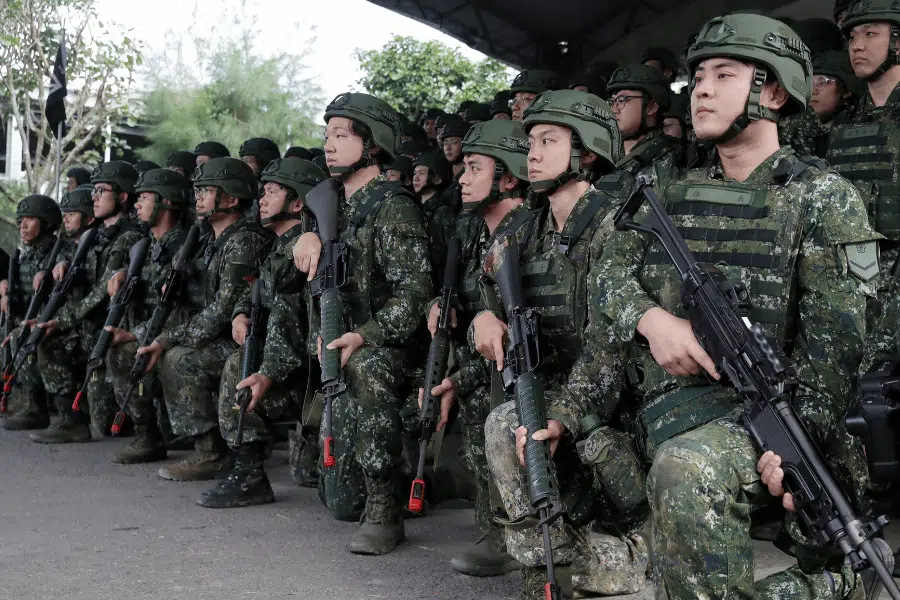
Decoder Replay: Can Taiwan fend off China forever?
But since 1949, Taiwan has functioned with de facto independence; it has its own government, military and currency. Yet the People’s Republic of China has always insisted that Taiwan is a part of the PRC.
China also insists that other countries respect its “One China” principle. Thus, only 12 countries recognise Taiwan as an independent country. They have diplomatic relations with Taiwan rather than the People’s Republic of China. These are mainly small nations in Latin America and the Pacific Islands.
Not surprisingly, the status of Taiwan has become a focal point for the great power rivalry between China and the United States.
Most Western countries, in contrast, have diplomatic relations with Beijing, and maintain representative offices in Taipei. The United States maintains unofficial relations with the people of Taiwan through the American Institute in Taiwan, a private nonprofit corporation, which performs U.S. citizen and consular services similar to those at embassies.
A diplomatic dance
Back in 1992, representatives of both Taiwan and China met and ironed out some conditions that could allow for relations across the Taiwan Strait. This became known as the 1992 Consensus. While it broadly committed both to the principle of “One China,” each interprets that differently; The People’s Republic sees Taiwan as a renegade state that must return at some point in the future, while Taiwan values its own autonomy.
Much to the chagrin of Beijing, the DPP does not accept the “1992 Consensus.”
Thus, there has been a dramatic deterioration in relations in recent years, especially since President Tsai’s presidency overlapped with that of the very assertive Chinese leader, Xi Jinping.
Many commentators now argue that the Taiwan Strait is the most dangerous region in the world.
China believes Taiwan must be unified with the mainland under the banner of its “One China” principle, and China’s claims to Taiwan are only intensifying in tandem with its growing economic power. The impatience of Xi Jinping was palpable in 2021 when he said that the “Taiwan issue cannot be passed on from generation to generation.”
Autonomy versus subjugation
Needless to say, Xi’s upping the ante has only exacerbated tensions across the Taiwan Strait — as have Beijing’s interference in the affairs of Hong Kong and the consequent deterioration in its freedom and human rights.
Hong Kong’s system of “one country, two systems” was once considered to be a possible model for Taiwan. But this is no longer the case.
Today, less than 10% of the Taiwanese people are in favor of unification with China. The majority prefer to keep the status quo. While feelings for independence are strong, the Taiwanese people are concerned that any move to independence would provoke Beijing — hence the widespread support for the status quo.
For its part, the United States has “acknowledged” (but not supported) the “One China” positions of both Beijing and Taipei. But the United States does not recognize Beijing’s sovereignty over Taiwan.
Nor does it recognise Taiwan as a sovereign country. According to official U.S. policy, Taiwan’s status is unsettled, and must be solved peacefully.
The United States stands by.
Back in 1979 when the United States recognised the People’s Republic of China and established diplomatic relations with it as the sole legitimate government of China, it also implemented the Taiwan Relations Act.
This requires the United States to have a policy “to provide Taiwan with arms of a defensive character” and “to maintain the capacity of the United States to resist any resort to force or other forms of coercion that would jeopardize the security, or the social or economic system, of the people on Taiwan.”
When Chiang Kai-shek and his KMT retreated to Taiwan in 1949, Taiwan was poorer than virtually all of the provinces of mainland China. But the Taiwanese economy would grow dramatically thanks to U.S. support, an increasingly well-educated and industrious workforce, a strong entrepreneurial spirit and the legacy of infrastructure and institutions from Japan’s colonisation of the island.
Today, Taiwan’s successful democratic capitalism is a strategic asset of the West. Its economy is a lynchpin in the global economy’s high-tech supply chains. In a world where democracy seems increasingly under threat, it is a beacon of democratic hope and inspiration. Taiwan also offers proof that democracy is not inconsistent with Chinese culture.
Taiwan’s position in the so-called “first island chain,” geographically located between U.S. allies Japan and the Philippines, is crucial to Washington’s foreign policy in the region at a time when China is trying to evict the United States from East Asia and behaving aggressively in the South China Sea.
China casts a big shadow.
The loss of Taiwan would undermine the credibility of the United States as an ally of Japan, Korea, the Philippines and Australia. If China took control of Taiwan, it could be freer to project power in the western Pacific and rival the United States.
While U.S. official policy toward Taiwan has remained unchanged over the years, the United States has been deepening its partnership with Taiwan in tandem with Xi Jinping’s assertive attitude over the past decade, thereby provoking Beijing’s anger. This has included increased arms sales and military training, and the visits of high-level U.S. Congress representatives, which Beijing interprets as conferring political recognition on Taiwan.
U.S. President Joe Biden has indicated four times that he would use the military to defend Taiwan if China ever attacked the island. The U.S. Congress has a strong resistance to the idea of sacrificing democratic Taiwan to the increasingly authoritarian Beijing.
And as recently as 20 April 2024 it passed a series of foreign aid bills that allocated $8 billion for Taiwan and other Indo-Pacific allies, along with much larger sums for Ukraine and Israel.
There is much speculation about the future of China-Taiwan relations by geopolitical analysts.
According to one school of thought, China faces a narrow window of opportunity, in light of its deteriorating economic prospects, to subjugate Taiwan. Thus many are alert to the possibility of China placing extreme pressure on Taiwan, including through a possible invasion over the coming years.
Others argue that Russia’s invasion and never-ending war with Ukraine make China hesitant to contemplate a similar operation in Taiwan. Taiwan’s mountainous geography and relatively shallow seas on the west coast would make an invasion much more challenging.
Is invasion a possibility?
The close location of U.S. forces in Japan and the Philippines mean that China would inevitably bump into the United States. And because China’s economy is so tightly integrated into Western-led supply chains, the cost of Western sanctions on China would be much greater than the sanctions on Russia.
The most likely scenario is that China will seek to subjugate Taiwan without overt military action, notably by cyber attacks, coercion, information warfare, harassment and threats. All things considered, with or without an invasion or direct military attacks, the Taiwan Straits will likely remain Asia’s biggest hot spot and occupy the attention of strategic planners for many years to come.
So are the Taiwan Straits the most dangerous region in the world?
Having recently spent 10 days visiting Taiwan with the Australian Institute of International Affairs, my answer is a resounding no. Taiwan and the Taiwanese people have a calm, relaxed and polite air. They seem immune to the bellicose, megaphone diplomacy of mainland China.
And as they continue to strengthen their economy and deepen their international friendships, their destiny would seem increasingly secure, although they need to invest much more in their military capabilities. But there will never be grounds for complacency — as the case of Hong Kong demonstrates, things can change virtually overnight.
Three questions to consider:
1. What autonomy does Taiwan currently have?
2. Why is Taiwan’s independence seen as important to other democratic nations in the region?
3. Do you think the United States should provide Taiwan military support to protect its autonomy?
-
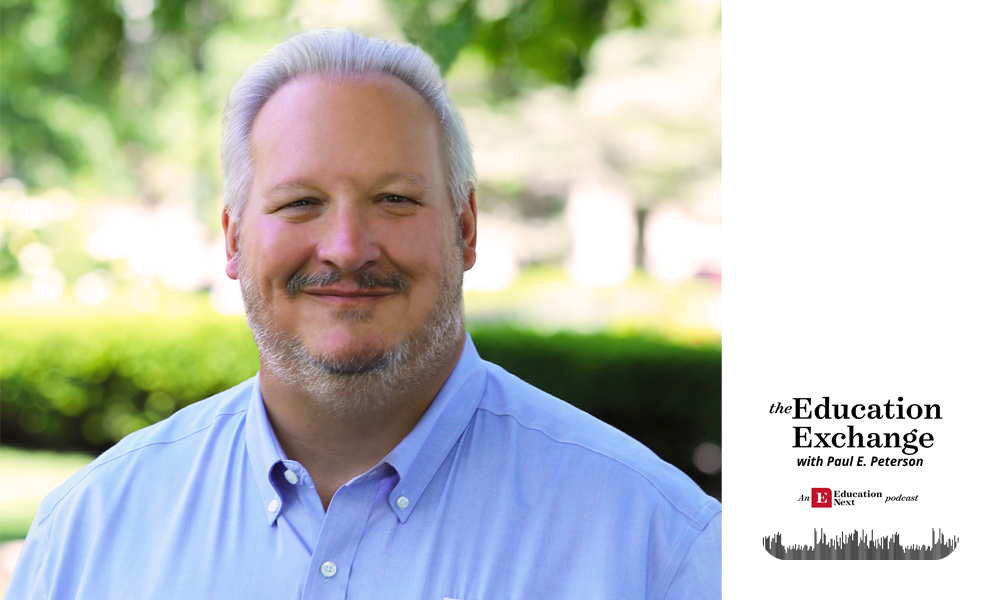
Education Exchange Replay: “Congress Swung for the Fences on School Choice and Hit a Single”
In this replay episode of the Education Exchange, Robert Enlow, the President and CEO of EdChoice, joins Paul E. Peterson to discuss the tax credit scholarship provision that was part of budget reconciliation bill, which was passed by Congress and signed into law on July 4, 2025.
-

Decoder Replay: Can we prepare for unpredictable weather?
There’s no denying climate change when a tornado rips through your town or a blizzard buries you in snow. So why blame the people who raise weather alarms?
Source link -
Decoder Replay: Gold is valuable. But you can’t drink it.
We’re marking World Water Week, a gathering in Sweden intended to solve water-related challenges such as droughts, floods and food security. Let’s invest in it.
Source link -
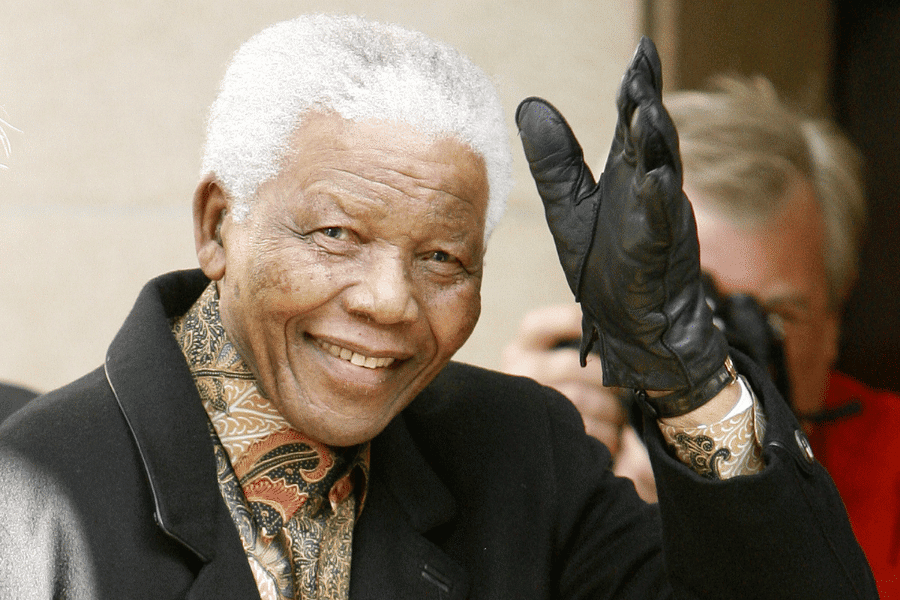
Decoder Replay: Let’s celebrate Mandela Day
February 11, 1990 was truly a turning point in the history of South Africa.
For decades the nation at the southern tip of the continent had been pilloried by much of the rest of the world. This was because of its apartheid racial segregation laws that hugely favoured the white population over the far larger and mostly black majority.
Apartheid means “separateness” in Afrikaans, the language rooted in Dutch that evolved when the country was a colony.
By 1989 — itself a remarkable year for the wave of revolutions in communist East Europe — South Africa had made significant steps in its effort to end its pariah status. International sanctions were costing it dearly economically, culturally and in sporting terms.
As a taste of events to come, the government freed senior figures in the African National Congress (ANC), the exiled organisation waging a low-level guerrilla campaign against apartheid.
The fight against apartheid
A favourite weapon of the ANC was small mines. One of them exploded in a shopping mall in the commercial capital Johannesburg just as I had finished shopping there and was safely in the mall’s car park.
But there was no word when ANC leader Nelson Mandela — who ultimately spent 27 years incarcerated, much of it in an island prison — would be freed.
Lawyer Mandela entered the world stage with a famous speech at his 1963 trial for sabotage acts against the state in which he stated that freedom and equality were “an ideal for which I am prepared to die.”
Releasing Mandela from prison was a key card that South Africa could play to regain respectability, and the government would play it “soon,” Anton Lubowski, an anti-apartheid activist and human rights advocate, told me.
Lubowski did not live to see his forecast fulfilled. In September 1989, gunmen pumped AK-47 rifle rounds into him, with the coup de grace a pistol bullet. He was the latest in a long list of opposition figures in southern Africa to fall victim to unnamed assassins.
Freedom as news
Knowing that Mandela was expected to be released — his freedom would be a huge news story — but not knowing how or when it would happen was particularly frustrating for a news agency reporter like me.
Reuters and its rivals compete tooth and nail to get stories first, and to get them right. Being just one minute behind another news agency on a major story rates as a failure.
What I dreaded most was that Mandela would be released from prison unannounced, just as his ANC colleagues had been. This possibility made it necessary for me and my colleagues to be constantly alert, straining to catch the first authentic information.
The problem was that, then as now, the pressure to get hard information was compounded by a fog of fake news and hoaxes, saying that the release of Mandela was imminent or indeed had actually happened.
These claims were typically relayed on pagers, the messaging devices of the pre-smartphone age. Such messages, no matter how bogus-sounding, had to be checked. This took time and energy and shredded nerves.
Recognizing a hero
It was one such scare that prompted reporters to flock to an exclusive clinic outside Cape Town where Mandela was known to be undergoing treatment.
It was then that another problem surfaced: Nobody among us knew what Mandela looked like after his marathon spell in prison. There had been no pictures of him. Would we even recognise him if he walked out of the clinic?
The hilarious result was that every black man leaving the clinic — whether porter, delivery man, cleaner or whatever — came under intense scrutiny from the ranks of the world’s press assembled outside.
But on the timing of the release, I had a lucky break. A local journalist friend introduced me to a senior member of a secretive police unit who was willing to share with me whatever information he had on when Mandela would be a free man.
The police official’s name was Vic — I did not then know his full name. But he was no fake policeman. He introduced me to his staff in his offices, which were in a shopping arcade concealed behind what looked like a plain mirror but was in fact also a door.
Verifying fake claims.
All cloak-and-dagger stuff. With enormous lack of originality, my Reuters colleagues and I referred to Vic as our “Deep Throat,” the pseudonym of the informant who provided Washington Post reporters Bob Woodward and Carl Bernstein with information about the 1972 Watergate scandal.
Some time in the latter half of 1989, Vic told me in the less than cloak-and-dagger setting of a Holiday Inn coffee shop that Mandela was likely to be released in January or February of 1990.
This was not precise information, but at least it was better than anything that I had, or apparently anybody else in the news business.
In later meetings, Vic refined the information without disclosing the exact day of the release, which apparently was known to just four people in the South African government.
One of the ways Vic was valuable to us was that whenever a fake claim about Mandela’s whereabouts surfaced, I could call him, day or night, to check. And it was Vic who told me on February 10 that “it looked like” Mandela would be a free man the next day.
And so it proved.
Mandela instantly became universally recognisable, South Africa disbanded apartheid, elections were held in which all races voted, the ANC won, and Mandela became South Africa’s first fully democratically elected president.
February 11, 1990 is indeed a day to remember.
Three Questions to Consider
1. Why did apartheid last so long?
2. What was the reaction of South African whites to Mandela’s release?
3. Can you think of someone today who is trying to fight against an system of oppression?
-
Decoder Replay: Is truth self-evident?
Fake news is dangerous. But it’s hardly new.
More than 3,000 years ago, the largest chariot battle ever pitted the forces of one of the most powerful pharaohs of ancient Egypt — Ramesses the Great — against the Hittite Empire in Kadesh, near the modern-day border between Lebanon and Syria.
The battle ended in stalemate.
But once back in Egypt, Ramesses spread lies portraying the battle as a major victory for the Egyptians. He had scenes of himself killing his enemies put up on the walls of nearly all his temples.
It was propaganda. “It is all too clear that he was a stupid and culpably inefficient general and that he failed to gain his objectives at Kadesh,” Egyptologist John A. Wilson wrote.
Disinformation in ancient Rome
The Roman general Mark Antony killed himself with his sword after his defeat in the Battle of Actium upon hearing false rumors — fake news — propagated by his lover Cleopatra claiming that she had committed suicide.
American patriots, including the esteemed U.S. statesman and inventor Benjamin Franklin, and their British enemies swapped spurious allegations during the American Revolution that murderous Native Americans were working in league with their adversaries, scalping allies.
How about the 1938 radio drama, “The War of the Worlds”? Adopted from a novel by H.G. Wells, the radio broadcast fooled some listeners into believing that Martians had landed in America. Newspapers of the day said the broadcast sparked panic.
But historians today say the panic was exaggerated. So it was fake news about fake news!
There is no shortage of modern-day instances of fake news. In Myanmar in 2018, the military spearheaded a campaign of fake news, mainly on Facebook, claiming the Rohingya minority had murdered and raped members of the Buddhist majority. The Rohingya were described as dogs, maggots and rapists. The fake news helped trigger violence against the Rohingya that forced 700,000 people to flee their homes.
The irony is that many in Myanmar had turned to Facebook for information because the military had alienated many citizens with its control of the media. But the same military took advantage of the false reports to crack down on the Muslim minority.
Election falsehoods
Similarly, fake news has been used in the Philippines, Indonesia, Malaysia and Sri Lanka to influence the outcome of elections, hide corruption and stir up religious animosity.
One of the ironies of fake news is it can embolden authoritarian governments to turn the tables and use made-up news as an excuse to crack down on the media. That can enable the regime to control the media message. In other words, fake news to the rescue of autocrats.
But we should not fool ourselves into thinking that fake news can be cured merely through technological solutions, that it’s a product of our times, that it’s mainly political and that it’s peddled only by our opponents. It’s not the property of any one political party or interest.
Fake news takes root in the gray area between truth and fiction, an area we can be quite comfortable in. There is something very enticing about fake news, especially if it aligns with our pre-conceived notions. Yet we are apt to think that fake news is the exception, a new aberration.
We can easily fall victim to fake news in part because we are not always disgusted by lies. We are taught at a very early age that deceit – deception, dishonesty, disinformation – is all around us. And that not all lies are as harmful as others. Our parents read us fairy tales from the earliest of ages, and many tales involve lies.
The telling of fairy tales
Take the ancient fable of “The Cock and the Fox,” included in the medieval collection of Middle Eastern folk tales, “One Thousand and One Nights.”
A hungry fox tries to coax a rooster out of a tree by telling him a tall tale — that there is universal friendship now among hunters and the hunted. The cock has nothing to fear, the wily fox says. It’s a lie, of course.
So, the equally wily cock resorts to his own lie: he tells the fox that he sees greyhounds running towards them, surely with a message from the King of Beasts. The fox, outwitted, runs away in fear. So here we have two lies in a single story. The moral? “The best liars are often caught in their own lies.”
Children and their parents are quite comfortable surrounded by lies. Is Santa Claus a malicious or harmless lie?
Do you know the story of the Wizard of Oz? That classic U.S. movie about a young girl lost in a fantasy world, pursued by witches, struggling to go home? The entire plot relies on a deceit – a supposedly powerful wizard who is nothing more than a bumbling, ordinary conman, who uses magic tricks to make himself seem great and powerful.
Deceit at the service of entertainment.
Advertisements are often innocent exaggerations, fiction if you will in the service of business and profit-making. But sometimes ads can veer into falsehoods.
So fake news is not new. And we’re no strangers to lies. What does that mean for those of us interested in making the world a better place? Should we simply give up because the task is too great?
Hardly. The lesson is that truth is not black and white, but grey, and it’s a moving target.
Take, for example, colonialism. From the 15th century on, white Europeans conquered huge swathes of the Americas, Africa, the Middle East, Asia and Oceania. They subjugated millions of people, using brutal violence in many places to subdue indigenous populations. They brought diseases that wiped out millions.
They exploited natural resources, using native labor and pocketing most of the profit from sales into a global trading network that they established. By 1914, Europeans had gained control of 84% of the globe.
We know all of that now because colonized peoples have revolted against their colonial rulers and won independence. The wars of independence have been won, yet so many countries around the world are still grappling with the shameful effects of colonialism and racism.
The ambiguity of truth
But would everyone have agreed on that depiction of Europeans as rapacious colonialists before the wars of independence?
Certainly not most of the Europeans, who believed they were exporting a superior civilization to backward natives. Missionaries who led many colonial ventures believed they were doing God’s will by converting native populations to Christianity. And not a few natives turned a blind eye to atrocities and benefited financially.
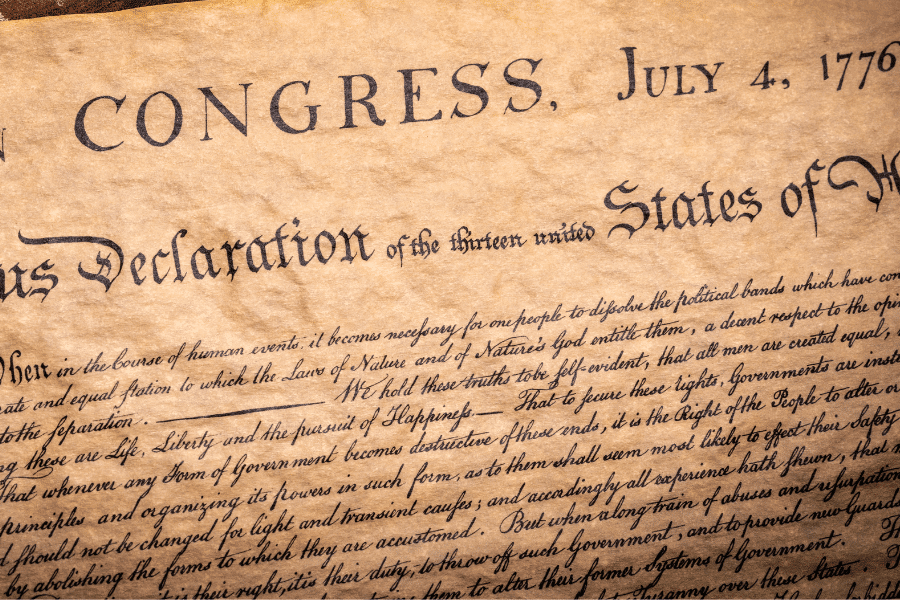
For a glaring example of the ambiguity of truth, take the United States. Its Declaration of Independence, borrowing from the French enlightenment, states that “all men are created equal,” with “unalienable Rights” to “Life, Liberty, and the pursuit of Happiness.” It put notions of freedom and equality at the heart of the American experiment. Yet it was written by a slave owner, Thomas Jefferson, and represented 13 colonies that all, to one degree or another, allowed slavery.
Convinced of their superiority and driven by an almost unquenchable appetite for wealth, white settlers drove Native Indians from their homes. The U.S. government authorized more than 1,500 attacks and raids on Indians. By the end of the 19th century, fewer than 238,000 indigenous people remained, down from some 5-15 million living in North America when Columbus arrived in 1492.
What is more, settlers in the South imported slaves from Africa, forcing them to work on vast plantations and denying them the very rights to life and liberty spelled out in the Declaration of Independence.
Rights and repercussions
Both Native Indians and African Americans are struggling to this day to come to terms with the treatment they suffered at the hands of the white colonials.
Would a white settler have seen himself or herself as a murderer? Hardly. In their minds, they were doing God’s work.
Mind you, the desire to colonize is not peculiar to Europeans. Imperial Japan and imperialist China both established overseas empires. The Empire of Japan seized most of China and Manchuria. To this day, Chinese nationals and South Koreans harbor ill feelings towards the Japanese. Chinese dynasties won control over parts of Vietnam and Korea.
There’s an expression in newsrooms around the world: “One man’s terrorist is another man’s freedom fighter.” Put another way, the same individual might seem a terrorist to some, a hero to others.
Take Yagan, a 19th century indigenous Australian warrior from the Noongar people. He played a key role in early resistance to British colonial rule in an area that is now Perth. His execution by a young settler figures in Australian history as a symbol of the unjust treatment of indigenous peoples by colonial settlers.
A hero to his people, he was a murderer in the eyes of the British.
Different perspectives on history
Or take the Incan emperor, Atahualpa, who resisted the explorer and conquistador Francisco Pizarro, to this day a Spanish hero. Pizarro forced Atahualpa to convert to Christianity before eventually killing him, hastening the end of one of the greatest imperial states in human history.
How you view Pizarro may depend on where you are sitting and when you lived.
There are countless modern examples of radically different perspectives on events. Such discrepancies may be inevitable. Dogged journalists can shed light on events and protagonists, and help shape history – for better or for worse.
Joseph McCarthy was a U.S. senator who in the early years of the Cold War spearheaded a smear campaign against alleged Communist and Soviet spies. Only courageous reporting by a small group of journalists who dared question McCarthy’s tactics and risked being tarred as Communist sympathizers themselves led to McCarthy’s downfall.
Joseph McCarthy (L) with his attorney Roy Cohn, who later mentored Donald Trump (Wikimedia Commons)
The New York Times and Washington Post went out on a legal limb when in 1971 they published the Pentagon Papers, a U.S. government history of the Vietnam War that laid bare official lies that drove American policy for more than a decade in Southeast Asia.
The government called the man who leaked the government documents a criminal and sought to prevent the newspapers from publishing the damning revelations.
The newspapers won their case before the Supreme Court, and their reporting increased public pressure on the government to withdraw from Vietnam.
Watergate upended a presidency.
You’ve perhaps heard of Watergate? Literally speaking, it’s a hotel in Washington, DC. But it has come to stand for the dogged and courageous news reporting by two journalists with the Washington Post who exposed crimes by President Richard Nixon and helped lead to his resignation in 1974.
Courageous investigative journalism is hardly confined to the United States. A non-profit news outfit called AmaBhungane — in Zulu, “dung beetle,” an animal that digs through shit – has reported on corrupt business deals at the highest levels of South Africa’s government.
In the Arab world, investigative journalists in Egypt, Yemen, Tunisia, Syria, Lebanon, Jordan, Iraq, Bahrain, Palestine, Mauritania, Algeria, Kuwait and Sudan have uncovered tax evasion, money laundering, drug smuggling, torture and slavery. They have unmasked doctors who have removed the wombs of mentally disabled girls with the consent of parents.
But it’s not all easy sailing. According to Freedom House, in 2017 there were only 175 investigative journalists in all of China, down 58% since 2011.
What does this mean for you, a young activist who wants to help change the world?
Truth is murky.
The lesson is that the truth may not lie squarely on one side or the other, but rather in a murky, grey area. It can take courage to shine a light in the shadows, teeming with lies. And you may have to hear viewpoints that differ radically from your own. It pays to listen.
Progress against racism, inequality and injustice depends on an informed public.
The best journalists recognize their responsibility to uphold the Universal Declaration of Human Rights, which state that: all human beings are born free and equal in dignity and rights; and everyone has the right to freedom of opinion and expression; this right includes freedom to hold opinions without interference and to seek, receive and impart information and ideas through any media and regardless of frontiers.
As the third U.S. President Thomas Jefferson said: “Were it left to me to decide whether we should have a government without newspapers or newspapers without a government, I should not hesitate a moment to prefer the latter.”
So stick up for your rights, including the right to free expression. Be fair. And remember that one man’s terrorist may be another man’s freedom fighter. You don’t have a lock on the truth.
Questions to consider:
1. Why is it important to understand that fake news is nothing new?
2. Do you think there is any way to stamp out fake news?
3. What does it mean to say, “One man’s terrorist is another man’s freedom fighter”?
-
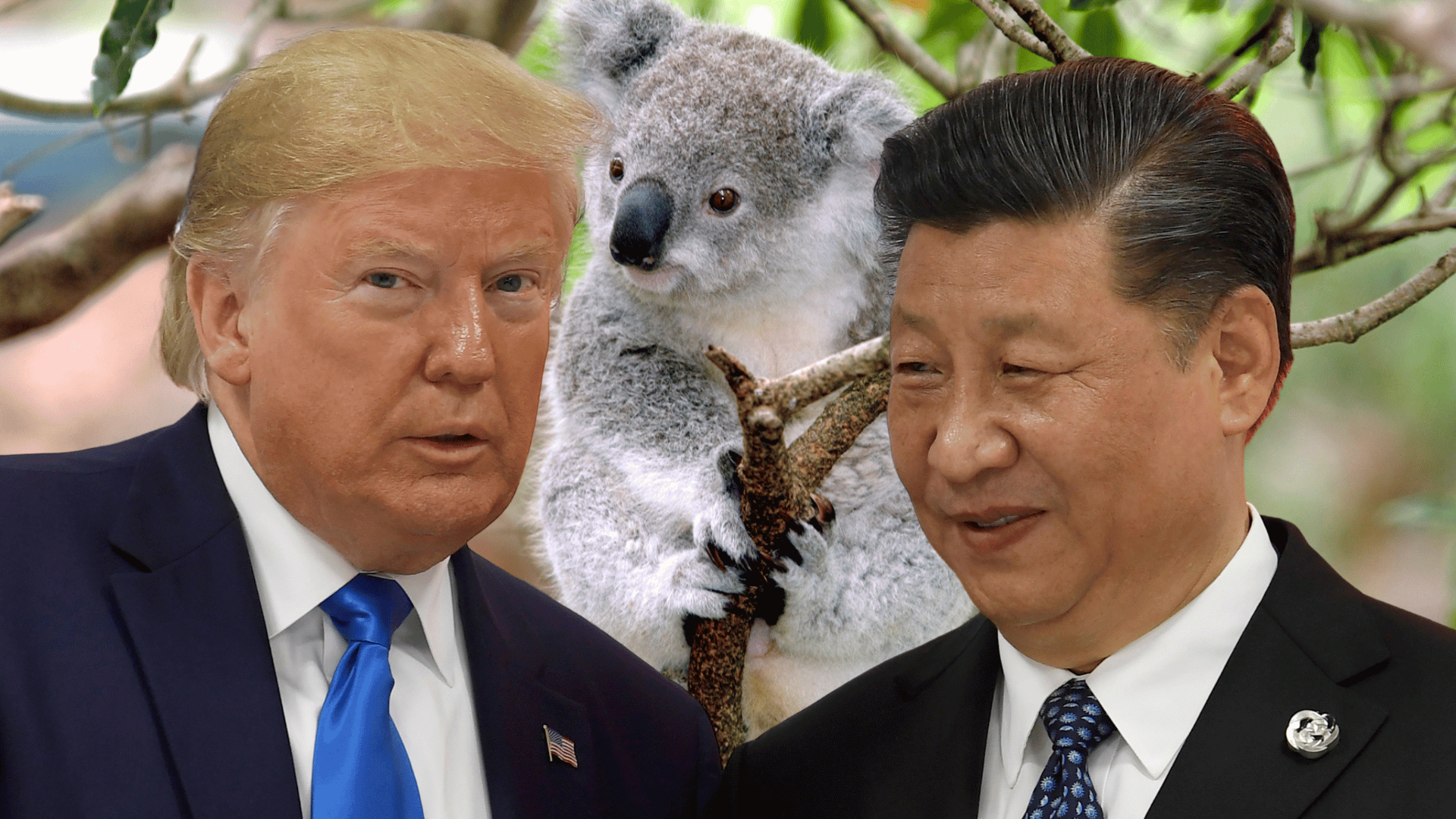
Decoder Replay: Australia waltzes with two superpowers
The index ranks 26 countries and territories in terms of their capacity to shape their external environment. It evaluates international power through 133 indicators across themes including military capability and defense networks, economic capability, diplomatic and cultural influence, as well as resilience and future resources.
The portrait that emerges from its latest survey is that while China’s overall power still lags the United States, it is not far behind, even though the current economic slowdown is holding it back in the short term.
After the two superpowers, trailing a long way back as the next most powerful countries in the Asia-Pacific are Japan, India, Russia and then Australia.
Economic versus military power
The index confirms that China draws its power from its central place in Asia’s economic system, while that of the United States comes from its military capability and unrivaled regional defense networks.
Australia’s relationship with the two mirrors the dilemma facing the whole region.
The United States is far and away Australia’s main strategic partner and has been since the Second World War.
In a deal signed in March 2023, Australia is set to acquire a conventionally-armed, nuclear-powered submarine capability with help from the United States through the AUKUS Treaty, which also involves the United Kingdom.
This was followed by plans to station more U.S. forces in Australia, especially in air bases in northern and western Australia. There are also moves to increase cooperation between both countries in space, speed up efforts for Australia to develop its own guided missile production capability and work with the United States to deepen security relationships with other countries in the region — most notably Japan.
This comes as Australia has been working hard to get trade restrictions eased with China after it imposed tariffs on a range of Australian products in 2020 during a standoff with the previous government.
Dining with Joe and Jinping
China is still Australia’s largest two-way trading partner in goods and services, accounting for almost one third of its trade with the world. Two-way trade with China grew 6.3% in 2020-21 to A$267 billion (about US$180 billion), mostly due to the coal and iron ore sectors.
So as it stands, Australia’s security relies on the United States but its economic prosperity is heavily influenced by China.
It’s no surprise then that Prime Minister Albanese had to walk a fine line in 2023 — going from a state dinner at the White House with U.S. President Biden on 26 October to meeting with Chinese president Xi Jinping 11 days later.
Colin Heseltine, a former Deputy Head of Mission at the Australian Embassy in Beijing and now senior advisor for independent think tank Asialink, said Australia is in a conundrum over China.
“Australia’s major trading partner is also perceived as our No.1 security threat,” he said.
Normalizing relations before an abnormal U.S. election
Heseltine believes there is a mood of cautious optimism about the growing relationship between Australia and China since the election of the Albanese government, but expects the future will not be completely free of headwinds.
In the end, Australia, like many other nations in the region, is pragmatically making the situation work. It has seen relations with Beijing normalize, or as some prefer to describe it, stabilize.
As for the United States, relations between Canberra and Washington remain vibrant and strong.
The next big issue for Australia in managing this twin policy of improving ties with the Asia-Pacific’s two diverse superpowers could well be the 2024 U.S. presidential election — who wins it and if China features in it.
And those things are outside its control.
Three questions to consider:
1. What is the emerging dilemma facing most democratic nations in the Asia-Pacific region?
2. Is China likely to overtake the United States as the Asia-Pacific’s major superpower anytime soon?
3. What is the biggest threat to the current status quo facing nations in the region?
-
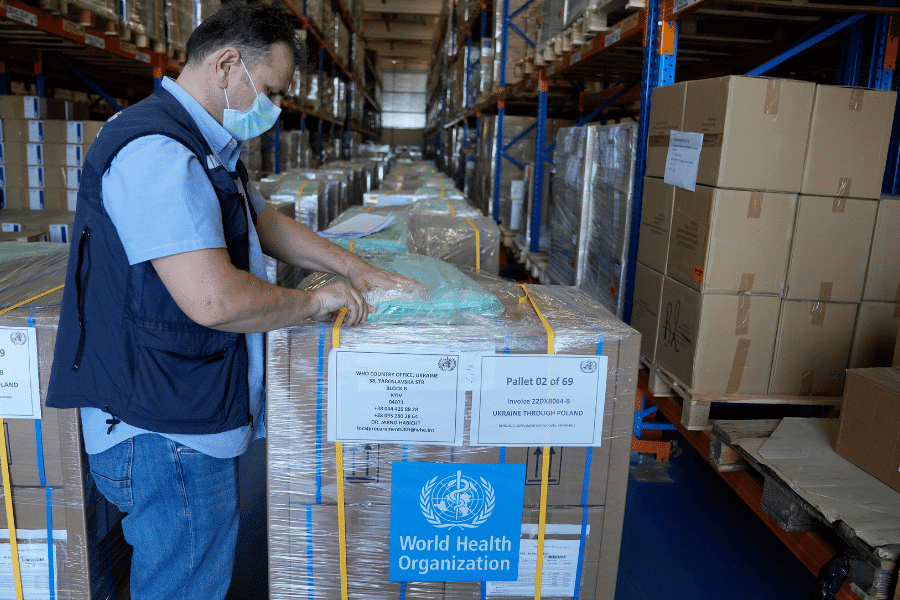
Decoder Replay: Bacteria doesn’t stop at the border
During the Covid pandemic, nations realized they needed to work together to keep their people safe. That’s where the World Health Organization comes in.
Source link