A new report from the Center for American Progress and the Thurgood Marshall College Fund shows that historically Black colleges and universities receive a disproportionately low percentage of federal research and development funding.
While HBCUs make up roughly 3 percent of all four-year higher ed institutions, they’ve received less than 3 percent of R&D funding since at least 2010, according to the report. In recent years, between 2018 and 2023, they were awarded less than 1 percent of R&D expenditures.
Some agencies have given HBCUs a relatively high proportion of R&D funding, including the Department of Education, the Small Business Administration and the Department of Agriculture, which has required allotments for land-grant HBCUs. But the two federal agencies that award the most R&D funding annually, the Department of Health and Human Services and the Department of Defense, have doled out especially low shares of those funds to HBCUs; in 2023, they awarded 0.54 percent and 0.40 percent, respectively. Meanwhile, 17 of the 43 federal agencies that supply research funding didn’t give HBCUs any R&D funds at all that year.
Sara Partridge, associate director of higher education policy at CAP and co-author of the report, said both Republicans and Democrats have sought to address inequities in R&D funding, but their efforts have been insufficient.
“In order to support these key drivers of scientific achievement and upward mobility, we need federal policymakers to commit to measurable benchmarks for the share of funds awarded to these institutions,” she said in a press release.
A new report from the Center for Community College Student Engagement found that even though parenting students are especially dedicated to their studies, they face significant obstacles in college.
The report, based on a 2024 survey of students from 164 community colleges, found that parenting students were more engaged than nonparenting students across multiple benchmarks, including coming to class prepared and never skipping classes, despite their additional responsibilities. These students were also more likely than nonparents to have earned an associate degree or certificate or to mention changing careers as a goal.
But even with such strong drive, 71 percent of student parents reported caring for dependents could cause them to withdraw from college; 73 percent said financial circumstances might make them stop out. Student parents were also more likely than nonparents to face food and housing insecurity, but only small fractions of students reported receiving food or housing support from their college in the last month. In a similar vein, a third of students with children say that their colleges don’t adequately support them as parents. Meanwhile, these students say underutilized supports that could help them, including campus childcare services, financial advising and career counseling, the report found.
The report also offers examples of higher ed institutions that have put in place effective supports for student parents. For example, Lee College in Texas offers weekly financial assistance for childcare and family-friendly study areas. Monroe Community College in New York created a designated student success coach role to serve single mothers.
“Parenting students are among the most engaged learners on our campuses, but they face barriers that too often derail their progress,” Linda García, CCCSE’s executive director, said in a news release. “But when colleges take intentional steps to support them, the impact is not only on students, but on their children and communities.”
Yesterday, HEPI and Cambridge University Press and Assessment jointly hosted the UK launch of the OECD’s Education at a Glance. You can see the OECD’s slides here.
Here we publish a response to the OECD from Professor Sir Chris Husbands, who is a former Vice-Chancellor of Sheffield Hallam University and also former Chair of the Teaching Excellence Framework (TEF) Panel. Chris is a Trustee of HEPI and spoke at the launch.
There is one line in the 2025 OECD Education at a Glance report which should be in bright flashing lights for this and all governments. The supporting data is on page 112 of the main report. It is this: Individuals with greater educational attainment generally face a lower risk of unemployment and earn higher wages. Race, gender, deprivation, place, subjects studied all impact outcomes in different ways, but the overall conclusion is clear, and in his HEPI briefing on the report, the OECD’s chief analyst Andreas Schleicher got the summary down to just two words: education pays.
The 2025 OECD Education at a Glance report comes in at 541 pages, and the annual appearance of the report has made it the definitive guide to education system performance and policy dynamics all around the world: in the now familiar graphs of compelling clarity, and crisp text judgements, the OECD team have made themselves indispensable to institutional leaders, policy analysts and decision makers.
This year’s report has a specific focus on tertiary education, which in OECD terms includes, but stretches a bit further than, higher education. There are some familiar and unsurprising themes in the 2025 report, but they are nonetheless important for being set out so clearly. A few key findings stood out for me, all of them speaking clearly to the English and UK policy agendas.
First, advantages are inherited: those who have at least one tertiary-educated parent are more than twice as likely to attain a tertiary qualification than those whose parents have below upper secondary attainment, though the gap is smaller in the UK than elsewhere (p.56).
Secondly, life is getting tougher for those without qualifications: the employment rate for young adults without upper secondary qualifications fell by 6 points since 2019, and by 9 points for men (pp.82-3).
Thirdly, at the same it’s getting better for the better qualified: the nearly one-in-six with a Master’s degree have higher employment rates and earnings than those with an undergraduate degree (p48).
Fourthly, education is losing the battle for public funding as the costs of health, pensions and defence rise: between 2015 and 2022, government spending on education declined from nearly 11% of budgets to just over 10% (p.278).
And fifthly, despite that decline, R&D is strengthening to drive growth and competitiveness. Where it is highest, government drives it: in the UK, Israel and Switzerland, government R&D expenditure is more than twice private expenditure (p.329).
There is more fine-grained analysis about English higher education. England, on the OECD data, is an outlier in important respects.
First: English HE is well-funded by comparison with the OECD, whatever it feels like in the sector just now. The finding is important: total tertiary expenditure per student, including R&D, is $35,000, among the highest in the OECD and 65% above the average (p.327).
Secondly, however, in the UK government tertiary expenditure is $8,000, 48% below the OECD average (p.331). This is a result of high tuition fees: undergraduate fees are three times the OECD average.
The third way in which England is an outlier is that access to higher education and completion rates within it are high – fourteen percentage points above the OECD average (p.246): access to higher education is far more a consequence of maintenance support than fee levels, but high fee levels almost certainly disincentivise non-completion. Finally, while there is a gap between economic returns to science and technology disciplines on the one hand and arts and humanities on the other in all OECD countries, the gap is much higher in the UK than in almost all other countries (p.111).
Putting all this together poses some knotty challenges. England has a successful, relatively accessible higher education system, but one which is very expensive when budgets for education are getting tighter. And this is happening when the economic returns to high levels of qualification are strengthening: masters and doctoral graduates enjoy higher returns than those with undergraduate degrees, while the least qualified face more intense difficulties. These challenges go beyond the voluminous data in Education at a Glance.
First, and painful for English higher education, the challenge is not simply the level of current funding, but funding in relation to what is a high-cost operating and delivery model. That model secures strong results in terms of access for disadvantaged students and high completion rates, but it is relatively inflexible. It’s unclear whether a lower-cost and potentially more flexible operating model would put some of the successes of the English system at risk.
Secondly, it is the economic, social and increasingly political costs of the plight of the lowest attaining young people, and especially young males without qualifications, which is attracting political attention. If money is tight, it’s more likely to go towards that problem, and the London government’s decision to move skills funding into the Department of Work and Pensions appears to be a signal of intent.
These are the leadership challenges which emerge from this year’s report: how to reshape our successful HE system so that its strengths remain, but it can be more responsive and flexible. It needs to adapt to a changing labour market and to a society in which division and inequality are being reinforced with greater ferocity.
This story was reported by and originally published by APM Reports in connection with its podcast Sold a Story: How Teach Kids to Read Went So Wrong.
When voters elected Donald Trump in November, most people who worked at the U.S. Department of Education weren’t scared for their jobs. They had been through a Trump presidency before, and they hadn’t seen big changes in their department then. They saw their work as essential, mandated by law, nonpartisan and, as a result, insulated from politics.
Then, in early February, the Department of Government Efficiency showed up. Led at the time by billionaire CEO Elon Musk, and known by the cheeky acronym DOGE, it gutted the Department of Education’s Institute of Education Sciences, posting on X that the effort would ferret out “waste, fraud and abuse.”
DOGE is looking for help from the general public!
Please DM insight for reducing waste, fraud, and abuse, along with any helpful insights or awesome ideas, to the relevant DOGE affiliates (found on the Affiliates tab). For example, @DOGE_USDA, @DOGE_SSA, etc. We will add…
A post from the Department of Government Efficiency.
When it was done, DOGE had cut approximately $900 million in research contracts and more than 90 percent of the institute’s workforce had been laid off. (The current value of the contracts was closer to $820 million, data compiled by APM Reports shows, and the actual savings to the government was substantially less, because in some cases large amounts of money had been spent already.)
Among staff cast aside were those who worked on the National Assessment of Educational Progress — also known as the Nation’s Report Card — which is one of the few federal education initiatives the Trump administration says it sees as valuable and wants to preserve.
The assessment is a series of tests administered nearly every year to a national sample of more than 10,000 students in grades 4, 8 and 12. The tests regularly measure what students across the country know in reading, math and other subjects. They allow the government to track how well America’s students are learning overall. Researchers can also combine the national data with the results of tests administered by states to draw comparisons between schools and districts in different states.
The assessment is “something we absolutely need to keep,” Education Secretary Linda McMahon said at an education and technology summit in San Diego earlier this year. “If we don’t, states can be a little manipulative with their own results and their own testing. I think it’s a way that we keep everybody honest.”
But researchers and former Department of Education employees say they worry that the test will become less and less reliable over time, because the deep cuts will cause its quality to slip — and some already see signs of trouble.
“The main indication is that there just aren’t the staff,” said Sean Reardon, a Stanford University professor who uses the testing data to research gaps in learning between students of different income levels.
All but one of the experts who make sure the questions in the assessment are fair and accurate — called psychometricians — have been laid off from the National Center for Education Statistics. These specialists play a key role in updating the test and making sure it accurately measures what students know.
“These are extremely sophisticated test assessments that required a team of researchers to make them as good as they are,” said Mark Seidenberg, a researcher known for his significant contributions to the science of reading. Seidenberg added that “a half-baked” assessment would undermine public confidence in the results, which he described as “essentially another way of killing” the assessment.
The Department of Education defended its management of the assessment in an email: “Every member of the team is working toward the same goal of maintaining NAEP’s gold-standard status,” it read in part.
The National Assessment Governing Board, which sets policies for the national test, said in a statement that it had temporarily assigned “five staff members who have appropriate technical expertise (in psychometrics, assessment operations, and statistics) and federal contract management experience” to work at the National Center for Education Statistics. No one from DOGE responded to a request for comment.
Harvard education professor Andrew Ho, a former member of the governing board, said the remaining staff are capable, but he’s concerned that there aren’t enough of them to prevent errors.
“In order to put a good product up, you need a certain number of person-hours, and a certain amount of continuity and experience doing exactly this kind of job, and that’s what we lost,” Ho said.
The Trump administration has already delayed the release of some testing data following the cutbacks. The Department of Education had previously planned to announce the results of the tests for 8th grade science, 12th grade math and 12th grade reading this summer; now that won’t happen until September. The board voted earlier this year to eliminate more than a dozen tests over the next seven years, including fourth grade science in 2028 and U.S. history for 12th graders in 2030. The governing board has also asked Congress to postpone the 2028 tests to 2029, citing a desire to avoid releasing test results in an election year.
“Today’s actions reflect what assessments the Governing Board believes are most valuable to stakeholders and can be best assessed by NAEP at this time, given the imperative for cost efficiencies,” board chair and former North Carolina Gov. Bev Perdue said earlier this year in a press release.
The National Assessment Governing Board canceled more than a dozen tests when it revised the schedule for the National Assessment of Educational Progress in April. This annotated version of the previous schedule, adopted in 2023, shows which tests were canceled. Topics shown in all caps were scheduled for a potential overhaul; those annotated with a red star are no longer scheduled for such a revision.
Recent estimates peg the annual cost to keep the national assessment running at about $190 million per year, a fraction of the department’s 2025 budget of approximately $195 billion.
Adam Gamoran, president of the William T. Grant Foundation, said multiple contracts with private firms — overseen by Department of Education staff with “substantial expertise” — are the backbone of the national test.
“You need a staff,” said Gamoran, who was nominated last year to lead the Institute of Education Sciences. He was never confirmed by the Senate. “The fact that NCES now only has three employees indicates that they can’t possibly implement NAEP at a high level of quality, because they lack the in-house expertise to oversee that work. So that is deeply troubling.”
The cutbacks were widespread — and far outside of what most former employees had expected under the new administration.
“I don’t think any of us imagined this in our worst nightmares,” said a former Education Department employee, who spoke on condition of anonymity for fear of retaliation by the Trump administration. “We weren’t concerned about the utter destruction of this national resource of data.”
“At what point does it break?” the former employee asked.
Every state has its own test for reading, math and other subjects. But state tests vary in difficulty and content, which makes it tricky to compare results in Minnesota to Mississippi or Montana.
“They’re totally different tests with different scales,” Reardon said. “So NAEP is the Rosetta stone that lets them all be connected.”
Reardon and his team at Stanford used statistical techniques to combine the federal assessment results with state test scores and other data sets to create the Educational Opportunity Project. The project, first released in 2016 and updated periodically in the years that followed, shows which schools and districts are getting the best results — especially for kids from poor families. Since the project’s release, Reardon said, the data has been downloaded 50,000 times and is used by researchers, teachers, parents, school boards and state education leaders to inform their decisions.
For instance, the U.S. military used the data to measure school quality when weighing base closures, and superintendents used it to find demographically similar but higher-performing districts to learn from, Reardon said.
If the quality of the data slips, those comparisons will be more difficult to make.
“My worry is we just have less-good information on which to base educational decisions at the district, state and school level,” Reardon said. “We would be in the position of trying to improve the education system with no information. Sort of like, ‘Well, let’s hope this works. We won’t know, but it sounds like a good idea.’”
Seidenberg, the reading researcher, said the national assessment “provided extraordinarily important, reliable information about how we’re doing in terms of teaching kids to read and how literacy is faring in the culture at large.”
Producing a test without keeping the quality up, Seidenberg said, “would be almost as bad as not collecting the data at all.”
The Hechinger Report provides in-depth, fact-based, unbiased reporting on education that is free to all readers. But that doesn’t mean it’s free to produce. Our work keeps educators and the public informed about pressing issues at schools and on campuses throughout the country. We tell the whole story, even when the details are inconvenient. Help us keep doing that.
A large majority of financial aid administrators, 72%, say they’ve experienced “noticeable changes” in the Federal Student Aid office’s communications, responsiveness and processing timelines since the U.S. Department of Education’s mass layoffs in March.
That’s according to a July survey conducted by the National Association of Student Financial Aid Administrators. The results also show that “federal support channels for students are breaking down,” including through issues with call centers, NASFAA said.
These disruptions are hampering colleges’ ability to assist students, it said. “Unless federal service channels stabilize, the aid system risks becoming less accessible, less predictable, and less trusted by the very students it is intended to serve,” it added.
Dive Insight:
When the Education Department moved to lay off roughly half its staff in March, student advocates voiced concerns that the agency wouldn’t have enough workers to carry out core functions, including financial aid services.
NASFAA’s survey builds on those concerns. The survey found that higher shares of financial aid administrators surveyed in July said they are experiencing delays and a lack of communication from the Education Department than those polled just two months before.
For instance, 59% of officials surveyed in May said they had experienced disruptions in the Federal Student Aid office’s responsiveness, communication and processing timelines — a number that has since jumped to 72%.
Ellen Keast, deputy press secretary at the Education Department, sharply rebuked the survey.
“It is an embarrassment for NASFAA to release a ‘survey’ that blatantly parrots falsehoods and is not representative of the higher education community nor the American people’s overwhelming charge for change,” Keast said in an emailed statement Wednesday. “Clearly, NASFAA is peddling a false narrative to preserve the status quo.”
An Education Department official accused the survey of having methodological shortcomings. The official pointed to the survey’s response rate — completed by over 549 institutions — saying that represents less than 10% of the roughly 5,800 colleges that work with Federal Student Aid.
The official also said questions spurred respondents to report negative experiences and that those polled were overrepresented by administrators working at nonprofit and public four-year colleges, which the agency accused as being the most likely to oppose the Trump administration.
Additionally, the official said the mass layoffs did not impact FAFSA staff or Federal Student Aid’s ability to serve customers.
Melanie Storey, president and CEO of NASFAA, said in a statement that the survey reflects “the real, everyday experiences of financial aid professionals.”
“To dismiss these concerns as fabricated or political undermines the expertise of those working directly with students every day, eager to deliver on the promise of postsecondary education, and shows that the administration is not interested in working with experts in the field to achieve the best results for students; instead, it is focused on advancing its own agenda,” Storey said.
In the survey, 32% of respondents said they’ve experienced processing delays for the Free Application for Federal Student Aid since May.
Earlier this month, the Education Department began beta-testing for the 2026-27 FAFSA form. So far, more than 1,000 students have completed the form, according to a department official.
Meanwhile, 49% of financial aid administrators have experienced processing delays with the e-App, the application colleges submit to the Education Department to participate in federal financial aid programs. Among colleges that submitted the e-App, 63% said in July that it still had not been processed.
More students are reaching out to their financial aid offices, according to the survey. Sixty percent of administrators said they’ve seen spikes in student questions about the Education Department’s services in the July poll, compared with 45% who said the same in May.
While several respondents said students were confused about the FAFSA process or federal aid, not all officials specified whether the inquiries were related to the Education Department’s mass layoffs or other recent federal changes.
Republicans recently made sweeping changes to the student loan system through their massive domestic policy bill signed into law in July. That includes consolidating the student loan repayment programs into just two options and phasing out Grad PLUS loans, which allow graduate and professional students to borrow up to the cost of attendance.
Critics have noted that the Education Department will have to carry out the vast policy changes mandated by the bill with about half the workforce it had before President Donald Trump retook office.
U.S. Education Secretary Linda McMahon has framed the layoffs as the first step to Trump’s goal of eliminating the Education Department and shifting its duties elsewhere — a change that would require congressional approval.
A federal judge initially blocked the Education Department’s mass layoffs, but the U.S. Supreme Court lifted that order in July while litigation challenging their legality proceeds.
It’s the latest in a series of data privacy incidents affecting L.A. schools, including a high-profile 2022 ransomware attack exposing students’ sensitive mental health records and last year’s collapse of a much-lauded $6 million artificial intelligence chatbot project.
In the news
Students at the center of Trump’s D.C. police takeover: In an unprecedented federal power grab, the Trump administration’s seizure of the D.C. police department and National Guard deployment is designed to target several vulnerable groups — including kids. | NPR
The move comes at a time when crime in the nation’s capital is on the decline. But a deep-dive from June explores how the district’s failure to prevent student absences has contributed to “the biggest youth crime surge in a generation.” | The Washington Post
Here’s what young people have to say about Trump’s D.C. takeover. | NBC 4
City police will roll out a youth-specific curfew Friday in the Navy Yard neighborhood. | Fox 5
A new Ohio law requires school districts to implement basic cybersecurity measures in response to heightened cyberattacks. What the law doesn’t do, however, is provide any money to carry out the new mandate. | WBNS
News in Trump’s immigration crackdown: A federal judge in Minnesota has released from immigration detention a nursing 25-year-old mother, allowing her to return to her children as her case works its way through the court. | The Minnesota Star Tribune
The Trump administration has revived one of its most controversial immigration policies from the president’s first term: Separating families. | The New York Times
Federal immigration officials quizzed an Idaho school resource officer about an unaccompanied migrant student, part of a broader national effort to conduct “welfare checks” on immigrant youth who came to the U.S. without their parents. | InvestigateWest
Leading Oklahoma Republican lawmakers have partnered with the Trump administration in a lawsuit challenging a state law allowing undocumented students to receive in-state college tuition. | InsideHigherEd
Los Angeles community members have organized to create protective perimeters around the city’s campuses after immigration agents reportedly drew their guns on a student outside a high school. | Los Angeles Times
The district announced new bus routes designed to improve student safety while commuting to school during heightened immigration enforcement. | NBC 4
The nonprofit Southwest Key, which for years has been the federal government’s largest provider of shelters for unaccompanied migrant children, has laid off thousands in Texas and Arizona after losing federal grants. The Trump administration dropped a lawsuit in March over allegations the nonprofit subjected migrant children to widespread sexual abuse. | ABC 15
A Texas court blocked the state attorney general’s request to depose and question a nun who leads Catholic Charities of the Rio Grande Valley, one of the largest migrant aid groups in the region. | The Texas Tribune
Sign-up for the School (in)Security newsletter.
Get the most critical news and information about students’ rights, safety and well-being delivered straight to your inbox.
Microphone-equipped sensors installed in school bathrooms to crack down on student vaping could be hacked, researchers revealed, and turned into secret listening devices. | Wired
‘These are innocent children, sir’: New video of the delayed police response to the 2022 mass school shooting in Uvalde, Texas, shows the campus police chief attempting to negotiate with the gunman for more than 30 minutes. | The New York Times
Kansas schools have become the latest target in the Trump administration’s campaign against districts that permit transgender students to participate in school athletics. | KCTV
The Loudoun County, Virginia, school board has refused to comply with an Education Department order to end a policy allowing transgender students to use restroom facilities that match their gender identity. | LoudounNow
The Education Department’s Office for Civil Rights has opened an investigation into allegations the Baltimore school district ignored antisemetic harassment by students and educators. | The Baltimore Banner
Lots of drills — little evidence: A congressionally mandated report finds that active shooter drills vary widely across the country — making it difficult to understand their effect on mental and emotional health. | National Academies of Sciences, Engineering, and Medicine
A federal judge has blocked a new Arkansas law requiring that public schools display the Ten Commandments in all classrooms. It’s the second state Ten Commandments law to be halted this year. | Axios
ICYMI: I did a deep-dive into the far-right Christian nationalists behind more than two dozen state Ten Commandments-in-schools bills nationally — each of which are inherently identical. | The 74
Is Texas up next? Civil rights groups will ask a judge on Friday to prevent a similar law from going into effect. | Houston Chronicle
As K-12 leaders look for ways to strengthen trust, engagement, and belonging, a growing number of districts are turning to a key partner in the work: their students.
A new national report from the National School Public Relations Association (NSPRA) and SchoolStatus reveals that districts that incorporate student voice into their communication strategies–through videos, messaging, and peer-created content–are seeing real results: stronger family engagement, increased student confidence, and more authentic school-community connection.
The report, Elevating Student Voice in School Communications: A Data-Informed Look at Emerging Practices in School PR, is based on a spring 2025 survey, which received 185 responses from K-12 communications professionals. It includes real-world examples from school districts to explore how student perspectives are being incorporated into communication strategies. It highlights the growing use of first-person student storytelling, direct-to-student messaging, and student internships as strategies to build trust, improve engagement, and strengthen school-community relationships.
“School communicators do more than share information. They help build connection, trust, and belonging in our communities,” said Barbara M. Hunter, APR, Executive Director of NSPRA. “Elevating student voice is not just a feel-good initiative. It is a powerful strategy to engage families, strengthen relationships, and improve student outcomes.”
Key findings include:
Video storytelling leads the way: 81 percent of districts using student voice strategies rely on video as their primary format.
Direct communication with students is growing, but there is room for improvement in this area: 65 percent of districts report at least some direct communication with students about matters that are also shared with families, such as academic updates, behavioral expectations or attendance
However, just 39 percent of districts copy students on email messages to families, and just 37 percent include students in family-teacher conferences, allowing them to be active participants
Internships on the rise: 30 percent of districts now involve students as interns or communication ambassadors, helping create content and amplify student perspectives
Equity efforts around student storytelling vary significantly. While some districts say they intentionally recruit students with diverse perspectives, fewer encourage multilingual storytelling or provide structured support to help students share their stories
Early results are promising: Districts report improved engagement, stronger student confidence, and more authentic communication when students are involved.
61 percent of districts that track comparisons report student-led content generates higher engagement than staff-created communications
80 percent of respondents observe that student voice positively impacts family engagement
A majority (55 percent) said direct communication with students improves academic outcomes
Building Inclusive Student Voice Strategies The report outlines a three-part approach for districts to strengthen student voice efforts:
Start with student presence by incorporating quotes, videos, and creative work into everyday communications to build trust and visibility
Develop shared ownership through internships, ambassador programs, and student participation in content creation and feedback
Build sustainable systems by aligning student voice efforts with district communications plans and regularly tracking engagement
The report also highlights inclusive practices, such as prioritizing student consent, offering mentorship and support for underrepresented students, featuring diverse stories, involving student panels in review processes and expanding multilingual and accessible communications.
“When districts invite students to take an active role in communication, it helps create stronger connections across the entire school community,” said Dr. Kara Stern, Director of Education for SchoolStatus. “This research shows the value of giving students meaningful opportunities to share their experiences in ways that build trust and engagement.”
The report also explores common challenges, including limited staff time and capacity, privacy considerations and hesitancy around addressing sensitive topics. To address these barriers and others, it offers practical strategies and scalable examples to help districts start or expand student voice initiatives, regardless of size or resources.
eSchool Media staff cover education technology in all its aspects–from legislation and litigation, to best practices, to lessons learned and new products. First published in March of 1998 as a monthly print and digital newspaper, eSchool Media provides the news and information necessary to help K-20 decision-makers successfully use technology and innovation to transform schools and colleges and achieve their educational goals.
HEPI Director, Nick Hillman OBE, takes a look at why today’s landmark report on student maintenancefrom HEPI, TechnologyOne and the Centre for Research in Social Policyat Loughborough Universityis so important.
Later today, HEPI will be hosting a free webinar with UCAS on this year’s admissions round – see here for details and to register for a free place.
A recent Wonkhe article by Will Yates of Public First noted, ‘It really was not that long ago that maintenance grants were the norm and student life was cheap and cheerful.’ We probably all know what he means.
When I went to the University of Manchester 35 years ago, I had no tuition fees and got to collect a grant cheque even though my parents were in secure middle-class jobs. Since then, life has become harder financially for students. Costs have gone up and grants have disappeared (in England). Meanwhile, the student body has diversified to include more people from disadvantaged backgrounds.
As if battling with the impact of COVID on their secondary schooling was not enough, today’s students face big financial obstacles. During my nine years as a Trustee of the University of Manchester (which sadly came to an end last month), I regularly ascended those same stairs I used to climb to collect my physical grant cheque in order to attend Board meetings at which we would discuss student poverty and its impact.
Will Yates’s conclusion needs qualifying of course. Just as it is true that there are today many poor pensioners alongside all the well-off ones who have cleaned up thanks to intergenerational inequities, so there have always been some students who struggled to survive on the maintenance support they received. I recently stumbled across the following exchange in Hansard from 1969, for example, on whether parents were making up the income of their student offspring in the way they have long been supposed to:
Mrs. Shirley Williams:I appreciate that students who do not receive the full parental contribution often suffer hardship. My Department recently wrote to local education authorities asking them to ensure that parents were made aware of the importance of making up the student’s grant. But I do not think it would be desirable or practicable to impose a legal obligation on parents to make their contributions. (Source: Hansard, 30 January 1969)
Plus ça change… Aside from the reference to local education authorities (which no longer have a role in student maintenance), the answer could have come from pretty much any one of the last seven decades.
These issues are topical in part because the threshold at which parents are expected to start contributing to their adult student offspring’s living costs has not increased for over 15 years – it was set at £25,000 for England by Gordon Brown (six Prime Ministers ago…). So parents in English households on just over £25,000 a year are expected to cough up – the situation is even worse elsewhere (just over £19,000 in Northern Ireland).
The recent HEPI / Advance HE Student Academic Experience Surveyshows over two-thirds of full-time undergraduates now do paid work during term time, and often at a dangerous number of hours (‘dangerous’ in the sense of impacting their academic work). So what has changed is the proportion of students who feel wickedly under-resourced financially.
The biggest lie told about students today is that they are pathetic ‘snowflakes’ who melt on contact with real life; in fact, when financially challenged, they tend to confront the problem head on by going out and finding paid work. Norman Tebbit would have been proud.
While my generation of students were debating or politicking or going to gigs, today’s students are more often serving those who do have the money to go out. In the UPP Foundation / Public First research that Will Yates was writing about, the students said they thought ‘it was them (rather than the university, the government, the OfS or any other body) who took responsibility for ensuring that they could afford to study and socialise.’
In my view, one of the very best projects we do at HEPI is the HEPI / TechnologyOne Minimum Income Standard. This is completely different to the student money surveys that ask students what their income is and how they spend it. Those are useful but only up to a point because what if the income is not enough? Knowing I have X pounds and spend X pounds is only of modest value if I actually need 2X pounds in order to afford the bus to campus, join my favourite student society and buy personal healthcare items (on this, see HEPI’s recent report by Rose Stephenson on menstruation and learning).
So the Minimum Income Standard starts with a blank sheet of paper plus a tried-and-tested methodology developed by the Centre for Research in Social Policy at Loughborough University to consider how much students really need to live with dignity – the calculation is not for a plush lifestyle nor a monastic one, but rather for a fairly basic-but-safe one and is based on the extensive experience of the research team as well as detailed focus groups with multiple students around the UK.
This year, the second such study dwells upon first-year students in Purpose-Built Student Accommodation (university halls and privately-owned student accommodation blocks). So it supplements last year’s study of second and third-years in shared ‘off-street’ housing. (In my view, it should really be called ‘on-street’ housing as it tends to be on normal residential streets, but I digress.)
While TechnologyOne have generously funded this vitally important work, I must stress that neither they nor HEPI have had any editorial control over the core central numbers, which are entirely Loughborough’s work and based on what students have told them. HEPI’s input has included feeding in supplementary figures for accommodation costs , with the help of Student Crowd and Students, and thinking through the possible policy consequences of the research.
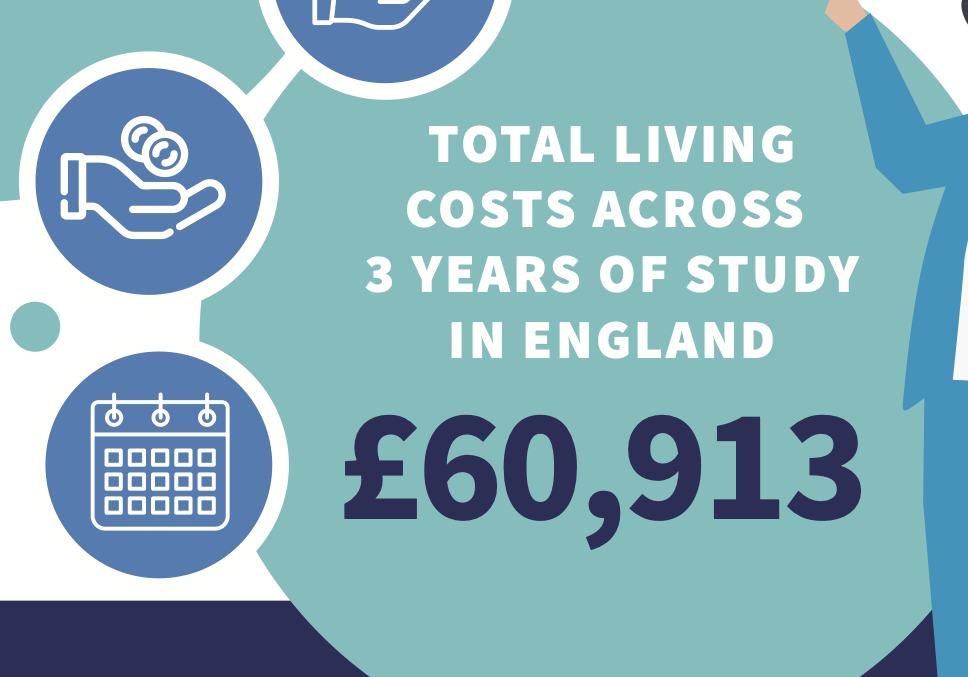
The top-level finding is that first-year students living in halls need £418 a week – over £20,000 a year and double the maximum maintenance support package in England. Even if a student (in England, living away from home and studying outside London) is in receipt of the maximum maintenance loan, they need to work 20 hours a week throughout the year to earn enough money to hit the Minimum Income Standard. Remember, these are people on full-time courses. As a society, we are now expecting people to do full-time study and half-time paid work and then we wonder why young students struggle to feel a sense of belonging to their institution…
People should look carefully at the methodology and conclusions to see if they agree with them. As a think tank, our job is to make people think; we can identify the main challenges and propose solutions but we are not a lobby group, so we would never claim we have all the answers. There may be elements of the Minimum Income Standard for Students that people want to pore over, challenge and improve.
Some of the issues people may want to consider on the back of the MISS include:
As the report makes clear, student life is generally a temporary phase that lasts no more than three or four years. So is it reasonable to apply the same methodology as is used for defining the basic minimum income for someone in work or in retirement? It is valid, in my view, because three years still represents a substantial proportion of a young person’s life up to that point and undergraduate study is often the first period of real independence for people – plus some other phases of life for which the minimum income methodology has been applied are also not always very long term. For example, someone on a ‘living wage’ is likely to hope to rise above it in due course as they gain experience. Besides, in one sense, no phase of life is permanent.
A second important question is whether letting students define their own minimum standard of living via focus groups will always tend towards larger monetary sums. The Minimum Income Standard for Students assumes students are likely to have gym membership, a short UK holiday and other costs (like wireless headphones, a modest alcohol budget and food for takeaways) that some people may deem to be non-essentials or at least not things that should be subsidised by taxpayer-funded income-contingent student loans (though, on the other hand, we only include very small sums for study-related costs). The MISS also includes some costs than some people might deem relevant only to a minority of students (such as paying to store items between terms). But the MISS is about having enough money for every student to live reasonably, with dignity and safety; it is not designed to be a ‘bare minimum’ or to represent the lifestyle of an ascetic. This is one of a number of reasons, further explored below, why we studiously avoid ever saying we think the Government should automatically set the maximum maintenance package at exactly (or even roughly) the level of the MISS. Moreover, students are not spendthrift – one interesting change this year compared to last, for example, is that they no longer deem a TV Licence as a must-have item so it has been removed from the calculation.
What we call a ‘minimum’ is also an ’average’; some cities are notably more expensive than others – London aside, we generally ignore this in the calculation and so the MISS might look too high or too low depending on where someone is studying and their own personal circumstances. For example, this means some of the freebies – such as prescriptions and bus travel – enjoyed by many Scottish students are ignored.
Should we be looking to reduce costs by giving applicants and students better information? A modest amount of the first-year premium (the extra costs that first-years seem to accrue) comes from being unused to budgeting and feeding themselves. The MISS for first-year students even includes a small additional sum for the first 12 weeks while students settle down and get used to things like eating up food before it goes off. Would better information of the students are crying out for fix at least some of the need for this? Similarly, would better information on the different consequences of different accommodation preferences shape better decisions, which in turn could shape the supply of student accommodation, and lead to a reduction in the MISS?
One particular policy challenge is explaining how any extra student maintenance support that could be offered now or later is likely to be spent in practice. Ministers will be less likely to give students improved maintenance packages if they think they will be entirely swallowed up by higher rent levels. One real challenge here, as so often, is that student accommodation tends to fall through the cracks in Whitehall, so it is not always clear who should be approached for these conversations.
Above all, HEPI is a policy body so for us the key question is always: what are the possible policy ramifications? On this, and notwithstanding the important fact that the report gives a clear indication of a preferred direction of travel, we are still working them out.
For example, the report concludes that the maximum maintenance package is only half of what students need to live. It clearly needs to be higher and available to more people. It would be absurd (literally absurd) to think parents could easily fill in the gap from their take-home pay unless they are on very good salaries indeed. It is similarly absurd, however, to think the Government can easily fill the whole gap, given the fiscal situation and the much larger number of students than in the past.
So what level of paid employment is it reasonable to assume students might do (and in holidays or term-time or both)? Or should students opt for a more basic standard of living (no en suite perhaps or more shared rooms, as in the United States)? Or should more students live at home as commuter students but at the cost of experiencing a full traditional student experience? These are difficult questions and, again, the answers will be different in different cases. Nonetheless, we welcome all thoughts in response.
As I sometimes say when speaking in schools, if and when it comes to my own children going to higher education, I will tell them three things:
good social spaces are more important than things like en suite facilities – if you are living a full student lifestyle, you may spend less time in your room than you originally expected;
taking a temporary full-time job in the holidays is generally preferable to doing a high number of hours of paid employment during term time, if you’re lucky enough to have the choice; and
in general, it tends to be better not to be a commuter student, unless there are specific individual reasons for being one.
Yet like most parents, I will also have to accept they will take what I say with a large pinch of salt and then find their own way.
Giving students equitable access to high-quality instruction and resources for becoming proficient readers will help inspire a love of reading and give them ownership in their own literacy development, according to a report from EdTrust.
States are making progress in promoting evidence-based reading, but more needs to be done for all students to become skilled and engaged readers, said Shayna Levitan, a P-12 policy analyst at EdTrust and author of the report. EdTrust is a nonprofit that promotes educational equity for students of color and students from low-income families.
“Every student has the right to read and to learn to read using rigorous, diverse instructional materials and the most effective instruction,” said Levitan in a July 29 statement.
Disappointing reading proficiency in recent years — as measured by exams like the National Assessment of Educational Progress — has led to many states adopting evidence-based reading policies such as science of reading frameworks. According to the Council of Chief State School Officers, most states had some type of law or policy addressing pre-K-12 literacy initiatives as of March 2024.
U.S. Education Secretary Linda McMahon has said literacy education is her No. 1 priority.
The EdTrust report recommends these six principles for states to advance equity in literacy:
Ensure instruction and curricula are evidenced-based. State literacy policies and implementation efforts should support schools with the adoption, implementation and continuation of evidence-based and culturally affirming instructional practices.
Have materials that connect to students’ identities and interests. Students who don’t see themselves authentically portrayed in learning materials are less likely to feel engaged and motivated to read, which can hinder their development of complex reading skills. EdTrust points out that efforts at the state and federal levels to restrict literature that reflects a variety of student cultures and experiences is “undercutting access to high-quality education, to the detriment of students’ literacy development.”
Tailor supports to students’ unique needs. Schools should provide early, targeted and differentiated interventions to students who require additional supports. Resources and interventions from qualified educators should be focused on multilingual learners, students with dyslexia and struggling older readers.
Begin literacy education at birth. States need to invest in high-quality and culturally responsive early education and family literacy programs. These supports can help young children gain pre-literacy skills.
Put resources toward supporting teachers. Teachers should have strong educator preparation supports, continuing professional development and on-the-job assistance so they are able to use evidence-based literacy instruction and interventions.
Don’t sideline families. Partnering with families can benefit students’ literacy skills development. This includes providing families accurate information about their child’s reading progress.