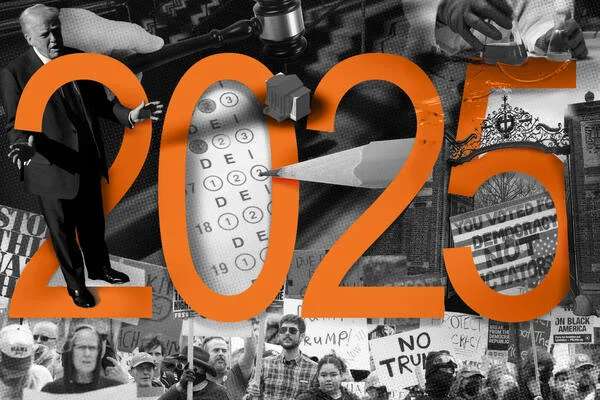
It’s been a whirlwind year for higher ed—and for Inside Higher Ed. Yes, we rigorously covered President Donald Trump’s unprecedented attacks on higher education, and our readers seemed to appreciate our efforts; according to my (unscientific) analysis of our readership statistics, about 70 percent of our most-read articles this year were about the Trump administration.
But we’ve also found time, somehow, to keep up with our bread-and-butter higher education stories: how technology is changing college campuses, institutions’ financial struggles, academic freedom and free speech issues, student success, college costs and the value of a degree, the continued rise of career and technical programs, and even a few intriguing scandals.
To look back at the work we’ve done over this tumultuous year, we asked the members of our editorial team to share one of their favorite stories published this year. These are stories that may have flown under the radar, highlight a reporter’s unique strengths, or push the boundaries of what a higher ed news story can be. But most importantly, they’re stories that helped our readers make sense of the changing higher ed landscape during a year that was unlike any other.
Our Favorite Stories of 2025
Emma Whitford, faculty reporter: “Inside a Network of Fake College Websites” by Josh Moody and Kathryn Palmer
Josh and Kathryn’s investigation into a network of fake college websites built using generative AI, to me, represents the particular strengths of the small but mighty IHE newsroom. While a couple of the faux institutions had been flagged by officials, it was Josh’s curiosity and close attention to his beat that prompted his digging, which uncovered dozens more fake schools and the fake accreditors that endorsed them. The double-byline teamwork made the depth of reporting in this story possible while the newsroom simultaneously continued to churn out the news of the day.

Susan Greenberg, managing editor: “The Handwriting Revolution” by Johanna Alonso
In this story, Johanna looked at how one of most feared, criticized and occasionally, celebrated developments to upend higher education in recent years—generative AI—is changing how faculty teach and assess students. She spoke to a number of professors who are requiring handwritten assignments to ensure that students don’t use ChatGPT or other AI tools to cheat their way through class. The story is lively, timely and illuminating; it includes the voices of an array of faculty members and experts who share nuanced perspectives about the pros and cons of reverting to traditional handwritten assessments to evaluate students in the age of AI.

Ashley Mowreader, student success reporter: “Charlie Kirk: Hero of ‘Civil Discourse’ or Fount of Division?” by Ryan Quinn
One of Ryan’s many talents as a reporter is being able to take a hot topic in news coverage and deeply report on it to add layers of context, insight and inquiry that could otherwise be overlooked or misunderstood. This piece is exemplary of this type of reporting, peeling past the horror of Charlie Kirk’s murder to investigate what it means to be a figure of civil discourse.

Ryan Quinn, policy reporter: “Spending Soars, Rankings Fall at New College of Florida” by Josh Moody
This story cut through the well-worn conservative/liberal debates about what should be taught in higher ed and showed a truth that has been raising eyebrows across the political spectrum: New College of Florida was spending “more than 10 times per student what the other 11 members of the State University System spend, on average” and politicians were likely discussing closing it behind the scenes. The article also had great quotes, including a faculty member calling NCF’s approach to recruitment “kind of like a Ponzi scheme” and a former administrator saying “academically, Richard [Corcoran] is running a Motel 6 on a Ritz-Carlton budget.”

Sara Custer, editor-in-chief: “The ‘Death Spiral’ of Deferred Maintenance” by Colleen Flaherty
The editors at Inside Higher Ed have a running joke that deferred maintenance is my favorite topic because I get excited when the issue of crumbling brick facades or broken elevators comes up. I’m not a facilities nerd. I just agree with what F. King Alexander told Colleen Flaherty about deferred maintenance for this piece: “This is a huge issue that presidents have to deal with that nobody’s talking about.” The sector has rightly spent 2025 following the Trump administration, college closures and leadership controversies, but Colleen’s story is my favorite because it adds nuance to the conversations about higher ed’s financial health and is a reminder that too many colleges are one leaky roof away from closure. It’s also got a killer headline.

Josh Moody, business, finance and leadership reporter: “International Student Visas Revoked” by Ashley Mowreader
As the Trump Administration began revoking student visas, the indefatigable Ashley Mowreader worked to identify which institutions and how many students were affected, resulting in a widely-read map that was cited in legal filings and by numerous other publications. Inside Higher Ed tracked 1,800-plus students who lost their F-1 or J-1 status as the Trump administration cracked down on immigration. Our reporting helped contextualize the federal government’s broadside against international students and the many subsequent lawsuits via reporting that informed and illuminated and resulted in one of our (deservedly) most-read pieces of 2025.

Sara Weissman, nontraditional students and minority-serving institutions reporter: “Grief Fuels Growth of Turning Point’s Campus Footprint” by Kathryn Palmer
Charlie Kirk’s killing called for a deep, nuanced look at the movement he created, and that’s exactly what Kathryn delivered in this story. The feature was beautifully written and richly detailed. It took Turning Point USA students’ grief seriously while also drawing on a range of scholarly perspectives to add balance and provide context about the movement’s present and future. The story also offered valuable framing for our ongoing coverage about the ways the aftermath of Kirk’s shooting roiled campuses in the months that followed.

Katherine Knott, news editor: “How Trump Uses the DOJ as Tool of ‘Fear-Mongering’” by Jessica Blake
This piece from Jessica helped to illuminate how another federal agency was applying pressure to colleges and universities and what’s at stake for higher ed more broadly. Her reporting came after the Department of Justice played a role in the resignation of Jim Ryan, who was president of the University of Virginia and faced questions from federal investigators about how he handled diversity, equity and inclusion efforts on campus. The timely story took readers beyond the news of the day and behind the scenes into the tactics of the second Trump administration.

Kathryn Palmer, research, technology and innovation reporter: “Preserving the Past of HBCUs” by Sara Weissman
Sara’s story on the effort to preserve the history of HBCUs was timely, well-reported and beautifully written. It featured so many voices and presented HBCUs as institutions that illuminate the complexities of America’s history at a time when the federal government is moving to sanitize it. Her story showed how HBCUs are integral to telling the story of Black America and why it’s an important story to preserve. The historical photos put it over the top.

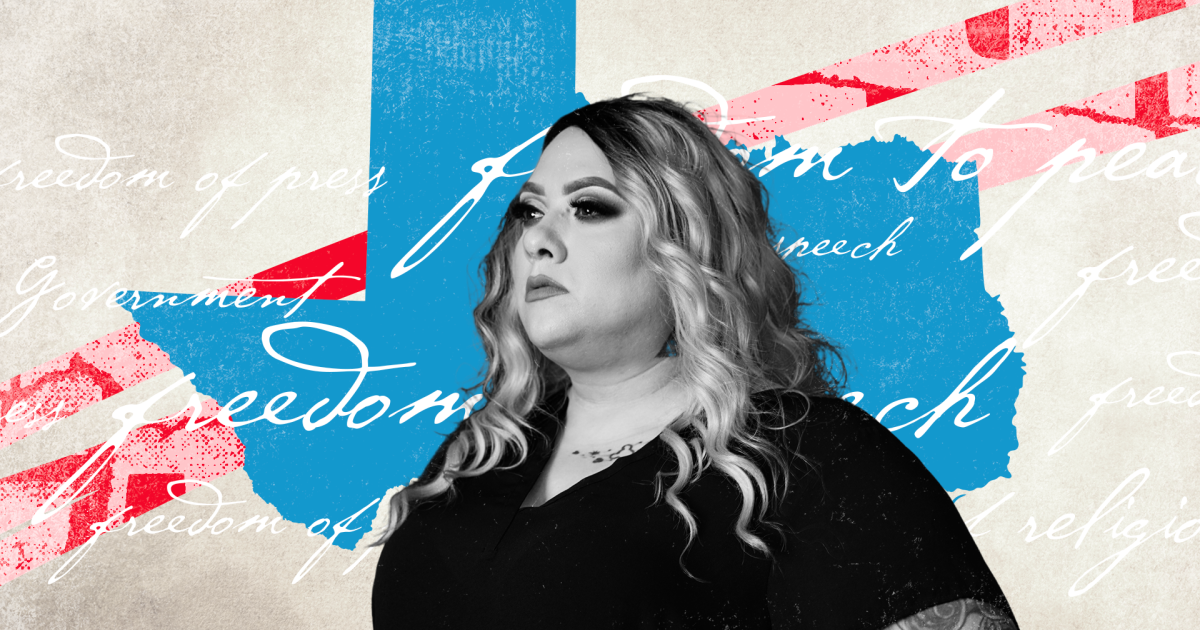
Johanna Alonso, admissions and enrollment reporter: “Texas Ban on Transgender Course Content Sows Chaos” by Emma Whitford
No one in the history of hitting the ground running has ever hit the ground running quite like Emma Whitford did when she came on as Inside Higher Ed’s faculty reporter this past September. Since then, Emma, who had previously worked at IHE from 2019 to 2022, has covered near daily clashes between faculty and administrators with persistence, precision and clarity. This story about verbal policies banning professors from teaching about gender identity in Texas perfectly encapsulates her incredible ability to root out the truth of complex controversies. From there, she continued to follow this story for weeks as more information came out about the nature of the ban and as faculty questioned the legitimacy of the verbal policy. The saga also demonstrates conservative leaders’ continued efforts to erode academic freedom, which has been a significant theme for the past several years and will surely continue into 2026.

Reporter
Jessica Blake, federal policy reporter: “Florida Universities Sign Agreements With ICE” by Josh Moody
This was a great scoop that Josh gathered by going back to the basics of journalism and making a public records request. And as someone who completed a bachelor’s degree while working part-time for Investigative Reporters and Editors, I’m a sucker for any story rooted in FOIA. He took an event that was making headlines throughout Florida and across the country and advanced the story, giving readers a behind-the-scenes look at which universities were striking agreements with the Trump administration and how.

Colleen Flaherty, senior editor for special content: The First 100 Days newsletter, Day 88 by Katherine Knott
We were supposed to avoid federal policy pieces due to the onslaught of those this year. But assuming that guidelines are more like suggestions, I have to go with this edition of After the First 100 Days, our weekly federal policy news roundup, by singular news editor Katherine Knott. Back in April, when the newsletter was still called the First 100 Days, the White House was targeting higher ed with such speed and force that it was unnervingly unclear how far things would go. Then came Day 88—or, as Katherine wrote—what “will be remembered as the week that Harvard said no and higher ed started to fight back.” It was a crucial moment for higher ed in 2025, and Katherine’s weekly analyses have otherwise become crucial reading for me. After the 100 Days is an IHE membership perk but I promise this isn’t a sales ploy, hence the gift link!