Tag: reporting

  • What does Trump’s executive order on foreign gift reporting mean for colleges?

    What does Trump’s executive order on foreign gift reporting mean for colleges?

    This audio is auto-generated. Please let us know if you have feedback.

    Since President Donald Trump retook office, the U.S. Department of Education has launched investigations into several high-profile colleges over their compliance with Section 117, a decades-old law that was largely ignored until 2018. 

    The law — part of the reauthorization of the Higher Education Act in 1986 — requires colleges that receive federal financial assistance to disclose contracts and gifts from foreign sources worth $250,000 or more in a year to the U.S. Department of Education. 

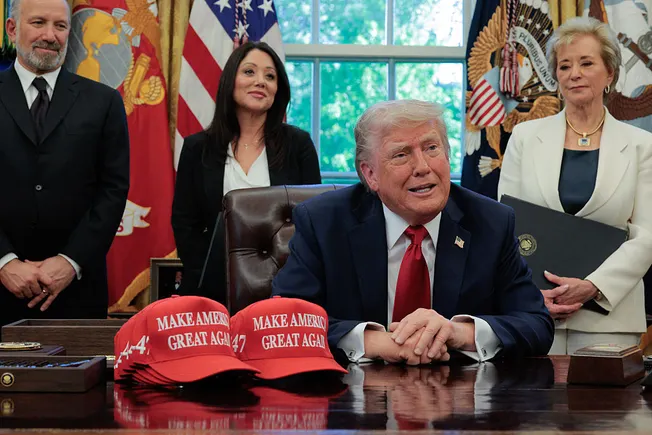
    In late April, Trump signed an executive order charging U.S. Education Secretary Linda McMahon to work with other executive agencies, including the U.S. Department of Justice, to open investigations and enforce Section 117. The order also explicitly ties compliance with Section 117 to eligibility for federal grant funding and directs McMahon to require colleges to disclose more specific details about their foreign gifts and contracts. 

    However, complying with the law is difficult and time-consuming for colleges given the challenges they face collecting the needed data and uploading it to the Education Department’s system, according to higher education experts. That means universities must take steps to ensure they are complying, such as dedicating a staff member to meet the law’s requirements, they said.

    Failing to properly do so could put colleges in the crosshairs of the Trump administration and potentially cause them to miss out on federal grants, as higher education experts speculate the executive order will be used as another tool to target institutions’ funding. 

    “The Trump administration has it out for American higher education, particularly those they have branded elite institutions,” said Jeremy Bauer-Wolf, investigations manager on the higher education program at New America, a left-leaning think tank. “Section 117 is another cudgel for them.”

    The history of Section 117

    After Section 117 was enacted nearly 40 years ago over concerns about foreign donations to colleges, it was never really implemented by the Education Department and went largely ignored, said Sarah Spreitzer, vice president and chief of staff for government relations at the American Council on Education. People just stopped thinking about the issue and didn’t pay attention to it, she said. 

    However, concerns in Congress grew in 2018 when then-Federal Bureau of Investigations Director Christopher Wray testified before a Senate panel that China was exploiting the open research and development environment in the U.S. and universities were naive to the threat. 

    Proactively monitoring Section 117 and investigating disclosures was seen at the time as a way to “mitigate malign and undue foreign influence,” a Congressional Research Service report released this past February stated. 

    Following the hearing, the first Trump administration “really started making a show of Section 117,” said Bauer-Wolf

    Between 2019 and 2021, the Trump administration opened investigations into prominent institutions such as Harvard University, Georgetown University, Cornell University, the Massachusetts Institute of Technology and Yale University. The administration was more focused on enforcing compliance through investigations than working with colleges to help them understand what the law required, said Spreitzer

    That had a “chilling impact on our institutions,” said Spreitzer. Colleges had a lot of questions about Section 117 reporting that went unanswered because they “were worried that if they called the Department of Education, they would be hit with an investigation.” 

    The investigations led colleges to report $6.5 billion in “previously undisclosed foreign funds,” according to Trump’s executive order. 

    When the Biden administration took over, Education Department officials moved enforcement of Section 117 from the Office of the General Counsel to Federal Student Aid. The Biden Education Department also closed several investigations launched under the Trump administration, and it did not open any new ones. 

    Trump, in his executive order, alleged the Biden administration “undid” the investigatory work completed during his first term. But those investigations had been going on for several years, so it’s unclear whether those probes should or should not have been closed, said Spreitzer.

    Source link

  • Orchestrated silence: How one of America’s most elite music schools expelled a student for reporting harassment

    Orchestrated silence: How one of America’s most elite music schools expelled a student for reporting harassment

    TAKE ACTION

    On stage, baton in hand, Rebecca Bryant Novak found her calling in the precarious. She says conducting an orchestra sometimes “feels like trying to do brain surgery on a conveyor belt. You don’t get to stop. You don’t get to pause and say, ‘Hold on, let me think.’” But that high-stakes intensity, the kind that crackles through a Brahms crescendo or explodes in a Mahler finale, is what drew her in. “I love that,” she says. “To conduct an orchestra once in your lifetime, much less dozens or hundreds of times, is just an enormous privilege.”

    But behind the podium at the University of Rochester’s Eastman School of Music, one of the world’s premier conservatories, the peril Bryant Novak faced was not merely musical. In October 2023, she reported her doctoral program advisor and the director of orchestras, Neil Varon, for harassment. What followed, by her account and email correspondence describing the university’s own investigative findings, was a spiral of institutional dysfunction in which Eastman abandoned its own policies to retaliate against Bryant Novak for speaking out.

    What began as a childhood dream — “I saved my babysitting money to buy tickets for me and my mom to go to St. Louis Symphony concerts,” she recalls — has now soured into a fight not merely for her academic degree but for her dignity, for institutional transparency, and for a measure of justice in an industry she loves.

    A pianist by training, she fell for music director David Robertson’s conducting as a teenager in St. Louis, where she was captivated by his orchestra’s sound and force. “I loved the idea of being part of it,” she says. “As I look back at that person, she had no idea what she was getting into. But the draw was strong.”

    Chasing the grueling dream of the podium was a particularly steep climb for a woman. “There have only been three women admitted to my program in over 20 years,” she says, referring to Varon’s conducting studio, which she estimates has accepted approximately 40 students during that time. “The resources are immense. So is the gender disparity. I mean, it’s extreme.”

    Bryant Novak, a first-generation college graduate, said that upon arrival she felt “very much a fish out of water in the fancy music school scene.” Still, she was undeterred. “I said to myself, look, I won the audition. The orchestra voted, and I got an overwhelming orchestra vote. Everyone was thrilled about my being here.” She believed — naïvely, she now says — that the music would speak for itself. “Gender has nothing to do with this. My work stands on its own. So I was kind of in that mindset going in.”

    Her optimism did not last.

    I had jobs in this field before going back for my doctorate. I knew the scene. My actual experience is that staying silent doesn’t help you that much.

    Bryant Novak claims that during one rehearsal, as she was conducting in front of about 60 students, Varon told her she was “Gibson impregnated,” a reference to her former teacher at the University of Cincinnati, Mark Gibson, with whom she had cut contact after completing her master’s degree. Bryant Novak’s history with Gibson was fraught with alleged maltreatment: she says she suffered “inappropriate behavior, including comments on [her] physical appearance” and “physical contact under the guise of instruction” that resulted in “lasting professional harm.”

    Gibson and Varon were close professional contacts, and though Bryant Novak says Varon repeatedly noted Gibson’s problematic history and widely known reputation for abuse, she claims he “began referencing [her] history with Gibson as early as [her] audition.” According to Bryant Novak, Varon’s increasingly hostile and erratic behavior in class eventually forced her to end a conducting session with the orchestra, which typically lasted almost an hour, after just fifteen minutes.

    In what she describes as a “damned if you do, damned if you don’t” calculation, Bryant Novak chose to report Varon. “I had jobs in this field before going back for my doctorate. I knew the scene,” she says. “There have been situations where I’ve stayed silent before, as in my master’s program studying with Mark Gibson. My actual experience is that staying silent doesn’t help you that much.”

    Initially, she raised the alarm privately, requesting the administration limit her contact with Varon rather than filing a formal complaint. Her request was denied. Instead, Bryant Novak says Title IX coordinator John Hain suggested she transfer. “I remember asking, ‘How is that supposed to work?’ These programs are very competitive. They’re very small. It’s not like I’m getting my bachelor’s in history. How is this the solution? It was just not at all thought through.”

    “I don’t think it’s an exaggeration to call it sabotage,” she said, after her final recital was stacked with outlandishly difficult material. (Smiley Photography)

    “I got this whole lecture about how there’s no law against being a jerk. I’m like, ‘I’m aware of that.’” Worse, she adds, “They disclosed the report to [Varon]. They kind of wagged their finger at him and said ‘good luck’ to me. I was stunned.”

    Faced with Eastman’s inaction, Bryant Novak used the only tool she had left — her voice. She wrote about the experience in a post on her Substack, The Queen of Wands, sharing conversations with administrators, naming names, and describing Eastman’s lack of support.

    That’s when the retaliation began.

    A senior administrator threatened her with a defamation lawsuit — the very same John Hain in charge of handling her Title IX complaint. Students who once applauded her presence grew cold. Some faculty offered quiet support but refused to speak publicly. “It got very bizarre,” she says. “Very, very weird.”

    According to email correspondence between Rebecca and university officials, the University of Rochester — Eastman’s parent institution — conducted an investigation that concluded Varon had indeed violated their harassment policy and that Eastman had grossly mishandled her complaint. Despite this, rather than offering protection to Rebecca, Eastman remained intent on shielding its own faculty. 

    Tell Rochester to Stop Muzzling its Students

    Take Action

    Tell the University of Rochester: Reinstate Rebecca Bryant Novak, restore due process, and stop muzzling students into a culture of silence.


    Read More

    By the following semester, “there was some nastiness” from some of her fellow students in the orchestra. Her conducting opportunities were reduced. The faculty grew tight-lipped. She would walk into a room and people would stop talking. One tenured professor whispered to her that he’d written a letter of support but begged her not to tell anyone.

    Meanwhile, Bryant Novak continued writing publicly about her experience on Substack. Her posts were measured, personal, and often devastating. Her first post, titled “My First Year at Eastman,” told the story of the initial incident and the process that ensued from her point of view. Another, titled “Cease and desist,” detailed John Hain’s defamation threat against her.

    Then, however implausibly, things got worse.

    In December 2024, the University of Rochester launched a second investigation, this time into Eastman’s continued mishandling of Bryant Novak’s complaint and the retaliation she alleged had taken place against her. That might seem like a reason to think things were finally looking up — except two weeks after Bryant Novak disclosed the second investigation in a Substack post, Eastman expelled her for a “lack of academic progress.”

    According to Bryant Novak, this came despite Eastman’s prior confirmation that her academic plan and credits were sufficient in order to graduate. Worse, Eastman’s letter to Bryant Novak ended with a list of non-academic allegations: “misuse of University email systems,” “creating a hostile environment,” and “language that has been perceived as threatening violence.” All this was presented without detail or evidence. It was also described as not the actual cause of her dismissal, but worth “remark.” For her part, she sees it as a last-ditch attempt to discredit her. “The double standards were pretty intense,” she says. The school claimed there wasn’t much it could do to restrain Varon but, she says, “When it was time to expel me — boy, their hands were not tied.”

    People assume we’ve moved past this stuff. But no, speech is still powerful. People are still afraid of it. And they’ll try to shut you up.

    In a June 18 letter to the university, FIRE detailed how Eastman skipped every procedural safeguard required by their own academic progress policy: no warnings, no probation, no appeal. It doesn’t take a bloodhound to sniff out the pretext: just after Bryant Novak disclosed the second investigation on Substack, Eastman’s concerns about her suddenly became so acute that it bypassed the two-semester review process its own policy required before dismissal. FIRE lambasted the university for this egregious betrayal of due process and charged that the expulsion — taking place amidst baseless legal threats and conflicts of interest — was retaliation against Bryant Novak for speech Rochester’s policies protected.

    Bryant Novak says it was Eastman itself that endangered her academic progress. After she reported his behavior, she says, “They let Neil [Varon] have control over my degree recital, which is the centerpiece of my degree. I mean, it was retaliatory. He put material on it that was outlandishly difficult — so much so that two guest faculty intervened and said, ‘This is not okay.’ One of them actually said directly to me, ‘That is a giant middle finger from him to you.’ I don’t think it’s an exaggeration to call it sabotage. They did ultimately change it, although you’re supposed to have up to a year to work on this. I was left with two months. And then they were trying to get me out the door. It was very, very clear they wanted me out in any way possible. They created a situation that was unsustainable.”

    Rebecca Bryant Novak

    “There are consequences either way. There are consequences to yourself if you stay silent. There are consequences out in the world if you speak out.” (Smiley Photography)

    The situation became so upsetting that she began seeing a university therapist. In her final semester, at the therapist’s request, she started going multiple times a week. “I was just kind of personally deteriorating,” Bryant Novak recalls. “I was honestly kind of having a breakdown.” She spent roughly a month working through her difficulties with her professors and her therapist, who was willing to offer the school documentation of her situation. In turn, Bryant Novak offered to submit that documentation to the school, but says that “a week later,” the school “responded with an expulsion letter.”

    In the broader Eastman community, Bryant Novak was shunned by what she describes as a “cultish culture.” Online, including on FIRE’s own social media posts, her classmates have left comments smearing her reputation. Some think their interpersonal issues with Bryant Novak, or whatever shortcomings they see in her as a student or conductor, justify her expulsion.

    But being unpopular does not cost you your rights. It does not strip you of due process protections. It does not neuter your expressive freedom. 

    Bryant Novak sees her case as part of a larger trend. This isn’t the first time Eastman has allegedly blacklisted a student for standing up against misconduct. And beyond its Rochester campus, other classical music artists have suffered similar fates for stepping forward. Bryant Novak has no illusions about the conservatory culture she sees as responsible. “The culture’s awful. It just is,” she says. “Everybody knows it. But at the same time, the music is phenomenal.” 

    She references a case, documented in New York Magazine, in which an alleged rape victim and an ally were pushed out of the New York Philharmonic and bullied by their peers for speaking up while the accused perpetrators remained. “That story jolted me,” she says. “And now I’m living my own version of it. People assume we’ve moved past this stuff. But no, speech is still powerful. People are still afraid of it. And they’ll try to shut you up.”

    Reflecting on it all, Rebecca says that though she is grateful for FIRE’s help, she found it hard to believe she needed it for something like this. “You know, I wasn’t in a Gaza protest. It wasn’t that. It was just saying: ‘Hey, harassment is bad. Can you stop?’ The fact that speaking out against harassment is controversial in this space? That says a lot.”

    Still, Bryant Novak refuses to be silenced. In April, she submitted a 200-page complaint to the New York State Division of Human Rights under penalty of perjury. Believing sunlight is the best disinfectant, she is documenting everything and wants it all out in the open. “If there’s an online Neil Varon fan club,” she quips, “I think that’s good for us to know. Surface it all.”

    As for her future? “I still want to conduct,” she says. “But more than that, I want a world where women can do this without fear.”

    Pausing to think about it, she says, “There are consequences either way. There are consequences to yourself if you stay silent. There are consequences out in the world if you speak out. I prefer the consequences out in the world.”


    Source link

  • Data breach reporting lags in education, study finds

    Data breach reporting lags in education, study finds

    This audio is auto-generated. Please let us know if you have feedback.

    Dive Brief:

    • It took the education sector 4.8 months on average to report data breaches following ransomware attacks between 2018 and 2025, according to a report released last week by Comparitech.
    • Colleges and schools had the highest average reporting time for ransomware data breaches when compared to the business, government and healthcare sectors, Comparitech found in its analysis of over 2,600 U.S. ransomware attacks. 
    • At the same time, education companies — counted separately from colleges and schools — saw even higher reporting times at 6.3 months. Waiting months to disclose a data breach is dangerous, given that stolen data can be on the dark web before victims even know a breach happened, wrote the researchers for Comparitech, a cybersecurity and online privacy product review website.

    Dive Insight:

    Delayed reporting of data breaches comes at a time when schools and ed tech companies alike are grappling with the ongoing threat of ransomware attacks.

    Illustrating the prolonged response times for ransomware breaches, the latest Comparitech report pointed to Texas’ Alvin Independent School District confirming just this month that a June 2024 data breach impacted nearly 48,000 people. The data involved names, Social Security numbers, credit and debit card numbers, financial account information, medical and health insurance information, and state-issued IDs. 

    Organizations often wait to disclose a data breach because they are unsure if data was stolen following a ransomware attack until the hacker posts the stolen information on the dark web, Comparitech said. 

    “Data theft is a common component of ransomware attacks, so it’s not unreasonable for companies to assume hackers stole data, even if there isn’t any evidence to suggest data theft at first,” researchers wrote. “The worst thing to do is to jump to the conclusion that data hasn’t been stolen.”

    The FBI also advises against paying threat actors following a ransomware attack. If organizations pay a ransom, it still doesn’t guarantee any data will be recovered, the agency’s website states, adding that ransom payments can actually encourage more attacks.

    K-12 school districts have been especially concerned about a widespread breach of student and staff data across North America following a December 2024 ransomware attack on ed tech provider PowerSchool. 

    Though PowerSchool disclosed the cybersecurity incident about a week later, the company allegedly told districts not to worry about sensitive student and staff information being exposed. Five months later, however, PowerSchool publicly confirmed that, despite paying a ransom to threat actors, multiple school districts were being extorted with the same information stolen in the December incident.

    Since then, over 100 school districts — including Tennessee’s largest school system, Memphis-Shelby County Schools — have sued PowerSchool for negligence, breach of contract and false advertising.

    Source link

  • Another reprieve for gainful employment, financial value transparency reporting deadline

    Another reprieve for gainful employment, financial value transparency reporting deadline

    This audio is auto-generated. Please let us know if you have feedback.

    Dive Brief:

    • The U.S. Department of Education is extending the reporting deadline for the gainful employment and financial value transparency regulations to Sept. 30, according to an agency announcement last week. 
    • The seven-month extension aims to give college officials more time to submit the required information and to allow institutions that have already sent in their data to make corrections. 
    • The Education Department has pushed back the reporting deadline several times amid concerns that colleges didn’t have enough time or guidance to provide the data required under the new regulations. This extension, the first one under the Trump administration, will be the last, the announcement said.

    Dive Insight:

    The Education Department originally asked colleges to submit the gainful employment and financial value transparency data by July 2024, but higher education institutions requested more time given last year’s bumpy rollout of the revamped Free Application for Federal Student Aid. 

    The Biden administration released final gainful employment and financial value transparency regulations in 2023. 

    Under the gainful employment rules, career education programs must prove that their graduates earn enough money to pay off their student loans and that at least half of them make more than workers in their state who only have high school diplomas. Programs that fail those tests risk losing their access to Title IV federal financial aid. 

    Although the financial value transparency regulations don’t threaten federal financial aid, they create new reporting requirements for all colleges. Under the rule, the Education Department will post data collected from institutions about their programs — such as costs and debt burdens — on a consumer-facing website to help students make informed decisions about their college attendance. 

    The Biden administration extended the deadline for reporting requirements three times. Despite the delays, Education Department officials said late last year that they still expected to produce data in the spring to help students select their colleges. 

    With its latest announcement, the Trump administration’s Education Department is delaying that timeline also. 

    “The Department does not plan to produce any FVT/GE metrics prior to the new deadline and will take no enforcement or other punitive actions against institutions who have been unable to complete reporting to date,” it said. 

    It’s so far unclear how the Trump administration will handle the gainful employment regulations. In President Donald Trump’s first term, then-Education Secretary Betsy DeVos rescinded the Obama-era version of the rules, saying they unfairly targeted the for-profit college sector. 

    The Education Department is facing at least one lawsuit over the Biden administration’s version of the gainful employment rule. However, a federal judge earlier this month paused legal proceedings for 90 days after the new administration sought more time “to become familiar with and evaluate their position regarding the issues in the case,” according to court documents.

    The National Association of Student Financial Aid Administrators — one of the organizations that pushed for a delay — applauded the move to extend the regulatory reporting deadline.

    The change “is a sensible and welcome decision that will give financial aid offices much needed breathing room while they navigate unresolved issues in submitting their data and make necessary corrections to ensure the data they submit is accurate,” NASFAA Interim President and CEO Beth Maglione said in a statement last week.

    Source link

  • $50K threshold for college foreign gift reporting passes House panel

    $50K threshold for college foreign gift reporting passes House panel

    This audio is auto-generated. Please let us know if you have feedback.

    Dive Brief: 

    • The House Committee on Education and Workforce voted Wednesday to advance a bill that would require colleges to report gifts and contracts valued at $50,000 or more from most foreign countries. 
    • That would lower the requirement from the current threshold of $250,000. Republicans argued that the bill, called the Deterrent Act, is needed to prevent foreign influence in higher education. 
    • The bill would also lower the reporting threshold to $0 for the “countries of concern” as determined by the U.S. Code or the secretary of education, which include China, Russia, Iran and North Korea. The proposal would bar colleges from entering into contracts with those countries unless the secretary of education issues them a waiver and renews it each year. 

    Dive Insight: 

    The Deterrent Act would amend Section 117 of the Higher Education Act, which oversees foreign gift and contract reporting requirements for colleges. Republicans on the education committee argued the measure is needed to provide more transparency. 

    A fact sheet on the bill included concerns about foreign adversaries stealing secrets from American universities and influencing student behavior. 

    The fact sheet also referenced a 2024 congressional report that accused two high-profile research institutions — University of California, Berkeley and Georgia Institute of Technology — of failing to meet the current reporting requirements through their partnerships with Chinese universities. 

    “Higher education is one of the jewels of American society,” said Rep. Michael Baumgartner, a Washington Republican who co-sponsored the bill, on Wednesday. “Unfortunately, it’s also an area that is often under attack and used by malign influences to subvert American interests.”

    Under the bill, colleges would face fines and the loss of their Title IV federal student aid funding if they didn’t comply with the reporting requirements. 

    Democrats largely voiced opposition to the measure. 

    However, they focused many of their complaints Wednesday on the Trump administration’s recent moves that have sparked outcry in the higher education sector, including cuts to the National Institutes of Health’s funding for indirect research costs. A judge temporarily blocked the cuts earlier this week. 

    “I understand and I do appreciate the intent behind the Deterrent Act, but if House Republicans and the president truly want to lead in America, and they want America to lead, they must permanently reverse the cuts to the National Institutes of Health,” said Rep. Lucy McBath, a Democrat from Georgia. “It’s not enough for us just to wait outside for the lawsuits to protect folks back home from damaging and possibly illegal orders like these.”

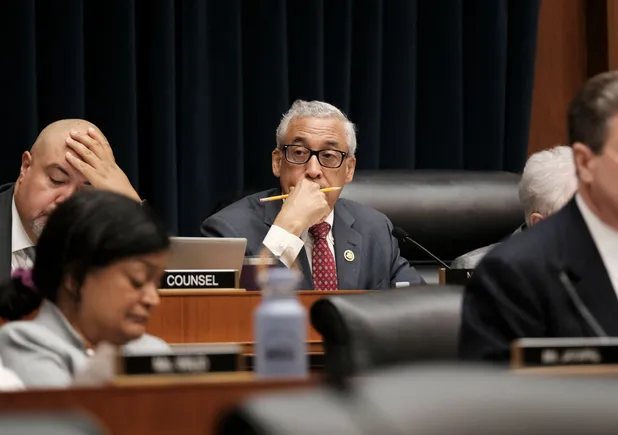
    Virginia Rep. Bobby Scott, the top-ranking Democrat on the committee, struck a similar tone, referencing the Trump administration’s goal of eliminating the U.S. Department of Education. 

    He noted that the authors of Project 2025 — a wide-ranging conservative policy blueprint for the Republican administration — aim to dismantle the Education Department with the stated goal of having the federal government be less involved in schools. 

    “The argument rests on the perception that the federal government is too involved in our schools, and here we are marking up bills that would give the Department of Education more responsibility to impose unfunded mandates and interfere with local schools,” Scott said. 

    The House committee advanced several other bills Wednesday, including those that would allow schools to serve whole milk and aim to end Chinese influence in K-12 education. 

    House lawmakers previously passed the Deterrent Act in 2023, though it was never put to a vote in the Senate. At the time, the American Council on Education and other higher ed groups opposed the bill, objecting in part to the large fines colleges could face for noncompliance. 

    The Republican-backed bill may face better odds in this congressional session, now that the GOP also controls the Senate and the White House.

    Source link