Blue-sky research is the basis for the successful development of future technologies. The evidence that UK universities are global leaders in this is clear – the Australian Strategic Policy Institute (ASPI) ranks the UK university system as third in the world on this basis.
Yet it has often been said the UK has not capitalised enough on its world-leading research to drive economic growth. Now though, the UK has, at last, a coherent and comprehensive industrial strategy that can realise the huge potential of this global advantage.
Previous industrial strategies identified some of the right industries, but the new strategy has a far more comprehensive approach. It recognises the breadth of sectors that are likely to be at the forefront of global technology-led growth, not just the fashionable few like AI or pharmaceuticals. Crucially, place has now taken a central role. A myriad of global growth “hot spots” show us that this is key to understanding the detailed collaborations that will deliver growth in different UK regions, cities and innovation districts.
In that sense this industrial strategy is the welcome and long needed economic policy that the UK economy has been lacking. Universities and their research are an essential core component, but all stakeholders across higher education, industry and government need to engage in a step-change in joined-up working if the UK is to translate the real advantage its research system has into a new level of growth and prosperity. There will need to be effective partnerships and collective momentum between universities, industry and government at both national and local levels.
Yet risks remain in successfully translating this strategy into the growth the government wants – particularly in the persistence of certain myths about university research.
Busting myths
A key myth is that blue sky research only equates to growth in the long term, when the government wants growth sooner. In fact, it does not work like that. Blue sky research delivers growth both now and later. Long term gains may be greater overall, but even in the short term research brings in highly skilled global scientists, attracts leading global firms, and is a draw to medium-sized firms who want to be at the forefront of the next innovation wave.
Research also builds place-based specialised skills that are essential for other industries and sectors, as can be seen in the Oxbridge Arc, Imperial’s White City innovation district, Manchester’s Sister district or Glasgow City Innovation District. Fostering research excellence across the UK’s places is an effective short and long-term growth strategy.
A second myth is about the breadth of impact of university research on growth. It is natural for policymakers to focus on university spin-outs and commercialisation, but in many ways these are a small, if important, part of the story. The lesson from successful university-based growth ecosystems around the world is that the role of large global firms and their relationship with university research and innovation is much more important.
There is understandable and laudable excitement at the prospect of nurturing UK-born unicorns, but in a globally competitive economy around future technologies it is large global firms that very often have substantial research and innovation capability. They employ global leading talent, have great market reach and also can absorb some of the risk necessary for success in future technology-based growth. They also have the interest in, and capacity and capability to partner with universities around research – as we see with Microsoft in Cambridge, Novartis in Imperial’s White City campus, Cranfield’s industry research with Airbus, AstraZeneca in Glasgow or Legal & General’s partnerships with Edinburgh and Newcastle.
In my own university, Brunel, we have long standing research relationships with Jaguar Land Rover and Constellium, one of Europe’s largest aluminium alloy firms. Yet there needs to be much more focus on increasing the number and deepening these relationships. These are near and long term relationships that will lock in longer term growth.
Third, is the misconception that university research exists in any freestanding way in just a small number of universities. It is certainly true that the UK’s leading research universities are absolutely key, but the research system operates in a much more complex, distributed and symbiotic way. Different types of universities play different but equally important roles, and they can and will contribute to the industrial strategy. Whether that is applied research, skills development in the workforce or building entrepreneurial capacity in a region, the university research and innovation system as a whole is key to making sure the benefits of cutting edge technology research are realised for the UK.
The government must not underestimate the centrality of university research and its contribution to future technology-led growth to any industrial strategy worldwide, let alone the UK’s. The industrial strategy is bold and ambitious, and UK universities are well positioned to propel its implementation. However, global competition in the development of future technologies is fierce. The UK cannot afford to underplay or misapply one of its core strategic assets. The opportunity with this strategy is greater than at any time for decades, but it is not going to succeed without harnessing the power of university research.
Nick Hillman, HEPI’s Director, tries to make sense of the Government’s new plans on R&D spending up to 2029/30.
Perhaps the Speaker of the House of Commons will be unhappy the Government have pre-briefed the media on what this week’s Spending Review will mean for research spending. But what should the higher education and wider research community make of it?
As the BBC story on the £86 billion reminds us, ‘Earlier this week, Reeves admitted that not every government department would “get everything they want” in Wednesday’s review’. We are meant to think the £86 billion is one of the rare exceptions, a surfeit of generosity (albeit with taxpayers’ money) – that is why it is being pre-briefed as a good news story a few days before the Spending Review itself. Ministers have even managed to squeeze positive endorsements from those tipped off in advance, such as the Russell Group. But let’s be honest, the Department for Science, Innovation and Technology (DSIT), which will oversee this £86 billion, is not getting what it wants. The £86 billion is thought to be a real-terms freeze; it is implausible to think DSIT Ministers have been lobbying the Treasury to stand still. If they had been, they would not have been doing their jobs. Some will wonder whether this explains why friends of the Secretary of State for Science, Innovation and Technology have been speaking up his chances of being moved to a bigger spending Department in due course.
We have been here before. The proudest boast in the Government’s news release, apart from the total multi-year settlement of £86 billion, is of ‘a bumper funding package worth more than £22.5 billion a year in 2029/2030’. But hang on a moment; if Whitehall had more institutional memory, they might have worded this differently because it is five years since the Treasury, under a previous administration and despite being in the midst of COVID, boasted there would be public spending of £22 billion on R&D by 2024/25, just £500 million a year less and five years earlier than the new number for 2029/30. While the modesty of the new announcement might be partly excused by the sluggish economic growth seen since, it may also explain why the announcement seems not to have had the pickup in the Sunday newspapers that the Government would have been hoping for.
A real-terms freeze is a cut in terms of the percentage of GDP spent on R&D, which is the usual way R&D spending is measured in the UK and internationally. In the past, policymakers have obsessed over whether the UK can reach 2.4% or even 3% of GDP on (public and private) R&D spending, putting such targets in many election manifestos. But by a stroke of the pen three years ago, the Office for National Statistics suggested the UK spends much more than we thought on R&D, meaning we had already hit the 2.4% target, overtaken the OECD average and even got close to the 3.0% ambition. So policymakers could claim they had already hit a target that had looked extremely stretching and shift their attention elsewhere. (The ONS’s change put red faces on those who had been lobbying for such targets, however: if the target you have been lobbying for has already been hit [even if it does not feel like it on the ground], what should your next move be? This is something no one quite seems to have worked out.) The new announcement is problematic in GDP terms because, if you assume any economic growth at all, then a real-terms freeze in research spending means a reduction in R&D spending as a proportion of GDP. The latest international data suggest the UK’s gross R&D spending has been just above the OECD average (2.8% of GDP versus 2.7%). If the OECD average remains the same or (as has been happening) goes up somewhat, today’s announcement means the UK is likely to spend less on R&D as a proportion of GDP and once more fall behind our main competitors. (This is not absolutely guaranteed because today’s announcement is on public spending and most R&D spending is private spending. However, public spending on R&D is generally [though not universally] thought to ‘crowd in’ rather than ‘crowd out’ public funding.)
It is easy for me to be a little cynical about all this because I was there when the same conversations happened between the Business, Innovation and Skills Department and the Treasury at the time of the 2010 Spending Review, which had a similar importance to this week’s forthcoming Spending Review. However, that experience also taught me that a flat settlement in a constrained environment can indeed be a win. The settlement in 2010 was flat-cash not flat real – in other words, it ignored future inflation, so was less generous even than the one being announced today. At one point during the 2010 negotiations, however, it had looked as if there would be actual cuts to the cash spent on research and development each year; expectations in the research community were running so low that, when flat cash was instead announced, it led to my boss, the Minister for Universities, being presented with a bouquet of white roses by the founder of Research Fortnight.
Today’s announcement is about the money but the Government’s spin doctors have also tried to focus on the uses to which the money is put. Voters are likely to find it hard to imagine what £86 billion spread over a number of years means in practice. However, as the Mirror reports, it could mean ‘In Liverpool, which has a long history in biotech, funding will be used to speed up drug discovery and in South Wales, which has Britain’s largest semiconductor cluster, on designing the microchips used to power mobile phones and electric cars.’ Those feels like things everyone can get behind, even if the focus on local spending may or may not mean a weakening of excellence as the key criterion on which to distribute research funding from central government. This focus on projects should also serve as a reminder to the research community that, whatever Ministers say now, there is likely to be more money available if they lobby smart in the months to come. After what was perceived as a good settlement for science in 2010, we still managed to secure additional funding at pretty much every subsequent spending review. There were lots of reasons for this to do with how effectively the Department lobbied (it helped having both a Lib Dem and a Tory Minister from the Department sit around the Cabinet table), George Osborne’s predilection for science (albeit generally for big new projects rather fully funding existing ones) and politicians’ ceaseless desire to have an exciting new building or two to don a hard hat for. Perhaps most importantly, the research community were ready with ideas of what additional projects should be funded whenever we went to them with the question; if we give policymakers the tools to lobby the Treasury in the years ahead, researchers could get more.
Finally, I am left wondering what this five-year settlement means for the commitment in Labour’s 2024 election manifesto to ‘scrap short funding cycles for key R&D institutions in favour of ten-year budgets that allow meaningful partnerships with industry to keep the UK at the forefront of global innovation.’ It was always likely that this wording was a political trick to put the focus on the length of time rather than the quantum of money. But Spending Reviews are always about money and always have a fixed shorter timetable, so how this week’s announcement chimes with longer-term planning is an issue that won’t go away even if it primarily is for another week.
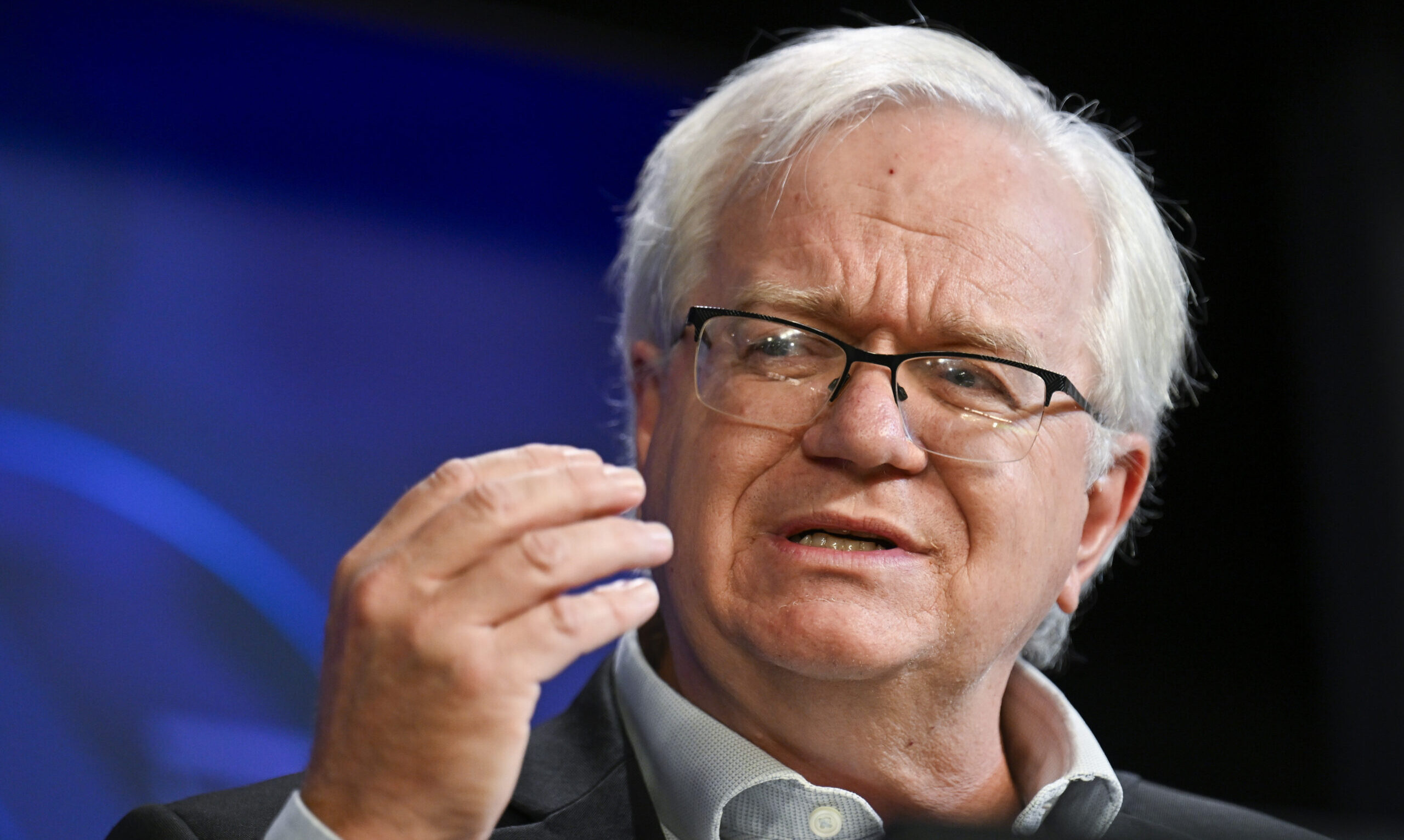
Brian Schmidt said research funding has been “a year-to-year series of wallpaper jobs for the last 20 odd years.” Picture: Martin Ollman
A Nobel laureate and an esteemed economist outlined the sub-par state of Australian research funding and sovereignty in a joint address to the National Press Club last Wednesday.
Please login below to view content or subscribe now.
This spring, the National Institutes of Health quietly began terminating programs at scores of colleges that prepared promising undergraduate and graduate students for doctoral degrees in the sciences.
At least 24 University of California and California State University campuses lost training grants that provided their students with annual stipends of approximately $12,000 or more, as well as partial tuition waivers and travel funds to present research at science conferences. The number of affected programs is likely higher, as the NIH would not provide CalMatters a list of all the cancelled grants.
Cal State San Marcos, a campus in north San Diego County with a high number of low-income learners, is losing four training grants worth about $1.8 million per year. One of the grants, now called U-RISE, had been awarded to San Marcos annually since 2001. San Marcos students with U-RISE stipends were often able to forgo part-time jobs, which allowed them to concentrate on research and building the skills needed for a doctoral degree.
The cuts add to the hundreds of millions of dollars of grants the agency has cancelled since President Donald Trump took office for a second term.
To find California campuses that lost training grants, CalMatters looked up known training grants in the NIH search tool to see if those grants were still active. If the grant’s award number leads to a broken link, that grant is dead, a notice on another NIH webpage says.
The NIH web pages for the grants CalMatters looked up, including U-RISE, are no longer accessible. Some campuses, including San Marcos, Cal State Long Beach, Cal State Los Angeles and UC Davis, have updated their own websites to state that the NIH has ended doctoral pathway grants.
“We’re losing an entire generation of scholars who wouldn’t have otherwise gone down these pathways without these types of programs,” said Richard Armenta, a professor of kinesiology at San Marcos and the associate director of the campus’s Center for Training, Research, and Educational Excellence that operates the training grants.
At San Marcos, 60 students who were admitted into the center lost grants with stipends, partial tuition waivers and money to travel to scientific conferences to present their findings.
From loving biology to wanting a doctoral degree
Before the NIH terminations, Marisa Mendoza, a San Marcos undergraduate, received two training grants. As far back as middle school, Mendoza’s favorite subjects were biology and chemistry.
To save money, she attended Palomar College, a nearby community college where she began to train as a nurse. She chose that major because it would allow her to focus on the science subjects she loved. But soon Mendoza realized she wanted to do research rather than treat patients.
At Palomar, an anatomy professor introduced her to the NIH-funded Bridges to the Baccalaureate, a training grant for community college students to earn a bachelor’s and pursue advanced degrees in science and medicine.
“I didn’t even know what grad school was at the time,” she said. Neither of her parents finished college.
The Bridges program connected her to Cal State San Marcos, where she toured different labs to find the right fit. At the time she was in a microbiology course and found a lab focused on bacteria populations in the nearby coastal enclaves. The lab was putting into practice what she was learning in the abstract. She was hooked.
“It just clicked, like me being able to do this, it came very easily to me, and it was just something that I came to be very passionate about as I was getting more responsibility in the lab,” Mendoza said.
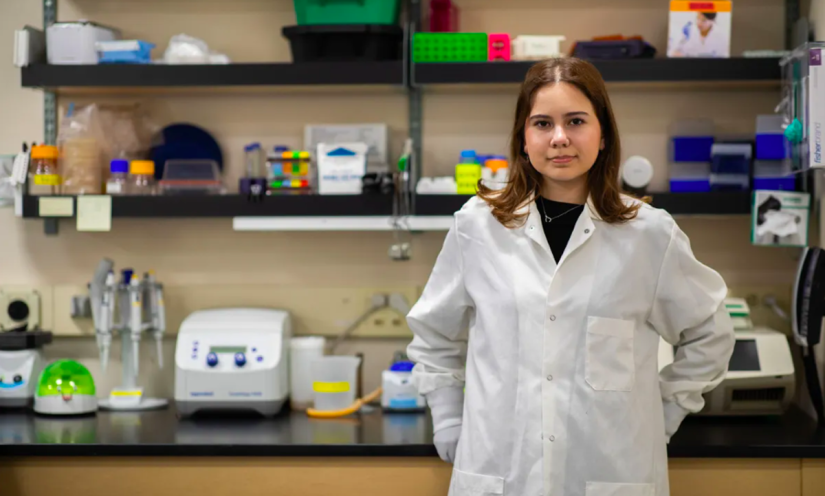
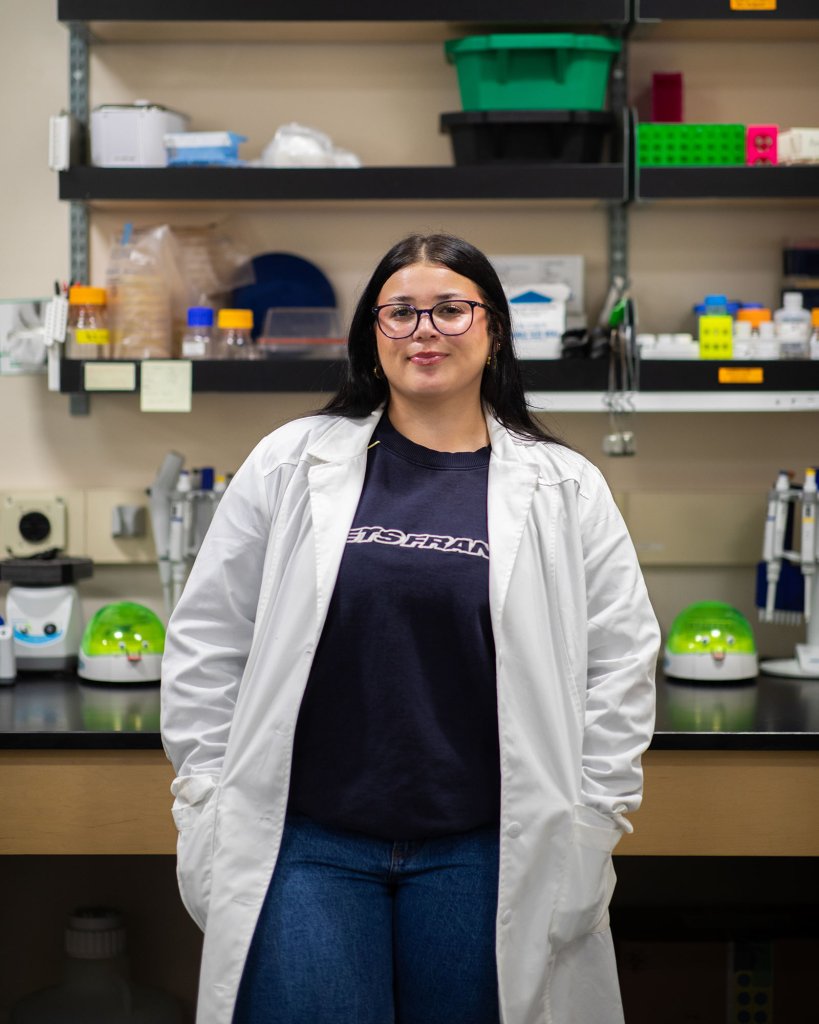
Marisa Mendoza, right, and Camila Valderrama-Martínez, left, get ready to demonstrate how they use lab equipment for their research work at Cal State San Marcos on May 6, 2025. Photo by Adriana Heldiz, CalMatters
From Palomar she was admitted as a transfer student to San Marcos and more selective campuses, including UCLA and UC San Diego. She chose San Marcos, partly to live at home but also because she loved her lab and wanted to continue her research.
She enrolled at San Marcos last fall and furthered her doctoral journey by receiving the U-RISE grant. It was supposed to fund her for two years. The NIH terminated the grant March 31, stripping funds from 20 students.
For a school like San Marcos, where more than 40% of students are low-income enough to receive federal financial aid called Pell grants, the loss of the NIH training awards is a particular blow to the aspiring scientists.
The current climate of doctoral admissions is “definitely at a point where one needs prior research experience to be able to be competitive for Ph.D. programs,” said Elinne Becket, a professor of biological sciences at Cal State San Marcos who runs the microbial ecology lab where Mendoza and other students hone their research for about 15 hours a week.
San Marcos doesn’t have much money to replace its lost grants, which means current and future San Marcos students will “100%” have a harder time entering a doctoral program, Becket added. “It keeps me up at night.”
Research is ‘a missing piece’
In a typical week in Becket’s lab, Mendoza will drive to a nearby wetland or cove to retrieve water samples — part of an ongoing experiment to investigate how microbial changes in the ecosystem are indications of increased pollution in sea life and plants. Sometimes she’ll wear a wetsuit and wade into waters a meter deep.
The next day she’ll extract the DNA from bacteria in her samples and load those into a sequencing machine. The sequencer, which resembles a small dishwasher, packs millions or billions of pieces of DNA onto a single chip that’s then run through a supercomputer a former graduate student built.
“Once I found research, it was like a missing piece,” Mendoza, a Pell grant recipient, said through tears during an interview at Cal State Marcos. Research brought her joy and consumed her life “in the best way,” she added. “It’s really unfortunate that people who are so deserving of these opportunities don’t get to have these opportunities.”
Student Marisa Mendoza gets emotional while she speaks about her research at Cal State San Marcos on May 6, 2025. Photo by Adriana Heldiz, CalMatters
The origins of the San Marcos training center date back to 2002. Through it, more than 160 students have either earned or are currently pursuing doctoral degrees at a U.S. university.
The grant terminations have been emotionally wrenching. “There had been so many tears in my household that my husband got me a puppy,” said Denise Garcia, the director of the center and a professor of biological sciences.
Garcia recalls that in March she was checking a digital chat group on Slack with many other directors of U-RISE grants when suddenly the message board lit up with updates that their grants were gone. At least 63 schools across the country lost their grants, NIH data show.
In the past four years of its U-RISE grant the center has reported to the NIH that 83% of its students entered a doctoral program. That exceeds the campus’s grant goal, which was 65% entering doctoral programs.
Mendoza is grateful: She was one of two students to win a campus scholarship that’ll defray much, but not all, of the costs of attending school after losing her NIH award. That, plus a job at a pharmacy on weekends, may provide enough money to complete her bachelor’s next year.
Others are unsure how they’ll afford college while maintaining a focus on research in the next school year.
Student Camila Valderrama-Martínez in a lab at Cal State San Marcos on May 6, 2025. Photo by Adriana Heldiz, CalMatters
“You work so hard to put yourself in a position where you don’t have to worry, and then that’s taken away from you,” said Camila Valderrama-Martínez, a first-year graduate student at San Marcos who also earned her bachelor’s there and works in the same lab as Mendoza. She was in her first year of receiving the Bridges to the Doctorate grant meant for students in master’s programs who want to pursue a biomedical-focused doctoral degree. The grant came with a stipend of $26,000 annually for two years plus a tuition waiver of 60% and money to attend conferences.
She can get a job, but that “takes away time from my research and my time in lab and focusing on my studies and my thesis.” She relies solely on federal financial aid to pay for school and a place to live. Getting loans, often anathema for students, seems like her only recourse. “It’s either that or not finish my degree,” she said.
Terminated NIH grants in detail
These grant cancellations are separate from other cuts at the NIH since Trump took office in January, including multi-million-dollar grants for vaccine and disease research. They’re also on top of an NIH plan to dramatically reduce how much universities receive from the agency to pay for maintaining labs, other infrastructure and labor costs that are essential for campus research. California’s attorney general has joined other states led by Democrats in suing the Trump administration to halt and reverse those cuts.
In San Marcos’ case, the latest U-RISE grant lasted all five years, but it wasn’t renewed for funding, even though the application received a high score from an NIH grant committee.
Armenta, the associate director at the Cal State San Marcos training center, recalled that his NIH program officer said that though nothing is certain, he and his team should be “cautiously optimistic that you would be funded again given your score.” That was in January. Weeks later, NIH discontinued the program.
He and Garcia shared the cancellation letters they received from NIH. Most made vague references to changes in NIH’s priorities. However, one letter for a specific grant program cited a common reason why the agency has been cancelling funding: “It is the policy of NIH not to prioritize research programs related to Diversity (sic), equity, and inclusion.”
That’s a departure from the agency’s emphasis on developing a diverse national cadre of scientists. As recently as February, the application page for that grant said “there are many benefits that flow from a diverse scientific workforce.”
Future of doctoral programs unclear
Josue Navarrete graduated this spring from Cal State San Marcos with a degree in computer science. Unlike the other students interviewed for this story, Navarrete, who uses they/them pronouns, was able to complete both years of their NIH training grant and worked in Becket’s lab.
But because of the uncertain climate as the Trump administration attempts to slash funding, Vanderbilt University, which placed Navarrete on a waitlist for a doctoral program, ultimately denied them admission because the university program had to shrink its incoming class, they said. Later, Navarrete met a professor from Vanderbilt at a conference who agreed to review their application. The professor said in any other year, Navarrete would have been admitted.
The setback was heartbreaking.
Josue Navarrete at the Cal State San Marcos campus on May 6, 2025. Photo by Adriana Heldiz, CalMatters
“I’m gripping so hard to stay in research,” Navarrete said. With doctoral plans delayed, they received a job offer from Epic, a large medical software company, but turned it down. “They wanted me to be handling website design and mobile applications, and that’s cool. It’s not for me.”
Valderrama-Martinez cited Navarrete’s story as she wondered whether doctoral programs at universities will have space for her next year. “I doubt in a year things are going to be better,” she said.
She still looks forward to submitting her applications.
So does Mendoza. She wants to study microbiology — the research bug that bit her initially and brought her to San Marcos. Eventually she hopes to land at a private biotech firm and work in drug development.
“Of course I’m gonna get a Ph.D., because that just means I get to do research,” she said.
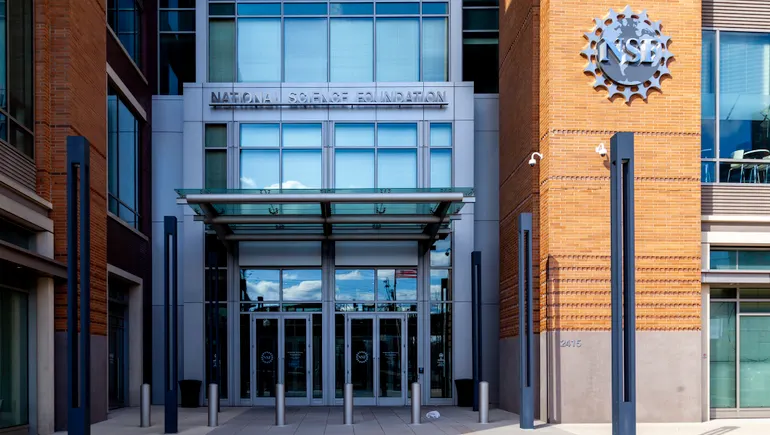
Plaintiffs allege both moves violate federal lawand threaten major research projects and millions of dollars in federal funding at universities in their states. An NSF spokesperson declined to comment on the lawsuit.
The suing states — nearly all of whom have Democrat attorneys general —asked a federal judge in New York to block NSF’s indirect cost cap and its April directive barring diversity-related grants.
Dive Insight:
On April 18, the science research agency — which was founded in 1950and had a budget of $9 billion last fiscal year — issued a statement announcing it would prioritize research focused on creating “opportunities for all Americans everywhere.”
“Research projects with more narrow impact limited to subgroups of people based on protected class or characteristics do not effectuate NSF priorities,” the agency said at the time.
The same day, NSF began issuing mass termination notices for projects that seek to boost participation in scientific fields by “women, minorities, and people with disabilities,” according to Wednesday’s complaint. Studies on misinformation and environmental justice also received termination notices.
The canceled projects include a University of Delaware study on post-traumatic stress disorder and suicidality among veterans;a new doctoral program in New Jersey promoting increased participation of underrepresented groups in science-related Ph.D.s; and a University of Oregon initiative providing some 20,000 students with learning experiences in computer science.
Later, in May, NSF moved to cap reimbursement for indirect research costs at 15% for all new grants issued to colleges. The cuts affect funding for equipment, administrative staff, laboratory construction and other expenses in research programs.
The funding cap already sparked at least one other lawsuit, from a group of higher education associations.
The change could bring steep financial and infrastructural damage to university research programs that the government relies on to advance knowledge and technology in the country, the state plaintiffs argued.
According to Wednesday’s lawsuit, the “vast majority” of university projects in the plaintiff states had negotiated indirect research rates between 40% and 60% with NSF. Those states’ “institutions will not be able to maintain essential research infrastructure and will be forced to significantly scale back or halt research, abandon numerous projects, and lay off staff,” the plaintiffs argued.
In both cases — the April directive and May indirect cost cap — the NSF violated law, the states said.
In the case of the April directive, the plaintiffs pointed to statutes that explicitly direct the agency to promote scientific participation among underrepresented groups in the U.S.
They further argue that the longstanding policy has worked, citing statistics showing that the number of women in science and engineering occupations or with related degrees doubled between 1995 and 2017. Participation in these fields by those from minority groups rose from 15% to 35% during the period.
The plaintiffs likewise argued that the indirect cost cap undermines a federal law directing the NSF to support basic scientific research and education programs.
Under the Trump administration this year, the National Institutes of Health and the U.S. Department of Energy also both adopted similar 15% caps on overhead reimbursement. Courts have blocked both policies, though the cases are ongoing.
This audio is auto-generated. Please let us know if you have feedback.
Dive Brief:
Harvard Universitywill put $250 million of its own funds toward research affected by the ongoing wave of federal cuts, according to a Wednesday announcement.
Since last week, Harvard has received “a large number of grant terminations from the federal government,” President Alan Garber and Provost John Manning said in a campuswide message. The funding disruptions are halting “lifesaving research and, in some cases, losing years of important work,” they said.
Harvard is taking the same tack as Northwestern and Johns Hopkins universities, which announced in April they would use institutional dollars to cover the cost of ongoing research hit by cuts.
Dive Insight:
Northwestern and Johns Hopkins began self-funding some of their own research after hundreds of millions of their federal funding had been lost or frozen due to the Trump administration.
Since Trump retook office, several federal agencies have abruptly changed their funding policies,cutting off billions in grants and contracts with little to no warning.The National Institutes of Healthalone slashed $1.8 billion in a little over a month, according to findings published in JAMA last week.
Harvard is now similarly self-funding affected research. But the federal government’s attacks against it outpace those directed at many of its peers.
Last month, the Trump administration canceled over $2.2 billion in federal funds to Harvard after the Ivy League institution publicly rebuked its ultimatums,arguing they overstepped the federal government’s authority.Among the demands, the administration sought a third-party audit of the viewpoints of university employees and students and wanted Harvard to selectively curtain the power of certain employees based on their activism.
The university is now bracing for even more cuts and mounting a legal battle against the Trump administration to regain its federal funding.
The university intends to fight the government’s “unlawful freeze and termination” of many of its grants and is doing what it can in the interim, Garber and Manning said Wednesday.
“Although we cannot absorb the entire cost of the suspended or canceled federal funds, we will mobilize financial resources to support critical research activity for a transitional period as we continue to work with our researchers to identify alternative funding sources,” they said.
They added that the university will advocate for “the productive partnership between the federal government and research universities” that has existed for over eight decades.
Over 50 higher ed organizations, led by the American Council on Education, made a similar plea in a joint statement Wednesday.
“The entire country benefits when policymakers and higher education leaders respect a common understanding of the vital role colleges and universities play in advancing the social, cultural, and economic well-being of the United States,” the organizations said.
They argued that the release of research funds should not be contingent on which students colleges enroll, what programs they offer or how they oversee their instructors. The signatories also include the American Association of Colleges and Universities and the New England Commission of Higher Education, Harvard’s accreditor.
Prior to its announcement Wednesday, Harvard had already implemented a hiring freeze for the spring semester. And dozens of faculty members have pledged 10% of their salaries to shore up against the “severe financial damage” the university faces as it takes the Trump administration to court.
Garber recently made a similar pledge. He will take a voluntary 25% pay cut beginning in July, a university spokesperson said Thursday.
Harvard has not yet publicly disclosed the new president’s salary. But his predecessors have made north of $1 million annually,meaning his voluntary pay cut in fiscal 2026 would likely net the university six-figure savings.
Garber, a longstanding Harvard employee, has taken a pay reduction during turbulent financial times before. As provost, Garber took a 25% cut in 2020 in response to the pandemic, as did the university’s then-president and executive vice president.
This audio is auto-generated. Please let us know if you have feedback.
Dive Brief:
A group of universities and higher education associations is suing theNational Science Foundationover its new cap on reimbursement for indirect research costs for all future college grants.
In court documents filed Monday, the plaintiffs — led by the American Council on Education, the Association of American Universities and the Association of Public and Land-Grant Universities — allege the unilateral 15% cap, which took effect May 5, violates the law in “myriad respects” and that its effects will be “immediate and irreparable.”
The new lawsuit follows two other legal challenges over similar caps implemented by the National Institutes of Health and the U.S. Department of Energy — both of which have been blocked, at least temporarily.
In the ruling, the judge said NIH unlawfully implemented the cap and violated constitutional prohibitions on applying new rules retroactively. The Trump administration quickly appealed the ruling, and the case is ongoing.
Next came the Energy Department. In April, the agency announced the same 15% cap on indirect research costs,alleging the plan would save taxpayers $405 million annually. Again, colleges sued, and a federal judge blocked the plan — albeit temporarily — while the lawsuit moves forward.
The ACE, AAU and APLU are plaintiffs in both cases.
Now NSF has introduced its own cap, to the chagrin of colleges and higher ed experts. When announcing the 15% cap, the agency argued the move would streamline and add transparency to the funding process and“ensure that more resources are directed toward direct scientific and engineering research activities.”
But the new lawsuit argues that NSF’s policy echoes the other agencies’ attempts, to deleterious effect.
“NSF’s action is unlawful for most of the same reasons, and it is especially arbitrary because NSF has not even attempted to address many of the flaws the district courts found with NIH’s and DOE’s unlawful policies,” it said.
Like the lawsuits against NIH and Energy Department’s policies, the plaintiffs allege that the NSF’s cap oversteps the agency’s authority.
“It beggars belief to suggest that Congress — without saying a word — impliedly authorized NSF to enact a sweeping, one-size-fits-all command that will upend research at America’s universities,” it said.
In fiscal 2024, Congress gave NSF $7.2 billion to fund research and related activities. In turn, the agency funded projects at 1,850 colleges —more than 1 in 4 of the higher education institutions in the U.S. eligible to receive federal dollars.
That year, NSF awarded Arizona State University, one of the plaintiffs, 172 awards worth a total of $197.5 million in anticipated and obligated funding, according to court documents. Prior to the NSF’s new policy, the institution negotiated a 57% rate for indirect costs in fiscal 2026.
The University of Illinois, another plaintiff, receivedjust over $129 millionin NSF funding in fiscal 2024 —making the agency its biggest funder — and negotiated an indirect research funding rate of 58.6%.
The university said in court documents that it has received the most NSF funding of all U.S. colleges for six years in a row, and it is poised to lose more than $23 million a year if the agency’s new cap is allowed to continue.
The college plaintiffs are:
Arizona State University.
Brown University, in Rhode Island.
California Institute of Technology.
The University of California.
Carnegie Mellon University, in Pennsylvania.
The University of Chicago.
Cornell University.
The University of Illinois.
Massachusetts Institute of Technology.
The University of Michigan.
The University of Minnesota.
The University of Pennsylvania.
Princeton University, in New Jersey.
The lawsuit also cited an attempt by the first Trump administration to cap rates for indirect research at a federal agency. In 2017, the White House proposed cutting the cap to 10% for all NIH grants. Congress – then under Republican control as it is now — “identified serious problems immediately” and took “swift and bipartisan” action against the proposal, the lawsuit said.
A coalition of universities and trade groups is suing the National Science Foundation over the independent federal agency’s plan to cap higher education institutions’ indirect research cost reimbursement rates at 15 percent.
In the lawsuit, filed Monday in the U.S. District Court for the District of Massachusetts, the same day the NSF’s new policy went into effect, the coalition argued that a cut would risk the country’s standing “as a world leader in scientific discovery” and “the amount and scope of future research by universities will decline precipitously.”
It warned that “vital scientific work will come to a halt, training will be stifled, and the pace of scientific discoveries will slow” and that “progress on national security objectives, such as maintaining strategic advantages in areas like AI and quantum computing, will falter.”
Plaintiffs in the lawsuit include the American Council on Education, the Association of American Universities, the Association of Public and Land-grant Universities, and 13 universities, including Arizona State University, the University of Chicago and Princeton University.
They attest that the NSF violated numerous aspects of the Administrative Procedure Act, including bypassing Congress to unilaterally institute an “arbitrary and capricious” 15 percent rate cap and failing to explain why it’s only imposing the policy on universities.
The NSF awarded $6.7 billion to some 621 universities in 2023.
Indirect costs fund research expenses that support multiple grant-funded projects, including computer systems to analyze enormous volumes of data, building maintenance and waste-management systems. In 1965 Congress enacted regulations that allow each university to negotiate a bespoke reimbursement rate with the government that reflects institutional differences in geographic inflation, research types and other variable costs.
Typical negotiated NSF indirect cost rates for universities range between 50 and 65 percent, according to the lawsuit.
And while the Trump administration has claimed that indirect cost reimbursements enable wasteful spending by universities, the plaintiffs note that an existing cap on administrative costs means that universities already contribute their own funds to cover indirect costs, “thereby subsidizing the work funded by grants and cooperative agreements.” In the 2023 fiscal year, universities paid $6.8 billion in unrecovered indirect costs, the lawsuit read.
The NSF is the third federal agency that has moved to cap indirect research costs since President Donald Trump took office in January; federal judges have already blocked similar plans from the National Institutes of Health and the Department of Energy.
“NSF’s action is unlawful for most of the same reasons,” the lawsuit read, “and it is especially arbitrary because NSF has not even attempted to address many of the flaws the district courts found with NIH’s and DOE’s unlawful policies.”
US President Donald Trump has cracked down on researchers that study vaccine hesitancy, participate in DEI practices or have links to China. Picture: Jim Watson
In its first 100 days, the Trump administration has terminatedmore than US$2 billion in federal grants, according to a public source database compiled by the scientific community, and it is proposing additional cuts that would reduce the $47 billion budget of the US National Institutes of Health, also known as the NIH, by nearly half.
Please login below to view content or subscribe now.
Unless you’ve been living under a rock, readers are likely to be very aware of the current financial challenges facing universities across the UK.
The situation is no different in Scotland where several Scottish universities have reported an adjusted operating deficit position for academic year 2023–24 – although it’s important to note that this position can also reflect the stage of the institution’s investment cycle or actions being taken to restructure as well as reflecting the current year financial performance of an institution.
These are difficult times for the sector. But a silver lining, if there were one to be found, could be that challenging times present an opportunity to do things differently. Approaches that would have previously been deemed too complicated to undertake can find themselves on the table because they have the potential to drive essential efficiencies and promote sustainability.
Looming large
With 18 universities receiving Scottish Funding Council (SFC) core funding for research – “Scottish QR”, the Research Excellence Grant (REG) – the Scottish system is of the size and scale where SFC can regularly have discussions with every vice principal for research. These discussions help us better understand the state of play and the pressures and challenges being faced.
When we most recently spoke with vice principals, as you’d expect, financial sustainability loomed large. Challenges are having a real impact on how many institutions are considering their R&I activity.
One of the things we heard is that an increasing number of institutions are exploring sharing back-office services between institutions to create efficiencies.
This makes sense. Scotland is a small country with a largesse of universities, all of which undertake world-leading research as determined by the REF. We’re also a country of concentrated geography with many of our institutions focused in the same places.
While these are moves in the right direction for sustainability, there are benefits from things happening sooner rather than later, given that there’s no quick fix for university finances. Here SFC has a role to play, by helping catalyse activity.
The fund will allow Scottish universities to apply for funding to develop sustainable models and steps to implement sharing services, including but not limited to sharing tech transfer offices (TTOs) and research offices. It will allow:
The consolidation of existing distinct functions by replacing them with a single shared function.
Institutions with smaller research portfolios to work with larger institutions to gain access to expertise and capability that they don’t currently have.
The creation of shared capacity between groups of institutions where limited functions currently exist but new shared capability would drive efficiencies.
It will kick-start longer-term collaboration by supporting the initial costs of change, enabling institutions to navigate the difficult proof of concept stage and de-risk the exploration of new approaches in a financially constrained environment.
Our intention is to precipitate and fund a different way of working, investing in change which will enable the change to carry on.
A total of £3m will be available over academic years 2025–26 and 2026–27 with grants of between £250,000 and £750,000 on offer through open competition. Grants will help to promote system sustainability by supporting increased inter-institutional operational collaboration.
As well as promoting financial viability, where grants are focused on the sharing of technology transfer office (TTO) services, the fund will increase Scotland’s research commercialisation pipeline by expanding access to key facilities across institutions.
This provides an opportunity to further Scottish government innovation ambitions as outlined in the National Innovation Strategy. University research commercialisation is central to the strategy and ensuring that world-leading research from across all of Scotland’s universities can be successfully commercialised requires access to critical expertise. The UK government’s spin-out review, published in November 2023, also highlights the value of shared technology transfer expertise across universities.
And it’s not necessarily just about sharing research offices and TTOs – we’re interested in other proposals for sharing R&I services which meet our criteria.
Small but mighty
We’re under no illusions that the R&I Shared Services Collaboration Fund will solve or even make a significant dent in the financial challenges currently being faced by universities. No, doing that will require multi-factored activity across many stakeholders.
But we hope that this funding will go some way to promoting sustainability and making Scotland’s small but mighty research system function in a way that reflects the opportunities of scale and collaboration we have on our doorstep.