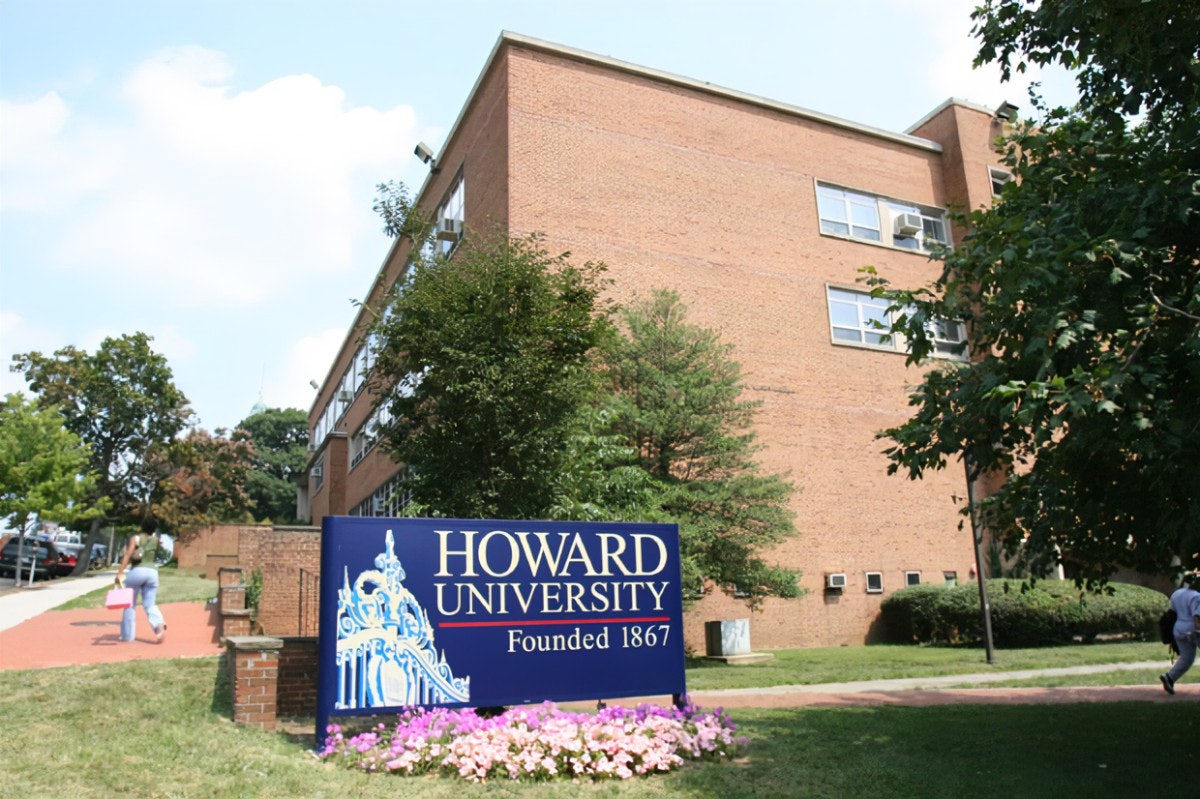
In a groundbreaking achievement that marks a significant milestone for historically Black colleges and universities (HBCUs), Howard University has become the first HBCU to receive the prestigious Research One (R1) Carnegie Classification, placing it among the nation’s most elite research institutions.
The announcement from the American Council of Education (ACE) on Thursday, recognizes Howard’s designation as an institution of “very high research spending and doctorate production,” a status that fewer than 150 universities nationwide have achieved. This accomplishment not only highlights Howard’s commitment to academic excellence but also represents a historic moment in the evolution of HBCUs in American higher education.
According to ACE’s stringent criteria, universities must demonstrate exceptional research capabilities through substantial financial investment and doctoral program success. The minimum requirements include at least $50 million in annual research spending and the production of at least 70 research doctorates. Howard University has significantly surpassed these thresholds, showcasing its commitment to advancing knowledge and fostering innovation.
Dr. Bruce A. Jones, Howard University’s senior vice president for research, provided specific details about the university’s achievements. “In Fiscal Year 2023, the most recent evaluation year in the classification cycle, the University’s productivity was significantly higher than the R1 base criteria, recording just under $85 million in research expenditures and awarding 96 doctorates in an array of fields,” Jones said. “This includes the highest number of doctorates awarded to Black students at any college or university in America.”
The impact of such a designation has broader implications beyond Howard, said Dr. Robert T. Palmer, chair and professor in the Department of Educational Leadership and Policy Studies at the university.
“Howard reaching R1 status is phenomenal. This status will help Howard to attract more highly competitive research grants and talented faculty and students,” said Palmer, who added that the university’s status as an R1 will also help to position itself as a premier institution “and help to amplify the great work being done by faculty, staff, and students, alumni”
Palmer noted that there are other HBCUs, including his alma mater, Morgan State University that is currently seeking R1 status.
“It would be great for HBCUs seeking R1 status to form a coalition and work collectively to support each other towards this goal,” he added.
University President Dr. Ben Vinson III emphasized the broader implications of this achievement for both Howard and the communities it serves.
“Howard University’s achievement of R1 status demonstrates our research capacity and reaffirms our deep commitment to tackling society’s most pressing questions through cutting-edge scholarship and technological innovation,” Vinson said. “As a leader in the evolution of next generation HBCUs, we are dedicated to ensuring that the benefits of discovery and progress reach all communities, including those historically overlooked and underrepresented.”
Vinson noted that the university’s research portfolio showcases its comprehensive approach to addressing critical societal challenges. For example, Howard hosts one of only fifteen U.S. Department of Defense University Affiliated Research Centers (UARC) in the nation, focusing on tactical autonomy, human-machine teaming, and artificial intelligence through its Research Institute for Tactical Autonomy.
In the medical field, Howard’s pioneering spirit is evident in its Center for Sickle Cell Disease, which was the first center in the nation devoted to studying and treating the disease. The university’s Cancer Center holds the distinction of being the only such facility at an HBCU providing comprehensive cancer treatment services while training future oncology professionals and researchers.
The university’s commitment to preserving and studying Black history and culture is exemplified by the Moorland-Spingarn Research Center, which stands as the nation’s largest and most comprehensive repository of materials on the global Black experience. Additionally, Howard’s Center for African Studies holds the unique position of being the only comprehensive National Resource Center at an HBCU, as designated by the U.S. Department of Education.
Higher education experts point out that Howard’s R1 designation represents not just an achievement for Howard University but a significant advancement for the entire HBCU community, potentially paving the way for other institutions to follow. As Howard continues to expand its research capabilities and influence, its impact on American higher education and scientific advancement promises to grow even stronger.
“I think it’s incredibly exciting that Howard University — a powerhouse for decades in research — is being recognized as a Research 1 institution,” said Dr. Marybeth Gasman, who is the Samuel DeWitt Proctor Endowed Chair in Education and University Distinguished Professor at Rutgers University. An expert on HBCUs, Gasman added that the important research contributions across disciplines at Howard have significantly impacted students, communities (regional, national, and international), and leaders.
“I’m excited to see what the institution does to build on this recognition as it progresses,” she said. “As a Research 1, it will be vital to ensure that all tenure-track faculty are supported through reduced course loads (4 courses a year max), research start-up funds across the disciplines, ample conference travel funding, and that Ph.D. students are supported with fully funded fellowships and assistantships.”
This audio is auto-generated. Please let us know if you have feedback.
Dive Brief:
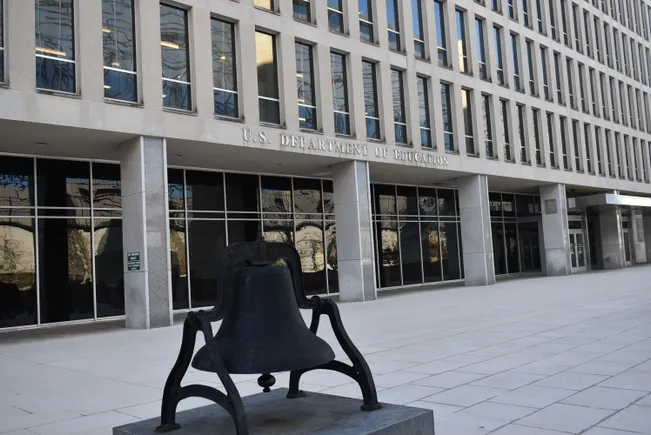
The U.S. Department of Education abruptly canceled about $881 million in multiyear research contracts on Monday, sparking a storm of protest from groups concerned about a loss of data accuracy and the dissemination of evidence-based practices.
The temporary Department of Government Efficiency, led by billionaire Elon Musk, said the contracts terminated by the Education Department’s Institute of Educational Sciences include 29 related to diversity, equity and inclusion that total $101 million.
Activities involving the National Assessment of Educational Progress, the College Scorecard and the College Navigator were not impacted by the cancellations, a department spokesperson said in an email.
Dive Insight:
In total, 89 IES contracts worth nearly $900 million were canceled, according to DOGE and the Education Department. The Education Department did not respond to a request for a list of the canceled contracts or provide a reason for the terminations.
President Donald Trump has pledged to eliminate the Education Department, although that action would need congressional approval. As a first step, Trump is expected to issue an executive order in the near future limiting the department’s power and responsibilities.
Last month, the Education Department said it had “removed or archived” hundreds of DEI-related outward-facing documents — including guidance, reports and training materials — to comply with Trump’s executive order to end federal DEI activities. The Education Department also recently put employees charged with leading DEI efforts on paid leave.
As the education field was attempting to better understand the reach of the canceled contracts, several individuals and organizations expressed concern.
The “robust collection and analysis of data are essential for ensuring quality education,” according to a joint statement on Monday from the American Education Research Association and the Council of Professional Associations on Federal Statistics.
The organizations said the contract terminations will prevent the National Center for Education Statistics from participating in international assessments and reporting data on school, college and university finances. Also concerning will be the loss of future survey data to understand the extent of teacher shortages and chronic absenteeism in schools, they said.
Limiting NCES’ work “will have ramifications for the accuracy of national-level data on the condition and progress of education, from early childhood through postsecondary to adult workforce,” AERA and COPAFS said. As a result, “student learning and development will be harmed.”
EdTrust, a nonprofit that aims to eliminate racial and economic barriers in schools, said the abrupt cancellations jeopardize “our collective responsibility to identify and address” inequities affecting populations including students from low-income families, students of color, English language learners, students with disabilities, student parents, and rural students.
Sameer Gadkaree, president and CEO of the Institute for College Access & Success, pointed to a risk that “core Congressional mandates — including increasing transparency and improving student outcomes through evidence-based strategies — will be delayed and may not be possible.
“Without action, ongoing data collection efforts will be impaired and future availability of basic, up-to-date information will be at risk,” Gadkaree said in a statement Tuesday.
But some saw the move as a restart for federal education research.
Mark Schneider, director of the Institute of Education Sciences from 2017 to 2024 and currently a nonresident senior fellow at the American Enterprise Institute, addressed the matter during a LinkedIn conversation Tuesday with Bellwether, a nonprofit education research and analysis organization.
IES systems need to be re-evaluated and modernized, said Schneider, adding he wished he could have made large-scale reforms as director of IES. “Do I wish I had even a modicum of the power that that DOGE [has]? Yes, of course,” he said.
He said the federal education research arm needs significant rebuilding by people knowledgeable about research infrastructure.
“I think we have to understand that this is not a tragedy. This is not a catastrophe. This is an opportunity,” said Scheider.
Without mass resistance, these attacks will
result in layoffs, program & school closures, and devastation to
local economies that depend on the economic impact of our colleges and
universities. Higher ed workers – long facing growing job precarity –
are now facing unprecedented job insecurity.
In February 19, at actions across the country, higher education workers, students, and allies will get in the streets and loudly proclaim: Hands off our healthcare, research, and jobs!
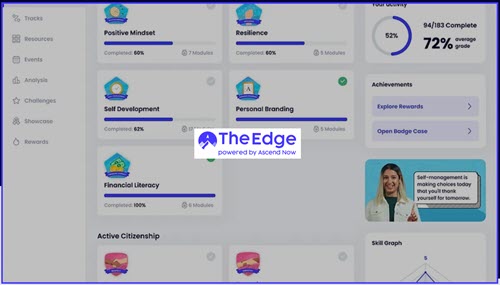
Los Angeles, CA — As students navigate an increasingly complex world defined by artificial intelligence, social media, and rapid technological change, the need for essential life skills has never been greater. The Edge, an innovative, research-based social-emotional and life skills curriculum, creates a dynamic and effective learning environment where middle and high school students can build the social-emotional and life-readiness skills needed to succeed in school, relationships, and life.
Designed in collaboration with educators and aligned with the CASEL framework, The Edge is the first curriculum to meet educators’ demands for high-quality instructional materials for SEL and life-skills readiness. The curriculum helps students cultivate communication, problem-solving, and self-awareness, as well as essential life skills like entrepreneurship, negotiation, financial literacy, and networking, to boost their academic abilities.
“The Edge represents a paradigm shift in education,” says Devi Sahny, Founder and CEO of The Edge and Ascend Now. “It’s not just about helping students excel academically—it’s about helping them understand themselves, connect with others, and develop the resilience to face life’s challenges head-on.”
By combining bite-sized lessons with project-based learning, The Edge creates a dynamic and effective learning environment with ready-to-use, adaptable resources educators use to help students develop both hard and soft skills. Its advanced analytics track student progress whilesaving valuable preparation time. Designed to enable educators to adapt as needed, the curriculum is flexible and requires minimal preparation to support all learning environments—asynchronous and synchronous learning, even flipped learning.
Key highlights include:
Integrated Skill Framework: A robust curriculum featuring 5 pillars, 24 essential skills, and 115 modules, blending SEL with employability and life skills such as negotiation, financial literacy, and digital literacy, all aligned with CASEL, ASCA, and global educational standards.
Educator-Friendly Design: With over 1,000 customizable, MTSS-aligned resources, The Edge saves teachers time and effort while allowing them to adapt materials to meet their unique classroom needs.
Hard Skill Development Meets SEL: By engaging in activities like entrepreneurship, critical thinking, and leadership training, students develop technical proficiencies while enhancing communication, empathy, and resilience.
Real-Time Analytics: Advanced data tools provide administrators with actionable insights into student progress, enabling schools and districts to measure outcomes and improve program alignment with educational goals.
Compelling Content.The curriculum features engaging content that integrates the latest insights from learning sciences with professional writing from skilled authors affiliated with SNL, Netflix, and HBO Max. This combination guarantees that the material is educationally solid, relevant, and thought-provoking.
The Edge immerses students in real-life, complex scenarios that challenge them to think critically, collaborate effectively, and apply social-emotional learning (SEL) to everyday situations. For example, one lesson about conflict resolution uses an actual problem that Pixar faced when allocating resources for new movies.
Early adopters of The Edge have reported remarkable results. The Edge was used by rising high school seniors during a three-week summer college immersion program (SCIP) at Georgetown University, which prepares high school students from underserved backgrounds to apply for college. At the end of the program, 94% reported learning important skills, and 84% said they discovered something new about themselves.
ABOUT THE EDGE
The Edge is the latest innovation from Ascend Now US, dba The Edge, a US-based education startup committed to increasing both college and career readiness for all students. Sahny founded The Edge in the US after building and scaling Ascend Now Singapore, which has provided personalized academic and entrepreneurship tutoring to over 10,000 students and 20+ international schools over the last decade.
eSchool Media staff cover education technology in all its aspects–from legislation and litigation, to best practices, to lessons learned and new products. First published in March of 1998 as a monthly print and digital newspaper, eSchool Media provides the news and information necessary to help K-20 decision-makers successfully use technology and innovation to transform schools and colleges and achieve their educational goals.
There has been growing interest in the potential of arts-based research (ABR) methods to enrich educational inquiry (Everley, 2021). However, minimal attention has been given to how accessible or relevant ABR is for practice-based researchers (including lecturers and teachers), who undertake the professional doctorate in education (EdD) pathway. We believe that this lack of attention is significant, partly because institutional frameworks for doctoral programmes are often informed by traditional models of PhD research, which may constrain the creative possibilities of practice-based study (Vaughan, 2021), and partly due to the nature and ‘uniqueness’ of the EdD as a research degree (Dennis, Chandler & Punthil, 2023).
We have previously argued that ABR potentially holds particular promise for EdD research due to its alignment with the programme’s highly relational and contextual nature and its engagement with diverse audiences. In our 2024 paper, which was part of a special issue of Teaching in Higher Education, we mapped the theoretical similarities in understandings of ABR and the EdD, exploring this alignment across aspects including practice, audience and reflexivity (Dobson & Clark, 2024). Our paper called for colleagues to ‘embrace hybridity’ and provide permission for creativity in EdD research and we attempted to illustrate this within the paper itself, entangling examples of creative nonfiction writing with a traditional scoping review to embody our theorisation. However, we also concluded with a realisation that maximising the potential of ABR requires careful attention to how design, practice and regulations support students’ identity development and agency (Savva & Nygaard, 2021).
To build on this, throughout 2024 we have been working with a group of nine EdD students studying at our respective institutions, who are all exploring the potential of ABR for their work. These students span professional roles from early childhood through to higher education, and disciplines including the arts, business and science. Following initial narrative interviews with each student, we developed an online cross-institution action learning set (Revans, 1982) to facilitate dialogue and learning relating to some of the key problems and opportunities students were experiencing in relation to their engagement with ABR. As a group we met 6 times, each time agreeing an area of focus, and providing opportunities for individuals to present and group members to ask clarifying and open-ended coaching style questions. This process culminated in creative analysis, where we collaboratively analysed and reflected on the learning that had taken place, and each student presented a creative interpretation of their learning to the group. We are currently working with a group of these EdD students to co-author a paper which captures and illustrates this learning and shares these creative outputs.
Alongside this, the second paper from our project (Clark & Dobson, forthcoming) explores some of the key learning arising from the initial interview phase – in particular the idea of ABR as a form of ‘resistance’ involving potentially either a deliberate, or more hesitant, decision to ‘go against the grain’. Using Glăveanu’s 5A’s theory (actors, actions, artifacts, audiences and affordances) to understand creativity as embedded in social relations, we developed the interview transcripts into vignettes for each student and identified three key strands of the students’ perceptions of their experiences – many of which continued to be key areas of focus as we worked through the action learning set process. The process highlighted the students’ understanding of how methodological expectations were reflected through key audiences and structures, how methodological choices aligned with their sense of self and identity and the role of ABR in promoting action and agency. The vignettes offered a nuanced illustration of the tensions in these areas, which we feel offers wider value due to the fact that, unlike any previous work we had identified in this area, the understandings related to students both with and without previous artist identities, backgrounds or experiences.
The focus on audience and structures highlighted the numerous audiences which exist for students’ EdD research, often spanning academic, professional and community spaces and how these can create tensions in terms of expectations of what research ‘should’ look like. Some students talked of an ongoing battle to justify and ensure their ABR projects were taken seriously, whilst others positioned their decision to use ABR as an active decision to resist academic or managerial structures they perceived had been unhelpfully imposed on them. This also highlighted that whilst valuing creativity in research within the micro context of an EdD programme itself (through teaching and supervision) was significant and built confidence, students also needed support to consider how to frame their work in wider contexts, including through institutional processes (such as those for ethics approval) and professional and academic communities. One student, for example, highlighted feeling ‘junior’ and ‘a bit insecure’ about engaging in wider university processes designed for what they felt was understood as more ‘serious research’.
In relation to identities and self, we explored a complex and nuanced understanding of students’ perceptions of the need for ongoing negotiation of the entanglement between professional, researcher, and in some cases, artist identities. Where students identified pre-existing artist identities, for some this created an obvious alignment with their research, but for others they identified tensions, including feeling ‘nervous’ about bringing this identity into their research and apprehensive of their relevance to an academic audience. Where students had no prior expertise or experience in the arts, they often expressed hesitance regarding using ABR, but strong feelings about its potential to align with aspects of their professional identity and values. For example, they appreciated ABR’s affordances in ensuring research was accessible to wider communities and supporting children’s voices to be heard.
This also connected with the final strand, action and agency, where ABR was positioned by the students as having the potential to facilitate an emancipatory process in education, promote agency and in some cases play a role in research as a form of activism. This was often associated with ideas of social justice, with one student, for example, talking of ABR as providing agency for him to ‘push back against’ an education system that marginalises certain groups. Alongside this, another highlighted ABR as having stronger potential to be participatory and action based, maximising the benefits of the research process itself on her participants who were also her students.
As we continue our work on this project, the learning it has generated allows us to begin to reflect on its implications: implications that are both within individual EdD programs, where teaching and supervision have strong potential to offer spaces to explore, and reflect on, the potential value of ABR within EdD research, and at an institutional level, where regulations need to continue to respond to growing focus on the social and professional relevance of doctoral research and the range of models, and methodologies, they encompass. A key part of the action learning sets has also been their role in highlighting the value of facilitating methodological dialogue and creating a community of doctoral researchers exploring ABR. As one of the students reflected, this has helped with their sense of ‘validation’ for their work and provided a space to navigate some of the key tensions.
Dr Timothy Clark is Director of Research and Enterprise for the School of Education at the University of the West of England, Bristol. His research focuses on aspects of doctoral pedagogy and researcher development, particularly in relation to academic writing and methodological decision making on the professional Doctorate in Education (EdD).https://www.linkedin.com/in/drtimothyclark/
AI research tools such as OpenAI o1 have now reached test score levels that meet or exceed the scores of those who hold Ph.D. degrees in the sciences and a number of other fields. These generative AI tools utilize large language models that include research and knowledge across many disciplines. Increasingly, they are used for research project ideation and literature searches. The tools are generating interesting insights to researchers that they may not have been exposed to in years gone by.
The field of academe has long emphasized the single-discipline research study. We offer degrees in single disciplines; faculty members are granted appointments most often in only one department, school or college; and for the most part, our peer-reviewed academic journals are in only one discipline, although sometimes they welcome papers from closely associated or allied fields. Dissertations are most commonly based in a single discipline. Although research grants are more often multidisciplinary and prioritize practical solution-finding, a large number remain focused on one field of study.
The problem is that as we advance our knowledge and application expertise in one field, we can become unaware of important developments in other fields that directly or indirectly impact the study in our chosen discipline. Innovation is not always a single-purpose, straight-line advance. More often today, innovation comes from the integration of knowledge of disparate fields such as sociology, engineering, ecology and environmental developments, and expanding understanding of quantum physics and quantum computing. Until recently, we have not had an efficient way to identify and integrate knowledge and perspectives from fields that, at first glance, seem unrelated.
“Amidst the urgency of increasingly complex global challenges, the need for integrative approaches that transcend traditional disciplinary boundaries has never been more critical. Climate change, global health crises, sustainable development, and other pressing issues demand solutions from diverse knowledge and expertise. However, effectively combining insights from multiple disciplines has long been a significant hurdle in academia and research.
“The Multi-LLM Iterative Prompting Methodology (MIPM) emerges as a transformative solution to this challenge. MIPM offers a structured yet flexible framework for promoting and enhancing multidisciplinary research, peer review, and education. At its core, MIPM addresses the fundamental issue of effectively combining diverse disciplinary perspectives to lead to genuine synthesis and innovation. Its transformative potential is a beacon of hope in the face of complex global challenges.”
Even as we integrate AI research tools and techniques, we, ourselves, and our society at large are changing. Many of the common frontier language models powering research tools are multidisciplinary by nature, although some are designed with strengths in specific fields. Their responses to our prompts are multidisciplinary. The response to our iterative follow-up prompts can take us to fields and areas of expertise of which we were not previously aware. The replies are not coming solely from a single discipline expert, book or other resource. They are coming from a massive language model that spans disciplines, languages, cultures and millennia.
As we integrate these tools, we too will naturally become aware of new and emerging perspectives, research and developments generated by fields that are outside our day-to-day knowledge, training and expertise. This will expand our perspectives beyond the fields of our formal study. As the quality of our AI-based research tools expands, their impact on research cannot be overstated. It will lead us in new directions and broader perspectives, uncovering the potential for new knowledge, informed by multiple disciplines. One recent example is Storm, a brainstorming tool developed by the team at Stanford’s Open Virtual Assistant Lab (OVAL):
“The core technologies of the STORM&Co-STORM system include support from Bing Search and GPT-4o mini. The STORM component iteratively generates outlines, paragraphs, and articles through multi-angle Q&A between ‘LLM experts’ and ‘LLM hosts.’ Meanwhile, Co-STORM generates interactive dynamic mind maps through dialogues among multiple agents, ensuring that no information needs overlooked by the user. Users only need to input an English topic keyword, and the system can generate a high-quality long text that integrates multi-source information, similar to a Wikipedia article. When experiencing the STORM system, users can freely choose between STORM and Co-STORM modes. Given a topic, STORM can produce a structured high-quality long text within 3 minutes. Additionally, users can click ‘See BrainSTORMing Process’ to view the brainstorming process of different LLM roles. In the ‘Discover’ section, users can refer to articles and chat examples generated by other scholars, and personal articles and chat records can also be found in the sidebar ‘My Library.’”
One of the concerns raised by skeptics at this point in the development of these research tools is the security of prompts and results. Few are aware of the opportunities for air-gapped or closed systems and even the ChatGPT temporary chats. In the case of OpenAI, you can start a temporary chat by tapping the version of ChatGPT you’re using at the top of the GPT app, and selecting temporary chat. I do this commonly in using Ray’s eduAI Advisor. OpenAI says that in the temporary chat mode results “won’t appear in history, use or create memories, or be used to train our models. For safety purposes, we may keep a copy for up to 30 days.” We can anticipate these kinds of protections will be offered by other providers. This may provide adequate security for many applications.
Further security can be provided by installing a stand-alone instance of the LLM database and software in an air-gapped computer that maintains data completely disconnected from the internet or any other network, ensuring an unparalleled level of protection. Small language models and medium-size models are providing impressive results, approaching and in some cases exceeding frontier model performance while storing all data locally, off-line. For example, last year Microsoft introduced a line of SLM and medium models:
“Microsoft’s experience shipping copilots and enabling customers to transform their businesses with generative AI using Azure AI has highlighted the growing need for different-size models across the quality-cost curve for different tasks. Small language models, like Phi-3, are especially great for:
Resource constrained environments including on-device and offline inference scenarios
Latency bound scenarios where fast response times are critical.
Cost constrained use cases, particularly those with simpler tasks.”
In the near term we will find turnkey private search applications that will offer even more impressive results. Work continues on rapidly increasing multidisciplinary responses to research on an ever-increasing number of pressing research topics.
The ever-evolving AI research tools are now providing us with responses from multiple disciplines. These results will lead us to engage in more multidisciplinary studies that will become a catalyst for change across academia. Will you begin to consider cross-discipline research studies and engage your colleagues from other fields to join you in research projects?
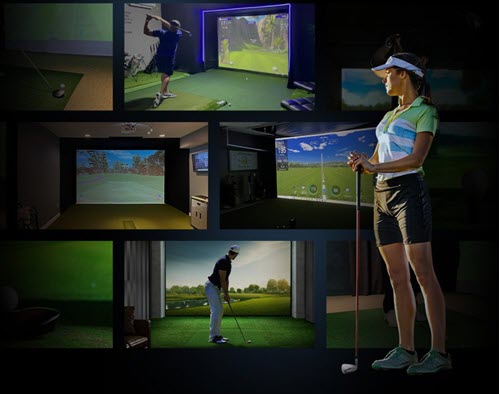
COSTA MESA, Calif. — BenQ, an internationally renowned provider of visual display and collaboration solutions, today announced that Marian High School in Omaha, Nebraska, selected and installed two BenQ LK936ST 4K HDR short-throw golf simulator projectors for its golf sim Golf Training Lab at the Marian Athletic Center. In 2024, the Marian girls’ golf team became the undefeated Nebraska State Champions in Class A golf. Designed to help analyze and improve the golfers’ swings and give them the ability to practice in all weather conditions, the Marian Golf Training Lab provides the girls’ high school and junior teams with an immersive and realistic golf course environment. Based on research and recommendations from golf simulation experts, Marian High School chose the BenQ LK936ST for its exceptional color accuracy, powerful brightness, and maintenance-free operation.
Head Coach Robert Davis led the effort to build the Golf Training Lab, which includes two golf simulator bays featuring Carl’s Place 16×10 impact screens and ProTee VX launch monitors. Seeking a high-performance projector that could deliver realistic course visuals, bright images in a well-lit environment, and long-term, maintenance-free operation, Davis consulted with golf simulator manufacturers and reviewers. After thorough research, BenQ’s LK936ST emerged as the top choice.
“Our athletes benefit from an experience that’s as close as you can get to being on an actual course,” said Davis. “When we pull up courses, you can see distinct leaves on the trees. That level of realism not only makes training more effective but also more enjoyable.”
The BenQ LK936ST’s 4K UHD resolution, combined with BenQ’s exclusive Golf Mode, ensures a highly detailed, true-to-life golfing experience. Its 5,100 lumens of brightness allow it to perform exceptionally well in the Marian Athletic Center’s brightly lit environment, ensuring clear visuals even without dimming the lights. Additionally, its short-throw lens and advanced installation tools — such as digital shrink, lens shift, and keystone correction — allow for a flexible and seamless setup within the limited space of the simulator bays.
“The golf simulation market has grown rapidly as more schools, athletes, and enthusiasts seek ways to improve their game year-round,” said Bob Wudeck, senior director of business development at BenQ America Corp. “With the LK936ST, we’ve provided everything a golf simulator needs to deliver a truly immersive experience. Its 4K resolution, high brightness, and laser-powered color accuracy ensure that golfers can see every detail with precision, whether it’s the grain of the greens or the clear blue sky. By combining these features, we’ve created a projector that meets the high standards required for today’s golf training environments.”
The BenQ LK936ST is engineered to provide a truly immersive and precise golf simulation experience, making it an ideal choice for Marian High School’s Golf Training Lab. With a 4K UHD resolution powered by Texas Instruments’ DLP chip technology, it delivers razor-sharp visuals and a stunning 3,000,000:1 contrast ratio, which allows for enhanced graphics and a lifelike recreation of the world’s top golf courses. Its exclusive Golf Mode, designed specifically for golf simulation, reproduces the vivid greens and brilliant blues of fairways and skies, offering 92% of the Rec. 709 color gamut for true-to-life color accuracy. This unprecedented visual fidelity helps golfers maintain their focus and engagement, simulating real-world conditions to perfect their game.
In addition to its color and image quality, the LK936ST is designed to excel in challenging environments. The projector’s short-throw lens (0.81-0.89) and 1.1x zoom capacity make it easy to install outside of the swing zone, projecting a large image without casting shadows on the screen. Digital shrink, offset, lens shift, keystone correction, and corner fit provide advanced installation flexibility, enabling perfect alignment with the screen, even in tight or unconventional spaces like garages, basements, or smaller training rooms.
Built for long-lasting, maintenance-free operation, the LK936ST features a sealed IP5X-rated dustproof optical engine, eliminating the need for filter changes and ensuring optimal performance even in dusty environments. Its laser light source guarantees 20,000 hours of use with consistent color and brightness, far outlasting traditional lamp-based projectors. The projector also offers instant power-up without the need for warm-up or cool-down times, allowing golfers to jump straight into their training. With multiple HDMI inputs and networking options, it integrates easily with other entertainment or training components, making it a versatile centerpiece for not only golf simulations but also home theater and gaming setups.
More information on the BenQ LK936ST 4K HDR short-throw golf simulator projector is available at bit.ly/3na585n.
About BenQ America — Business & Education Solutions The No. 1 selling global projector brand powered by TI DLP technology, according to Futuresource, the BenQ digital lifestyle brand stands for “Bringing Enjoyment and Quality to Life,” fusing ease of use with productivity and aesthetics with purpose-built engineering. BenQ is a world-leading human technology and professional solutions provider serving the enterprise, education, and entertainment markets. To realize this vision, the company focuses on the aspects that matter most to users, redefining traditional technology with innovative capabilities that increase efficiency, enhance learning, and amplify entertainment — all while ensuring a healthy, safe, and intuitive user experience. BenQ’s broad portfolio of professional installation solutions includes digital, laser, and interactive projectors; premium flat panels; and interactive large-format displays that take visual enjoyment to new heights in corporate offices, classrooms and lecture halls, and home theaters. The company’s products are available across North America through leading value-added distributors, resellers, and retailers. Because it matters. More information is available at www.BenQ.com.
All trademarks and registered trademarks mentioned herein are the property of their respective owners.
eSchool Media staff cover education technology in all its aspects–from legislation and litigation, to best practices, to lessons learned and new products. First published in March of 1998 as a monthly print and digital newspaper, eSchool Media provides the news and information necessary to help K-20 decision-makers successfully use technology and innovation to transform schools and colleges and achieve their educational goals.
Brittany Trinh returns to The Social Academic featured interview series. We talk about how her thinking on websites for professors, scientists, and researchers has changed. We also talk about how her life has changed now that she’s back in grad school (and what that means for her online presence). Plus, hear about our Team VIP Day service for research lab websites. Read Brittany’s bio.
In this interview
Meet Brittany
Jennifer: Hi everyone. It is Jennifer van Alstyne. Welcome to The Social Academic. I’m here today with my friend and one of my business partners, Brittany Trinh. We’re talking about personal academic websites, research lab websites, websites for academics. Brittany, would you say hi and introduce yourself? Or, reintroduce yourself since you’ve already been a guest on our show?
Brittany: Hi everyone. My name is Brittany Trinh. Yeah, I feel like the last time I was on your show was maybe in like 2020 or something like that. It was a while ago.
Jennifer: Oh my goodness. It’s been that long and we’ve been friends ever since. I mean, Brittany, you were at my wedding this summer. I can’t believe how time has flown by and your life has changed. You’re back in grad school. Tell me about that.
Brittany: Yeah, so I was working and running my side business as a website designer at the time when we’ve met. Since then, I had started grad school in 2021. I am now a PhD candidate in Chemistry at the University of Wisconsin Madison.
Jennifer: Amazing. I really like how you reached out and introduced yourself to me in the very beginning. I felt like there wasn’t a need to be in competition with each other. It was so nice to be able to have someone to talk with about something that we both care about, which is having an online presence when you’re a scientist or someone who’s in academia. And also, we’ve been able to work together and partner together on some fun projects.
Brittany: When I first started getting in the online space and I heard about you. When I saw you at first, I was kind of thinking like, “Oh, we are kind of competitors in a sense that we have similar services” and things like that. But after I thought about it and kind of learned more about the space, I figured at that time we had slightly different audiences. You were still more targeting professors and people who were further along, whereas I was trying to target with graduate students and earlier career. But obviously since starting grad school, a lot of my side business web design stuff has kind of been put on the back burner. I’m still kind of working on it here and there, and I love collaborating with you as of late. So that has been a really good kind of easing back into the web design business.
Jennifer: That’s really fun. And I love hearing about your grad school experiences on social media. What was it like to start sharing that part of your new lifestyle in your online space that was kind of different from how you were showing up before?
Brittany: When I was showing up before, I was mostly just sharing a lot of tips and information on Twitter at the time. That worked for some time. But once I got to grad school, I thought, first of all, I don’t want to just be known for websites anymore. But I also had to take a break because I wasn’t really sure about my scientific identity yet because I just started grad school, and even though I had worked in industry for some time, starting grad school made me feel like a beginner again. And actually it took me probably the last three-ish years or so to finally feel a little bit more confident about posting things on social media regarding grad school.
Because for me personally, I just didn’t really want to be just a PhD influencer. There’s a lot of PhD influencers. I follow them too because I like their contents motivating and things like that, of course. But there’s just certain aspects of it that I didn’t really align with. And, I didn’t want to create that type of content. It took me a really long time up until maybe last year to finally figure out, “Oh, actually I still do want to talk about some things about grad school and about being a scientist, being in STEM and all that. But it just looks a little bit different than how a lot of people are currently doing it.” That’s because a lot of people are also science communicators, so they’re communicating their research, which is great. But for me personally, that wasn’t exactly something that I wanted to do.
Jennifer: Oh, that’s so interesting because the way that I see websites is part of science communication. At least for scientists, it’s a way to communicate who they are and what they’re doing. And that’s something you’re so great at. It’s totally okay that it’s not an interest of yours when it comes to the other areas of your life. That’s so interesting to me. I’m curious if you’re open to it, would you share with me what aspect of influencer life maybe didn’t appeal to you? Because there may be people who are listening to this who are considering the same thing and hearing your thoughts might be really helpful for them.
Brittany: Yeah, I guess for me, a lot of it was just hearing the over romanticizing the lifestyle was one thing that I wasn’t really a fan of, especially without context. I love the aesthetic. When I was in high school, I was obsessed with study aesthetic and everything. So, I get it. It’s very appealing to see that type of content. But I think that when you create that type of content and you share that without sharing the context in which a PhD program happens. I guess what goes on in a PhD program, it can be a bit deceiving to say the least, or just a little bit. I don’t know what the right word is, but I just didn’t feel like that’s something I wanted to do. I think that it’s a good thing that they’re inspiring younger people or anybody who wants to pursue a PhD. I think that’s good to be a source of inspiration. But I think that for me, I didn’t want it to just be an aesthetic look like a lifestyle.
Jennifer: Yeah, I absolutely understand that. And what’s interesting to me is that if I came across your channel and didn’t know that you didn’t want to be an influencer, I would think that you’re quite realist in what you share about your PhD life. And, you even have a podcast about what it’s like to be in grad school. I think that there’s a difference between influencer in terms of the intention of creating partnerships and brand deals and maybe even gaining a certain type of following for being an influencer in that space. And then also just having influence over a space because you are more open about sharing your story. And I think that your openness is really refreshing because you do share maybe some of the negative experiences too, some of the struggles and some of the highlights. It feels very real every time I check out your social media stories. Yeah, I don’t know. That’s so refreshing for me. What was that like for you to decide to actually start posting about these things?
Brittany: That was kind of hard, actually. For the first two years, I think the way I described it to people was that I felt like I was kind of ‘in a shell.’ I was very withdrawn because a lot of my PhD struggles took up a lot of my mental capacity. I just really didn’t have the desire at all to show up and to be seen, and honestly, to be that vulnerable to so many people online and to show them I’m struggling. Because a lot of people, again, like I mentioned, were set up the aesthetic. Everyone looks like, “Oh, they’re having such a good time in their PhD, they’re accomplishing so much. Why don’t I feel that way? Why am I not doing X, Y, Z?”
What I realized recently was that I guess I could go through those times, but I didn’t have to share it in real time. I can still share it now, which is what I’m learning to do right now, which is part of this project I’m working on for my podcast. I’m trying to write a series or make it episode, whatever series of episodes of all the different struggles I’ve kind of gone through. And sharing my thought process through that and what I did, what I wish I did differently, so that hopefully people who listen to the podcast or future people who encounter the podcast can learn from it. And can see, I wouldn’t say the bad side of things, but just these are things that people don’t want to openly talk about. And I think that it does take time to get over it so that you have fully processed it in a way that you can talk about it in a more meaningful way than just, I guess venting about it. Because I never really want to come off that way, even though in real life in the moment, I’m just like, “Oh my God, this was so stressful. Why are things like this?”
But when I talk to other people, younger students and things like that, I have to actively reframe it in my mind. How do I make this useful or helpful to them? Or what can I take away from it? How can I improve through this experience? Which has been happening a lot recently.
Jennifer: You’ve been doing more mentoring yourself, haven’t you?
Brittany: Yeah, a lot of mentoring in terms of in the lab. I’ve had four undergrads so far, and I have two right now. And then I also do some mentoring for first year students. So when they come in, they have a lot of questions about how do I join a group? How do I talk to a professor? Which group should I join and what are things I should look out for and stuff like that. Whenever I give advice, I always preface it with, this was my experience, because I never want to come off as I know everything. I’m just being like, I’m just sharing my experience, and you can take away what you want to take away from it. Honestly, I feel like that’s the same approach I have for my podcast as well.
Beyond Your Science, a podcast for grad students and early career scientists
Jennifer: So who should subscribe to your podcast? What’s it called, and where can people find it?
Brittany: My podcast is called Beyond Your Science. It’s available on Apple Podcast and Spotify. It’s really for any graduate student or early career scientist who wants to explore the intersection between science, creativity, and entrepreneurship. And so those are some of the core pillars I talk about on my podcast. Grad school is just a part of it for now just because I’m in it, but that’s not giving advice on how to get into grad school or anything. One thing I really would love to focus on more in the future is kind of small businesses in STEM, just because I think that’s a really niche area that we don’t really hear a lot about when we’re in grad school. In grad school, we hear about becoming a professor or going to industry, and we also actually hear a lot about people going into startups and entrepreneurship and stuff.
But at least on the grad school level, I haven’t really heard a lot about people choosing a small business route after grad school. But because of getting to know so many academics on online over the years and seeing where they’ve gone, a lot of them have started their own businesses and things like that because of the flexibility, the freedom to do what they would like to pursue their own ideas. I think those are all things that we as graduate students, we really value. And so I kind of want to show more people that this is a possibility for you if you could consider it. Yeah.
How Brittany’s thinking about academic websites has changed
Jennifer: Oh, that’s so cool. That’s really exciting for me to hear. And that’s kind of the first time I’m hearing about this too. So I love that you shared that. Now, I’m curious, how has your thinking about websites changed since our last interview? It’s been a while. I know we’ve worked on websites together. Overall, how has maybe your thinking changed over time?
Brittany: Oh my God, that’s such a good question because let me tell you, when I first started, I had just gotten out of undergrad and I was starting my job. I was trying to convince grad students to create websites for their work. And at the time when I started four years ago before coming to grad school, I was just really baffled. I was like, why don’t you want to create websites for your work? Why aren’t you proud of your work? Because you’re doing cool stuff and you’re super qualified. But no amount of me encouraging them could really get them to change anything. So I would just be like, “Oh, well, whenever you’re ready, this information is here for you.” But now that I became a grad student, I understand why.
Jennifer: Oh, wait, wait. Tell me a couple of reasons why. Because there’s definitely grad students listening to this that are like, ‘I think that might be me.’
Brittany: Yeah. Okay. Because I have my website and my website has all my website design stuff, my podcast stuff. But for the longest time, I didn’t really want to talk about my research at all. I didn’t want to share it with people.
Jennifer: What’s your research on?
Brittany: My research is focused on polymer chemistry specifically. Right now, I’m learning or developing a method to make more make up this polymerization more environmentally friendly. Before that, I was learning about how polymers can be made stronger and tougher for high impact materials, aerospace equipment, military equipment, things like that. So I’m just really interested in polymers and how their mechanical properties are useful. But now, right now I’m mostly focusing on how to synthesize polymers in a more eco-friendly way.
Jennifer: I love that! And I love the environment, so that’s my favorite. What about that felt like you wanted to hold it back or hold that part of yourself back from sharing on your website, and have you shared it?
Brittany: I think it was because I just didn’t really have the tangible result to show: because I didn’t have a paper. I still don’t have a paper. I’m a fourth year student PhD candidate. I have no papers. It just reminded me of that Pride and Prejudice quote, “I’m 27 years old and I have no prospects.”
Jennifer: I love it. We’re both readers. We both love classical music. Brittany and I are good friends, and there’s so many reasons why.
Brittany: But seriously, that’s the reason why I feel so, I don’t want to say ashamed, but just a little bit hesitant to be like, ‘This is my research.” I haven’t published anywhere. I maybe presented at a conference, but that work is unpublished and I don’t know if that will be published anytime soon. All those reasons combined. Plus, just the way that just by the nature of the PhD experience. I just naturally feel more inadequate than before. Imposter syndrome, right? All those reasons combined makes me not want to own up to it. I guess at least professionally, it’s easy for me to just say, “I’m a Graduate Research Assistant, because that’s what I am on paper. But to be like, “I’m a scientist.” I don’t really know about that.
Jennifer: It feels like a stretch, even though that’s not true. You’re mentoring future scientists already [laughing].
Brittany: I’m doing science, more science than a normal person does. Even if I don’t feel that that way, I am already doing it. That’s kind of what I had to tell myself. Yeah.
Jennifer: So did you put it on your website?
Brittany: I finally did put it on my website.
Jennifer: Oh my goodness.
Brittany: Yeah, because I was like, oh, my bio has nothing about chemistry. So it’s just in my bio, it’s like a little blurb. It says, Brittany is a PhD candidate in chemistry. Her research focuses on synthesizing high impact polymers in a more eco-friendly way and leveraging their tough mechanical properties into industrial applications.
It was really hard to condense what I do into a couple of words that are easy to understand. On one hand, it felt like I was oversimplifying, but on the other hand, I was like, I’m not going to go into the details. If someone was really interested, they could ask. But that was also really hard because I was like, it makes it sound like what I do sounds really, I don’t know, noble and great? But I don’t feel that way on the day to day. You know what I mean? At least I assume a lot of graduate students probably feel some type of way about their research.
Jennifer: Oh my goodness. Professors feel that kind of way about their research. Let me tell you, that feeling of being unsure about how you’re talking about your research and the things you care about most? That doesn’t go away when you become a mid-career researcher or a senior researcher, and you might even struggle to talk about it the way that you feel when you’re retired. So I think that it’s something many people struggle with it. And I love that you shared what you wrote with us because it sounded great.
Brittany: Yeah. I used your tips from a previous podcast interview, I think with Dr. Echo Rivera.
Jennifer: Ooh. For anyone who is listening, we do talk about how to write an amazing conference speaker bio. That’s great for academics writing any kind of bio. So I hope you’ll check that out.
Updating her personal website
Jennifer: Now, your online presence has changed as your new life experiences and goals have popped up. One of the things that you did was redoing your website, and you just talked about adding in that bio. What prompted you to want to redo your website? I know as a website designer myself, that’s a project I’ve been putting off for so long. I need to do it. So what prompted you to do it?
Brittany: Yeah. For the longest time, I had started with all my services about website design or workshops about website design. And then as I was realizing I don’t really have the capacity to do this anymore, I started making those pages hidden. I didn’t want to highlight that anymore. And then just throughout grad school, I realized I don’t really know if I want to just leave it open for website design right now. So I kind of want to just make it very clear that I’m trying to build my personal brand instead. That my personal brand still includes website design tips, but that I’m not actively soliciting new clients.
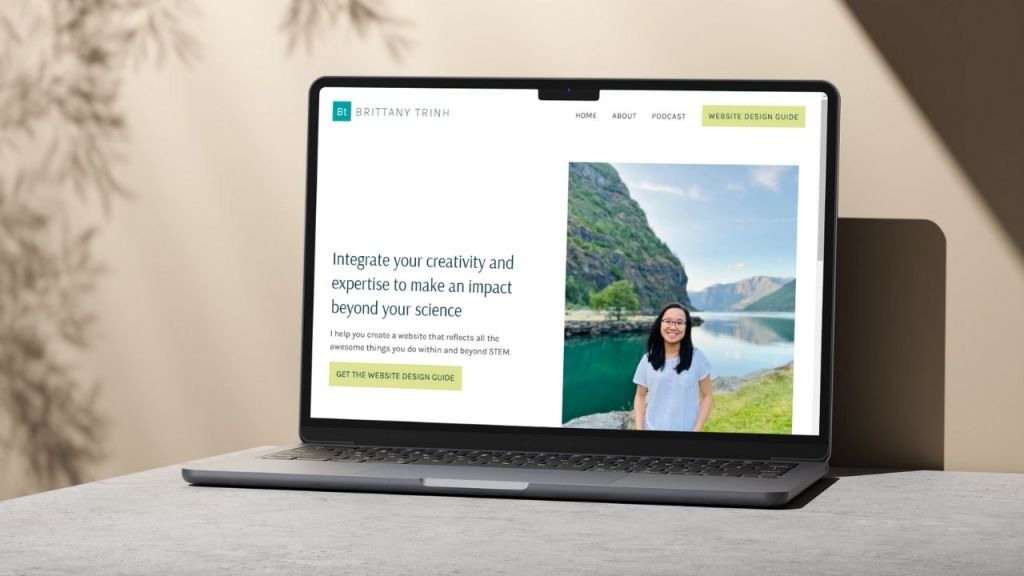
And I think that has really helped because now on my website, it’s just me featuring my podcast, which is my main mode of sharing and building my personal brand through the podcast and also LinkedIn newsletter. Then also kind of just repackaging some of the things I already had, some of the resources I had so that it’s still useful to people, but it’s more organized. I finally did that a couple months ago. And I also did a podcast episode where I talked about the process of me deciding to do that. But again, it was also something that I had put off for the longest time too. Because school, life, all the other things that come first.
Jennifer: Exactly. Sometimes we have to prioritize all the other things, and it’s okay to put off the thing with your online presence as long as you need to. I love that Brittany made that list because what she was ready, she knew what she wanted to do.
Best Personal Academic Websites Contest returns in 2025
Jennifer: Now we have done, since we last did our interview, two annual Best Personal Academic Website Contests. It was so fun to be able to share some amazing websites from grad students, postdocs, early career researchers, people who were in research labs. Oh my goodness. There were just so many people who were curious to submit to this contest. Would you be open to doing another one with me next year? What do you think?
Brittany: Yeah, I love doing it. I love seeing how people show their research, show themselves through their websites. It’s very interesting to see how people interpret also website tips and then implement it on their website too. And I think also because we do it with Owlstown. Owlstown is [a website builder] made for academics. I think it’s really fun to see how people still are able to customize it to their own needs.
Jennifer: Brittany and I are both designers, and so we’re thinking about every little detail, but for so many people, all you need is a website. And it is totally amazing that Dr. Ian Li has created Owlstown, a free academic website builder that you can easily make your website in. What is it? Like 15 minutes? I mean, it’s really fast. We did it on that call.
Brittany: Yeah, it’s very fill in the blank type of [website design]. That’s what I told this to the grad students in my department too. I was like, if you guys need a website, just use this. It’s so fast and easy. You don’t need to think about the design.
Jennifer: Even if you do eventually want that fully designed website in the future, if you know it’s not on your list this year or next, I mean make an Owlstown website, it will create a stronger online presence for you like today.
Brittany: Yeah. And I also met Ian, around the same time I met you or reached out to him around the same time. I also had to test it out for myself before I recommended it to people. When I tested it out, it was in its early stages, and even in its early stages, I was like, wow, this is really good. And then over time, he started developing more features and things and I was like, sold. This is so good now.
Jennifer: Right? I love how responsive he is. If you have a question about it or a suggestion, some kind of feature that you want to see, if he thinks it’ll help people, he’ll try and make that feature happen. It’s so cool.
Jennifer: Now, research lab and group websites, that is something we’ve been teaming up on for VIP days where professors get a done-for-you website in one day. I mean, seriously, we gather the materials in advance. We have a Planning Meeting. We talk about things like website aesthetics and colors and stuff and what you want. But then Brittany and I, and my husband, Matthew, we team up, we create the website for you in just one day. Oh my goodness. Brittany teaming up with you on this has been amazing. It’s been so transformative. I’m honestly shocked by how much we’ve been able to get done in one day.
Brittany: Yeah, me too. I think it’s really nice to work in a team like this because before I had just been working on my own. I think the workflow of gathering all the content beforehand helps so much. Because then you know what needs to go on the page, and it just makes everything go by so much faster.
Jennifer: Exactly. Now we can totally work together. If you’re looking for that bigger done-for-you research lab website [Strategic Website Design service]. Brittany, and I may still be able to help with that, but Team Website VIP days is what I recommend for most research labs, especially if this is going to be your first website. It’s not like a redesign. So we only have a couple days left in 2024, but please reach out about the new year. We would love to work with you and help your research lab or group. Brittany, what should people know about their research lab website or group website? Do they need one? Who should consider this kind of service?
Brittany: If you are a professor who’s actively recruiting students, you definitely need a website. I remember even when I was looking for groups and such, or even students now when they’re coming in and they’re looking at professors, they check the website. They go and see when was it last updated? Are students graduating? Is your group still active? Because the student is trying to prepare as much as they can to know about the professor so that when they meet the professor, they can talk about the research or ask about active projects and how they can get involved. Or, talk about what skills they bring to the table and things like that. But it’s going to be kind of hard for them to do that if there’s no website. Or, if you just have a very broad research statement on your faculty page or something.
The other thing is that students may be interested in the general area of research, but they may not know exactly what the research work entails. Maybe some people will be like, “Oh, just read the papers.” But in all honesty, a lot of students when they’re coming in, they’re very overwhelmed with enrolling in classes, teaching classes, looking for a group, acclimating to their new city. Trying to also parse out which papers are relevant to current projects at the moment is also very difficult. I really advocate for professors to have this on their website: a very clear or recently updated Projects page with publications that are most relevant or recent so that the student can easily pick out. “Okay, let me read the update on this and see where, what they’re doing right now, where could I fit in,” and things like that. So definitely professors of any age that wants to get students interested in their work. And, especially younger professors. I think now a lot of younger professors are, they’re trying to build a personal brand and everything in addition to the research.
Jennifer: This is a great use of startup funds. You can pay with your university monies. So please don’t hesitate to reach out if you are interested in having a VIP Day website for your research group or lab.
Jennifer: Brittany has been so much fun to have you back on The Social Academic podcast. Is there anything you’d like to chat about or add before we wrap up?
Brittany: No, thanks for having me. I really enjoyed working on the VIP days with you because it lets me still be a part of the helping academics with their websites, but kind of more on the back end of things. That just helps me as a graduate student right now because I’m just not able to do the front facing stuff at the moment.
Jennifer: Yeah, we’re perfect partners on this. And Dr. Makella Coudray, whose research lab website we did recently. We just had a workshop with her research group and she said that she now feels like her online presence is a 10 on a scale of 1 to 10. It’s a 10, and her website is a huge part of that. It makes her feel really good about her research and it makes her lab really excited to help share it. So I’m just so proud of the work that we’ve been able to do together so far, and excited for all the work to come.
Brittany: Yeah, me too.
Jennifer: Brittany, thank you so much for coming on today’s show.
Brittany Trinh is a Vietnamese-American website designer and chemist. She helps enterprising scientists, science communicators, and academic entrepreneurs create a website that integrates your creativity and expertise. Brittany knows when your website reflects the awesome things you do within and beyond STEM, it helps you forge your own path.
She hosts the Beyond Your Science Podcast, where she talks about integrating science, entrepreneurship, and creativity within and beyond STEM, from her own experiences and interviews with other scientists and small-business owners. Listen to the Beyond Your Science Podcast.
Brittany is a PhD candidate in Chemistry at the University of Wisconsin-Madison. Her research focuses on synthesizing high-impact polymers in a more eco-friendly way and leveraging their tough mechanical properties into industrial applications. She received her BS in Chemistry with a minor in Psychology from the University of Houston. Follow her research on Google Scholar.
When she’s not in the lab, she’s probably playing piano or violin, watching slice-of-life anime, or cooking some kind of noodle.
There is a feeling among some policymakers that the UK research system lacks agility. But the key question is agility for who: for researchers, for research institutions, or for the government which funds the research?
By definition, research explores the unknown. These unknowns range from the unknown solutions to today’s challenges such as affordable healthcare and reversing climate change, to initiating the yet unknown technologies of tomorrow that will feed future economic growth.
Whose agility?
The UK government’s Plan for change: milestones for mission-led government repeatedly mentions the UK’s outstanding research base. It is also clear that government has high expectations of how our research system can demonstrate agility to pivot towards addressing major societal needs. But addressing any of these missions requires time, and hence a disciplined balance of agility and commitment to a long-term research agenda.
At a more operational level, for our national funders such as UKRI, legitimate concerns over the precarity of research careers, and the recognition that hard problems take time to solve, means that a large fraction of their annual budget is committed for three or more years into the future.
The extent of these multi-year commitments seemingly restricts the agility of the research system. However, looking more closely, embedded within these commitments are the commitments made to individual researchers to support them and their teams to pursue thematic programmes while empowering their own agility to rapidly pivot their research in response to new ideas of their own or the discoveries of others. It is precisely these longer-term funding commitments typified by support for research fellowships or the quality-related funding driven by REF that allows the UK’s researchers themselves to be agile.
It is widely accepted the UK’s research system is highly productive in basic curiosity-driven research. This productivity, we would argue, is a direct result of the researcher-led agility that our current funding system allows. However, we also recognise that government can and should identify areas of research in support of our industrial or other national needs – some on shorter time horizons.
The key is the balance between this academically-led and government directed agility – we can and do need to do both. Reaching this balance requires greater transparency from the funding agencies and an intellectually safe discussion between government and the research sector. We urge UKRI and DSIT to articulate this balance, around which we can all then work.
Speed and success
Related to these questions of agility are current problems in the funding system which if left unchecked will undermine our research productivity. The costs of research have far outstripped inflation and available research funding has not kept pace – for example, the fall in the number of doctoral training centres funded by EPSRC from 2014 to 2019 and to 2024.
These financial pressures have driven hyper competition in the sector. Success rates have plummeted, with many researchers’ experience being of ten per cent success rates or less – particularly in the schemes supporting academically-led, curiosity-driven research.
Perhaps even worse are the lengthening times taken to receive a funding decision; a decision on a three-year long application often takes more than one year to receive – hardly a route to agility of any kind.
Irrespective of these budget-constrained success rates, we urge our national funders to reduce significantly the time it takes to reach their decisions on whether to fund or not. Suggestions have been made to move to lottery funding, thereby reducing decision times and eliminating potential biases within an ultra-low success rate environment. But a lottery would not solve the issue of low success rates, and hence fails to provide the continuity of funding for people and the security of careers upon which their agility depends.
Beyond long decision times, low success rates drive many other unwanted behaviours: for example, conservatism in selection, or a tendency for the applicant to oversell.
The danger of system failure
The reality is that the public purse alone is insufficient to fund the research volume the UK requires. Hence a question for the research sector, funders and government alike is how we can maximise the gearing of taxpayers’ investments by securing industrial and philanthropic co-investment to drive economic growth and public benefit.
It should also be recognised that universities in the UK increasingly cross-subsidise the whole research system via non-publicly funded teaching, and that this aspect of the system is already highly geared. Leaving aside several successful schemes which already do this, such as EPSRC prosperity partnerships, we believe that a co-investment culture would also require system agility and prompt decisions.
We all feel that the research system lacks agility, but we each see this problem from our own perspectives. The government bemoans the forward commitment of our funders – but also needs to restrict the number of new initiatives to those that it has the resources to fund, perhaps refocussing an agreed fraction of the challenges each year. Funders think that they are empowering the agility of their researchers – but also need to realise that their lengthy decision times are harming productivity. Individual researchers should welcome the agility with which they are empowered – but must accept also the responsibility to never stop thinking as to how their expertise can be applied to benefit the economy and society.
These are the interconnected problems of agility, of balance between government priorities and curiosity-driven research, of success rates, of decision times. The system we have is in danger of failing us all – we need to talk.