The Health and Human Services Department has terminated the Minority Biomedical Research Support program, which provided colleges and universities grants to increase the number of minority faculty, students and investigators conducting biomedical research.
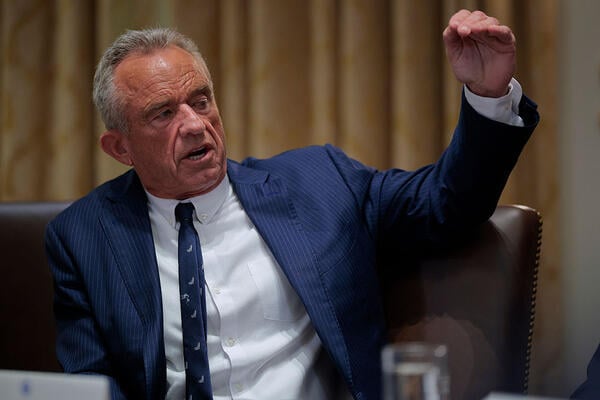
In a notice published Monday in the Federal Register, HHS secretary Robert F. Kennedy Jr. said the cancellation is to comply with two anti–diversity, equity and inclusion executive orders President Trump signed in January on his first two days back in office, plus the 2023 U.S. Supreme Court decision banning affirmative action in college admissions decisions. The change is effective Sept. 25.
“The MBRS program prioritizes racial classifications in awarding federal funding,” including by relying on “‘minority student enrollment’ to determine applicant eligibility,” Kennedy wrote. And, though the Supreme Court ruling focused on university admissions, Kennedy wrote that “the principles identified in Students for Fair Admissions also apply to the federal government and require repeal of the MBRS program.”
STAT reported the move earlier. Rochelle Newman, a University of Maryland psychologist who used the grant to pay undergraduate researchers and train them, told STAT that “cutting of these programs means that an entire generation of students will end up being lost to science.”
Organization recognized for excellence in high-impact tutoring design and student achievement gains
PHILADELPHIA, Aug. 25, 2025 –Catapult Learning, a division of FullBloom that provides academic intervention programs for students and professional development solutions for teachers in K-12 schools, today announced it earned the Tutoring Program Design Badge from the National Student Support Accelerator (NSSA) at Stanford University. The designation, valid for three years, recognizes tutoring providers that demonstrate high-quality, research-aligned program design.
The recognition comes at a time when the need for high-impact tutoring (HIT) has never been greater. As schools nationwide work to close learning gaps that widened during the COVID-19 pandemic and accelerate recovery, Catapult Learning stands out for its nearly 50-year legacy of delivering effective academic support to students who need it most.
“Catapult Learning is honored to receive this prestigious national recognition from the NSSA at Stanford University,” said Rob Klapper, president at Catapult Learning. “We are excited to be recognized for our high-impact tutoring program design and will continue to uphold the highest standards of excellence as we support learners across the country.”
Each year, Catapult Learning’s programs support more than 150,000+ students with nearly four million in-person tutoring sessions, in partnership with 2,100 schools and districts nationwide. Its tutors, many of whom hold four-year degrees, are highly trained professionals who are supported with ongoing coaching and professional development.
Recent data from Catapult Learning’s HIT programs show strong academic gains across both math and reading subject areas:
8 out of every 10 math students increased their pre/post score
9 out of every 10 reading students increased their pre/post score
These results come from programs that have also earned a Tier 2 evidence designation under the Every Student Succeeds Act, affirming their alignment with rigorous research standards.
The Badge was awarded following a rigorous, evidence-based review conducted by an independent panel of education experts. The NSSA evaluated multiple components of Catapult Learning’s program – including instructional design, tutor training and support, and the use of data to inform instruction – against its Tutoring Quality Standards.
“This designation underscores the strength and intentionality behind our high-impact tutoring model,” said Devon Wible, vice president of teaching and learning at Catapult Learning. “This achievement reflects our deep commitment to providing high-quality, research-based tutoring that drives meaningful outcomes for learners.”
Tutoring is available in person, virtually, or in hybrid formats, and can be scheduled before, during, or after school, including weekends. Sessions are held a minimum of three times per week, with flexible options tailored to the needs of each school or district. Catapult Learning provides all necessary materials for both students and tutors.
Catapult Learning, a division of FullBloom, provides academic intervention programs for students and professional development solutions for teachers in K-12 schools, executed by a team of experienced coaches. Our professional development services strengthen the capacity of teachers and leaders to raise and sustain student achievement. Our academic intervention programs support struggling learners with instruction tailored to the unique needs of each student. Across the country, Catapult Learning partners with 500+ school districts to produce positive outcomes that promote academic and professional growth. Catapult Learning is accredited by Cognia and has earned its 2022 System of Distinction honor.
A new DESSA screener to be released for the Fall ‘25 school year–designed to be paired with a strength-based student self-report assessment–accurately predicted well-being levels in 70 percent of students, a study finds.
According to findings from Riverside Insights, creator of research-backed assessments, researchers found that even students with strong social-emotional skills often struggle with significant mental health concerns, challenging the assumption that resilience alone indicates student well-being. The study, which examined outcomes in 254 middle school students across the United States, suggests that combining risk and resilience screening can enable identification of students who would otherwise be missed by traditional approaches.
“This research validates what school mental health professionals have been telling us for years–that traditional screening approaches miss too many students,” said Dr. Evelyn Johnson, VP of Research & Development at Riverside Insights. “When educators and counselors can utilize a dual approach to identify risk factors, they can pinpoint concerns and engage earlier, in and in a targeted way, before concerns become major crises.”
The study, which offered evidence of, for example, social skills deficits among students with no identifiable or emotional behavioral concerns, provides the first empirical evidence that consideration of both risk and resilience can enhance the predictive benefits of screening, when compared to strengths-based screening alone.
In the years following COVID, many educators noted a feeling that something was “off” with students, despite DESSA assessments indicating that things were fine.
“We heard this feedback from lots of different customers, and it really got our team thinking–we’re clearly missing something, even though the assessment of social-emotional skills is critically important and there’s evidence to show the links to better academic outcomes and better emotional well-being outcomes,” Johnson said. “And yet, we’re not tapping something that needs to be tapped.”
For a long time, if a person displayed no outward or obvious mental health struggles, they were thought to be mentally healthy. In investigating the various theories and frameworks guiding mental health issues, Riverside Insight’s team dug into Dr. Shannon Suldo‘s work, which centers around the dual factor model.
“What the dual factor approach really suggests is that the absence of problems is not necessarily equivalent to good mental health–there really are these two factors, dual factors, we talk about them in terms of risk and resilience–that really give you a much more complete picture of how a student is doing,” Johnson said.
“The efficacy associated with this dual-factor approach is encouraging, and has big implications for practitioners struggling to identify risk with limited resources,” said Jim Bowler, general manager of the Classroom Division at Riverside Insights. “Schools told us they needed a way to identify students who might be struggling beneath the surface. The DESSA SEIR ensures no student falls through the cracks by providing the complete picture educators need for truly preventive mental health support.”
The launch comes as mental health concerns among students reach crisis levels. More than 1 in 5 students considered attempting suicide in 2023, while 60 percent of youth with major depression receive no mental health treatment. With school psychologist-to-student ratios at 1:1065 (recommended 1:500) and counselor ratios at 1:376 (recommended 1:250), schools need preventive solutions that work within existing resources.
The DESSA SEIR will be available for the 2025-2026 school year.
This press release originally appeared online.
eSchool Media staff cover education technology in all its aspects–from legislation and litigation, to best practices, to lessons learned and new products. First published in March of 1998 as a monthly print and digital newspaper, eSchool Media provides the news and information necessary to help K-20 decision-makers successfully use technology and innovation to transform schools and colleges and achieve their educational goals.
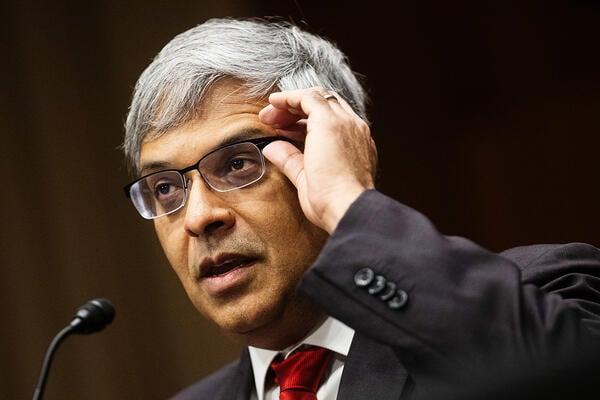
NIH director Jay Bhattacharya said that among other priorities, the agency will focus on artificial intelligence and “ensuring evidence-based health care for children and teenagers identifying as transgender.”
Jim Watson/AFP/Getty Images
The National Institutes of Health’s director ordered employees to “conduct an individualized review of all current and planned research activities,” including active grants and funding opportunity announcements, according to images of a document provided to Inside Higher Ed. The review comes amid concerns that the NIH won’t distribute all of its allocated grant money by the time the federal fiscal year ends Sept. 30, meaning those dollars will return to the U.S. Treasury.
The document images, provided by a source who wished to remain anonymous due to fear of retaliation, show that NIH director Jay Bhattacharya sent the memo Friday and that the review is effective immediately. According to the memo, “relevant NIH personnel” must review grants, funding opportunity announcements, contracts, contract solicitations, applications for new and competing renewal awards, intramural research and research training programs, cooperative agreements, and “other transactions.”
The order is part of a larger memo in which Bhattacharya outlined “select agency priorities” and said projects that don’t align with these priorities may be “restricted, paused, not renewed, or terminated.” The focuses are, among other things, artificial intelligence, “furthering our understanding of autism” and “ensuring evidence-based health care for children and teenagers identifying as transgender.”
In response to a request for an interview about the review and why it’s needed, the NIH press team sent a public statement from Friday, in which Bhattacharya listed the priorities.
Regarding health care for transgender youth, he said, “There are clearly more promising avenues of research that can be taken to improve the health of these populations than to conduct studies that involve the use of puberty suppression, hormone therapy, or surgical intervention.” He says that “by contrast, research that aims to identify and treat the harms these therapies and procedures have potentially caused … and how to best address the needs of these individuals so that they may live long, healthy lives is more promising.”
Bhattacharya’s letter comes after President Trump, earlier this month, ordered senior appointees at federal agencies to annually review discretionary grants “for consistency with agency priorities.”
Joanne Padrón Carney, chief government relations officer for the American Association for the Advancement of Science, said in a statement to Inside Higher Ed that the president’s budget request for fiscal year 2026 already outlined a set priorities for the rest of the current year.
“Switching gears at this stage reinforces confusion, diminishes trust, and increases concerns within the scientific community,” Carney added. “It joins the long list of tactics risking impoundment of congressionally appropriated funds rather than funding biomedical research that is essential for the people’s well-being.”
In SRHE News and Blog a series of posts is chronicling, decade by decade, the progress of SRHE since its foundation 60 years ago in 1965. As always, our memories are supported by some music of the times.
1995 was the year of the war in Bosnia and the Srebrenica massacre, the collapse of Barings Bank, and the Oklahoma Bombing. OJ Simpson was found not guilty of murder. US President Bill Clinton visited Ireland. President Nelson Mandela celebrated as South Africa won the Rugby World Cup, Blackburn Rovers won the English Premier League. Cliff Richard was knighted, Blur-v-Oasis fought the battle of Britpop, and Robbie Williams left Take That, causing heartache for millions. John Major was UK Prime Minister and saw off an internal party challenge to be re-elected as leader of the Conservative Party. It would be two years until D-Ream sang ‘Things can only get better’ as the theme tune for the election of New Labour in 1997. Microsoft released Windows 95, and Bill Gates became the world’s richest man. Media, news and communication had not yet been revolutionised by the internet.
“The 1990s has been the decade of quality in higher education. There had been mechanisms for ensuring the quality of higher education for decades prior to the 1990s, including the external examiner system in the UK and other Commonwealth countries, the American system of accreditation, and government ministerial control in much of Europe and elsewhere in the world. The 1990s, though, saw a change in the approach to higher education quality.”
In his own retrospective for the European Journal of Education on the previous decade of ‘interesting times’, Guy Neave (Twente) agreed there had been a ‘frenetic pace of adjustment’ but
“Despite all that is said about the drive towards quality, enterprise, efficiency and accountability and despite the attention lavished on devising the mechanics of their operation, this revolution in institutional efficiency has been driven by the political process.”
Europe saw institutional churn with the formation of many new university institutions – over 60 in Russia during 1985-1995 in the era of glasnost, and many others elsewhere, including Dublin City University and University of Limerick in 1989. Dublin Institute of Technology, created in 1992, would spend 24 years just waiting for the chance[1] to become a technological university. 1995 saw the establishment of Aalborg in Denmark and several new Chinese universities including Guangdong University of Technology.
UK HE in 1995
In the UK the HE participation rate had more than doubled between 1970 (8.4%) and 1990 (19.4%) and then it grew even faster, reaching 33% by 2000. At the end of 1994-1995 there were almost 950,000 full-time students in UK HE. Michael Shattock’s 1995 paper ‘British higher education in 2025’ fairly accurately predicted a 55% APR by 2025.
There had been seismic changes to UK HE in the 1980s and early 1990s. Polytechnic directors had for some years been lobbying for an escape from unduly restrictive local authority bureaucratic controls, under which many institutions had, for example, not even been allowed to hold bank accounts in their own names. Even so, the National Advisory Body for Public Sector HE (NAB), adroitly steered by its chair Christopher Ball (Warden of Keble) and chief executive John Bevan, previously Director of Education for the Inner London Education Authority, had often outmanoeuvred the University Grants Committee (UGC) led by Peter Swinnerton-Dyer (Cambridge). By developing the idea of the ‘teaching unit of resource’ NAB had arguably embarrassed the UGC into an analysis which declared that universities were slightly less expensive for teaching, and the (significant) difference was the amount spent on research – hence determining the initial size of total research funding, then called QR.
Local authorities realised too slowly that controlling large polytechnics as if they were schools was not appropriate. Their attempt to head off reforms was articulated in Management for a Purpose[2], a report on Good Management Practice (GMP) prepared under the auspices of NAB, which aimed to retain local authority strategic control of the institutions which they had, after all, created and developed. It was too little, too late. (I was joint secretary to the GMP group: I guess, now it’s time, for me to give up.) Secretary of State Kenneth Baker’s 1987 White Paper Higher Education: Meeting the Challenge was followed rapidly by the so-called ‘Great Education Reform Bill’, coming onto the statute book as the Education Reform Act 1988. The Act took the polytechnics out of local authorities, recreating them as independent higher education corporations; it dissolved the UGC and NAB and set up the Universities Funding Council (UFC) and the Polytechnics and Colleges Funding Council (PCFC). Local authorities were left high and dry and government didn’t think twice, with the inevitable progression to the Further and Higher Education Act 1992. The 1992 Act dissolved PCFC and UFC and set up Higher Education Funding Councils for England (HEFCE) and Wales (HEFCW). It also set up a new Further Education Funding Council (FEFC) for colleges reconstituted as FE corporations and dissolved the Council for National Academic Awards. The Smashing Pumpkins celebrated “the resolute urgency of now”, FE and HE had “come a long way” but Take That sensibly advised “Never forget where you’ve come here from”,
The Conservative government was not finished yet, and the Education Act 1994 established the Teacher Training Agency and allowed students to opt out of students’ unions. Debbie McVitty for Wonkhe looked back on the 1990s through the lens of general election manifestos:
“By the end of the eighties, the higher education sector as we know it today had begun to take shape. The first Research Assessment Exercise had taken place in 1986, primarily so that the University Grants Committee could draw from an evidence base in its decision about where to allocate limited research funding resources. … a new system of quality assessment had been inaugurated in 1990 under the auspices of the Committee of Vice Chancellors and Principals (CVCP) …
Unlike Labour and the Conservatives, the Liberal Democrats have quite a lot to say about higher education in the 1992 election, pledging both to grow participation and increase flexibility”
In 1992 the Liberal Democrats also pledged to abolish student loans … but otherwise many of their ideas “would surface in subsequent HE reforms, particularly under New Labour.” Many were optimistic: “Some might say, we will find a brighter day.”
In UK HE, as elsewhere, quality was a prominent theme. David Watson wrote a famous paper for the Quality Assurance Agency (QAA) in 2006, Who Killed What in the Quality Wars?, about the 1990s battles involving HE institutions, QAA and HEFCE. Responding to Richard Harrison’s Wonkhe blog about those quality wars on 23 June 2025, Paul Greatrix blogged the next day about
“… the bringing together of the established and public sector strands of UK higher education sector following the 1992 Further and Higher Education Act. Although there was, in principle, a unified HE structure after that point, it took many more years, and a great deal of argument, to establish a joined-up approach to quality assurance. But that settlement did not last and there are still major fractures in the regime …”
SRHE’s chairs from 1985-1995 were Gareth Williams, Peter Knight, Susan Weil, John Sizer and Leslie Wagner. The Society’s administrator Rowland Eustace handed over in 1991 to Cynthia Iliffe; Heather Eggins then became Director in 1993. Cynthia Iliffe and Heather Eggins had both worked at CNAA, which facilitated a relocation of the SRHE office from the University of Surrey to CNAA’s base at 334-354 Gray’s Inn Road, London from 1991-1995. From the top floor at Gray’s Inn Road the Society then relocated to attic rooms in 3 Devonshire St, London, shared with the Council for Educational Technology.
In 1993 SRHE made its first Newer Researcher Award, to Heidi Safia Mirza (then at London South Bank). For its 30th anniversary SRHE staged a debate: ‘This House Prefers Higher Education in 1995 to 1965’, proposed by Professor Graeme Davies and Baroness Pauline Perry, and opposed by Dr Peter Knight and Christopher Price. My scant notes of the occasion do not, alas, record the outcome, but say only: “Now politics is dead on the campus. Utilitarianism rules. Nationalisation produces mediocrity. Quangos quell dissent. Arid quality debate. The dull uniformity of 1995. Some students are too poor.”, which rather suggest that the opposers (both fluent and entertaining speakers) had the better of it. Whether the past or the future won, we just had to roll with it. The debate was prefaced by two short papers from Peter Scott (then at Leeds) on ‘The Shape of Higher Education to Come’, and Gareth Williams (Lancaster) on ‘ Higher Education – the Next Thirty Years’.
Research into higher education was still a small enough field for SRHE to produce a Register of Members’ Research Interests in 1996, including Ron Barnett (UCL) (just getting started after only his first three books), Tony Becher, Ernest Boyer, John Brennan, Sally Brown, Rob Cuthbert, Jurgen Enders, Dennis Farrington, Oliver Fulton, Mary Henkel, Maurice Kogan, Richard Mawditt, Ian McNay, David Palfreyman, Gareth Parry, John Pratt, Peter Scott (in Leeds at the time), Harold Silver, Maria Slowey, Bill Taylor, Paul Trowler, David Watson, Celia Whitchurch, Maggie Woodrow, and Mantz Yorke. SRHE members and friends, “there for you”. But storm clouds were gathering for the Society as it entered the next, financially troubled, decade.
If you’ve read this far I hope you’re enjoying the musical references, or perhaps objecting to them (Rob Gresham, Paul Greatrix, I’m looking at you). There will be two more blogs in this series – feel free to suggest musical connections with HE events in or around 2005 or 2015, just email me at [email protected]. Or if you want to write an alternative history blog, just do it.
Rob Cuthbert is editor of SRHE News and the SRHE Blog, Emeritus Professor of Higher Education Management, University of the West of England and Joint Managing Partner, Practical Academics. Email [email protected]. Twitter/X @RobCuthbert. Bluesky @robcuthbert22.bsky.social.
[1] I know this was from the 1970s, but a parody version revived it in 1995
[2]National Advisory Body (1987) Management for a purpose Report of the Good Management Practice Group London: NAB
Academic researchers are worried that the government’s plans to stop investing in the development of messenger RNA vaccines, a technology university scientists first used to help develop the COVID-19 vaccines, will undermine the United States’ standing as a global leader in biomedical research and development.
As promising as mRNA technology may be for treating a range of maladies, including numerous types of cancer and autoimmune diseases, its role in developing the COVID vaccine has thrust it into a political crossfire, fueled by the Trump administration’s smoldering criticisms of the Biden administration’s handling of the pandemic.
Last week, Robert F. Kennedy Jr., director of the Department of Health and Human Services, who frequently cites misinformation about vaccines and other public health issues, announced that the department is winding down mRNA vaccine research under the Biomedical Advanced Research and Development Authority and canceling $500 million worth of contracts and grants with numerous biotech companies and Emory University in Atlanta.
“We reviewed the science, listened to the experts, and acted,” Kennedy, a lawyer by training, said in a statement, claiming that “thedata show these vaccines fail to protect effectively against upper respiratory infections like COVID and flu. We’re shifting that funding toward safer, broader vaccine platforms that remain effective even as viruses mutate.”
Jeff Coller, director of the RNA Innovation Center at Johns Hopkins University, whose own graduate student helped develop Moderna’s COVID vaccine, said that “mRNA technology is incredibly misunderstood by the public and many of our politicians.”
Despite that, “the science has always been consistently clear about the powerful medical benefits of the mRNA platform,” he said. “It’s saved millions of lives, is incredibly safe, has huge potential and will revolutionize medicine in the next 100 years. Yet, we’re ceding American leadership in this technology.”
The half-a-billion-dollar cut comes at the same time that the Trump administration has withdrawn support for federally funded scientific research that doesn’t align with its ideological views, including projects focused on vaccine hesitancy, LGBTQ+ health and climate change.
According to a report from STAT News, the 181-page document Kennedy cited as his evidence that mRNA vaccines aren’t safe or effective references disputed studies written by other skeptics of COVID mitigation protocols, including stay-at-home orders and vaccines.
In his op-ed, Bhattacharya acknowledged that mRNA is a “promising technology” that “may yet deliver breakthroughs in treating diseases such as cancer,” but that “as a vaccine intended for broad public use, especially during a public health emergency, the platform has failed a crucial test: earning public trust.”
“Unfortunately, the Biden administration did not manage public trust in the coronavirus vaccines, largely because it chose a strategy of mandates rather than a risk-based approach and did not properly acknowledge Americans’ growing concerns regarding safety and effectiveness,” he wrote.
‘Political Shot Across the Bow’
The vast majority of scientists agree that the mRNA-based COVID vaccine—which was created in record time as a result of President Donald Trump’s Operation Warp Speed, launched in 2020—is generally safe and effective.
“I’m concerned about [the cut] weakening our country and putting us at a disadvantage,” said an mRNA researcher who asked to remain anonymous out of fear of retaliation. “The promise of mRNA is almost limitless, and I’d like to see those advances being made in this country. But currently it seems those advances are more likely to come from Europe and Asia. I’m also worried about the impact this could have on our economy—this is a growing field of industry.”
Coller, of Johns Hopkins, said Kennedy’s decision to withdraw funding for mRNA vaccine research has more than financial implications.
“It was a political shot across the bow of the entire research community, both in industry and academia,” Coller said. “What it says is that the government doesn’t want to support this technology and is going to make sure it doesn’t happen. If you’re an academic thinking about starting a new program in mRNA medicines, don’t waste your time.”
And now it will be even easier for political whims to drive the government’s scientific research priorities. Last week, Trump issued an executive order that will put political appointees—rather than subject-matter experts—in charge of federal grant-making decisions.
Heather Pierce, senior director for science policy and regulatory counsel at the Association of American Medical Colleges, said that while Kennedy’s decision won’t end all of the nation’s mRNA research, “the indication that a certain technology or scientific area won’t be pursued regardless of the progress made so far is worrisome as a concept.”
That’s in part because “when we unilaterally close the door on a specific type of research or technology, we don’t know what would have come from that,” she said. “It’s not to say that every research project using every technology and scientific tool will necessarily lead to a cure or breakthrough, but the initial funding of these projects shows that there was promise that made it worth exploring.”
Both Kennedy and Bhattacharya have said the government will continue to support research on other uses of mRNA technology unrelated to infectious disease vaccines. But experts say separating those research areas isn’t so simple.
“They’re all interconnected,” said Florian Krammer, a professor of vaccinology at the Icahn School of Medicine at Mount Sinai. “If you take away funding in the infectious disease space and innovation doesn’t happen there, it’s also not happening in other spaces where mRNA technology is used.”
That will create a “huge problem for researchers,” he added, “because a lot of fields are using this technology, and if it’s not moving forward, it closes doors.”
Autistic college students are experiencing anxiety and depression at significantly higher rates than their non-autistic peers, according to new research from Binghamton University that analyzed data from nearly 150,000 undergraduate students across 342 institutions nationwide.
The study, published in the Journal of Autism and Developmental Disorders, represents one of the most comprehensive examinations to date of mental health challenges facing autistic students in higher education—a population that researchers say has been historically underrepresented in academic research despite growing enrollment numbers.
“What we found is really staggering—autistic individuals endorse much higher rates of anxiety and depression compared to their non-autistic peers,” said Diego Aragon-Guevara, the study’s lead author and a PhD student in psychology at Binghamton University.
The research team analyzed data from the National Survey of Student Engagement (NSSE), which in 2021 became the first year that autism was included as an endorsable category in the survey. This milestone allowed researchers to conduct the first large-scale comparison of mental health outcomes between autistic and non-autistic college students.
“We were really excited to see what the data would tell us. It was a big opportunity to be able to do this,” said Dr. Jennifer Gillis Mattson, professor of psychology and co-director of the Institute for Child Development at Binghamton University, who co-authored the study.
The findings come at a critical time for higher education institutions as autism diagnoses continue to rise nationwide and more autistic students pursue college degrees. The research highlights a significant gap in support services that could impact student success and retention.
“We know the number of autistic college students continues to increase every single year,” Gillis-Mattson noted. “We really do have an obligation to support these students, and to know how best to support these students, we need to look beyond just autism.”
The study reveals that campus support systems may be inadvertently overlooking mental health needs while focusing primarily on autism-specific accommodations. Aragon-Guevara, whose research focuses on improving quality of life for autistic adults, said this represents a critical oversight in student services.
“Support personnel might address an individual’s autism and, in the process, overlook their mental health issues,” he explained. “More care needs to be put into addressing that nuance.”
The research underscores the need for institutions to develop more comprehensive support frameworks that address both autism-related needs and concurrent mental health challenges. The findings suggest that traditional disability services approaches may need significant enhancement to serve this population effectively.
“We want to provide the best support for them and to make sure that they have a college experience where they get a lot out of it, but also feel comfortable,” Aragon-Guevara said.
Dr. Hyejung Kim, an assistant professor in Binghamton’s Department of Teaching, Learning and Educational Leadership, noted that the complexity of factors affecting autistic students requires deeper investigation.
“This population often skews male, and interactions between personal factors and conditions such as anxiety and depression may shape overall well-being in college,” she said.
Kim also pointed to additional considerations that institutions should examine.
“Autistic students are also more likely to pursue STEM fields, and many report different experiences with faculty and staff across institutional settings,” she said. “We still have much to learn about how these and other contextual factors relate to mental well-being.”
The Binghamton team views this study as foundational research that confirms the scope of mental health challenges among autistic college students. Their next phase will investigate specific contributing factors, including social dynamics, faculty support, campus accessibility, and other environmental elements that influence student well-being.
“There are so many elements that go into being comfortable in the new environment that is college,” Aragon-Guevara explained. “We want to look into that and see if there are any deficits in those areas that autistic college students are experiencing, so that we know where we can help support them, or create institutional things to help improve quality of life as a whole.”
The research is part of a broader effort at Binghamton to better understand and support autistic students in higher education, with plans to collaborate with campus partners to develop targeted interventions based on their findings.
Research on community colleges has taken a hit amid the Trump administration’s ongoing war against the Ivy League.
The Community College Research Center, an independent organization based at Columbia University’s Teachers College, found out in March that four of its grantstotaling at about $12 million were immediately cancelled, despite being multiple years into their grant cycles. The remaining grant money expected from the Institute of Education Sciences amounted to at least $3.5 million. Four half-completed research projects relied on the funding. Now CCRC leaders are scrambling to find ways to continue the work.
The grants were swept up in the Trump administration’s slashing of $400 million in grants to Columbia University to cow the institution into agreeing to a set of demands. Columbia has since reached an agreement with the administration to restore its federal funding, but the deal only restored grants administered by the U.S. Department of Health and Human Services and the National Institutes of Health. Education Department grants, like the CCRC’s, didn’t return.
The center, now almost 30 years old, conducts rigorous research into community college programs and practices, like guided pathways and dual enrollment, to help institutions improve the student experience and student outcomes.
The canceled grants funded two efforts focused on pandemic recovery, including a study into a program at Virginia community colleges to support adults earning short-term credentials in high-demand fields. CCRC researchers were also using IES money to evaluate the Federal Work-Study program and for a fellowship that placed doctoral students in apprenticeships at education agencies and nonprofits. Teachers College has agreed to take over funding for the fellowship program for at least the upcoming academic year.
Thomas Brock, CCRC’s director, worries the field of community college research—and its benefits for students—are at risk at a time when federal funding has grown more tenuous. He spoke with Inside Higher Ed about how the center is moving forward in the absence of these funds. The conversation has been edited for length and clarity.
Q: How did you react when you first heard from the Education Department about the nixed IES grants?
A: It got us completely by surprise. We did not see that coming. The notification came on a Friday morning. We had to be finished with our work by the end of the day that Friday—we could have no further charges beyond that point. So, there was just no time to prepare. And all of our communications with IES until that point had been very positive. We were on track to complete the goals of our grants. We had been in frequent conversation with our program officers. So, there was simply no inkling that this would be coming.
Q: What was the extent of the funding loss for you?
A: The overall funding loss amounted to about $3.5 million. Most of the grants that we were working on were pretty far along. The total berth of the grants was well above $3.5 million, but that was about the amount we had remaining. Most of the work that was canceled was in the last year or two. It was all the more disappointing then, because we were so close to having results that we could share with the field. And that is important, of course, not just to CCRC but to the states and colleges that we partner with more broadly to accomplish our mission of informing community colleges, policymakers, practitioners about strategies that work to improve student outcomes.
Q: Going forward, what’s going to happen to projects funded by the canceled grants?
A: So, everything had to be put on hold. I will say we’ve been in discussion with some foundations about what they are calling last-mile funding to complete some of the IES-funded work. We don’t have the grants in hand just yet but invited proposals and ones we think have a good chance of funding.
We should hear news this fall about some of those. With the last-mile funding, we had to narrow the scope. Generally speaking, foundations don’t have the kinds of resources that the federal government does. So, most of these grants are just to really get out the final results and not putting as much emphasis on dissemination as we would have done with the federal funding. But nonetheless, we’re very grateful to have those opportunities.
We were lucky at CCRC. We’ve been around for a while. So, over many years, we’ve built up a reserve fund for rainy days, and we decided if this wasn’t a rainy day, we didn’t know what was. So, we have dipped into those reserves to keep many of our staff fully employed while they work on these proposals and to continue to have the ability to do the work if we get refunded. Those funds won’t last forever. We will have to make some tough decisions later this year about just what size of organization we can continue to support with foundation funds. And, I should note, we have already made a few layoffs and have had a couple of voluntary departures. So we are already smaller than we were, but we hope to maintain a critical core.
Q: Columbia recently reached an agreement with the Trump administration to have some of its research funds restored. Were you hopeful that your funds would be restored as well in that agreement?
A: We were, yes. We were not part of the negotiations. That was handled by Columbia University. And one of the complications here—really, going all the way back to the initial cancellation of our grants—was a misunderstanding, honestly, by the current administration of Teachers College’s relationship to Columbia. We are an affiliated institution, but we are independent—legally, financially, administratively. We have our own president, our own Board of Directors. We are a separate nonprofit organization, a separate 501(c)(3), so the affiliation we have is a loose one. It allows our students to cross-register and take courses at Columbia. But we do not benefit in any way from Columbia’s endowment or its wealth as an institution. Teachers College is a relatively poor stepchild within the Columbia University constellation.
So, when we first lost our grants, we appealed as we were instructed to do if we had an issue with the cancellation. The beginning of our appeal was just that we are a separate institution. Whatever complaints the administration may have about Columbia University and how it handled the student protests last year, that had no bearing on what happened at Teachers College. And indeed, we had no student protests. We had no actions that were of concern to the administration or to anyone. So, we hope, just on that basis, we might win on appeal.
Our appeals were acknowledged, but they have not ever been acted upon as the university went forward with its negotiations. We were hopeful that perhaps [the agreement] would benefit us as well. And when the settlement was reached, I had maybe 24 hours when I was I was really holding my breath. But unfortunately, as we looked at the details of the settlement, it only applied to grants made to the U.S. Department of Health and Human Services and the National Institutes of Health. Department of Education grants were not included.
Q: You touched on this, but what comes next for the CCRC? How are you thinking about moving forward and how you might have to pivot?
A: In the near term, we will have to depend on foundation funding exclusively or primarily. We are fortunate in that we have a long history of foundation funding, so that’s not new, but our model has always involved a blending of federal and foundation resources. And that’s just very important to an organization like ours, because foundations and the federal government have typically funded different kinds of things. They both are really critical to advancing a research agenda.
What is the most important about the federal funding is, No. 1, the strong emphasis on scientific rigor. So, things like the randomized controlled trials that we’re doing on Federal Work-Study, it’s possible you could get a foundation to pick up a project like that, but that is much more in the bailiwick, or at least traditionally has been in the bailiwick of the U.S. Department of Education and its Institute of Education Sciences—not just randomized controlled trials but rigor in all ways, the emphasis on nationally representative samples on longitudinal research. IES funding has been really important for that.
A second way IES has been so critical is this emphasis on dissemination. IES has been criticized, and justifiably so, for the What Works Clearinghouse, for instance, being a bit indecipherable at first and having too much in it that really wasn’t showing effectiveness. But it’s come a long way in improving that resource and also really in encouraging grantees to get their findings out into the field. We depended heavily on federal funding for our website, for our social media efforts, for attending practitioner conferences. It was really vital support for those purposes. So, that is largely what concerns us. Perhaps some new foundation supporters will be interested in that kind of work. [It’s] not likely we will find the level of funding that was available through the federal government, but we hope at least enough to keep our essential communications and outreach efforts intact.
Our agenda will probably have to shift a little bit. This is also what’s disappointing about the Department of Education and IES stepping back—we could count on them to really help set the national agenda and things that were of importance to all 50 states and students in all parts of the country. It’s not to say foundations don’t have that interest, but it is much more typical with foundations to find that they are investing in particular places. There simply are not that many foundations with the resources to kind of take the national view, and that is a concern moving forward. So, it’s something that we’re addressing or trying to think about strategically, but it will be a challenge.
Q: How does the uncertainty with federal funding affect the broader field of community college research?
A: Well, obviously I am biased here. I think research matters, or I would not have entered this profession.
There have been major advances in how community colleges think about developmental education, for example. The models that were in place 20 years ago just turned out to be fundamentally wrong. Most community college students coming in were assessed and placed into developmental education courses that actually did them more harm than good. It was years of careful research that documented that fact and that then supported partnerships with community colleges interested in trying different strategies.
And thanks to all of that work, we now have multiple-measures assessment, where students’ high school grades and other indicators are used. It’s resulting in far fewer students being placed in developmental courses. We also have corequisite remediation, where students are placed in college-level work right away with extra support, as opposed to requiring them to do what was known as prerequisite remediation before starting college-level work. So, those are strategies that we would not have known about, but for this kind of investment, and strategies that have been widely picked up now by the field that are demonstrably leading to improve student outcomes.
So, I guess what I worry about is the cessation, or near cessation, of those kinds of research and development efforts that lead to new insights, that lead to new ways of doing business that really could be transformative for students. And if you think about today’s challenges, they are no different or less concerning.
Artificial intelligence is transforming education. What will it mean for community college students? How could institutions best harness those tools to really ensure students are learning and moving forward? That’s a big, big area that I think cries out for deeper investigation. Another big area of interest is short-term training. Congress is prepared to make Pell Grants available for short-term training. Past evidence has shown not much effectiveness there. But what are the program areas that do lend themselves to short-term training? How might community colleges focus these efforts so that they really do lead to a payoff for students and for taxpayers?
These are big questions that, if we don’t have some of the foundational work in place, we’re not going to have answers five or 10 years from now. And the field as a whole, students specifically, will suffer as a result.
This blog was kindly authored by Lauren Amdor, who graduated from LSE with a BSc in History and International Relations and has recently finished her post as the Activities and Communities Sabbatical Officer at LSE’s Students’ Union.
The 2023 Higher Education (HE) Freedom of Speech Act (the Act) has long been one to watch, especially after Labour paused its implementation last July. As an LSE Students’ Union (LSESU) Sabbatical Officer, the Act raised broader questions around how students’ education would be affected, which I explored in the research project Power to Speak and subsequent focus groups.
With 592 responses across LSE Departments, modes of study and domiciles, students were asked nine quantitative questions in the Power to Speak survey measured on a Likert scale which found that:
One-in-four respondents did not feel comfortable speaking up in class.
75% of respondents agreed that the teacher defines what speech is accepted in the classroom.
45% of respondents felt ill-equipped to encounter/respond to ‘damaging speech’ protected by free speech laws.
Half of the respondents agreed that campus lacked opportunities for groups with opposing views to engage in dialogue.
The tenth qualitative question asked students what they thought ‘promoting freedom of speech should look like’, given the upcoming duty on universities to promote this under the Act.
Student responses were coded into five thematic categories:
A safe environment to express or not express views (26.8%)
Freedom to express views without retaliation or consequences (23.6%)
Promoting and welcoming free speech (22.2%)
Students’ rights to protest (15.3%)
A zero tolerance to hate speech and violence (12.1%)
Two key points emerged, which universities and students’ unions should pay particular attention to:
Why did students report feeling unable to express their views?
Where do students think the line is with free (but offensive) speech, and why?
Institutional ramifications, not strictly legal ones, recurred throughout responses. This included fearing academic repercussions for articulating a converging perspective to their teachers, visa revocation and the social consequences of adopting minority viewpoints including being ‘judged’, ‘ostracised’ or ‘persecuted’. The most cited fear, however, was disciplinary action against students by the University which was also central in the Right to Protest theme. Here, students specifically referenced disciplinaries against those protesting for Palestine across higher education institutions. These various fears contributed to what students considered as ‘a chilling effect on free speech’ despite the high legal threshold for unlawful speech.
Inadequate tools and support systems to engage with conflicting perspectives was a significant issue. Students highlighted difficulties navigating emotionally charged topics, especially as university was the first time many had encountered diametrically opposing views. Shying away from these discussions was partly down to ‘the fear of the first time’ and accidentally causing offense, particularly appearing Islamophobic or Antisemitic. Limited experience in having these conversations exacerbated the individual burden felt and reported by students, as universities had seemingly not supported necessary skill development. Fluctuating stress across the academic year also elevated anxiety around difficult conversations or debates, further reducing the capacity to cope adequately. The demographic breakdown of Question 27 of the National Student Survey (NSS) suggested that minority-group students felt less free to express their views during their studies. A focus group discussing Faith in the Classroom further explored this trend, finding that practising students wanted to avoid dealing with possible arguments around personal beliefs. Departmental colleagues additionally identified how cultural norms regarding debate contributed to an uneven baseline from which students engage (discussed in the case of Chinese international students). Universities should be aware that certain student groups feel less equipped to navigate free speech and should therefore take a tailored approach to upholding it.
Although academic freedom laws ensure academic staff can express their views as they choose, this was considered a barrier to students participating in debate. Students consistently maintained that teachers should not necessarily ‘engineer neutrality for the sake of it’ but should be trained to foster a culture of academic disagreement without discrimination and manage conflicting views constructively and skilfully. Building trust and a positive rapport between students and academics was significant in empowering students to contest presented arguments and approach academic staff to discuss related issues.
Students expressed concern around speech which might harm and negatively impact minority student groups, and how a hostile campus environment impacted their overall education. How potentially harmful (but legal) views were presented was of equal concern, with most students accepting such speech if it was respectful and considerate to diverse and underrepresented experiences. This is effectively the debate around balancing free speech rights with the right to privacy and protection from discrimination under the European Commission of Human Rights. While institutions consult the OfS guidance on interpreting the Act and related questions, institutions also contend with the apparent lack of clarity amongst students, reiterated by consistent calls to draw a clear line and articulate ‘what free speech is not’.
Recommendations Arising from the Research Findings
Clarify how free speech, rights against discrimination and to privacy are practically balanced, and what speech or action might result in institutional disciplinaries, in an understandable way for students.
Create a baseline level of soft skills for respectful disagreement and debate as part of a university education, regardless of a student’s course of study.
Facilitate dialogue spaces ‘across religious, ethnic and ideological boundaries’, to counter polarisation, model respectful discussion of ‘controversial issues’ and assist students with this responsibility.
Equip teachers to facilitate debate across challenging topics while upholding Academic Freedom.
Where Do Students’ Unions Sit?
Students’ Unions (SU) are uniquely positioned to support students and institutions with the realities of the Act. As a student-led organisation, there is a clear opportunity to create student-led dialogue spaces for interested students, as the LSESU Campus Relations Group has done. Working with individual student societies additionally offers a chance to carve out pockets of safety for those encountering especially difficult perspectives at university. As a key liaison between institutions and students, SUs have an explanatory role to ensure students understand their rights related to the Act and university policy. And finally, as an acknowledged student voice mechanism, SUs can lobby their institutions on issues pertaining to students’ free speech or work with larger organising bodies (e.g. the National Union of Students) to lead national policy change.
When a group of researchers at Northwestern University uncovered evidence of widespread—and growing—research fraud in scientific publishing, editors at some academic journals weren’t exactly rushing to publish the findings.
“Some journals did not even want to send it for review because they didn’t want to call attention to these issues in science, especially in the U.S. right now with the Trump administration’s attacks on science,” said Luís A. Nunes Amaral, an engineering professor at Northwestern and one of the researchers on the project. “But if we don’t, we’ll end up with a corrupt system.”
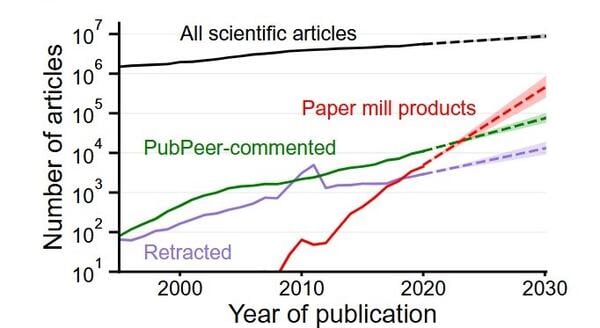
Last week Amaral and his colleagues published their findings in the Proceedings of the National Academy of Sciences of the United States of America. They estimate that they were able to detect anywhere between 1 and 10 percent of fraudulent papers circulating in the literature and that the actual rate of fraud may be 10 to 100 times more. Some subfields, such as those related to the study of microRNA in cancer, have particularly high rates of fraud.
While dishonest scientists may be driven by pressure to publish, their actions have broad implications for the scientific research enterprise.
“Scientists build on each other’s work. Other people are not going to repeat my study. They are going to believe that I was very responsible and careful and that my findings were verified,” Amaral said. “But If I cannot trust anything, I cannot build on others’ work. So, if this trend goes unchecked, science will be ruined and misinformation is going to dominate the literature.”
Luís A. Nunes Amaral
Numerous media outlets, including The New York Times, have already written about the study. And Amaral said he’s heard that some members of the scientific community have reacted by downplaying the findings, which is why he wants to draw as much public attention to the issue of research fraud as possible.
“Sometimes it gets detected, but instead of the matter being publicized, these things can get hidden. The person involved in fraud at one journal may get kicked out of one journal but then goes to do the same thing on another journal,” he said. “We need to take a serious look at ourselves as scientists and the structures under which we work and avoid this kind of corruption. We need to face these problems and tackle them with the seriousness that they deserve.”
Inside Higher Ed interviewed Amaral about how research fraud became such a big problem and what he believes the academic community can do to address it.
(This interview has been edited for length and clarity.)
Q: It’s no secret that research fraud has been happening to some degree for decades, but what inspired you and your colleagues to investigate the scale of it?
A: The work started about three years ago, and it was something that a few of my co-authors who work in my lab started doing without me. One of them, Jennifer Byrne, had done a study that showed that in some papers there were reports of using chemical reagents that would have made the reported results impossible, so the information had to be incorrect. She recognized that there was fraud going on and it was likely the work of paper mills.
So, she started working with other people in my lab to find other ways to identify fraud at scale that would make it easier to uncover these problematic papers. Then, I wanted to know how big this problem is. With all of the information that my colleagues had already gathered, it was relatively straightforward to plot it out and try to measure the rate at which problematic publications are growing over time.
It’s been an exponential increase. Every one and a half years, the number of paper mill products that have been discovered is doubling. And if you extrapolate these lines into the future, it shows that in the not-so-distant future these kinds of fraudulent papers would be the overwhelming majority within the scientific literature.
Proceedings of the National Academy of Sciences of the United States of America
Q: What are the mechanisms that have allowed—and incentivized—such widespread research fraud?
A: There are paper mills that produce large amounts of fake papers by reusing language and figures in different papers that then get published. There are people who act as brokers between those that create these fake papers, people who are putting their name on the paper and those who ensure that the paper gets published in some journal.
Our paper showed that there are editors—even for legitimate scientific journals—that help to get fraudulent papers through the publishing process. A lot of papers that end up being retracted were handled and accepted by a small number of individuals responsible for allowing this fraud. It’s enough to have just a few editors—around 30 out of thousands—who accept fraudulent papers to create this widespread problem. A lot of those papers were being supplied to these editors by these corrupt paper mill networks. The editors were making money from it, receiving citations to their own papers and getting their own papers accepted by their collaborators. It’s a machine.
Science has become a numbers game, where people are paying more attention to metrics than the actual work. So, if a researcher can appear to be this incredibly productive person that publishes 100 papers a year, edits 100 papers a year and reviews 100 papers a year, academia seems to accept this as natural as opposed to recognizing that there aren’t enough hours in the day to actually do all of these things properly.
If these defectors don’t get detected, they have a huge advantage because they get the benefits of being productive scientists—tenure, prestige and grants—without putting in any of the effort. If the number of defectors starts growing, at some point everybody has to become a defector, because otherwise they are not going to survive.
Q: [Your] paper found a surge in the number of fraudulent research papers produced by paper mills that started around 2010. What are the conditions of the past 15 years that have made this trend possible?
A: There were two things that happened. One of them is that journals started worrying about their presence online. It used to be that people would read physical copies of a journal. But then, only looking at the paper online—and not printing it—became acceptable. The other thing that became acceptable is that instead of subscribing to a journal, researchers can pay to make their article accessible to everyone.
These two trends enabled organizations that were already selling essays to college students or theses to Ph.D. students to start selling papers. They could create their own journals and just post the papers there; fraudulent scientists pay them and the organizations make nice money from that. But then these organizations realized that they could make more money by infiltrating legitimate journals, which is what’s happening now.
It’s hard for legitimate publishers to put an end to it. On the one hand, they want to publish good research to maintain their reputation, but every paper they publish makes them money.
Q: Could the rise of generative AI accelerate research fraud even more?
A: Yes. Generative AI is going to make all of these problems worse. The data we analyzed was before generative AI became a concern. If we repeat this analysis in one year, I would imagine that we’ll see an even greater acceleration of these problematic papers.
With generative AI in the picture, you don’t actually need another person to make fake papers—you can just ask ChatGPT or another large language model. And it will enable many more people to defect from doing actual science.
Q: How can the academic community address this problem?
A: We need collective action to resist this trend.We need to prevent these things from even getting into the system, and we need to punish the people that are contributing to it.
We need to make people accountable for the papers that they claim to be authors of, and if someone is bound to engage in unethical behavior, they should be forbidden from publishing for a period of time commensurate with the seriousness of what they did. We need to enable detection, consequences and implementation of those consequences. Universities, funding agencies and journals should not hide, saying they can’t do anything about this.
This is about demonstrating integrity and honesty and looking at how we are failing with clear eyes and deciding to take action. I’m hoping that the scientific enterprise and scientific stakeholders rise to that challenge.