

Tag: reset

  • An opportunity to reset the higher education environment?

    An opportunity to reset the higher education environment?

    Author:
    Bahram Bekhradnia

    Published:

    This blog was authored by Bahram Bekhradnia, HEPI’s founder and President, and was first written before yesterday’s news about the Chief Executive of the Office for Students standing down at Easter 2026.

    The recently published OfS Strategy states that, in addition to being ambitious and vigilant, in future the organisation will be ‘collaborative’ and ‘vocal’ in promoting English higher education as a force for good. If that really is its intention, it will represent a huge and welcome change from its past behaviour. No doubt this new approach reflects that of a new Government and Secretary of State. But this leopard will not find it easy to change its spots so suddenly.

    These spots derive from the environment and ideology that gave rise to its creation. In that respect, the recent Post-16 Education and Skills white paper represents a great missed opportunity to correct one of the more egregious faults of the present regime – an ideology which underpinned the 2011 white paper and the changes that followed: the ideology of higher education as a marketplace

    The 2010/11 regime, enshrined in legislation and which continues even now, is based on the notion that higher education – indeed, perhaps education more generally – is a ‘product’ and that students are ‘consumers’ of that product.  And consequently, as is the case with respect to consumers of other monopoly (or monopolistic) products like gas, water, telecoms etc they need a ‘market’ regulator to protect their interests.  So in the same way as we now have Ofgem, Ofwat and Ofcom, we needed an OfStud.

    But even those other ‘Offices for’ recognise the need for a healthy sector and are concerned with the national interest and their sector as a whole. Not so the Office for Students, which has steadfastly avoided any concern to ensure that England has a healthy and successful higher education sector, but has focused firmly and exclusively on protecting student interests – or at least what it has perceived as being student interests.

    For more than a decade, its modus operandi has been to wag its finger sternly at higher education institutions and tell them that they must do better – however well they are doing – and to say nothing to advocate for higher education. Indeed, constantly telling universities that they must do better has fed the anti-university environment fostered by previous ministers (even the previous Prime Minister spoke of ‘rip-off degrees’) and a hostile press.

    The leadership of the OfS could not be expected to change its spots. New leadership was clearly required, and the replacement of the Chair represents a good start. But after more than a decade of undermining the higher education sector, it will take more than a new Chair at the top of the organisation to enable it credibly to discharge its new stated aim of being ‘collaborative’ and ‘vocal that higher education is a force for good’.

    New leadership is certainly required, but beyond that, the Government needs to create a body that is more than a regulator – one that has explicit responsibility for fostering the health of the sector as a whole and ensuring that England has the higher education sector that it needs. It should reject the ideology of higher education as a marketplace, of education as a product and of students as ‘consumers’ of that product.
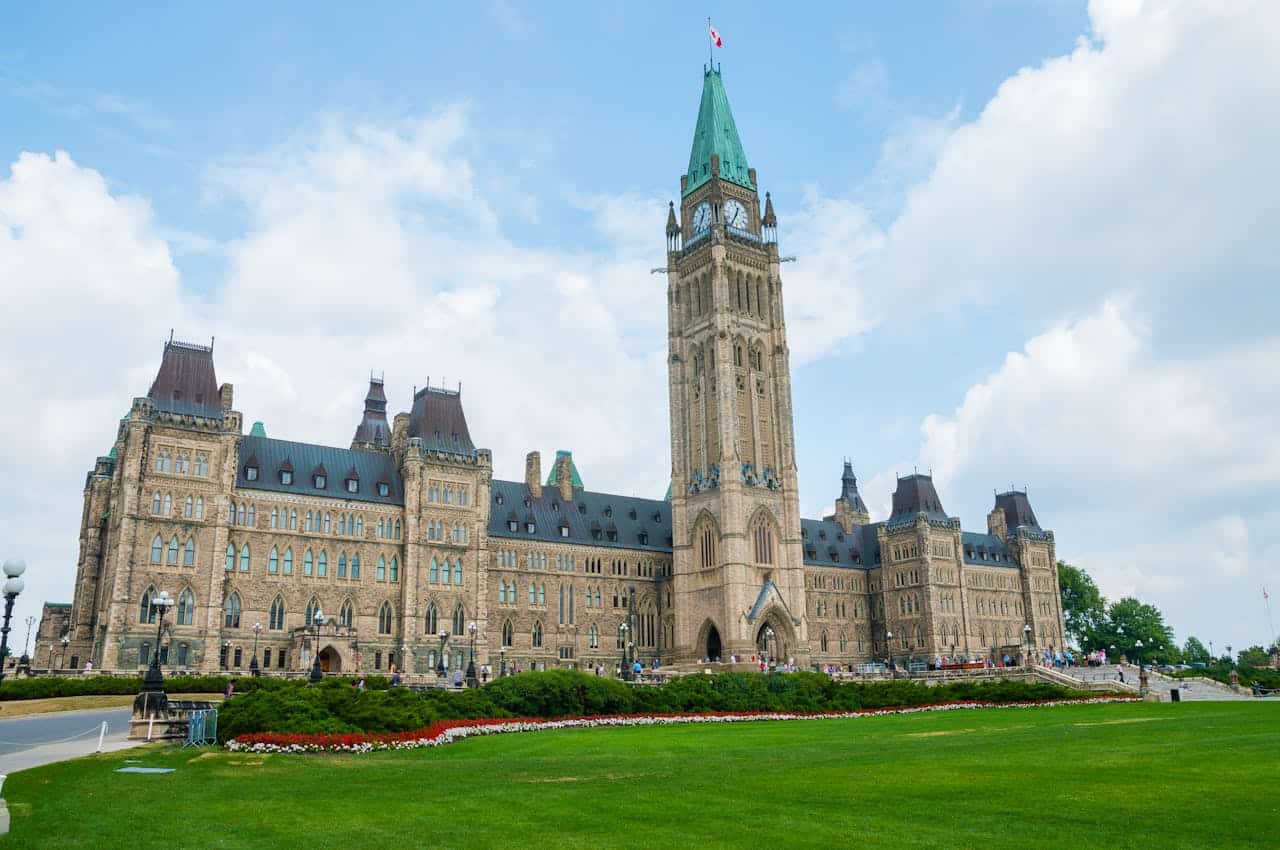
    Source link

  • Canada’s study permits plunge by 60% in immigration reset

    Canada’s study permits plunge by 60% in immigration reset

    New IRCC data has revealed plummeting international student arrivals from January to August this year, with stakeholders bracing for further declines as the government pushes forward with efforts to reduce temporary residents in Canada.  

    “The international education sector is rightly concerned that study permit approvals are far below the caps, but the news release makes clear that those concerns are not shared by the Carney government,” Regulated Canadian Immigration Consultant (RCIC) Matthew McDonald told The PIE News

    The figures showed less than 90,000 new international students entered Canada from January to August 2025, making it highly unlikely that Canada will meet its goal of issuing 437,000 study permits this year, as announced in January 2025.  

    While international student arrivals have fallen by 60%, the government has painted the figures as a “story of success” in reducing Canada’s temporary resident population, said McDonald.  

    Taken together, the number of work permit holders and study permit holders decreased by 22% from August 2024 to 2025 – a trend that the IRCC said was “a clear sign the measures we’ve put in place are working”.  

    The drop has brought the total number of study permit holders (including those who hold a work and study permit at the same time) down to 802,425 – 21% less than in 2024 and the lowest level since 2021 during the pandemic. 

    It sets Canada on track to drastically miss the government’s target of issuing a total of 437,000 study permits this year, which was a 10% reduction of the original 2024 cap

    Given the expected shortfall, stakeholders are calling for greater transparency about IRCC’s objectives, highlighting the detrimental impact of the decline on institutions whose budgets were largely guided by the 10% cap.  

    The TR data release is a weather balloon … to see if the Canadian public accepts the message that immigration is now under control in Canada

    Matthew McDonald, RCIC

    The timing of the release less than two weeks ahead of the 2025-2027 Immigration Levels plan has not gone unnoticed by commentators, who are expecting an update to align with the incoming 2025 budget and the shifting vision of Canada’s long-standing openness to immigration. 

    “The temporary resident (TR) data release is a weather balloon, alongside updated processing times, to see if the Canadian public accepts the message that immigration is now under control in Canada,” said McDonald. 

    “The Carney government is concerned about the floor, not the ceiling—i.e., about wrestling down the TR population below 5%,” he added.  

    Currently, the government aims to reach the 5% goal by the end of 2027, with Carney acknowledging it will take several years to reduce TR levels by restricting those coming in and transitioning more temporary residents to permanent residency.  

    Notwithstanding any surprises in the upcoming budget and Immigration Levels Plan, McDonald said he expected the government to “hold their foot” on new study and work permit approvals for several years to come.  

    Ahead of the federal budget announcement, the Canadian Bureau for International Education (CBIE) is urging the government to launch a renewed International Education Strategy to “restore Canada’s global brand to bolster its foreign policy and trade relationships”. 

    The body highlighted the economic contributions of international students who contributed nearly CA$40bn to the country in 2022, boosting local communities and filing labour shortages. 

    What’s more, CBIE emphasised the cultural perspectives international students bring to Canada’s campuses and their importance to the country’s soft power, with students who leave becoming ambassadors for Canada in their home countries.  

    Source link