Tag: reshaping

  • How Community Innovation Practitioners are reshaping place-based innovation

    How Community Innovation Practitioners are reshaping place-based innovation

    Research has the capacity to transform universities, communities and their places. The problem is that the funding architecture does not allow for sufficient sharing of power, benefits, or resources between communities, academics and non-academic partners.

    How research funding is organised, distributed, and managed, spotlights issues of regional inequality and uneven cultural and economic growth.

    These challenges, and how to address them, are at the heart of the Northumbria University led deep dive scoping report, By All, For All: The Power of Partnership, which provided the robust evidence base for best practice in partnership working and bridging knowledge gaps.

    The report makes recommendations for devolving research power, directly addressing the UKRI strategic aim to work across an expanded research ecosystem, with communities as researchers rather than just the subjects of research.

    Funding

    A new round of Community Innovation Practitioner (CIP) Awards—the signature award of the Creative Communities programme–a £3.9 million investment funded by the UKRI Arts and Humanities Research Council (AHRC) and based at Northumbria University–is a direct result of those recommendations.

    Harnessing the transformative power of devolution, the CIP Awards embed researchers directly within communities across all four devolved nations and devolved mayoral regions of the UK for a year. The awards contribute to an emerging evidence base on how culture can enhance belonging, address regional inequality, deliver devolution and break down barriers to opportunity for communities.

    Underpinning the work of the CIPs is a fundamental question: what if we stopped doing research to communities and started doing it with them?

    The first cohort of CIPs employed co-creative methodologies to address complex social challenges across diverse communities, from Belfast’s Market area to Welsh post-industrial regions and Liverpool’s healthcare settings. Their work aimed to empower marginalised communities through participatory cultural interventions, using arts, heritage, music and creative practices as vehicles for social change and community building.

    Each practitioner developed innovative approaches to bridge academic research with grassroots community needs, fostering cross-sector collaborations that challenged traditional boundaries between universities, public services and residents–using the so-called ‘quadruple helix’ model. Through their community-led research, the CIPs demonstrated how creative co-production can tackle issues ranging from mental health and social isolation to heritage conservation and youth engagement, ultimately building more inclusive and resilient communities.

    The 2025-6 cohort of CIPs build on that strong foundation. They will generate vital new knowledge about co-creation and the unique role played by their communities and partnerships in growth through new research, development and innovation (RD&I).

    Between them, the six CIPs will transform empty retail spaces into creative hubs in Dundee; foster reconciliation in Belfast through a co-created community art exhibition; strengthen community cohesion through craft in Rochdale; address cultural health and creating cultural planning across Kirklees; support cultural regeneration in Digbeth and inspire new forms of collective storytelling in Cardiff.

    Democratising research outputs

    With UK Government Missions focused on addressing regional inequality and economic growth, there’s growing recognition that top-down policy interventions have limited effectiveness. The CIP Awards directly address this by generating evidence from the ground up, with communities defining both problems and solutions.

    This approach aligns with broader shifts in policy thinking. The recent emphasis on place-based innovation across government departments reflects a growing understanding that place really matters—that solutions appropriate for, say, Manchester might fail spectacularly in Dundee, not because of implementation failures but because they were never designed with local lived experience and landscapes in mind.

    When it comes to democratising research funding and carrying out co-creation, significant obstacles remain. The promotion criteria in universities still heavily favour traditional academic outputs over community impact. REF panels, despite rhetorical commitments to broader impact, struggle to assess research where communities are co-creators rather than case studies, and funding timelines often clash with the slow work of building genuine partnerships.

    The CIP Awards attempt to address some of these structural barriers by providing dedicated funding for relationship-building and requiring evidence of community partnership from the application stage. But systemic change will require broader cultural shifts.

    A model for the future

    Early indicators from Creative Communities research are promising. Projects have influenced everything from devolved government manifestos, to UNESCO heritage policies and NHS approaches to community health. But scaling this impact requires moving beyond individual projects to a wider systemic change of who gets to do RD&I.

    The CIP Awards represent more than a funding opportunity: they’re a prototype for what research looks like when we take community expertise seriously. In an era of declining trust in institutions and growing demands for research relevance, this approach offers a path toward more democratic, more impactful, and ultimately more valuable knowledge creation that is truly by all, and for all.

    The Creative Communities podcast is available online CIP Podcast – Creative Communities. You can read more about the work of AHRC Creative Communities on the website, where you can access the case studies and policy papers from the 2023-24 CIPs.

    Source link

  • 5 Trends Reshaping K-12 Education Across the U.S. – The 74

    5 Trends Reshaping K-12 Education Across the U.S. – The 74


    Get stories like this delivered straight to your inbox. Sign up for The 74 Newsletter

    Since 2020, interest in homeschooling, microschooling, and other alternatives to conventional education has soared. Entrepreneurial parents and teachers have been building creative schooling options across the U.S. Kerry McDonald, a senior fellow at the Foundation for Economic Education and contributor to The 74, was so inspired by these everyday entrepreneurs that she wrote a book about them: Joyful Learning: How to Find Freedom, Happiness, and Success Beyond Conventional Schooling.The following is an adapted excerpt from McDonald’s book. It is reprinted here with permission from the publisher.

    In 2019, I gave a keynote presentation at the Alternative Education Resource Organization’s (AERO) annual conference in Portland, Oregon. Founded in 1989 by Jerry Mintz, AERO has long supported entrepreneurial educators in launching new schools and spaces, with a particular focus on learner‑centered educational models. It was about a month after my previous book Unschooled was published, and I was talking about the gathering interest in unconventional education. Homeschooling numbers were gradually rising, and more microschools and microschooling networks were surfacing. I predicted that these trends would continue, but I said they would remain largely on the ­edge— as alternative education had for decades. They would offer more choices to some families who were willing to try new things, similar to those of us who eagerly embraced Netflix’s mailed DVDs when they first appeared. But I didn’t think these unconventional models would upend the entire education sector the way Netflix ultimately did with entertainment. I thought they would remain small and niche. I was wrong.

    The COVID crisis catapulted peripheral educational trends into the mainstream, not only creating the opportunity for new schools and spaces to emerge but, more importantly, permanently altering the way parents, teachers, and kids think about schooling and learning. The pre‑pandemic tilt toward homeschooling and microschooling has converged with five post‑pandemic trends that are profoundly reshaping American education for families and founders. Together, these trends are shifting the K–12 education sector from being an innovation laggard to an innovation leader.

    Trend #1: The growth of homeschooling and microschooling

    The nearby microschool for homeschoolers that my children attended before COVID was one of only a sprinkling of schooling alternatives in our area. Now, it’s part of a wide, fast‑growing ecosystem of creative schooling options— both locally and nationally— representing an array of different educational philosophies and approaches. Families today are better able to find an education option that aligns with their preferences. From Maine to Miami to Missouri to Montana, the majority of the innovative schools and spaces I’ve visited have emerged since 2020, and many already have lengthy waitlists, inspiring more would‑be founders. The demand for these options will grow and accelerate over the next ten years, as will the number of homeschooling families, many of whom will be attracted to homeschooling as a direct result of these microschools and related learning models. Indeed, data from the Johns Hopkins University Homeschool Hub reveal that homeschooling numbers continued to grow during the 2023/2024 academic year compared to the prior year in 90 percent of the states that reported homeschooling data, shattering assumptions that homeschooling’s pandemic‑era rise was just a blip. Parents that otherwise wouldn’t have considered a homeschooling option will do so because homeschooling enables them to enroll at their preferred microschool or learning center.

    One particularly striking and consistent theme revealed in my conversations with founders as I’ve crisscrossed the country is that their kindergarten classes are filling with students whose parents chose an unconventional education option from the start. These parents aren’t removing their child from a traditional school because of an unpleasant experience or a failure of a school to meet a child’s particular needs. They are opting out of conventional schooling from the get‑go, gravitating toward homeschooling and microschooling before their child even reaches school age. This trend is also likely to accelerate, as younger parents become even more receptive to educational innovation and change.

    Trend #2: The adoption of flexible work arrangements

    Today’s generation of new parents grew up with a gleeful acceptance of digital technologies and the breakthroughs they have facilitated in everything from healthcare to home entertainment. These parents see the ways in which technology and innovation enable greater personalization and efficiency, and expect these qualities in all their consumer choices. It’s no wonder, then, that parents of young children today are generally more curious about homeschooling and other schooling alternatives. They are often perplexed that traditional education seems so sluggish.

    The response to COVID gave these parents license to consider other options for their children’s education. The school closures and extended remote learning during the pandemic empowered parents to take a more active role in their children’s education. That trend persists, as does the remaking of Americans’ work habits. The number of employees working remotely from home rather than at their workplace has more than tripled since 2019. 

    As more parents enjoy more flexibility in their work schedules, they will seek similar flexibility in their children’s learning schedules. While remote and hybrid work generally remain privileges of the so‑called “laptop class” of higher‑income employees, the growing adoption of flexible work and school arrangements is driving demand for more of these alternative learning models, including many of the ones featured in Joyful Learning that offer full‑time, affordable programming options for parents who don’t have job flexibility. Remote and hybrid work patterns are here to stay, and so is the trend toward more nimble educational models for all.

    Trend #3: The expansion of school choice policies

    The burst of creative schooling options since 2020 is now occurring all across the United States, in small towns and big cities, in both politically progressive and conservative areas, and in states with and without school choice policies that enable education funding to follow students. 

    Education entrepreneurs aren’t waiting around for politicians or public policy to green‑light their ventures or provide greater financial access. They are building their schools and spaces today to meet the mounting needs of families in their communities.

    That said, there is little doubt that expansive school choice policies in many states are accelerating entrepreneurial trends. Founders I talk to who are developing national networks of creative schooling options, are intentional about locating in states with generous school choice policies that enable more parents to choose these new learning models. Other entrepreneurs are moving to these states specifically so that they can open their schools in places that enable greater financial accessibility and encourage choice and variety. Jack Johnson Pannell is one example. The founder of a public charter school for boys in Baltimore, Maryland, that primarily serves low‑income students of color, Jack grew discouraged that the experimentation that defined the early charter school movement in the 1990s steadily disappeared, replaced by an emphasis on standardization and testing that can make many—but certainly not all—of today’s charter schools indistinguishable from traditional public schools. He saw in the choice‑enabled microschooling movement the opportunity for ingenuity and accessibility that was a hallmark of the charter sector’s infancy. In 2023, Jack moved to Phoenix, Arizona, to launch Trinity Arch Preparatory School for Boys, a middle school microschool that families are able to access through Arizona’s universal school choice policies. 

    Trend #4: The advent of new technologies and AI

    New technologies are also accelerating the rise of innovative educational models, while making it harder to ignore the inadequacies of one‑size‑fits‑all schooling. The ability to differentiate learning, personalizing it to each student’s present competency level and preferred learning style, has never been easier or more straightforward. It no longer makes sense to say that all second graders or all seventh graders should be doing the same thing, at the same time, in the same way—and failing them if they don’t measure up. 

    Emerging and maturing technologies help prioritize students over schools and systems, but the widespread introduction of artificial intelligence (AI) tools, and bots like ChatGPT, will hasten this repositioning. New AI bots can act as personal tutors for students, helping them navigate through their set curriculum. The real promise, according to founders focused more on agency‑ based or learner‑directed education, is for AI tools to work for the students themselves, helping them to control their own curriculum.

    “We don’t have a set pathway for our learners. It’s personalized,” said Tobin Slaven, cofounder of Acton Academy Fort Lauderdale, which he launched with his wife Martina in 2021. Part of the global Acton Academy microschool network, Tobin’s school prioritizes student‑driven education in which young people set and achieve individual goals in both academic and nonacademic areas, participate in frequent Socratic group discussions, engage in collaborative problem‑solving and shared decision‑making, and embark on their own “hero’s journey” of personal discovery and achievement. 

    When we spoke in 2024, Tobin had recently founded an educational technology startup building AI companion tools that act as a personal tutor, life coach, and mentor all in one. He sees AI tools like his as being instrumental in helping learners have more independence and autonomy over their learning. Rather than AI bots guiding a student through a pre‑established curriculum, Tobin thinks the truly transformative potential of AI lies in tools that help students lead their own learning—answering their own questions and pursuing their own academic and nonacademic goals.

    “When I hear the visions of some other folks in the education space, their visions are very different from mine,” Tobin said, referring to many of today’s emerging AI‑enabled educational technologies. He offered the example of a device known as a jig, used often in carpentry, to further illustrate his point. “The jig tells you exactly where the curves should be, where the cut should be. It’s like a template. The template that most of the AI folks are using is traditional education. It was broken from the start. It’s a bad jig,” Tobin said.

    Instead, he sees the potential of AI to help reimagine education rather than reinforce a top‑down, traditional model. He is helping to create a new and better educational jig.

    Trend #­ 5: Openness to new institutions

    The final trend that is merging with the others to transform American education is the shift away from established institutions toward newer, more decentralized ones. Some of this is undoubtedly due to emerging technologies that can disrupt entrenched power structures and lead to greater awareness of, and openness to, new ideas, but the trend goes beyond technology. Annual polling by Gallup reveals that Americans’ confidence in a variety of institutions has fallen, with their confidence in public schools at a historic low. Only 26 percent of survey respondents in 2023 indicated that they had a “Great deal/Quite a lot” of confidence in that institution. The good news is that confidence in small business remains high, topping Gallup’s list with 65 percent of Americans expressing a “Great deal/Quite a lot” of confidence in that institution in 2023. The falling favor of public schools occurring at the same time that small businesses continue to be well‑liked creates ideal conditions for today’s education entrepreneurs. Families who are dissatisfied with public schooling may be much more interested in a small school or space operating or opening within their community. 

    For another signal of the shift away from older, more centralized institutions toward newer, more customized options, look at what the Wall Street Journal calls the “power shift underway in the entertainment industry,” as YouTube increasingly draws viewers away from traditional television networks. Individual YouTube content creators, such as the world’s top YouTuber, MrBeast, who has some 300 million subscribers, appeal to more viewers than the legacy media networks with their more curated content. New content creators are particularly attractive to younger generational cohorts like Gen Z, who prefer decentralized, user‑generated content over traditional, top‑ down media models. Consumers today are looking for more modern, responsive, personalized products and services, especially those being developed by individual entrepreneurs who bear little resemblance to legacy institutions. This is as true in education as it is in entertainment and will be an ongoing, indefinite, and transformational trend in both sectors.

    Shortly before completing this manuscript, I spoke again at the annual AERO conference, this time in Minneapolis. Gone was my measured optimism of 2019. In its place was a mountain of evidence showing how popular alternative education models have become since 2020, and how steadily that popularity continues to grow. This isn’t a pandemic- era fad or an educational niche destined for the edges. This is a diverse, decentralized, choice‑filled entrepreneurial movement that is shifting American education from standardization and stagnation toward individualization and innovation.

    We are only at the very early stages of a fundamental change in how, where, what, and with whom young people learn. Over the next decade, homeschooling and microschooling numbers will continue to grow, work flexibility will trigger greater demand for schooling flexibility, expanding education choice policies will make creative schooling options more accessible to all, AI and emerging technologies will help create a new “educational jig” fit for the innovation era, and declining confidence in old institutions will enable fresh ones to arise. The future of learning is brighter than ever. Families and founders are finding freedom, happiness, and success beyond conventional schooling, inspiring the growth of today’s joyful learning models and the invention of new ones yet to be imagined.


    Get stories like these delivered straight to your inbox. Sign up for The 74 Newsletter

    Source link

  • How Artificial Intelligence Is Reshaping College Planning

    How Artificial Intelligence Is Reshaping College Planning

    What does the latest research tell us about students using AI for college planning?

    If you have spent time with today’s high school students, you know their college search journey looks nothing like it did ten, or even five, years ago. A glossy brochure or a well-timed postcard still has a place. However, the first “hello” increasingly comes through a digital assistant, a TikTok video, or a quick artificial intelligence–powered search.

    Let us not pretend artificial intelligence (AI) is everyone’s new best friend. Some students are eager, some are eye-rolling, and plenty are stuck in the “maybe” camp. That mix of excitement and hesitation is real, and it deserves as much attention as hype.

    The data is clear: nearly half of students (45 percent) have already used a digital AI assistant on a college website, with usage peaking among 9th- and 10th-graders (RNL, Halda, & Modern Campus, 2025). At the same time, a full third of students nationwide have turned to tools like ChatGPT to explore colleges, scholarships, and even essay help (RNL & Teen Voice, 2025).

    This trend is playing out nationwide, with major news outlets reporting that AI chatbots are becoming a common part of the college application process, assisting students with everything from brainstorming essays to navigating deadlines (Singer, 2023).

    For many students, AI is not futuristic; it is already woven into how they imagine, explore, and narrow their choices. Recent reporting confirms that AI-driven college search platforms are helping more students, especially those without access to personalized guidance, find the right fit and expand their options beyond what they might have considered on their own (Greenberg, 2025).

    Beyond RNL: What other research shows

    The RNL findings fit a much bigger story about how AI changes education. Around the world, researchers are watching students test, tinker, and sometimes wrestle with what these tools mean for learning and planning.

    One line of research looks at predictive modeling. Recent studies have shown that AI-driven platforms can analyze student data, grades, extracurricular activities, and demographics to predict which students are likely to pursue college and which might need extra support (Eid, Mansouri, & Miled, 2024). By flagging students at risk of falling off the college pathway, these predictive systems allow counselors to intervene earlier, potentially changing a student’s trajectory.

    Another cluster of studies zeroes in on personalized guidance. Tools built around a student’s interests and goals can recommend classes, extracurriculars, and colleges that “fit” better than a generic list. This is especially important in schools where one counselor may juggle hundreds of students (Majjate et al., 2023).

    Meanwhile, students are already using AI, sometimes in ways that make their teachers nervous. A Swedish study added some nuance: the most confident students use AI the most, while those who are already unsure of their skills tend to hold back (Klarin, 2024). That raises real equity questions about who benefits.

    And not all students are fans. Some research highlights concerns about privacy, over-reliance, and losing the chance to build their problem-solving muscles. It is a reminder that skepticism is not resistance for resistance’s sake but a way of protecting what matters to them.

    On the institutional side, surveys suggest that many colleges are preparing to use AI in admissions, whether for transcript analysis or essay review. Recent coverage underscores that admissions offices are increasingly turning to AI tools to streamline application review, identify best-fit students, and even personalize outreach (Barnard, 2024).

    If all of this feels like a promise and a warning label, it is because it is. AI can democratize access to information, but it can also amplify bias. Students know that. And they want us to take their concerns seriously.

    Empower your leadership and staff to harness the power of AI.

    Don’t get left behind in the AI transformation for higher education. See how RNL’s AI Education Services can help your leaders and staff unlock the full potential of AI on your campus.

    Learn more

    Meet the pioneers, aspirers, resistors, and fence-sitters

    As revealed by our research in The AI Divide in College Planning (RNL & Teen Voice, 2025), not all students approach artificial intelligence the same way. Four personas stand out:

    • Pioneers are already deep in the mix, using artificial intelligence for research, essays, and scholarship searches. Many say it has opened doors to colleges they might not have even considered otherwise.
    • Aspirers are curious but want proof. They like the idea of scholarship searches or cost planning, but need easy, free tools and success stories before they commit.
    • Resistors lean on counselors and family. They are worried about accuracy and privacy, but might come around if an advisor they trust introduces the tool.
    • Fence-Sitters are classic “wait and see” students. A third might trust artificial intelligence to guide them through the application process, but the majority are still unsure.

    The takeaway? There is no single “artificial intelligence student.” Institutions need flexible strategies that welcome the eager, reassure the cautious, and do not alienate the skeptics.

    What happens after the chatbot says, “Hello“?

    One of the most striking findings from the E-Expectations study is that students rarely stop at the chatbot (RNL, Halda, & Modern Campus, 2025). After engaging with an AI assistant, they move. Twenty-nine percent email admissions directly, 28% click deeper into the website, 27% fill out an inquiry form, and almost a quarter apply.

    In other words, that little chat bubble is not just answering frequently asked questions. It is a launchpad.

    Personalization meets privacy

    Here is another twist. While most students (61%) want personalization, they want it on their terms. Nearly half prefer to filter and customize their content, while only 16% want the college to decide automatically (RNL, Halda, & Modern Campus, 2025).

    That is the sweet spot for artificial intelligence: not deciding for students but giving them the levers to design their journey.

    What this means for your enrollment teams

    • AI is not just a front-end feature but a funnel mover. Treat chatbot engagement like an inquiry. Have a system ready to respond quickly when a student shifts from chatting to acting.
    • Remember the personas. Pioneers want depth, Aspirers want reassurance, Resistors want trusted guides, and Fence-Sitters want time. Design communications that honor those differences instead of pushing one script for all.
    • Personalization is not about guessing. It is about giving students control. Build tools that let them filter, sort, search, and resist the temptation to over-curate their journey.
    • AI is a natural fit for cost and scholarship exploration. If you want to hook Aspirers, put AI into your net price calculators or scholarship finders.
    • Virtual tours and event registration bots should not feel like gimmicks. When done well, they can bridge the gap between interest and visit, giving students confidence before setting foot on campus.

    Download the complete reports from RNL and our partners to see what students are telling us directly:

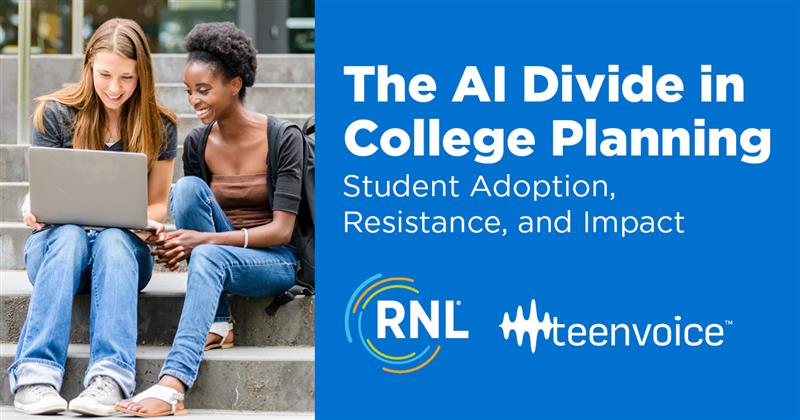
    Report: The AI Divide in College Planning, image of two female college students sitting on steps and looking at a laptop
    The AI Divide in College Planning
    References

    Source link

  • How Pakistani students are reshaping global mobility

    How Pakistani students are reshaping global mobility

    A new study from ApplyBoard has shown the number of students leaving Pakistan to join universities in countries such as the UK and US has grown exponentially in the past few years, with student visas issued to Pakistani students bound for the ‘big four’ nearly quadrupling from 2019 to 2025.

    “One of the most striking findings is just how rapid and resilient Pakistan’s growth has been across major study destinations,” ApplyBoard CEO Meti Basiri told The PIE News.

    “The rise of Pakistani students is a clear signal that global student mobility is diversifying beyond traditional markets like India and China,” he said.

    The question is, why?

    A large factor is Pakistan’s young population – 59%, or roughly 142.2 million people, are between the ages of five and 24, making it one of the youngest populations in Asia.

    Additionally, due to economic challenges faced by Pakistan, many young people see international education as a necessity in order to succeed financially, even with Pakistan’s economic growth and gradual stabilisation – which has a possibility of slightly decreasing the overall movement between countries in the future.

    The UK has remained the most popular destination for Pakistani students even through Covid-19, with Pakistan rising to become the UK’s third largest source country in 2024.

    Visas issued to Pakistani students have grown from less than 5,500 to projected 31,000 this year, an increase of over 550% from 2019 to 35,501 in 2024.

    Some 83% of students chose postgraduate programs, with the most popular being business courses, but in recent years statistics show a shift towards computing and IT courses.

    This trend aligns with the growth of the UK’s tech sector, which is now worth more than 1.2 trillion pounds, with graduates set to aid further growth in the coming years.

    “In the US, F-1 visas for Pakistani students are on track to hit an all-time high in FY2025,” said Basiri, with STEM subjects the most popular among the cohort.

    This aligns with the US labour market, where STEM jobs have grown 79% in the last 30 years.

    Basiri highlighted the “surprising” insight that postgraduate programs now make up the majority of Pakistani enrolments, particularly in fields of IT, engineering and life sciences. “This reflects a deliberate and career-driven approach to international education,” he said.

    Such an approach is true of students across the world, who are becoming “more intentional, choosing destinations and programs based on affordability, career outcomes, and visa stability, not just brand recognition,” said Basiri.

    The rise of Pakistani students is a clear signal that global student mobility is diversifying beyond traditional markets like India and China

    Meti Basiri, ApplyBoard

    Canada, unlike the US and UK, has welcomed far fewer Pakistani students, most likely due to the introduction of international student caps. ApplyBoard also suspects Pakistani student populations to drop further in the coming years, it warned.

    Similarly, the amount of visas issued to Pakistani students has also dropped in Australia after high demand following the pandemic.

    Germany, however, has experienced rising popularity, a 70% increase in popularity over five years amongst Pakistani students.

    One of the biggest factors for this is their often tuition-free public post secondary education, according to ApplyBoard, as well as the multitude of engineering and technology programs offered in Germany.

    What’s more, though smaller in scale, the UAE has seen a 7% increase in Pakistani students in recent years, thanks, in part to “geographic proximity, cultural familiarity and expanding institutional capacity,” said Basiri.

    Source link

  • The hidden cost of learning: how financial strain Is reshaping student life

    The hidden cost of learning: how financial strain Is reshaping student life

    • This HEPI guest blog was kindly authored by Cheryl Watson, VP of Education, UK at TechnologyOne.

    Rising costs are now a defining feature of the student experience in the UK. What once felt like an educational ‘coming of age’ for young people is, for many, becoming a difficult balancing act between academic ambition and financial survival.

    From housing and transport to food and essential tech, students today face relentless financial pressures just to participate in university life. For institutional leaders, the evidence is clear: the financial landscape is changing, and approaches to student engagement and support must change with it.

    A growing financial gap in UK higher education

    Financial pressures on students are not new but are growing in scale and complexity. The joint Minimum Income Standard for Students (MISS) 2024 research with HEPI and the Centre for Research in Social Policy (CRSP) at Loughborough University found that a typical full-time student living away from home needs around £244 per week to maintain a minimum standard of living. Yet, most face a significant shortfall even with part-time work and maintenance support.

    This gap impacts attendance, well-being, debt levels, and student retention. National data shows that 30% of students take on additional debt to cover basic living costs. At the same time, HEPI and Advance HE’s 2025 Student Academic Experience Survey found that more students are working part-time (68%) than not, often juggling jobs alongside demanding timetables.

    One student from the recent MISS focus groups summed up the reality:

    Even [like] knowing that I’m in my overdraft…I know it’s interest-free and stuff, but having to rely on it is not ideal, and I want to work to try and get out of it, but also like I can’t afford to.”

    It’s a cycle, and you constantly max it out every year, and then you’re constantly working to pay it back.

    This financial tightrope is increasingly common.

    How student life is being redefined by cost pressures

    Students are making tough choices daily between travel, food, work, and study. Financial stress is changing not just what students can afford, but also how they experience university life on a day-to-day basis.

    While pressures vary, the underlying theme remains consistent: rising costs are reshaping the student experience in real-time.

    The new commuter reality

    Many universities still operate around the traditional student living on campus, but according to the Sutton Trust, over 50% of UK students go to university where they grew up and students from poorer backgrounds are three times more likely to commute from home.

    For many, this is often because they cannot afford to live near campus. This has real academic consequences, with many students missing classes due to travel costs and disconnected timetables.

    I live in Sheffield but a lot of the people in my class seem to commute and there’ll be times where like most of the class don’t turn up for a certain seminar and it’s because… it just wouldn’t make sense to pay all that money to come for an hour and a half and then just leave again.

    Without more flexible, student-aware scheduling and targeted support, commuter students risk being structurally disadvantaged.

    Technology isn’t optional

    Access to digital tools is now essential for participation in academic life. From lecture recordings to online submissions, students are expected to stay constantly connected and equipped.

    You definitely need a laptop as well because although the University library provides computers, especially during exam season, you have to book them in advance, and they’ve already been taken up.

    For many, the cost of keeping up with technology adds to financial pressures, creating further barriers to participation.

    Living with financial stress

    Financial pressure is a constant presence for many students. Overdrafts are used regularly, part-time work is essential, and mismatches between payment schedules and bills force difficult choices.

    In 2023, HEPI found that more than a quarter of universities operate food banks to support students, while rising rent costs leave little left for essentials.

    The difference between first year and second year is that you have that comfort blanket of it, but by the time you get into second year, you’ve already used it, and you’ve got nothing to help you anymore.”

    These aren’t one-off lapses in budgeting. They’re the result of an unsynchronised system that does not reflect the financial reality students are working within.

    Missing out on student life

    Financial pressures also limit participation in the social and community aspects of university life that are vital for wellbeing and development.

    Especially in the SU, it’s not ideal because lots of societies will do socials there so if you can’t afford that… It might seem silly, but if you’re part of a sports society then there is some sort of expectation to go to Sports Night on a Wednesday most weeks so that obviously adds up if you’re going most weeks.

    MISS24 found that 55% of students missed out on social experiences and 53% skipped extracurricular activities due to financial constraints.[AC1] 

    Opting out is often the only option, but it comes at a cost to confidence and connection

    Why this matters for universities and policymakers

    Financial stress is no longer a fringe issue in UK higher education. When 30% of students are taking on extra debt just to cover essentials, and many are skipping classes or missing out on key experiences, the impacts on retention, well-being, and academic outcomes cannot be ignored.

    The disconnect between what students need and what current funding models assume continues to grow. Part-time work and family contributions are often treated as standard, despite being unrealistic for many students.

    What’s next: Building an evidence base for change

    If the Minimum Income Standard for Students 2024 brought much-needed clarity to the financial pressures facing undergraduates, this year’s follow-up takes that work a step further.

    The upcoming report, Minimum Income Standard for Students 2025 (MISS25), focuses specifically on first-year students living in purpose-built accommodation, offering the most detailed insight yet into the cost of starting university life in the UK.

    The findings are stark. Those on minimum support face a funding gap that must be filled by family or debt. The report also reveals a growing mismatch between student needs and how maintenance systems are designed, particularly for those without access to parental support.

    For institutional leaders, policymakers and student advocates, we encourage you to read closely, and to consider how your planning, funding and engagement strategies can respond to what today’s students are telling us.

    Click the link below to sign up for a copy of the MISS25 report when it’s ready.

    Sign up for a copy of the report 

    TechnologyOne is a partner of HEPI. TechnologyOne is a global Software as a Service (SaaS) company. Their enterprise SaaS solution transforms business and makes life simple for universities by providing powerful, deeply integrated enterprise software that is incredibly easy to use. The company takes complete responsibility to market, sell, implement, support and run solutions for customers, which reduce time, cost and risk. 


    Source link

  • How AI is reshaping the learning experience

    How AI is reshaping the learning experience

    Since late 2022, generative AI has disrupted all levels of education, and higher education must adapt quickly to ensure that the integrity of qualifications is not compromised.

    New technologies can be disruptive and present challenges and opportunities. They influence how we work, interact with others, source information, and learn.

    Although artificial intelligence (AI) has been around for decades, generative AI has emerged as both a risk to traditional learning and an opportunity for students to use new technologies responsibly and ethically. Generative AI is disrupting all levels of education, and higher education must adapt quickly to ensure that the integrity of the qualifications awarded is not compromised.

    Recently, researchers examined policies and guidelines documents from 116 US universities on the use of GenAI. They found a lack of concern in these documents for ethics and privacy associated with using GenAI while encouraging its use by both staff and students. That is, intellectual property and student privacy seem to be an afterthought.

    The introduction of GenAI has added complexity to the detection of plagiarism, and some argue that using GenAI tools should not be deemed academic dishonesty because they enhance the learning experience and improve productivity. 

    In June 2024, the Tertiary Education Quality and Standards Agency (TEQSA) asked all registered higher education providers for action plans addressing the risk-generative AI in their courses. There was a 100 per cent response rate from providers to this request.

    TEQSA then analysed responses to develop resources to support the higher education sector and released Gen AI strategies for Australian higher education: Emerging practice in late November 2024[1]. This document is designed as a toolkit to assist higher education providers. The toolkit is structured into three key dimensions: Process, People and Practice. The toolkit notes that:

    There is no single form of assessment that can enable students to demonstrate achievement of all learning outcomes or support development of all appropriate uses of gen AI. Similarly, no single tool or technology can be deployed to guarantee assessment security (p43).

    Therefore, the higher education sector needs to be agile and adapt to the ubiquitous adoption of GenAI, so that we can adapt the learning experience so that students meet the learning outcomes of their course. This requires a significant shift for institutions and educators to achieve these objectives in a GenAI world.

    Ensuring equitable access to AI

    A key challenge for integrating GenAI in education is ensuring equitable access to AI-powered tools and resources for all students, regardless of their socio-economic background or geographical location. GenAI’s promise for student learning can only be achieved if students’ and staff’s access to GenAI tools is equitable, inclusive, and free from bias.

    TEQSA cautions that higher education institutions need to carefully consider the needs of diverse student populations and prioritise an inclusive and equitable educational environment when integrating GenAI in teaching, learning and assessment. This includes ensuring everyone recognises their responsibility to implement and engage in culturally safe practices.

    References

    Eden, C.A., Chisom, O.N. and Adeniyi, I.S., 2024. Integrating AI in education: Opportunities, challenges, and ethical considerations. Magna Scientia Advanced Research and Reviews, 10(2), pp.006-013.

    McDonald, N., Johri, A., Ali, A. and Hingle, A., 2024. Generative artificial intelligence in higher education: Evidence from an analysis of institutional policies and guidelines. arXiv preprint arXiv:2402.01659.

    Yusuf, A., Pervin, N. and Román-González, M., 2024. Generative AI and the future of higher education: a threat to academic integrity or reformation? Evidence from multicultural perspectives. International Journal of Educational Technology in Higher Education, 21(1), p.21.

    [1] Available from: https://www.teqsa.gov.au/sites/default/files/2024-11/Gen-AI-strategies-e…


    Hear more from A/Professor Yvette Blount and other education leaders at the Generative AI for Education Leaders Summit 2025 and gain access to cutting-edge insights and strategies that will put your institution ahead of the curve. Learn more.

    To access the detailed conference program, download the brochure here.

    Do you have an idea for a story?
    Email [email protected]

    Source link