
Tag: resigns

  • Columbia’s Katrina Armstrong Resigns Amid Trump’s Attacks

    Columbia’s Katrina Armstrong Resigns Amid Trump’s Attacks

    Sirin Samman/Columbia University

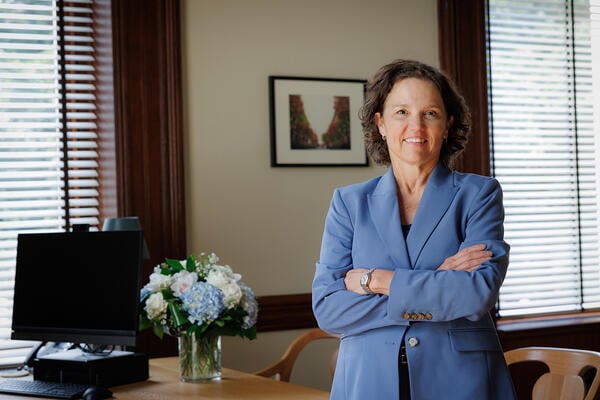
    After agreeing to the Trump administration’s sweeping demands and then appearing to backtrack to faculty, Columbia’s interim president stepped down Friday night—a move that federal officials praised, though it may add to the upheaval at the Ivy League institution that’s facing criticism on multiple fronts, from the federal government to faculty to students.

    Katrina Armstrong, who has served as the interim president since last August, is returning to her previous post leading the institution’s Irving Medical Center, according to the Friday announcement.

    In a brief statement, she said it had been a “singular honor to lead Columbia University in this important and challenging time … But my heart is with science, and my passion is with healing. That is where I can best serve this University and our community moving forward.” Claire Shipman, a former broadcast journalist and a co-chair of Columbia’s Board of Trustees, will take over as acting president while the university begins a nationwide search for a permanent leader.

    The leadership shake-up comes after weeks of turmoil at Columbia as the Trump administration has waged war against the Ivy League institution, stripping it of $400 million in federal contracts for what it calls Columbia’s “continued inaction in the face of persistent harassment” against Jewish students on campus. Trump’s antisemitism task force, which was formed by executive order in early February, then demanded the university implement a number of sweeping reforms, including restructuring its disciplinary process under the Office of the President, expanding the authority of its campus security force and placing its Middle East, South Asian and African Studies department into receivership.

    The university announced a week ago that it would comply with the demands, to the frustration of critics who argued that the demands may be unlawful and that giving in to them undermines academic freedom and free speech. On CNN, Education Secretary Linda McMahon praised Armstrong, saying she had had productive conversations with the then-interim president and that Columbia was “on the right track” to having its funding restored.

    But according to a transcript of a virtual meeting between Armstrong and faculty members obtained by Bari Weiss’s news outlet, The Free Press, Armstrong told faculty members that many of the changes the university had promised the antisemitism task force would not come to pass. She said there would be “no change” to masking and admissions policies, that the MESAAS department wouldn’t be placed into a receivership, and that the disciplinary process would not move under the Office of the President.

    Armstrong seemingly denied those claims in a statement Tuesday, writing, “Let there be no confusion: I commit to seeing these changes implemented, with the full support of Columbia’s senior leadership team and the Board of Trustees … Any suggestion that these measures are illusory, or lack my personal support, is unequivocally false.”

    Her sudden resignation was met with enthusiasm from the federal antisemitism task force, which appeared to imply in a statement released Friday night that her leadership would have impeded the task force’s ability to move toward a resolution with Columbia.

    “The action taken by Columbia’s trustees today, especially in light of this week’s concerning revelation, is an important step toward advancing negotiations as set forth in the pre-conditional understanding reached last Friday between the University and the Task Force to Combat Anti-Semitism,” the statement read.

    While many faculty had strongly opposed Columbia’s choice to give in to the Trump administration’s demands, Armstrong appeared to be generally well-liked among the faculty; in a recent Inside Higher Ed article, Michael Thaddeus, vice president of the campus’s American Association of University Professors chapter, said she was one of the most open leaders he had worked with in his time at Columbia.

    Shipman, now the acting president, also praised Armstrong’s leadership in that article, calling her an “exceptional leader” who “came in to help us heal and get our campus in order” and who is skilled at working under “crisis conditions.”

    But one AAUP leader noted in an email to Inside Higher Ed that, though he was personally surprised that Armstrong stepped down, it will do little to change the AAUP’s ongoing work to oppose Trump’s crusade against higher education.

    “Katrina Armstrong’s resignation changes almost nothing,” wrote Marcel Agüeros, Columbia AAUP’s chapter secretary. “For the past two years, we have been advocating for a greater role for faculty in the decision-making processes of the university. That, and defending our university and all universities against unwanted and likely unlawful interference by the federal government, remains our North Star.”

    The AAUP chapter at Columbia last week sued the Trump administration in an effort to restore the $400 million in funding. The lawsuit argues that the funding freeze was a “coercive tactic” that’s already caused irreparable damage.

    Clare Shipman joined the Columbia board in 2013.

    Shipman will be the third leader of Columbia in nine months; Armstrong took over the role when Minouche Shafik, who had led the New York institution for a little over a year, stepped down in August. Shafik resigned after backlash from both pro-Palestinian students and faculty and Republican lawmakers for how she handled pro-Palestinian encampments at Columbia. Shipman testified before Congress with Shafik last April at a hearing about antisemitism at Columbia.

    “I assume this role with a clear understanding of the serious challenges before us and a steadfast commitment to act with urgency, integrity, and work with our faculty to advance our mission, implement needed reforms, protect our students, and uphold academic freedom and open inquiry,” Shipman said in a news release. “Columbia’s new permanent president, when that individual is selected, will conduct an appropriate review of the University’s leadership team and structure to ensure we are best positioned for the future.”

    In a statement, Rep. Tim Walberg, the Michigan Republican who chairs the House Education and the Workforce Committee, warned, “Ms. Shipman, while we wish you all good success, we will be watching closely.”


    Source link

  • Columbia University’s Interim President Resigns Amid Trump Administration’s Pressure Over Campus Activism

    Columbia University’s Interim President Resigns Amid Trump Administration’s Pressure Over Campus Activism

    Columbia University’s interim president, Dr. Katrina A. Armstrong, resigned on Friday, just days after the university made significant concessions to the Trump administration in exchange for the restoration of $400 million in federal research funding. Armstrong’s resignation follows a tumultuous period for the institution, already reeling from the departure of her predecessor, Minouche Shafik, in August 2024.

    Armstrong, who had stepped into the role of interim president during a time of political and social unrest, faced mounting pressure over the university’s handling of pro-Palestinian student activism, which sparked national controversy and calls for accountability from political leaders, including former President Donald Trump and his administration. Armstrong’s resignation marks the latest chapter in a series of leadership shifts at Columbia as it navigates the increasingly polarized political environment surrounding campus protests.


    Effective immediately, Claire Shipman, co-chair of Columbia’s Board of Trustees, has been appointed acting president. David J. Greenwald, chair of the Board of Trustees, praised Armstrong for her dedication to the university, acknowledging her hard work during a time of “great uncertainty.” Greenwald’s statement highlighted Armstrong’s contributions to the university, saying, “Katrina has always given her heart and soul to Columbia. We appreciate her service and look forward to her continued contributions to the University.” Armstrong, who will return to lead the Irving Medical Center, had taken on the interim presidency in a period marked by increasing tensions on campus over political activism and its fallout.

    Political Pressure and Concessions to the Trump Administration

    The resignation comes amid significant political pressure, as the Trump administration imposed a set of demands on Columbia in exchange for the release of crucial federal funding. Earlier this month, the administration presented the university with nine conditions to restore the $400 million in research grants that had been frozen over accusations of antisemitism linked to campus protests.

    In an effort to regain the funding, Columbia conceded to these demands, which included a ban on students wearing masks to conceal their identities during protests, except for religious or health reasons. Additionally, Columbia agreed to hire 36 new campus security officers with the authority to arrest students involved in protests. The university also committed to increasing institutional oversight by appointing a new senior vice provost to monitor the university’s Department of Middle East, South Asian, and African Studies.

    Perhaps most notably, Columbia pledged to adopt a stance of “greater institutional neutrality,” a policy that the university said would be implemented after working with a faculty committee. The decision was seen as an attempt to quell political tensions while navigating the contentious issues surrounding student activism.

    A Leadership Crisis at Columbia University

    Armstrong’s resignation follows the departure of Minouche Shafik, who faced widespread criticism for her handling of campus protests against the war in Gaza. Under Shafik’s leadership, Columbia became a focal point of national debates about free speech, activism, and the role of universities in responding to global conflicts. Shafik ultimately resigned after facing intense scrutiny for her handling of the protests and the occupation of an academic building by students, an incident that ended with NYPD officers forcibly removing the students.

    In Armstrong’s case, her tenure was similarly marred by controversies surrounding the university’s response to the growing political activism on campus. The university’s handling of pro-Palestinian protests, particularly those related to the ongoing Israel-Palestine conflict, led to calls for stronger action from political figures, especially within the Republican Party. Armstrong’s decision to oversee negotiations with the Trump administration over the university’s federal funding placed her at the center of a storm of political and social unrest, further intensifying the pressure on her leadership.

    Columbia’s Future Amidst Political Turmoil

    The resignation of Armstrong is a significant moment for Columbia, as the institution grapples with the broader implications of political activism within academia and the increasing role of government in shaping university policies. As the university enters another phase of leadership instability, the question remains: how will the next president balance the competing demands of activism, free speech, and political pressures from outside forces?

    Columbia’s decision to adopt a policy of institutional neutrality and increase security measures reflects the complex and polarized environment that universities are navigating in today’s political climate. The growing influence of political figures like Trump and the scrutiny placed on universities over their responses to student protests signal a new era for higher education, one where the lines between campus activism and political power are increasingly blurred.

    As the search for a permanent president continues, Columbia University will need to chart a course that both addresses the concerns of its diverse student body and faculty while navigating the external pressures that have shaped the university’s recent trajectory. The role of universities in fostering open dialogue, supporting activism, and protecting the rights of students will likely continue to be a central issue in higher education for years to come.

    Conclusion

    The resignation of Katrina Armstrong adds to a growing list of university presidents who have faced intense political pressure and scrutiny over campus activism, particularly surrounding Middle Eastern and global conflicts. Columbia’s next steps will be crucial not only for the future of the institution but also as a bellwether for how universities across the country navigate the increasingly complex landscape of political activism, academic freedom, and government intervention. The institution’s response to these challenges will undoubtedly have long-term implications for the role of higher education in a polarized society.

    Source link

  • AGB leader resigns abruptly after six months

    AGB leader resigns abruptly after six months

    Less than a year into the job, Framroze Virjee is out as president and CEO of the Association of Governing Boards of Universities and Colleges.

    Virjee retired, a decision that was effective Saturday, according to an email from Ross Mugler, chair of AGB’s Board of Directors, who has been tapped as acting president and CEO.

    “Fram shared that after working diligently to further the organization’s mission, he determined that the president/CEO role at AGB did not align operationally with his personal and professional goals, and he decided to step down from the organization. The AGB Board of Directors accepted his resignation and offered its appreciation for his accomplishments during his tenure,” Mugler wrote in a Monday email.

    In a message to AGB staff, Virjee wrote, “This was a difficult decision and not one that I made casually, but instead only after careful consideration and thought. As I leave AGB, I remain committed to its mission of supporting excellence in board governance and leadership and remain dedicated to the value of higher education in the lives of students, our communities, and our nation.”

    Virjee, president emeritus of California State University, Fullerton, formally started in mid-August after his predecessor, former AGB president and CEO Henry Stoever, resigned amid plagiarism allegations in late 2023.

    AGB did not respond to a request for comment from Inside Higher Ed on Monday about Virjee’s sudden exit, but the organization’s website has been updated to reflect the leadership change.

    “As a result of this announcement, I have agreed to serve as acting president and CEO while the AGB Board of Directors finalizes details regarding new leadership,” Mugler wrote Monday.

    Mugler recently retired as commissioner of the revenue for Hampton, Va., a post he held for more than three decades. Mugler has been on AGB’s board since 2018 and was appointed five times to Old Dominion University’s Board of Visitors.

    Source link