Tag: restrictions

  • Fewer New International Students Enroll at U.S. Colleges Amid Trump Restrictions – The 74

    Fewer New International Students Enroll at U.S. Colleges Amid Trump Restrictions – The 74


    Get stories like this delivered straight to your inbox. Sign up for The 74 Newsletter

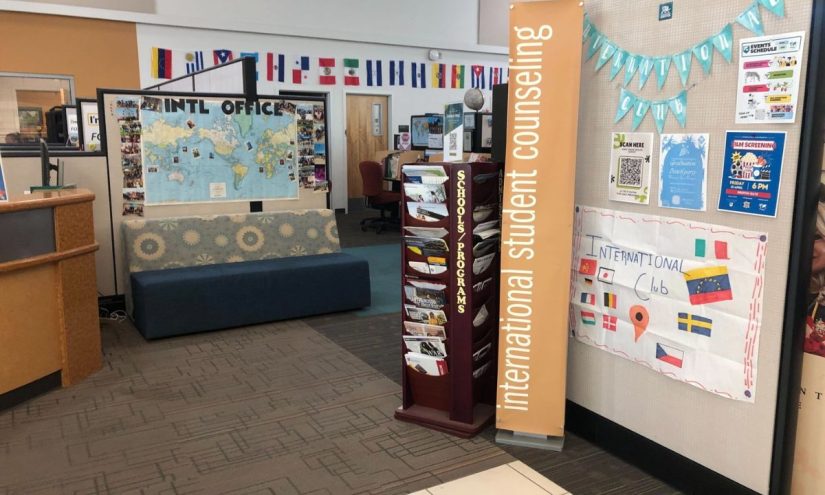
    New international students enrolling at U.S. colleges declined sharply this fall, a concerning development for universities that rely on those students for research, tuition revenue and the diversity they bring to campus culture. It could, however, create more space for U.S. residents at those campuses.

    Enrollments of new international students were down 17% compared to fall 2024, according to a report released Monday by the Institute of International Education, which surveyed more than 800 colleges about their fall 2025 enrollments. The institute, a nonprofit organization based in New York, publishes an annual report that examines the enrollment of international students. 

    The fall data was not broken down by state, so the scale of decline in California is unclear. At USC, which enrolls more international students than any other California college, overall enrollment of international students is down 3% this fall, according to a campus spokesperson. That includes returning and first-time students, so the drop could be much higher for new arrivals. USC this fall enrolls about 12,000 international students, or 26% of its total student population, according to the college. About half of those students are from China. 

    The declines come amid a changing landscape for international students under the Trump administration, which has delayed visa processing, created travel restrictions and pressured some campuses to recruit and admit fewer students from other countries. The colleges surveyed this fall by the institute cited visa application concerns and travel restrictions as top factors in the decline. 

    “We are confronting major headwinds with what I would say are poor policy decisions that the administration is taking. And that is creating a climate for international students that signals that you’re not welcome here,” said Fanta Aw, CEO of NAFSA, a nonprofit for international education and exchange.

    President Donald Trump has said that he wants to lower the number of international students at U.S. colleges to leave more room at those campuses for U.S. students. “It’s too much because we have Americans that want to go there and to other places, and they can’t go there,” he said earlier this year, referencing the number of international students at Harvard and other universities.

    For the full 2024-25 academic year, new international student enrollments were down by 7%, driven by a 15% drop among new international graduate students, compared to 2023-24. However, the number of new undergraduates was up by 5%. Trump took office in January, just before the start of the spring semester at most colleges. 

    In the U.S., students from India were the largest group of international students, accounting for 30.8% of all international students, followed by students from China, with 22.6% of enrollments.

    In the 2024-25 academic year in California, the largest share of international students were from China, and they made up 35.4% of enrollments, followed by students from India at 20.9%. Overall enrollment of international students in California was down 1.1% in 2024-25. 

    USC enrolled the most international students of any California university, followed by four University of California campuses: Berkeley, Los Angeles, San Diego and Irvine. According to the report, the total number of enrolled international students were: 12,020 at Berkeley, 10,769 at UCLA, 10,545 at San Diego, and 7,638 at Irvine.

    Across the state, international students make up about 7% of enrollments at four-year colleges, according to the Public Policy Institute of California. They make up a large share of graduate students, accounting for 31% of graduate students at UC campuses, 15% at private nonprofit universities, and 12% at California State University campuses. 

    Freya Vijay, 20, a third-year student from Canada studying business administration at USC, said she always planned to come to the United States for college. 

    “In terms of business and just the economy, you have Wall Street, you have New York, Chicago, L.A., and San Francisco, all these big cities that dominate what’s going on in the world,” she said. “So immediately, in terms of opportunity, my mind was set on the States.” 

    In addition to visa and travel restrictions, the Trump administration has directly requested — or threatened, as some have called it — California campuses to limit enrollments of international students. The administration’s compact offer to USC last month would have forced the university to cap international enrollment at 15% for undergraduates and limit enrollment from any one country to 5%.

    USC has since rejected the compact, which also would have required the university to make a number of other changes, including committing to “transforming or abolishing institutional units that purposefully punish, belittle and even spark violence against conservative ideas.” 

    Separately, in a settlement proposal to UCLA, the Trump administration calls on the campus to ensure that “foreign students likely to engage in anti-Western, anti-American, or antisemitic disruptions or harassment” are not admitted. UCLA is still in negotiations with the administration and has not yet reached a deal. The Trump administration has charged the campus with antisemitism and civil rights violations. 

    Even amid the turmoil, experts say they expect California universities to continue recruiting international students. Julie Posselt, a professor of education at USC’s Rossier School of Education, noted that at research universities, much of the research is being carried out by international graduate students. 

    “Especially in STEM fields, international students are really central to the research functions of universities,” Posselt said. “Enrolling international students is not optional. It is absolutely a part of the fabric of what makes universities great.” 

    On top of that, colleges have financial incentives to enroll international students. That’s especially true at UC campuses, which charge international students and students from other states much higher rates of tuition than California residents. In the 2026-27 academic year, new international and out-of-state undergraduates at UC will pay nearly $52,000 in tuition, more than triple what in-state students will be charged. Nonresidents in graduate programs also generally pay higher rates than residents.

    Facing pressure from the state Legislature to make more room for California residents, UC in 2017 passed a policy to cap nonresident enrollment at 18%, with a higher percentage allowed for campuses that were already above that mark. But the system still gets significant tuition revenue from nonresidents, including international students, which UC says supports the system’s core operations and helps to lower the cost of attendance for California residents.  

    In a Nov. 10 interview with Fox News, Trump seemed to acknowledge the importance of international students, saying colleges might “go out of business” without them.

    “You don’t want to cut half of the people, half of the students from all over the world that are coming into our country — destroy our entire university and college system — I don’t want to do that,” he said. 

    International students also bring diverse perspectives and “a richness to the campus culture,” said Stett Holbrook, a spokesperson for the University of California system. “That’s something we really appreciate and try to cultivate.”

    At USC, the presence of international students from more than 130 countries means there are “innumerable opportunities at USC to encounter different perspectives” and “experience new cultures,” a spokesperson said in a statement. 

    Vijay, the USC student from Canada, said she regularly boasts about USC to friends, adding that she hopes attending remains an option for other international students. 

    “I always think it’s just such a great opportunity and that no international student should ever take it for granted,” she said. “I wish other internationals could experience it.”

    This story was originally published on EdSource.


    Did you use this article in your work?

    We’d love to hear how The 74’s reporting is helping educators, researchers, and policymakers. Tell us how

    Source link

  • Restrictions on use of NDAs continue to tighten

    Restrictions on use of NDAs continue to tighten

    By luck or judgment two separate regulatory regimes applying in the HE sector came into effect on the same day last month.

    They are condition E6, the new condition of registration imposed by the Office for Students to better protect students from harassment and sexual misconduct, and a revised duty to secure freedom of speech within the law set out in the Freedom of Speech Act 2023.

    Both regimes impose restrictions on the use of non-disclosure agreements (NDAs) by HE institutions. However, their scope is slightly different.

    Condition E6 forbids provisions which have the object or effect of preventing students from “disclosing information about an allegation of harassment and/or sexual misconduct, which in any way involves or affects one or more students” to any other person. These restrictions on NDAs were introduced as free-standing requirements on 1 September 2024.

    The Freedom of Speech Act measures also relate to harassment and sexual misconduct, but the restrictions are not confined to misconduct affecting students. These restrictions extend to NDA provisions in agreements that prevent anyone connected with the institution, including visiting speakers, from disclosing information about a complaint they have made about misconduct to any other person.

    In an ideal world, these two separate regulations would be better aligned, but in practice, institutions will be able to square the circle by following the more onerous of the two provisions in any given situation.

    The regulatory guidance on condition E6 states:

    Although this provision does not apply to other persons, providers should consider the wider requirements of this condition in applying such restrictions to other persons such as staff, and not to inhibit discussion of these issues that might support those who have experienced harassment or sexual misconduct, or allow issues to be aired and properly addressed.”

    This suggests the guidance appears to anticipate the free speech measures. However, somewhat strangely, the issue of NDAs is not mentioned at all in the OfS’s regulatory advice on the free speech duty.

    And there’s more

    As if two overlapping NDA regimes were not troublesome enough, a third is now in sight. Amendments to the Employment Rights Bill in July 2025 (at report stage in the House of Lords) impose new restrictions on confidentiality clauses relating to harassment and discrimination (as defined in the Equality Act 2010).

    Again, the scope of the targeted misconduct (harassment or sexual misconduct) is similar, but these provisions focus on workplace harassment and are confined to restrictions in agreements between workers and employers. There is also the possibility of exceptions being created by regulations, though we don’t know what these would look like yet.

    So, the scope of the restrictions will be narrower than the current legislation universities operate under. However, the range of misconduct covered is wider as it extends to direct and indirect discrimination as well as harassment. Though this does not include breach of the reasonable adjustments duty or victimisation.

    Bringing it all together

    All three sets of restrictions build on existing limits to NDAs.

    First, there are currently provisions that protect whistleblowers from signing gagging clauses that prevent them from making a disclosure. The connection between sexual misconduct and protected disclosures will be made explicit by another proposed measure in the Employment Rights Bill, as it adds disclosure of information about sexual harassment to the list of disclosures qualifying for whistleblower protections.

    Many protected disclosures involve misconduct that is potentially criminal. It is already the case that an NDA will be unenforceable to the extent that it seeks to prevent reporting of a criminal offence to the relevant authorities or cooperating with their enquiries. These rules will be codified in a slightly broader form by provisions in the Victims and Prisoners Act 2024, coming into effect on 1 October 2025.

    Secondly, lawyers involved in the drawing up of confidentiality agreements will be aware of the warning notice from the Solicitors Regulatory Authority, first issued in 2018 and revised in August 2024. The warning notice means it will amount to professional misconduct to draft NDAs that are not legally enforceable, or to obscure limitations in the scope of the confidentiality requirements being lawfully imposed by using obfuscatory drafting.

    There are also broader reputation and compliance issues to consider. As a result, several policy initiatives exist to encourage HEIs to limit or eliminate the use of these agreements. One of the most significant recent developments was the launch in 2022 by Universities UK of a strategic guide to tackling staff-to-student sexual misconduct. The guide considers that the use of NDAs can inhibit the development of a culture which makes this kind of conduct less likely, and says that they should not be used to prevent “reporting parties from speaking out or to restrict what the university might disclose to others.”

    The development of placing limits on NDAs has been piecemeal and inconsistent, but the direction of travel is clear. It is increasingly difficult to use blanket NDAs. Thought needs to be given to the proposed reasons for and the effects of NDAs in relation to any aspect of an HEI’s operations. It will rarely be appropriate to seek NDAs in relation to issues of harassment or sexual misconduct, and other (common) processes and approaches for handling such situations effectively with staff, students, members, visitors, and other stakeholders will be required.

    Source link

  • Trump administration pauses Head Start immigration restrictions

    Trump administration pauses Head Start immigration restrictions

    This audio is auto-generated. Please let us know if you have feedback.

    The Trump administration agreed Friday to temporarily pause enforcement of recent policy changes that restrict some education-related federal programs based on students’ immigration or citizenship status. 

    The agreement, filed in U.S. District Court for Rhode Island, was reached between the parties in a lawsuit brought last week by 20 states and the District of Columbia against multiple federal agencies, including the departments of Education and Health and Human Services. 

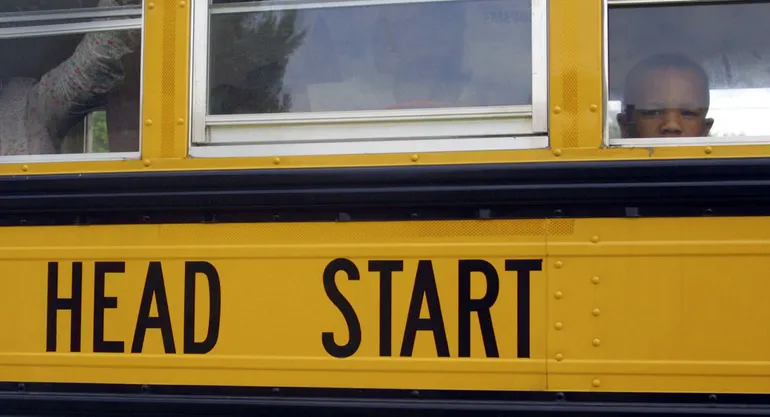
    Under the agreement, Head Start programs in those states won’t be required to verify the immigration or citizenship status of the children they enroll until at least Sept. 3, 2025. HHS, which administers Head Start, previously said the new policy requiring immigration status verification would take effect immediately. 

    The Department of Education, meanwhile, was set to enforce its new restrictions for some immigrants in programs like dual enrollment, adult education and career and technical training programs by Aug. 9. The Friday agreement would delay that by about a month. 

    As part of the agreement, states that sued cannot be held liable for admitting students without proper immigration status into the programs before Sept. 4. That means programs will not be retroactively penalized for enrolling all students regardless of their immigration status, as has been the norm for Head Start for decades. 

    “Today’s stipulation ensures that, for now, critical services will continue without disruption, and that families across New York and the nation will not be punished for seeking the help to which they are lawfully entitled,” the New York Attorney General’s office said in a Friday press release.

    New York led the states filing the original lawsuit, and arguments are expected on or after Aug. 20. The District of Columbia joined the suit as did these states: 

    • Washington
    • Rhode Island
    • Arizona
    • California
    • Colorado
    • Connecticut
    • Hawaii
    • Illinois
    • Maine
    • Maryland
    • Massachusetts
    • Michigan
    • Minnesota
    • Nevada
    • New Jersey
    • New Mexico
    • Oregon
    • Vermont
    • Wisconsin

    The U.S. Department of Education could not be reached for comment in time for publication. 

    Source link

  • 20 states sue over immigration restrictions for Head Start, other programs

    20 states sue over immigration restrictions for Head Start, other programs

    Dive Brief:

    • Twenty states and the District of Columbia sued the Trump administration Monday afternoon, challenging the administration’s decision earlier this month to restrict publicly funded programs — including those related to education — based on immigration status.
    • The lawsuit, led by New York, argues that the restrictions to previously inclusive programs like Head Start will hurt low-income families and lead to the “collapse of some of the nation’s most vital public programs.”
    • Seeking to block the changes in the short and long term, the states allege the U.S. Department of Education and three other federal agencies did not follow the required rulemaking process in issuing new immigration verification requirements.

    Dive Insight:

    In July 10 announcements, the Education Department said it will require immigration status verification for adult education services like dual enrollment and career training programs, while the U.S. Department of Health and Human Services mandated such verification for participation in Head Start programs.

    HHS said at the time that Head Start would be “reserved for American citizens from now on.″ An HHS spokesperson clarified to K-12 Dive on July 10 that children of green card holders will remain eligible for the program and said Head Start agencies will determine eligibility based on the immigration status of the child. Head Start has heretofore been open to any child eligible based on their age or their family’s low-income status, regardless of immigration status.

    However, the lawsuit filed Monday alleges that the policy changes will impact not only undocumented immigrants, but also people holding legal status, such as temporary workers, exchange visitors and those with student visas. The suit was filed in federal district court in the U.S. District Court for the District of Rhode Island.

    The state attorneys general filing the lawsuit also warned that even U.S. citizens and lawful residents could be denied services, since many low-income individuals lack government-issued identification.

    “For decades, states like New York have built health, education, and family support systems that serve anyone in need,” said New York Attorney General Letitia James in a press statement on Monday. “Now, the federal government is pulling that foundation out from under us overnight, jeopardizing cancer screenings, early childhood education, primary care, and so much more.”

    James and the coalition filing the lawsuit said the policies are already “causing significant disruption” as state programs are expected to comply immediately without the infrastructure they say is necessary to do so.

    “Some longstanding providers, including those serving children, pregnant patients, refugees, and other vulnerable populations, will not be able to comply under any timeline and are already facing the risk of closure,” James’ statement said.

    These changes have alarmed civil rights advocates — who say the changes will harm the very low-income children Head Start is intended to serve. The National Head Start Association, which represents Head Start workers, meanwhile, has said the Head Start Act has never required them to check the citizenship or immigration status of children prior to their enrollment in the 60 years of the program’s existence.

    Upon release of the policy change on July 10, the American Civil Liberties Union immediately threatened to expand an existing lawsuit over the Trump administration’s actions vis-a-vis Head Start to include “this new attack on Head Start.” In April, the ACLU filed a lawsuit challenging the administration’s moves to gut Head Start by shuttering half of the regional Office of Head Start offices and laying off much of the federal offices’ staff.

    Plaintiffs in that lawsuit, filed in U.S. District Court in Washington state, include parent groups and the Head Start associations of Washington, Illinois, Pennsylvania and Wisconsin.

    “Implementation of this directive will create fear and confusion for immigrant families about enrolling their children in Head Start regardless of what their legal status may be. This will harm children and destabilize Head Start programs,” said Lori Rifkin, litigation director at the Impact Fund, in a statement on July 10. The Impact Fund, a public interest law group, is representing plaintiffs in the Head Start lawsuit alongside ACLU.

    “If the administration moves forward with publication of this notice, we will take legal action,” RIfkin said at the time.

    The Department of Education has not specified an implementation date for the new restrictions, but has said it “generally” wouldn’t be enforcing them before Aug. 9. HHS said its changes were effective immediately in its July 10 announcement.

    Source link

  • How Major Restrictions Silently Reshape Student Pathways

    How Major Restrictions Silently Reshape Student Pathways

    Title: The Invisible Barrier: How Restrictions on Majors Influence Career Paths

    Source: Strada Education Foundation

    Author: Nichole Torpey-Saboe and Akua Amankwah-Ayeh

    When university departments face increasing demand, many implement additional entry requirements. But this seemingly reasonable practice has far-reaching consequences for equity and workforce development, according to new research from Strada Education Foundation surveying recent college graduates.

    The study found that while 67 percent of recent public four-year institution graduates considered a restricted major, only 50 percent were admitted to one. This gap translates to more than 200,000 students annually deterred from pursuing their preferred field of study—with the impact falling disproportionately on historically marginalized populations. Black graduates (27 percent) and first-generation students (22 percent) did not pursue restricted majors of interest at higher rates than the average graduate (17 percent).

    A notable finding is that major restrictions operate largely outside institutional awareness. For every student formally rejected from a restricted major, four others never apply, deterred by requirements they see as difficult to meet. This “invisible barrier” effect means institutional data captures only a fraction of the impact, making it difficult for institutions to fully assess the effects of these policies.

    These findings align with economic research by Zachary Bleemer and Aashish Mehta that highlights two conclusions. First, major restrictions have tripled the economic value gap between degrees earned by underrepresented minority students and their peers since the mid-1990s. Second, there is no evidence that restrictions improved educational outcomes for excluded students or enhanced the value of restricted majors for those who remained.

    The most common restrictions respondents report are academic performance thresholds: out-of-department GPA requirements (42 percent), in-department GPA thresholds (33 percent), and test score requirements (29 percent). Other barriers include higher costs (15 percent), required work hours (12 percent), wait lists (9 percent), portfolio reviews (8 percent), and auditions (7 percent).

    The research identifies four approaches institutions might consider:

    • Implement bridge programs for underrepresented students in gateway courses for high-demand majors, paired with specialized academic and career advising.
    • Develop alternative credential pathways through certificates, minors, and interdisciplinary programs that provide students access to skills in high-demand fields without major-specific entry barriers.
    • Secure funding, such as through state appropriations, to expand educational resources and capacity in high-demand departments, recognizing these programs’ higher delivery costs as well as their value.
    • Work with industry leaders to secure access to equipment, facilities, guest instructors, and financial support to expand capacity in resource-intensive programs.

    While institutional resource constraints are real, the unintended consequences of major restrictions are reshaping student pathways in ways that affect both equity and workforce development. By implementing thoughtful alternatives, institutions can better respond to student aspirations while addressing workforce needs.

    For more information, read the complete Strada Education Foundation report and Bleemer & Mehta’s economic analysis on how these policies affect long-term wage disparities.

    —Alex Zhao


    If you have any questions or comments about this blog post, please contact us.

    Source link

  • 60 Minutes and Vice President Vance put Europe’s worrying speech restrictions into the spotlight

    60 Minutes and Vice President Vance put Europe’s worrying speech restrictions into the spotlight

    Free speech in Europe is under debate at the moment, and for good reason. For anyone who is concerned about the preservation of free expression on a global scale, the restrictions on speech — including online speech — in countries like the United Kingdom and Germany in recent years have been alarming. 

    I’ve long written about international threats to free expression at FIRE — including in our newsletter, the Free Speech Dispatch — to help Americans better understand the broader state of speech, and how our First Amendment fits into the global stage. The current spotlight on speech restrictions abroad should once again remind us of the value of protecting our rights here at home. 

    Policing the ‘limits’ of Germany’s speech

    A CBS 60 Minutes segment that aired over the weekend is particularly disturbing, both because of the extent to which Germany polices speech and the casual disregard the prosecutors interviewed showed toward freedom of expression. 

    One of the prosecutors, when asked how targets respond to raids — sometimes conducted pre-dawn — of their homes and electronics, said that they are surprised to discover that they have committed a crime. “You have free speech as well, ” Dr. Matthäus Fink said, “but it also has its limits.” 

    Indeed it does, online and off. Just look at how German police and prosecutors have responded to speech that has the potential to offend in recent years. 

    A 64-year-old man is facing charges not just for alleged antisemitic posts, but also for calling a German politician a “professional idiot.” An American writer living in Germany may be sentenced to years in prison for satirically using a swastika to criticize the country’s COVID policies. Berlin police literally cut off the power to a pro-Palestinian conference because of “the potential for hate speech.” Then they shut down a pro-Palestinian protest because they couldn’t be sure if Irish protesters were saying something hateful in a foreign language — better censored than sorry. And what of the arrests of people who share, even unknowingly, a fake quote, because “the accused bears the risk of spreading a false quote without checking it”? Or of the man whose home was raided at dawn for tweeting at a local politician, “You are such a penis”?

    And it’s not only Germany that targets insults of politicians. Just yesterday, news broke that a musician from the band Placebo has been charged with defamation for “contempt of the institutions” after calling Italian Prime Minister Giorgia Meloni a “piece of shit, fascist, racist” during a 2023 music festival.

    Free speech is under threat in Europe, whether it’s online speech, blasphemy, or public protests.

    In case you thought arrests over insults were a fluke, the prosecutors featured by 60 Minutes are here to assure you: That’s the intention, not a byproduct. When interviewer Sharyn Alfonsi asked, “Is it a crime to insult somebody in public?,” all three confirmed it was, with Fink suggesting punishment for online insult could be even more severe “because in internet, it stays there.” Reposts, too, can be criminal. 

    Fink went on to defend prosecutorial action against the man who called a politician a “penis,” suggesting this and similar crass language has “nothing to do with … political discussions or a contribution to a discussion.” The notion that prosecutors should use the power of the state to shape the civility of political discourse should alarm anyone concerned about the state of expression in Germany and online.

    Vance criticizes European leaders’ speech policing

    Last week, Vice President JD Vance gave a much-discussed speech about “shared values” at the Munich Security Conference. In it, Vance took European leadership to task over censorship of conservative and religious speech, particularly in the UK. “Free speech, I fear, is in retreat,” Vance said. 

    The speech prompted pushback from European officials who objected to Vance’s diagnosis. Business Secretary Jonathan Reynolds, for example, said in response to Vance’s discussion of religious speech, “let’s be clear, we don’t have blasphemy laws in the UK.”

    That isn’t so clear at all. 

    In just the past few months alone, the UK managed to have multiple blasphemy controversies. (Not to mention the UK’s many other recent free speech woes covered in FIRE’s Free Speech Dispatch, which are too numerous to discuss in full here.) 

    In November, the Advertising Standards Authority banned comedian Fern Brady from using an advertisement for her stand-up tour that depicted Brady as the Virgin Mary because it could cause “serious offence” to Christians. Then Member of Parliament Tahir Ali called on Prime Minister Keir Starmer to create “measures to prohibit the desecration of all religious texts and the prophets of the Abrahamic religions” — also known as a blasphemy law.

    And early this month, Greater Manchester Police arrested a man “on suspicion of a racially aggravated public order offence” for publicly burning a Quran. An assistant chief constable said police “made a swift arrest at the time and recognise the right people have for freedom of expression, but when this crosses into intimidation to cause harm or distress we will always look to take action when it is reported to us.” 

    Harm? Distress? These concepts are vast enough to fit the entirety of Big Ben. It is, as writer Kenan Malik puts it, “a form of blasphemy restriction but in secular garb.”

    Labour Deputy Prime Minister Angela Rayner is also establishing a council to create an official government definition of Islamophobia. Depending on the council’s ultimate definition, and whether and how it is used by government agencies to respond to Islamophobia, it could implicate UK citizens’ ability to speak freely about important religious issues. (As FIRE has written repeatedly in the context of the International Holocaust Remembrance Alliance’s definition of anti-Semitism in the U.S., codification of these definitions into official policy can risk punishment or chilling of protected speech about political and religious matters.) 

    Outside of the UK, Europe’s restrictions on blasphemy are growing — and show no signs of stopping. Indeed, the Manchester man arrested for burning a Quran did so in response to the Jan. 29 assassination in Sweden of Iraqi refugee Salwan Momika, known for his well-publicized and controversial public Quran burnings. Just after Momika’s killing, a Swedish court found Salwan Najem, another Iraqi refugee who burned Qurans with Momika, guilty of incitement against an ethnic group. Momika faced similar charges, which were only dropped upon his death.

    The United Nations Human Rights Council encourages these kinds of prosecutions, passing a 2023 resolution advising countries to “address, prevent and prosecute acts and advocacy of religious hatred.” Denmark did so, enacting a law criminalizing desecration of holy texts later that year. 

    Vance’s support of speech abroad is undermined by Trump admin’s early censorship efforts

    Free speech is under threat in Europe, whether it’s online speech, blasphemy, or public protests. But it simply isn’t possible to square Vance’s criticism of European censorship with the recent actions of the administration in which he serves.

    In his speech, Vance said “there is a new sheriff in town” and “under Donald Trump’s leadership, we may disagree with your views, but we will fight to defend your right to offer them in the public square.” Vance also objected to “shutting down media.” 

    Has Vance checked in on what the sheriff is doing? 

    The president is directly targeting people for their speech, which frustrates the United States’ ability to credibly — and rightfully — advocate for free speech on the world stage. Take, for example, the White House’s decision last week to indefinitely bar the Associated Press from spaces including the Oval Office and Air Force One over its failure to adopt the government-preferred term “Gulf of America.” Press Secretary Karoline Leavitt confirmed that the White House was punishing what it deems misinformation, saying that “if we feel that there are lies being pushed by outlets in this room, we are going to hold those lies accountable.” In his speech, Vance criticized the Biden administration for “threaten[ing] and bull[ying]” private companies into censoring “so-called misinformation.”

    Vance, however, is aware of the AP decision — and supports it. In response to journalist Mehdi Hasan’s post asking Vance if he’d seen the ban, he wrote yesterday afternoon: “Yes dummy. I think there’s a difference between not giving a reporter a seat in the WH press briefing room and jailing people for dissenting views. The latter is a threat to free speech, the former is not. Hope that helps!”

    That’s rationalizing censorship. 

    He’s right that banning a journalist from press events isn’t the same as imprisoning them. Obviously some punishments are worse than others, but any punishment based on a journalist’s viewpoint is a free speech violation. As my colleague Aaron Terr explained last week, explicitly barring a news outlet on the basis of viewpoint — and its failure to adopt the state’s preferred terminology — is a serious threat to free speech, one Americans should oppose regardless of who is in the Oval Office.

    Vance also said in Munich, “Speaking up and expressing opinions isn’t election interference.” He’s right. There is perhaps no one who needs to hear that message more than President Donald Trump, who praised Vance’s speech but is nevertheless suing Iowa pollster J. Ann Selzer for her polling in the 2024 election — calling it “election interference.” (FIRE represents Selzer.) 

    FIRE’s defense of pollster J. Ann Selzer against Donald Trump’s lawsuit is First Amendment 101

    News

    A polling miss isn’t ‘consumer fraud’ or ‘election interference’ — it’s just a prediction and is protected by the First Amendment.


    Read More

    Another member of the Trump administration, Elon Musk, separately called this weekend for journalists at 60 Minutes to receive “a long prison sentence” for “deliberate deception to interfere with the last election,” referring to the journalists’ editing of an interview with then-Vice President Kamala Harris, not the segment on Germany’s online speech policing. Instead, hours later, he shared a clip of that segment with the caption, “Thank the Lord that America has freedom of speech!”

    Elected officials should press their colleagues around the world to stand by the values of free expression. Vance’s articulation of those rights is necessary. But being effective requires credibility. That’s why FIRE believes our commitment to nonpartisanship, and our dedication to defending the right to speak regardless of preference or popularity, is our most important value. 

    If we undermine these freedoms at home, it’s harder to advocate them abroad to an already skeptical body politic. 

    Source link