Tag: restricts

  • Education Department Rule Restricts Public Service Loan Forgiveness Eligibility

    Education Department Rule Restricts Public Service Loan Forgiveness Eligibility

    File photoThe Department of Education announced a new rule that would allow the agency to exclude certain nonprofit and government employers from the Public Service Loan Forgiveness program, targeting organizations that “engage in specific enumerated illegal activities” or do not align with the current administration’s priorities.

    The rule, which was published Friday in the Federal Register, grants Education Secretary Linda McMahon unilateral authority to determine which organizations are ineligible for the program. It takes effect July 1, 2026.

    According to critics, the rule could disqualify employees of sanctuary jurisdictions and nonprofit organizations that provide immigrant family support, gender-affirming care, diversity and equity programs, or assistance to protesters exercising First Amendment rights.

    The Public Service Loan Forgiveness program was established by Congress in 2007 on a bipartisan basis. Under the program, federal, state, local and tribal government employees, as well as workers for 501(c)(3) nonprofit organizations, can have their remaining federal student loan debt forgiven after making 10 years of qualifying payments while working in public service. More than one million workers have received loan forgiveness through the program to date.

    Two advocacy organizations, Democracy Forward and Protect Borrowers, issued a joint statement committing to challenge the rule in federal court.

    “This is a direct and unlawful attack on nurses, teachers, first responders, and public service workers across the country,” the organizations said. “This new rule is a craven attempt to usurp the legislature’s authority in an unconstitutional power grab aimed at punishing people with political views different than the administration’s.”

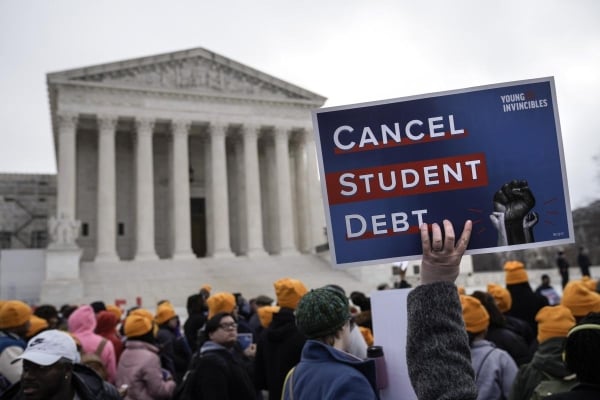
    Alexander Lundrigan, Higher Education Policy and Advocacy Manager at Young Invincibles, called the changes “illegal” and “politically motivated.”

    “The administration cannot unilaterally rewrite a program that was passed into law by Congress,” Lundrigan said. “PSLF eligibility is defined by law, not political ideology.”

    Jaylon Herbin, director of federal policy at the Center for Responsible Lending, agrees, adding that the regulation “is the latest in a long list of cruel tricks imposed on workers and groups who hold views or serve people this administration doesn’t like.”

    He added that the restrictions “will consign millions of student borrowers to decades of unaffordable debt repayment and will worsen existing shortages of teachers, police and emergency services workers, and nonprofits who help local residents thrive and contribute to building vibrant, economically resilient communities.”


    Source link

  • Ohio State Restricts Decorations in Public Dorm Spaces

    Ohio State Restricts Decorations in Public Dorm Spaces

    Ohio State University has advised resident advisers to restrict all dorm floor and common room decor—as well as welcome programming for incoming students—to “Ohio State spirit themes” to avoid offending or alienating students. That means motifs like “retro video games and SpongeBob” motifs, which one outraged former RA on Reddit said they decorated with, won’t be allowed. 

    The move comes partly in response to SB1, a higher ed law Ohio passed in March that prohibits DEI, requires institutions to “demonstrate intellectual diversity” and mandates institutional neutrality on “controversial” subjects such as climate change, electoral politics, foreign policy, immigration, marriage and abortion.

    “SB1 was certainly a factor, but our goal is to create an open and welcoming environment for all students … including in our residence halls, as we build community throughout our spaces and programming,” Dave Isaacs, OSU communications and media relations manager, said in a statement shared with Inside Higher Ed. “And this was discussed with RAs during their orientation for the position.”

    Move-in activities are also required to be Buckeye-themed, including “necklace making and mug decorating,” the statement said.

    Students took to Reddit to pan the new decorating rules, with one commenter posting, “SB1 and university leadership has sucked the life out of literally everything.”

    “There were no comments supporting Ohio State’s decision,” the student newspaper, The Lantern, noted. “However, one user called on students to protest the state and national government over these decisions, rather than Ohio State’s administration.”

    Source link

  • U of Utah Urges Compliance After State Restricts Pride Flags

    U of Utah Urges Compliance After State Restricts Pride Flags

    A University of Utah lawyer last week urged faculty to comply with the state’s new prohibition on the “prominent“ display of pride flags and other flags on campus, The Salt Lake Tribune reported.

    Deputy general counsel Robert Payne urged faculty in a meeting not to “be a lightning rod to the Legislature” and said state lawmakers “have a lot of power over us,” the newspaper reported. Payne also suggested that if employees tried to get around the law by hanging pride posters instead of flags, legislators might “come back with something worse,” the Tribune reported.

    Utah’s Republican-controlled Legislature passed House Bill 77 last month, and Gov. Spencer J. Cox, a Republican, let it become law without signing or vetoing it. When it takes effect May 7, it will ban government entities, including public colleges and universities, from displaying flags on government property “in a prominent location.” Some flags are exempted, such as the U.S. flag and the prisoner of war/missing in action flags.

    Trevor Lee, a Republican Utah House member and HB 77’s chief sponsor, told Inside Higher Ed he didn’t file the legislation specifically to ban pride flags. But “that’s just been the biggest, biggest issue of any political flag,” he said. “I mean, it’s not even close.”

    Lee said the flags go beyond representing inclusivity. He said, “It’s a sex flag. It tells everyone what sexual ideology you believe in.”

    The University of Utah has released guidance online saying the law generally bans pride flags, Juneteenth flags and others from prominent locations. The guidance notes exemptions, including that students and employees can “wear or carry a flag as a personal expression of free speech,” and that employees can decorate their offices with flags “so long as they are not easily visible outside of their personal space (e.g., posted in an office window).”

    Payne said the university hasn’t yet decided how it will enforce the flag ban, according to the Tribune. The university’s guidance says, “Flags may also be used as decorations in connection with a brief cultural celebration hosted by the university within a university building,” but can’t be up for more than a week. It’s unclear whether pride will be considered a cultural celebration.

    Source link

  • Trump order restricts PSLF eligibility for certain nonprofits

    Trump order restricts PSLF eligibility for certain nonprofits

    Drew Angerer/Getty Images

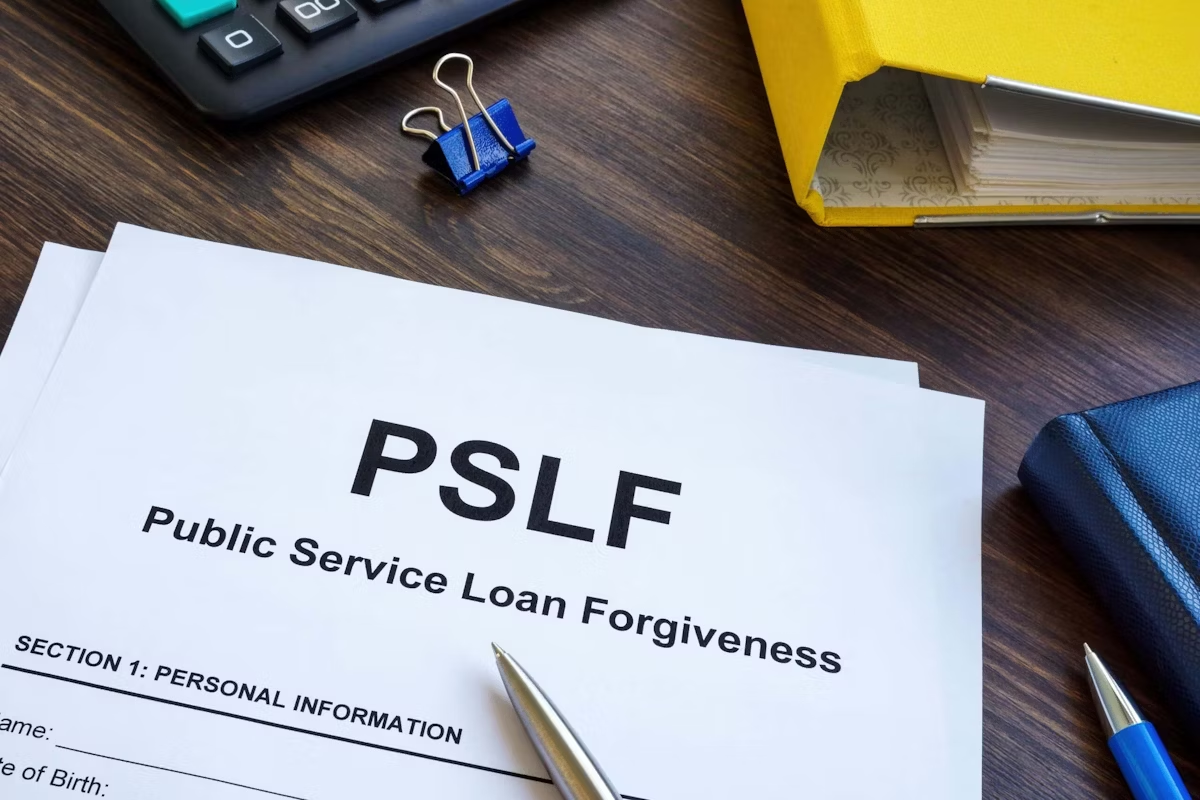
    In his latest executive action, President Donald Trump directed the Education Department to limit eligibility for the Public Service Loan Forgiveness program.

    The order, issued late Friday evening, would require the Education Department to go through a complex and lengthy process known as negotiated rule making, so the directive doesn’t change anything immediately. And Education Secretary Linda McMahon pledged at her confirmation hearing that PSLF will not be eliminated completely, as “that’s the law.” However, the changes could lead to the denial of student loan forgiveness for thousands of nonprofit employees.

    The administration argued the order was a necessary step to “restore the program” and end the subsidization of “illegal activities” such as “illegal immigration, human smuggling, child trafficking, pervasive damage to public property, and disruption of the public order.”

    But Democrats and debt relief and consumer protection advocates say it’s another attempt to weaponize the federal government and block funds from reaching public servants in fields the president disagrees with.

    “Don’t be fooled, today’s executive order is blatantly illegal,” Mike Pierce, executive director of the Student Borrower Protection Center, said in a statement Friday. “It is an attack on working families everywhere and will have a chilling effect on our public service workforce doing the work every day to support our local communities.”

    Like Trump’s other executive orders, this directive is likely to face legal challenges.

    Congress created the PSLF program in 2007 with bipartisan support under former president George W. Bush. It was designed to incentivize Americans to work in public service, by promising student loan forgiveness to federal, state, local or tribal government staff members; civilians working in the military; and the employees of certain nonprofit organizations after they make 10 years of qualifying payments on an approved federal loan repayment plan.

    Historically, recognized nonprofits have included emergency management and crime-reduction services, public interest and civil rights legal groups, and institutions of public health and education. More than two million borrowers are eligible for the program, according to December data from the Education Department, the Associated Press reported.

    But gaining access to the program’s benefits hasn’t always been easy. In 2019, during the first Trump administration, the American Federation of Teachers sued then–education secretary Betsy DeVos, alleging “gross mismanagement” of the program. Data showed that of the roughly 76,000 applications submitted between 2017 and the filing of the lawsuit, only about 1 percent had been approved.

    Although the department reached a settlement in fall 2021 and committed to reconsider every application it denied, when the first Trump administration exited office, only 7,000 Americans had received forgiveness. Comparatively, the Biden administration prioritized making the program easier to access and provided more than $74 billion in relief to more than one million borrowers over the course of four years.

    Now, under the new stipulations, fewer borrowers could see relief, advocates said.

    “The PSLF Program has misdirected tax dollars into activist organizations that not only fail to serve the public interest, but actually harm our national security and American values, sometimes through criminal means,” the order says. “The Secretary of Education shall propose revisions … that ensure the definition of ‘public service’ excludes organizations that engage in activities that have a substantial illegal purpose.”

    According to the order, activities that would disqualify a nonprofit include: aiding or abetting violations of federal immigration laws, supporting terrorism, engaging in violence for the purpose of obstructing federal policy, the chemical and surgical castration or mutilation of children “or the trafficking of children to so-called transgender sanctuary States for purposes of emancipation from their lawful parents,” and aiding and abetting illegal discrimination.

    Although the president didn’t say so directly, experts interpret the order as yet another attempt to discourage activism and chill efforts Trump disagrees with, such as diversity, equity and inclusion; LGBTQ+ advocacy; pro bono defense for undocumented immigrants; and Palestinian statehood.

    Representative Tim Walberg, a Republican from Michigan and chair of the House Committee on Education and the Workforce, praised the president’s intentions in a statement, saying President Trump is protecting Jewish students from “the hatred they’ve been enduring” on college campuses.

    “Federal dollars shouldn’t fund antisemitism,” he said. “President Trump is stepping up by preventing these activists from receiving windfalls in forgiveness benefits footed by taxpayers.”

    Senator Patty Murray, a Democrat from Washington and former chair of the Health, Education, Labor and Pensions Committee, says Trump is “holding resources owed to hardworking Americans hostage.”

    “President Trump is once again trying to use his office to force his extreme political views on the American people by choking off promised relief for people who’ve served our country in ways he disagrees with,” she said. “It is as outrageous as it is un-American.”

    But the Trump administration says the order is about more than just preventing “subsidized wrongdoing.” In his view, it’s also a matter of limiting “perverse incentives” for higher education institutions.

    Rather than alleviating worker shortages, the president said, PSLF encourages colleges and universities to increase the cost of tuition and load students in “low-need majors” with “unsustainable” debt.

    To that, debt-relief advocates like the Student Debt Crisis Center say, “Public service workers are the backbone of this country.”

    “This executive order is both illegal and deeply troubling for all nonprofit workers,” SDCC president Natalia Abrams said in a statement. “Relentless political attacks on education and existing programs are not just policy decisions—they disrupt the lives and financial stability of Americans with student debt and their families. This must stop.”

    Source link