Tag: revealed

  • England’s international fee levy under fire after details revealed

    England’s international fee levy under fire after details revealed

    Critics of the policy – now subject to consultation – say the levy will only heap more pressure onto an already creaking higher education network. At present, only England’s universities will be subject to the charge, as the Office for Students, which will manage the charge, only regulates English institutions.

    Official modelling predicts that the change, set to come in from August 2025, will cost universities an annual £330 million. However, under the proposals, each provider will receive an annual allowance to cover their first 220 international students – a move that’s made smaller and specialist institutions breathe a sigh of relief.

    But for larger universities with high numbers of international students, the picture isn’t so rosy.

    Gary Davies, pro vice-chancellor of London Metropolitan University, told The PIE News the levy would have a detrimental effect on his institution despite being brought in as a flat fee.

    “For us the levy means a cut in funding for the very students the levy proposes to support. It will impact what we can offer in relation to student hardship, careers advice, scholarships for underrepresented students,” he said.

    Diana Beech, director of the Finsbury Institute at City St George’s, said the details of the policy had been “buried in the Treasury’s Red Book” – largely dodging coverage by the mainstream media.

    “This begs the question: why undermine one of the UK’s strongest export sectors without even gaining political credit for it – whether that’s by framing the levy as a tough stance on immigration or as a much-needed boost for disadvantaged students,” she asked.

    “By going about this policy in such a hush-hush way, the levy will simply tax legitimate, highly skilled migration under the radar and heap further pressure on universities already in financial distress. Worse still, fixing it as a flat £925 fee per student risks hitting those institutions least able to absorb the cost, given the lack of price elasticity outside the elite end of the sector.”

    Why undermine one of the UK’s strongest export sectors without even gaining political credit for it?
    Diana Beech, City St George’s

    University Alliance CEO Vanessa Wilson warned the levy risked “denting [the] success story” of UK international education – even if the cash raised would go towards a goo cause like domestic maintenance grants.”

    Wilson said the move would hit universities hard, and pressed for a full assessment of the levy’s effects on higher education institutions before its proposed implementation in 2028.

    “Alongside this, the government must explore further ways to soften the blow for professional and technical universities, such as cutting costly regulation and reviewing their participation in the Teachers’ Pension Scheme, which some universities are legally obliged to offer at increasingly expensive contribution rates,” she added. 

    Malcolm Press, president of Universities UK, pointed out that the UK’s international fees are already high. As a result of the proposed levy, he predicted, English universities would either have to reduce cross-subsidies that support teaching and research, or raise international fees further – which could drive down international student numbers and therefore force institutions to reduce domestic places.

    The irony of the levy – which will be used to fund maintenance grants for disadvantaged British students – actually reducing places for home students has been raised before. An analysis by the think tank Public First predicted the levy could shrink domestic places by 135,000.
    Source link

  • The PIEoneer Awards 2025: winners revealed

    The PIEoneer Awards 2025: winners revealed

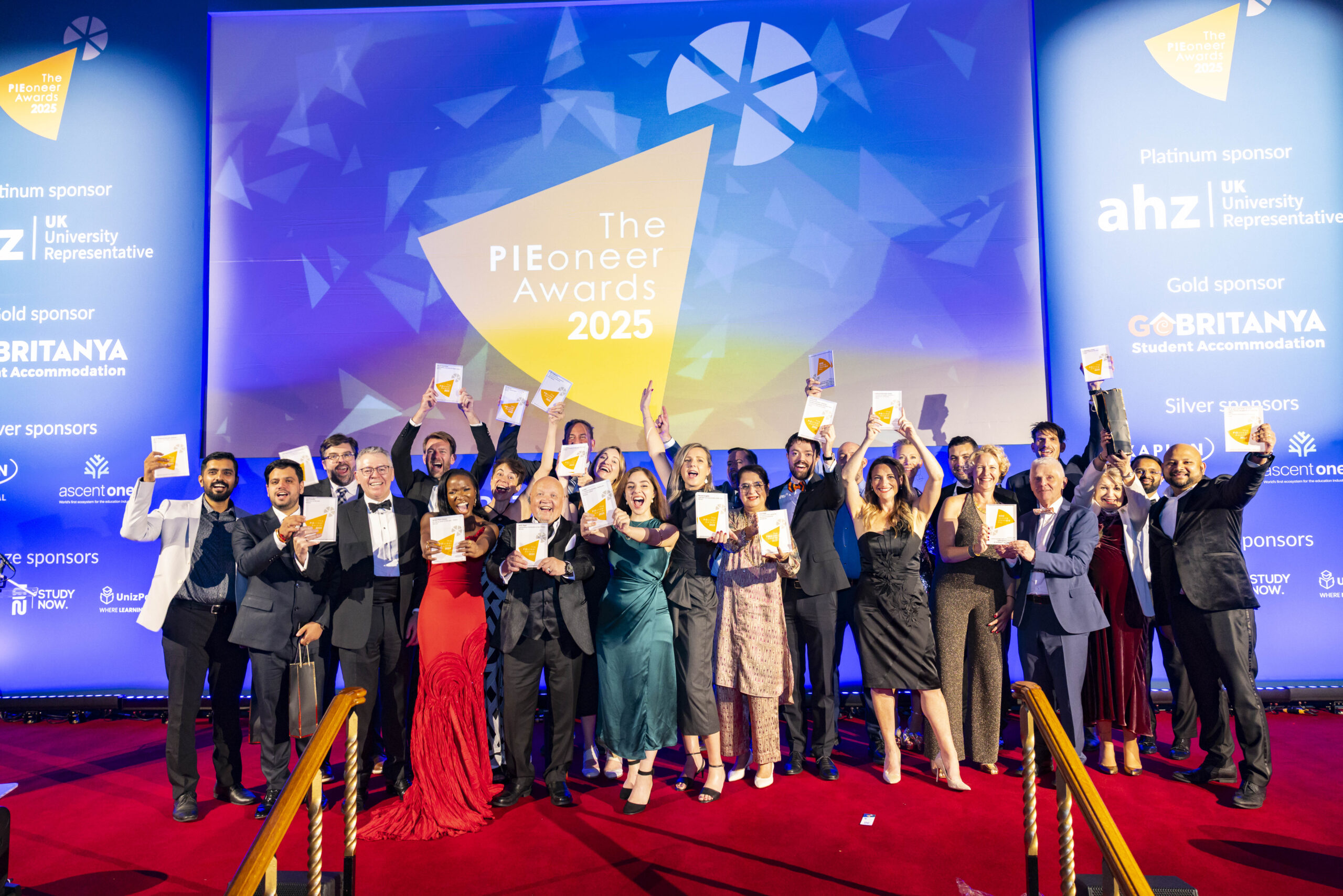
    Winners across 21 categories were announced at a glamorous gala hosted at the historic Guildhall in London, with many more entrants recognised as highly commended for their outstanding achievements and contributions to global education over the past year.

    “It feels as though the quality of The PIEoneer Award entries improves every year, and 2025 has been no exception,” commented The PIE’s editor, Beth Kennedy.

    A distinguished judging panel – representing a wide range of expertise and international backgrounds – sought out individuals and organisations redefining excellence and driving progress in global education.

    “We, and our panel of judges, were truly blown away by this year’s finalists. It’s been another challenging year for the international education sector, but their hard work, innovation and drive to make life better for international students has been truly inspiring – a sign that our community is set to thrive for many years to come,” continued Kennedy.

    In keeping with its commitment to sustainability, The PIE once again rolled out the green carpet, encouraging attendees to wear pre-loved outfits and showcase eco-friendly glamour.

    This year, the Sustainability international impact award went to the International Education Sustainability Group (IESG) with QS Quacquarelli Symonds and the University of Exeter highly commended for their Future17 SDG Challenge.

    The coveted PIEoneer of the year award recognised EasyTransfer for its efforts in simplifying global tuition payments for over 800,000 students in
    more than 170 countries.

    Each year, The PIE recognises an individual for their Outstanding contribution to the industry and this year Keith Segal, president and CEO at Guard.me, was recognised for his work in international education over the last three decades.

    It’s been another challenging year for the international education sector, but their hard work, innovation and drive to make life better for international students has been truly inspiring
    Beth Kennedy, The PIE

    The full list of winners and highly commended for the 2024 PIEoneer Awards are:

    • Business school of the year: UC Business School, New Zealand
      Highly commended: Leicester Castle Business School (LCBS), De Montfort University, United Kingdom
    • Championing diversity, equity and inclusion award: Jusoor, Global
      Highly commended: Edward Consulting, Nigeria
    • Digital innovation of the year – learning: Seenaryo, United Kingdom
      Highly commended: My Speaking Score – Real-Time TOEFL® Speaking Insights, Canada
    • Digital innovation of the year – student recruitment: VisaMonk – AI Powered Visa Interview Prep Platform, India
      Highly commended: Platty – Innovative Online Government Student Management Platform, Australia & Gyanberry – AI Powered Medical Admissions Platform, United Arab Emirates
    • Emerging leader of the year: Bimpe Femi-Oyewo, Nigeria
      Highly commended: Ricardo Tavares, United Kingdom
    • Employability international impact award: Virtual Internships, United Kingdom
      Highly commended: Wayble, Canada & PeopleCert / PeopleCert Accredited Academic Partner Program, United Kingdom
    • Excellence in data and insight: Beyond enrolment: Tracking international graduate outcome data, Netherlands
      Highly commended: Voyage’s Social Source, Australia
    • International alum of the year: Adityakumar Shrimali, India, London College of Fashion, University of the Arts, London and International Students House, London, United Kingdom
      Highly commended: Chenai Dunduru, Zimbabwe, Torrens University, Australia
    • International student recruitment organisation of the year: Keystone Education Group, Global
      Highly commended: NCUK, United Kingdom
    • Language training provider of the year: Discover English, Australia
      Highly commended: International House Yangon-Mandalay, Myanmar
    • Marketing campaign of the year: FPT University, Vietnam, STEM education in the age AI
      Highly commended: Queen’s University Belfast & PingPong Digital, United Kingdom, Bridging Research & Reputation: Queen’s Inspiring Experts Campaign in China
    • Membership organisation of the year: AIRC: The Association of International Enrollment Management, United States
      Highly commended: AIEA, United States
    • Outstanding contribution to the industry: Keith Segal, Guard.me, Canada
    • PIEoneer of the year: EasyTransfer, United Kingdom
      Highly commended: Global Seal of Biliteracy, United States
    • Progressive education delivery award: Kruu Edutech Private Limited, India & Global Cities, Inc., a Program of Bloomberg Philanthropies, United States
      Highly commended: Real Madrid Global Sports Management, Summer Discovery, United States
    • Public / Private partnership of the year: ISDC, Jain University, GOAL Guyana and SQA, ISDC, United Kingdom, GOAL – Guyana Online Academy of Learning, Guyana
      Highly commended: International student higher education recruitment, marketing and admissions support, Kaplan International, United Kingdom, Arizona State University, United States & University of Greenwich and Studiosity – A multi-year partnership, Studiosity, United Kingdom, University of Greenwich, United Kingdom
    • Secondary school international innovation: USAP Community School, Zimbabwe
      Highly commended: German European School Singapore (GESS), Singapore
    • Student support award: IES Abroad, United States
      Highly commended: KI Student Grief Network and Mindfulness-based Resilience, United Kingdom & Shorelight – The Shorelight Center for Academic Success (CAS), United States
    • Study abroad and exchange experience of the year: Coventry University Immersive Telepresence In Theatre (Romeo and Juliet Online), United Kingdom
      Highly commended: Think Pacific, United Kingdom
    • Sustainability international impact award: International Education Sustainability Group (IESG), Global
      Highly commended: Future17 SDG Challenge by QS Quacquarelli Symonds and the University of Exeter, Global
    • The Charlene Allen award for inspirational leadership: Kris Holloway, United States & Sonya Singh, India
      Highly commended: Miri Firth, United Kingdom

    The PIEoneer Awards will return to the Guildhall in September 2026 for its 10th anniversary.

    Source link

  • New vice-chancellor of Adelaide revealed – Campus Review

    New vice-chancellor of Adelaide revealed – Campus Review

    Professor Nicola Phillips has been revealed as the vice-chancellor of the new Adelaide University ahead of its opening next year.

    Please login below to view content or subscribe now.

    Membership Login

    Source link

  • Colorado reversal on misgendering ban is a crisis averted but a danger revealed

    Colorado reversal on misgendering ban is a crisis averted but a danger revealed

    Colorado just dodged a constitutional bullet. Not a legislative win so much as a near-miss.

    The Kelly Loving Act, named after a trans person killed in the Club Q mass shooting in Colorado Springs in 2022, started out as a sweeping and constitutionally suspect bill aimed at protecting transgender individuals from discrimination, but trampling the First Amendment in the process.

    The bill would have classified misgendering and deadnaming in certain contexts as unlawful under the Colorado Anti-Discrimination Act. Its most controversial provision said that if a parent doesn’t use their child’s preferred pronouns, that must be considered “coercive control” in any custody dispute. This would have negatively impacted a parent’s case for custody of their child, regardless of any other context.

    The original bill would have also required parents, journalists, business owners, and educators to use people’s chosen names and pronouns in every piece of public-facing content, from news articles to school newsletters.

    But the Constitution protects the right to call others by any name or pronoun under the sun, even if it causes hurt or offense. Forcing people to use particular language, even with the intention of inclusivity, is compelled speech, and the First Amendment generally forbids it.

    The test of a free society is not how well it protects popular speech, but how well it protects speech that others find uncomfortable or even offensive.

    This important principle also protects the rights of people in states whose government officials would seek to require that people be deadnamed and misgendered, or prohibit other expression in support of trans or queer causes. The First Amendment blocks that kind of speech restriction as well.

    Of course, any speech, including declining to use a child’s preferred pronouns, can be part of a broader pattern of abuse that would be appropriate to consider in decisions about the custody of children. The problem was that the bill automatically counted this speech as a legal mark against parents, regardless of any further context. This served to effectively force all parents to adopt the state’s preferred speech, lest they one day face a custody battle and risk losing their children because of it.

    Another concern was that the Kelly Loving Act included “pre-publication requests” for publishers to use preferred names and pronouns, signaling that the law may be used against journalists simply for quoting a legal name in a criminal proceeding or publishing information already in the public domain that contradicts someone’s preferences or identity. This raised serious concerns that the law could chill legitimate journalistic expression and infringe on press freedoms protected by the First Amendment.

    Thankfully, its sponsors stripped all three provisions — misgendering, deadnaming, custody — out before the state senate approved the bill this week.

    Colorado’s lawmakers did the right thing by cutting these provisions. But we should still reflect on what happened because while the final bill is harmless, the impulse behind it is not.

    There are those in America who believe the state should address speech they oppose by compelling citizens to use approved words, or forbidding them from using disapproved words. This goes beyond political correctness to coercive control, to use a familiar term.

    The right is no stranger to this kind of behavior either. Florida’s Stop WOKE Act, which aims to control what can or cannot be said about race and gender in classrooms and workplaces under the guise of anti-discrimination law, is no better. After FIRE filed a lawsuit challenging the law, a federal court halted enforcement of key parts of it.

    If you think it’s dangerous for Florida’s legislators to have the power to police speech in public school classrooms, then you should find it equally outrageous for Colorado legislators to try to mandate what pronouns parents can use with their own children in their own homes or journalists can use when reporting stories.

    When a state starts dictating which words are acceptable in public discourse and private discussion, it jumps headlong into the culture wars, telling everyone to fall in line or face the consequences.

    Sadly, this is nothing new. Milton, Locke, and Voltaire all warned against the dangers of governments trying to manage thought. In Areopagitica, Milton argued for the liberty to know and argue freely “above all liberties.” In our wisdom, we Americans took note and enshrined this liberty in our First Amendment, understanding it is the one that protects the rest.

    In A Letter Concerning Toleration, Locke eloquently wrote “the care of souls is not committed to the civil magistrate, any more than to other men.” In other words, the state has no business telling you what to think or say any more than your fellow citizens.

    That is not how a free society operates, and that is why in West Virginia v. Barnette, the Supreme Court famously struck down a rule requiring students to salute the flag. In the words of Justice Robert H. Jackson, “If there is any fixed star in our constitutional constellation, it is that no official, high or petty, can prescribe what shall be orthodox in politics, nationalism, religion, or other matters of opinion.”

    Thankfully, we live in a country where the government doesn’t get to tell you what you have to say or what you must believe. The test of a free society is not how well it protects popular speech, but how well it protects speech that others find uncomfortable or even offensive.

    The revisions to this bill should be counted as a victory for the good people of Colorado. But we should also be concerned this was such a close shave in the first place because it indicates a dangerous impulse lurking in our culture. If people want to lead on inclusion, they must do so by persuasion, not coercion.

    Source link