The University of Wollongong (UOW) and Western Sydney University (WSU) have confirmed job cut numbers, with a combined 351 staff to be cut from the institutions.
Please login below to view content or subscribe now.
Membership Login


The University of Wollongong (UOW) and Western Sydney University (WSU) have confirmed job cut numbers, with a combined 351 staff to be cut from the institutions.
Please login below to view content or subscribe now.
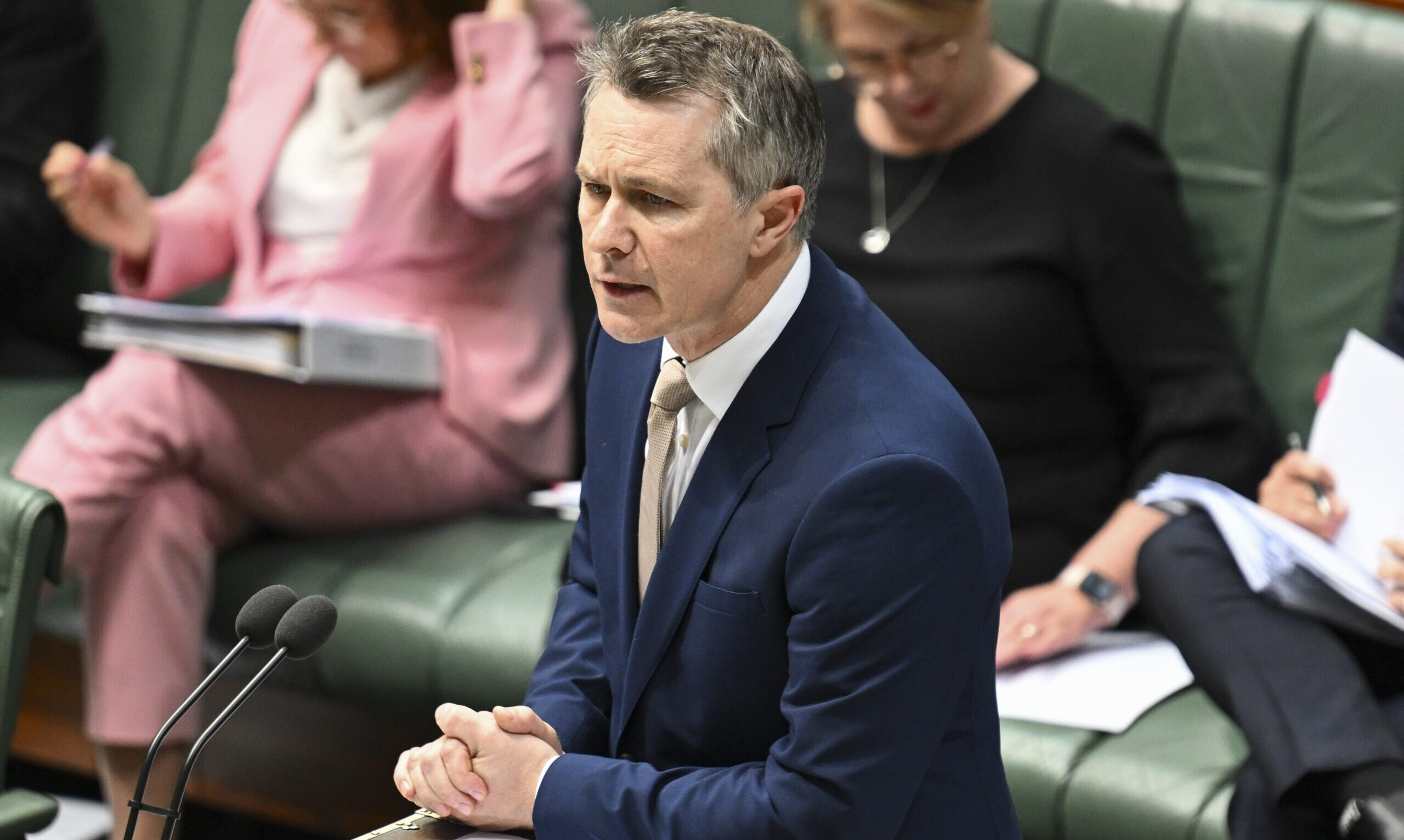
The National Higher Education Code to Prevent and Respond to Gender-based Violence passed through Parliament on Monday.
Please login below to view content or subscribe now.
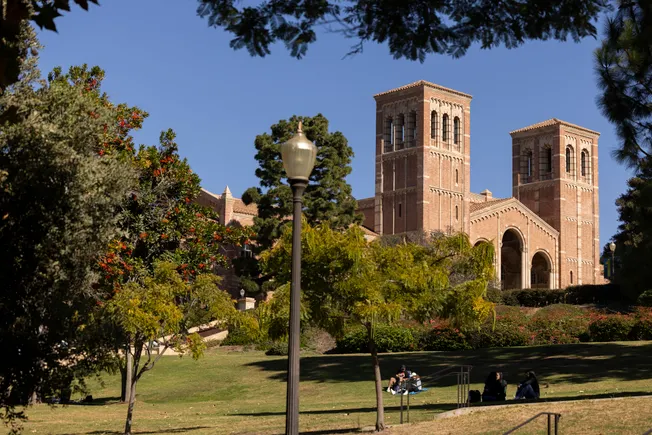
A federal judge struck down the U.S. Department of Education’s Feb. 14 guidance that threatened to revoke federal funding for colleges and K-12 schools that practiced diversity, equity and inclusion efforts it considers illegal. In her decision, the judge ruled that the guidance unconstitutionally put viewpoint-based restrictions on academic speech and used overly vague language about what was prohibited.
The number of international student visas the U.S. Department of State has revoked so far this year. The agency terminated between 200 and 300 of the visas over allegations of support for terrorism, a spokesperson said.

Universities should offer shorter, cheaper and more accessible courses that recognise prior learning to help boost Australia’s productivity, Canberra’s economic roundtable has agreed.
Please login below to view content or subscribe now.

A new report has found that clerical and administrative workers, telemarketers, salespeople, receptionists and programmers are the most likely to face work changes caused by generative artificial intelligence (gen AI).
Please login below to view content or subscribe now.

Deputy vice-chancellor of cooperation and innovation at Sweden’s Halmstad University Kristian Widen explained how market forces like IKEA changed the country’s higher education system.
Please login below to view content or subscribe now.

As budget cuts continue to ripple across the education sector, many institutions are being forced to reassess how they manage their workforce. From widespread restructures to heavier workloads, staff are feeling the strain.
Some academics are now working the equivalent of nine-hour days, 365 days a year. At the same time, some institutions are making difficult staffing decisions in response to multi-million dollar funding gaps.
These pressures are compounding existing workforce challenges. Human resource (HR) and payroll teams are navigating complex employment arrangements, evolving compliance requirements, and increasing scrutiny around underpayment.
Without the right systems in place, even minor errors can have significant consequences.
For many universities and TAFEs, HR and payroll systems haven’t kept pace with the realities of modern education. What may have once worked for a more stable, less fragmented workforce is now creating unnecessary complexity.
When systems aren’t integrated, data is difficult to reconcile and even harder to act on. Payroll teams are left cross-checking spreadsheets, while HR teams struggle to track performance, training, and entitlements across multiple roles and contracts.
Manual processes create more room for error, and a lack of visibility makes it harder to ensure compliance. According to McKinsey, automating finance processes can free up 30 to 40 per cent of a team’s capacity.
Disparate platforms also limit the experience for staff. Employees struggle to access their information, update details, or understand how their workload impacts their pay and entitlements. In a climate where staff are already stretched, that lack of clarity can further impact morale and retention.
Education providers are turning to integrated enterprise resource planning (ERP) software to automate tasks like timesheet management, onboarding, and performance tracking, thereby freeing up teams to focus on more strategic work.
We have identified eight benefits of an integrated HR and payroll solution. Payroll becomes more accurate, compliance becomes easier to manage, and leaders gain clearer insights into workforce trends.
While workforce challenges persist across the sector, some institutions are proving that the right technology can deliver meaningful change.
Instead of relying on fragmented systems, organisations like GOTAFE and Victoria University have shown how ERP software, like TechnologyOne’s, can play a critical role in improving payroll accuracy, streamlining HR tasks, and boosting overall efficiency and decision-making.
These are just two recent TechnologyOne success stories among many, but their experiences reflect a broader shift happening across the sector. More institutions are recognising the value of embracing ERP software that can grow with them.
We recently saw this shift in action at GOTAFE, which replaced its ageing payroll system with TechnologyOne’s modern enterprise software.
By moving to our Human Resources & Payroll product, GOTAFE was able to unify its systems and reduce its reliance on manual processes. Staff could manage leave and payslips through self-service tools, while HR teams gained real-time insights into workforce activity and performance.
The improvements were significant. Contract generation dropped from four days to five minutes. Workforce reports that once took weeks could now be produced in two days. These changes helped the organisation make faster, more informed decisions and improve the employee experience.
Importantly, the shift was also cultural. GOTAFE moved away from customising the platform to match legacy processes, instead adopting standard functionality to unlock ongoing improvements.
The result is a more agile, data-driven workforce environment that supports both staff needs and strategic planning.
Read more about the GOTAFE story here.
Victoria University recently completed a major digital transformation, replacing legacy platforms with a single enterprise solution with TechnologyOne’s OneEducation. While the project was initially focused on improving the student experience, the impact on staff productivity, reporting, and decision-making has been just as significant.
Before the shift, the university was operating across a patchwork of disconnected systems. Frequent outages and manual workarounds meant that staff were spending more time managing technology than using it effectively. Reporting was cumbersome, making it difficult to generate insights or respond to changes with confidence.
By unifying core systems across student management, finance, and scheduling, Victoria University has created a more connected environment for both staff and students. Manual tasks have been replaced with automated workflows. Reporting is no longer a reactive process but an embedded part of everyday decision-making.
Overall, the university fixed nearly 180 pain points. The result is a more agile workforce environment where time is spent on higher-value work and institutional knowledge is easier to share and act on.
You can find out more about Victoria University’s transformation here.
From shifting compliance requirements to the increasing complexity of workforce management, legacy systems are no longer equipped to support long-term success.
Modern enterprise platforms are changing that. In an environment where every hour counts, the ability to streamline tasks and remove administrative roadblocks makes a real difference.
The next generation of education software is already here. Institutions that embrace it will be better positioned to support their people, respond to challenges, and plan with confidence.
TechnologyOne Human Resources & Payroll (HRP), part of our OneEducation solution, provides universities with real-time workforce insights, automated payroll processing, and self-service HR tools.
Designed for the unique needs of higher education, it streamlines recruitment, onboarding, and workforce planning, helping institutions manage staff efficiently while ensuring compliance.
Adapt, evolve, and stay ahead with a solution built for the future of education.
Do you have an idea for a story?
Email [email protected]

The directive follows President Donald Trump’s social media post attacking the Smithsonian museums as “OUT OF CONTROL,” claiming they focus only on “how horrible our Country is, how bad Slavery was, and how unaccomplished the downtrodden have been.” The White House subsequently ordered a full review of all archival materials to determine alignment with Executive Order 14235, aimed at “Restore Truth and Sanity to American History.”
“ASALH stands in fierce opposition to this latest directive and all efforts to erase or distort our history, to silence our voices, and to minimize our story,” said ASALH President Dr. Karsonya “Kaye” Wise Whitehead.
The 110-year-old organization, which founded Black History Month, partnered with the African American Policy Forum to co-lead a “Hands Off Our History” rally at the Smithsonian’s National Museum of African American History & Culture in Washington, D.C.
Whitehead characterized the museum review as part of a broader pattern of attacks on diversity and inclusion efforts. She cited the 2023 banning of over 10,000 books, many featuring people of color, and recent executive orders eliminating Diversity, Equity, and Inclusion programs in higher education, medicine, and K-12 history courses.
“These steps are veiled attempts to rewrite and distort the narrative by removing any mention of the racist actions, words, and deeds that have shaped American history,” Whitehead added.
The ASALH president described the current moment as part of an escalating campaign that began with what she termed the “whitelash election” of 2017, followed by increased white supremacy after George Floyd’s murder, and culminating in current efforts to “defund libraries, whitewash history curricula, zero-base the Department of Education.”
ASALH, founded in 1915, positions itself as a bridge between scholars and the public in preserving and promoting Black history. The organization is preparing for its annual conference in Atlanta, scheduled for September 24-28, 2025, which Whitehead said will serve as an opportunity to “organize and prepare ourselves to counter his next steps.”
The controversy highlights ongoing tensions over how American history is taught and presented in educational and cultural institutions, with particular focus on narratives involving slavery, civil rights, and systemic racism.
Whitehead added that the organization’s resistance draws inspiration from historical figures including Dr. Carter G. Woodson, Dr. W.E.B. Du Bois, and Harriet Tubman, stating: “Our work as truth seekers obliges us to ‘speak the truth to the people’ and demands that we stay ready.”
The Smithsonian Institution has not yet responded to requests for comment regarding the White House directive.

Education Minister Jason Clare granted the university regulator’s wish for more power over universities at the Australian Financial Review Higher Education Summit on Tuesday.
Please login below to view content or subscribe now.
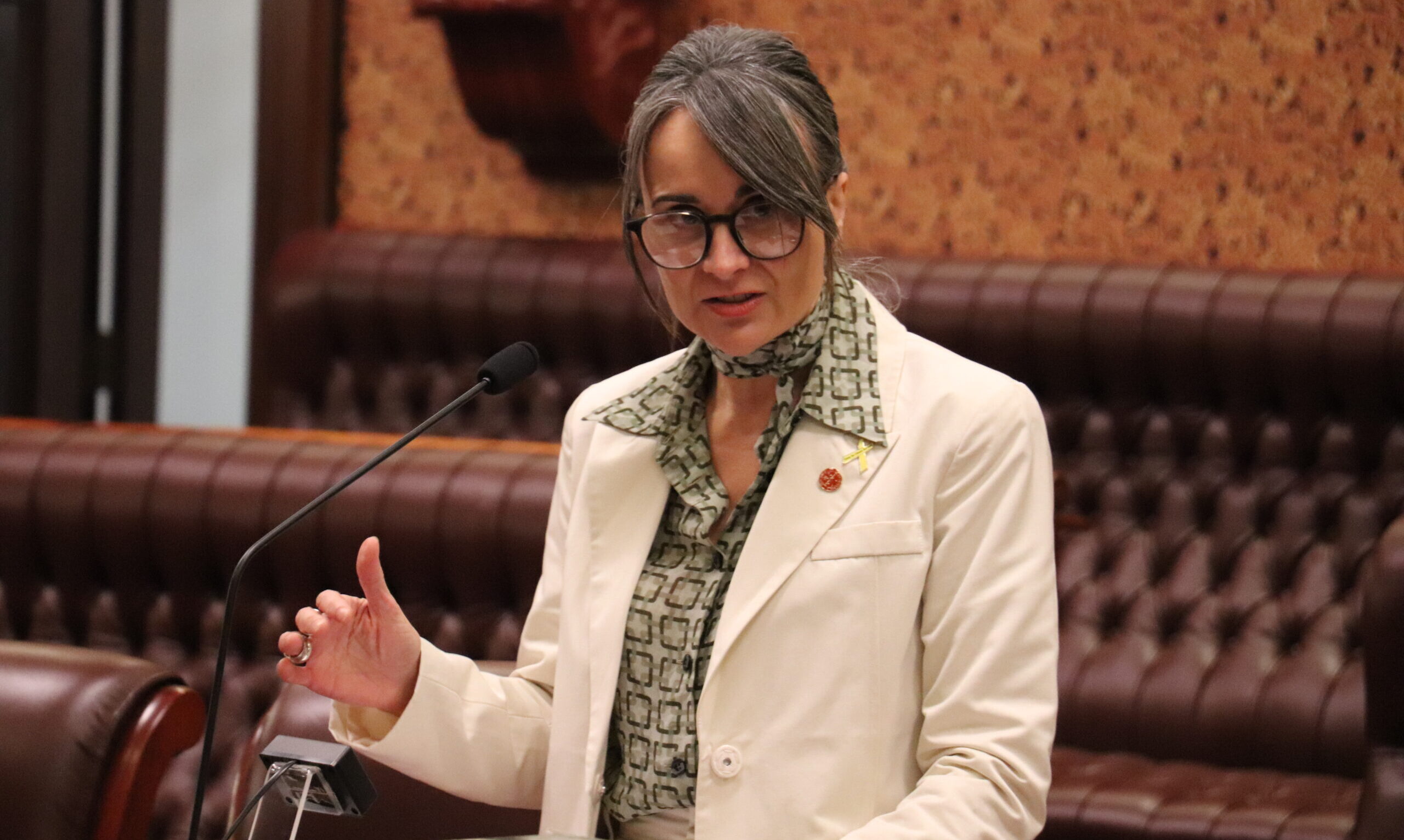
The NSW Upper House on Monday referred a Parliamentary inquiry into its universities to investigate and report on the “crisis” in the sector.
Please login below to view content or subscribe now.