WSU chancellor Jennifer Westacott. Picture: Newswire
Universities should offer shorter, cheaper and more accessible courses that recognise prior learning to help boost Australia’s productivity, Canberra’s economic roundtable has agreed.
Please login below to view content or subscribe now.
A new report has found that clerical and administrative workers, telemarketers, salespeople, receptionists and programmers are the most likely to face work changes caused by generative artificial intelligence (gen AI).
Please login below to view content or subscribe now.
Deputy vice-chancellor of cooperation and innovation at Sweden’s Halmstad University Kristian Widen explained how market forces like IKEA changed the country’s higher education system.
Please login below to view content or subscribe now.
As budget cuts continue to ripple across the education sector, many institutions are being forced to reassess how they manage their workforce. From widespread restructures to heavier workloads, staff are feeling the strain.
These pressures are compounding existing workforce challenges. Human resource (HR) and payroll teams are navigating complex employment arrangements, evolving compliance requirements, and increasing scrutiny around underpayment.
Without the right systems in place, even minor errors can have significant consequences.
The limitations of outdated systems
For many universities and TAFEs, HR and payroll systems haven’t kept pace with the realities of modern education. What may have once worked for a more stable, less fragmented workforce is now creating unnecessary complexity.
When systems aren’t integrated, data is difficult to reconcile and even harder to act on. Payroll teams are left cross-checking spreadsheets, while HR teams struggle to track performance, training, and entitlements across multiple roles and contracts.
Manual processes create more room for error, and a lack of visibility makes it harder to ensure compliance. According to McKinsey, automating finance processes can free up 30 to 40 per cent of a team’s capacity.
Disparate platforms also limit the experience for staff. Employees struggle to access their information, update details, or understand how their workload impacts their pay and entitlements. In a climate where staff are already stretched, that lack of clarity can further impact morale and retention.
A smarter approach to HR and payroll
Education providers are turning to integrated enterprise resource planning (ERP) software to automate tasks like timesheet management, onboarding, and performance tracking, thereby freeing up teams to focus on more strategic work.
While workforce challenges persist across the sector, some institutions are proving that the right technology can deliver meaningful change.
Instead of relying on fragmented systems, organisations like GOTAFE and Victoria University have shown how ERP software, like TechnologyOne’s, can play a critical role in improving payroll accuracy, streamlining HR tasks, and boosting overall efficiency and decision-making.
These are just two recent TechnologyOne success stories among many, but their experiences reflect a broader shift happening across the sector. More institutions are recognising the value of embracing ERP software that can grow with them.
How GOTAFE transformed payroll and people management
By moving to our Human Resources & Payroll product, GOTAFE was able to unify its systems and reduce its reliance on manual processes. Staff could manage leave and payslips through self-service tools, while HR teams gained real-time insights into workforce activity and performance.
The improvements were significant. Contract generation dropped from four days to five minutes. Workforce reports that once took weeks could now be produced in two days. These changes helped the organisation make faster, more informed decisions and improve the employee experience.
Importantly, the shift was also cultural. GOTAFE moved away from customising the platform to match legacy processes, instead adopting standard functionality to unlock ongoing improvements.
The result is a more agile, data-driven workforce environment that supports both staff needs and strategic planning.
Victoria University recently completed a major digital transformation, replacing legacy platforms with a single enterprise solution with TechnologyOne’s OneEducation. While the project was initially focused on improving the student experience, the impact on staff productivity, reporting, and decision-making has been just as significant.
Before the shift, the university was operating across a patchwork of disconnected systems. Frequent outages and manual workarounds meant that staff were spending more time managing technology than using it effectively. Reporting was cumbersome, making it difficult to generate insights or respond to changes with confidence.
By unifying core systems across student management, finance, and scheduling, Victoria University has created a more connected environment for both staff and students. Manual tasks have been replaced with automated workflows. Reporting is no longer a reactive process but an embedded part of everyday decision-making.
Overall, the university fixed nearly 180 pain points. The result is a more agile workforce environment where time is spent on higher-value work and institutional knowledge is easier to share and act on.
You can find out more about Victoria University’s transformation here.
Embrace the future of education software
From shifting compliance requirements to the increasing complexity of workforce management, legacy systems are no longer equipped to support long-term success.
Modern enterprise platforms are changing that. In an environment where every hour counts, the ability to streamline tasks and remove administrative roadblocks makes a real difference.
The next generation of education software is already here. Institutions that embrace it will be better positioned to support their people, respond to challenges, and plan with confidence.
Invest in TechnologyOne’s Human Resources & Payroll today
Designed for the unique needs of higher education, it streamlines recruitment, onboarding, and workforce planning, helping institutions manage staff efficiently while ensuring compliance.
Adapt, evolve, and stay ahead with a solution built for the future of education.
Dr. Karsonya “Kaye” Wise WhiteheadThe Association for the Study of African American Life and History (ASALH) has issued a forceful condemnation of the White House’s directive calling for a comprehensive review of Smithsonian Institution museums, warning that the move represents an attempt to “erase or distort” Black history.
The directive follows President Donald Trump’s social media post attacking the Smithsonian museums as “OUT OF CONTROL,” claiming they focus only on “how horrible our Country is, how bad Slavery was, and how unaccomplished the downtrodden have been.” The White House subsequently ordered a full review of all archival materials to determine alignment with Executive Order 14235, aimed at “Restore Truth and Sanity to American History.”
“ASALH stands in fierce opposition to this latest directive and all efforts to erase or distort our history, to silence our voices, and to minimize our story,” said ASALH President Dr. Karsonya “Kaye” Wise Whitehead.
The 110-year-old organization, which founded Black History Month, partnered with the African American Policy Forum to co-lead a “Hands Off Our History” rally at the Smithsonian’s National Museum of African American History & Culture in Washington, D.C.
Whitehead characterized the museum review as part of a broader pattern of attacks on diversity and inclusion efforts. She cited the 2023 banning of over 10,000 books, many featuring people of color, and recent executive orders eliminating Diversity, Equity, and Inclusion programs in higher education, medicine, and K-12 history courses.
“These steps are veiled attempts to rewrite and distort the narrative by removing any mention of the racist actions, words, and deeds that have shaped American history,” Whitehead added.
The ASALH president described the current moment as part of an escalating campaign that began with what she termed the “whitelash election” of 2017, followed by increased white supremacy after George Floyd’s murder, and culminating in current efforts to “defund libraries, whitewash history curricula, zero-base the Department of Education.”
ASALH, founded in 1915, positions itself as a bridge between scholars and the public in preserving and promoting Black history. The organization is preparing for its annual conference in Atlanta, scheduled for September 24-28, 2025, which Whitehead said will serve as an opportunity to “organize and prepare ourselves to counter his next steps.”
The controversy highlights ongoing tensions over how American history is taught and presented in educational and cultural institutions, with particular focus on narratives involving slavery, civil rights, and systemic racism.
Whitehead added that the organization’s resistance draws inspiration from historical figures including Dr. Carter G. Woodson, Dr. W.E.B. Du Bois, and Harriet Tubman, stating: “Our work as truth seekers obliges us to ‘speak the truth to the people’ and demands that we stay ready.”
The Smithsonian Institution has not yet responded to requests for comment regarding the White House directive.
Jason Clare addressed the AFR Higher Education Summit on Tuesday. Picture: Monique Harmer
Education Minister Jason Clare granted the university regulator’s wish for more power over universities at the Australian Financial Review Higher Education Summit on Tuesday.
Please login below to view content or subscribe now.
The Education and Employment Committee has heard Australian National University (ANU) students are forced to sit on the floor in overpacked tutorials as a result of budget cuts in its $250m restructure.
Please login below to view content or subscribe now.
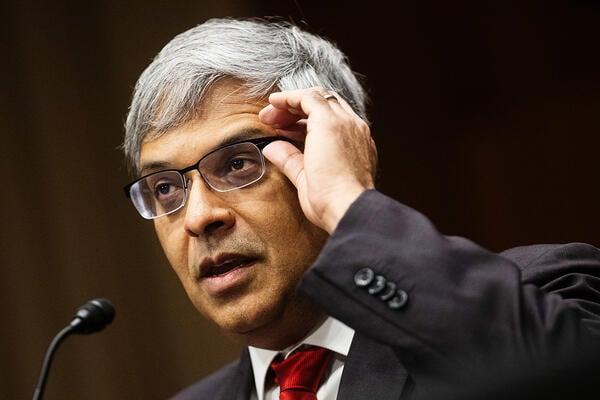
NIH director Jay Bhattacharya said that among other priorities, the agency will focus on artificial intelligence and “ensuring evidence-based health care for children and teenagers identifying as transgender.”
Jim Watson/AFP/Getty Images
The National Institutes of Health’s director ordered employees to “conduct an individualized review of all current and planned research activities,” including active grants and funding opportunity announcements, according to images of a document provided to Inside Higher Ed. The review comes amid concerns that the NIH won’t distribute all of its allocated grant money by the time the federal fiscal year ends Sept. 30, meaning those dollars will return to the U.S. Treasury.
The document images, provided by a source who wished to remain anonymous due to fear of retaliation, show that NIH director Jay Bhattacharya sent the memo Friday and that the review is effective immediately. According to the memo, “relevant NIH personnel” must review grants, funding opportunity announcements, contracts, contract solicitations, applications for new and competing renewal awards, intramural research and research training programs, cooperative agreements, and “other transactions.”
The order is part of a larger memo in which Bhattacharya outlined “select agency priorities” and said projects that don’t align with these priorities may be “restricted, paused, not renewed, or terminated.” The focuses are, among other things, artificial intelligence, “furthering our understanding of autism” and “ensuring evidence-based health care for children and teenagers identifying as transgender.”
In response to a request for an interview about the review and why it’s needed, the NIH press team sent a public statement from Friday, in which Bhattacharya listed the priorities.
Regarding health care for transgender youth, he said, “There are clearly more promising avenues of research that can be taken to improve the health of these populations than to conduct studies that involve the use of puberty suppression, hormone therapy, or surgical intervention.” He says that “by contrast, research that aims to identify and treat the harms these therapies and procedures have potentially caused … and how to best address the needs of these individuals so that they may live long, healthy lives is more promising.”
Bhattacharya’s letter comes after President Trump, earlier this month, ordered senior appointees at federal agencies to annually review discretionary grants “for consistency with agency priorities.”
Joanne Padrón Carney, chief government relations officer for the American Association for the Advancement of Science, said in a statement to Inside Higher Ed that the president’s budget request for fiscal year 2026 already outlined a set priorities for the rest of the current year.
“Switching gears at this stage reinforces confusion, diminishes trust, and increases concerns within the scientific community,” Carney added. “It joins the long list of tactics risking impoundment of congressionally appropriated funds rather than funding biomedical research that is essential for the people’s well-being.”
Nearly three dozen selective colleges are facing an antitrust lawsuit alleging they used the early decision admissions process to reduce competition and inflate prices. Also named as defendants are application platforms Common App and Scoir, as well as the Consortium on Financing Higher Education, an information-sharing coalition of selective liberal arts colleges.
By the numbers
740,000
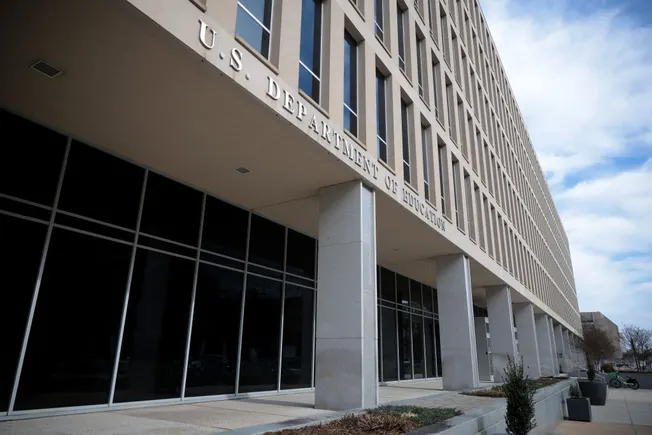
That’s the estimated number of work hours the higher education sector can expect to add as a result of the U.S. Department of Education’s plan to cull new data from colleges on their applicants’ race and sex. Behind the push is the Trump administration’s hostility toward diversity initiatives and its aggressive approach to enforcing the U.S. Supreme Court’s ban on race-based admissions.
Anti-DEI push in courts, board rooms and classrooms:
A federal judge declined to block Alabama’s governor from enforcing a new law that eliminates diversity, equity and inclusion offices and forbids colleges from requiring students to adopt a long list of “divisive concepts.” The professors and students who sued over the law expressed concerns that it is overly vague and restricts their free speech rights.
The Iowa Board of Regents adopted a new policy requiring public university faculty to present controversial subjects “in a way that reflects the range of scholarly views and ongoing debate in the field.” Before last week’s vote, the board stripped the proposal’s original language around DEI and critical race theory after public pushback. But one regent noted the policy does not define “controversial” and raised questions about who would.
Students for Fair Admissions dropped its lawsuits against the U.S. Military Academy at West Point and the U.S. Air Force Academy over race-conscious admissions. Both academies dropped their diversity efforts in admissions earlier this year under a directive from the Trump administration.
Quote of the week:
“Our actions clearly demonstrate our commitment to addressing antisemitic actions and promoting an inclusive campus environment by upholding a safe, respectful, and accountable environment.”
George Washington University
The private institution became one of the latest targets of the Trump administration, which claimed the university was indifferent to harassment of Jewish and Israeli students on its Washington, D.C., campus. As with its accusations against a handful of other colleges, the administration cited a pro-Palestinian protest encampment at GWU in spring 2024. The university asked the local police to clear the encampment shortly after it was formed.