Tag: review

  • English language test integrity matters – Campus Review

    English language test integrity matters – Campus Review

    Commentary

    The experience should reflect the best of what Australia has to offer: fairness, opportunity and integrity

    As Australia recalibrates its approach to skilled migration and international education, one thing remains constant: the importance of trust. 

    Please login below to view content or subscribe now.

    Membership Login

    Source link

  • Bill Shorten’s fresh eyes – Campus Review

    Bill Shorten’s fresh eyes – Campus Review

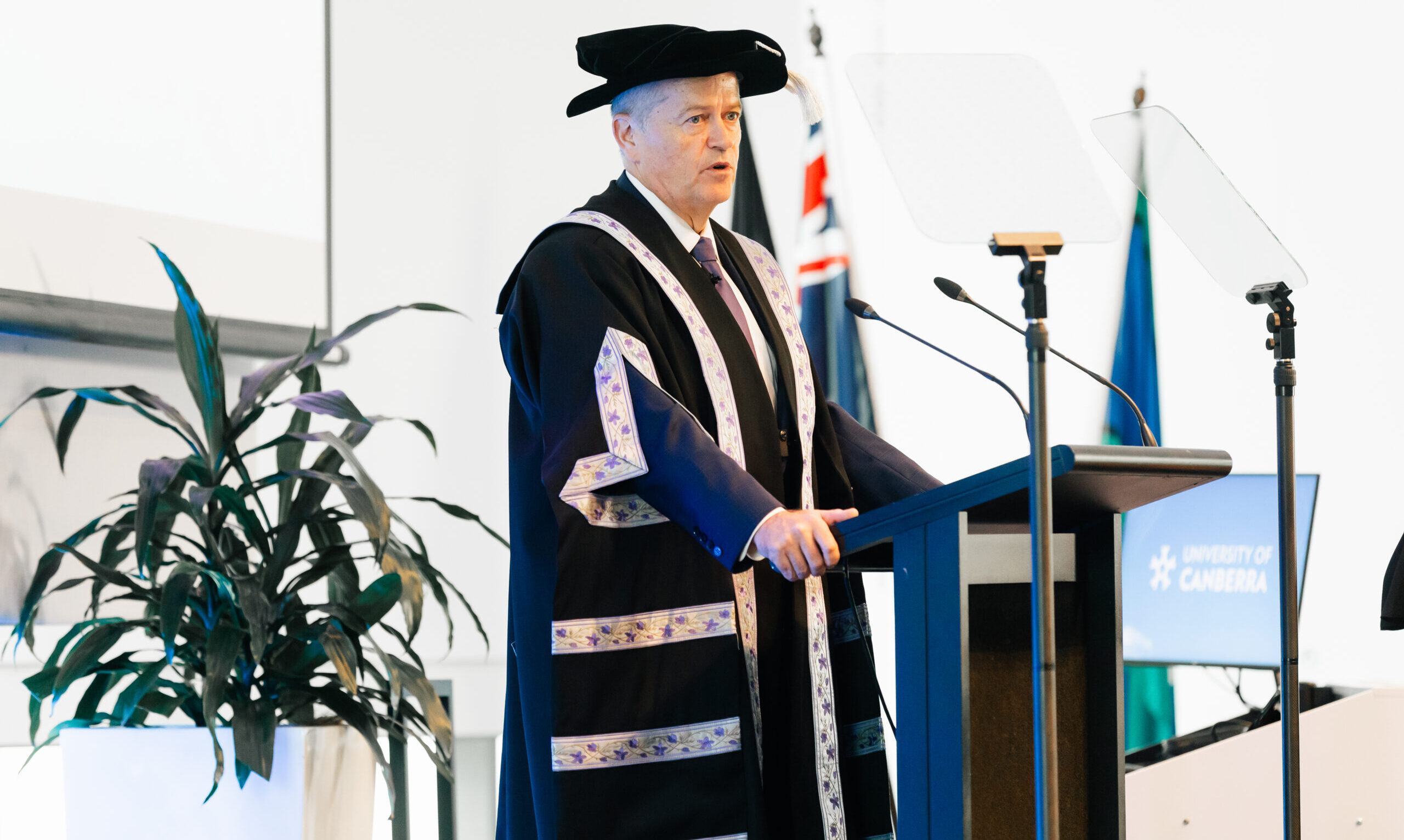
    The Honourable Bill Shorten transitioned at the start of the year from cabinet to vice-chancellor and president of the University of Canberra.

    Please login below to view content or subscribe now.

    Membership Login

    Source link

  • Reactions to intl student cap increase – Campus Review

    Reactions to intl student cap increase – Campus Review

    The international student cap in Australia will increase from next year with an extra 25,000 placements on offer for universities.

    Please login below to view content or subscribe now.
    Membership Login

    Source link

  • UOW reduces job cuts again – Campus Review

    UOW reduces job cuts again – Campus Review

    The University of Wollongong (UOW) on Monday announced it now only needs to cut between 85 and 118 full-time positions instead of the originally proposed 155 to 185 jobs.

    Please login below to view content or subscribe now.

    Membership Login

    Source link

  • Call to promote university racism survey – Campus Review

    Call to promote university racism survey – Campus Review

    The Australian Human Rights Commission’s landmark Racism@Uni survey will appear in student and staff inboxes from August 11.

    Please login below to view content or subscribe now.

    Membership Login

    Source link

  • “Politically correct”, “druggies” and “weirdoes”: Review of ‘Storming the Ivory Tower’ by Richard Corcoran

    “Politically correct”, “druggies” and “weirdoes”: Review of ‘Storming the Ivory Tower’ by Richard Corcoran

    • This blog is a review by HEPI’s Director, Nick Hillman, of Storming the Ivory Tower: How a Florida College Became Ground Zero in the Struggle to Take Back Our Campuses

    The tone of this new book by Richard Corcoran on ‘Florida’s most left-wing public university’ is set at the very start with a tribute to the New York Times, the Washington Post and other newspapers for their ‘unshakeable commitment to ignoring any fact that does not support their predetermined narrative’. It continues into the Foreword, contributed by the US conservative Christopher Rufo, which argues for ‘institutional recapture’ and ‘reconquest’.

    The main text begins, however, with a paean to ‘liberal education’, a defining feature of western education but also a particularly good way of describing some higher education in the US. It then recounts how, in early 2023, the Republican governor of Florida, Ron DeSantis, appointed six new trustees (including Rufo) to oversee the New College of Florida, which is the smallest institution in the State University System of Florida. The institution had only a few hundred students but was also a place that the American right thought had lost its way and needed saving.

    Oversight versus autonomy

    It is easy to forget on the UK side of the Atlantic, where we tend to associate university success with university autonomy, how much power state governors have over university systems in the US. The American model is akin to letting Andy Burnham decide who should govern the various universities in Greater Manchester. Or more pertinently perhaps, given the politics of the people involved, letting Andrea Jenkyns, the Reform mayor of Lincolnshire and former Minister for Universities, choose the board members of Lincoln University and Bishop Grosseteste University (soon to be renamed Lincoln Bishop University).

    Those who choose the trustees of an institution indirectly choose who should manage that institution as it is trustees who hire and fire leaders and hold them to account.  And in the case of the New College of Florida, DeSantis’s six new trustees helped to install the author of this book, Richard Corcoran, as the institution’s President in 2023.

    Corcoran’s core argument is that the changes wrought by DeSantis were necessary to rescue a failing institution to which those students who did enrol struggled to feel a sense of belonging. Admitted students (some of whom never actually enrolled) told researchers that the New College of Florida’s social culture was ‘politically correct’ and shaped by ‘druggies’ and ‘weirdoes’. Corcoran (rightly) points out this is ‘the exact opposite’ characterisation that ‘any rational organisation would adopt if it was trying to appeal to a broad swath of students and parents.’

    At just 650 students, the New College of Florida was only around half the size the local legislature had expected and, indeed, was smaller than the average secondary school in either the UK (1,000+ pupils) or the US (c.850), rather than boasting the typical enrolment of a higher education institution. That made a quick turnaround more feasible and Corcoran claims victory near the end of the book, arguing that, ‘In a mere 10 months, New College of Florida went from one of the most progressively captured universities in the country to the freest university in the nation.’ (This claim is caveated a little though, when Corcoran takes a dig at some of New College’s longer-serving staff: ‘I still have a small handful of faculty members who believe in leftist indoctrination.’)

    DEI, gender studies and 7 October

    The story of the takeover / recovery of New College is told via chapters looking at:

    • DEI (Diversity, Equity and Inclusion), which we are told was costly and ineffectual or even counter-productive;
    • gender studies, which we are told has no place within the liberal arts; and
    • the campus battles after the 7 October attack by Hamas, which we are told exposed the power of ‘unseen, unknown, unelected people who reside in large part in and around academia.’

    The chapter on gender studies looks at the growth of the discipline and its arguably un-evidenced approach – especially towards the treatment of children with gender dysphoria. A succinct way to summarise it would be to say JK Rowling would likely approve of the chapter. But Corcoran ends with an important thought about why the way such issues are treated in academia matters: ‘The real concern is not just the suppression of free speech, but what happens in society when dialogue around important issues is summarily dismissed.’

    A later chapter focuses on the changes wrought Corcoran and his allies, such as changing curricula, adding sports and improving campus facilities. He and his team clearly have the institution’s and its students’ interests at heart. But the level of public expenditure for such a small college seems extraordinary and some of it seems to have been spent unnecessarily. For example, some neglected student dorms were renovated at large expense only to be declared still unfit for humans to live in, meaning hotel beds had to be requisitioned.

    It is striking that the reconquest of the institution was done via the actions of the state governor, the spending of considerable public money and the enforcement of strict rules. In other words, the tactics were interventionist rather than libertarian, even if the agenda was right-wing rather than left-wing. This helps explain why Corcoran is, unlike some other Republicans, opposed to abolishing the Department of Education, urging the American right to copy the left by using federal bodies to effect real change.

    The other thing that really sticks out is how big a battle was fought over a college that educates something like 0.003% of America’s college students (or 0.15% of Florida’s). In terms of size relative to the rest of the higher education sector, the New College of Florida is the US equivalent of something like the Dyson Institute here in the UK. So it is worth asking whether the campus battles are a trailblazer akin to Ronald Reagan taking on the University of California or whether they are more like the skirmishes seen here in the UK over institutions like Regent’s University London, the New College of the Humanities (now Northeastern University London) and Buckingham (where, to declare an interest, I sit on the Council). Corcoran himself seems unsure which they will turn out to be.

    I. Did. Not. Give. A. F***.

    At one point, Corcoran tells a story about his negotiations to eject a car museum which was on the New College campus and occupying much-needed space at a rent level that was far below the market value. This leads to some negative media coverage about which Corcoran writes, ‘As to the press: I. Did. Not. Give. A. F***.’ But there is an element of protesting too much here as there is page after page of settling scores and putting the record straight after numerous attacks on New College from many sides (including some parts of the media, staff and students and the Governor of another state [California]).

    While it makes sense to discuss the media attacks on the New College of Florida’s leaders in a book on the institution, the author can’t resist the temptation to broaden his text out to include earlier battles he fought with the media about COVID during his previous job as Education Commissioner of Florida, before delving even further back to recount his time as the 100th Speaker of Florida’s House of Representatives. It is all diverting and somewhat interesting as a study of state-level politics, but it is not really on what the book professes to be about.

    I don’t blame the author for responding to the attacks; educational institutions that profess to be objective can sometimes struggle to accommodate members that hold anything other than the standard left-wing views that predominate in education. But as a reader on this other side of the Atlantic, I’d have preferred more higher education strategy and less tittle-tattle. When you’re trying to work out what lessons the battles over New College might hold for higher education outside the US, the settling of old scores with various local, national and specialist media outlets is less interesting.

    Nonetheless, the book ends with a nine-point ‘roadmap’ for transformation, from ‘Leadership is everything’, through ‘Litigate, litigate, litigate’ to ‘Presidents should have CEO capabilities’. Given it is so hard to find out what a Farage Government might mean for higher education over here, then this book may provide a bigger hint than Reform’s last manifesto.

    Parting thought

    When I’ve previously posted my assessment of books that are relevant to higher education and written from a right-of-centre perspective, I’ve received pushback. My far-from-adulatory review of one of Matt Goodwin’s books, for example, won an excoriating comment from a former vice-chancellor: ‘HEPI was set up as a serious evidence based think tank. It was not set up to dabble in phoney party political “culture wars”.’

    It is hard to disagree with the general sentiment on HEPI’s purpose, but I do disagree with the notion that we should ignore books written from the right. It is important to understand the right’s approach to higher education (on both sides of the Atlantic). If you draw a thick boundary around those books that are deemed acceptable to read and review and if that line excludes books like Corcoran’s, there are two problems.

    1. First, you play into the hands of – and give succour to – those who regard higher education as both insufficiently ideologically diverse and unwilling to engage with the full range of mainstream ideas.
    2. Secondly, you fail to draw a distinction between a right-wing stance, like Corocran’s, which (whether you agree with it or not) is aimed at raising educational standards, and other right-wing educational escapades that are much less clearly about improving education.

    Having also just finished reading Trump U: The Inside Story of Trump University by Stephen Gilpin, which lays bare the horror that was ‘Trump University’ and its get-rich-quick-at-the-expense-of-the-poor schemes which have nothing to do with academia, I am reinforced in my view that we should engage with all mainstream educational ideas irrespective of whether they emerge from potentially divisive Republicans such as Corcoran or somewhere else.

    Source link

  • Gen Z craves purpose. Universities must catch up – Campus Review

    Gen Z craves purpose. Universities must catch up – Campus Review

    Speak to young university students today and a picture emerges of deep concern for justice, hunger for real-world connection, and an urgent desire to belong to something bigger than themselves.

    Please login below to view content or subscribe now.

    Membership Login

    Source link

  • Students call for AI art class cancellation – Campus Review

    Students call for AI art class cancellation – Campus Review

    Technology

    UNSW says the course explores creative and ethical questions about the use of gen AI in art

    The University of New South Wales has come under fire for offering a new subject that asks students to explore how to use generative AI to create art.

    Please login below to view content or subscribe now.

    Membership Login

    Source link

  • How do we gain and measure social licence? – Campus Review

    How do we gain and measure social licence? – Campus Review

    Podcasts

    Please login below to view content or subscribe now.

    Membership Login

    Source link

  • Is peer review of teaching stuck in the past?

    Is peer review of teaching stuck in the past?

    Most higher education institutions awarded gold for the student experience element of their 2023 Teaching Excellence Framework (TEF) submissions mentioned peer review of teaching (PRT).

    But a closer look at what they said will leave the reader with the strong impression that peer review schemes consume lots of time and effort for no discernible impact on teaching quality and student experience.

    What TEF showed us

    Forty out of sixty providers awarded gold for student experience mention PRT, and almost all of these (37) called it “observation.” This alone should give pause for thought: the first calls to move beyond observation towards a comprehensive process of peer review appeared in 2005 and received fresh impetus during the pandemic (see Mark Campbell’s timely Wonkhe comment from March 2021). But the TEF evidence is clear: the term and the concept not only persist, but appear to flourish.

    It gets worse: only six institutions (that’s barely one in ten of the sector’s strongest submissions) said they measure engagement with PRT or its impact, and four of those six are further education (FE) colleges providing degree-level qualifications. Three submissions (one is FE) showed evidence of using PRT to address ongoing challenges (take a bow, Hartpury and Plymouth Marjon universities), and only five institutions (two are FE) showed any kind of working relationship between PRT and their quality assurance processes.

    Scholarship shows that thoughtfully implemented peer review of teaching can benefit both the reviewer and the reviewed but that it needs regular evaluation and must adapt to changing contexts to stay relevant. Sadly, only eleven TEF submissions reported that their respective PRT schemes have adapted to changing contexts via steps such as incorporating the student voice (London Met), developing new criteria based on emerging best practice in areas such as inclusion (Hartpury again), or a wholesale revision of their scheme (St Mary’s Twickenham).

    The conclusion must be that providers spend a great deal of time and effort (and therefore money) on PRT without being able to explain why they do it, show what value they get from it, or even ponder its ongoing relevance. And when we consider that many universities have PRT schemes but didn’t mention them, the scale of expenditure on this activity will be larger than represented by the TEF, and the situation will be much worse than we think.

    Why does this matter?

    This isn’t just about getting a better return on time and effort; it’s about why providers do peer review of teaching at all, because no-one is actually required to do it. The OfS conditions of registration require higher education institutions to “provide evidence that all staff have opportunities to engage in reflection and evaluation of their learning, teaching, and assessment practice”.

    Different activities can meet the OfS stipulation, such as team teaching, formal observations for AdvanceHE Fellowship, teaching network discussions, microteaching within professional development settings. Though not always formally categorised within institutional documentation, these nevertheless form part of the ecosystem under which people seek or engage with review from peers and represent forms of peer-review adjacent practice which many TEF submissions discussed at greater length and with more confidence than PRT itself.

    So higher education institutions invest time and effort in PRT but fail to explain the benefits of their reasoning, and appear to derive greater value from alternative activities that satisfy the OfS. Yet PRT persists. Why?

    What brought us to this point?

    Many providers will find that their PRT schemes were started or incorporated into their institutional policies around the millennium. Research from Crutchley and colleagues identified Brenda Smith’s HEFCE-funded project at Nottingham Trent in the late 1990s as a pioneering moment in establishing PRT as part of the UK landscape, following earlier developments in Australia and the US. Research into PRT gathered pace in the early 2000s and reached a (modest) peak in around 2005, and then tailed off.

    PRT is the Bovril of the education cupboard. We’re pretty sure it does some good, though no one is quite sure how, and we don’t have time to look it up. We use it maybe once a year and are comforted by its presence, even though its best before date predates the first smartphones, and its nutritional value is now less than the label that bears its name. The prospect of throwing it out induces an existential angst – “am I a proper cook without it?” – and yes of course we’d like to try new recipes but who has the time to do that?

    Australia shows what is possible

    There is much to be learnt from looking outside our own borders, on how peer review has evolved in other countries. In Australia, the 2024 Universities Accord offered 47 recommendations as part of a federally funded vision for tertiary education reform for 2050. The Accord was reviewed on Wonkhe in March 2024.

    One of its recommendations advocates for the “increased, systematised use of peer review of teaching” to improve teaching quality, insisting this “should be underpinned by evidence of effective and efficient methodologies which focus on providing actionable feedback to teaching staff.” The Accord even suggested these processes could be used to validate existing national student satisfaction surveys.

    Some higher education institutions, such as The University of Sydney, had already anticipated this direction, having revised their peer review processes with sector developments firmly in mind a few years ahead of the Accord’s formal recommendations. A Teaching@Sydney blog post from March 2023 describes how the process uses a pool of centrally trained and accredited expert reviewers, standardised documentation aligned with contemporary, evidence-based teaching principles, and cross-disciplinary matching processes that minimise conflicts of interest, while intentionally integrating directly with continuing professional development pathways and fellowship programs. This creates a sustainable ecosystem of teaching enhancement rather than isolated activities, meaning the Bovril is always in use rather than mouldering behind Christmas’s leftover jar of cranberry sauce.

    Lessons for the UK

    Comparing Australia and the UK draws out two important points. First, Australia has taken the simple but important step of saying PRT has a role in realising an ambitious vision for HE. This has not happened in the UK. In 2017 an AdvanceHE report said that “the introduction and focus of the Teaching Excellence Framework may see a renewed focus on PRT” but clearly this has not come to pass.

    In fact, the opposite is true, because the majority of TEF Summary Statements were silent on the matter of PRT, and there seemed to be some inconsistency in judgments in those instances where the reviewers did say something. In the absence of any explanation it is hard to understand why they might commend the University of York’s use of peer observation on a PG Cert for new staff, but judge that the University of West London meeting their self-imposed target of 100 per cent completion of teaching observations every two years for all academic permanent staff members was “insufficient evidence of high-quality practice.”

    Australia’s example sounds rather top-down, but it’s sobering to realise that they are probably achieving more impact for the cost of less time and effort than their UK colleagues, if the TEF submissions are anything to go by.

    And Australia is clear-sighted about how PRT needs to be implemented for it to work effectively, and how it can be joined up with measures such as student satisfaction surveys that have emerged since PRT first appeared over thirty years ago. Higher education institutions such as Sydney have been making deliberate choices about how to do PRT and how to integrate it with other management, development and recognition processes – an approach that has informed and been validated by the Universities Accord’s subsequent recommendations.

    Where now for PRT?

    UK providers can follow Sydney’s example by integrating their PRT schemes with existing professional development pathways and criteria, and a few have already taken that step. The FE sector affords many examples of using different peer review methods, such as learning walks and coaching in combination. University College London’s recent light refresh of its PRT scheme shows that management and staff alike welcome choice.

    A greater ambition than introducing variety would be to improve reporting of program design and develop validated tools to assess outcomes. This would require significant work and sponsorship from a body such as AdvanceHE, but would yield stronger evidence about PRT’s value for supporting teaching development, and underpin meaningful evaluation of practice.

    This piece is based on collaborative work between University College London and the University of Sydney examining peer review of teaching processes across both institutions. It was contributed by Nick Grindle, Samantha Clarke, Jessica Frawley, and Eszter Kalman.

    Source link