Tag: review

  • Bill Shorten calls out ‘ivory tower’ unis – Campus Review

    Bill Shorten calls out ‘ivory tower’ unis – Campus Review

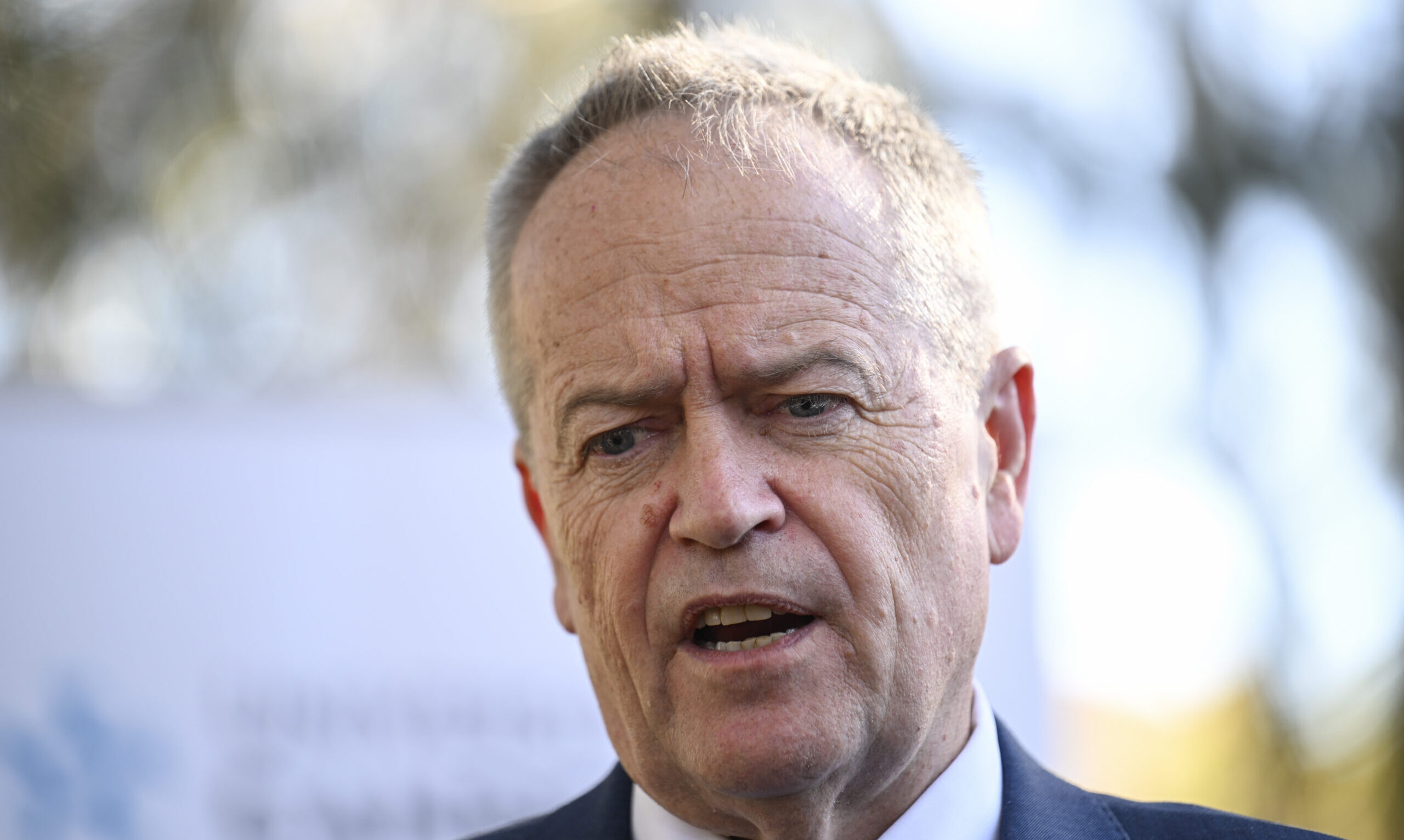
    New University of Canberra (UC) vice-chancellor Bill Shorten has scolded the higher education sector for not keeping up with students’ demands in a piece he penned for The Australian on Thursday.

    Please login below to view content or subscribe now.

    Membership Login

    Source link

  • New vice-chancellor of Adelaide revealed – Campus Review

    New vice-chancellor of Adelaide revealed – Campus Review

    Professor Nicola Phillips has been revealed as the vice-chancellor of the new Adelaide University ahead of its opening next year.

    Please login below to view content or subscribe now.

    Membership Login
    Source link

  • Griffith to pay $8m back to 6,000 staff – Campus Review

    Griffith to pay $8m back to 6,000 staff – Campus Review

    Nearly six thousand current and former staff at Griffith University have been underpaid more than $6m over the past decade and will receive more than $8m in back-pay.

    Please login below to view content or subscribe now.
    Membership Login

    Source link

  • Podcast: Spending review, Tooling Up, REF, students at work

    Podcast: Spending review, Tooling Up, REF, students at work

    This week on the podcast we examine the government’s spending review and what it means for higher education. How will the £86bn R&D commitment translate into real-terms funding, and why was education notably absent from the Chancellor’s priorities?

    Plus we discuss the Post-18 Project’s call to fundamentally reshape HE policy away from market competition, the startling new REF rules, and the striking rise in student term-time working revealed by the latest Student Academic Experience Survey.

    With Stephanie Harris, Director of Policy at Universities UK, Ben Vulliamy, Executive Director at the Association of Heads of University Administration, Michael Salmon, News Editor at Wonkhe, and presented by Mark Leach, Editor-in-Chief at Wonkhe.

    Tooling up: Building a new economic mission for higher education

    Investing for the long term often loses out to pensioner power

    What’s in the spending review for higher education

    The student experience is beyond breaking point

    How to assess anxious, time-poor students in a mass age

    REF is about institutions not individuals

    Source link

  • The Year the Money Ran Out: Global Higher Ed Review

    The Year the Money Ran Out: Global Higher Ed Review

    Hello everyone, and welcome to the World of Higher Education podcast. I’m Tiffany MacLennan, and if you’re a faithful listener, you know what it means when I’m the one opening the episode—this week, our guest is AU.

    We’re doing a year in review, looking at some of the global higher education stories that stood out in 2024—from massification to private higher education, from Trump’s international impact to the most interesting stories overall. But I’ll pass it over to Alex.


    The World of Higher Education Podcast
    Episode 3.35 | The Year the Money Ran Out: Global Higher Ed Review

    Transcript

    Tiffany MacLennan (TM): Alex, you’re usually the one asking the questions, but today you’re in our hot seat.

    Alex Usher (AU): It’s technically the same seat I’m always in.

    TM: Fair point. But today, you’re in the question seat. Let’s start with the global elephant in the room.

    Last week, we talked at length with Brendan Cantwell about the domestic effects of Donald Trump’s education policies. But what impacts are we seeing internationally? Are any countries or institutions actively trying to capitalize on the chaos in the U.S.? And if so, how serious are those efforts to poach talent and build their reputations?

    AU: There are lots of countries that think they’re in a position to capitalize on it—but almost none of them are serious.

    The question is: where is the real destruction happening in the United States? Where is the greatest danger? And the answer is in research funding. NIH funding is going to be down by a third next year. NSF funding is going to be down by more than 50%. So it’s the scientists working in STEM and health—those with the best labs in the world—who are suddenly without money to run programs.

    But what are they supposed to do? Are there alternatives to labs of that scale? Are there alternatives to the perks of being a top STEM or health researcher at an American university?

    Places like Ireland—well, Ireland has no research culture to speak of. The idea that Ireland is going to step in and be competitive? Or the Czech Republic? Or India, which keeps talking about this being their moment? Come on. Be serious. That’s not what’s happening here.

    There might be an exodus—but it’s more likely to be to industry than to other countries. It’s not clear to me that there will be a global redistribution of this talent.

    Now, the one group that might move abroad? Social scientists and humanities scholars. And you’ve already seen that happening—especially here in Toronto. The University of Toronto has picked up three or four high-profile American scholars just in the last little while.

    Why? Because you don’t need to build them labs. The American lead in research came from the enormous amounts of money spent on infrastructure: research hospitals, labs—facilities that were world-class, even in unlikely places. Birmingham, Alabama, for example, has 25 square blocks of cutting-edge health research infrastructure. How? Because America spent money on research like no one else.

    But they’re not doing that anymore. So I think a lot of that scientific talent just… disappears. It’s lost to academia, and it’s not coming back. And over the long term, that’s a real problem for the global economy.

    TM: Sticking with the American theme, are there other countries that have been taking, well, I hesitate to say lessons, but have been adopting policies inspired by the U.S. since Donald Trump came to power? Or has it gone the other way—more like a cautionary tale of what not to do if you want to strengthen your education sector?

    AU: I think the arrival of MAGA really made a lot of people around the world realize that, actually, having talented researchers in charge of things isn’t such a bad idea.

    We saw that reflected in elections—in Canada, in Australia—where center-left governments that were thought to be in trouble suddenly pulled off wins. Same thing in Romania.

    The one exception seems to be Poland. But even there, I’m not sure the culture war side of things was ever as intense as it was in the United States. In fact, the U.S. isn’t even the originator of a lot of this stuff—it’s Hungary. Viktor Orbán’s government is the model. The Project 2025 crew in the U.S. has made it pretty clear: they want American universities to look more like Hungarian ones.

    And the Hungarian Minister of Higher Education has been holding press conferences around the world, claiming that everyone’s looking at Hungary as a model.

    So, there’s definitely been a shift—America is moving closer to the Hungarian approach. But I don’t think anyone else is following them. Even in Poland, where there’s been political change, the opposition still controls the parliament, so it’s not clear anything dramatic will happen there either.

    So no—I don’t think we’re seeing widespread imitation of U.S. education policy right now. Doesn’t mean it couldn’t happen—but we’re not there yet.

    TM: One thing we’ve seen a lot of this year is talk—and action—around the massification of higher education. What countries do you think have made some of the most interesting moves in expanding access? And on the flip side, are there any countries that are hitting their capacity?

    AU: Everyone who’s making progress is also hitting their capacity. That’s the key thing. Massification isn’t just a matter of saying, “Hey, let’s build a new school here or there.” Usually, you’re playing catch-up with demand.

    The really interesting case for me is Uzbekistan. Over the past decade, the number of students has increased fivefold—going from about 200,000 to over a million. I’m not sure any country in the world has moved that fast before. That growth is driven by a booming population, rising wealth, and—crucially—a government that’s willing to try a wide range of strategies: working with domestic public institutions, domestic private institutions, international partners—whatever works. It’s very much a “throw spaghetti at the wall and see what sticks” approach.

    Dubai is another case. It’s up 30% this year, largely driven by international students. That’s a different kind of massification, but still significant.

    Then there’s Africa, where we’re seeing a lot of countries running into capacity issues. They’ve promised access to education, but they’re struggling to deliver. Nigeria is a standout—it opened 200 new universities this year. Egypt is another big one. And we’re starting to see it in Kenya, Tanzania, Ghana—places that have reached the level of economic development where demand for higher education takes off.

    But here’s the catch: it’s not always clear that universal access is a good idea from a public policy standpoint. At certain stages of economic development, you can support 70% participation rates. At others, you’re doing well to sustain 20%. It really depends where you are.

    And these are often countries with weak tax systems—low public revenue. So how do you fund it all? That’s a major challenge.

    What we’re seeing in many places is governments making big promises around massification—and now struggling to keep them. I think that tension—between rising demand and limited capacity—is going to be a major story in higher education for at least the next three or four years.

    TM: I think that leads nicely into my next question: what’s the role of private higher education in all of this?

    Private institutions have been popping up more and more, and the conversation around them has only grown. Sometimes they’re filling important gaps, and sometimes they’re creating problems. But this year, we also saw some pretty major regulatory moves—governments trying to reassert control over what’s become a booming sector.

    Do you see this as part of a broader shift? And what do you think it means for the future of private higher education?

    AU: I don’t see a big shift in private education in less industrialized countries. What you’re seeing there is more a case of the public sector being exhausted—it simply can’t keep up with demand. So private providers show up to fill the gap.

    The question is whether governments are regulating those providers in a way that ensures they contribute meaningfully to the economy, or if they’re just allowing bottom-feeders to flourish. And a lot of places struggle to get that balance right.

    That said, there are some positive examples. Malaysia, for instance, has done a pretty good job over the years of managing its private higher education sector. It’s a model that other countries could learn from.

    But I think the really interesting development is the growth of private higher education in Europe.

    Look at Spain—tuition is relatively cheap, yet 25% of the system is now private. France has free tuition, but still, 25% of its system is private. In Germany, where tuition is also free, the private share is approaching 20%.

    It’s a different kind of issue. Strong public systems can ossify—they stop adapting, stop responding to new needs. In Europe, there’s very little pressure on public universities to align with labor market demand. And rising labor costs can mean that public universities can’t actually serve as many students as they’d like.

    France is a good example. It’s one of the few countries in Europe where student numbers are still growing significantly. But the government isn’t giving public universities more money to serve those students. So students leave—they say, “This isn’t a quality education,” and they go elsewhere. Often, that means going to private institutions.

    We had a guest on the show at one point who offered a really interesting perspective on what private higher education can bring to the table. And I think that’s the fascinating part: you’d expect the private sector boom to be happening in a place like the U.S., with its freewheeling market. But it’s not. The big story right now is in Europe.

    TM: Are there any countries that are doing private higher education particularly well right now? What would you say is the “good” private higher ed story of the year?

    AU: That’s a tough one, because these things take years to really play out. But I’d say France and Germany might be success stories. They’ve managed to keep their top-tier public institutions intact while still allowing space for experimentation in the private sector.

    There are probably some good stories in Asia that we just don’t know enough about yet. And there are always reliable examples—like Tecnológico de Monterrey in Mexico, which I think is one of the most innovative institutions in the Americas.

    But I wouldn’t say there’s anything dramatically different about this year that marks a turning point. That said, I do think we need to start paying more attention to the private sector in a way we haven’t since the explosion of private higher education in Eastern Europe after the fall of the Berlin Wall.

    Back then, governments looked around and said, “Okay, we need to do something.” Their public universities—especially in the social sciences—were completely discredited after decades of Marxist orthodoxy. So they let the private sector grow rapidly, and then had to figure out how to rein it in over time.

    Some countries managed that fairly well. Romania and Poland, for instance, have built reasonably strong systems for regulating private higher education—though not without some painful moments. Romania in particular had some pretty chaotic years. If you look up Spiru Haret University, you’ll get a sense of just how bad it can get when you completely let the market rip.

    But now there are decent examples that other regions—especially Africa and Central Asia—can look to. These are areas where private education is going to be increasingly important in absorbing new demand.

    The real question is: how do you translate those lessons from one context to another?

    TM: Alex, when it comes to the least good stories of the year, it felt like the headlines were all the same: there’s no money. Budget cuts. Doom and gloom.

    What crisis stood out to you the most this year, and what made it different from what we’ve seen in other countries?

    AU: Well, I think Argentina probably tops the list. Since President Milei came into power, universities have seen their purchasing power drop by about 60%. It’s a huge hit.

    When Milei took office, inflation was already high, and his plan to fix it was to cut public spending—across the board. That meant universities had to absorb the remaining inflation, with no additional support to help cushion the blow. And on top of that, Milei sees universities as hotbeds of communism, so there’s no political will to help.

    It’s been brutal. So that’s probably the number one crisis just in terms of scale.

    Kenya is another big one. The country has been really ambitious about expanding access—opening new universities and growing the system. But they haven’t followed through with adequate funding. The idea was that students would pick up some of the slack financially, but it turns out most Kenyan families just aren’t wealthy enough to make that work.

    They tried to fill the gap with student loans, but the system couldn’t support it. And now there’s blame being placed on the funding formula. But the issue isn’t the formula—it’s the total amount of money being put into the system.

    There’s a common confusion: some people understand that a funding formula is about dividing money between institutions. Others mistakenly think it dictates how much money the government gives in total. Kenya’s leadership seems to have conflated the two—and that’s a real problem.

    Then you’ve got developed countries. In the UK, there have been lots of program closures. France has institutions running deficits. Canada has had its fair share of issues, and even in the U.S., problems were mounting before Trump came back into the picture.

    We’ve almost forgotten the extent to which international students were propping things up. They helped institutions on the way up, and they’re now accelerating the downturn. That’s been a global issue.

    And I know people are tired of hearing me say this, but here’s the core issue: around the world, we’ve built higher education systems that are bigger and more generous than anyone actually wants to pay for—whether through taxes or tuition.

    So yeah, we’ve created some great systems. But nobody wants to fund them. And that’s the underlying story. It shows up in different ways depending on the country, but it’s the same problem everywhere.

    TM: Do you think we’re heading into an era of global higher ed austerity, or are there some places that are bucking the trend?

    AU: It depends on what you mean by “austerity.”

    Take Nigeria or Egypt, for example—the issue there isn’t that they’re spending less on higher education. The issue is that demand is growing so fast that public universities simply can’t keep up. You see similar dynamics in much of the Middle East, across Africa, to some extent in Brazil, and in Central Asia. It’s not about cuts—it’s about the gap between what’s needed and what’s possible.

    Then you have a different set of challenges in places with more mature systems—places that already have high participation rates. There, the problem is maintaining funding levels while demographics start to decline. That’s the situation in Japan, Korea, Taiwan, and parts of Europe. The question becomes: can you sustain your system when there are fewer students?

    And then there’s a third category—countries that are still growing, but where governments just don’t want to spend more on higher education. That’s Canada, the United States, and the UK. Those systems aren’t necessarily shrinking, but they’re certainly under strain because of political choices.

    But keep in mind—those are also among the richest countries in the world, with some of the best-funded universities to begin with.

    In a way, what’s happening internationally mirrors what we saw in Canada with the province of Alberta. For many years, Alberta had post-secondary funding that was 40 to 50% above the national average. Then it started to come down toward the mean.

    I think that’s what we’re seeing globally now. Countries like the UK, U.S., and Canada—whose systems were well above the OECD average in terms of funding—are being pulled back toward that average.

    To us, it might feel like austerity. But if you’re in a country like Greece or Lithuania, and you look at how much money is still in the Canadian or UK system, you’d probably say, “I wish I had your problems.”

    So I’d say we’re seeing three different dynamics at play—not a single, uniform trend.

    TM:  One of the most fun things about working at HESA is that we get to read cool stories for a good chunk of the time. What was the coolest or most unexpected higher education story you came across this year?

    AU: I think my favorite was the story out of Vietnam National University’s business school. Someone there clearly read one of those studies claiming that taller people make more successful business leaders—you know, that there’s a correlation between CEO pay and height or something like that.

    Same idea applies to politicians, right? Taller politicians tend to beat shorter ones. Canada, incidentally, has a lot of short politicians right now. Anyway, I digress.

    At VNU in Hanoi, someone apparently took that research seriously enough that they instituted a minimum height requirement for admission to the business school. That was easily my favorite ridiculous higher ed story of the year—just completely ludicrous.

    There were others, too. Just the other day I saw a job posting at a university in China where credential inflation has gotten so bad that the director of the canteen position required a doctorate. That one stood out. And yet, people say there’s no unemployment problem in China…

    Now, in terms of more serious or long-term developments, one story that really caught my attention is about Cintana. They’re using an Arizona State University–approved curriculum and opening franchises across Asia. They’ve had some real success recently in Pakistan and Central Asia, and they’re now moving into South Asia as well.

    If that model takes off, it could significantly shape how countries in those regions expand access to higher education. That’s definitely one to watch.

    And of course, there’s the gradual integration of AI into universities—which is having all sorts of different effects. Those aren’t headline-grabbing curiosities like the Vietnam height requirement, but they’re the developments we’ll still be talking about in a few years.

    TM: That leads perfectly into my last question for you. What’s one trend or change we should be watching in the 2025–26 academic year? One globally, and one locally?

    AU: Globally, it’s always going to come back to the fact that nobody wants to pay for higher education. That’s the obvious answer.

    And I don’t mean that people in theory don’t want to support higher ed. It’s just that the actual amount required to run higher education systems at their current scale and quality is more than governments or individuals are willing to pay—through taxes or tuition.

    So I think in much of the Northern Hemisphere, you’re going to see governments asking: How do we make higher education cheaper? How do we make it leaner? How do we make it less staff-intensive? Not everyone’s going to like those conversations, but that’s going to be the dominant trend in many places.

    Not everywhere—Germany’s finances are still okay—but broadly, we’re heading into a global recession. Trump’s policies are playing a role in triggering that downturn. So even in countries where governments are willing to support higher education, they may not be able to.

    That means we’re going to see more cuts across the board. And for countries like Kenya and Nigeria—where demand continues to grow but capacity can’t keep up—it’s not going to get any easier.

    Unfortunately, a lot of the conversation next year will be about how to make ends meet.

    And then there’s what I call the “Moneyball” question in American science. U.S. science—particularly through agencies like NIH and NSF—has been the motor of global innovation. And with the huge cuts now underway, the whole world—not just the U.S.—stands to lose.

    In Moneyball, there’s that moment where Brad Pitt’s character says, “You keep saying we’re trying to replace Isringhausen. We can’t replace Isringhausen. But maybe we can recreate him statistically in the aggregate.”

    That’s the mindset we need. If all the stuff that was going to be done through NIH and NSF can’t happen anymore, we need to ask: How can we recreate that collective innovation engine in the abstract? Across Horizon Europe, Canada’s granting councils, the Australian Research Council, Japan—everyone. How do we come together and keep global science moving?

    That, I think, could be the most interesting story of the year—if people have the imagination to make it happen.

    TM: Alex, thanks for joining us today.

    AU: Thanks—I like being on this side. So much less work on this side of the microphone. Appreciate it.

    TM: And that’s it from us. Thank you to our co-producer, Sam Pufek, to Alex Usher, our host, and to you, our listeners, for joining us week after week. Next year, we won’t be back with video, but we will be in your inboxes and podcast feeds every week. Over the summer, feel free to reach out with topic ideas at [email protected]—and we’ll see you in September.

    *This podcast transcript was generated using an AI transcription service with limited editing. Please forgive any errors made through this service. Please note, the views and opinions expressed in each episode are those of the individual contributors, and do not necessarily reflect those of the podcast host and team, or our sponsors.

    This episode is sponsored by KnowMeQ. ArchieCPL is the first AI-enabled tool that massively streamlines credit for prior learning evaluation. Toronto based KnowMeQ makes ethical AI tools that boost and bottom line, achieving new efficiencies in higher ed and workforce upskilling. 

    Source link

  • Horizon Europe revisited in wake of Trump’s attacks on unis – Campus Review

    Horizon Europe revisited in wake of Trump’s attacks on unis – Campus Review

    Universities Australia (UA) has again called on the Albanese government to invest in research fund Horizon Europe amid growing uncertainty from the United States.

    Please login below to view content or subscribe now.

    Membership Login

    Source link

  • TEQSA’s new payroll, wage regulatory expectations – Campus Review

    TEQSA’s new payroll, wage regulatory expectations – Campus Review

    Institutions will be required to prove that their payroll operations are effective to combat endemic wage underpayment, the university regulator has announced.

    Please login below to view content or subscribe now.

    Membership Login

    Source link

  • Prime Minister announces productivity roundtable – Campus Review

    Prime Minister announces productivity roundtable – Campus Review

    Prime Minister Anthony Albanese has announced a productivity roundtable between business leaders, unions and community associations with the aim of boosting economic growth and wages, in his National Press Club address on Tuesday.

    Please login below to view content or subscribe now.

    Membership Login

    Source link

  • What I learned from US universities – Campus Review

    What I learned from US universities – Campus Review

    I have greatly benefited from an academic and leadership career spanning three continents over 40 years, and always viewed the US as a different stage, but one with much to learn from. 

    Please login below to view content or subscribe now.

    Membership Login

    Source link

  • What’s coming for higher education in the spending review?

    What’s coming for higher education in the spending review?

    The breadth of what we expect from the public sector is such that expertise needs to be distributed around the civil service.

    There are numerous costly initiatives, allocations, and activities fueled by state spending – all of them have advocates and skeptics, and hidden pitfalls and tensions.

    Even if there was a single brain that had a grasp of everything, how would that person weigh up the costs and benefits of spending on lifesaving drugs against maintaining housing benefits? Or expanding school breakfast clubs against meaningful support for public libraries? Or properly maintaining research infrastructure against properly maintaining flood defences?

    A spending review is an exercise in compromise – a search for the least worst answer – that almost by design disappoints nearly everyone. If there’s good news in one area of spending, there is pain coming elsewhere.

    Where did spending reviews come from?

    The idea of taking the time every few years to gather together all current public sector spending demands and assess the possibilities for savings feels like it has been around for ever.

    In fact, the first multi-year spending review took place as recently as 1998.

    Before this, UK spending and taxation was decided based on prevailing economic conditions – leading to accusations of short-termism in government thinking. After all it is difficult to plan sustainable programmes of spending with only one year of funding confirmed.

    The first multi-year comprehensive spending review was a Gordon Brown innovation – coming off the back of two years with public sector finance (politically) constrained by the previous government’s last year of allocations, it represented (in the language of the time) an opportunity for a newish Labour government to demonstrate ongoing “prudence”.

    As Brown put it:

    By looking not just at what government spends but at what government does, the review has identified the modernisation and savings that are essential. The first innovation of the Comprehensive Spending Review is to move from the short-termism of the annual cycle and to draw up public expenditure plans not on a one year basis but on a three year basis. And the review‘s second conclusion is that all new resources should be conditional on the implementation of essential reforms, money but only in return for modernisation

    Labour stuck a pattern of three year reviews throughout their last period of office – including another comprehensive spending review in 2007. Under Conservative-led administrations the pattern became more irregular (largely for reasons of political expediency, but also to respond to one off events like the Covid-19 pandemic). The last spending review was in 2021 – three governments (and three Prime Ministers) ago.

    How a spending review works

    The specifics may vary, but the review is a series of conversations conducted by the treasury (usually under the auspices of the Chief Secretary to the Treasury) and each department. Starting with officials modelling the impact of broad-brush cuts at various levels and arguing about what constitutes the work their department is required to do (the ambit) and what (for non-zero based spending reviews) the baseline funding should be, the process ends with ministers taking the argument directly to the treasury – or overhead to the prime minister and via carefully placed stories in the press.

    Eventually – the key date this year was as recent as late May – ministers and the Chancellor will come to a final agreement over what will be allocated and what, in broad terms, it will be spent on.

    Those who have been closely involved tend not to be enamoured of the process – former DfE adviser Sam Freedman recently described it as “demented” and “not a good or strategic way to make decisions about government spending”.

    In 2024

    The current iteration kicked off straight after the 2024 election, with the first part of it announced by Rachel Reeves alongside the autumn budget. Alongside some punchy political lines (that “£22bn black hole” for one) she confirmed the overall envelope for the spending review:

    Day to day spending from 2024-25 onwards will grow by 1.5 per cent in real terms, and total departmental spending, including capital spending, will grow by 1.7 per cent in real terms.

    We also got some broad promises on education spending – an extra £300m for further education, a £2.3bn increase in the schools core budget and a reform of special educational needs provision. However, the Institute for Fiscal Studies is warning that given other promises, most notably on defence and health, “unprotected” DfE recurrent spending (which would include spending on higher education) is likely to fall by around 3 per cent over the three years the review covers – and significant schools and FE spending (which the government is likely to want to protect) also appears within that bucket.

    Higher education is by no means alone in facing a very tight multi-year settlement – but it suffers in terms of public salience. While, thanks to the efforts of universities and trade unions, there is a general consensus that the sector is struggling it is neither as totemic (NHS, schools, defence) or visible (local services, adult skills, social care) as the recipients of other public spending. There’s been a lot of work done in making the arguments for investment, but these arguments are never going to be as strong as they need to be.

    That’s (flat) capital

    What Reeves appears to be promoting in the run up to the review is the availability of capital. Traditionally, spending reviews have only addressed departmental expenditure limits (DEL) – recurrent funding that can reasonably be controlled by the department in question – involving capital spending only really started in 2020 and 2021. Changes to, for example, eligibility rules for benefits can also have an impact on recurrent annual managed expenditure (AME) and spending reviews have moved further in that direction in recent times.

    Capital is more traditionally allocated and spent in fiscal events – it makes for big numbers and eyecatching infrastructure investments and doesn’t usually form a part of the spending reviews, but it was always in scope for 2024 to set capital budgets for at least five years.

    And the big sector-focused news has been about research and development funding. While by no means all R&D funding goes to universities, a substantial proportion will end up there – and the news that the overall allocation for R&D will keep pace with inflation until 2029-30 is undoubtedly good in the context of a very tight overall recurrent settlement. As my colleague James Coe sets out elsewhere on Wonkhe, there are other calls on R&D beyond the traditional UKRI allocations (though we know UKRI allocations will be broadly stable this year): there are calls for increased spending in defence research, there will be small (£30m to each current mayoral strategic authority) regional allocations, and there will likely be funding streams attached to each of the government’s missions.

    Recall also, the manifesto promise of ten-year funding settlements for some research activity. Five years of flat (inflation-compensated) funding represents exactly the kind of stable and predictable income that some parts of the sector have been asking for – if there are people unhappy with that, promising stability for ten years isn’t going to feel much different.

    Teaching funding

    Fans of the national accounts will know that the majority of funding allocated to teaching in higher education (the student loan outlay) is, in fact, AME capital. There has been some initial hope that the portion that isn’t (the recurrent DEL that is allocated via the grant letter to the Office for Students) would form a part of the long promised review of funding – but this looks less likely than a commitment to continue inflationary fee-cap uplifts alongside measures to improve efficiency in spending (rooting out fraudulent applications and suchlike, promoting shared services).

    The parallel is with funding for 16-19 students – an extra £190m will push per-student funding up an inflation-busting 5.9 per cent next year, to £5,105. The recurrent funding simply isn’t there to do anything like that for direct higher education funding, but using an increase in capital spending offers a release valve via the tuition fee loan mechanisms.

    Fee increases would be unpopular (a tax on aspiration, if you like) with young people and their parents. The temptation would be to favourably tweak the conditions of repayment, and there may be some headroom here – if you recall last year’s earnest and sporadically understood talk around PSNFL in the fiscal rules, one of the upshots was that loans count as assets, and the more loans we have the more (in the short-to-medium term at least) assets we have. While this could fuel a further expansion of the sector, the current policy weather suggests that this flexibility could instead be used to offer young people a better loan deal.

    On the day

    While a multi-year spending review is an exercise in demonstrating the long term planning capacity of a government, the event itself has to interface with the short-term news cycles. There needs to be some good news in there – and the pre-announced transport capital, R&D capital, and above-inflation settlement for health are part of that.

    Good news could also take the form of announcing popular savings. Very few people will be disappointed in cuts to bureaucracy (at least in the short term, people do tend to become very upset when waiting times rise and services become less effective) and measures to address fraud. Here we’ve already heard a lot of mood music around fraud within the higher education funding system – the very high profile case of Oxford Business College suggests that ministers see the opportunity to better manage the current allocations of funding, and there is a consultation response ready to drop. We’d assumed this would come alongside the promised white paper, but I wouldn’t be surprised to see at least headline proposals sneak out earlier.

    Finally we have the broader favourite that is “efficiency” savings. Universities have been very engaged with this agenda ever since the HE Reform letter – the conjunction of the Universities UK report, the release of TRAC data (slightly delayed over last year), and the spending review may not be entirely coincidental.

    Source link