The federal government will reward universities that enrol international students in line with allocated numbers under a new visa processing practice to begin in November.
Please login below to view content or subscribe now.
Membership Login

The federal government will reward universities that enrol international students in line with allocated numbers under a new visa processing practice to begin in November.
Please login below to view content or subscribe now.

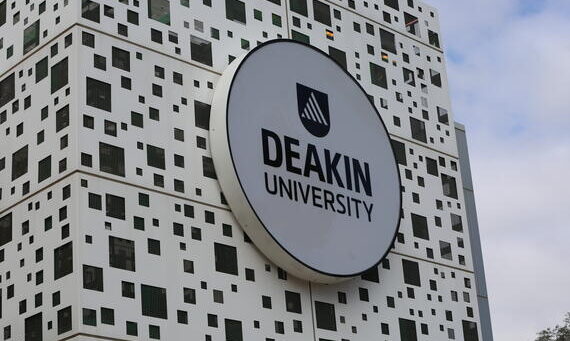
Deakin University has found it underpaid casual staff $2.9 million over the last eight years, adding to the growing list of wage underpayments in the sector.
Please login below to view content or subscribe now.

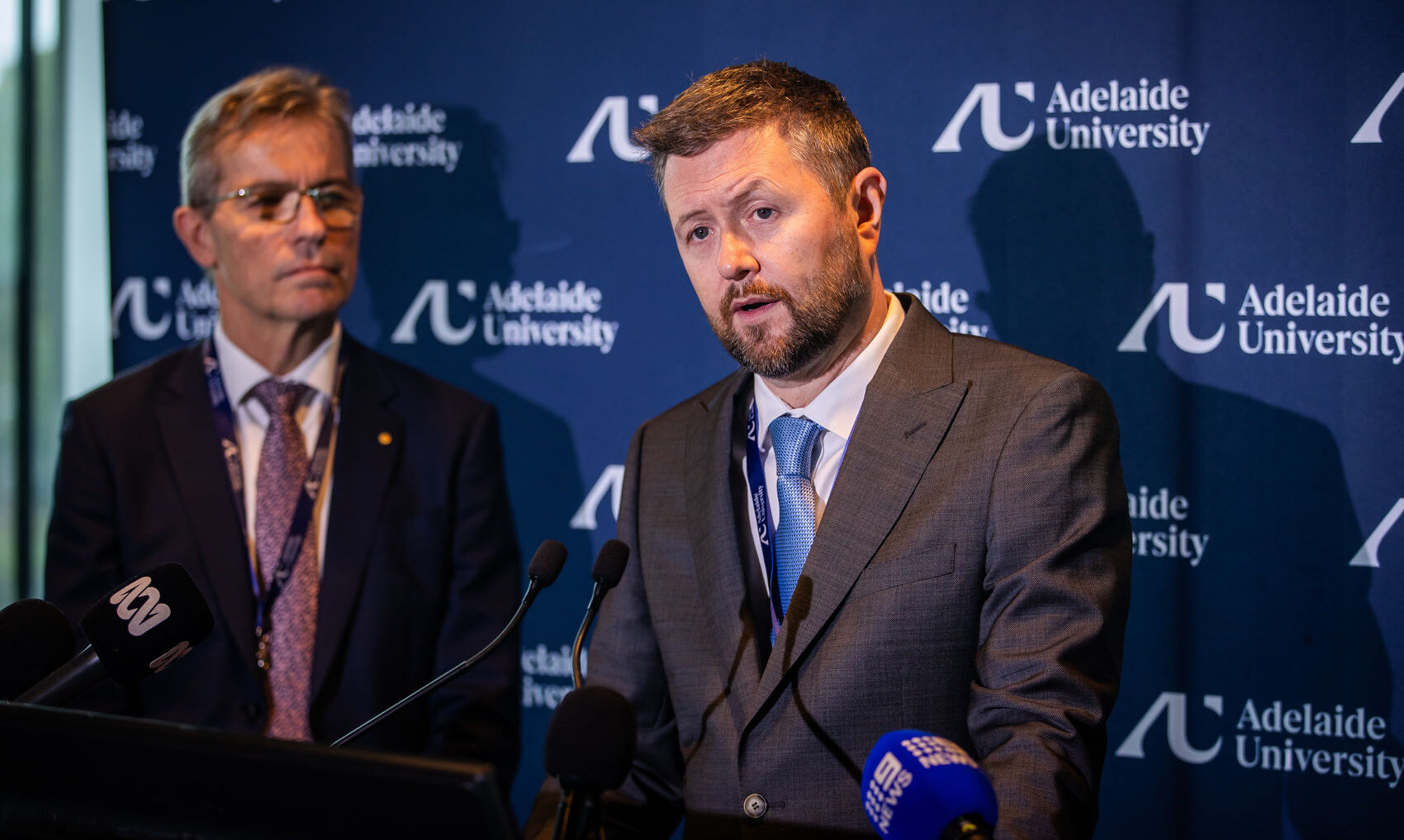
The leaders of the merged Adelaide University told senators compliance costs are taking away from spending on research and students at a federal governance inquiry on Monday.
Please login below to view content or subscribe now.
Billionaire philanthropist MacKenzie Scott has donated $387 million in unrestricted funds to eight historically Black colleges and universities in recent weeks. Each institution described their donation as one of the biggest, if not the biggest, in their history. Scott, who is largely out of the public eye, does not announce donation values unless the recipients do.
The number of layoff notices the University of Southern California has issued since July. The private institution’s leadership said last week that it is “on track” to eliminate its longstanding deficit by the end of the fiscal year, following the significant cost-cutting measures.
This is the end of an era. Even if things settle out, the damage has already been done.
Michael Lubell
Physics professor at City College of New York
Under an August presidential order, Trump administration political appointees at federal agencies now have the power to ensure grant awards align with the federal government’s “priorities and the national interest” and don’t promote undefined “anti-American values.”
Academics and researchers like Lubell are raising alarms that the change — yet another significant departure from scientific funding norms — will erode U.S. research.

The U.S. Department of Education’s downsizing under the Trump administration has intensified debate among parents, special education advocates and policy experts about the federal government’s role in serving students with disabilities. Some critics of the Education Department’s Office of Special Education Programs say an overhaul is needed to improve responsiveness to parents’ concerns and school districts’ needs, while others have called for the office, which oversees implementation of the Individuals with Disabilities Education Act, to be eliminated altogether.
Advocates, however, have warned that shrinking the department would “decimate implementation of key education and disability laws.”
Number of the week:
6%

Academics and businesspeople have given evidence to a NSW inquiry into university governance about the role appointed council members play in the management of institutions.
Please login below to view content or subscribe now.
The University of Technology Sydney (UTS) vice-chancellor has been asked whether he would consider an alternative restructure plan written by his own academics, at a NSW government hearing on Friday.
Please login below to view content or subscribe now.

Southern Cross University has launched the first specialised university programs in neurodiversity and the circular economy in Australia to attract new students.
Please login below to view content or subscribe now.
This blog was kindly authored by Professor Sir Chris Husbands, who is a Director of Higher Futures and a HEPI Trustee. He was previously the Vice-Chancellor of Sheffield Hallam University.
The Final Report of the Curriculum and Assessment Review led by Becky Francis has been published. At 196 pages, with 16 pages of recommendations, it is a long and complex document – long and complex enough for early commentary to find quite different things in it. The Daily Telegraph headline was ‘five year olds to learn climate change under Labour’ (a Bad Thing). The Guardian headline was that the curriculum “should focus less on exams and more on life skills” (a Good Thing). The Times was more neutral, picking up on “more diversity — and fewer exams at GCSE” (which could be Bad Things or Good Things). The report’s length and attention to analytical detail (there are 478 footnotes and what is by comparison a brief analytical annex of 37 pages) make it difficult to summarise. But so do the granularity of the recommendations, which include such recommendations as that the Government reviews “how the PE Key Stage 1 to 4 Programmes of Study refer to Dance, including whether they are sufficiently specific” (p 106), or that it “makes minor refinements to the Geography Programmes of Study” (p 83). The detail and granularity are consistent with Becky Francis’s repeated statement that her review would be “evolutionary not revolutionary”, and there is enough here to keep curriculum leaders in schools and assessment policy wonks in awarding bodies busy for a very long time. But they make it difficult to see the underlying ideas.
But underlying ideas are there. From the perspective of higher education policy, there are probably three. The first is commitment to evolution rather than revolution. The school curriculum in five years’ time will not be unrecognisable from now. It will continue to be a subject-based, knowledge-led curriculum. Some of the more egregious aspects of the Gove reforms of a decade ago – the obsession with formal teaching of technical grammar such as ‘fronted adverbials’ (p 75), the overloading of history programmes of study (p 85) and the obsession with pre-twentieth century literature (p79) — are abandoned. There is greater emphasis on diversity and inclusion “so that all young people can see themselves represented” in what they learn (p 10). The review is conservative on assessment. The burden of assessment at 16 is to be reduced, suggesting that a reduction of 10% in GCSE examinations is feasible to increase time for teaching (p 135), but not changed in its overall form. Government “[should] continue to employ the principle that non-exam assessment should be used only when it is the only valid way to assess essential elements of a subject” (pp 138, 193), because “externally set and marked exams remain the fairest and most reliable method of assessment” (p 136).
This rebalancing, with less prescription, greater clarity between what is statutory and what is advisory and the reduced volume of GCSE (but not, unless I have missed it, A-level) assessment is the key to a second underlying idea which is an attempt to enhance teacher agency. This is cautious. The report is strong on pupil entitlement: this is a “national curriculum … for all our children and young people” (p180), which obviously means that it should apply to academies as well as local authority maintained schools, and that it should apply to all learners, not least because “learners with the lowest GCSE attainment (particularly grades 1 or 2) have fundamental knowledge gaps that extend to earlier key stages” (p163). But the report also recognises that any curriculum depends on those who teach it, and it recommends that the overhaul of programmes of study “involve… teachers in the testing and design of Programmes of Study as part of the drafting process” (p54). In all curriculum reform, the balance between prescription and latitude, between entitlement and flexibility is difficult. The report creates more space for teachers to make choices, but it retains a strong prescriptive core, and in some cases extends that: under current arrangements, Religious Education, although compulsory is outside the national curriculum. Francis wants the content brought into national requirements, and there will be hard fought arguments about RE.
The third key idea is about the 16-19 curriculum. The review stresses the key importance of level 3 learning and qualifications in “shaping life chances and supporting our economy” (p31), and it is sensibly less clear-cut than the interim report appeared to be on the differentiation between academic and vocational pathways at 16-19. Arguably, the report is agnostic about which Level 3 pathway students pursue, providing that more do access level 3. The report recommends abandoning the English Baccalaureate performance measure on the evidential grounds that “whilst well-intentioned [it has] not achieved” its goal and has “to some degree unnecessarily constrained students’ choices” (p10). The EBacc will be largely unmourned, except by its ministerial architects. The Review’s strong focus on progression is critical and may be its most important feature in the long term. Francis “thinks it is important that as many learners as possible who have achieved level 2 (five GCSEs at grade 4 or above or the equivalent) should be supported to study at level 3” (p141). This is obviously important for HE and is consistent with the Prime Minister’s Labour Party conference commitment to expand access to tertiary education. The Review unsurprisingly endorses the new ‘V-level’ qualification, although T-levels and V-levels refer to concepts (technology, vocational education) which are not levels of study. The Review remains committed to T-levels, and was probably required to be, but its evidence here on take-up (just 3% of learners, p141) is a reminder about just how far there is to go to establish T-levels. But the fundamental point is that the future of widening participation at all levels of tertiary education depends on improving progression from level 2 to level 3.
The Curriculum Review is a frustrating document to read. It is complex, thorough in its analysis of evidence and has clearly been hemmed in by policy priorities in several directions. It is dogged and detailed, well-meaning and intelligent, realistic about the world as it is and cautious about radical change. It offers a nip here, a tuck there and a tweak in other places. Arguably, this is Starmerism in the form of education policy. Natalie Perera, CEO of the Education Policy Institute, which I chair, called it “a broadly sensible direction of travel” and that is right. The initial reaction of the Opposition that the review rates “learning about climate change as more important than learning to read and write” is clearly absurd.
Many of the Review recommendations are for government and others to do further work. That means that the real impact of the Review depends less on the recommendations themselves than on the combination of political will and strategic implementation to make things happen. The government’s immediate response, which has been to accept some of the recommendations, suggests that there is scope for a good deal of frustration as thinking turns to implementation. Higher education academics and institutions care a lot about the ways that the compulsory education system prepares young people for entry to higher education – even if that is not its main function. What they get from the review is a largely recognisable curriculum landscape, conservatism about assessment approaches, a national entitlement to a more modernised and flexible curriculum, and, above all, a strong focus on pathways into post-16 study.

It feels like Christmas has come early for policy nerds. At 6.01am this morning, we finally got sight of Building a world-class curriculum for all, the long-awaited report from the Government’s independent Curriculum and Assessment Review (CAR).
Overseen by Professor Becky Francis, who is an experienced educational leader and researcher and someone who also has a background in policy, it was commissioned when the Labour Government was facing brighter days back in their first flush.
The first thing to note about the report is that, in truth, independent reports commissioned by governments are only half independent. For example, the lead reviewer is usually keen to ensure their report lands on fertile soil (and, indeed, is usually chosen because they have some affinity to the people in charge). In addition, independent reviews are supported by established civil servants inside the machine and there is usually a conversation behind the scenes between the independent review team and those closest to ministers as the work progresses. (In higher education, for example, both the Browne and Augar reviews fit this model.) So it is no great surprise that the Government has accepted most of what Becky’s largely evidence-led team has said.
Yet anyone reading the press coverage of the CAR while it has been underway, or anyone who has seen the front page of today’s Daily Mail, which screams ‘LABOUR DUMBS DOWN SCHOOLS’, may wonder if the report that has landed today is the nightmare before Christmas rather than a welcome festive present. There is lots to like but the document also feels incomplete, especially – for example – for people with an interest in higher education. So it is perhaps best thought of as a present for which the batteries have yet to arrive.
Nonetheless, this morning I spoke at the always excellent University Admissions Conference hosted annually by the Headmasters’ and Headmistresses’ Conference (HMC) and the Girls’ School Association (GSA) and I could not help wondering aloud whether any new restraints on state-maintained schools might give our leading independent schools, who are much freer to teach what they like, an additional edge – especially as academy schools are already, even before today, having freedoms ripped from them.
But what does the review, which had a team of 11 beneath Becky (including one Vice-Chancellor in Professor Nic Beech and also Jo-Anne Baird from the Oxford University Centre for Educational Assessment) actually say?
The first thing to note is that it is much better than the Interim Report, which said little, sought to be all things to all people and read like it had been written by one of the better generative AI tools.
In terms of hard proposals, the Final Report starts and ends with older pupils, those aged 16 to 19, for whom we are told there should be ’a new third pathway at level 3 to sit alongside A-Levels and T Levels.’ If this feels familiar, it is because the Curriculum and Assessment Review’s emerging findings helped shape the recent Post-16 Education and Skills white paper and, more importantly, because there is already such a pathway populated by qualifications like BTECs.
So there is a sense of reinventing the wheel here, with (to mix my metaphors) politicians putting a new coat of paint on the current system. In many respects, the material on 16-to-19 pupils is the least interesting part of the report – especially as there is next to nothing at all on A-Levels. The review team starkly states, ‘we heard very little concern regarding A Levels in our Call for Evidence and our sector engagement’, so they basically ignore them – in a world of change, A Levels continue to sail steadfastly on.
As trailed in the newspapers, there is a recommendation for new ‘diagnostic Maths and English tests to be taken in Year 8.’ This would obviously help track progress between the tests taken at the end of primary school (in Year 6) and the public exams taken at age 16. But the idea has already prompted anger from trade unionists, almost guaranteeing that the benefits and downsides will be overegged in the inevitable political rows to come.
There are also numerous scattergun subject-by-subject recommendations. These are largely sensible (see, for example, the iideas on improving English GCSEs or the section on Science) but also a little unsatisfying. Some of the subject-specific changes are a little trite or inconsequential (like tweaks to the name of individual GCSEs) while others need much more detail than a general review of everything that happens between the ages of 11 and 19 is able to offer. Any material changes will need to be at a wholly different level of detail to what we have got today, and they will be some years away, so may make no difference to anyone already at secondary school.
Other points to note include that the Review is Gove-ian in its love of exams, which it stresses are a protection against the negatives of AI, over coursework. (I suspect Dennis Sherwood, the campaigner against grading inaccuracy will be incandescent about how the report appears to skate over some of the imperfections of how exams currently operate.) However, despite the support for exams, one of the crunchiest recommendations in the review is the proposal of a 10% reduction in ‘overall GCSE exam volume’, which we are told can happen without any significant downsides, though the tricky details are palmed off to Ofqual and others.
The one really clear place where Professor Francis’s review team and the Government, who have generally accepted the recommendations, are out of kilter with one another is on Progress 8.
Progress 8 is a school accountability measure that assesses how much ‘value-added’ progress occurs between primary school (SATs) and GCSEs. It is such a favoured measure that the Government has recently proposed a new Progress 8 measure for universities (which is a mad idea that wrongly assumes universities are just big schools – in reality, it is a defining feature of universities that they set their own curricula and are their own awarding body).
Becky Francis opposes the EBacc, which is a metric related to, but separate, from Progress 8, yet she wishes to maintain some vestiges of the EBacc within Progress 8. While the EBacc focuses specifically on how many students achieve qualifications in a list of specially favoured subject areas (English Lang and Lit, Maths, Sciences, Geography or History plus a language), the CAR recommends ‘the removal of the EBacc measures but the retention of the EBacc “bucket” in Progress 8 under the new title of “Academic Breadth”.’
This is something the Government is not running with, favouring less restrictions on Progress 8 instead, which may or may not reinvigorate some creative subjects. Yes, it is all exceptionally complicated but Schools Week have an excellent guide and the two pictures below (from Government sources) might help: the first shows the status quo on Progress 8 and is what Becky Francis wishes to maintain (though pillars 3, 4 and 5 would be renamed if she got her way); the second shows the Government’s proposal.

Call me simple, but I was always going to judge the Curriculum and Assessment Review partly on the extent to which it tackled specific challenges that we have looked at closely at HEPI In recent years. Here the CAR is a mixed bag. On the positive side of the ledger, the review recommends more financial education, reflecting the polling we conducted to help inform the CAR’s work: when we asked undergraduates how well prepared they felt for higher education, 59% said they felt they should have had more education on finances and budgeting.
The most obvious problem that the CAR insufficiently addresses is the huge underperformance of boys. This issue usually gets a namecheck in Bridget Phillipson’s interviews but it was entirely ignored in the recent Post-16 white paper; in the CAR, it does at least receive a quick nod and just maybe some of the proposed curriculum changes will benefit boys more than girls. But there is more focus on class and other personal characteristics than sex and in the end the brief acknowledgement of boys’ underperformance does not lead to anything properly focused on the problem.
This is very strange for we simply cannot fix the inequalities in outcomes until we give the gaps in the attainment of boys and girls the attention they deserve. I am beginning to think I was wrong to be so hopeful that a female Secretary of State was more likely to focus on this issue than a male one (on the grounds that it would be less sensitive politically).
Another area where we at HEPI have been mildly obsessed is the catastrophic decline in language learning, as tracked for us by the Oxonian Megan Bowler. Here, as with boys, the new review is disappointing. In the section looking at welcome subject-by-subject changes, the recommendations on languages are both relatively tentative and relatively weak. As one linguist emailed me first thing this morning, ‘It is pretty remarkable that the CAR’s decision on languages runs exactly contrary to the best and consistent advice of the key language advisers on the issue’. However, the Government’s response goes a little further and Ministers promise to ‘explore the feasibility of developing a new qualification for languages that enables all pupils to have their achievements acknowledged when they are ready rather than at fixed points.’ We might not want languages always to be treated so differently from other subjects but I am still chalking that up as a win.
The CAR also ignores entirely one issue that is currently filling some MPs’ postbags – the defunding of the International Baccalaureate (IB). The IB delivers a broad curriculum for sixth-formers, is liked by highly selective universities and tackles the early specialisation which marks out our education system from those in many competitor nations. Back in the heady Blair years, Labour politicians loved the qualification and promised to bring it within touching distance of most young people.
As HEPI is a higher education body, it also feels incumbent upon me to point out that higher education is largely notable by its absence in the CAR, with universities being mentioned just nine times across the (almost) 200 pages and despite schools and colleges obviously being the main pipeline for new students. It is rather different from the days when universities were regarded as having a key direct role to play in designing what goes on in schools. Indeed, our exam boards tended to originate within universities.
The odd references to universities that do make it in to the CAR report are not especially illuminating. For example, more selective universities appear as part of the rationale for killing the EBacc ‘the evidence does not suggest that taking the EBacc combination of subjects increases the likelihood that students attend Russell Group universities.’ Universities also appear in the section on bolstering T Levels, with the review proposing ‘The Government should continue to promote awareness and understanding of T Levels to the HE sector.’ But that is about it.
Incidentally, there is also less in the report on extracurricular activities than the pre-publication press coverage might have led you to believe, even if the Government’s response to the review does focus on improving the offer here.
Becky Francis used to head up the UCL Institute of Education (IoE), which is an institution that has always wrestled with excellence versus opportunity. Years ago, I sat in a learnèd IoE seminar on why university league tables are supposedly pernicious – but I had to walk past multiple banners boasting that the IoE was ‘Number 1’ in the world for studying education to get to the seminar and, while I was in the room, news came through that the IoE was going to cement its reputation and position by merging with UCL.
Such tension is a reminder that educational changes generally have trade-offs and the Executive Summary of the main CAR document admits: ‘All potential reforms to curriculum and assessment come with trade-offs’. Abolishing the EBacc as the CAR team want and watering down Progress 8 as the Department for Education want, might help some pupils and some disciplines while making the numbers we produce about ourselves look better – though the numbers produced by others about us (at places like the OECD) could come to tell a different story in time.
In the end, we have to recognise that there are only so many hours in the school day, only so many (ie not enough) teachers and only so much room in pupils’ lives, not to mention huge diversity among pupils, schools and staff, which together ensure there can be no perfect curriculum. More of one subject or more extracurricular activities are likely to mean less of other things because the school day is not infinitely expandable (and there is nothing here to free up teachers’ time or fill in all those teacher vacancies). Yet the school curriculum does need to be revised over time to ensure it remains fit for purpose.
The question now is whether the CAR report matters. Will we still be talking about it in 20 years time? Can a Government buffeted by all sides, facing a huge fiscal crisis and with a Secretary of State for Education who sometimes seems more focused on political battles (like the recent Deputy Leadership election of the Labour Party) than on engaging with the latest educational evidence really deliver Becky Francis’s vision? Or will the CAR’s proposals wilt as quickly as the last really big proposal for curriculum reform: Rishi Sunak’s British Baccalaureate? In all honesty, I am not certain but there are, in theory at least, four years of this Parliament left whereas Rishi Sunak spent more like four months pushing his idea.
My parting thought, however, is different. It is that, while the trade-offs in the CAR report partly just represent the facts of life in education, they do not entirely do so. Trade-offs are much trickier to deal with when you are also seeking to root out diversity of provision. And in the end, if there is one thing that marks this Government’s mixed approach to schooling out above all, it is the desire to make all schools more alike, whether that is reducing academy freedoms, micromanaging the rules on school uniforms, defunding the IB, forcing state schools to stop offering classical languages or pushing independent schools to the wall. Would it be better, and also make politicians’ lives easier, if we stopped pretending that the 700,000 kids in each school year group are more like one another than they really are?
Postscript: While the CAR paper is infinitely more digestible than the interim document, there is still some wonderful eduspeak, my favourite of which is:
A vocational qualification is aligned to a sector and is usually taught and assessed in an applied way. A technical qualification meanwhile has a direct alignment with an occupational standard. Despite the name ‘Technical Awards’, these qualifications are therefore vocational rather than technical.