Tag: review

  • Senators ask Bishop about $800,000 expenses – Campus Review

    Senators ask Bishop about $800,000 expenses – Campus Review

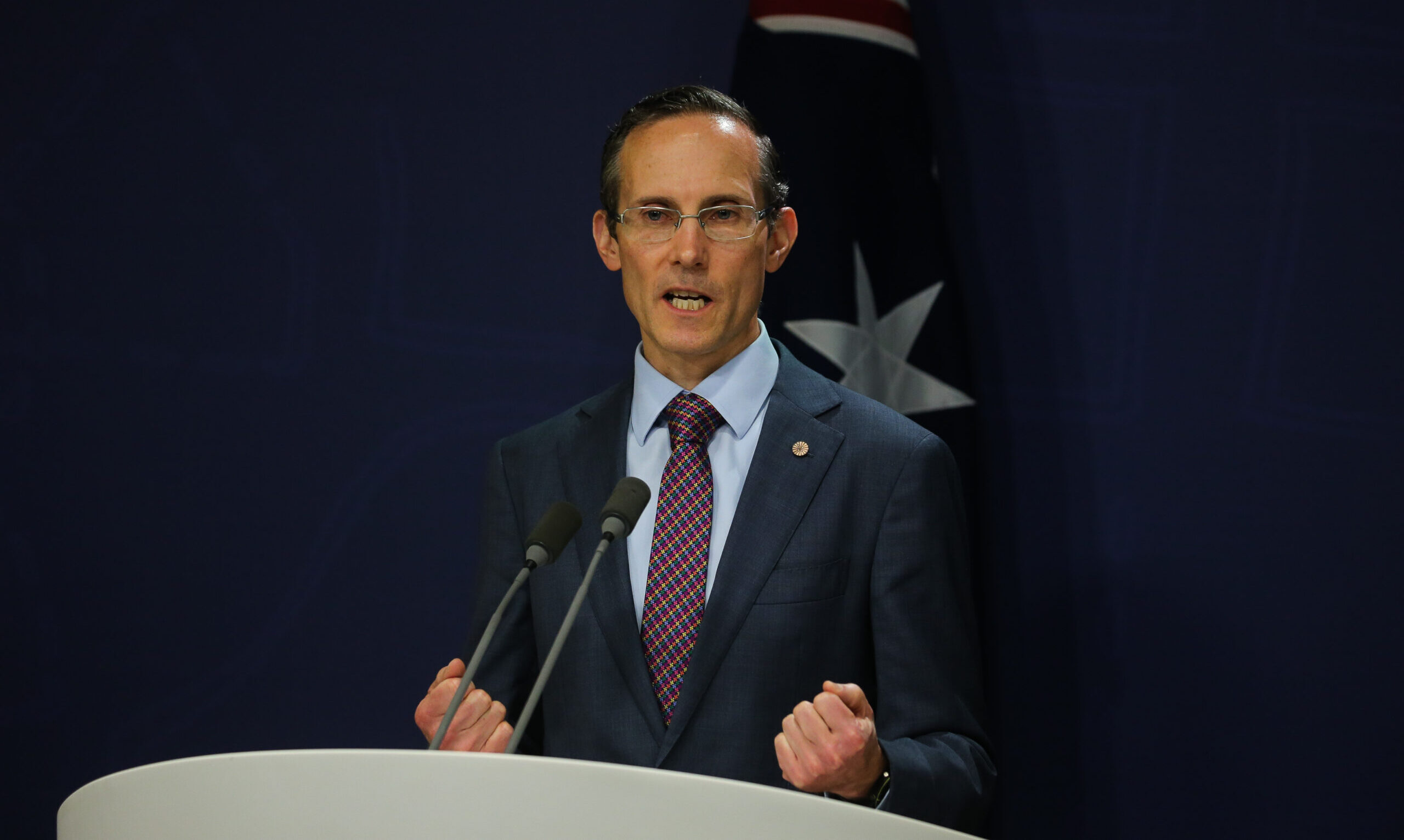
    Senators have grilled embattled Australian National University (ANU) chancellor Julie Bishop on her spending habits after she racked up nearly $800,000 in expenses while slashing more than 1000 jobs since August of last year.

    Please login below to view content or subscribe now.

    Membership Login

    Source link

  • Should students be involved in governance? – Campus Review

    Should students be involved in governance? – Campus Review

    On Campus

    Student voice is not a survey or metric but rather fostering a culture of participation on campus

    Students participating in management decisions starts in the classroom and should be supported right through to governing bodies, a student experience expert has said.

    Please login below to view content or subscribe now.

    Membership Login

    Source link

  • iSpring Course Creation Contest – Campus Review

    iSpring Course Creation Contest – Campus Review

    Creating online courses that truly engage learners is no small feat. That’s why the iSpring Course Creation Contest has become such an exciting platform for educators, students, and learning professionals in Australia and around the globe. It’s more than a competition, it’s a hands-on, skill-building experience that inspires creativity, encourages collaboration, and gives participants the chance to shine.

    This year, the contest attracted 1,097 applications from 100 countries, culminating in 109 impressive final projects. The contest offered a practical way for newcomers, considering their career in ID design, to explore iSpring Suite, a powerful authoring tool for building slide-based and scrollable courses. Participants went through an intensive onboarding program to learn not only how to use the software, but also how to craft courses that are interactive, visually compelling, and pedagogically sound.

    For students and educators in Australia, especially those enrolled in instructional design programs, this kind of hands-on experience is a real advantage. It helps them build the practical skills and confidence needed to excel in a field that’s rapidly growing and evolving.

    Learning Through Collaboration

    One of the most exciting aspects of the contest was the community. Participants weren’t working in isolation, they received guidance from past winners and expert judges, including industry leaders: Nicole Lugara, Clark Quinn, David Kelly, Holly Owens, Mike Taylor, Robin Sargent, and ten other experts. This feedback helped participants refine their projects and grow their skills.

    The collaborative environment encouraged participants to exchange ideas, discuss challenges, and learn from one another that mirrored the real-world teamwork existing in instructional design.

    Demonstrating Creativity and Skills

    Contestants could create content in two categories: slide-based courses and scrollable courses. They were evaluated on learning objectives, content consistency, design, learner engagement, compliance, and creativity.

    Celebrating the Winners

    Here are the winners in both categories and a glimpse of their outstanding work:

    Winners in the slide-based course category

    Winners in the scrollable course category

    These projects showcase creativity, technical skill, and a deep understanding of instructional design — one of the most in-demand skills in today’s era of digital education. They prove that great ideas, when paired with the right tools, can turn learning into an engaging and impactful experience.

    Winners not only received cash prizes and certificates, but also recognition that strengthens their professional portfolios and encourages others to join and explore the new field of eLearning.

    Learning That Lasts Beyond the Contest

    The iSpring contest isn’t just a one-time event — it’s a launchpad for ongoing professional growth. From live Q&A sessions to structured training and expert feedback, participants gained insights and skills they can apply long after the competition ends. For educators and students alike, this kind of practical experience is invaluable in a world where online learning and instructional technology are constantly evolving.

    Your Turn to Shine

    If you’re ready to explore new tools, strengthen your instructional design skills, and connect with a global eLearning community, start your journey with a free trial of iSpring Suite. Whether it’s building your first course or taking your portfolio to the next level, the next contest is just around the corner, and it’s your chance to shine.

    Create, connect, and inspire, because the future of online learning is waiting for bold ideas like yours.

    Do you have an idea for a story?
    Email [email protected]

    Source link

  • One Aus university in top 50 THE rankings – Campus Review

    One Aus university in top 50 THE rankings – Campus Review

    Australia’s universities have charged up the global leaderboard in a year where many of their international peers lost ground, according to a world-renowned tertiary rankings list.

    Please login below to view content or subscribe now.

    Membership Login

    Source link

  • Universities in the age of intelligent machines – Campus Review

    Universities in the age of intelligent machines – Campus Review

    When Geoffrey Hinton, the so-called ‘godfather of AI’, declared in 2016 that ‘we should stop training radiologists now,’ his warning caused a stir.

    Please login below to view content or subscribe now.

    Membership Login

    Source link

  • Students on the UQ experience – Campus Review

    Students on the UQ experience – Campus Review

    University of Queensland pro-vice-chancellor of education and student experience Suzanna Le Mire hosted a student panel at the Queensland Commitment summit in October.

    Please login below to view content or subscribe now.

    Membership Login

    Source link

  • Understanding and writing the Literature Review in Mba Projects

    Understanding and writing the Literature Review in Mba Projects

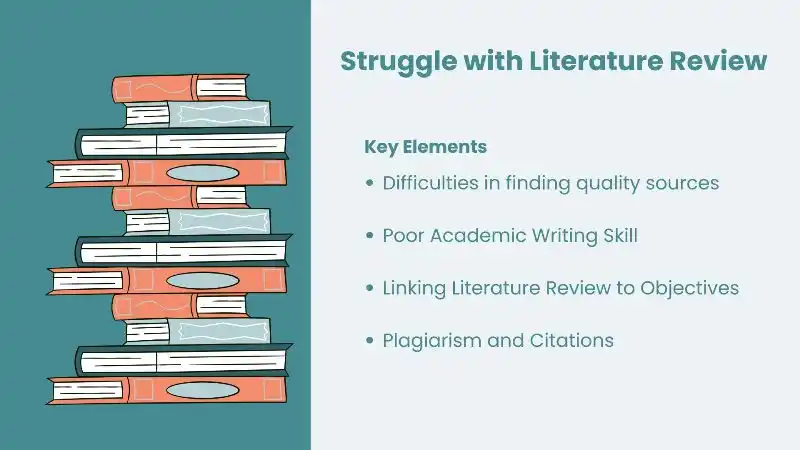
    Understanding the Topic: Even before starting to write a student should be having a full clarity about the research title, the objective of the study and the research problems.

    Searching for Relevant Literature: Students should search the academic libraries like Google Scholars, Research Gate, JSTOR or Scopus.

    Evaluating Sources: Once relevant sources are collected students should analyze, evaluate the objective, findings and limitation of those studies.

    Grouping of Literature: Collected literature should be grouped as per the subheading of the required studies.

    Write Critically: Literature review should be written critically and analytically relevant to the study .

    Identify the Research Gap: Students should analyze and find the research gap and specify where his study will add value to those gaps.

    Cite & Reference: Students should use formats like APA (7th edition) or Havard Referencing style while using in text citing.

    Source link

  • Texas Systems Review Course Descriptions, Syllabi

    Texas Systems Review Course Descriptions, Syllabi

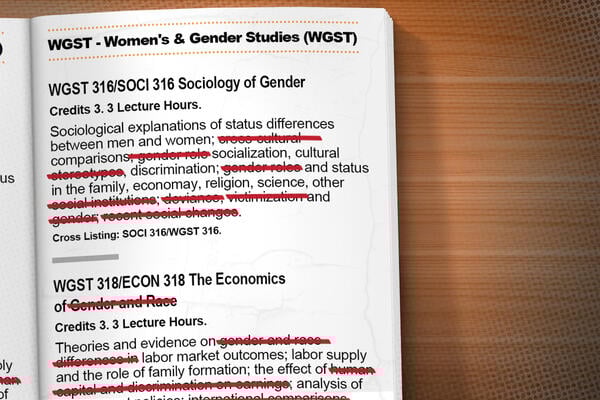
    As conservative Texas politicians identify and target faculty who teach about gender identity, officials at six Texas public university systems have ordered reviews of curriculum, syllabi and course descriptions.

    The impetus is clear: Texas A&M University fired a professor, demoted two administrators and pushed out its president after conservative politicians lambasted the institution for a lesson on gender identity in a children’s literature class. Their criticism hinged on the fact that the topic was not reflected in the brief course catalog description for the class. Before he resigned, Texas A&M president Mark Welsh ordered an audit of all courses at the flagship campus, which the system Board of Regents quickly extended to all Texas A&M institutions.

    “The Board has called for immediate and decisive steps to ensure that what happened this week will not be repeated,” the regents wrote in a statement posted on X. “To that end, the Regents have asked the Chancellor to audit every course and ensure full compliance with applicable laws.”

    Other systems soon followed. On Sept. 29, University of North Texas system chancellor Michael Williams instructed the president of each institution to “conduct an expedited review of their academic courses and programs—including a complete syllabus review to ensure compliance with all current applicable state and federal laws, executive orders, and court orders,” he wrote in a letter. The review is due Jan. 1.

    The University of Texas system is reviewing all courses on gender identity to “ensure compliance and alignment with applicable law and state and federal guidance, and to make sure any courses that are taught on a U.T. campus are aligned with the direction and priorities of the Board of Regents,” according to a statement from the system. The review will be discussed at the Board of Regents meeting in November.

    System leaders at several public institutions have cited Texas House Bill 229, President Donald Trump’s Jan. 20 executive order and a Jan. 30 letter from Gov. Greg Abbott that said, “All Texas agencies must ensure that agency rules, internal policies, employment practices, and other actions comply with the law and the biological reality that there are only two sexes—male and female.” Yet no current federal or state laws prohibit public university professors from teaching about transgender identity.

    A University of Houston system spokesperson told The Texas Tribune that it is completing a review of general education courses in compliance with Texas Senate Bill 37, which took effect this fall. The law requires public universities to complete a curriculum review every five years, but the first reviews aren’t due until 2027. Texas Woman’s University is also conducting a review of all academic courses and programs, the Tribune reported.

    Texas Tech University ordered its faculty to ensure that course content complies with Texas and U.S. law, as well as the federal and gubernatorial executive orders that declare the existence of only two genders—male and female. The resulting oral policies—which officials are purposely not writing down—severely limit what faculty can teach about gender identity and effectively erase transgender people and topics from the curriculum.

    It’s unclear how each of the six university systems will respond after their reviews are complete, and whether courses will be censored or entirely removed from the catalog.

    “Faculty are highly trained experts in their fields of study. It harms education for faculty to be told what to teach by politicians,” Brian Evans, President of the Texas Conference of the American Association of University Professors, told Inside Higher Ed by email. “For example, it is impossible to teach about gender without recognizing that there are countless gender identities and gender expressions across the world, the ideology that there are only two genders being only one of those.”

    The conservative politicians who have gone after institutions and faculty for teaching about gender identity have found professors through syllabi and course information posted online. As the risk of doxing grows, faculty are working to keep their information private, but new technology and Texas law are adding complications.

    Hundreds of American colleges and universities are now requiring their faculty to upload syllabi to Simple Syllabus, a third-party platform that offers uniform syllabus templates and easy editing; it also allows faculty to embed syllabi into campus learning management systems. According to the company’s website, more than 500 colleges and universities currently use the platform. Institutions may limit who can view the syllabi—for example, Clemson University requires users to log in with university credentials.

    But other institutions—including the University of Houston, Texas A&M University and the University of Texas at Austin—allow the general public to view their Simple Syllabus pages. This may be in part due to Texas House Bill 2504, a 15-year-old law that requires public institutions to provide publicly accessible syllabi that include major assignments and exams, required or recommended readings, and a general description of lecture or discussion topics.

    Andrew Joseph Pegoda, a lecturer in the Women’s, Gender and Sexuality Studies Department at the University of Houston, experienced the risks of this public access firsthand. In August, a conservative news site published a piece targeting Pegoda for teaching two courses that include queer theory in the curriculum and that, according to the news site, exemplify “indoctrination in women’s and gender studies departments.”

    “I realized that they got their information from Simple Syllabus,” Pegoda said. The platform allows users to search posted syllabi at an institution using keywords—for example, searching the word “queer” on the Simple Syllabus page for one Texas university returned four different syllabi that included the term.

    The spotlight on Pegoda came and passed quickly, largely because his name wasn’t included in the article’s headline. “I’m glad it wasn’t worse than it was. It could have been more direct or more vicious,” he said.

    Simple Syllabus spokesperson Matthew Compton-Clark said the company has not received any reports of targeting via the platform. “We take data privacy extremely seriously, and are a faculty-first organization,” he wrote in a statement to Inside Higher Ed. “We provide multiple privacy features, giving faculty the ability to set not just their entire syllabus private, but individual components as well. This same feature also exists for the institution, allowing the school to set the visibility of the entire syllabus, or individual parts of the document based on their state-specific legislation.”

    The Texas law does not require the public syllabi to include class meeting times or locations, though many professors don’t amend the public versions of their materials to exclude that information. Pegoda said he’s been advised to “put minimum detail in the public Simple Syllabus and then to provide a more regular syllabus to students,” he said.

    But, in the wake of the incident at Texas A&M, that may not work, he said. “Now professors are being encouraged to very specifically detail everything in the syllabus so as to not potentially get fired or have student complaints.”


    Source link

  • Unis need modern tech for flexible courses – Campus Review

    Unis need modern tech for flexible courses – Campus Review

    Calls for universities to offer shorter, more flexible courses that meet the demands of Australia’s future economy must be met with better technology management, according to sector voices from a leading software company.

    Please login below to view content or subscribe now.

    Membership Login

    Source link

  • Students told degrees revoked in WSU hack – Campus Review

    Students told degrees revoked in WSU hack – Campus Review

    Western Sydney University (WSU) has been warned it may be in breach of its data safety obligations by the university watchdog after thousands of students and graduates received scam emails claiming their qualifications had been stripped.

    Please login below to view content or subscribe now.

    Membership Login

    Source link