The average tuition and fees paid by students and their families after aid rose slightly for the 2025-26 academic year but remain well below historic peaks, according to the latest higher education pricing study from the College Board.
At public four-year colleges, net tuition and fees for first-time, full-time students increased just 1.3% to $2,300 from last year,when adjusted for inflation, according to the College Board’s estimates. That figure is down 48.3% from the peak in 2012-2013.
At private nonprofits, net tuition and fees for first-time, full-time students rose 3.7% annually to $16,910 in the 2025-26 year, when adjusted for inflation. By comparison, that’s down 14.6% from the peak for private colleges in 2006-07.
Dive Insight:
Despite widespread debate over the cost of college, in real terms those costs have largely decreased for students over the past two decades. Grants from both public and institutional sources can defray those costs and often significantly reduce college sticker prices.
In 2024-25, grant aid rose an inflation-adjusted 5.4% to $173.7 billion, according to the College Board. Much of that increase comes from a 19% spike in Pell Grant aid, which went to nearly 1 million more studentsduring the 2024-25 year. Enrollment in the program rebounded and eligibility expanded under the FAFSA Simplification Act.
Last year’s 7.3 million Pell recipients still fell well below the program’s height of 9.3 million in 2010-11. Total government spending on Pell, at $38.6 billion in 2024-25, was down about one-fourth from its peak in 2010-11 after inflation.
Institutional aid plays a significant role in reducing sticker prices as well, and increasingly so as colleges wrestle with enrollment pressures and competition. Grant aid from colleges made up 33% of the $205.2 billion in total student aid, which includes federal loans, for undergraduates in 2024-25. That’s compared to 23% a decade earlier, according to the College Board study.
That has reduced the burden for students. Average student debt for bachelor’s degree recipients in 2023-24 was $29,560,about $6,000 less than it was 10 years prior, according to the report.
While sticker prices have been rising, adjusting for inflation tempers the price growth. Before inflation, tuition and fees for residents rose 2.9% at four-year public colleges in 2025-26, while sticker prices rose 4% at private nonprofits. After factoring in inflation, those sticker price increases were 1% and 1.4%, respectively.
Still, the public often focuses on sticker price, and tuition discounting often muddies the college cost picture. Although tuition discounting often helps colleges recruit students, some experts say high sticker prices can scare off those not attuned to the complexities of college pricing and can distort the public conversation around cost.
The College Board also found that college enrollment has rebounded from a pandemic-era dip. Fall enrollment hit 18.9 million students in 2023, up from 18.5 million in 2022 and 18.6 million in 2021. However, that figure is down 9.6% from peak enrollment in 2011.
Facing a proposal by congressional Republicans to significantly raise the endowment tax and other major changes for the sector, colleges spent millions of dollars on lobbying efforts in the second quarter of 2025.
An Inside Higher Ed analysis of federal lobbying spending by members of the Association of American Universities and other select institutions showed a slight uptick in spending over the first quarter of 2025. AAU members alone spent about $9 million in the first quarter of 2025, which dramatically outpaced the same time frame in 2024.
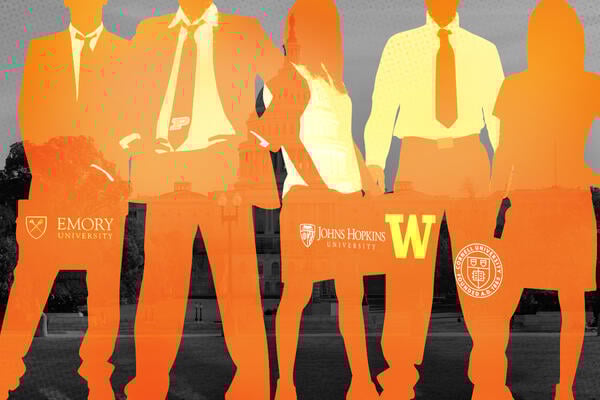
That number rose even more in the second quarter: Federal data shows AAU members spent more than $9.7 million on lobbying—and that’s without the multiple institutions that failed to report their numbers by a July 21 deadline, making the total likely higher. Emory University spent the most among AAU members, totaling $500,000. Among non-AAU members, the University of Phoenix spent the most, at $480,000.
Here’s a look at how much universities spent on federal lobbying in the second quarter of 2025, and what issues they focused on between April 1 and June 30, as reported in required disclosures.
Lobbying Expenditures
Some institutions maintained spending levels similar to the first quarter, while others significantly increased lobbying expenditures. Emory, for example, spent $170,000 in the first quarter of 2025. But in the second quarter it increased that spending by $330,000 as lobbyists pressed Congress on cuts to federal research and public health funding, Senate disclosure reports show. Compared to data from prior years, this is the most Emory has spent on lobbying in one quarter.
(Emory did not respond to a request for comment.)
Emory was one of a few institutions that cracked the top 10 in terms of spending while also having the highest percentage increase in lobbying expenditures, at nearly 200 percent. Others that heavily ratcheted up lobbying efforts include Cornell University, which went from $230,000 to $444,000 over one quarter; the University of Washington, which jumped from $250,000 to $440,000; and Johns Hopkins University, which boosted lobbying from $170,00 to $380,000 between quarters.
Only the University of Washington provided a statement to Inside Higher Ed on lobbying expenses, with spokesperson Victor Balta writing, “In light of a changing federal policy environment, we want to make sure that we are well represented so that we can continue to serve the American people through our teaching and research. Additionally, some expenses from our associations in these areas have gone up or are charged in Q2 for the full year.”
All four institutions—along with many others—brought concerns about federal research funding to Congress, according to lobbying disclosure forms. Other key concerns for the sector included legislation that would likely limit international student enrollment and federal student aid.
Some institutions dialed back their lobbying expenditures in the second quarter.
Northwestern University spent the most on lobbying among single-institution AAU members in the first quarter of 2025 (excluding the University of California, which lobbies as a system)—$607,000. That declined to $306,000 for the second quarter, a figure that remains in the top 10 among AAU member institutions despite falling by nearly half.
Lobbying Wins and Losses
Higher education lobbyists seemed to score at least a few wins with their congressional efforts.
Liz Clark, vice president for policy and research at the National Association of College and University Business Officers, noted at NACUBO’s annual conference this week that recent federal legislation could have imposed far-reaching and costly changes for higher education.
The One Big Beautiful Bill Act, as President Donald Trump deemed it, capped some student loan programs and eliminated the Grad PLUS program, limited repayment options, and mandated that programs pass an earnings test for attendees to be able to access federal student loans. The federal legislation also tweaked the endowment excise tax, among other changes for the sector.
But Clark noted that a leaked memo from January, well before the bill was passed in July, showed congressional Republicans considered changes that would have gone further, including imposing taxes on scholarships, dramatically increasing the endowment tax and cutting certain tax credits.
“In that memo, it was very clear that higher education was on the menu,” Clark said.
However, those changes never materialized as proposed. The Senate walked back House plans to significantly raise the endowment tax and extend it to far more institutions, opting for a softer blow, capping it at a maximum of 8 percent instead of the proposed 21 percent. Clark told NACUBO attendees that “what was not in the bill” was a win for the sector.
Thad Inge, vice president at the lobbying firm Van Scoyoc Associates, told NACUBO attendees Monday that the leaked memo was “a real wake-up call” that “activated a lot of advocacy.”
Inge argued that many of the proposals in the memo would have been harmful for the sector and that while higher education can absorb some hits, altogether it presented “an existential threat.” He credited individual institutions with making a personalized push to get through to Congress.
“It’s easy to demonize Harvard and Yale and Columbia and say higher education is woke,” Inge said. “But when folks hear from schools in their state, schools in their district, they don’t paint with such a broad brush. I think those cultural battles will continue, but the more we as advocates bring it back home—not that we’re not fighting on behalf of all of higher education—but I think making it more personal to the state and the district makes it easier to win those battles.”
Sector lobbyists weren’t quite as successful in other areas.
Multiple universities have lobbied to maintain research funding as the Trump administration yanked federal grants and contracts, often with little to no warning or explanation. So far, the federal government has been impervious to their efforts. Similarly, many institutions advocated for the continuance of the Grad PLUS program, which was axed by Congress in July.
Some colleges also encouraged Congress to push back on policies that could harm international enrollment and cause visa processing delays or denials—such as vetting social media posts for criticism of the U.S. government and culture—which the State Department continues to do.
Months into the second Trump administration, clear trends are reshaping the higher education landscape. Economic uncertainty stemming from inconsistent tariff policies has left businesses and consumers grappling with unpredictability. Meanwhile, efforts by the administration and congressional leadership to overhaul federal funding for higher education, including cuts to research grants and proposed cuts to Pell Grants and student loans, have created significant challenges for the sector.
The U.S. economy contracted slightly in the first quarter of 2025, with the administration’s erratic and unpredictable policies amplifying recession risks. These fluctuations have led some to draw comparisons to the 2008 Great Recession, particularly regarding public higher education. While some lessons of that recession for higher education, such as those related to state appropriations, remain relevant, others may not apply due to the administration’s unique policies and priorities.
Since the 1980s, economic downturns have increasingly impacted public higher education, primarily due to state budget cuts. During the 1980 recession, state educational appropriations per full-time-equivalent student dropped by 6 percent but recovered to pre-recession levels by 1985. In contrast, during the 2008 Great Recession, funding fell by nearly 26 percent, and most states never fully restored funding to pre-recession levels before the COVID-19 pandemic once again disrupted budgets in 2020. This prolonged recovery left public institutions financially weakened, with reduced capacity to support students.
More than a decade after the Great Recession, public institutions were struggling to regain the level of state funding they once received. This prolonged recovery significantly affected student loan borrowing. The Great Recession weakened higher education systems as states shifted funds to mandatory expenses and relied on the federal student loan system and Pell Grants to cover a growing share of students’ educational costs. As a result, when states reduce funding, students and their families shoulder more financial responsibility, leading to greater student loan debt.
During the Great Recession, public institutions were operating with reduced funding and downsizing, even as rising joblessness drove more people to enroll in college. Before 2008, total enrollment in degree-granting institutions was about 18.3 million, but by 2011–12, it exceeded 21 million. This period marked the emergence of the modern student loan crisis. Public institutions, already strained by reduced funding, faced the dual challenge of accommodating more students while maintaining quality. For many students, especially those pursuing graduate degrees, borrowing became a necessity. The economic downturn exacerbated these trends, further entrenching reliance on debt to finance education.
A future recession could have an even more pronounced impact on public higher education, particularly in terms of state funding. The recently passed House budget bill, which proposes substantial cuts to higher education and Medicaid, exacerbates this risk by forcing states to prioritize addressing these funding shortfalls. Consequently, as legislatures shift resources to more immediate needs, both states and students may find themselves unable to rely on federal aid to support education. Long-standing research indicates that states will prioritize health-care funding over higher education. This pattern suggests that recent state investments in higher education could be rolled back or significantly reduced, even before a recession takes hold.
The financial pressures on public institutions are already evident. Some systems are considering closing branch campuses, while others are cutting programs, laying off staff or grappling with declining enrollments. In addition, public regional institutions are particularly at risk, as they depend heavily on state funding and serve many of the students most vulnerable to financial challenges. If a recession occurs, these institutions may face severe and rapid downsizing.
Following downsizing, a key consideration is whether a future recession will lead to an enrollment rebound similar to that seen during the Great Recession. This issue can be analyzed through two key factors: (1) the severity of joblessness and (2) the availability of grants, scholarships and loans, as well as the repayment structures of those loans.
During the 2008 crisis, unemployment peaked at 10 percent, double the pre-recession rate, with a loss of 8.6 million jobs. Higher unemployment historically benefits higher education as individuals seek to retool their skills during economic downturns. Economists predict that under the current administration, unemployment could rise from 4.1 percent to between 4.7 percent and 7.5 percent, though projections are uncertain due to volatile policies. While higher unemployment might lead more people to consider enrolling in college, proposed changes to financial aid policies could significantly dampen such trends.
The House’s One Big Beautiful Bill Act introduces stricter eligibility requirements for Pell Grants, such as tying awards to minimum credit-hour thresholds. Students would need to enroll in at least 30 credit hours per year for maximum awards and at least 15 credit hours per year to qualify at all. Furthermore, the bill eliminates subsidized student loans, meaning students would accrue interest while still in school. This change could add an estimated $6,000 in debt per undergraduate borrower, increasing the financial burden on students and potentially deterring enrollment.
On the repayment side, the proposed Repayment Assistance Plan would replace existing income-driven repayment options. Unlike current plans, RAP bases payments on adjusted gross income rather than discretionary income, resulting in higher monthly payments for lower-income borrowers. Although RAP ensures borrowers do not face negative amortization—which is important for borrowers’ financial and mental distress—the 30-year forgiveness timeline is longer than that of current IDR plans, and the lack of inflation adjustments makes it less appealing than current IDR plans. Together, these changes could discourage potential students, particularly those from low-income or disadvantaged backgrounds, and depress graduate student enrollment.
The bill also introduces a risk-sharing framework that requires institutions to repay the federal government for a portion of unpaid student loans. This framework, based on factors such as student retention and default rates, could influence enrollment decisions. Institutions might avoid admitting students who pose financial risks, such as those from low-income backgrounds, with lower precollege performance or nonwhite students, thereby restricting access and perpetuating inequities. Alternatively, some institutions may opt out of the student loan system entirely, further limiting opportunities for those who rely on federal aid.
Recent executive actions pausing international student visa interviews will hinder the ability to recruit international students and eliminate the potential for these students to help subsidize low-income domestic students. As a result, institutions have fewer resources to support key groups in the administration’s electoral base without burdening American taxpayers. These actions not only increase the cost of higher education but also appear inconsistent with a fiscally conservative ideology.
Mass layoffs in the Department of Education have delayed financial aid processing and compliance and hindered institutions’ ability to support more low-income students during an economic downturn. These personnel play a critical role in ensuring that state higher education systems receive the funding needed to expand access for low-income students. During the last recession, their efforts were essential to fostering student success, but under the current administration, the federal government continues to be an unreliable partner.
While lessons from the Great Recession may offer some insight for public higher education during a future recession, the financial context and the priorities of the administration and congressional majority leadership differ significantly. Unlike the Great Recession, the next economic downturn may not lead to a surge in higher education enrollment. Without proactive measures to protect funding, expand financial aid and increase opportunity, public higher education risks reduced capacity and declining student outcomes. These changes will likely undermine higher education’s role as a pathway to economic mobility and societal progress.
Daniel A. Collier is an assistant professor of higher and adult education at the University of Memphis. His work focuses on higher education policy, leadership and issues like student loan debt and financial aid; recent work has focused on Public Service Loan Forgiveness. Connect with Daniel on Bluesky at @dcollier74.bsky.social.
Michael Kofoed is an assistant professor of economics at the University of Tennessee, Knoxville. His research interests include the economics of education, higher education finance and the economics of financial aid; recent work has focused on online learning during COVID. Connect with Mike on X at @mikekofoed.
This audio is auto-generated. Please let us know if you have feedback.
Dive Brief:
College enrollment rose 3.2% year over year in spring 2025, increasing by 562,000 students and inching closer to pre-pandemic levels, according to new data from the National Student Clearinghouse Research Center.
Total enrollment reached 18.4 million students. Undergraduate enrollment increased 3.5% to 15.3 million, while graduate enrollment rose 1.5% to 3.1 million.
Community colleges again drove much of the growth in the sector, with a 5.4% increase in undergraduate enrollment at public two-year institutions. Among community colleges focused on vocations, enrollment rose 11.7%, a gain of about 91,000 students.
Dive Insight:
Colleges are continuing to make up ground lost during the pandemic, according to the clearinghouse’s latest report. While undergraduate enrollment this spring remained 2.4% lower than pre-pandemic levels, graduate enrollment grew 7.2% higher than in 2020.Spring enrollment at trade-focused colleges was up a whopping 20% since 2020, an increase of 871,000 students.
Historically Black colleges and universities saw their highest upticks since the pandemic, with year-over-year growth of 4.6% for undergraduates and 7.7% for graduate students, according to the clearinghouse.
Undergraduate enrollment grew among students in their 20s for the first time since the pandemic, with headcounts up 3.2% among students aged 21 to 24 and 5.9% for students aged 25 to 29.
Every kind of higher ed institution saw enrollment growth this semester, with community colleges taking center stage.
Public two-year institutions accounted for a little over half of the sector’s undergraduate growth in spring 2024 while making up slightly more than a third of the total undergraduate population, Doug Shapiro, executive director of the clearinghouse’s research center, noted during a media briefing Wednesday. However, community college enrollment is still “well below pre-pandemic numbers,” he noted.
At about 4.7 million students, public two-year college enrollment this spring is still nearly 350,000 students under its 2020 high, according to the clearinghouse report.
Along with two-year program enrollment increases, community colleges drove 4.8% enrollment growth in undergraduate certificate programs.
“Students are voting with their feet in favor of shorter-term credentials at lower costs and with more direct job-related skills,” Shapiro said.
Four-year institutions also made progress this spring. Total spring enrollment was up 2.5% in public four-year colleges — compared to 1.7% growth in spring 2024. And private four-year nonprofits saw headcounts rise 1.4% — a slight deceleration from last spring’s 1.7% growth but still another mark of progress since the pandemic-era declines.
Most states in the U.S. experienced enrollment growth, with a handful of exceptions: Enrollment dropped 6.2% in Idaho, 3% in Alaska, 2% in Vermont, 1.6% in Oregon, 1% in Nebraska and 0.7% in Missouri.
The clearinghouse prefaced that the decline in Idaho, the biggest drop seen among the states, was largely driven by one college’s decision to stop reporting dual enrollment numbers, which include high school students taking college classes.
Earlier this year, the clearinghouse found that fall 2024 enrollment grew 4.5%, with first-year student headcounts rising 5.5% annually.
“College student attendance patterns this spring compared to spring 2024 are reinforcing and building on the growth that we saw in the fall,” Shapiro said Wednesday.